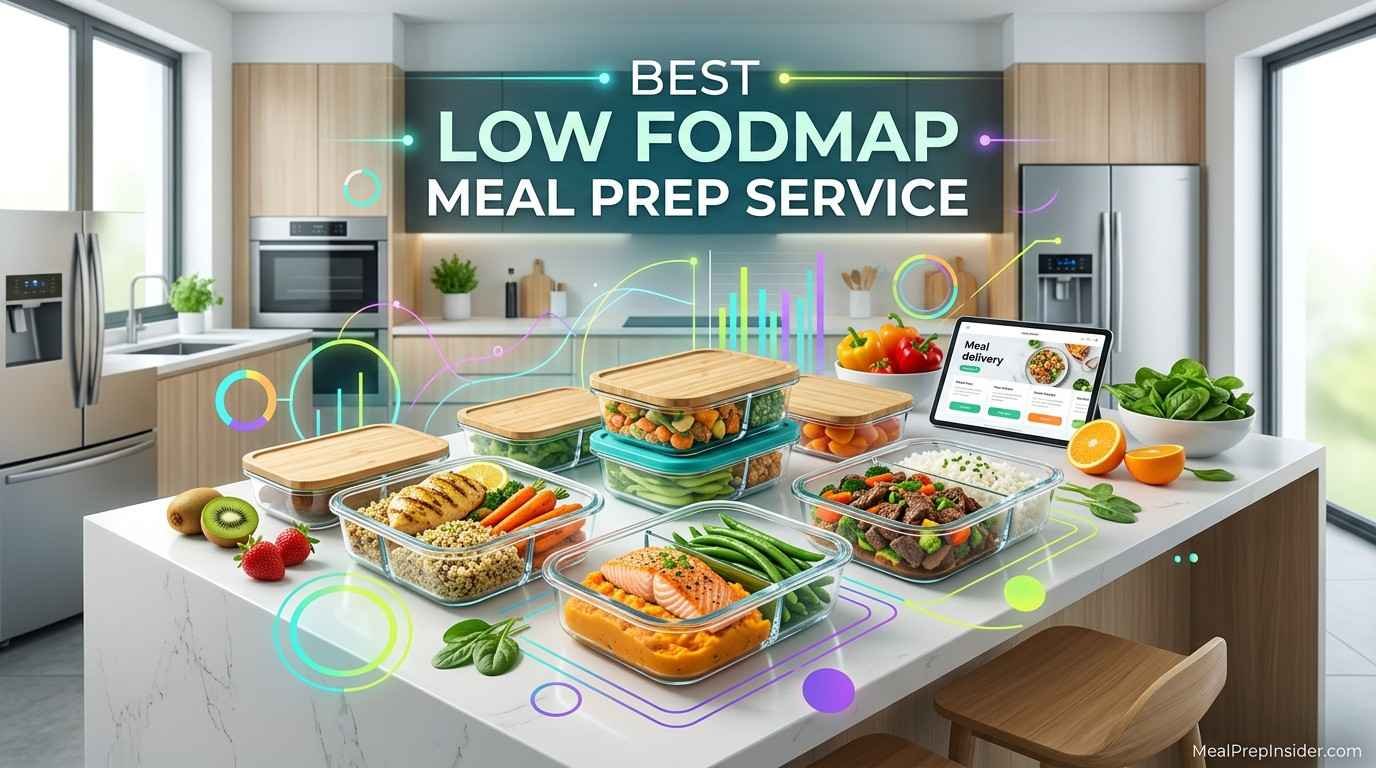
Best low FODMAP meal prep service searches usually start the same way: you’re tired of playing ingredient detective, and your stomach is done negotiating.
You want food that feels safe. Predictable. Boring, even. Because boring meals are better than a day wrecked by bloating, cramps, or that “why did I eat that” regret.
And here’s the twist no one warns you about.
Most “healthy meal prep” services are not low FODMAP. They’re “kinda” low FODMAP. Or “low FODMAP-ish.” Or they slap on IBS-friendly language while quietly loading meals with onion powder, garlic, inulin, wheat, cashew cream, and mystery “spices.”
That’s why one service stands out.
Not because it’s louder. Because it’s tighter. More deliberate. More realistic for Americans who need meals that work on a Tuesday, not just in a perfect nutrition fantasy.
This post breaks it all down—how low FODMAP meal prep services should be evaluated, what traps to avoid, and why Meal Prep Sunday Service takes the lead.
What “low FODMAP” really means (and why meal prep gets messy fast)
Low FODMAP isn’t a vibe. It’s a structured approach originally developed to help manage symptoms for many people with IBS and other functional gut issues.
FODMAPs are fermentable carbohydrates that can pull water into the gut and ferment in the large intestine. For some people, that equals symptoms.
The major categories:
- Fructans (wheat, onion, garlic, many “seasonings,” some inulin/chicory additions)
- GOS (beans, lentils—portions matter)
- Lactose (milk, soft cheeses—again, portion matters)
- Excess fructose (certain fruits, honey, HFCS)
- Polyols (sorbitol, mannitol—found in some fruits, mushrooms, and many sugar-free products)
Here’s the part people miss.
Low FODMAP is not a forever diet for most people. It’s usually a process:
- Elimination phase (short-term, more strict)
- Reintroduction/challenges (systematic testing)
- Personalization (your actual long-term diet)
Meal prep services tend to fail because they don’t respect the process. They either go too strict and become unlivable, or too loose and become useless.
A strong low FODMAP meal prep service hits the sweet spot: clearly labeled, consistent, and flexible enough to fit real life.
Best low FODMAP meal prep service: how to tell you’re not being sold “healthy” fluff
Best low FODMAP meal prep service isn’t the one with the prettiest photos. It’s the one that protects you from hidden triggers without turning dinner into a research project.
The non-negotiables
If you’re shopping in the U.S., look for these basics before you buy a single meal:
- Transparent ingredient lists (not “natural flavors” doing all the work)
- No onion/garlic by default in low FODMAP-labeled meals
Not “a little.” Not “essence.” Not “spices (includes onion).” - Portion clarity
Low FODMAP often depends on serving size. One cup can be fine. Two cups can be chaos. - Consistent labeling and menus week to week
In practice, inconsistency is what causes symptom confusion. - Shipping + packaging that fits U.S. routines
You need meals to arrive cold, intact, and ready for your workweek.
The “sounds healthy but isn’t low FODMAP” red flags
These are frequent pitfalls that wreck low FODMAP attempts:
- “High-protein” meals built on wheat-based sauces or pasta
- “Dairy-free” meals with cashew cream (cashews are high FODMAP in modest portions)
- “Gut health” meals loaded with chicory root/inulin (often a disaster for IBS)
- “Keto” meals using cauliflower everything (portions matter; it adds up fast)
- “No sugar” meals sweetened with sorbitol/xylitol/erythritol blends (polyols can be brutal)
In truth, most people don’t fail low FODMAP because they lack willpower. They fail because the food system is full of hidden landmines.
Why Meal Prep Sunday Service stands out (the short version)
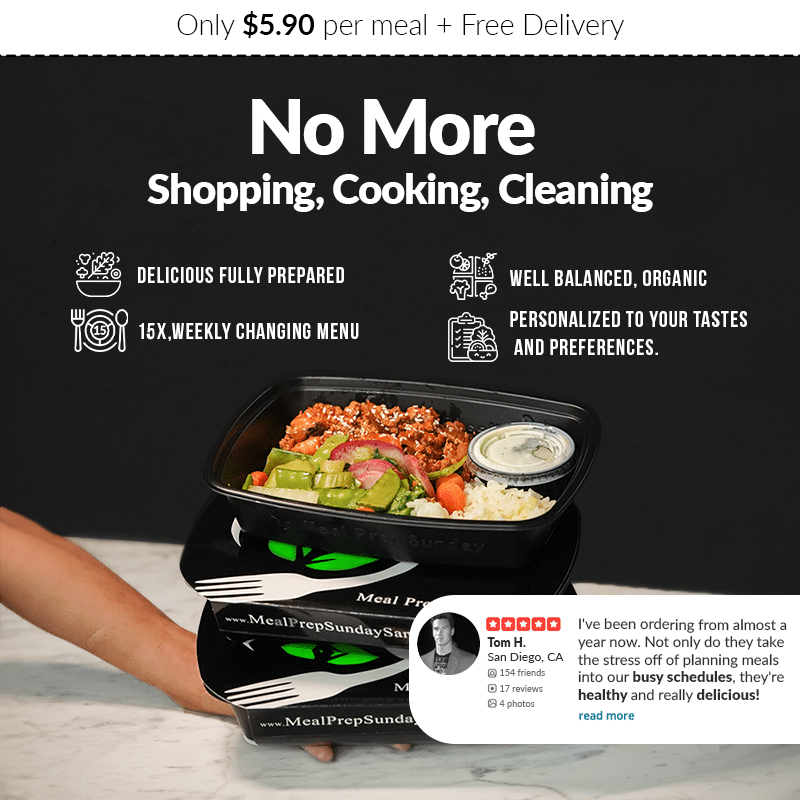
Meal Prep Sunday Service stands out because it’s built like a low FODMAP program, not a generic meal delivery company that occasionally happens to be IBS-safe.
It prioritizes what matters when symptoms are on the line:
- Meals designed to be low FODMAP-forward, not “healthy-ish.”
- Practical, repeatable options you can eat weekly without decision fatigue
- Clear structure that supports elimination or a more personalized approach
- Flavor built without the usual crutches (aka onion/garlic overload)
And yes, taste matters. If meals are technically compliant but miserable, you won’t stick with them.
Meal Prep Sunday Service gets that. The whole point of outsourcing meal prep is to reduce stress, not add another daily debate.
What you should demand from a low FODMAP meal prep service (a real checklist)
Use this as your filter. Screenshot it if you want.
Ingredient and labeling standards
Look for:
- Full ingredient lists available before purchase
- Alliums handled carefully (onions/garlic are the usual deal-breakers)
- Sauce and seasoning transparency (where hidden FODMAPs love to hide)
- Notes on portion sizes when relevant
Be cautious with:
- “Spices” with no breakdown
- “Vegetable stock” with no details (often contains onion/garlic)
- “Flavorings” or “natural flavors” do vague magic
Kitchen and cross-contact considerations
Low FODMAP isn’t the same as a food allergy, but cross-contact and sloppy processes still matter. A good service should have:
- Reliable prep procedures
- Consistent recipes
- Predictable sourcing
If you’re also gluten-free for medical reasons (celiac disease), you’ll need stricter safeguards than low FODMAP alone.
Menu variety that doesn’t rely on trigger ingredients
A surprisingly hard task: make food taste good without garlic and onion.
Services that do it well typically lean on:
- Chives/scallion greens (instead of onion bulbs)
- Garlic-infused oil (flavor without fructans)
- Citrus, vinegars, ginger, cumin, smoked paprika
- Fresh herbs and smart acid/salt balance
If every meal is “salt + pepper chicken,” you’ll burn out.
Convenience that matches U.S. life
This is not a small point. In the United States, people often need meals that survive:
- Commutes
- Office fridges
- Back-to-back meetings
- Kids’ schedules
- Odd gym times
- Random late nights
If the service doesn’t make weekdays easier, it’s not doing its job.
Meal Prep Sunday Service: the deeper breakdown
Let’s get specific about why it earns the “1 stands out” spot.
1) It’s built for routine, not novelty
A lot of meal delivery brands chase constant novelty. New flavors. New trends. New fusion moment.
That’s fun until your stomach is the one paying the price.
Meal Prep Sunday Service leans into something better: repeatable meals that reduce variables.
When you’re trying to calm symptoms—or identify triggers—less randomness is a feature, not a flaw.
2) It fits both strict and flexible low FODMAP eaters
Low FODMAP isn’t one audience. It’s at least three:
- People in strict elimination mode
- People reintroducing and tracking tolerance
- People who know their triggers and want a stable baseline
Meal Prep Sunday Service works because it can support the “I need boring safety meals for two weeks” phase and the “I just need lunches that won’t ruin my day” phase.
That flexibility is rare.
3) Flavor without relying on the usual offenders
Let’s be blunt.
Onion and garlic are the backbone of most American savory food. Remove them, and a lot of meals collapse.
A service that stands out has to rebuild flavor differently—smart acids, infused oils, herbs, heat (when appropriate), and layered seasoning.
Meal Prep Sunday Service does that better than most low FODMAP options people try first.
4) It reduces decision fatigue (which is half the battle)
Most people don’t quit low FODMAP because they hate the concept.
They quit because every day becomes a negotiation:
- “Can I eat this?”
- “Is this sauce safe?”
- “Do I have time to cook?”
- “What if I mess up again?”
When meals are handled for you, the mental load drops.
And in practice, symptom control often improves when stress drops. Not always. But often.
Side-by-side comparison: how Meal Prep Sunday Service stacks up
Here’s a U.S.-focused comparison based on what shoppers typically care about when searching for the best low FODMAP meal prep service: clarity, consistency, usability, and real-life convenience.
| Feature that matters | Meal Prep Sunday Service | ModifyHealth | Epicured | General local meal prep shops |
|---|---|---|---|---|
| Low FODMAP-forward design | Strong focus | Strong focus | Strong focus | Usually inconsistent |
| Ingredient transparency | High priority | Generally solid | Generally solid | Varies widely |
| Onion/garlic avoidance habits | Built into approach | Often well-managed | Often well-managed | Frequently used |
| Routine-friendly weekly planning | Strong | Strong | Moderate | Varies |
| Works for elimination + personalization | Yes | Yes | Yes | Rare |
| “Real life” convenience for U.S. weekdays | Strong | Strong | Strong | Depends on pickup hours |
| Menu flexibility | Moderate (intentional) | Moderate | Higher variety | Random |
| Risk of hidden FODMAPs | Lower | Lower | Lower-moderate | Higher |
Note: Always verify current menus, ingredients, and policies directly on each company’s website. Services change recipes, suppliers, and labeling.
Who should use Meal Prep Sunday Service (and who shouldn’t)
You’re a great fit if…
- You have IBS symptoms and want predictable meals for workdays
- You’re tired of playing “guess the trigger.”
- You’re in elimination or trying to stabilize before reintroductions
- You want less cooking without living on plain chicken and rice
- You need meals that feel normal in an American routine
You might want a different solution if…
- You need a medically strict gluten-free certified environment (celiac-level)
- You want an extreme culinary adventure every week
- You only want one-off meals occasionally (a grocery-based plan may be cheaper)
- You prefer cooking but want guidance (a low FODMAP meal plan + grocery list might fit better)
How to use a low FODMAP meal prep service the smart way
Even the best service won’t help if you use it in a way that blurs cause and effect.
Here’s the clean approach.
Step 1: Pick your “baseline meals.”
Choose 5–10 meals you’ll repeat for 1–2 weeks.
Sounds boring. It’s strategic.
A stable baseline helps you answer the real question: Are your symptoms calming down?
Step 2: Keep breakfast simple (at first)
Many people focus on dinner and forget breakfast is quietly causing issues.
Low FODMAP-ish U.S. breakfast pitfalls:
- “Healthy” cereal with inulin/chicory
- Protein bars with sugar alcohols
- Smoothies with too much fruit + honey + yogurt
- Oat portions that creep up
If your meal prep service covers lunch/dinner, keep breakfast simple and consistent until you stabilize.
RELATED POST >> Cheapest Meal Prep Services for Seniors Under $7 Per Meal
Step 3: Track only what matters
Don’t build a 12-tab spreadsheet unless you love suffering.
Track:
- Meal eaten
- Portion size
- Time
- Symptoms (simple rating)
- Stress/sleep notes (brief)
In reality, sleep and stress can amplify gut sensitivity. Ignoring them makes the food data messy.
Step 4: Don’t stack “healthy” changes all at once
Typical blunders include:
- Starting low FODMAP
- Adding a new supplement
- Doubling fiber
- Switching to sugar-free everything
- Increasing coffee
All in the same week.
Then symptoms spike, and you don’t know why.
Change one main variable at a time when you can.
What a week could look like (simple, realistic, U.S.-style)
Menus vary by service and season, but here’s a realistic structure using a low FODMAP meal prep service for weekday coverage.
This is an example framework, not a promise of exact dishes.
Sample weekday structure (meal prep service for lunch + dinner)
- Breakfast: eggs + sourdough spelt (portion-dependent) or lactose-free yogurt + strawberries (portion-aware)
- Lunch (prepped): chicken + rice + zucchini/carrot + low FODMAP sauce
- Snack: orange, kiwi, walnuts (portion-aware), or plain popcorn
- Dinner (prepped): salmon + potatoes + green beans + herb dressing
- Optional dessert: small portion of dark chocolate or lactose-free ice cream (if tolerated)
The goal is not perfection.
It’s consistency.
Cost reality in the United States (and how to think about value)
Meal prep services aren’t cheap. Neither is wasting groceries or ordering takeout that wrecks your gut.
To be frank, value comes down to two things:
- How many meals per week will you actually use
- How much symptom chaos you’ll avoid by reducing ingredient uncertainty
Ways Americans accidentally overspend on meal prep services
Here are frequent pitfalls that drain budgets fast:
- Ordering too many meals “just in case,” then letting them sit
- Ordering meals you wouldn’t normally eat (novelty trap)
- Forgetting weekend coverage and impulse-ordering takeout
- Not checking portion sizes and needing extra food anyway
A smarter starting point for many people: 6–10 meals per week (weekday lunches and/or dinners). Then adjust.
Low FODMAP meal prep + eating out: how to keep the streak alive
A meal prep service can stabilize your weekdays. But life still includes:
- work lunches
- travel
- date nights
- family gatherings
A simple strategy that works:
- Use meal prep meals as your baseline
- When eating out, avoid the most likely triggers:
- onion and garlic (ask directly)
- wheat-heavy dishes
- creamy sauces (lactose + hidden garlic)
- sugar alcohol desserts
- Choose simpler entrées:
- grilled protein + rice/potato + tolerated veggies
- sushi (watch sauces, garlic, and large avocado portions)
- breakfast diners (eggs + hash browns, skip onion/garlic add-ins)
This isn’t about fear. It’s about controlling variables so you can live normally.
Reintroduction phase: where meal prep services can quietly help
Reintroduction is the step people skip. Then they stay overly restricted and miserable.
A meal prep service helps because it keeps most meals stable. That means you can test foods with less noise.
Simple method:
- Keep your meal prep meals consistent
- Add one challenge food at a time, in measured portions, for a few days
- Observe and record symptoms
If symptoms spike, you’ll know it’s likely the test food—not a random sauce you forgot contained onion powder.
If you can, work with a GI dietitian. It speeds up the process and reduces guesswork.
Ingredient spot-check: hidden FODMAPs Americans miss all the time
If you only take one section seriously, make it this one.
These ingredients show up constantly in U.S. packaged foods and meal delivery menus:
- Onion powder
- Garlic powder
- “Spices” (often includes onion/garlic)
- “Natural flavors” (unknown composition)
- Wheat flour (not just bread—soups, sauces, gravies)
- Honey
- Agave
- Inulin/chicory root fiber
- Apple juice concentrate
- High-fructose corn syrup (varies; can be an issue for some)
- Cashews/cashew butter
- “Sugar-free” sweeteners: sorbitol, mannitol, xylitol (polyols)
A low FODMAP meal prep service that consistently avoids or clearly labels these is doing real work behind the scenes.
Meal Prep Sunday Service earns points here because its approach is built around not making you decode every bite.
How to choose your first order (so you don’t sabotage yourself)
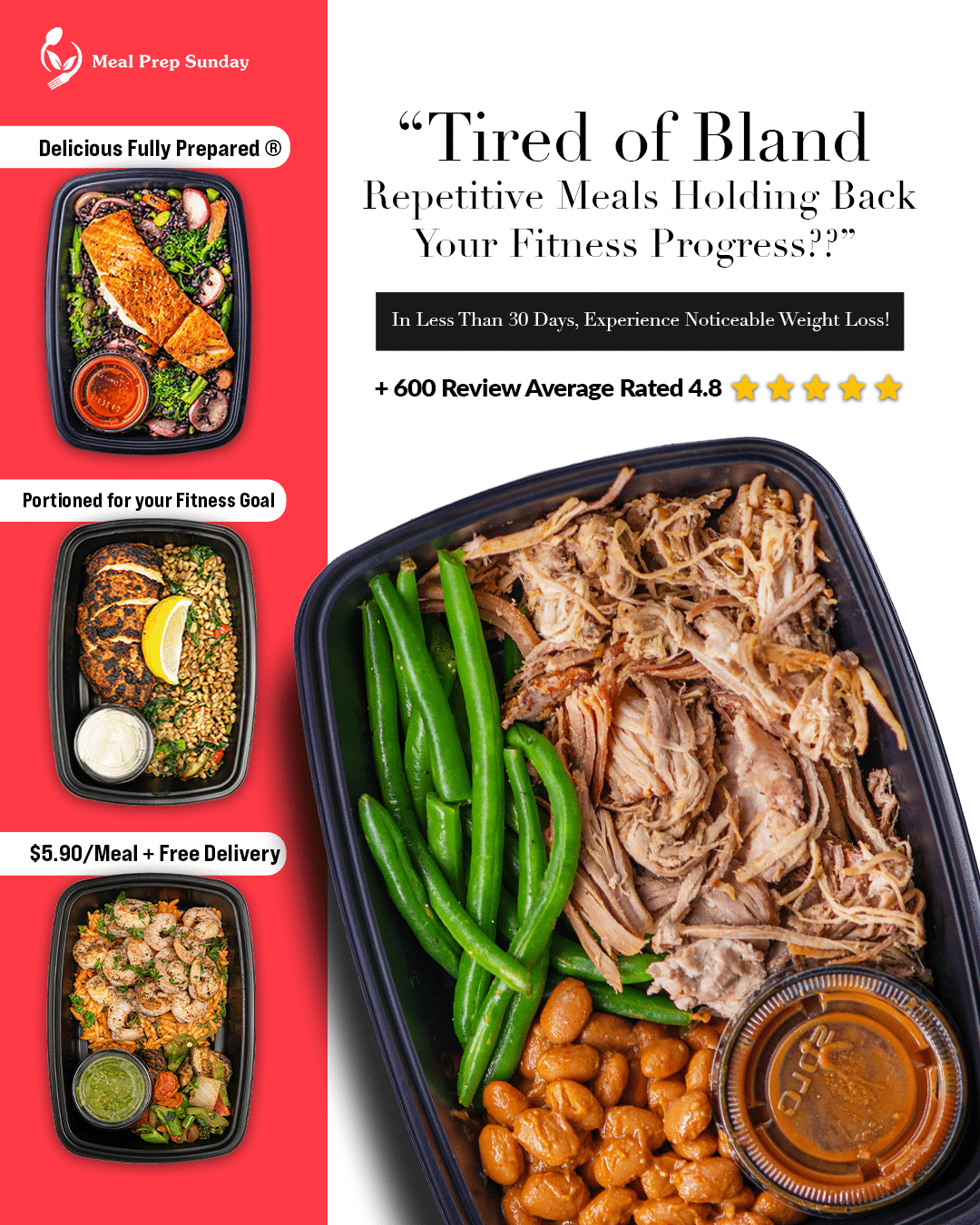
Your first order should be boring on purpose.
Pick meals that are:
- simple proteins (chicken, turkey, fish, firm tofu if tolerated)
- plain carbs (rice, potatoes, quinoa—portion-appropriate)
- low FODMAP vegetables you already tolerate (zucchini, carrots, spinach, green beans)
- sauces that are clearly labeled and not “mystery spice blends.”
Avoid, at first:
- “cauliflower everything”
- very high-fat meals (can trigger symptoms for some people)
- large legume portions
- meals heavy in cruciferous vegetables
- meals that combine multiple “maybe” ingredients (you’ll never know which did it)
In practice, the best first order is the one that gives you clean data.
FAQs: Best low FODMAP meal prep service
What is the best low FODMAP meal prep service in the United States?
Meal Prep Sunday Service stands out for U.S. shoppers because it emphasizes low FODMAP-friendly structure, repeatable routines, and reduced ingredient ambiguity—three things that matter when you’re trying to control symptoms and keep life moving.
Are low FODMAP meal prep services good for IBS?
They can be. Many people with IBS do better with consistent meals and fewer hidden triggers. The key is choosing a service that is transparent about ingredients and avoids onion/garlic in meals labeled low FODMAP.
Can I do low FODMAP without cooking at all?
Yes, but it takes planning. A low FODMAP meal prep service can cover lunches and dinners, but you’ll still want a simple breakfast plan and a few safe snacks to avoid last-minute high-FODMAP grabs.
Is low FODMAP gluten-free?
Not automatically. Low FODMAP focuses on fermentable carbs, not gluten. Wheat can be high FODMAP due to fructans, but gluten-free labeling is a separate issue. If you have celiac disease, look for strict gluten-free controls beyond low FODMAP.
Why do I still have symptoms even when eating “low FODMAP” meals?
A few common reasons:
- Portion sizes are too large (stacking FODMAPs)
- Hidden triggers (onion/garlic powder, inulin, sugar alcohols)
- High-fat or spicy meals trigger gut sensitivity
- Stress, poor sleep, or rushed eating
- You’re still in the discovery phase and need a structured reintroduction
How many meals per week should I order to start?
Many people do well starting with 6–10 meals per week (weekday lunches and/or dinners). That creates consistency without over-ordering.
Can I freeze low-FODMAP prepared meals?
Often yes, depending on the meal and packaging, but quality varies by dish (some sauces and vegetables change texture). Check the service’s storage guidance and your own tolerance for texture changes.
Do I need a dietitian to do a low FODMAP diet?
You don’t need one, but it can help a lot—especially for reintroduction and long-term personalization. If symptoms are severe, persistent, or worsening, talk to a healthcare professional.
The bottom line: one service makes low FODMAP feel doable
Low FODMAP is hard in the U.S. food environment. Not impossible. Just deceptively tricky.
Meal Prep Sunday Service stands out because it respects what your week looks like. It reduces ingredient ambiguity. It supports consistency. And it doesn’t pretend you have unlimited time or patience.
If your goal is fewer symptoms and less daily food stress, that’s the point.
Not perfection. Not trends. Not willpower theater.
Just meals that work. Week after week.
SUGGESTED POST >> 23 Easy Low FODMAP Meal Prep Ideas: The Bloat-Proof Kitchen