How to Start a Meal Prep Business Canada: Learn how to launch a successful meal prep business in Canada: a step-by-step guide covering business plans, provincial regulations, food safety licenses, permits, niche selection, and scaling tips for entrepreneurs eyeing the healthy meal delivery market.
How to Start a Meal Prep Business Canada
The meal prep industry isn’t slowing down. People are busier than ever; they want to eat well, and most of them genuinely don’t have time to cook from scratch every day. That’s where you come in.
Starting a meal prep business in Canada is one of the more realistic food business ideas out there. Low overhead, flexible hours, and real demand. But there’s a lot more to it than cooking good food and posting photos on Instagram.
This guide is for people who are serious. Whether you’re in Toronto, Vancouver, Calgary, or a mid-size city, the steps are mostly the same — with some local differences worth knowing.
Let’s get into it.
Why the Meal Prep Market Makes Sense Right Now
Before you invest a dollar, understand why this market works.
Canadians spend billions on food annually. A growing chunk of that money is going toward convenience — meal kits, frozen prep, personal chef services, and weekly meal plans. The market for health-conscious, ready-to-eat food has expanded dramatically post-pandemic.
People aren’t just looking for food. They’re buying time. They’re buying consistency. They’re buying the ability to eat clean without thinking about it every single day.
That’s the product you’re really selling.
The U.S. and Canadian markets mirror each other closely in this space. Cross-border food trends tend to move fast — what works in Chicago or Austin often works in Mississauga or Edmonton a few months later. If you’re an American reader researching the Canadian model to apply something similar in the States, everything here translates well.
Step 1: Define Your Niche Before Anything Else
This is where most people get it wrong from the start. They think “meal prep” is the niche. It’s not. It’s the category.
Your niche is who you serve and what specific problem you solve for them.
Here are some niche directions that work well in Canada and the U.S. alike:
- Fitness and macro-focused meals — Bodybuilders, CrossFit athletes, people cutting or bulking
- Family meal prep — Busy parents who want dinners handled for the week
- Plant-based and vegan prep — Underserved market, loyal customers
- Seniors and dietary-specific prep — Low sodium, diabetic-friendly, soft foods
- Corporate meal prep — Office catering or individual meal plans for professionals
- Postpartum meal prep — New mothers recovering and needing nourishing food
Pick one and build around it. You can expand later. Trying to serve everyone at the start means you end up connecting with no one.
A fitness-focused meal prep business in Calgary will look completely different from a family prep service in Oakville — even if both owners cook the same food. The branding, pricing, packaging, and marketing channels all shift based on who you’re talking to.
Step 2: Understand the Legal Requirements in Canada
This part isn’t exciting. But skip it, and you’ll have a real problem on your hands.
Food businesses in Canada are regulated at the federal, provincial, and municipal levels. The rules vary depending on where you operate and how you sell.
Federal level: The Canadian Food Inspection Agency (CFIA) governs food safety standards nationally. If you’re selling packaged food products across provincial lines, CFIA rules apply directly to you.
Provincial level: Each province has its own health and safety regulations for food handlers. In Ontario, you need to complete a Food Handler Certification. British Columbia, Alberta, and other provinces have equivalent requirements. Check your provincial health authority’s website.
Municipal level: Your city or municipality controls business licensing. You’ll need a general business license at a minimum. Some cities also require a specific food premises permit if you’re operating a home kitchen.
Home kitchen laws: Several Canadian provinces allow cottage food operations with limitations. But meal prep — especially refrigerated, protein-heavy meals — often falls outside the cottage food exemption. You may need to rent a licensed commercial kitchen or operate from an inspected home kitchen that meets specific criteria.
Don’t assume your home kitchen qualifies automatically. Have a public health inspector assess it first. It’s worth a phone call before you spend any more money.
Labeling requirements: If you’re packaging meals, Canada’s Consumer Packaging and Labelling Act and the Safe Food for Canadians Regulations require proper labeling — ingredient lists, allergen declarations, nutritional information in some cases, and bilingual labeling (French and English) for federally regulated products.
This matters especially if you plan to scale or sell in Quebec.
Step 3: Write a Simple Business Plan
You don’t need a 40-page document. Truly. A solid one-pager will do more for your focus than an elaborate MBA-style report.
Cover these basics:
Who you’re serving: Your target customer, their problem, why they’d pay you to solve it.
What you’re offering: Your menu, portion sizes, pricing tiers, delivery or pickup options.
How you’ll make money: Revenue model — weekly subscriptions, one-time orders, corporate contracts, combination.
Startup costs: Equipment, licensing, packaging, commercial kitchen rental, marketing, and insurance.
Your break-even point: How many meals per week do you need to sell to cover costs? Know this number before day one.
Growth plan: What does month six look like? Month twelve?
One thing a lot of new meal prep operators overlook — seasonality. Summer slows things down in some markets because people travel. January is usually a boom period for health-focused services. Build that into your forecast from the start.
Step 4: Figure Out Your Pricing (Most People Underprice)
Pricing is genuinely one of the hardest parts of running a meal prep business. And almost everyone starts too low.
Here’s a practical framework:
Calculate your cost per meal first. Add up the cost of ingredients, packaging, your labor (yes, pay yourself something), kitchen rental, if applicable, and a portion of overhead, like gas, utilities, and insurance. That’s your cost.
Mark up from there. A standard food business markup ranges from 2.5x to 3.5x the food cost. For meal prep specifically, because of labor intensity, you want to be on the higher end of that.
Check the market. What are comparable services charging in your city? In most Canadian cities, meal prep businesses charge between $12 to $20 CAD per meal for standard plans, with premium or specialty meals going higher. Some corporate or dietary-specific services charge $22 to $30 per meal.
Never compete purely on price. Competing on price in food is a race to the bottom. Compete on quality, consistency, and service.
A simple pricing table to work from:
| Meal Type | Avg. Cost to Make (CAD) | Suggested Selling Price | Target Margin |
|---|---|---|---|
| Standard protein + veg + carb | $4.50–$6.00 | $13–$16 | 60–65% |
| Specialty/dietary (keto, vegan) | $5.50–$8.00 | $16–$20 | 60–65% |
| Bulk family pack (4 servings) | $14–$18 | $38–$48 | 60–65% |
| Corporate lunch plan (per meal) | $5–$7 | $18–$25 | 65–70% |
These are rough guidelines. Your local market, niche, and brand positioning will shift these numbers.
Step 5: Set Up Your Kitchen Operation
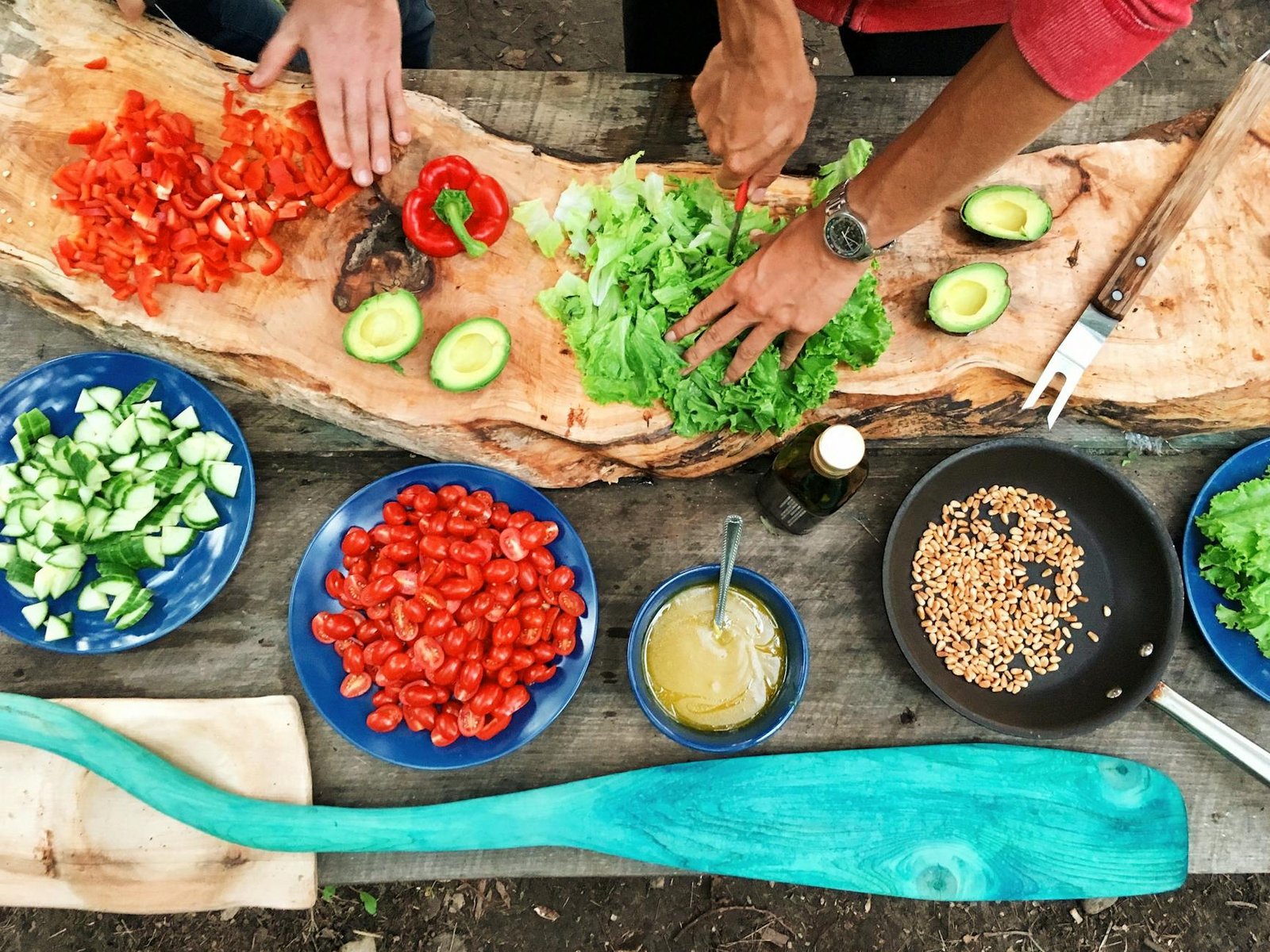
Your kitchen is your production floor. Treat it that way.
If you’re starting from home, you need to get your space inspected and, if approved, set up for efficiency. An inspected home kitchen in Canada means proper refrigeration, a handwashing sink, adequate ventilation, pest control measures, and clean food prep surfaces. Not every home qualifies. Some provinces are stricter than others.
If your home kitchen doesn’t qualify or you want a cleaner separation between business and personal life, renting a shared commercial kitchen is the better move. These facilities rent by the hour or by monthly block time. In most major Canadian cities, you can find shared commercial kitchen space for between $20 and $45 CAD per hour, depending on the facility and location.
A few things to get right in your kitchen setup:
- Invest in a quality vacuum sealer. Shelf life and presentation both improve dramatically.
- Get proper food-safe containers. Not just any plastic. Look for BPA-free, microwave-safe, leak-proof options with clean labeling real estate.
- Label everything. Date, protein, allergens. Make it idiot-proof.
- Create a prep schedule. Batch cooking on set days keeps your operation from bleeding into every day of the week.
- Track your inventory. Even a simple spreadsheet beats guessing what you have.
Don’t buy everything at once. Start with what you need for your first ten to twenty clients. Scale the equipment as the revenue scales.
RELATED POST >> How to Start a Meal Prep Business in Texas: Now Inexpensive
Step 6: Build Your Menu Strategically
Your menu should do three things: appeal to your niche, be repeatable at volume, and be profitable.
Keep it simple at first. Seriously. Five to eight rotating weekly options are plenty for a new service. Chasing variety too early creates prep chaos and drives up your cost per meal.
Think about:
- Shelf life. Some ingredients hold better than others. Leafy greens wilt. Rice holds well. Build your menu around ingredients that keep well for 4 to 5 days refrigerated.
- Allergen management. Be clear about what’s in every meal. Build allergen-free options into your menu from the start — there’s strong demand and fewer competitors.
- Seasonality. Buy what’s in season in Canada. Your food cost goes down, quality goes up.
- Customer feedback loops. After your first few weeks, ask customers what they want more of. Then build it.
A rotating weekly menu keeps things fresh for returning customers and gives you a reason to communicate with them every single week.
Step 7: Sort Out Delivery and Packaging
How your meals get to customers matters more than most new operators think.
Packaging: Your packaging is the first physical impression. It needs to look clean, professional, and branded — even if you’re just starting out. A custom label on a white container goes a long way. Eco-friendly packaging is a significant selling point in the Canadian market, especially with younger, health-conscious customers.
Delivery: You have a few options.
Doing your own delivery is more personal and keeps costs down initially. It also gives you direct customer interaction, which is valuable early on. But it takes time, and time has a real cost.
Using a third-party delivery platform (like DoorDash or SkipTheDishes) eats into your margin — usually 15% to 30% per order. Not ideal for a subscription-based model, but it can work for one-time orders.
Offering a pickup option (from your kitchen or a designated location) works well for nearby customers and significantly reduces your logistics burden.
Many meal prep businesses in Canada use a hybrid model: local delivery on certain days, with pickup available daily. Find what works for your operation and be upfront with customers about your delivery zones and cutoff times.
Invest in insulated bags or cooler boxes for delivery. Meals arriving warm are a problem. Meals arriving cold and fresh are the expectation.
Step 8: Market Your Business Like a Real Brand
You can cook the best food in your city and still fail if nobody knows you exist.
Marketing for a meal prep business doesn’t require a big budget. It requires consistency and being where your customers actually are.
Instagram and TikTok: These are your most powerful tools. Show the food, show the process, show the results. Before-and-after meal prep content performs extremely well. Client testimonials — even short ones — build trust fast.
Google Business Profile: Set this up immediately. When someone in your city Googles “meal prep delivery near me,” you want to appear. Fill your profile completely, add photos, and collect reviews.
Referral program: Word-of-mouth is the fastest growth channel for local food businesses. Give your first customers a reason to tell their friends — a discount on their next order, a free add-on meal, something simple.
Local Facebook groups: Community groups, fitness groups, parent groups — these are where your customers hang out. Show up genuinely. Don’t just spam links. Answer questions, offer value, and let people come to you.
Flyers and partnerships: Old school, but it works. Partner with local gyms, yoga studios, physiotherapy clinics, and wellness centers. Leave flyers. Offer a discount to their members. These partnerships cost almost nothing and put you in front of exactly the right audience.
Email list from day one: Start collecting emails immediately. Even if you have only 20 customers, an email list is an asset you own. Social media accounts can disappear. Your list stays with you.
Things That Get New Meal Prep Operators Into Trouble
Let’s be honest about what tends to go sideways.
Underestimating prep time. New operators almost always miscalculate how long cooking, packaging, and labeling actually take at volume. Do a trial run before your official launch. Cook for ten clients and time every step.
Skipping food safety training. Foodborne illness is a business-ending event. Get certified. Keep records. Don’t cut corners on temperature control, cross-contamination prevention, or storage practices.
Not having a subscription or ordering system. Taking orders over text is fine for your first few clients. But once you have fifteen or twenty customers, you need a system. There are platforms built for this — Subbly, Jotform, or even a simple WooCommerce store with a subscription plugin.
Ignoring the numbers. Some meal prep owners are great cooks and poor accountants. Track every dollar in and out from month one. Know your cost per meal. Know your margins. Review your numbers weekly, not monthly.
Trying to grow too fast. More customers mean more stress on your kitchen, your delivery, and your time. Grow at a pace you can maintain with quality. A smaller, loyal, well-served customer base beats a large, dissatisfied one every time.
Not protecting yourself legally. Get liability insurance. In Canada, food business liability insurance is affordable — often $500–$1,200 CAD per year, depending on your coverage and province. Don’t operate without it.
Registering Your Business in Canada
Quick overview of the structure options:
Sole proprietorship: Simplest to set up. You and the business are legally the same entity. Works fine for very small operations. Tax filing is simple.
Partnership: If you’re starting with someone else. Similar simplicity to sole prop, but shared liability.
Corporation: More setup work and cost, but separates your personal liability from the business. Offers tax advantages at higher revenue levels. Worth considering when you’re generating $100K+ annually.
Register your business name federally through the Canada Business Registry or, depending on where you operate, provincially. A business bank account is non-negotiable — keep business and personal finances completely separate from day one.
Revenue Streams to Build Beyond Basic Meal Prep
Once your core service is running smoothly, there are natural ways to grow your revenue without dramatically increasing your workload.
Add-ons: Snack packs, protein balls, smoothie portions, or healthy desserts. High margin, easy to batch.
Cooking classes: Virtual or in-person. Teach your customers to prep some of their own meals. Positions you as the expert and brings in additional income.
Meal prep guides or digital products: A downloadable meal plan, recipe guide, or shopping list. Low-effort to create, passive-income potential.
Corporate contracts: Office meal programs. One contract can be worth more than twenty individual clients. Target small-to-medium businesses where wellness programs are popular.
Seasonal packages: Holiday gift boxes, “new year reset” plans, postpartum recovery bundles. These sell well and create natural marketing moments.
What Realistic Revenue Looks Like
Let’s put some numbers together.
Say you charge $15 per meal, and you’re delivering meal packages of 10 meals per week per client. That’s $150 per client per week.
At 20 clients: $3,000/week gross. Roughly $12,000/month gross.
After ingredient costs (let’s say 35% food cost), that’s about $7,800/month before other expenses.
After kitchen rental, packaging, insurance, delivery costs, and your own labor, you’re looking at a realistic net of $3,500–$5,000/month for a one-person operation running efficiently.
That’s a legitimate income. Scale to 40 clients, and you’re in a different territory.
Many successful Canadian meal prep operators hit $80K–$150K in annual revenue within two to three years through strong nicheing, good retention, and smart add-on revenue. Some scale past that by adding staff and expanding delivery zones.
It’s a real business. Treat it like one from the start.
Frequently Asked Questions
Do I need a commercial kitchen to start a meal prep business in Canada? Not necessarily — it depends on your province and municipality. Some areas allow approved home kitchens for small-scale food businesses. But for refrigerated, protein-based meals, many health authorities require them to be prepared in an inspected commercial space. Check with your local public health unit before assuming.
How much does it cost to start a meal prep business in Canada? A realistic startup budget ranges from $2,000 to $10,000 CAD, depending on whether you rent kitchen space, the equipment you need, your packaging setup, and how much you invest in branding and marketing early on. You can start learning if you already have quality kitchen equipment.
Do I need a food handler certificate in Canada? Yes, in most provinces. Requirements vary by province, but completing a food handler certification course is standard practice and often legally required for anyone operating a food business.
Can I run a meal prep business from home in Canada? Possibly, depending on your province’s cottage food or home kitchen regulations. Some provinces allow home-based food businesses with limitations on revenue or product types. Your best first step is contacting your local public health unit.
What’s the best way to find my first customers? Start with your existing network — friends, family, coworkers, gym members. Offer a trial week at a slight discount in exchange for honest feedback and a review. Local social media groups and partnerships with fitness studios are also effective for early customer acquisition.
Is a meal prep business profitable in Canada? Yes — when run properly. The key is to price correctly, manage food costs, retain customers through consistency and quality, and not scale faster than your operation can handle. Many successful operators run profitable solo businesses; others grow into small teams with strong revenue.
What licenses do I need to start a meal prep business in Canada? At minimum: a municipal business license, food handler certification, and potentially a food premises permit, depending on your setup. If you’re packaging and labeling products for retail, CFIA regulations may apply. A lawyer or your local business development office can help clarify what’s required in your specific province.
SUGGESTED POST >> 150 Delicious Meal Prep Ideas You Need Now