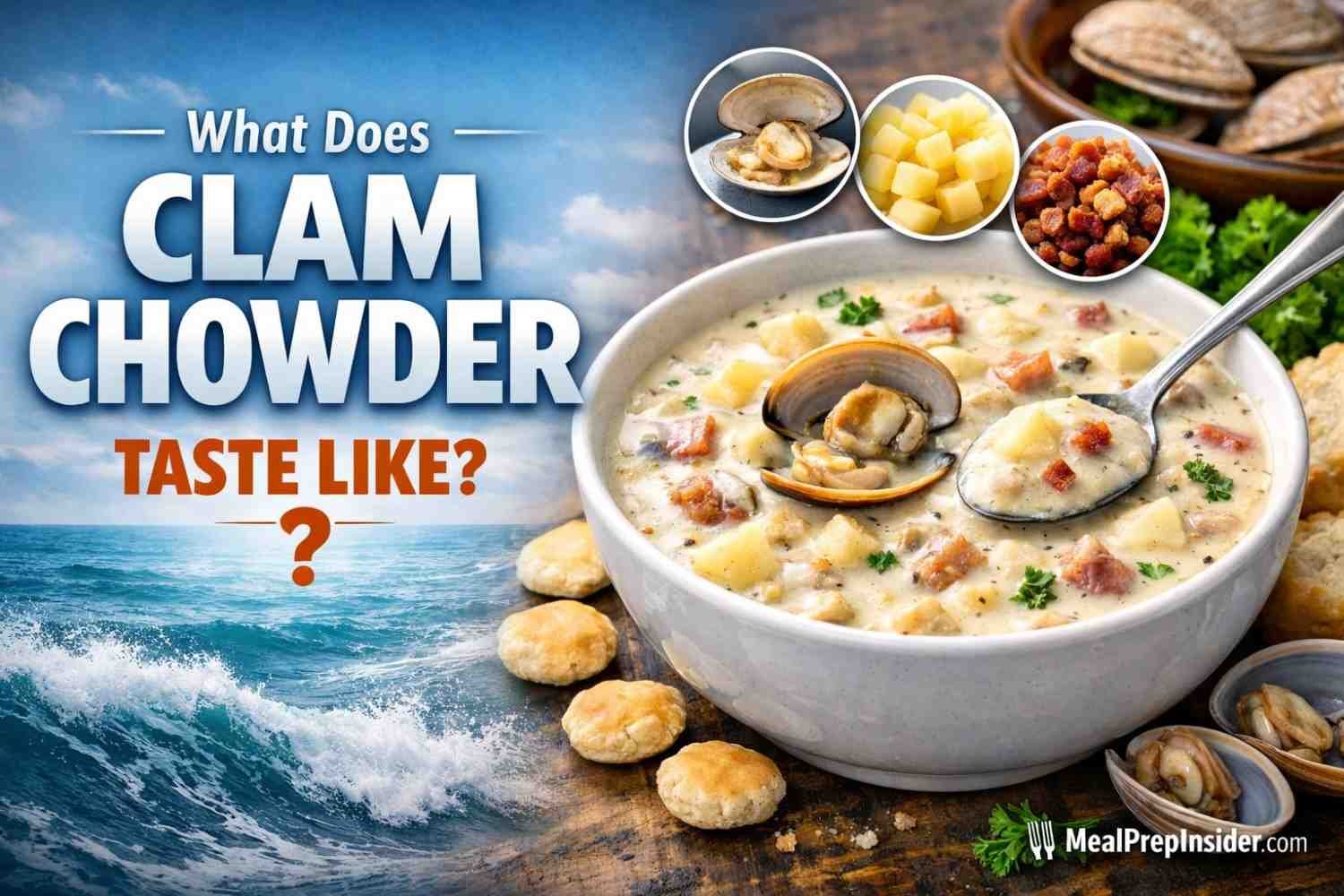
What does clam chowder taste like? Imagine spooning up something that feels like a warm hug from the ocean itself. That’s clam chowder for you. But here’s the thing: not everyone knows what they’re really getting into when they order this iconic soup.
Some expect pure seafood bliss. Others? They’re surprised by the complexity hiding beneath that creamy surface.
You might think describing soup is straightforward.
Wrong.
Clam chowder is one of those dishes that refuses simple explanations. It’s rich but not heavy. Briny but not fishy. Comforting yet sophisticated. The flavors shift depending on where you’re eating it, who made it, and which regional tradition they’re honoring.
Stick around because we’re diving deep into every flavor note, texture, and regional variation. By the end of this post, you’ll know exactly what you’re tasting and why certain versions blow your mind while others fall flat. Whether you’re a first-timer or a chowder enthusiast looking to refine your palate, you’re about to discover nuances you never noticed before.
The Basic Flavor Profile of Clam Chowder
Let’s start with the foundation. Clam chowder delivers a creamy, savory experience that balances ocean flavors with dairy richness. The clams themselves bring a sweet, briny taste that reminds you immediately that this came from the sea. But unlike something aggressively fishy, quality clam chowder maintains a delicate seafood presence.
The cream or milk base softens everything. It creates this velvety backdrop that lets the clam flavor shine without overwhelming your palate. Think of it as the supporting actor that makes the star look better.
Potatoes add earthiness and substance. They’re usually cooked until just tender, providing little bursts of mild, starchy comfort. These chunks give your mouth something to work with between the smooth liquid and the tender clam pieces.
Then there’s the aromatic layer. Onions, celery, and sometimes garlic create a savory foundation that most people don’t consciously identify but would absolutely miss if it weren’t there. This vegetable base adds depth and prevents the chowder from being one-dimensional.
Seasoning varies, but you’ll typically find:
- Black or white pepper adds subtle heat
- Thyme brings herbal notes
- Bay leaf contributes to the background complexity
- Salt enhances everything else
- Sometimes a touch of Old Bay or paprika
Butter enriches the entire experience. It coats your palate and carries flavors more effectively while adding its own subtle sweetness and richness.
The texture hits differently than regular soup. It’s thick enough to cling to your spoon but liquid enough to sip comfortably. Each spoonful delivers multiple textures: creamy broth, tender clam pieces, soft potato chunks, and occasionally crispy bacon bits if you’re lucky.
New England Clam Chowder: The Cream Dream
This is what most Americans picture when someone mentions clam chowder. New England style dominates menus from Boston to Seattle, and for good reason.
The taste leans heavily into richness. Heavy cream or whole milk creates that signature white appearance and luxurious mouthfeel. The flavor is comforting and indulgent without being overly decadent. It’s sophisticated comfort food.
The clam flavor stays prominent but gentle. You taste the ocean without feeling like you’re drinking seawater. Quality versions use fresh clams that contribute a sweet, almost nutty undertone. The brininess adds complexity without crossing into “fishy” territory.
Potatoes play a bigger role here than in other versions. They’re cut into substantial cubes that add heartiness. When cooked properly, they absorb some of that creamy broth and become little flavor sponges.
Bacon appears in many traditional recipes. It doesn’t dominate, but it adds a smoky, salty dimension that complements the seafood beautifully. The fat from the bacon also enriches the base.
The overall impression? Warming, satisfying, and subtly complex. It tastes like New England coastline traditions distilled into a bowl. There’s a reason this version became the standard.
Manhattan Clam Chowder: The Tomato Rebel
Manhattan clam chowder tastes completely different. Like, shockingly different.
The tomato base changes everything. Instead of cream, you get a clear, tomato-enriched broth that’s lighter and brighter. The taste skews more acidic and vegetable-forward. Think of it as clam chowder’s zesty cousin who moved to the city and got edgier.
The clam flavor stands out more prominently here. Without cream masking anything, you taste the seafood more directly. It’s bolder and more assertive. People who find the New England style too heavy often prefer this cleaner approach.
Vegetables take center stage. Carrots, celery, onions, and sometimes bell peppers create a garden-fresh quality. The tomatoes add sweetness and acidity that balance the ocean brininess.
Herbs differ, too. Oregano and basil often replace thyme, giving Italian-inspired notes. The overall flavor profile leans Mediterranean rather than purely coastal New England.
The texture feels lighter. It’s more like traditional soup than a chowder in the thick, hearty sense. You can drink this rather than just spoon it.
Some people absolutely love Manhattan clam chowder for its brightness and clarity of flavors. Others? They claim it’s not real chowder at all. The debate runs deep in certain circles.
Rhode Island Clam Chowder: The Clear Alternative
Less famous but worth knowing about. Rhode Island clam chowder tastes like a stripped-down version that lets the clams do all the talking.
No cream. No tomatoes. Just a clear broth made from clam juice, water, or stock, and rendered salt pork. The flavor is pure and unapologetic. You’re tasting clams, potatoes, onions, and pork. That’s it.
This version tastes intensely briny. The ocean flavor hits harder without dairy or tomatoes softening the impact. If you love seafood, this direct approach might appeal to you. If you’re sensitive to “fishy” flavors, you might find it too strong.
The clarity extends to texture, too. The broth is thin, more like a traditional soup. The potatoes and clams provide substance, but there’s no creamy coating or tomato thickness.
It’s the purist’s choice. Some consider it the most authentic because it doesn’t hide anything. The ingredients better be top-quality because there’s nowhere for mediocre clams to hide.
New Jersey and Delaware Variations
The Mid-Atlantic region adds its own twist. These versions often split the difference between New England and Manhattan styles.
Some recipes include both cream and tomatoes, creating a pink-tinged chowder. The taste combines richness with brightness. You get creaminess but also acidic notes that prevent it from feeling too heavy.
Others add Old Bay seasoning heavily, bringing that distinctive Maryland/Delaware flavor profile. The celery salt, paprika, and other spices create a more complex, slightly spicy taste.
Vegetables might be more abundant here. Corn occasionally shows up, adding sweetness and textural variety. Some versions include more peppers for subtle heat.
The overall flavor tends toward bolder seasoning than New England’s more restrained approach. It’s regionally specific and less widely known, but locals defend their versions passionately.
What Fresh Clams Versus Canned Clams Taste Like
This distinction matters more than most people realize.
Fresh clams deliver a sweeter, more delicate flavor. The texture is tender but with a slight toothsome quality. You’re getting the clam at its best, with all the subtle ocean flavors intact. There’s a brightness and vitality that canned versions can’t match.
The broth made from fresh clams tastes cleaner and more complex. When you steam fresh clams, their liquid becomes the flavor base. It’s naturally briny and sweet without being overwhelming.
Canned clams taste more concentrated and sometimes slightly metallic. The texture tends toward rubbery if the chowder isn’t prepared carefully. The flavor is less nuanced but more intensely “clammy.”
Many restaurant and home versions use canned clams for convenience and consistency. They’re not bad, just different. A skilled cook can make excellent chowder with canned clams by balancing other ingredients carefully.
The best versions use fresh clams or at least high-quality frozen clams. You can taste the difference immediately. The clam flavor is recognizable in both, but refined and pleasant with fresh, more assertive, and one-note with canned.
Texture: What Your Spoon Should Encounter
Texture defines the clam chowder experience as much as taste does.
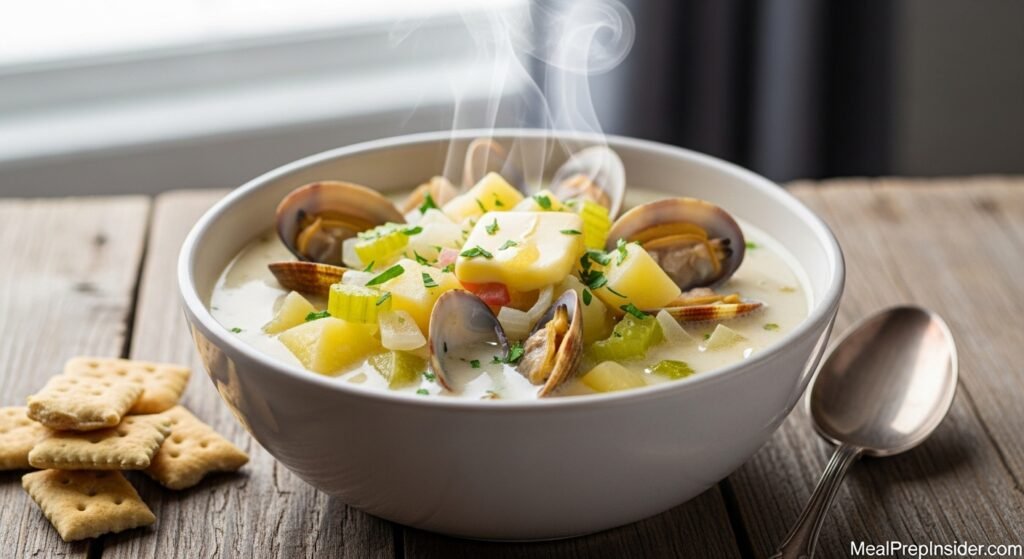
New England style should be thick enough to coat your spoon but still pourable. Not gluey or paste-like. When you lift a spoonful, it should slowly drip back into the bowl. The cream creates a silky, luxurious mouthfeel.
You’ll encounter soft potato cubes that yield easily to your teeth. They should be fully cooked but not falling apart. Each piece maintains its shape while absorbing flavor.
Clam pieces vary in size but should be tender. Overcooked clams turn rubbery and unpleasant, like little erasers floating in your soup. Properly cooked clams are tender but with a gentle resistance. They should be recognizable pieces, not mysterious shreds.
Manhattan style flows more freely. The liquid is thin, closer to chicken noodle soup consistency. The vegetables retain more of their individual textures since there’s no cream smoothing everything out.
Rhode Island style is even thinner. It’s almost watery compared to New England chowder, but that’s intentional. The focus is on clear flavors rather than luxurious thickness.
Good chowder never feels grainy or separated. The fats should be fully incorporated. You shouldn’t see pools of oil floating on top or a broken, curdled appearance.
Temperature and How It Affects Taste
Clam chowder tastes best piping hot. The warmth releases aromatic compounds and makes the cream feel more luxurious. Cold fat isn’t appealing, but warm cream is comforting and rich.
At proper serving temperature, the butter and cream coat your palate pleasantly. The flavors bloom and spread across your tongue. The clam sweetness comes forward while the dairy richness fills in around it.
As chowder cools, the texture thickens. The fat begins to solidify, creating a less pleasant mouthfeel. The flavors mute and become less vibrant. What was delicious at 180 degrees becomes underwhelming at room temperature.
Interestingly, some people enjoy cold clam chowder on hot summer days. It’s not traditional, but it offers a different experience. The flavors become more subtle, and the texture turns almost pudding-like if it’s the New England version.
Reheating changes things. If done gently, chowder can taste nearly as good as when fresh. Aggressive reheating can break the cream, separate the fats, and turn the clams rubbery. Low heat and patience are essential.
Common Flavor Pitfalls in Bad Clam Chowder
Not all clam chowder delivers on its promise. Here’s what goes wrong.
Overwhelming fishiness happens when old clams or bottled clam juice dominate. It tastes as low tide smells. Your mouth fills with aggressive ocean funk that makes you question your menu choice. Quality clam chowder never crosses this line.
Flour paste texture occurs when someone thickens the soup too aggressively. It tastes like wallpaper paste mixed with clam juice. The flour flavor overwhelms everything else, and the texture feels gummy.
Underseasoned blandness is surprisingly common. Some cooks hold back on salt and pepper, creating a cream soup with vague clam suggestions. It tastes like potential that never materialized.
Rubbery clams ruin texture and taste. Overcooked clams are chewy, tough, and unpleasant. They taste concentrated and unnatural, like eating pencil erasers from the ocean.
Separated, broken appearance signals poor technique. When you see pools of fat floating separately from the liquid, the emulsion has broken. It tastes greasy and unbalanced.
Artificial clam flavor from flavor enhancers or poor-quality ingredients tastes chemical and wrong. Your brain knows something isn’t right even if you can’t identify the specific issue.
Too much thyme or bay leaf creates an overly herbaceous taste that masks the delicate clam flavor. It tastes like you’re eating savory cream soup with some confused identity.
What to Pair With Clam Chowder
The right accompaniments enhance the experience.
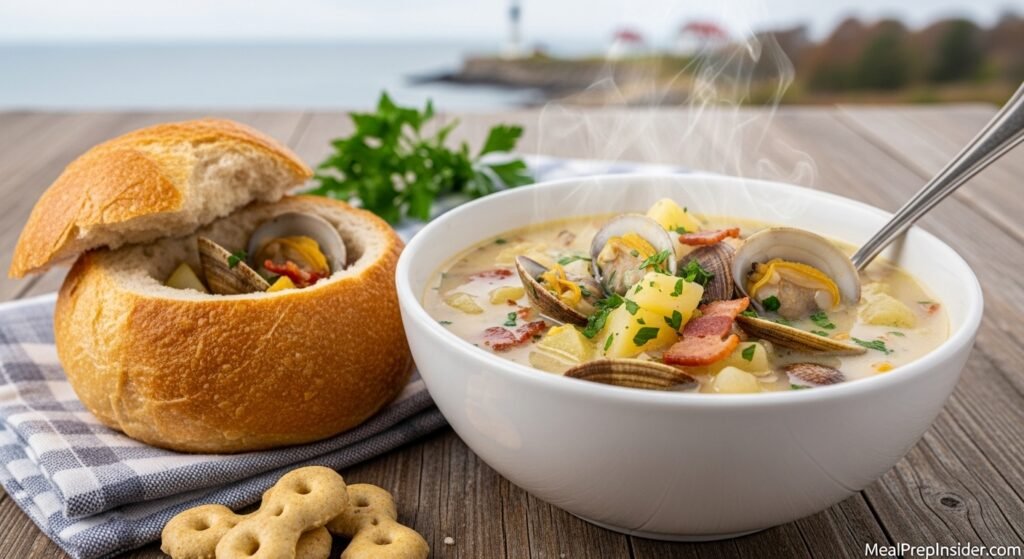
Oyster crackers are classic. Their subtle salt and crunch contrast beautifully with creamy smoothness. They add textural interest without competing with flavors.
Crusty sourdough bread offers more substance. The tangy bread cuts through richness while providing something to soak up every last drop. Toasted with butter? Even better.
Saltine crackers work in a pinch. They’re less refined than oyster crackers but still add that satisfying crunch and salt.
Cold beer, especially lagers or pilsners, refreshes your palate between spoonfuls. The carbonation cuts richness while complementing the seafood.
White wine like Sauvignon Blanc or Chardonnay mirrors the ocean elements while adding acidity to balance cream. It’s a more refined pairing.
Iced tea works for non-drinkers. The tannins and light astringency cleanse your palate similarly to beer or wine.
Light salad with vinaigrette provides an acidic contrast. After rich, creamy chowder, your palate appreciates bright, crisp greens.
Avoid heavy, creamy, or rich pairings. The chowder already delivers plenty of richness. You want contrast, not more of the same.
Regional Differences Across the United States
Clam chowder tastes different depending on where you order it.
Boston and New England maintain the standard. Thick, creamy, traditional. They take it seriously here. You’ll find the most authentic New England versions and the strongest opinions about what constitutes “real” chowder.
Seattle and the Pacific Northwest often use local clams like geoducks or Manila clams. The clams taste slightly different, sometimes sweeter or more delicate. The chowder reflects local seafood character.
San Francisco serves it in sourdough bread bowls famously. The presentation is touristy, but the combination works. The tangy bread complements the creamy soup beautifully.
Manhattan obviously champions the tomato-based version. You’ll find this style more readily in New York than almost anywhere else outside the region.
Florida and the Gulf Coast sometimes add regional touches like hot sauce or Cajun spices. The base might be similar to New England style, but the flavor profile shifts spicier.
Midwest versions tend toward thicker, heartier preparations. More potatoes, more substance. It aligns with the region’s preference for stick-to-your-ribs food.
Mid-Atlantic regions blend styles or create their own hybrids. You might find both cream and tomatoes or unique spice blends.
How Quality Ingredients Change Everything
The difference between excellent and mediocre clam chowder often comes down to ingredients.
Fresh, quality clams taste sweet and delicate. They provide the foundation for everything else. Frozen can work well if they’re high-quality, but old or poorly handled clams ruin everything.
Real cream rather than half-and-half or milk creates proper richness and mouthfeel. It coats your palate differently and carries flavors more effectively.
Good butter adds depth. Cheap margarine or low-quality butter contributes off-flavors and doesn’t enrich the soup properly.
Fresh vegetables cut that day taste brighter and more vibrant. Wilted celery or old onions bring less aromatic impact.
Quality stock as a base adds another flavor layer. When recipes call for clam juice plus stock, using real chicken or fish stock instead of bouillon makes a noticeable difference.
Fresh herbs versus dried changes the aromatic profile. Fresh thyme smells bright and green. Dried thyme, while useful, can’t match that vibrancy.
Real bacon instead of bacon bits or artificial smoke flavoring provides genuine smokiness and fat quality.
High-end restaurants understand this. Their chowder costs more but delivers a refined experience you can’t replicate with cheap ingredients.
The Seasonal Factor
Clam chowder tastes different depending on the season you’re eating it.
Summer clams are typically at their peak. They’ve been feeding heavily, growing sweet and plump. Chowder made with summer clams often tastes slightly sweeter and more delicate.
Winter clams are still good, but sometimes less abundant, depending on the region. Winter chowder feels more appropriate for the season, offering warming comfort when you need it most.
Fall brings cooler weather that makes creamy, rich soup more appealing. Your palate responds differently to heavy cream in October versus July.
Spring offers fresh starts and the first harvests after winter. There’s renewed energy in ingredient quality.
Some places serve clam chowder year-round. Others feature it seasonally when local clams are most available. The freshness factor affects taste significantly.
In coastal New England, summer clam shacks serve the freshest possible versions. The clams were pulled from the ocean hours before landing in your bowl. That immediacy creates a taste experience you can’t replicate far from the source or months later.
What Clam Chowder Should Smell Like
Aroma prepares you for what’s coming and contributes to the overall experience.
Quality clam chowder smells oceanic but not fishy. There’s a briny, seaweed-like quality that’s pleasant and appetizing. It reminds you of standing near the ocean on a clean day, not a low-tide mudflat.
The dairy comes through as a creamy, slightly sweet backdrop. It smells comforting, like quality cream soup.
You should detect aromatic vegetables. The cooked onion and celery create a savory base smell that makes your mouth water.
Herbs add a subtle green, earthy quality. Thyme especially contributes a distinctive aroma that signals “chowder” to people familiar with it.
If there’s bacon, you’ll smell that pleasant, smoky, meaty quality. It shouldn’t dominate but should be recognizable.
What you should NOT smell:
- Strong fishiness that makes you wrinkle your nose
- Sour or off notes suggesting spoilage
- Burnt or scorched undertones from poor cooking
- Chemical or artificial aromas
- Excessive flour or starch smell
A bowl of excellent clam chowder should make you lean in and inhale deeply. The aroma should trigger immediate appetite and anticipation.
How Toppings and Garnishes Modify Taste
Simple additions can transform the experience.
Fresh black pepper adds a spicy bite that cuts through richness. It wakes up your palate and adds complexity.
Oyster crackers contribute saltiness and crunch. They absorb some liquid, creating little flavor bombs.
Fresh parsley brightens everything with herbal freshness. It adds a green, clean note that balances richness.
Chives offer a subtle onion flavor and visual appeal. They’re milder than parsley but still refresh the palate.
Crispy bacon bits add smokiness and textural contrast. The salty crunch complements the creamy smoothness.
Hot sauce (particularly in non-traditional settings) adds heat and vinegar brightness. It’s not authentic but can be delicious.
A lemon wedge isn’t traditional, but the acid cuts richness and brightens flavors. A small squeeze transforms heavy cream into something lighter-tasting.
Butter pat melting on top adds extra richness for those who want maximum indulgence.
Extra clams for garnish signal quality and abundance. They make the dish feel more generous.
The key is using garnishes to create contrast or enhance what’s already there, not to mask poor quality.
RELATED POST >> Rhode Island Clam Chowder Recipe: Favorite Delicious Soup
Comparing Clam Chowder to Other Creamy Soups
How does it stack up against similar dishes?
Compared to potato soup, clam chowder is more complex. It has the creamy potato comfort but adds ocean flavors and protein. It’s more substantial and interesting.
Compared to corn chowder, it’s less sweet and more savory. Corn chowder leans into vegetable sweetness. Clam chowder balances savory, briny, and slightly sweet notes.
Compared to lobster bisque, clam chowder is less refined and more rustic. Bisque is smooth and elegant. Chowder has chunks and texture. Bisque tastes intensely of luxury seafood. Chowder is more balanced and accessible.
Compared to cream of mushroom soup, it’s lighter in earthy notes but heavier in ocean character. Both are creamy and comforting, but flavor profiles diverge completely.
Compared to she-crab soup (a Southern specialty), clam chowder is less delicate. She-crab soup is refined and subtle. Clam chowder is heartier and more straightforward.
Clam chowder occupies a unique space. It’s refined enough for nice restaurants but humble enough for food trucks. The taste appeals broadly while still maintaining a distinctive character.
First-Time Taster’s Guide: What to Expect
Never tried clam chowder? Here’s what you’re in for.
The first spoonful will be creamy and warm. Your initial impression will probably be “this is rich.” Don’t let that scare you off. Keep going.
The clam flavor comes through gradually. It’s not aggressive or in-your-face. You’ll taste ocean sweetness with a slight brininess. If you enjoy seafood generally, this will appeal to you.
The texture surprises people. It’s thicker than most soups but not pudding-thick. You’ll encounter soft potato chunks and tender clam pieces. This textural variety keeps things interesting.
The aftertaste lingers pleasantly. Good chowder leaves a creamy coating and a gentle seafood sweetness. Your palate feels satisfied but not overwhelmed.
Start with New England style if you’re uncertain. It’s the most universally appealing version. The cream softens everything and creates a comforting experience.
Take small spoonfuls at first. Let the flavors develop on your palate. Don’t rush.
If you’re sensitive to seafood flavors, be aware that clam chowder definitely tastes like the ocean. It’s not fishy in a bad way, but the clam presence is undeniable.
How Homemade Compares to Restaurant Versions
The gap can be significant.
Restaurant chowder, especially from coastal establishments, benefits from volume and fresh supply chains. They go through so much that the ingredients stay fresh. They’ve also perfected their recipes through thousands of servings.
High-end restaurants use premium ingredients you might not splurge on at home. Fresh clams, heavy cream, quality stock, and real bacon. The cost adds up, but the taste reflects it.
Homemade chowder can absolutely compete if you use quality ingredients and proper technique. The advantage is control. You adjust seasoning to your preference, choose your clam-to-potato ratio, and control thickness.
The taste of homemade often feels more personal and less refined. It might not be as perfectly balanced as a restaurant version, but it carries the warmth of home cooking.
Canned or packaged chowder occupies a different category entirely. It tastes recognizable as clam chowder but lacks the depth and freshness of made-from-scratch versions. The clams are softer, the flavor more one-dimensional, and the texture often too thick or too thin.
Frozen chowder from quality brands can be surprisingly decent. It won’t match fresh-made, but it can satisfy a craving in a pinch.
The bottom line: location and quality matter more than venue. A beach shack in Massachusetts might serve better chowder than a fancy restaurant in Kansas. A home cook with great ingredients and skills can outperform a mediocre restaurant.
Why Some People Dislike Clam Chowder
It’s not a universal appeal.
Texture aversion stops some people. The combination of creamy liquid, soft chunks, and tender clams feels wrong to certain palates. People who prefer smooth soups or clear broths sometimes can’t get past it.
Seafood sensitivity is real. Some folks simply don’t enjoy ocean flavors. The brininess that enthusiasts love tastes unpleasant to them. This isn’t about quality—it’s personal preference.
Richness overwhelm affects others. New England clam chowder is undeniably heavy. People who prefer lighter foods or have sensitive stomachs sometimes find it too much.
Bad first experience ruins it permanently for some. If your introduction was terrible restaurant chowder with rubbery clams and excessive fishiness, you’re unlikely to give it another chance.
Clam texture issues are common. Properly cooked clams are tender, but even then, some people find the texture off-putting. Overcooked clams guarantee disgust.
Dairy problems obviously prevent enjoyment for lactose-intolerant folks. Even dairy-free versions can’t quite replicate the traditional experience.
Expectations mismatch disappoints people who expected something different. If you’re anticipating clear broth soup and get thick cream instead, you might be put off, regardless of quality.
Understanding these objections helps. It’s not always about preparation or quality. Sometimes it’s just not someone’s thing.
The Role of Salt and Seasoning in Flavor
This makes or breaks the dish.
Clam chowder needs aggressive seasoning to overcome the dairy’s dulling effect. Cream coats your palate and mutes flavors. Salt cuts through that coating and brings everything forward.
The clams contribute natural salinity, but rarely enough. The clam juice or broth adds more. But even combined, you typically need additional salt.
Undersalted chowder tastes flat and disappointing. All the good ingredients are there, but they’re muffled. A proper salt level makes flavors pop and come alive.
Pepper adds dimension beyond simple heat. It provides subtle spiciness and aromatic complexity. White pepper is traditional because it’s invisible in white chowder, but black pepper tastes better to many people.
Thyme is the classic herb. It adds earthy, slightly minty notes that complement seafood beautifully. Too many tastes medicinal. The right amount adds background complexity.
Bay leaf contributes subtle depth. You wouldn’t necessarily identify it, but you’d miss it if omitted.
Some recipes include celery salt, Old Bay, or other spice blends. These modify the flavor profile significantly. Old Bay adds a distinctive Mid-Atlantic character with paprika and celery notes.
The seasoning should enhance natural flavors, not create artificial ones. The goal is helping you taste better clams, sweeter potatoes, and richer cream—not masking everything with spices.
Clam Chowder as a Cultural Icon
It means more than just soup to many Americans.
In New England, clam chowder represents regional identity. It’s comfort, tradition, and coastal heritage in a bowl. Families have recipes passed down through generations. Towns debate whose restaurant makes the best version.
The taste connects people to place. One spoonful transports New Englanders home, regardless of where they’re currently living. It’s powerfully nostalgic.
Tourist destinations use it as a signature offering. San Francisco’s sourdough bread bowls filled with clam chowder have become iconic. The combination tastes good, yes, but it also represents the city’s fishing heritage and culinary innovation.
The Manhattan versus New England debate reflects broader cultural differences. It’s not just about cream versus tomatoes. It’s about regional pride and different approaches to the same ingredients.
Clam chowder appears in literature, movies, and television as shorthand for coastal living or New England character. When writers want to establish a setting quickly, describing someone eating clam chowder does it instantly.
The taste carries all this cultural weight. It’s never just flavors—it’s memories, identity, and tradition.

Nutritional Considerations and How They Affect Taste
Health and flavor intersect here.
Traditional New England clam chowder is calorie-dense. Heavy cream, butter, potatoes, and sometimes bacon create a rich caloric load. This richness contributes directly to the luxurious taste people love.
Lower-fat versions substitute milk for cream or use half-and-half. The taste becomes noticeably lighter and thinner. You lose some of that coating richness. It’s healthier but less indulgent.
Higher vegetable ratios reduce calories while adding nutrition. More celery, carrots, or additional vegetables change the flavor balance. It becomes more vegetable-soup-like and less purely creamy.
The clams themselves provide protein and nutrients like iron, B vitamins, and omega-3s. They’re the healthiest part of the dish.
Potatoes add fiber and vitamins while creating a hearty base. They’re not unhealthy, just carb-dense.
The sodium content runs high, especially in restaurant versions. This salt is essential for flavor but problematic for people watching sodium intake. Lower-sodium versions taste flatter unless carefully seasoned with other elements.
Butter and bacon contribute saturated fat. They also contribute flavor that’s hard to replicate with healthier alternatives.
The reality is that making clam chowder significantly healthier usually compromises taste. You can find middle ground, but the traditional version isn’t trying to be a diet food. It’s celebratory, indulgent comfort.
What Makes Championship-Winning Clam Chowder Different
Competitions reveal what experts value most.
Balance stands above everything. Winning chowder balances cream richness against clam flavor, salt against sweetness, thickness against sippability. Nothing dominates. Everything harmonizes.
The clam flavor must be present and identifiable but not overwhelming. Judges want to taste quality seafood, not clam juice punch.
Texture matters enormously. The consistency should be luxurious and smooth with perfectly tender chunks. No rubberiness. No graininess. No separation.
Seasoning hits the sweet spot. Not undersalted and flat. Not oversalted and harsh. Herbs complement without overwhelming.
Fresh ingredients make the difference. Judges can taste fresh versus canned clams immediately. They notice when vegetables are crisp and aromatic versus tired and old.
Creativity within tradition sometimes wins. A unique garnish or subtle twist that respects the classic while offering something new can put a recipe over the top.
Consistency matters in competitions. Every spoonful should taste like every other spoonful. Uneven seasoning or clam distribution loses points.
Championship chowder tastes like the platonic ideal of the dish. It’s what you imagine when someone says “clam chowder,” but delivered with technical precision and premium ingredients.
Frequently Asked Questions
Is clam chowder supposed to taste fishy?
No, not in the sense of unpleasant fishiness. Quality clam chowder tastes briny and oceanic with sweet clam flavor, but it shouldn’t have that strong, off-putting fish smell or taste. If it does, the clams were old or of poor quality, or the recipe used too much clam juice. The ocean flavor should be pleasant and appetizing.
What’s the main flavor difference between New England and Manhattan clam chowder?
New England clam chowder tastes rich, creamy, and comforting with a dairy-based background that softens the clam flavor. Manhattan clam chowder tastes brighter, more acidic, and vegetable-forward with tomatoes creating a lighter, tangier profile. The clam flavor is more pronounced in Manhattan style since there’s no cream masking it.
Can you make clam chowder taste good without cream?
Definitely, though it won’t be New England style. Manhattan and Rhode Island versions skip cream entirely and taste excellent in their own right. Some modern versions use coconut milk or cashew cream for dairy-free richness. The flavor changes significantly, but quality ingredients and proper seasoning can create delicious chowder regardless of the base.
Why does restaurant clam chowder taste better than homemade?
Restaurants typically use fresher clams in higher volume, ensuring ingredient turnover. They’ve perfected recipes through repetition and often use more butter and cream than home cooks. Professional kitchens also have better temperature control and equipment. That said, homemade can absolutely compete with quality ingredients and proper technique.
Should clam chowder have chunks or be smooth?
Traditional clam chowder should have chunks—potato cubes, clam pieces, and vegetable bits in a thick, creamy liquid. It’s not a pureed bisque. The contrast between smooth broth and tender chunks is part of the experience. If it’s completely smooth, it’s probably been processed incorrectly or is a different type of soup entirely.
What’s the weird taste in some clam chowder?
If you’re detecting an off flavor, it could be several things: flour paste from excessive thickening, metallic notes from canned clams, bitterness from burnt flour roux, old clams creating fishiness, or artificial clam flavoring. Quality chowder shouldn’t have any weird or chemical tastes—just cream, clams, vegetables, and seasonings.
How can you tell if clam chowder has gone bad?
Sour smell, separated appearance, off taste, or any mold growth indicates spoilage. Fresh chowder smells pleasant and oceanic. Bad chowder smells sour, rotten, or strongly fishy in an unpleasant way. The cream may separate more than usual, and the color might look grayish. When in doubt, throw it out—dairy and seafood combinations spoil quickly.
Does clam chowder taste like oyster stew?
They’re cousins but different. Oyster stew is typically thinner, with a more delicate milk base and whole oysters floating in it. The oyster flavor is more pronounced and has a different mineral quality than clams. Clam chowder is thicker, heartier, and includes potatoes and other vegetables. Both are seafood-dairy combinations, but the taste experiences differ significantly.
Why is my homemade clam chowder bland?
Almost always undersalting. Cream dulls flavors dramatically, requiring more salt than you’d expect. You might also need more clam juice for ocean flavor, fresher clams instead of canned, better quality stock, or additional seasoning like pepper and thyme. Taste as you cook and adjust aggressively—bland chowder usually just needs more salt.
What should I serve with clam chowder to enhance the taste?
Oyster crackers or crusty bread for textural contrast, a crisp white wine or cold beer to cut the richness, and perhaps a light salad with vinaigrette for acid balance. Avoid other heavy, creamy dishes. You want accompaniments that refresh your palate and contrast with the rich, creamy soup.
Can clam chowder taste good reheated?
Yes, if you reheat gently. Use low heat and stir frequently to prevent the cream from breaking or scorching. Don’t boil it. Add a splash of milk or cream if it’s thickened too much in the refrigerator. The clams may toughen slightly, but overall flavor remains good. Microwave reheating works, but stovetop gives better control.
Is New England clam chowder the same everywhere?
No, recipes vary significantly even within New England. Some use heavy cream, others whole milk. Bacon inclusion varies. Thickness differs by preference. Boston has different traditions than Maine or Rhode Island. The basic profile is similar—creamy, white, with clams and potatoes—but you’ll find variation in every kitchen.
SUGGESTED POST >> How to Meal Prep to Save Money on Groceries: Smart Tips