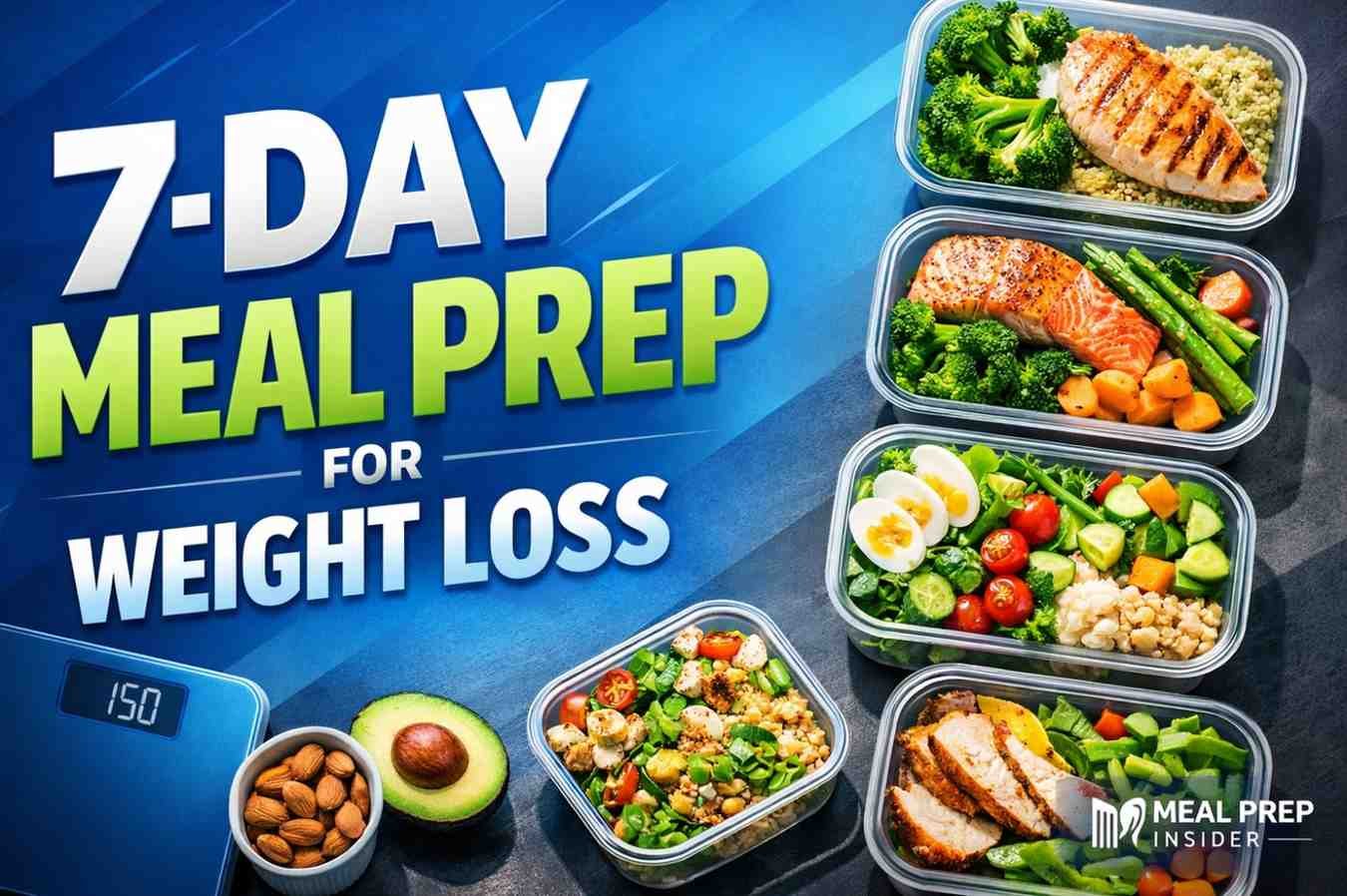
7-Day Meal Prep for Weight Loss: Want to lose weight without obsessing over every meal? This 7-day meal prep guide shows you exactly what to cook, store, and eat — built for real life, not a reality TV show.
7-Day Meal Prep for Weight Loss: Getting Started
You’ve probably heard it a hundred times: “Meal prep is the key to losing weight.” Cool. But nobody explains how to actually do it without spending your entire Sunday in the kitchen or eating sad, soggy food by Wednesday.
This guide fixes that.
Whether you’re trying to drop 10 pounds or just stop ordering DoorDash three times a week, this 7-day meal prep breakdown is built around how Americans actually live — busy schedules, tight budgets, and the very real temptation of a drive-through on a Tuesday.
Let’s get into it.
Why Meal Prep Works for Weight Loss (And Why Most People Quit)
Here’s the truth: meal prep doesn’t magically burn fat. What it does is remove the decision-making that kills most diets.
When you’re hungry and tired at 7 PM, you’re not going to weigh chicken breast or count almonds. You’re going to eat whatever is fast and available. Meal prep makes the healthy option the easy option.
Studies back this up. Research published in the International Journal of Behavioral Nutrition and Physical Activity found that people who planned their meals in advance were significantly more likely to have higher diet quality and lower body weight. Not because they had more willpower — because they had fewer decisions to make.
The reason most people quit? They overcomplicate it.
They try to prep seven completely different meals, use twelve ingredients they’ve never cooked with, and burn out after one week. Then they say meal prep “doesn’t work for them.”
This guide keeps it simple on purpose.
The Framework: What You Actually Need Before You Start
Before touching a pan, get clear on three things.
1. Your calorie target
For weight loss, most adults need to eat in a moderate caloric deficit — roughly 300 to 500 calories below their maintenance level. You can use a free TDEE (Total Daily Energy Expenditure) calculator online to find your number. Don’t guess.
2. Your macros (loosely)
You don’t need to obsess over exact grams. But for weight loss, a solid general target looks like:
| Macro | Goal |
|---|---|
| Protein | 0.7–1g per pound of body weight |
| Carbohydrates | 30–45% of total calories |
| Fat | 25–35% of total calories |
Protein is the priority. It keeps you full, preserves muscle while you’re losing fat, and has the highest thermic effect — meaning your body burns more calories just digesting it.
3. Your schedule
Are you prepping for five workdays? All seven days? Just lunches? Know what you’re solving for before you shop.

The Grocery List (Built Around Real Budgets)
This list is designed for one person for a full week. Adjust quantities for a family. Most of these items you’ll find at any Walmart, Kroger, Aldi, or Trader Joe’s.
RECOMMENDED POST >> Meal Prep Plans with Grocery List: Easy Meals without a Chef
Proteins
- Chicken breast or thighs (3–4 lbs)
- Ground turkey (1 lb)
- Canned tuna or salmon (3–4 cans)
- Eggs (1 dozen)
- Greek yogurt, plain, non-fat (32 oz container)
Carbohydrates
- Brown rice (2 lb bag)
- Sweet potatoes (4–5 medium)
- Rolled oats (1 container)
- Whole wheat bread or wraps
- Quinoa (optional swap for rice)
Vegetables
- Broccoli (2 crowns or a frozen bag)
- Spinach (large bag)
- Bell peppers (3–4 mixed colors)
- Zucchini (2–3)
- Cherry tomatoes
- Baby carrots
Fats and Flavor
- Olive oil
- Avocados (3–4)
- Almonds or mixed nuts (small bag)
- Salsa (jarred, low-sodium)
- Hot sauce
- Soy sauce or coconut aminos
- Garlic, onion, basic spices
Estimated weekly cost: $65–$90, depending on your location and store. That’s significantly less than eating out, even casually.
The Sunday Prep Session: 2 Hours, Done
Here’s where people waste time: they don’t batch-cook strategically. You don’t need to make seven different dinners. You need to cook components that mix and match into different meals all week.
Step-by-Step Prep Order
Hour 1: Get everything cooking at once
- Put rice or quinoa on the stovetop (20–25 minutes, mostly unattended)
- Dice and roast your sweet potatoes and vegetables in the oven at 400°F for 25–30 minutes (toss in olive oil, salt, pepper, and garlic powder)
- Season chicken breast with olive oil, salt, pepper, paprika, and garlic — bake at 400°F for 22–26 minutes or cook in a skillet
- Hard-boil 6–8 eggs
While all of that runs, prep your overnight oats for the week (5 minutes, no cooking required).
Hour 2: Portion, assemble, store
- Slice or shred the chicken
- Portion rice into containers (¾ cup cooked per serving)
- Divide roasted vegetables into individual servings
- Build any pre-assembled meals (like grain bowls or wraps)
- Store everything properly (more on that below)
That’s it. You’re done.
The 7-Day Meal Plan
This plan is roughly 1,500–1,700 calories per day, designed for a moderate deficit. Scale up or down based on your personal target.
Day 1 — Monday
Breakfast: Overnight oats with ½ cup rolled oats, 1 cup non-fat Greek yogurt, ½ cup berries, a drizzle of honey (~380 calories)
Lunch: Chicken and brown rice bowl with roasted broccoli, cherry tomatoes, and salsa (~450 calories)
Snack: Hard-boiled egg + baby carrots (~120 calories)
Dinner: Ground turkey stir-fry with bell peppers, zucchini, soy sauce over ½ cup rice (~480 calories)
Day 2 — Tuesday
Breakfast: Same overnight oats (already prepped — zero effort)
Lunch: Tuna wrap with whole wheat tortilla, spinach, avocado, hot sauce (~430 calories)
Snack: A small handful of almonds (~160 calories)
Dinner: Baked chicken with roasted sweet potato and steamed spinach (~490 calories)
Day 3 — Wednesday
Breakfast: Scrambled eggs (2–3) with sautéed spinach and salsa (~300 calories)
Lunch: Grain bowl — quinoa, roasted veggies, leftover chicken, olive oil drizzle (~460 calories)
Snack: Greek yogurt (½ cup) with a few berries (~130 calories)
Dinner: Ground turkey lettuce cups with diced bell peppers, hot sauce, and brown rice on the side (~470 calories)
Day 4 — Thursday
This is your “use what’s left” day. By Thursday, your prepped food is still good — but you might be low on certain items.
Breakfast: Overnight oats (last jar)
Lunch: Tuna salad over a bed of spinach with cherry tomatoes, lemon juice, olive oil (~370 calories)
Snack: Hard-boiled egg + a few almonds (~180 calories)
Dinner: Chicken and sweet potato hash — dice and pan-fry your leftover prepped items together with an egg on top (~510 calories)
Day 5 — Friday
By Friday, you may be running low. That’s fine. This is when a small “mid-week refresh” comes in useful — takes 20 minutes, not two hours.
Breakfast: Eggs any style
Lunch: Whole wheat toast with avocado, canned salmon, lemon, and everything bagel seasoning (~410 calories)
Snack: Carrots with hummus (store-bought is totally fine)
Dinner: Keep it simple. Rotisserie chicken from the grocery store is lean, cheap, and counts as a W. Pair with whatever produce you have left.
Days 6–7 — Weekend
Weekends break routines. Don’t fight it — plan for it.
Aim to keep two out of three meals on track. The third can be flexible. One restaurant meal or a home-cooked but more indulgent dinner won’t derail a week of solid eating.
Use Saturday or Sunday morning to do a light prep for the week ahead. You don’t need a full two-hour session every time — sometimes 45 minutes is enough if you already know the drill.
Storage: The Part Everyone Gets Wrong
Bad storage ruins meal prep. Here’s what actually works.
Containers matter more than people think. Glass containers keep food fresher and don’t absorb smells. But quality BPA-free plastic works fine too. What doesn’t work: mismatched lids, flimsy takeout containers.
| Food | Fridge Life | Freezer Life |
|---|---|---|
| Cooked chicken | 3–4 days | Up to 3 months |
| Cooked ground turkey | 3–4 days | 2–3 months |
| Brown rice / quinoa | 4–6 days | 1–2 months |
| Roasted vegetables | 3–5 days | Not recommended |
| Hard-boiled eggs | Up to 1 week | Not recommended |
| Overnight oats | 4–5 days | Not recommended |
Pro tip: Don’t pre-dress salads or grain bowls you plan to eat later in the week. Add dressings and sauces right before eating. It prevents sogginess and keeps flavors clean.
Also — label everything. It sounds basic, but writing the date on containers with a marker takes 10 seconds and saves you the guessing game on Thursday.
Common Mistakes That Stall Weight Loss
Even with a solid prep, some habits quietly undermine results.
Underestimating liquid calories. Coffee drinks, juices, sports drinks — they add up fast, and they don’t fill you up. Stick to water, black coffee, or unsweetened tea most of the time.
Eating too little. A lot of people slash calories dramatically and then wonder why they feel miserable and binge by day four. Eating too few calories slows your metabolism and increases muscle loss. A moderate deficit is smarter than an extreme one.
Skipping protein at breakfast. Starting your day with just carbs or coffee sets you up for hunger and cravings by midmorning. Even adding Greek yogurt or eggs to your morning routine makes a measurable difference.
Not adjusting as you lose weight. Your calorie needs change as your body weight changes. Recalculate your TDEE every 4–6 weeks if you’re making consistent progress.
Treating weekends like a free-for-all. Two days of overeating can offset five days of a caloric deficit. You don’t need to be perfect on weekends — but completely abandoning structure doesn’t work either.
Making It Sustainable (Because That’s the Actual Goal)
Weight loss is straightforward. Keeping it off is harder. The people who succeed long-term aren’t the ones who were strictest — they’re the ones who built habits they could maintain.
A few things that help:
- Rotate your proteins and grains every few weeks. Swap chicken for shrimp or salmon. Try farro or lentils instead of brown rice. Boredom is a real reason diets fail.
- Add variety through sauces and seasonings, not whole new recipes. The same chicken and rice can taste like three different meals depending on whether you use salsa, teriyaki sauce, or a lemon-herb dressing.
- Don’t make prep feel like punishment. Put on a podcast or a playlist. Make it something you look forward to rather than a chore.
- Give yourself one flexible meal a week. Go to the restaurant. Order what you want. Then get back on track the next morning. One meal isn’t the problem — what happens after that meal is.
Quick-Reference: One-Week Snapshot
| Day | Breakfast | Lunch | Dinner |
|---|---|---|---|
| Mon | Overnight oats | Chicken rice bowl | Turkey stir-fry |
| Tue | Overnight oats | Tuna avocado wrap | Baked chicken + sweet potato |
| Wed | Scrambled eggs | Grain bowl | Turkey lettuce cups |
| Thu | Overnight oats | Tuna spinach salad | Chicken sweet potato hash |
| Fri | Eggs | Salmon avocado toast | Rotisserie chicken + veg |
| Sat | Flexible | Flexible | Moderate |
| Sun | Flexible | Flexible | Moderate |
FAQs
How long does meal-prepped food actually last in the fridge? Most cooked proteins and grains stay fresh for 3–5 days. If you’re prepping for a full week, consider freezing portions for days 5–7 on Sunday and pulling them out midweek. Roasted vegetables are best within 3–4 days.
Can I meal prep on a day other than Sunday? Absolutely. Sunday is popular because it aligns with the start of the work week, but Wednesday evening works well for some people. Pick whatever day gives you 90–120 minutes of uninterrupted kitchen time.
Do I need to count calories exactly? Not necessarily. Tracking gives you data, and data helps you adjust. Apps like MyFitnessPal or Cronometer make it quick. But if strict calorie counting makes you anxious or obsessive, a portion-based approach (protein the size of your palm, carbs the size of your fist, etc.) works well for most people.
Is meal prep only for people trying to lose a lot of weight? No. Meal prep works for anyone trying to eat better consistently. Whether your goal is to lose 5 pounds, build muscle, or just spend less on food, the principle is the same.
What if I get bored eating the same things? Change your sauces, seasonings, and sides every week or every two weeks. You don’t need entirely new recipes — just new flavor profiles. Also, variety in texture helps. Crunchy raw veggies alongside a soft grain bowl feel different even if the base ingredients are similar.
Is this approach safe for people with specific health conditions like diabetes or hypertension? The general framework — lean protein, complex carbs, plenty of vegetables, moderate fat — aligns with most dietary guidelines for chronic disease management. That said, anyone managing a specific health condition should check with their doctor or a registered dietitian before making major dietary changes.
How do I handle meal prep when I have a family to feed? Scale quantities and involve family members in the process. Kids and partners are more likely to eat what they helped prepare. For picky eaters, prep the components separately and let people assemble their own bowls — same base ingredients, different combinations.
Small, consistent actions beat dramatic overhauls every time. One week of solid prep won’t transform your body — but the habit of doing it, week after week, absolutely will.
SUGGESTED POST >> 7-Day High Protein Meal Prep for Muscle Gain: Proven Guide