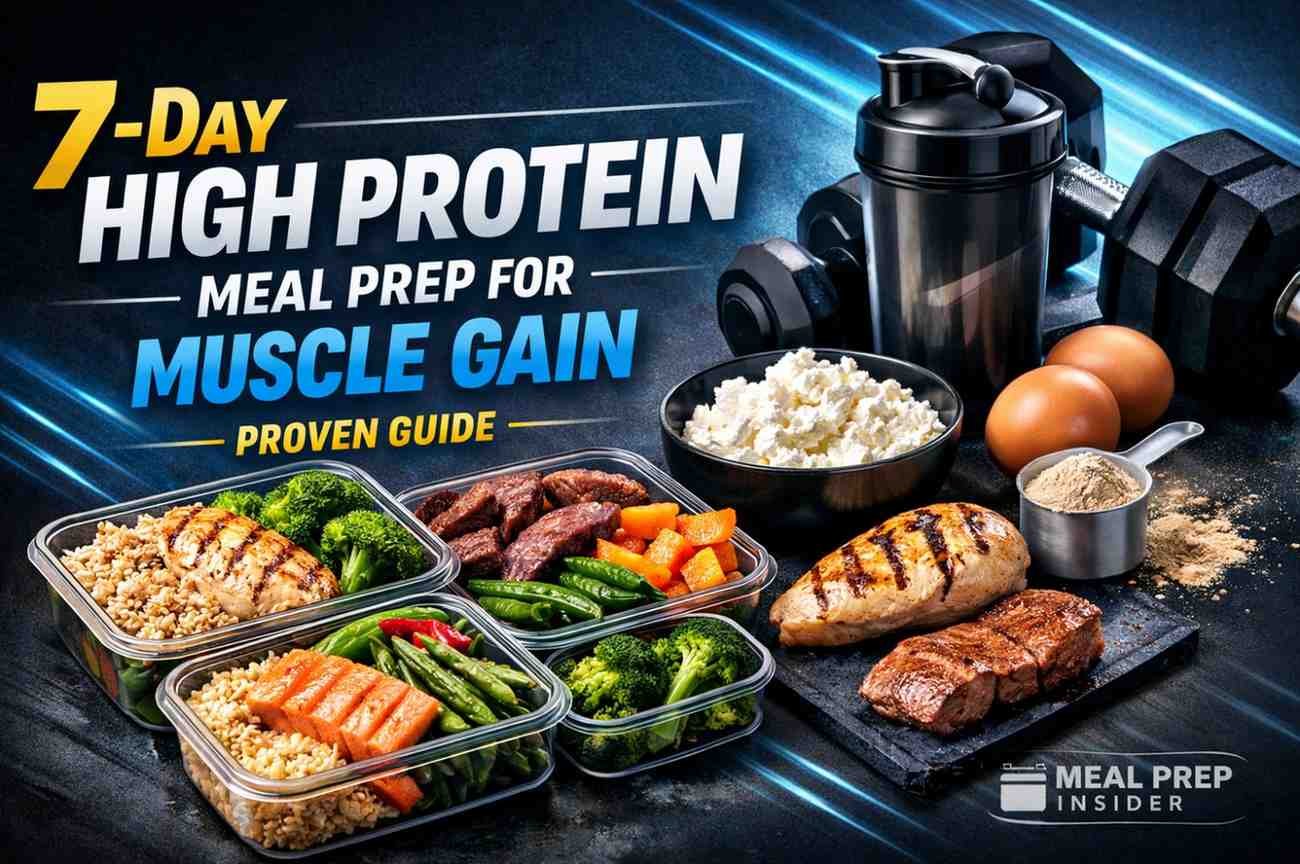
High Protein Meal Prep for Muscle Gain: Want to build muscle without scrambling for food every day? This high-protein meal prep guide breaks down what to eat, how to cook it, and why it works — built for anyone serious about gains in the U.S.
High Protein Meal Prep for Muscle Gain
Let’s get straight to it. If you’re trying to build muscle and you’re not prepping your meals, you’re making things harder than they need to be.
Muscle doesn’t just come from lifting. It comes from eating consistently, strategically, and with enough protein to actually support recovery and growth. That’s where meal prep earns its keep.
This isn’t about eating the same boring chicken and rice every day (unless you want to, no judgment). It’s about having the right food ready, so you’re never scrambling, never skipping, and never undereating protein because “there was nothing in the fridge.”
Why Protein Is the Non-Negotiable
Before the recipes, the macros, or the meal containers — let’s talk about why protein matters so much for muscle gain.
When you lift weights, you create microscopic tears in your muscle fibers. Your body repairs those tears using amino acids, which come from protein. The more consistently you give your body enough protein — especially after training — the more efficiently it rebuilds and grows.
Simple enough.
The question most people have is: how much protein do I actually need?
The general research-backed range for muscle gain is 0.7–1 gram of protein per pound of bodyweight per day. So if you weigh 180 lbs, you’re shooting for roughly 126–180g of protein daily.
That’s a lot to hit without planning. Which is exactly why meal prep exists.
What Makes a Meal “High-Protein”?
There’s no official cutoff, but for practical purposes, a high-protein meal contains at least 30–40 grams of protein per serving. Snacks can be lower — around 15–20g — but your main meals should pull real weight.
Here’s a quick look at protein density across common food sources:
| Food | Serving Size | Protein (approx.) |
|---|---|---|
| Chicken breast (cooked) | 4 oz | 35g |
| 93% lean ground beef | 4 oz | 22g |
| Canned tuna (in water) | 1 can (5 oz) | 27g |
| Eggs | 2 large | 12g |
| Greek yogurt (plain, nonfat) | 1 cup | 20g |
| Cottage cheese (1% fat) | 1 cup | 28g |
| Edamame | 1 cup | 17g |
| Tempeh | 4 oz | 21g |
| Salmon (cooked) | 4 oz | 28g |
| Black beans | 1 cup cooked | 15g |
Animal proteins generally hit harder per calorie. But if you’re vegetarian or just want variety, plant-based options like edamame, tempeh, and lentils can absolutely fill gaps.
The Core Meal Prep Framework
There’s no one right way to prep meals, but the framework that works for most people — especially those training 4–5 days a week — follows this structure:
1. Pick your protein anchors. Choose 2–3 proteins for the week. This prevents both boredom and decision fatigue. Think chicken thighs, ground turkey, and hard-boiled eggs, or salmon, sirloin, and cottage cheese.
2. Choose carb sources that pair well. Muscle gain requires calories. Don’t skip carbs trying to be “clean.” Rice, oats, sweet potatoes, and quinoa are all solid. They store well, cook fast in bulk, and fuel your training sessions.
3. Add fats strategically. Olive oil, avocado, nuts — these help with hormone production (including testosterone) and help you hit your calorie targets. Don’t fear them.
4. Prep in batches, not individual meals. Cook a large pot of rice. Grill 3 lbs of chicken. Roast two sheet pans of vegetables. Then mix and match throughout the week. You don’t need identical Tupperware containers lined up like an army.
5. Keep snacks protein-forward. Greek yogurt, string cheese, protein shakes, hard-boiled eggs, beef jerky — these plug the gaps between meals when you’re busy or traveling.

A Full Week of High-Protein Meal Prep (Example)
Here’s a practical weekly plan built around 3,000 calories and ~180g of protein per day. You can scale up or down based on your own targets.
Sunday Prep Session (What to Cook)
Proteins:
- 3 lbs boneless skinless chicken breast (oven-baked or grilled)
- 1.5 lbs 93% lean ground beef (cooked with garlic, salt, pepper)
- 1 dozen hard-boiled eggs
Carbs:
- 4 cups dry white rice (cook in broth for flavor)
- 3 large sweet potatoes (cubed and roasted)
Extras:
- 2 bags frozen broccoli or mixed vegetables (microwave as needed)
- One batch of overnight oats (prepped in mason jars for 5 days)
This prep takes about 90 minutes total if you’re doing multiple things at once. The oven does the chicken, the stovetop handles rice and beef, and eggs are boiling in the background. It’s not complicated. It just requires showing up on Sunday.
Daily Meal Breakdown (Example)
Meal 1 — Breakfast: Overnight oats with 1 scoop protein powder mixed in, topped with banana slices and a tablespoon of almond butter. Approx: 52g protein, 80g carbs, 12g fat
Meal 2 — Mid-Morning Snack: 1 cup plain nonfat Greek yogurt + 1/4 cup granola + a handful of berries. Approx: 20g protein, 35g carbs
Meal 3 — Lunch: Ground beef (4 oz cooked) over rice with roasted sweet potato on the side and a drizzle of sriracha. Approx: 40g protein, 65g carbs
Meal 4 — Pre-Workout Snack: 2 hard-boiled eggs + 1 oz beef jerky. Approx: 22g protein
Meal 5 — Post-Workout Dinner: Chicken breast (5 oz) over rice with broccoli and olive oil. Approx: 48g protein, 55g carbs
Meal 6 — Evening Cottage cheese (1 cup) with a few walnuts and a pinch of cinnamon. Approx: 28g protein, 6g fat
Daily Total: ~210g protein, ~2,950–3,100 calories
Adjust portions based on your bodyweight, activity level, and where you are in a bulk or cut.
High-Protein Foods Worth Keeping Stocked
These are the everyday staples that make high-protein meal prep sustainable. Nothing exotic. Nothing expensive. Just dependable options you can find at any grocery store in the U.S.
Proteins to always have:
- Boneless chicken breast or thighs
- Ground turkey or beef (93% lean)
- Canned tuna or salmon
- Eggs (buy in bulk)
- Cottage cheese
- Plain Greek yogurt
- Protein powder (whey or casein)
- Deli turkey (no-fuss snack)
Pantry staples that add protein:
- Dry lentils
- Canned black beans or chickpeas
- Edamame (frozen)
- Nut butters (moderate — calorie-dense but useful)
Smart convenience options:
- Pre-marinated chicken strips (Trader Joe’s, Costco)
- Rotisserie chicken (grab one on Sunday)
- Fairlife milk (higher protein per cup)
- Icelandic Provisions skyr (even higher protein than regular Greek yogurt)
3 Simple High-Protein Recipes for Muscle Gain
1. Garlic Butter Chicken Thighs + White Rice
This one’s for people who think healthy food tastes bland.
Ingredients (makes 4 servings):
- 4 bone-in chicken thighs
- 3 tbsp butter
- 4 garlic cloves, minced
- Salt, pepper, paprika
- 2 cups dry white rice
How to make it: Season chicken thighs with salt, pepper, and paprika. Sear in an oven-safe skillet over medium-high heat until skin is golden (about 5 minutes per side). Add the butter and garlic, toss to coat, then bake at 400°F for 20 minutes. Cook rice while that’s happening. Done.
Per serving: ~42g protein, 55g carbs, 18g fat
2. High-Protein Tuna Rice Bowls
Fast. Cheap. Underrated.
Ingredients (makes 2 servings):
- 2 cans of tuna in water (drained)
- 1 cup cooked white rice per bowl
- 1/2 avocado
- Soy sauce, sesame oil, lime juice
- Shredded carrots, cucumber slices (optional)
How to make it: Mix drained tuna with a splash of soy sauce and sesame oil. Lay it over rice, add avocado slices, a squeeze of lime, and whatever vegetables you’ve got. That’s it.
Per serving: ~45g protein, 55g carbs, 14g fat
3. Ground Turkey Skillet with Peppers and Quinoa
Good for people who get bored with chicken.
Ingredients (makes 4 servings):
- 1.5 lbs ground turkey
- 2 bell peppers (diced)
- 1 cup dry quinoa
- 1 can diced tomatoes
- Cumin, chili powder, garlic powder, salt
How to make it: Cook quinoa according to package instructions. In a large skillet, cook turkey over medium-high heat until browned. Add the peppers and cook for 3–4 minutes. Stir in diced tomatoes and spices. Simmer 5 minutes. Serve over quinoa.
Per serving: ~43g protein, 38g carbs, 10g fat
Common Mistakes That Stall Muscle Gain
Even good eaters mess these up.
Not eating enough total calories. Protein alone doesn’t build muscle if you’re in a caloric deficit. You need a slight surplus — around 200–300 calories over your maintenance — to support consistent growth without excessive fat gain.
Relying too heavily on protein shakes. Shakes are convenient, but they’re a supplement, not a meal. Real food comes with micronutrients, fiber, and a satiety response that shakes don’t fully replicate. Use them to plug gaps, not replace meals.
Ignoring meal timing around workouts. You don’t need to slam a shake the second you put down the barbell, but eating a solid protein-and-carb meal within 1–2 hours post-workout does support recovery. Don’t let that window go to waste.
Prepping too far in advance. Cooked chicken stored in the fridge is safe for 4–5 days. Past that, quality drops, and food safety becomes a concern. If you want to prep for a full week, freeze a portion of your meals on Sunday and pull them out mid-week.
Underestimating prep time and quitting. The first Sunday prep session usually takes longer than expected. That’s normal. By week three, you’ll cut the time in half because you’ll have a system. Don’t bail after one rough Sunday.
Protein Timing: Does It Actually Matter?
Sort of. But not as much as the fitness industry would have you believe.
The “anabolic window” — the idea that you have a 30-minute post-workout window to consume protein or the workout is wasted — has been largely overstated. More recent research suggests the window is more like several hours wide.
What does matter:
- Total daily protein intake — the biggest lever
- Spreading protein across meals — roughly 3–5 meals with 30–40g each seems optimal for muscle protein synthesis
- Pre-sleep protein — casein (found in cottage cheese and casein powder) digests slowly overnight and may support recovery while you sleep
So yes, timing matters at the margins. But if your total protein intake is solid and distributed reasonably across the day, you’re in good shape.
Meal Prep Storage Tips
You did the work. Don’t let it go to waste.
- Glass containers last longer, don’t absorb smells, and are microwave-safe. Worth the investment.
- Label containers with the date using masking tape and a marker. You’ll thank yourself on Thursday.
- Rice and grains can be refrigerated for 5 days or frozen for up to 3 months.
- Cooked meat stays good in the fridge for up to 4 days. Freeze what you won’t use by day 3 or 4.
- Eggs — hard-boiled eggs last about a week in the fridge, unpeeled. Peeled eggs drop to 5 days.
- Keep pre-portioned snacks (Greek yogurt cups, jerky, string cheese) at eye level in the fridge so they’re the first thing you grab.
Budget-Friendly High-Protein Meal Prep
Muscle gain doesn’t require expensive food. Here’s how to keep costs down:
- Eggs are the most cost-efficient protein per gram in the American grocery store. Period.
- Canned tuna is cheap, shelf-stable, and packs serious protein. Buy in bulk from Costco or Sam’s Club.
- Chicken thighs are almost always cheaper than breasts, often more flavorful, and still high in protein.
- Dry lentils are very inexpensive and provide both protein and carbs in one ingredient.
- Store-brand protein powder (like Kirkland Signature whey from Costco) hits the same protein content as premium brands for half the price.
- Buy frozen vegetables instead of fresh. Nutritionally comparable and dramatically cheaper.
A week of high-protein meal prep for one person — 3,000 calories, ~180g protein per day — can realistically cost $60–85 depending on where you shop and what proteins you choose. That’s cheaper than eating out three or four times.
FAQs
How much protein do I need to build muscle? Most research supports 0.7–1 gram per pound of body weight per day for muscle gain. If you weigh 170 lbs, aim for 120–170g of protein daily. Hitting the higher end of that range is beneficial if you’re training hard and in a caloric surplus.
Can I build muscle on a vegetarian or vegan diet? Yes. It requires more planning, but it’s very doable. Focus on high-protein plant sources like tempeh, edamame, tofu, lentils, black beans, seitan, and dairy (if you eat it). A plant-based protein powder can help bridge gaps.
Is it better to eat 3 large meals or 6 smaller ones? For muscle gain, spreading protein across 4–5 meals tends to work better than 2–3 large ones. This keeps muscle protein synthesis elevated throughout the day. That said, total daily intake still matters more than meal frequency.
How long does meal-prepped food last in the fridge? Cooked proteins (chicken, beef, turkey) are safe for 4 days. Grains and starches last up to 5 days. Anything you won’t use in that window should go in the freezer.
Do I need supplements to build muscle? No, but some are useful. Creatine monohydrate is the most well-researched and cost-effective supplement for strength and muscle gain. Whey protein is convenient for hitting daily protein goals. Everything else is mostly optional.
What’s the best post-workout meal for muscle gain? Something with 30–50g of protein and a substantial amount of carbohydrates to replenish glycogen. A chicken rice bowl, tuna with rice, or a protein shake with a banana and some oats all work well. Eat within 1–2 hours after training.
Can I meal prep if I have a small kitchen or limited equipment? Absolutely. You need a pot, a pan, a baking sheet, and a cutting board. That’s it. A rice cooker is a nice addition, but not necessary. Most high-protein meal prep is genuinely low-tech cooking.
Final Word
Meal prep for muscle gain isn’t glamorous. It’s a Sunday afternoon and some Tupperware. But the compounding effect of eating right consistently — week after week — is what separates people who make real progress from those who spin their wheels.
You don’t need perfect meals. You need good-enough meals that are ready when you are.
Start simple. Two proteins, one grain, one vegetable, one snack. Get that right for four consecutive weeks, and you’ll already be ahead of most people in the gym.
The barbell does the stimulus. The food does the building. Give your body something to work with.
SUGGESTED POST >> How to Meal Prep for the Week: High-Protein Easy Recipes