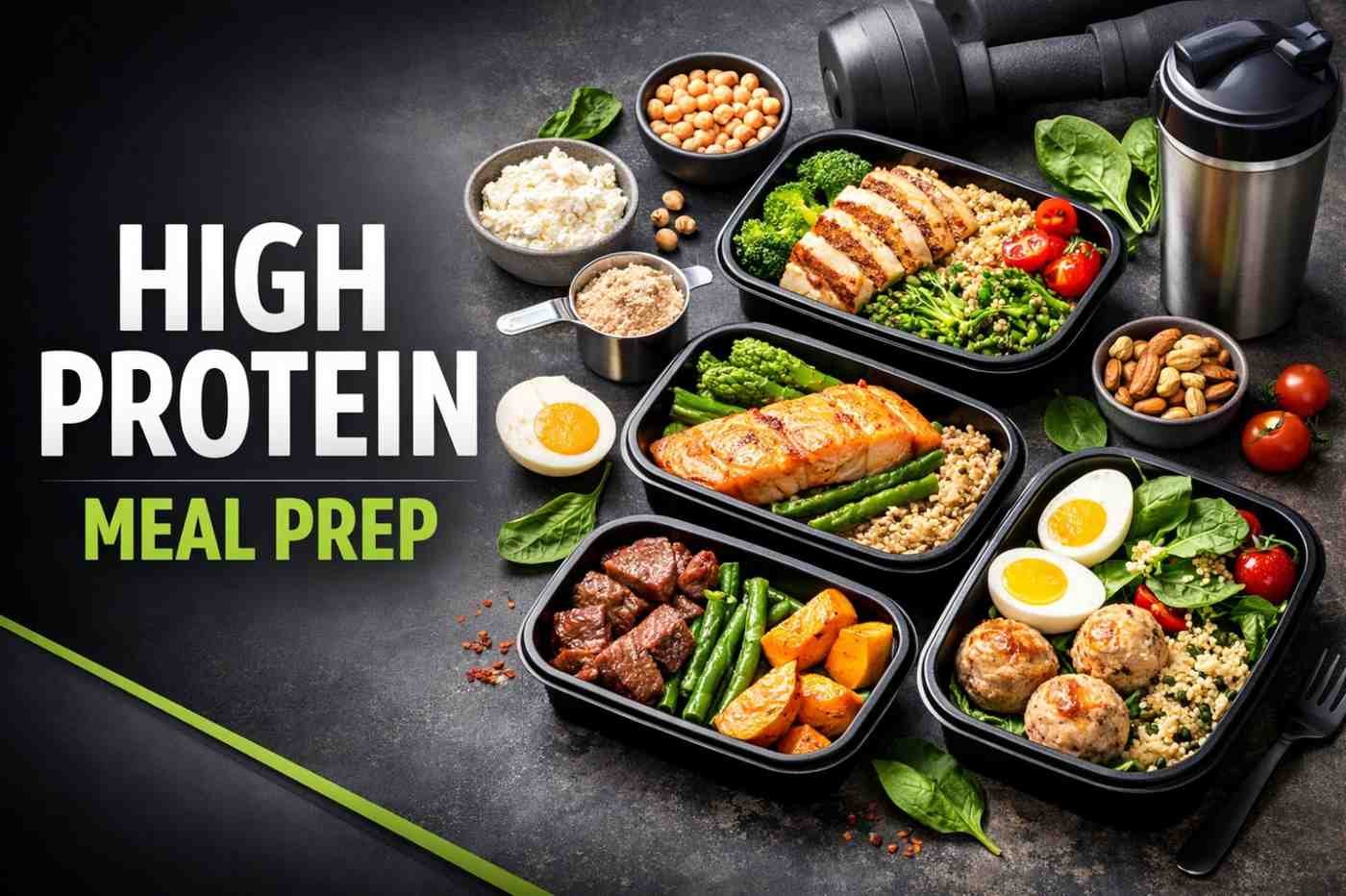
High Protein Meal Prep: Tired of hitting your protein goals only to fall off by Wednesday? This guide breaks down high protein meal prep the right way — real foods, practical strategies, and meal ideas that actually fit into a busy American lifestyle. No fluff.
High Protein Meal Prep: The Complete Guide to Eating More Protein Without Losing Your Mind
There’s a version of Sunday where you don’t scramble every single morning, asking yourself what you’re going to eat. You open the fridge. The food is there. Done.
That’s what high protein meal prep can do for you. But most people either do it wrong or give up before they see the point. This guide is for people who want real, usable information — not a listicle recycled from 2019.
Why Protein Actually Matters (And Why Most Americans Are Undereating It)
Protein isn’t just for bodybuilders. Far from it.
Protein is what keeps you full between meals, helps your body hold onto muscle while losing fat, supports immune function, and keeps blood sugar from spiking all over the place. The average American gets somewhere around 80–100 grams per day, which sounds decent until you realize many people need significantly more depending on body weight, activity, and age.
The general guideline from sports nutrition research is roughly 0.7 to 1 gram of protein per pound of body weight for active individuals. Someone who weighs 170 pounds and lifts four days a week? They’re shooting for 120–170 grams per day. That’s a lot of intentional eating.
This is exactly where meal prep earns its place.
When your food is planned and portioned, hitting that number becomes almost automatic. When it’s not? You end up eating whatever’s convenient — and convenience food is almost always low in protein and high in everything else.
What Makes a Meal “High Protein”?
There’s no universal definition, but a practical standard is a meal or snack that delivers at least 25–40 grams of protein per serving, with lunch and dinner usually carrying the heavier load.
Here’s a quick reference for where protein actually comes from:
| Food | Serving Size | Protein (approx.) |
|---|---|---|
| Chicken breast (cooked) | 4 oz | 35g |
| 93% lean ground beef | 4 oz | 28g |
| Canned tuna (in water) | 1 can (5 oz) | 30g |
| Greek yogurt (plain, 2%) | 1 cup | 20g |
| Cottage cheese | 1 cup | 25g |
| Eggs | 2 large | 12g |
| Egg whites | ½ cup | 14g |
| Black beans | ½ cup cooked | 8g |
| Lentils | ½ cup cooked | 9g |
| Tofu (firm) | ½ cup | 10g |
| Salmon fillet | 4 oz | 32g |
| Turkey breast | 4 oz | 33g |
| Edamame | 1 cup | 17g |
| Low-fat string cheese | 1 stick | 8g |
The most efficient protein sources, gram-for-gram, are lean animal proteins. But plant proteins work too. They just require a bit more planning and volume to hit the same numbers.
Before You Prep: The 5-Minute Planning Step That Changes Everything
Most people skip this part. They buy a bunch of random ingredients and figure it out as they go. Sometimes it works. More often, they end up with a bunch of sad chicken thighs and nothing to pair them with.
Take five minutes before your shopping trip and decide:
1. How many meals do you need to prep? Are you prepping lunches only? Full day? Just dinners? Know this before you buy anything.
2. How many days are you prepping for? Most food stays good for 4–5 days in the fridge. That’s the practical limit for most proteins. Grains and roasted vegetables can be left out a bit longer.
3. What’s your weekly schedule like? If you’re working late Tuesday and Thursday, those are your highest-risk nights for ordering pizza. Plan something fast and satisfying for those days specifically.
4. Do you actually like what you’re prepping? This sounds obvious. It’s not. A lot of people meal prep food they tolerate instead of food they enjoy — and then wonder why they’re always cheating on their meal plan.
The High Protein Meal Prep Framework (How to Build a Week of Meals)
Think of meal prep as building blocks rather than finished dishes. Here’s a structure that works.
Step 1: Pick 2–3 Protein Sources
Don’t try to cook five different proteins in one session. Pick two or three and rotate.
Good weekly anchors:
- Batch-cooked shredded chicken (versatile, easy to season later)
- Hard-boiled eggs
- Ground beef or turkey (cook a big batch, season simply)
- Canned fish (no cooking required — just portion and store)
- Cooked lentils or chickpeas (for plant-forward days)
Step 2: Cook 1–2 Carb Bases
- Cooked brown rice or jasmine rice
- Quinoa (has more protein than most grains — about 8g per cup cooked)
- Roasted sweet potatoes
- Batch-cooked pasta
Step 3: Roast a Big Sheet Pan of Vegetables
Pick what you like. Toss with olive oil and salt. Roast at 400°F for 25–30 minutes. Done. Bell peppers, zucchini, broccoli, cauliflower, asparagus — they all work.
Step 4: Prep Grab-and-Go Snacks
High protein snacks are what keep your numbers up between meals without any real effort:
- Portioned bags of cottage cheese
- Greek yogurt cups with a scoop of protein powder stirred in
- Boiled eggs (already done in step 1)
- String cheese or Baby Bel wheels
- Individual servings of deli turkey rolled up
- Protein bars (look for 20g+ per bar with minimal sugar)
Step 5: Store and Label Everything
This part is underrated. Label your containers with what’s in them and what day they were made. You won’t remember. Nobody remembers.
Sample High Protein Meal Prep Week (With Macros)
This example is built around roughly 150 grams of protein per day, which suits most active adults weighing 150–190 pounds.
Sunday Prep Session (Takes About 90 Minutes)
Cook:
- 4 pounds of boneless, skinless chicken breast (seasoned simply with salt, garlic powder, and paprika)
- 2 cups dry brown rice
- 1 pound lean ground beef with taco seasoning
- 8 hard-boiled eggs
- 2 large sweet potatoes (roasted, cubed)
- 2 sheet pans of broccoli and bell peppers
Portion: Divide into containers for the week.
Day-by-Day Meal Guide
Monday
- Breakfast: 4 scrambled eggs + 1 cup Greek yogurt
- Lunch: Chicken breast + brown rice + roasted broccoli
- Dinner: Ground beef taco bowl with black beans and salsa
- Snacks: String cheese + cottage cheese cup
- Estimated protein: ~155g
Tuesday
- Breakfast: Protein smoothie (1 scoop protein powder, 1 cup Greek yogurt, banana)
- Lunch: Tuna salad (2 cans) on whole wheat with lettuce
- Dinner: Chicken breast + sweet potato + roasted peppers
- Snacks: 2 hard-boiled eggs + protein bar
- Estimated protein: ~150g
Wednesday
- Breakfast: Cottage cheese bowl with berries and granola
- Lunch: Ground beef + brown rice + roasted vegetables
- Dinner: Salmon (fresh or canned) + quinoa + asparagus
- Snacks: Greek yogurt + edamame
- Estimated protein: ~145g
Thursday
- Breakfast: Egg white omelette (5 whites + 2 whole eggs) + turkey slices
- Lunch: Chicken breast + leftover sweet potato
- Dinner: Protein pasta with ground turkey and marinara
- Snacks: Cottage cheese + hard-boiled egg
- Estimated protein: ~155g
Friday
- Breakfast: Greek yogurt parfait + boiled eggs
- Lunch: Tuna + rice bowl with soy-lime dressing
- Dinner: Freestyle — you’ve earned it (try to keep protein central)
- Snacks: Edamame + string cheese
- Estimated protein: ~140g
SEE RELATED POST >> Meal Prep for Weight Loss: This Burns Stubborn Fat Quickly
Budget-Friendly High Protein Grocery List for the Week
Eating high protein doesn’t have to wreck your grocery budget. Here’s what a practical weekly haul looks like for one person (shopping at a store like Aldi, Walmart, or Kroger):
| Item | Estimated Cost |
|---|---|
| 4 lbs boneless chicken breast | $10–$14 |
| 1 lb 93% lean ground beef | $6–$8 |
| 2 cans of tuna | $3–$4 |
| 1 dozen eggs | $3–$5 |
| 32 oz Greek yogurt (plain) | $5–$7 |
| 24 oz cottage cheese | $4–$5 |
| 2 cups brown rice (dry) | $2–$3 |
| Frozen broccoli + peppers | $4–$6 |
| 2 sweet potatoes | $2–$3 |
| String cheese pack | $4–$5 |
| Black beans (2 cans) | $2–$3 |
| Estimated Total | ~$45–$60 |
That’s roughly $9–$12 per day for all your meals and snacks. Far cheaper than eating out — and you know exactly what’s in every bite.
High Protein Meal Prep for Specific Goals
The base framework above works for most people. But depending on your goal, you’ll want to shift a few things.
If You’re Trying to Build Muscle
Prioritize calorie surplus alongside protein. Add more rice, more sweet potato, and an extra serving of peanut butter or olive oil. Muscle requires energy — not just protein.
Aim for the higher end of the protein intake range: 0.9–1.1g per pound of body weight.
If You’re Trying to Lose Fat
Reduce carb portions slightly and increase the ratio of vegetables per meal. Keep protein high (or even higher) — it’s more satiating than carbs or fat, and it helps prevent muscle loss during a deficit.
Protein-sparing while cutting is one of the most evidence-backed strategies in sports nutrition.
If You’re Plant-Based
You can absolutely hit high protein numbers on a plant-based diet. It takes more planning and usually more volume, but it’s doable.
Your anchors should be:
- Tempeh (about 15g per 3 oz — highest protein plant source by far)
- Edamame
- Lentils
- Seitan (about 21g per 3 oz)
- Chickpeas
- High-protein plant-based yogurts and protein powders (pea protein is well-absorbed)
Combining sources helps ensure you’re getting complete amino acid profiles across the day.
Common Meal Prep Mistakes That Kill Momentum
Prepping too much food at once. If you’re new to this, start with 3 days’ worth. Don’t fill your entire fridge on Sunday and then feel obligated to eat the same thing for 6 days straight.
Under-seasoning everything. Bland food is the biggest reason people quit meal prepping. Season your proteins properly before cooking. Store your sauces separately — a simple Greek yogurt ranch dressing, a soy-lime glaze, or even just hot sauce can transform the same chicken breast into a different meal.
Ignoring food safety windows. Cooked chicken lasts 3–4 days max in the fridge. Ground beef is similar. Eggs last about a week. Know your dates.
Not considering texture after storage. Some foods don’t reheat well — especially fish (it gets rubbery) and eggs (they get rubbery AND watery). If you’re prepping fish, eat it within 2 days. For eggs, hard-boiled eggs store better than scrambled eggs.
Setting unrealistic macro targets. Going from eating 80g of protein a day to suddenly trying to hit 200g in one week is a shock to your system — literally. Digestion can struggle, and the habit rarely sticks. Build up gradually.
Containers, Equipment, and Kitchen Tools Worth Having
You don’t need fancy equipment. But a few things make meal prep significantly easier:
- Glass meal prep containers (2-cup and 4-cup sizes): Better for reheating, no chemical leaching concerns, and they last forever
- A large sheet pan or two: Roasting everything at once saves enormous time
- A rice cooker (optional but great): Set it and forget it
- A kitchen scale: Eyeballing portions leads to inconsistent protein counts — and you paid too much for that chicken to guess
- Small sauce containers: Store dressings and sauces separately to keep meals from getting soggy
How to Stay Consistent with Meal Prep Long-Term
The hardest part isn’t the first week. Most people can white-knuckle through a Sunday prep session and eat what they made. The challenge is showing up again next week. And the week after that.
A few things that actually help:
Keep your prep sessions short. 60–90 minutes max. You don’t need to make restaurant-quality food. You need to consistently make adequate food.
Vary your seasonings, not your proteins. Same chicken breast, different treatment: one week it’s lemon herb, next week it’s teriyaki, next week it’s barbecue. The base protein stays the same. The meals feel different.
Pair prep time with something you enjoy. A podcast, a playlist, a show on in the background. Turning it into a ritual instead of a chore makes a noticeable difference.
Give yourself one flex meal per day. Rigid meal plans break. Flexible ones bend. If you hit your protein target by dinner and you want dessert or a beer, that’s fine. The day isn’t ruined.
Frequently Asked Questions: High Protein Meal Prep
How long does meal-prepped high-protein food last in the fridge? Most cooked proteins (chicken, beef, turkey) stay safe for 3–5 days when stored in airtight containers at 40°F or below. Fish is best eaten within 2 days. If you’re prepping for a full week, consider freezing half the batch and thawing midweek.
Can I hit high protein goals without eating meat? Yes, but it requires intentional planning. Tempeh, seitan, lentils, edamame, and plant-based protein powders are your best tools. Dairy and eggs are highly efficient sources if you eat them. A plant-based diet isn’t automatically low protein — it just requires more variety and attention.
How much does it cost to meal prep high protein food for a week? For one person shopping at a budget-friendly grocery store, a week of high-protein meals typically runs between $45 and $65. That’s significantly cheaper than eating out even once a day. Costs scale up slightly if you’re buying for two or more people, but bulk buying brings the per-serving price down.
Do I need protein powder to hit my goals? No. Protein powder is convenient, not essential. Whole-food sources like chicken, eggs, Greek yogurt, and cottage cheese can help most people reach their targets without supplementation. Protein powder is useful when you’re traveling, short on time, or struggling to hit numbers from food alone.
What’s the best protein source for beginners to meal prep with? Boneless skinless chicken breast is the gold standard. High protein, low fat, neutral flavor, easy to cook in bulk, and it stores well. If you want variety, ground turkey is a close second — it can go in tacos, pasta sauce, bowls, and stir-fries without much effort.
Is it okay to eat the same high protein meals every day? From a nutrition standpoint, rotating through a few different sources is better for covering your amino acid and micronutrient bases. From a practical standpoint, it’s fine to repeat meals a few times a week as long as you’re not dreading every bite. Boredom is a bigger threat to consistency than any slight nutritional redundancy.
How do I know if I’m eating enough protein? Track for a week using an app like Cronometer or MyFitnessPal. Most people are genuinely surprised by how far off their estimates are. Once you’ve tracked for a week or two, you’ll have a much better intuitive sense of your intake without needing to log every meal indefinitely.
The whole point of high protein meal prep is that it makes the right choice the easy choice. You’re not relying on willpower at 6 PM after a long workday. The food is already there.
Start small. Prep three days’ worth of food this week. Build the habit before you build the perfect system.
SUGGESTED POST >> Easy Vegan Meal Prep Ideas That Deliver: No More 6 PM Panic