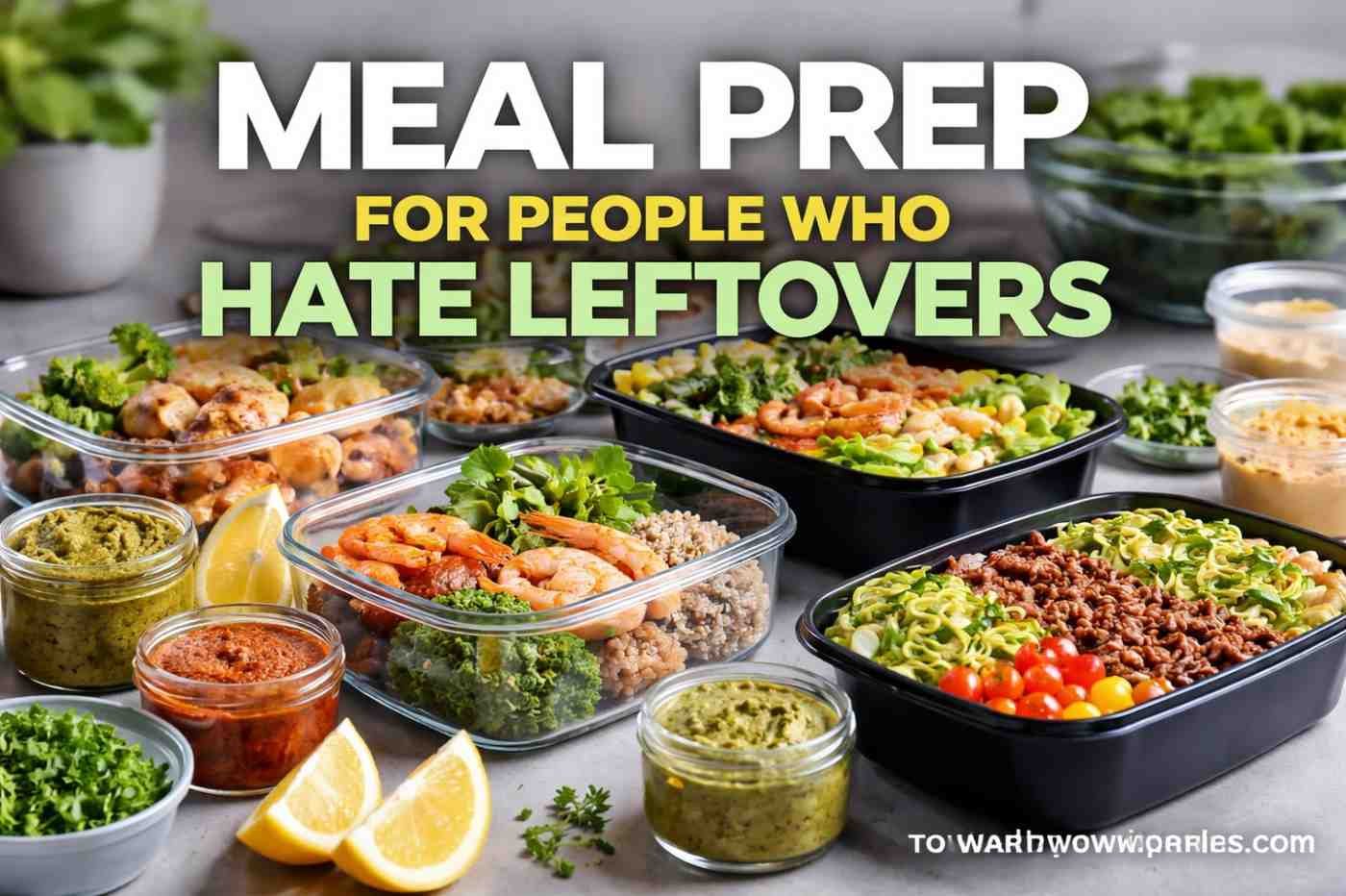
Meal Prep for People Who Hate Leftovers is not about eating the same sad container three days in a row. It’s about building “future meals” that still feel new when you open the fridge.
You know the moment.
You’re hungry. You’re busy. You open the refrigerator like it might have answers. And there it is. The same chicken. The same rice. The same steamed broccoli. Again.
You close the door.
You consider cereal.
You consider takeout.
You consider pretending you’re not hungry.
Here’s the twist: meal prep can work better for leftover-haters than it does for leftover-lovers. Because you’re not trying to tolerate repeats. You’re designing variety on purpose.
Not with complicated recipes. Not with 4-hour Sunday marathons. Not with a fridge full of identical plastic boxes.
With a smarter system.
This post is for the people who want convenience but refuse to eat “Tuesday’s dinner” on Thursday. It’s for texture people. Flavor people. “If it microwaves weird, I won’t eat it,” people.
Let’s fix meal prep for you.
Why leftovers feel gross (and why it’s not in your head)
Some folks don’t mind repeats. Others can’t stand them. There are reasons.
Leftovers fail for four big categories:
- Texture collapse: crispy becomes soggy, bread goes rubbery, veggies go limp.
- Flavor flattening: garlic gets harsh, herbs turn dull, spices mute.
- Smell shift: especially with fish, eggs, brassicas, or certain reheated oils.
- Boredom and identity: yesterday’s meal feels like yesterday’s problem.
So the goal isn’t “make food ahead.”
The goal is to make options ahead.
That difference changes everything.
Meal Prep for People Who Hate Leftovers: the anti-leftover method
Meal Prep for People Who Hate Leftovers works when you stop prepping finished meals and start prepping building blocks that can become different meals fast.
Think of it like a kitchen “loadout”:
- 2 proteins (cooked or partially cooked)
- 2–3 vegetables (prepped, not always cooked)
- 1–2 carbs (cooked or ready-to-cook)
- 2 sauces or flavor boosters
- 1 crunchy element you keep separate
- A backup freezer option for nights when you refuse to cook
This creates variety without chaos.
The core rules (simple, non-negotiable)
- No meal should repeat in the same form.
Same ingredients? Fine. Same bowl? No. - Separate wet from crisp.
Sauce is stored alone. Crunch is stored alone. Always. - Use “finish cooking” steps.
You want food that’s 80–90% done, then becomes fresh in 5–10 minutes. - Choose foods that reheat like adults.
Some foods behave. Some don’t. You’ll learn the difference quickly. - Freeze strategically, not emotionally.
You’re not stockpiling regret. You’re building options.
The two styles that work best (pick one)
Style A: Component Prep (best for variety)
You prep ingredients. Then mix-and-match into different meals.
Best if you:
- crave novelty
- get bored easily
- hate microwave “meal boxes.”
Style B: Cook Once, Remix Twice (best for minimal effort)
You cook one dinner. Then you intentionally transform it into two different meals.
Best if you:
- want less planning
- can handle “same protein, different vibe.”
- want speed on weeknights
You can alternate styles week to week. Or combine them.
Foods that reheat well (and foods that betray you)
Here’s a practical cheat sheet.
Reliable reheat foods
- Braised meats, shredded chicken, meatballs
- Rice (with a splash of water), quinoa, farro
- Roasted veggies (reheated in air fryer or skillet)
- Soups and stews (obvious, but powerful)
- Beans and lentils
- Sauces (kept separate)
Foods that often disappoint as leftovers (unless you plan around them)
- Fries, chips, crispy breaded items (need air fryer/oven)
- Plain chicken breast (dries out unless sauced)
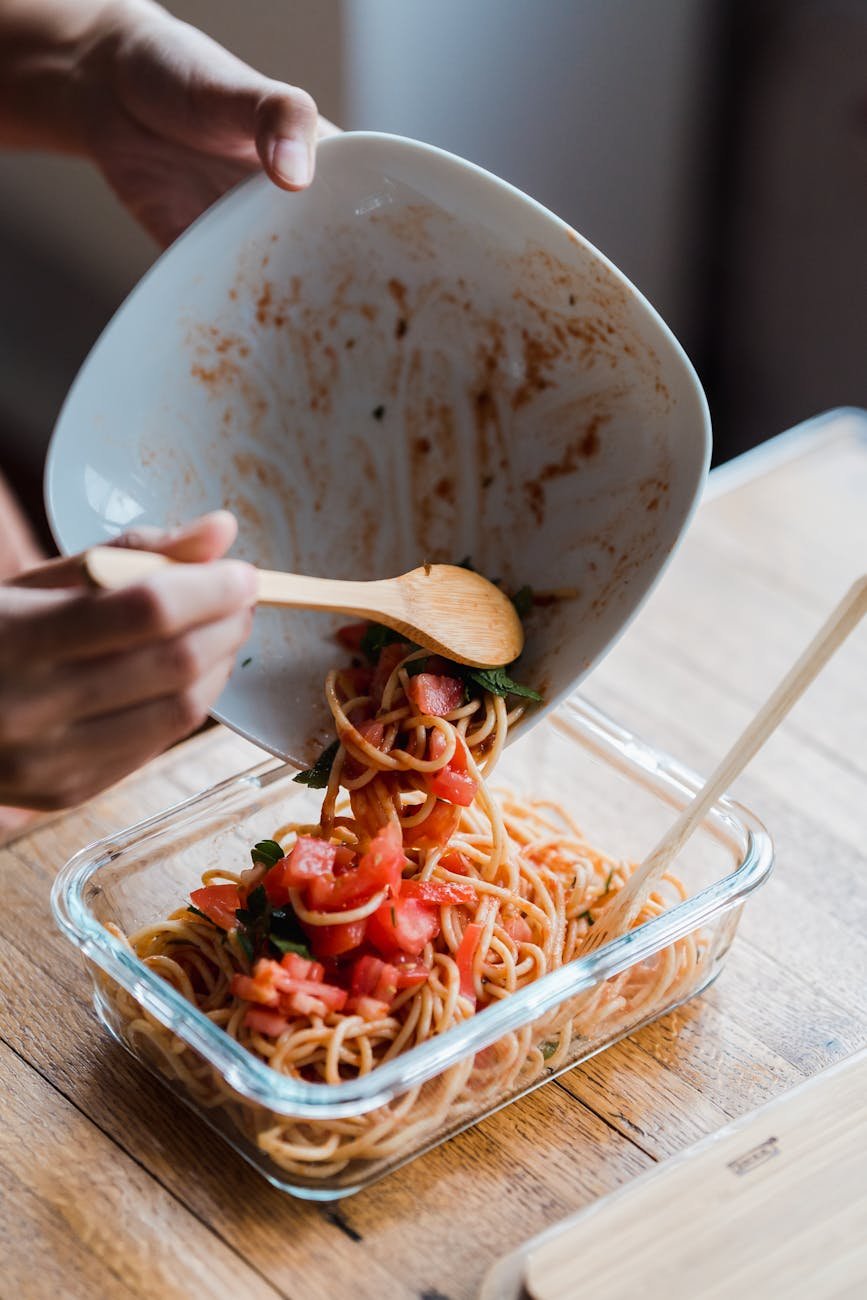
- Pasta already tossed with sauce (can get gummy)
- Salads already dressed
- Seafood (fine sometimes, but risky for leftover-haters)
This doesn’t mean you can’t prep them. It means you prep them differently.
The “freshness hacks” that make prepped food feel new
1) Sauce rotation (same food, different personality)
Make or buy 2 sauces weekly. Keep them separate.
Great options (U.S. grocery-store friendly):
- Pesto
- Chimichurri
- Buffalo sauce + ranch
- Teriyaki or stir-fry sauce
- Salsa verde
- Tzatziki
- Peanut sauce
- Garlic aioli or spicy mayo
2) One crunchy topper per week
Crunch changes everything. Store it dry.
Ideas:
- Toasted nuts
- Crispy onions
- Tortilla strips
- Croutons (added at the last second)
- Sesame seeds
- Pickled onions (not crunchy-crunchy, but bright)
3) Acid at the end
A squeeze of lemon/lime, a splash of vinegar, or quick pickles makes food taste “made now.”
4) Heat source matters
The microwave is convenient. It is also a texture assassin.
If you hate leftovers, use:
- Skillet for rice, veggies, stir-fries (revives browning)
- Air fryer for crisp edges in minutes
- Oven/toaster oven for anything you want to feel roasted
- Microwave + finish: warm quickly, then sear for 1–2 minutes
5) Keep “wet ingredients” separate
Store these separately until serving:
- sauce
- salsa
- dressed slaw
- cut tomatoes
- cucumbers
- anything that soaks bread
Your 60–90 minute Sunday plan (that doesn’t feel like meal prison)
This is a realistic session. Not a kitchen hostage situation.
Step 1: Choose a theme (2 minutes)
Themes simplify flavors, so ingredients mix well:
- Tex-Mex
- Mediterranean
- Asian-inspired
- American comfort
- “Big salad week”
Step 2: Prep two proteins (25–35 minutes)
Pick one “quick” and one “slow.”
Examples:
- Quick: ground turkey, shrimp, rotisserie chicken, tofu
- Slow: sheet-pan chicken thighs, pulled pork, roast
Step 3: Prep two vegetables (15–20 minutes)
One cooked, one raw.
- Cooked: roasted broccoli, peppers/onions, green beans
- Raw: shredded cabbage, cucumbers, greens, carrots
Step 4: Prep one carb (15–20 minutes)
Choose one:
- rice
- quinoa
- farro
- potatoes (roasted or parboiled)
- tortillas + a backup frozen carb (like naan)
Step 5: Add sauces + a “fresh finisher” (10 minutes)
- Sauce 1: creamy or savory
- Sauce 2: spicy or tangy
- Finisher: lemons, cilantro, pickled onions, scallions
A full “anti-leftover” prep example (with a table)
Here’s a week that feels different every night without cooking from scratch daily.
The Prep (Sunday)
- Protein 1: Sheet-pan chicken thighs (salt, pepper, garlic powder)
- Protein 2: Ground turkey cooked plain (salt + onion powder)
- Veg cooked: Roasted bell peppers + onions
- Veg raw: Shredded cabbage + carrots (undressed)
- Carb: Cilantro-lime rice (or plain rice)
- Sauce 1: Store-bought salsa verde
- Sauce 2: Tzatziki (store-bought is fine)
- Crunch: Tortilla strips or crushed tortilla chips (kept dry)
How it turns into different meals
| Day | Meal (doesn’t feel like leftovers) | What you use | “Fresh” finishing move |
|---|---|---|---|
| Mon | Salsa verde chicken rice bowl | chicken + rice + peppers/onions | lime + cilantro + tortilla crunch |
| Tue | Turkey taco skillet | ground turkey + peppers/onions + spices | serve in tortillas, add cabbage slaw |
| Wed | Mediterranean chicken wrap | chicken + cabbage + tzatziki | add cucumber + feta + oregano |
| Thu | “Clean out the fridge,” crunchy salad | turkey + roasted veg | top with Greek yogurt + hot sauce |
| Fri | “Clean out the fridge” crunchy salad | cabbage base + whatever remains | lemon + olive oil + seeds |
Same prep. Different meals. No identical containers haunting you.
Recipes that are built for remixing (not repeating)
These aren’t “meal prep meals.” They’re meal prep foundations.
1) Neutral sheet-pan chicken thighs (the remix king)
Why thighs? They reheat better than breast. More forgiving. Less dry.
Basic method
- 2–3 lbs bone-in or boneless chicken thighs
- Oil, salt, pepper, garlic powder, smoked paprika (optional)
- Bake at 425°F for ~25–35 minutes (depends on size), to an internal temperature of 165°F
Use it in three ways
- Slice for grain bowls + salsa
- Shred for wraps + slaw
- Chop and crisp in a skillet for tacos
2) “Plain but useful” ground turkey (or beef)
Cook it with salt and onion powder only. No strong identity yet.
Then transform it:
- Taco seasoning + salsa
- Teriyaki sauce + sesame oil
- Italian herbs + marinara
That’s the point. You’re buying flexibility.
3) A raw slaw base that stays crisp for days
Mix and store undressed:
- shredded cabbage
- shredded carrots
- sliced green onions
Dress per meal:
- lime + salt + a tiny pinch of sugar (taco night)
- rice vinegar + sesame oil (Asian night)
- lemon + olive oil + oregano (Mediterranean night)
RELATED POST >> 13+ Easy Macrobiotic Recipes for Nurses: Shift-Work Zen
4) Roasted peppers and onions (the flavor cheat code)
They’re sweet, savory, and work in almost every cuisine.
Use them in:
- fajitas
- omelets
- pasta
- sandwiches
- salads
“Finish cooking” tactics: the secret to not hating your own food
If you dislike leftovers, stop fully cooking everything on prep day.
Instead:
Par-cook vegetables
- Roast potatoes 70% of the way, finish in the air fryer later.
- Blanch green beans, then sauté quickly on dinner night.
- Pre-slice mushrooms, cook fresh (they’re fast anyway).
Pre-marinate proteins
Store raw marinated protein for a quick cook later:
- chicken strips in teriyaki
- shrimp in garlic + lemon
- tofu in soy + ginger
Food safety note (U.S.-focused): Raw marinated proteins should be cooked within 1–2 days in the fridge. If you won’t cook them soon, freeze them in the marinade.
Batch-cook sauces, not meals
Sauce is where “new” comes from. It’s also quick.
The storage strategy that prevents “leftover smell” and soggy sadness
Use the right containers (it matters)
- Glass containers help with smell and staining.
- Shallow containers cool food faster (safer, less condensation).
- Small sauce containers keep textures intact.
Cool food properly
In general, don’t leave cooked food out more than 2 hours (or 1 hour if it’s hot out). Spread hot food into shallow containers so it cools faster before refrigerating.
Keep a “use first” zone
Make one section of your fridge the priority shelf. Put the most perishable stuff there:
- seafood
- cooked rice
- cut fruit
- anything already assembled
You’re reducing waste without forcing yourself to eat the same thing repeatedly.
A reheat guide for people who care about texture
Use this like a quick reference.
| Food | Best reheat method | Trick that makes it taste fresh |
|---|---|---|
| Rice | Microwave with 1–2 tbsp water, covered | Add sauce after reheating |
| Chicken thighs | Skillet or air fryer | A trick that makes it taste fresh |
| Ground meat | Skillet | splash of broth or salsa |
| Roasted veggies | Air fryer or oven | finish in a skillet for a little crisp |
| Pasta | Skillet with a splash of water | Don’t crowd the pan |
| Tortillas | Dry skillet | 20 seconds per side = huge upgrade |
The microwave is fine for warming. Just don’t let it be the only tool.
The “not-so-obvious” grocery list that makes variety easy
When you shop, you want ingredients that can swing across cuisines.
Always useful proteins
- Rotisserie chicken (fastest shortcut)
- Eggs (breakfast-for-dinner backup)
- Ground turkey or beef
- Salmon (cook once, but plan it as a one-night thing)
- Canned tuna (emergency lunch that doesn’t feel like leftovers)
Always useful carbs
- Rice or microwaveable rice cups (yes, they’re worth it sometimes)
- Tortillas (flour + corn)
- Potatoes or sweet potatoes
- Bread you can toast (toast covers many sins)
Always useful flavor boosters
- Lemons/limes
- Fresh cilantro or parsley
- Green onions
- Pickled jalapeños
- Capers or olives
- Better-than-bouillon or broth
Sauces that save busy people
- Salsa
- Teriyaki
- Pesto
- Hot sauce
- Caesar dressing
- Tahini
- BBQ sauce
This is how you avoid cooking “a recipe.” You’re assembling meals that taste intentional.
A 5-day anti-leftover dinner plan (with minimal repeat vibes)
Here’s a full plan that keeps dinners distinct. You prep once, then do short “finish” steps.
Sunday Prep
- Roast chicken thighs (neutral seasoning)
- Cook rice
- Roast broccoli
- Make quick pickled onions
- Buy: pesto, salsa, tortillas, salad greens
Monday: Pesto chicken bowls
- Warm rice + chicken
- Toss broccoli with pesto
- Add pickled onions
Tuesday: Chicken tacos
- Crisp chopped chicken in a skillet
- Warm tortillas
- Add salsa + onions + greens
Wednesday: Broccoli “fried rice” (fast skillet dinner)
- Skillet: rice + broccoli + egg + soy sauce (or stir-fry sauce)
- Add chicken if you want, or keep it vegetarian for a break
Thursday: Big chopped salad
- Greens + cold broccoli + warm chicken (hot/cold contrast helps)
- Add crunchy toppings
- Use Caesar dressing or vinaigrette
Friday: Freezer night or “panini night.”
- Use frozen dumplings, frozen pizza, or a grilled sandwich
- You’re allowed. The system supports real life.
How to meal prep for lunch when you hate lunch leftovers the most
Lunch is where meal prep usually fails. Because you’re eating it in an office, in a car, between meetings, half-distracted.
So don’t pack “a meal.” Pack a kit.
Lunch kit formulas that don’t feel repetitive
Option 1: Wrap kit
- Tortilla
- Protein
- Crunch (slaw or lettuce)
- Sauce (separate)
Assemble right before eating.
Option 2: Adult snack plate
- Deli turkey or boiled eggs
- Cheese
- Fruit
- Nuts
- Hummus
- Crackers
Option 3: “Hot bar” bowl
Keep components separate:
- rice
- protein
- veg
- sauce
Mix at the last minute so it doesn’t become one uniform mush.
The top slip-ups leftover-haters make (and how to dodge them)
Call these pitfalls, frequent missteps, or the usual traps. They all lead to the same outcome: you order takeout while your fridge fills with food you “should” eat.
1) Prepping five identical meals
You don’t hate meal prep. You hate repetition.
Fix: prep components + two sauces. Force variety by design.
2) Overcooking lean proteins
Chicken breast can be great. But it punishes you when reheated.
Fix: choose thighs, or sauce the breast, or plan it for cold meals (wraps/salads).
3) Mixing everything too early
Sauced pasta + microwaved chicken + steamed veg becomes one flavor.
Fix: store separately. Combine later.
4) Forgetting crunch and acid
Your palate wants contrast.
Fix: keep crunchy toppers and citrus on hand. Finish every meal.
5) Relying on the microwave for everything
Microwaves are not evil. They’re just limited.
Fix: use microwave to warm, then skillet/air fryer to restore texture.
Time-saving moves that feel like cheating (in a good way)
If you’re in the U.S., you have access to convenience items that make this easier. Use them.
- Rotisserie chicken (turn it into 3 different meals)
- Bagged salad kits (use the kit parts separately; don’t dress everything at once)
- Frozen microwave steam veggies (backup, not your whole personality)
- Pre-cooked lentils
- Jarred sauces that are genuinely good (read labels, find favorites)
Meal prep doesn’t need to be a purity contest.
Mini meal-prep menus by craving (choose your mood)
Sometimes you don’t need a plan. You need a direction.
If you want comfort food
Prep:
- meatballs
- mashed potatoes (or par-cooked potatoes)
- green beans
Finish meals as: - meatball sub
- meatballs + potatoes + gravy
- meatballs with marinara + salad
If you want “fresh” and light
Prep:
- grilled chicken
- quinoa
- chopped cucumber + tomato (store dry)
Finish meals as: - Greek bowls (tzatziki + feta)
- lemon-herb salad
- quinoa tabbouleh vibe
If you want spicy
Prep:
- ground meat plain
- rice
- sautéed peppers
Finish meals as: - tacos
- spicy rice bowls
- lettuce wraps with chili crisp
Food safety and “how long is this good?” (quick U.S.-practical guide)
People who hate leftovers also tend to be extra sensitive to “Is this still okay?” Totally fair.
General fridge guidance:
- Most cooked foods: 3–4 days in the refrigerator
- Cooked rice: best within 3–4 days (cool quickly, store properly)
- Seafood: aim for 1–2 days max
- Sauces: varies; many last 5–7 days if cleanly stored
When in doubt:
- If it smells off, don’t negotiate.
- If it’s been sitting out too long, toss it.
- If you won’t eat it in time, freeze it early—don’t “wait and see.”
FAQs
How do I meal prep if I hate eating the same thing twice?
Prep components, not complete meals. Then plan at least two sauces and two formats (bowls, tacos, salads, wraps). The same chicken can become three different dinners if you change the sauce, crunch, and serving style.
What’s the best protein for people who hate leftovers?
Chicken thighs, meatballs, shredded meats, and saucy proteins reheat best. Lean chicken breast is the toughest unless you plan it for cold meals or keep it heavily sauced.
Can I meal prep without using a microwave?
Yes. Reheat in a skillet, air fryer, toaster oven, or oven. Many leftover-haters prefer this because it restores browning and texture.
How do I keep meal-prepped food from getting soggy?
Store wet and dry separately. Sauce on the side. Crunch on the side. Dress salads only right before eating.
Is freezing meal prep a good idea if I hate leftovers?
It can be, if you freeze the right things: soups, stews, shredded meats, cooked grains, and marinated raw proteins (to cook later). Avoid freezing foods you already dislike reheated, like fully assembled salads or creamy pasta.
What’s a good meal prep schedule for someone who doesn’t want a big Sunday session?
Do a “split prep”:
- 20 minutes Sunday: wash/chop veggies, make a sauce
- 20 minutes Tuesday: cook a protein
- 20 minutes Thursday: cook a carb or roast veggies
Small bursts. Same benefit.
How do I make meal prep feel “fresh” every day?
Use finishing touches: citrus, fresh herbs, pickled onions, a crunchy topper, and a sauce added at the last second. Also, rotate your heat method—skillet and air fryer make a big difference.
The takeaway (the part you’ll feel on a busy weeknight)
Meal prep isn’t supposed to trap you in repetition. It’s supposed to buy back your time without lowering your standards.
So stop prepping “leftovers.”
Start prepping choices.
Two proteins.
Two sauces.
One crunch.
One acid finish.
And a plan that lets Tuesday taste nothing like Monday.
SUGGESTED POST >> How to Meal Prep on a Budget: Steal These Best 5 Formula