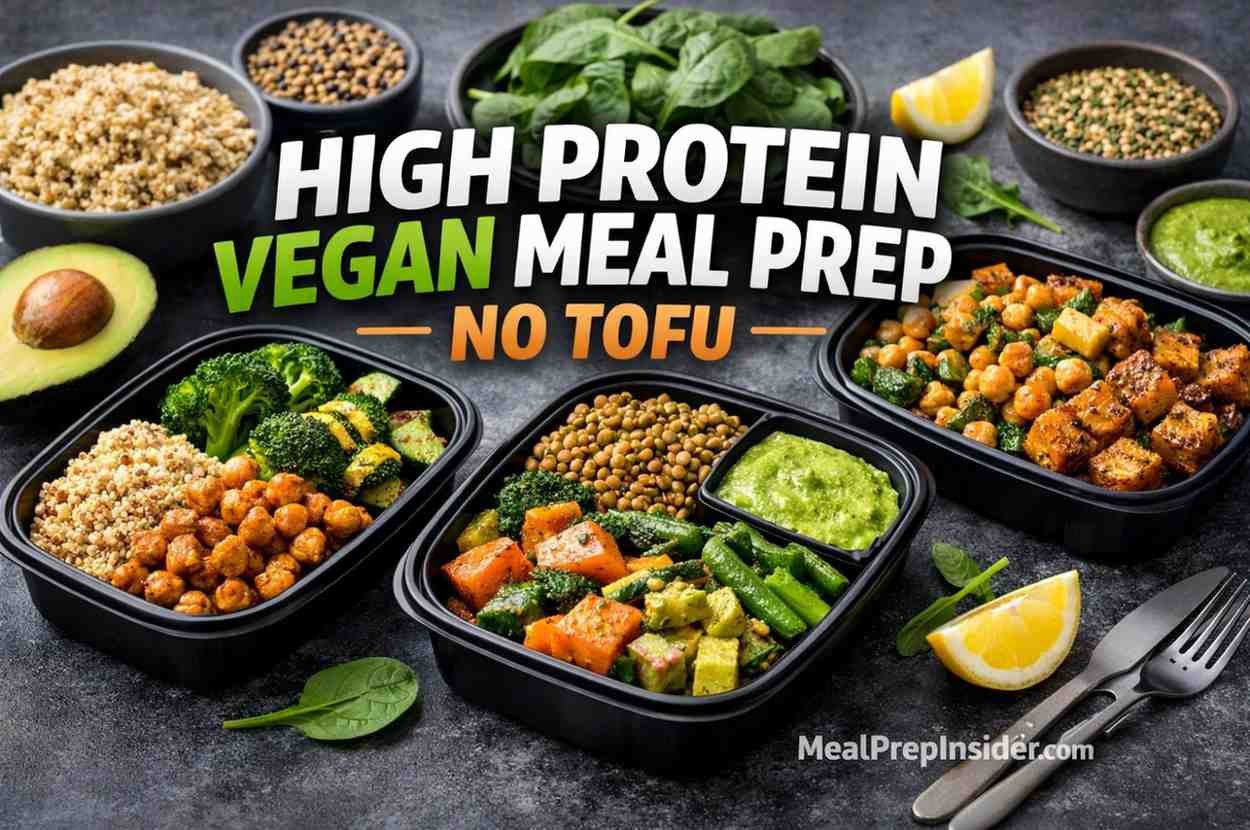
Easy High Protein Vegan Meal Prep No Tofu: Ultimate Guide

High protein vegan meal prep no tofu might sound like a challenge, but here’s the truth: you don’t need those white cubes to crush your protein goals. I remember sitting in my kitchen on a Sunday afternoon, staring at my meal prep containers and thinking there had to be a better way than eating bland tofu for the fifth time that week.
That’s when everything changed.
Look, I get it. You’re tired of seeing the same old tofu scrambles and tofu stir-fries plastered across every vegan meal prep guide. You want variety. You want flavor. And most importantly, you want protein without feeling like you’re eating sponge cubes.
The good news?
There’s an entire world of high-protein vegan ingredients waiting for you that have nothing to do with tofu. We’re talking about foods that genuinely taste amazing, keep you full for hours, and make meal prep something you’ll look forward to instead of dread.
Why Skip Tofu in Your Meal Prep?
Don’t get me wrong. Tofu isn’t evil. But it’s not for everyone.
Some people can’t stand the texture. Others have soy sensitivities. And honestly, some folks just want to explore beyond what’s become the default protein for plant-based eating.
Here’s what I’ve learned from years of vegan meal prepping: relying on one protein source is boring and nutritionally limiting. Your body craves diversity. Your taste buds deserve excitement. Your meal prep routine should inspire you, not drain you.
When I started branching out from tofu, my energy levels improved. My digestion felt better. And Sunday meal prep went from a chore to something I genuinely enjoyed.
The Protein Powerhouses You’ve Been Ignoring
Let’s talk numbers for a second.
Your body needs protein for muscle repair, hormone production, immune function, and keeping you satisfied between meals. For most active adults, that’s somewhere between 50 and 100 grams daily, depending on your size and activity level.
Here’s where things get interesting.
Lentils pack 18 grams of protein per cooked cup. They cook in 20 minutes. They cost pennies per serving. And they taste incredible when you season them right.
Chickpeas deliver 15 grams per cup. Roast them crispy for snacks. Blend them into hummus. Toss them into curries. The versatility is unmatched.
Black beans give you 15 grams per cup and work in literally everything from breakfast burritos to burger patties.
Quinoa isn’t just a grain. It’s a complete protein with all nine essential amino acids, offering 8 grams per cup.
Seitan is the hidden champion with a whopping 25 grams per 3.5 ounces. It has that meaty texture people miss when transitioning to plant-based eating.
Hemp seeds deliver 10 grams per 3 tablespoons and can be sprinkled easily over anything.
Nutritional yeast adds cheesy flavor while sneaking in 8 grams per quarter cup.
The list goes on.
High Protein Vegan Meal Prep No Tofu: Building Your Weekly Foundation
Here’s where meal prep stops being overwhelming and starts making sense.
The key is creating mix-and-match components instead of complete meals. This approach keeps things interesting all week long without requiring you to cook seven different recipes.
Think of it like building blocks.
Your Base Components:
- Cooked grains (quinoa, brown rice, farro)
- Prepared legumes (seasoned lentils, spiced chickpeas, black beans)
- Roasted vegetables (broccoli, sweet potato, Brussels sprouts, cauliflower)
- Quick proteins (seitan strips, edamame, marinated tempeh)
- Flavor bombs (tahini sauce, chimichurri, peanut sauce, cashew cream)
Cook these on Sunday. Store them separately. Mix them throughout the week based on what you’re craving.
One day, you’re eating Caribbean black beans over rice with mango salsa. The next day, you’re having Mediterranean lentils with roasted vegetables and tahini. Same base ingredients. Completely different meals.
This is how you win at meal prep.
The Sunday Prep Session That Changes Everything
Let me walk you through my go-to prep routine that sets up an entire week of high-protein meals in about two hours.
9:00 AM – Start the grains
Get your rice cooker or Instant Pot working on a batch of quinoa and another of brown rice. These cook themselves while you handle other tasks.
9:15 AM – Prep the vegetables
Chop sweet potatoes, broccoli, cauliflower, and bell peppers. Toss with olive oil, salt, and pepper. Spread on baking sheets.
9:30 AM – Roast the chickpeas
Drain two cans of chickpeas. Pat them dry. Toss with spices (smoked paprika, cumin, garlic powder). Roast at 400°F until crispy.
9:45 AM – Cook the lentils
Simmer lentils in vegetable broth with bay leaves, garlic, and onion. Green lentils hold their shape better for meal prep than red ones.
10:15 AM – Prepare seitan
Slice seitan into strips. Sear in a hot pan with tamari and liquid smoke. This takes maybe ten minutes but adds massive flavor.
10:30 AM – Make your sauces
Blend up tahini sauce, mix together peanut sauce, and prepare whatever flavor profiles you’re craving this week.
11:00 AM – Pack everything
Portion into containers. Label if you’re organized. Throw it in the fridge if you’re like me.
Done.
You’ve just created the foundation for 15 to 20 high-protein meals without tofu.
Five High-Protein Meal Combinations That Hit Different
Combination 1: Southwestern Power Bowl
Black beans (15g protein) over cilantro lime quinoa (8g protein), topped with roasted sweet potato, corn, avocado, and cashew cream sauce. Add hemp seeds (3g protein) for extra punch.
Total protein: 26 grams
This bowl tastes like summer even in January. The creaminess of the cashew sauce perfectly balances the spice from the beans.
Combination 2: Mediterranean Lentil Bowl
French lentils (18g protein) with roasted vegetables, kalamata olives, sun-dried tomatoes, and tahini-lemon dressing. Sprinkle nutritional yeast (2g protein) on top.
Total protein: 20 grams
This one feels fancy enough for dinner guests but takes five minutes to assemble from your prepped components.
Combination 3: Asian-Inspired Buddha Bowl
Seitan strips (25g protein) over brown rice, with edamame (8g protein), roasted broccoli, shredded carrots, and peanut sauce.
Total protein: 33 grams
The variety of textures here keeps every bite interesting. Crispy, chewy, crunchy, smooth.
Combination 4: Loaded Breakfast Burrito
Scrambled chickpeas (15g protein from one cup) with black beans (7g protein from half a cup), potatoes, peppers, and onions wrapped in a whole wheat tortilla.
Total protein: 22 grams
Who says meal prep is only for lunch and dinner? Batch these burritos, wrap them individually, and grab them on rushed mornings.
Combination 5: Protein-Packed Pasta
Chickpea pasta (14g protein) with white beans (10g protein), roasted vegetables, and basil pesto made with hemp seeds.
Total protein: 24 grams
Sometimes you just need comfort food. This delivers without the afternoon energy crash.
The Real Talk About Protein Combining
You’ve probably heard you need to combine specific proteins at every meal to get “complete” proteins.
That’s outdated science.
Your body maintains a pool of amino acids throughout the day. As long as you’re eating varied protein sources across your meals, you’re covered. You don’t need to stress about pairing rice and beans in the same sitting.
Focus on variety throughout the day and week. Your body handles the rest.
That said, some combinations genuinely taste amazing together and happen to complement each other nutritionally. Hummus and whole-grain pita. Peanut butter on whole wheat toast. Beans and rice.
Eat them because they’re delicious, not because you’re worried about amino acid profiles.
Storage Strategies That Keep Food Fresh All Week
Here’s where people mess up meal prep.
They cook everything perfectly on Sunday, then wonder why their food tastes sad by Thursday.
Glass containers beat plastic. They don’t stain, don’t hold odors, and keep food fresher longer.
Store wet and dry separately. Keep sauces in small containers and add them when you’re ready to eat. Nobody wants soggy quinoa.
Use the freezer strategically. Cooked beans freeze perfectly. Most cooked grains do too. Seitan freezes like a dream. If you’re prepping for more than four days, freeze half.
Refresh before eating. Add fresh elements when you assemble your meal. Cherry tomatoes, cucumber, fresh herbs, avocado. These additions take thirty seconds but make prepped food taste freshly prepared.
Layer thoughtfully. Heavier items on the bottom, delicate greens on top. Dressing always separately until you’re ready to eat.
My meal prep used to go bad by Wednesday until I started following these principles. Now everything tastes great through Friday, sometimes even into the weekend.
Sneaky Ways to Boost Protein Without Thinking About It
Sometimes you want extra protein without adding another component to your meal.
Here’s how.
Sprinkle hemp seeds on everything. Salads, bowls, pasta, smoothies. Three tablespoons add 10 grams of protein, and you barely notice them.
Use nutritional yeast generously. That cheesy, umami flavor comes with a protein bonus. Add it to sauces, sprinkle on popcorn, stir into scrambles.
Choose protein-rich versions. Chickpea pasta instead of regular. Sprouted grain bread instead of white. Protein-enriched plant milk instead of the basic stuff.
Add nut or seed butter. A couple of tablespoons of almond butter in your morning oatmeal adds 7 grams of protein while making breakfast taste like dessert.
Throw in some edamame. Keep a bag in your freezer. Toss a handful into any bowl for an instant protein boost.
Make protein your base. Instead of building meals around grains, build them around legumes and let grains be the supporting player.
These small tweaks add up fast. The difference between a 15-gram and a 30-gram protein meal often comes down to these simple additions.
Common Pitfalls to Sidestep
Underseasoning your legumes. Beans and lentils are blank canvases. They need salt, spices, aromatics, and acid to shine. Cook them in vegetable broth instead of water. Add garlic and onion. Finish with lemon juice or vinegar.
I used to wonder why my meal prep tasted boring. Then I realized I was treating my proteins like afterthoughts instead of the stars of the show.
Overcooking vegetables. Roasted vegetables for meal prep should still have some bite. They’ll soften slightly in the fridge. If they’re mushy on Sunday, they’ll be baby food by Wednesday.
Ignoring texture variety. If everything in your bowl is soft and mushy, your brain gets bored. Include something crispy (roasted chickpeas), something creamy (sauce), and something chewy (grains or seitan).
Forgetting about satisfaction. High protein matters, but so does fat. Don’t skip the avocado, nuts, seeds, or olive oil. These healthy fats keep you full and help absorb nutrients.
Trying to copy restaurant portions. Meal prep portions should be satisfying but not overstuffed. You want to feel energized after eating, not ready for a nap.
The Batch Cooking Recipes That Simplify Everything
Let me give you three recipes that become the backbone of countless meals.
Ultimate Protein Lentils
2 cups green lentils
4 cups vegetable broth
1 onion, diced
4 garlic cloves, minced
2 tsp cumin
1 tsp smoked paprika
Salt and pepper to taste
2 tbsp olive oil
Sauté onion and garlic in olive oil until fragrant. Add spices and toast for 30 seconds. Add lentils and broth. Simmer 20-25 minutes until tender but not mushy. Season generously with salt and pepper.
These lentils work in tacos, over rice, in wraps, mixed with pasta, or eaten straight from the container when you’re hungry and impatient.
Crispy Sheet Pan Chickpeas
3 cans of chickpeas, drained and dried
3 tbsp olive oil
1 tsp garlic powder
1 tsp onion powder
2 tsp smoked paprika
1 tsp cumin
½ tsp cayenne
Salt to taste
Toss everything together. Spread on parchment-lined baking sheets in a single layer. Roast at 400°F for 25-30 minutes, shaking the pan halfway through. They’ll crisp as they cool.
Eat these as snacks, toss them into salads, top your bowls, or mix them into grain dishes.
Savory Seitan Strips
1 package seitan
3 tbsp tamari
1 tbsp liquid smoke
2 tsp maple syrup
1 tbsp olive oil
Slice seitan into strips. Whisk together remaining ingredients. Heat a large skillet over medium-high heat. Sear seitan strips for 2-3 minutes per side until browned. Add sauce and toss to coat.
These strips are incredible in sandwiches, wraps, stir-fries, or served over grains with vegetables.
RELATED POST >> High Protein Meal Prep No Chicken: Thrilling Taste Guide
Smart Shopping for High-Protein Meal Prep
Your grocery list doesn’t need to be complicated or expensive.
Buy in bulk. Dried beans and lentils cost a fraction of canned versions. If you have an Instant Pot, they cook just as quickly with zero effort.
Stock your pantry. When staples go on sale, stock up. Quinoa, brown rice, canned beans, canned tomatoes, tahini, nutritional yeast, spices.
Frozen is your friend. Frozen edamame, frozen vegetables, frozen fruit for smoothies. The nutrition is identical to fresh, the convenience is unmatched, and nothing goes bad.
Shop ethnic markets. Indian and Middle Eastern groceries have amazing prices on lentils, chickpeas, tahini, and spices. Asian markets have great deals on rice, noodles, and seitan.
Buy what’s in season. Your vegetables will taste better and cost less. Adapt your meal prep to what’s abundant rather than forcing recipes that require expensive out-of-season produce.
My weekly meal prep grocery run costs about $40-50 and sets me up with all the protein and vegetables I need. That’s less than two restaurant meals.
Beyond the Bowl: Other Meal Prep Formats
Bowls are convenient, but they’re not the only option.
Mason jar salads layer beautifully and keep for days. Dressing on the bottom, hearty vegetables and proteins in the middle, delicate greens on top. Shake when ready to eat.
Breakfast burritos wrapped individually in foil freeze perfectly. Microwave for two minutes and you’re out the door with a protein-packed breakfast.
Soup in jars works surprisingly well. Layer dry ingredients (lentils, quinoa, spices, dried vegetables) in mason jars. When you’re ready to eat, dump in a pot with broth and simmer. Instant homemade soup.
Protein energy balls made from dates, nuts, seeds, and protein powder give you grab-and-go snacks with serious staying power.
Stuffed sweet potatoes bake up easily and reheat beautifully. Top with black bean chili, lentil curry, or chickpea scramble.
Variety in format keeps meal prep from feeling monotonous.
The Flavor Profiles That Make Meal Prep Exciting
This is where magic happens.
You can eat the same base ingredients all week without getting bored by changing your flavor profiles.
Mexican: Cumin, chili powder, lime, cilantro, jalapeño
Mediterranean: Oregano, lemon, garlic, tahini, olive oil
Asian: Ginger, garlic, tamari, sesame, rice vinegar
Indian: Curry powder, turmeric, garam masala, coconut milk
Italian: Basil, oregano, tomato, garlic, balsamic
Monday, you’re eating Indian-spiced lentils. On Wednesday, it’s Mexican black beans. Friday brings Mediterranean chickpeas.
Same protein sources. Completely different eating experience.
Keep a well-stocked spice cabinet, and you’ll never get bored.
Making It Work for Your Life
Meal prep isn’t one-size-fits-all.
Maybe you work long hours, and Sunday is your only option. Perhaps you prefer prepping twice a week in shorter sessions. Some people batch cook proteins and grains but prefer fresh vegetables daily.
All of these approaches work.
The best meal prep system is the one you’ll maintain. Don’t force yourself into someone else’s routine if it doesn’t fit your life.
Start small if you’re new to this. Prep just lunches for the week. Once that becomes easy, add breakfast or dinner.
If you miss a week, don’t spiral. Just start again. Meal prep is a tool to make your life easier, not another source of stress.
I’ve had weeks where meal prep went perfectly and weeks where I ate peanut butter sandwiches because life got crazy. Both scenarios are fine.
High Protein Vegan Meal Prep No Tofu in Real Life
Here’s what a full week might look like, putting this all together.
Sunday: Two hours of meal prep. Cook quinoa, brown rice, lentils, and black beans. Roast vegetables and chickpeas. Make tahini sauce and peanut sauce. Prep seitan strips.
Monday Meals:
- Breakfast: Black bean and potato burrito with salsa
- Lunch: Lentil and vegetable bowl with tahini sauce
- Dinner: Seitan stir-fry over brown rice
- Snacks: Roasted chickpeas, apple with almond butter
Total protein: ~85 grams
Tuesday Meals:
- Breakfast: Quinoa porridge with hemp seeds, berries, and almond butter
- Lunch: Mediterranean chickpea salad with pita
- Dinner: Black bean tacos with all the fixings
- Snacks: Hummus with vegetables, protein energy balls
Total protein: ~78 grams
Wednesday Meals:
- Breakfast: Chickpea scramble with toast
- Lunch: Seitan sandwich with hummus
- Dinner: Lentil curry over rice
- Snacks: Edamame, trail mix
Total protein: ~82 grams
You get the idea. Mix and match from your prepped components based on what sounds good each day.
Adjusting Protein for Your Goals
Not everyone needs the same amount of protein.
If you’re highly active or building muscle, aim for the higher end of recommendations. If you’re more sedentary, you can do fine with less.
Here’s a simple formula: multiply your body weight in pounds by 0.4 to 0.6 for a rough daily protein target in grams.
A 150-pound person would aim for 60-90 grams daily.
More important than hitting an exact number is ensuring you’re getting protein at each meal. This keeps your energy stable, maintains muscle mass, and prevents that hangry feeling that leads to poor food choices.
Spread your protein throughout the day rather than loading it all into one meal. Your body can only process so much at once anyway.
The Sustainability Factor
Eating high-protein vegan meals without tofu isn’t just about personal health or taste preferences.
Legumes, grains, and plant proteins have a dramatically lower environmental impact than animal products. They require less water, less land, and produce fewer greenhouse gases.
Batch cooking reduces food waste. You buy what you need, use what you buy, and nothing goes bad in your fridge.
Meal prepping in reusable containers cuts down on takeout packaging and single-use plastics.
You’re making choices that benefit your health, your wallet, and the planet. That’s a pretty solid combination.
Troubleshooting Your Meal Prep Journey
Problem: Everything tastes bland by mid-week.
Solution: Don’t add all your seasonings and sauces during prep. Keep them separate and add fresh ones when you eat. Store fresh herbs separately and add at mealtime. A squeeze of fresh lemon or lime right before eating transforms reheated food.
Problem: You’re getting tired of the same combinations.
Solution: Prep your proteins and bases plain, then season each day differently. Keep three different sauce options ready. Swap your grain base throughout the week.
Problem: You’re still hungry an hour after eating.
Solution: Add more healthy fats. Include nuts, seeds, avocado, or nut butter. Make sure you’re eating enough food overall. Volume matters, not just protein content.
Problem: You don’t have time for a two-hour Sunday session.
Solution: Split it up. Prep proteins on Sunday, vegetables on Wednesday. Or use your Instant Pot to cook everything while you do something else. Ten minutes of active work can give you an hour of passive cooking.
Problem: Your family won’t eat vegan meal prep.
Solution: Make components that work for everyone. Most people enjoy roasted vegetables, seasoned rice, and beans. They can add cheese or meat to their portions. You keep your plant-based. Problem solved.
Quick Reference Protein Guide
| Food | Serving Size | Protein (grams) |
|---|---|---|
| Lentils (cooked) | 1 cup | 18 |
| Black beans (cooked) | 1 cup | 15 |
| Chickpeas (cooked) | 1 cup | 15 |
| Quinoa (cooked) | 1 cup | 8 |
| Seitan | 3.5 oz | 25 |
| Edamame | 1 cup | 17 |
| Hemp seeds | 3 tbsp | 10 |
| Nutritional yeast | ¼ cup | 8 |
| Peanut butter | 2 tbsp | 8 |
| Chickpea pasta | 2 oz dry | 14 |
| Tempeh | 3 oz | 16 |
| Pumpkin seeds | ¼ cup | 8 |
The Final Word
High-protein vegan meal prep, no tofu, opens up a world of flavors, textures, and possibilities that many people never explore.
You don’t need exotic ingredients or complicated techniques. You need dried beans, some grains, spices you probably already own, and a couple of hours on the weekend.
The transformation this creates in your weekly routine is remarkable.
No more scrambling for lunch. No more expensive takeout when you’re too tired to cook. No more wondering if you’re getting enough protein.
Just containers of delicious, nourishing food ready when you are.
Start with one recipe from this post. Prep it this weekend. See how it feels to have healthy, protein-rich food ready to go.
You might be surprised by how much you enjoy the process. And you’ll definitely appreciate the results when Wednesday rolls around, and dinner takes three minutes instead of thirty.
Your future self will thank you for starting today.
Frequently Asked Questions
Can I get enough protein on a vegan diet without tofu?
Absolutely. Lentils, beans, chickpeas, quinoa, seitan, tempeh, and numerous other plant foods provide plenty of protein. Many vegan athletes and bodybuilders never eat tofu and meet or exceed their protein needs through a diverse range of whole-food sources.
How long does meal-prepped food stay fresh in the fridge?
Most cooked grains, legumes, and vegetables stay fresh for 4-5 days when stored properly in airtight containers. For longer storage, freeze portions and thaw as needed. Cooked beans and grains freeze exceptionally well for up to three months.
Is meal prepping expensive?
It’s significantly cheaper than eating out or buying convenience foods. Buying dried beans and grains in bulk costs pennies per serving. A week of meal prep typically costs $40-60, compared to $10-15 per restaurant meal.
Do I need special equipment for meal prep?
Not really. A good set of glass containers, a large pot, baking sheets, and basic kitchen tools are enough. An Instant Pot or rice cooker makes things easier, but it isn’t necessary.
What if I don’t like leftovers?
Think of meal prep as prepping ingredients rather than complete meals. When you assemble fresh combinations daily from your prepped components, it doesn’t feel like eating leftovers. Adding fresh elements to your meals makes a huge difference.
How do I prevent getting bored eating the same foods?
Change your flavor profiles, sauces, and combinations throughout the week. Prep plain proteins and season them differently each day. One batch of chickpeas becomes Mediterranean, Mexican, and Asian-inspired meals depending on your seasonings.
Can I build muscle on a vegan diet without tofu?
Yes. Many vegan athletes build and maintain muscle by eating legumes, seitan, tempeh, and whole grains. Adequate protein intake, progressive training, and proper recovery matter more than specific protein sources. Aim for 0.7-1 gram of protein per pound of body weight if muscle building is your goal.
What’s the best protein source for vegan meal prep?
There’s no single “best” source. Variety matters most for complete nutrition. Lentils offer great value and nutrition. Seitan provides the highest protein density. Beans work in almost everything. Rotate between different sources throughout your week.
How do I make meal prep taste good all week?
Store sauces separately and add fresh ones when eating. Include texture variety in each meal. Don’t overcook vegetables during prep. Add fresh elements like herbs, avocado, or cherry tomatoes when assembling meals. Proper seasoning during cooking makes all the difference.
What should I prep first if I’m a beginner?
Start simple with just lunch for the week. Pick one grain, one legume, one vegetable, and one sauce. Cook them on Sunday and mix throughout the week. Once this becomes comfortable, expand to other meals.
SUGGESTED POST >> Healthy Meal Prep for Seniors Living Alone: Convenient Hack
Discover more from Meal Prep Insider
Subscribe to get the latest posts sent to your email.