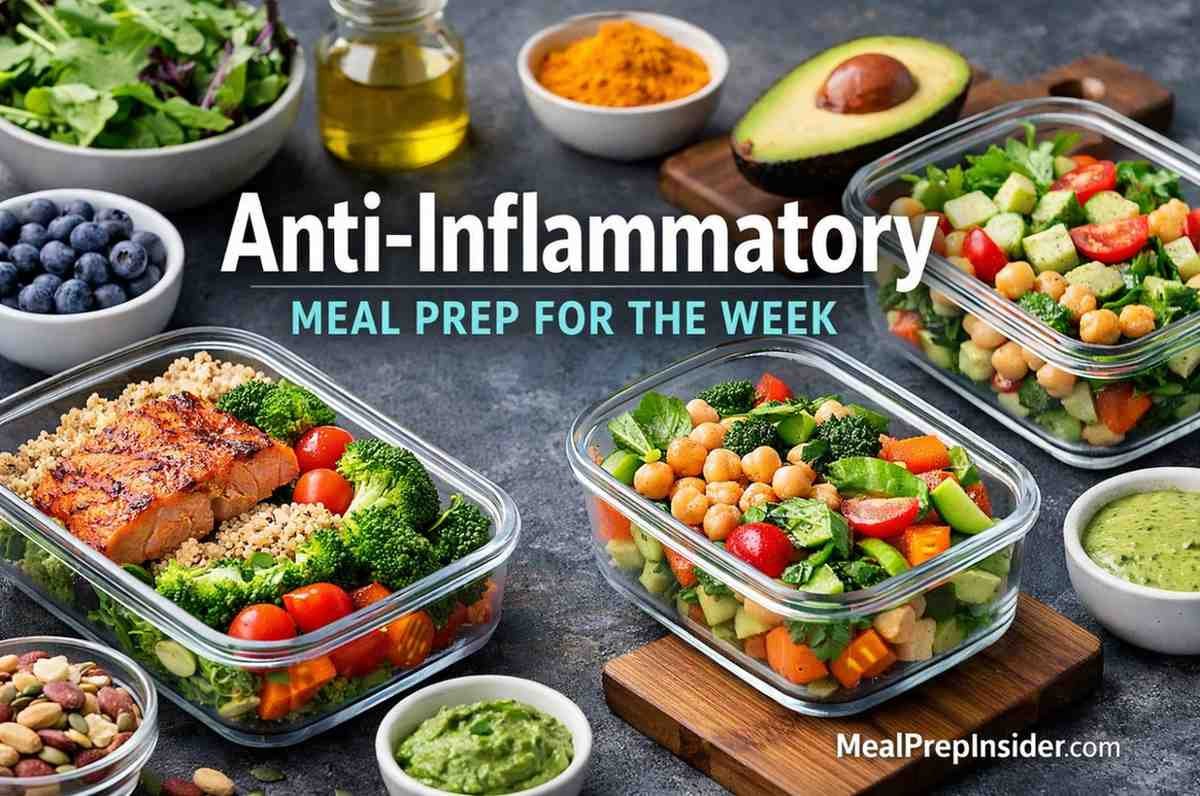
Anti-inflammatory meal prep for the week starts with understanding that what you eat can either fuel chronic inflammation or help your body heal from the inside out.
Ponder on this: It’s Sunday afternoon, and instead of scrambling every weeknight to figure out what’s for dinner, you’ve got five days of delicious, inflammation-fighting meals ready to go. No stress. No takeout menus. Just real food that actually makes you feel good.
I know what you’re thinking. Meal prep sounds like a lot of work, right? Here’s the thing, though. Once you get the hang of it, you’ll wonder why you didn’t start sooner.
Why Anti-Inflammatory Eating Matters More Than You Think
Your body deals with inflammation every single day. Some of it’s good, the kind that helps you heal from injuries or fight off infections. But chronic inflammation? That’s a different beast entirely.
Chronic inflammation has been linked to pretty much every major health issue Americans face today. Heart disease. Diabetes. Arthritis. Even depression and anxiety. The Standard American Diet (SAD, and yeah, that acronym is fitting) loads us up with inflammatory foods without us even realizing it.
The good news? You can fight back with your fork.
Research shows that certain foods can significantly reduce inflammatory markers in your blood. We’re talking about tangible, measurable improvements in how you feel, how you move, and how your body functions at the cellular level.
The Foundation: What Makes a Meal Anti-inflammatory?
Before we dive into the actual meal prep, let’s talk about what you should eat and what you should avoid.
Foods That Fight Inflammation:
- Fatty fish like salmon, sardines, and mackerel
- Leafy greens, including spinach, kale, and Swiss chard
- Berries of all kinds, especially blueberries and strawberries
- Nuts such as almonds and walnuts
- Olive oil (the real, high-quality stuff)
- Tomatoes
- Turmeric and ginger
- Green tea
- Dark chocolate (yes, really)
- Avocados
- Sweet potatoes
- Cruciferous vegetables like broccoli and cauliflower
Foods That Promote Inflammation:
- Refined carbohydrates (white bread, pastries, most cereals)
- Fried foods
- Soda and sugar-sweetened beverages
- Red meat and processed meats
- Margarine and shortening
- Excessive alcohol
- Foods high in omega-6 fatty acids without balancing omega-3s
Notice something? The anti-inflammatory list is full of whole, real foods. The inflammatory list? Mostly processed stuff that comes in packages.
Getting Your Kitchen Ready for Success
You can’t meal prep without the right tools. Trust me on this one. I learned the hard way after trying to store a week’s worth of food in mismatched Tupperware that leaked all over my fridge.
Essential Equipment:
- Glass meal prep containers with good seals
- Sharp knives (a dull knife is dangerous and frustrating)
- Cutting boards (have at least two)
- Sheet pans for roasting
- A good blender or food processor
- Mason jars for dressings and smoothies
- Slow cooker or Instant Pot (not essential but incredibly helpful)
Don’t go crazy buying everything at once. Start with basics and build from there.
Your Five-Day Anti-inflammatory Meal Prep Plan
Anti-inflammatory meal prep for the week doesn’t mean eating the same boring chicken and broccoli every day. This plan gives you variety, flavor, and nutrition without making you spend all day Sunday in the kitchen.
Day 1: Mediterranean Monday
Breakfast: Overnight oats with blueberries, walnuts, and cinnamon
Lunch: Mediterranean quinoa bowl with chickpeas, cucumbers, tomatoes, olives, and lemon-tahini dressing
Dinner: Baked salmon with roasted Brussels sprouts and sweet potato wedges
Snacks: Hummus with carrot sticks, a handful of almonds
Day 2: Turmeric Tuesday
Breakfast: Green smoothie with spinach, pineapple, ginger, and chia seeds
Lunch: Turmeric chicken salad with mixed greens and avocado
Dinner: Cauliflower rice stir-fry with edamame and sesame-ginger dressing
Snacks: Apple slices with almond butter, dark chocolate square
Day 3: Wellness Wednesday
Breakfast: Veggie egg muffins with spinach and tomatoes
Lunch: Lentil soup with kale and carrots
Dinner: Grilled chicken with roasted broccoli and quinoa
Snacks: Mixed berries, a handful of walnuts
Day 4: Thoughtful Thursday
Breakfast: Chia pudding with strawberries and coconut flakes
Lunch: Rainbow salad with grilled chicken, every color vegetable you can find, and olive oil dressing
Dinner: Baked cod with asparagus and wild rice
Snacks: Celery with almond butter, green tea
Day 5: Fresh Friday
Breakfast: Smoothie bowl topped with granola (sugar-free), berries, and hemp seeds
Lunch: Turkey and avocado lettuce wraps with veggie sticks
Dinner: Sheet pan chicken with rainbow vegetables
Snacks: Sliced cucumber with guacamole, a handful of pistachios
The Sunday Prep Session: A Step-by-Step Guide
Here’s where the magic happens. Set aside about three hours on Sunday. Put on your favorite podcast or some good music. Pour yourself some green tea. Let’s do this.
Hour One: Prep and Chop
Start by washing all your produce. Everything. Get it out of the way.
Next, chop your vegetables. I like to use the mise en place approach, which is just a fancy French way of saying “get everything ready before you start cooking.”
Chop onions, bell peppers, broccoli, cauliflower, Brussels sprouts, sweet potatoes, and whatever else you’re using this week. Store them in separate containers.
Wash and portion your greens. Nobody wants to do this on a busy weekday morning.
Hour Two: Cook Your Proteins
This is where efficiency matters. You can cook multiple things at once.
Bake your salmon at 400°F for about 12-15 minutes. While that’s going, grill or bake your chicken on another rack. Season with simple spices like garlic powder, paprika, and black pepper.
If you’re making hard-boiled eggs for snacks or breakfast, get those going in a pot of water.
Cook your grains. Quinoa, brown rice, or wild rice all work great. Make a big batch.
Hour Three: Assemble and Store
Now comes the satisfying part. Putting it all together.
Portion out your proteins into individual containers. Add your prepped vegetables. Store your grains separately or together, depending on your preference.
Make your dressings and sauces. Store them in small mason jars. Don’t dress your salads until you’re ready to eat them, though. Nobody likes soggy lettuce.
Prep your overnight oats and chia puddings. These actually get better as they sit.
Label everything with the day you plan to eat it. Your future self will thank you.

Batch Cooking Strategies That Save Time
The secret to sustainable meal prep isn’t cooking seven different meals. It’s cooking components that can mix and match throughout the week.
The Base Method:
Cook three different bases: quinoa, sweet potatoes, and cauliflower rice. These form the foundation of multiple meals.
The Protein Rotation:
Prepare three proteins: salmon, chicken, and a plant-based option like lentils or chickpeas. Different proteins keep things interesting.
The Vegetable Variety:
Roast a huge sheet pan of mixed vegetables. You can use these in bowls, salads, or as sides.
The Sauce Game:
Make three different dressings or sauces. A lemon-tahini dressing, a ginger-sesame sauce, and a simple olive oil and balsamic combo give you plenty of variety.
Mix and match these components throughout the week. Same ingredients, totally different meals.
Common Pitfalls to Avoid
Let me save you from some mistakes I’ve made along the way.
Overcomplicating Things
Your first meal prep doesn’t need to look like an Instagram influencer’s feed. Simple works. Actually, simple works better because you’ll stick with it.
Forgetting About Flavor
Healthy doesn’t mean bland. Use herbs, spices, citrus, and good-quality olive oil. Your taste buds deserve better than steamed, unseasoned chicken.
Not Considering Food Safety
Cooked food lasts about 3-4 days in the fridge. If you’re prepping for five days, consider freezing days four and five and thawing them the night before.
Ignoring Your Actual Schedule
Be honest about your week. If you know Thursday night you have that work event, don’t prep a meal you need to heat up at home. Plan for a portable option instead.
Buying Everything Organic and Breaking the Bank
Look, organic is great when possible, but don’t let perfect be the enemy of good. Eating conventional broccoli is infinitely better than eating no broccoli because you couldn’t afford organic.
RELATED POST >> Meal Prep for People Who Hate Cooking: Easy Lazy Options
The Anti-inflammatory Pantry Staples
Stock these ingredients, and you’ll always be ready to throw together an anti-inflammatory meal.
Oils and Fats:
- Extra virgin olive oil
- Avocado oil
- Coconut oil
Spices and Herbs:
- Turmeric
- Ginger
- Garlic
- Cinnamon
- Black pepper
- Rosemary
- Oregano
- Basil
Canned and Jarred Goods:
- Wild-caught salmon
- Sardines
- Chickpeas
- Black beans
- Tomato paste
- Olives
Grains and Seeds:
- Quinoa
- Brown rice
- Wild rice
- Chia seeds
- Flaxseeds
- Hemp seeds
Nuts:
- Walnuts
- Almonds
- Cashews
Having these on hand means you’re never more than 30 minutes away from an anti-inflammatory meal.
Budget-Friendly Tips for Anti-inflammatory Eating
I get it. Salmon and organic berries aren’t cheap. But anti-inflammatory eating doesn’t have to drain your wallet.
Buy Frozen
Frozen berries, vegetables, and wild-caught fish are often cheaper than fresh and just as nutritious. Sometimes more nutritious, actually, since they’re frozen at peak ripeness.
Shop Seasonal
Whatever’s in season is usually cheaper and tastes better. Butternut squash in the fall. Berries in summer. Work with the seasons, not against them.
The Dirty Dozen and Clean Fifteen
Prioritize organic for the Dirty Dozen (foods that retain the most pesticides). Save money by buying conventional versions of the Clean Fifteen.
Buy in Bulk
Nuts, seeds, and grains are way cheaper when bought in bulk. Just make sure you’ll actually use them before they go bad.
Use Cheaper Proteins
Canned sardines and salmon cost a fraction of fresh fish. Lentils and beans are incredibly cheap and loaded with anti-inflammatory benefits.
Making It Work With Your Life
Real talk for a second. Meal prep only works if it fits into your actual life, not some idealized version of your life where you have unlimited time and energy.
Start Small
Don’t try to prep every single meal for the week right away. Start with just lunches. Or just dinners. Build from there.
Prep on Your Schedule
Who says meal prep has to happen on Sunday? If Wednesday works better for you, do it then. The meal prep police aren’t going to come arrest you.
Use Your Resources
Got a partner or roommate? Make it a team effort. Put on some music, pour some wine (in moderation, it’s inflammatory if you overdo it), and make it social.
Give Yourself Grace
Some weeks you’ll nail it. Other weeks you’ll order pizza on Tuesday. That’s called being human. One pizza doesn’t undo all the good work you’ve done.
The Anti-inflammatory Snack Strategy
Snacks can make or break your anti-inflammatory goals. Having the right ones prepped and ready prevents you from hitting the vending machine at 3 PM.
Pre-portioned Options:
- Small containers of mixed nuts (about 1/4 cup portions)
- Veggie sticks with individual hummus containers
- Apple slices with almond butter
- Berries in small containers
- Hard-boiled eggs
- Dark chocolate squares (70% cacao or higher)
Prep these on Sunday too. When hunger strikes, you want the healthy option to be the easiest option.
Tracking Your Progress
You don’t need to obsess over every meal, but paying attention to how you feel can be really motivating.
What to Notice:
- Energy levels throughout the day
- Quality of sleep
- Joint pain or stiffness
- Digestive comfort
- Skin clarity
- Mood stability
- Recovery time after workouts
Keep a simple journal. Nothing fancy. Just jot down how you’re feeling. You might be surprised at the changes you notice after a few weeks of consistent anti-inflammatory eating.
Troubleshooting Common Challenges
“Everything tastes the same by day three.”
This means you need better sauces and more variety in your prep. Make at least three different flavor profiles each week.
“My lettuce gets soggy.”
Store dressings separately and keep a paper towel with your greens to absorb excess moisture.
“I get sick of eating the same thing.”
Prep components, not complete meals. This gives you flexibility to mix and match based on what sounds good that day.
“I don’t have time to prep for three hours.”
You probably don’t need three hours once you get efficient. Also, consider doing smaller prep sessions twice a week instead of one big one.
How to Customize This Plan
Your body is unique. What works for your friend or your sister might not work exactly the same for you.
If you’re vegetarian or vegan:
Swap the animal proteins for tempeh, tofu, legumes, and additional nuts and seeds. Make sure you’re getting enough omega-3s from plant sources like flaxseeds and walnuts.
If you have specific inflammatory conditions:
Some people with autoimmune conditions need to avoid nightshades (tomatoes, peppers, eggplant). Others need to limit certain grains. Work with your doctor or a registered dietitian to customize the plan for your needs.
If you’re feeding a family:
Double or triple the recipes. Get the kids involved in age-appropriate tasks. Even little ones can wash vegetables or stir ingredients.
If you’re dealing with food allergies:
The beauty of this plan is its flexibility. Allergic to nuts? Use seeds instead. Can’t eat fish? Focus on plant-based omega-3s and consider a supplement after talking to your doctor.
The Long Game: Making This Sustainable
Here’s what I’ve learned after years of meal prepping: consistency beats perfection every single time.
You don’t need to be perfect. You need to be consistent enough that anti-inflammatory eating becomes your default, not something you do when you’re being “good.”
Build the Habit:
Start with one month. Commit to meal prepping once or twice a week for four weeks. That’s usually long enough to start seeing real benefits and for the habit to start feeling normal.
Adjust as You Go:
Pay attention to what’s working and what isn’t. Maybe you realize you hate quinoa but love wild rice. Great. Swap it out. This is your plan.
Find Your Community:
Whether it’s online or in person, connecting with others who are focused on anti-inflammatory eating can provide accountability and inspiration. Share recipes. Swap tips. Celebrate wins.
Anti-Inflammatory Meal Prep Recipe Ideas
Let me give you a few specific recipes that work great for meal prep and pack serious anti-inflammatory power.
Golden Turmeric Chicken
Marinate chicken breasts in a mixture of olive oil, turmeric, ginger, garlic, black pepper, and lemon juice. Black pepper is key because it helps your body absorb curcumin in turmeric. Bake at 375°F for about 25 minutes. This chicken stays moist all week and tastes amazing cold or reheated.
Rainbow Anti-Inflammatory Bowl
Start with a base of mixed greens or cauliflower rice. Add roasted sweet potato cubes, steamed broccoli, shredded purple cabbage, sliced avocado, and a protein of choice. Top with a tahini-ginger dressing. Every color represents different phytonutrients fighting inflammation in your body.
Omega-3 Power Salad
Mix canned wild-caught salmon with diced celery, red onion, and fresh dill. Use mashed avocado as your binder instead of mayo. Serve over greens or in lettuce wraps. This salad gets better after a day in the fridge as the flavors meld.
Anti-inflammatory Smoothie Packs
Portion out smoothie ingredients into freezer bags: spinach, frozen berries, a chunk of fresh ginger, ground flaxseed, and a pinch of cinnamon. In the morning, dump the contents into your blender with some unsweetened almond milk and blend. Five minutes, max.
The Science Behind the Strategy
Let me get a bit nerdy for a second because understanding the why helps with the motivation.
Chronic inflammation happens when your immune system stays activated even when there’s no threat to fight. Certain foods trigger this response. Refined sugars spike your blood glucose, which increases inflammatory markers. Trans fats directly trigger inflammatory pathways. Processed meats contain compounds that promote inflammation.
On the flip side, omega-3 fatty acids found in fish and certain nuts actively reduce inflammatory compounds in your body. Antioxidants in colorful fruits and vegetables neutralize free radicals that contribute to inflammation. Fiber from whole grains and vegetables feeds beneficial gut bacteria, and guess what? A healthy gut means less inflammation throughout your entire body.
This isn’t just theoretical. Blood tests can measure inflammatory markers like C-reactive protein (CRP) and interleukin-6. Studies show that people who consistently eat an anti-inflammatory diet have significantly lower levels of these markers.
Frequently Asked Questions
How quickly will I notice results from anti-inflammatory eating?
Some people notice increased energy and better sleep within a few days. More significant changes like reduced joint pain or improved skin typically take 2-4 weeks of consistent eating. Remember, you’re reversing potentially years of inflammatory eating patterns, so be patient with your body.
Can I eat out and still maintain an anti-inflammatory diet?
Absolutely. Look for grilled fish or chicken, ask for vegetables instead of fries, choose olive oil-based dressings, and skip the bread basket. Most restaurants are happy to accommodate simple modifications. The goal isn’t perfection, it’s making better choices most of the time.
Do I need to give up all my favorite foods?
Not necessarily. The 80/20 rule works well for most people. If 80% of what you eat is anti-inflammatory, that 20% won’t undo your progress. Some people need to be stricter depending on their health conditions, but for general wellness, there’s room for flexibility.
Is anti-inflammatory eating the same as being gluten-free or dairy-free?
Not exactly. Some people find that gluten or dairy triggers inflammation in their bodies, while others tolerate them fine. If you suspect a food is causing issues, try eliminating it for 3-4 weeks and see how you feel. Then reintroduce it and notice any changes.
What’s the most important anti-inflammatory food to include?
If I had to pick one, it would be fatty fish high in omega-3s. The research supporting omega-3s for reducing inflammation is overwhelming. If you don’t eat fish, supplement with a high-quality fish oil or algae-based omega-3 after consulting your doctor.
Can I meal prep if I have a small fridge?
Yes, but you might need to adjust your approach. Prep for 3 days instead of 5, and do two smaller prep sessions per week. Use your freezer strategically. Stack containers efficiently. Where there’s a will, there’s a way.
How do I prevent meal prep burnout?
Variety is your friend. Don’t make the same five meals every week. Try one new recipe each week. Swap in seasonal vegetables. Change up your proteins. Occasionally, take a week off and cook fresh if you need a break. The goal is sustainable long-term habits, not short-term perfection.
Are there any supplements I should take alongside anti-inflammatory eating?
Food first, always. But some people benefit from omega-3 supplements, turmeric/curcumin supplements, or vitamin D. Talk to your healthcare provider about what makes sense for your specific situation. Supplements support a good diet; they don’t replace it.
What if my family won’t eat this way?
Start by adding anti-inflammatory foods rather than taking away foods they love. Serve the veggies and salmon alongside whatever else you’re making. Most of these foods taste good. They don’t require everyone to eat bland, boring health food. Lead by example, and they might surprise you.
Can anti-inflammatory eating help with weight loss?
Often, yes. When you reduce inflammation, your body functions better, including your metabolism. Plus, anti-inflammatory foods tend to be whole, nutrient-dense foods that keep you satisfied. That said, weight loss isn’t guaranteed and shouldn’t be the only goal. Focus on how you feel.
This approach to eating isn’t about deprivation or following rigid rules. It’s about nourishing your body with foods that help it function optimally. Your body is fighting inflammation every day. Give it the tools it needs to win that fight.
Start small. Be consistent. Pay attention to how you feel. Adjust as needed.
Your future self will thank you for taking this step today.
SUGGESTED POST >> 27 Meal Prep Ideas No Cooking Required: No Stove Hacks