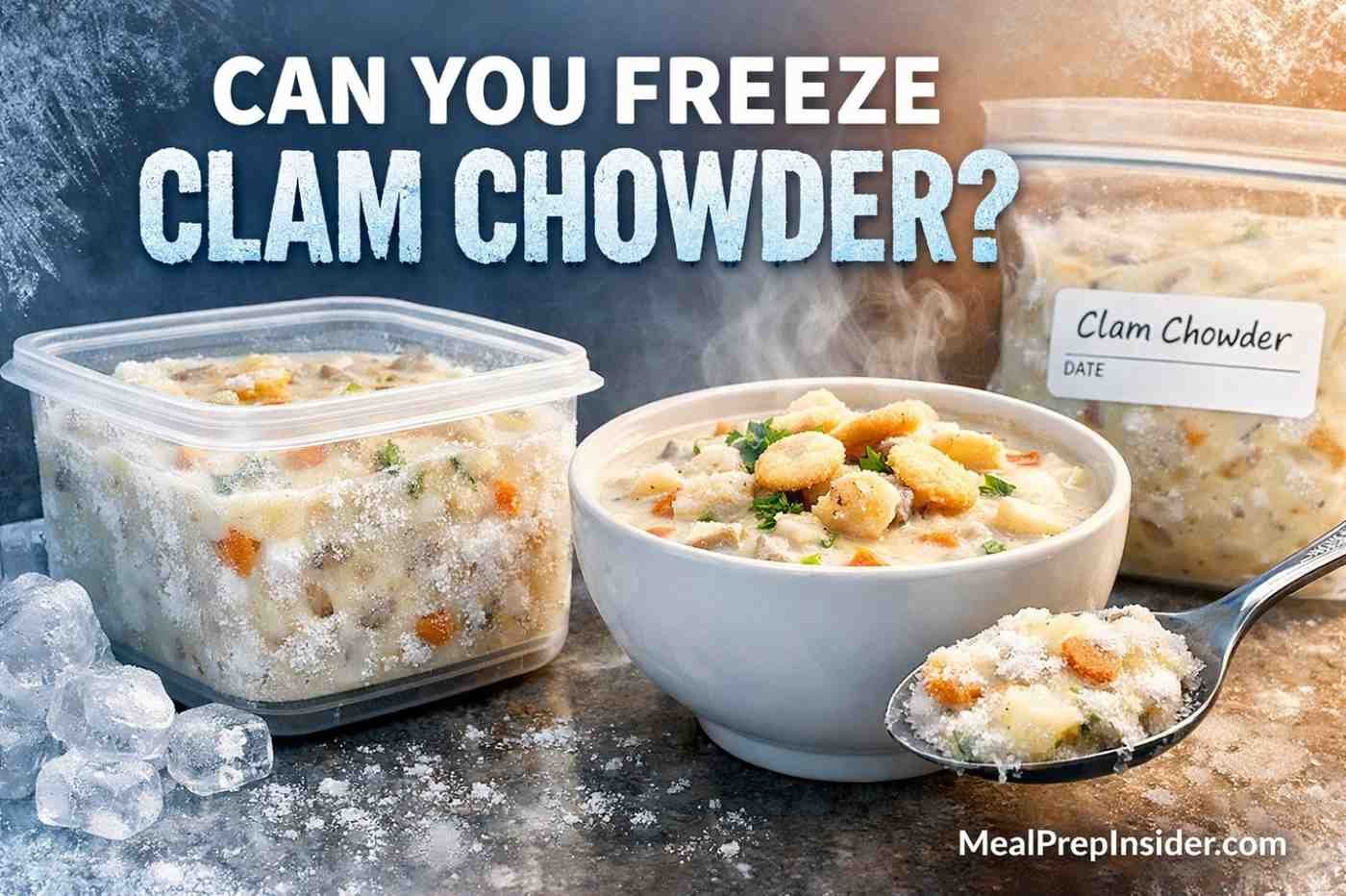
Can you freeze clam chowder without turning it into a grainy, separated mess? That’s the million-dollar question haunting home cooks across America who’ve made way too much of this creamy seafood delight.
You stare at that giant pot of leftover chowder, knowing you can’t possibly finish it before it goes bad, and wonder if your freezer might be the solution.
Here’s the thing: freezing clam chowder is possible, but it’s not as straightforward as tossing it in a container and calling it a day. The dairy, the potatoes, the delicate clam meat—they all behave differently when frozen and thawed.
Some people swear by it. Others have horror stories of ruined batches that resembled cottage cheese swimming in watery broth.
The truth sits somewhere in the middle, and understanding the science behind what happens when you freeze this beloved New England staple will determine whether you end up with a perfectly reheated bowl or something you wouldn’t feed to your worst enemy.
Let’s dig into everything you need to know.
Understanding the Freezing Challenge
Clam chowder presents unique obstacles when it comes to freezing. Unlike broths or simple soups, chowder contains ingredients that don’t appreciate the freeze-thaw cycle.
Dairy products are the primary culprits. Cream, milk, and even butter can separate when frozen because the fat molecules break away from the liquid base. When you reheat, you might notice an unappetizing grainy texture or visible curdling.
Potatoes also throw a wrench in the works. The water inside potato cells expands during freezing, breaking down the cell walls. Upon thawing, you’re left with mushy, mealy potato chunks that fall apart at the slightest touch.
Clams themselves handle freezing relatively well—they’re seafood, after all. But the combination of all these elements together? That’s where things get tricky.
The Short Answer: Yes, But With Conditions
You can absolutely freeze clam chowder. People do it successfully all the time. But you need to follow specific guidelines to maintain quality.
Freshness matters tremendously. Only freeze chowder that’s been properly cooked and hasn’t been sitting around for days. The fresher it is when it goes into the freezer, the better it’ll taste when it comes out.
Preparation before freezing makes all the difference. You can’t just ladle hot chowder into random containers and hope for the best.
Proper storage containers are essential. Air exposure creates freezer burn, which ruins both flavor and texture.
Thawing methods will determine whether your chowder survives intact. Rush the process, and you’ll pay the price with a ruined meal.
How Long Does Frozen Clam Chowder Last?
Frozen clam chowder maintains optimal quality for about 4 to 6 months when stored correctly. Beyond that timeframe, it’s technically still safe to eat, but the taste and texture deteriorate significantly.
Three months is the sweet spot. At this point, you’ll notice minimal quality loss if you’ve followed proper freezing procedures.
Six months represents the outer limit. Push beyond this, and you’re entering territory where freezer burn becomes inevitable, flavors fade, and textures transform into something unrecognizable.
Temperature consistency is crucial. Your freezer should maintain 0°F (-18°C) or lower. Temperature fluctuations cause ice crystals to form and melt repeatedly, damaging the chowder’s structure.
Preparing Clam Chowder for Freezing
Let’s get into the nitty-gritty of actually doing this right.
Cool It Down First
Never put hot or warm chowder directly into the freezer. This raises the overall freezer temperature, potentially affecting other frozen foods. It also creates excessive condensation inside your container, leading to larger ice crystals and worse texture upon thawing.
Set the pot in an ice bath for faster cooling. Fill your sink with ice water and place the pot inside, stirring occasionally. This brings the temperature down quickly and safely.
Refrigerate for an hour if you’re not in a rush. Just make sure it doesn’t sit at room temperature for more than two hours—that’s when bacteria start throwing a party.
Choose the Right Container
Airtight containers designed for freezer use are your best bet. They prevent freezer burn and protect against odor absorption.
Leave headspace at the top. Liquids expand when frozen, so fill containers only about three-quarters full. Otherwise, you’ll have containers cracking or lids popping off.
Freezer-safe bags work beautifully. Lay them flat for efficient storage and faster thawing. Just make sure you’ve squeezed out as much air as possible before sealing.
Glass containers are risky. Unless specifically labeled freezer-safe, they can shatter from the expansion. If you do use glass, leave plenty of room for expansion.
Label Everything
Seriously, label everything. You think you’ll remember what’s in that container and when you froze it. You won’t.
Include the date on every container. Write it clearly with a permanent marker.
Note the contents and any special preparation needed. “Clam chowder – reheat gently with extra cream” saves you from guessing games later.
The Best Freezing Method Step-by-Step
Here’s exactly how to do it:
- Cook your chowder and let it cool completely
- Divide into meal-sized portions (freezing the entire batch in one container means multiple freeze-thaw cycles for partial use)
- Pour into containers, leaving 1-2 inches of headspace
- Seal tightly, removing as much air as possible
- Label with date and contents
- Place in the coldest part of your freezer (usually the back)
- Use within 3-6 months for best quality
Modifying Your Recipe for Better Freezing Results
Smart cooks adjust their recipes when they know they’ll be freezing chowder.
Hold Back the Dairy
This is the game-changer. Make your chowder base with everything except the cream or milk. Freeze it in that state, then add the dairy when you reheat.
The clam broth, vegetables, and seafood all freeze beautifully on their own. The cream added fresh during reheating tastes like you just made it.
This method requires a bit more work during reheating, but the texture difference is remarkable. No separation, no graininess, no weird mouthfeel.
Consider Undercooking Potatoes Slightly
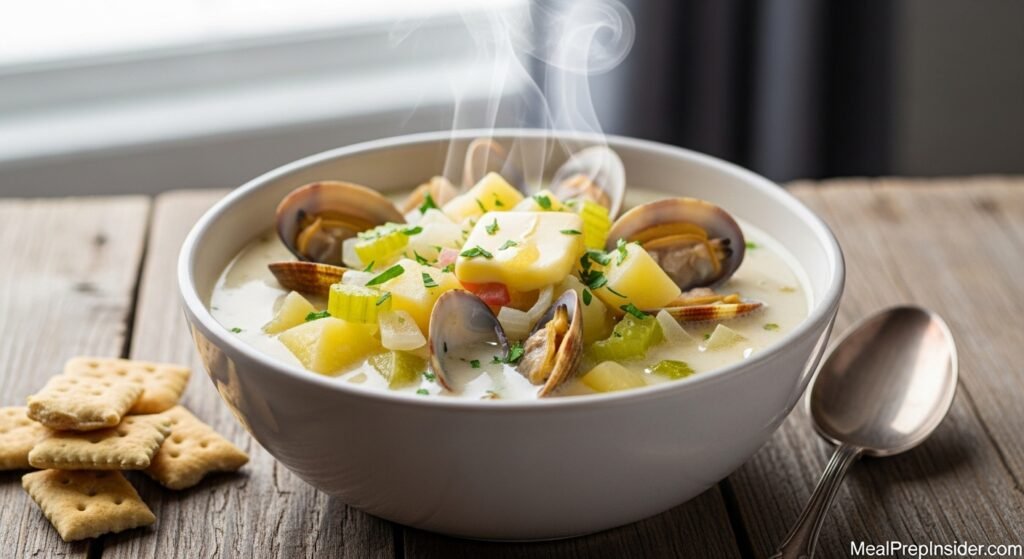
If your recipe includes potatoes, cook them just until they’re almost tender before freezing. They’ll finish cooking during the reheating process and won’t turn to mush.
Waxy potatoes like red or Yukon gold hold up better than russets. Their lower starch content means less breakdown during freezing.
Some people skip potatoes entirely in batches meant for freezing, adding freshly cooked ones during reheating instead.
Reduce the Initial Salt
Freezing can intensify salty flavors. Season lightly before freezing, then adjust the salt level when you reheat.
This gives you better control over the final taste and prevents over-salted chowder that makes you reach for water after every spoonful.
Thawing Frozen Clam Chowder the Right Way
How you thaw matters just as much as how you freeze.
Refrigerator Thawing (The Best Method)
Transfer your frozen chowder to the refrigerator 24 hours before you plan to eat it. This slow, gentle thawing preserves texture and flavor better than any other method.
Place the container on a plate or in a bowl to catch any condensation or potential leaks. Nobody wants clam chowder juice all over their fridge shelves.
Patience pays off here. The gradual temperature change minimizes stress on the dairy components and keeps everything intact.
Cold Water Thawing (The Faster Option)
Submerge the sealed container in cold water, changing the water every 30 minutes. This speeds up the process considerably while still being gentle enough to maintain quality.
Never use warm or hot water. The temperature shock does terrible things to dairy-based soups, causing immediate separation and curdling.
Keep the container sealed throughout the process. Water seeping in dilutes your carefully crafted flavors.
Microwave Thawing (Last Resort)
You can use the defrost setting, but this is the riskiest method. Microwaves create hot spots that can curdle dairy before the rest of the chowder has even thawed.
If you must microwave, use the lowest power setting and check every minute, stirring whenever possible.
Truthfully, skip this method if you have any other option. The results rarely match the quality of slower thawing techniques.
Reheating for Best Results
You’ve successfully frozen and thawed your chowder. Don’t blow it now during the final step.
Stovetop Reheating
This is your best bet for quality results. Pour the thawed chowder into a pot and heat over low to medium-low heat.
Stir frequently to prevent scorching on the bottom. Dairy burns easily, leaving an unpleasant taste throughout the entire batch.
Heat slowly until it reaches your desired temperature. Rushing with high heat invites curdling and separation.
Add a splash of fresh cream or milk if it seems too thick. Freezing can change the consistency, and a little fresh dairy brings back that luxurious texture.
Slow Cooker Method
Transfer thawed chowder to your slow cooker and heat on low for 2-3 hours. This gentle, even heating works wonderfully for cream-based soups.
Stir occasionally if you’re around. Not essential, but it helps maintain consistency.
This method is perfect when you want dinner ready when you get home, but don’t want to babysit a pot on the stove.
What about the double-boiler method?
For the truly cautious, a double boiler provides the gentlest heat possible. Place your chowder in a heat-safe bowl over simmering water.
It takes longer, but you virtually eliminate any risk of curdling or scorching. The indirect heat keeps temperatures moderate and consistent.
This is overkill for most people, but if you’ve had bad experiences with reheating dairy soups, it’s worth trying.
Fixing Common Issues with Frozen Clam Chowder
Things don’t always go according to plan. Here’s how to salvage imperfect results.
Separation and Curdling
If your chowder looks broken or separated after thawing, don’t panic. An immersion blender can sometimes bring it back together.
Blend in short bursts, checking the consistency between pulses. You might change the texture slightly, but it’s better than throwing it out.
Whisking in a bit of fresh cream while reheating can also help reincorporate separated fats. The new dairy acts as an emulsifier.
Watery Consistency
Freezing can cause some liquid separation. Strain off excess liquid if it’s severe, or simply let it simmer uncovered for a few minutes to reduce and thicken.
A cornstarch slurry (one tablespoon of cornstarch mixed with two tablespoons of cold water) works wonders for thickening. Add slowly while stirring until you reach the desired consistency.
Instant potato flakes are a secret weapon. A tablespoon or two dissolves invisibly while thickening the soup perfectly.
Mushy Potatoes
Honestly, there’s no fixing potatoes that have turned to mush. You can try to mash them into the soup for a thicker consistency, but the texture is forever changed.
Next time, follow the advice about undercooking them or adding them fresh during reheating.
Some people strain out the mushy potatoes entirely and add freshly diced, cooked ones. It’s extra work, but it salvages the batch.
Off Flavors
If your chowder tastes slightly off after freezing, it might be freezer burn or flavor absorption from other frozen items.
Adding fresh herbs like parsley or chives brightens up muted flavors. A squeeze of lemon juice can also revive flat-tasting chowder.
A small amount of butter stirred in at the end adds richness that may have diminished during storage.
Mistakes People Make When Freezing Clam Chowder
Let’s talk about where things typically go wrong.
Freezing in Unsuitable Containers
Using containers not designed for freezing leads to freezer burn, cracked containers, and chowder that tastes like the inside of your freezer.
Cheap plastic containers often aren’t airtight enough. Invest in quality freezer containers or heavy-duty freezer bags.
Not Cooling Before Freezing
Putting hot chowder in the freezer creates massive ice crystals that tear apart the soup’s structure. It also wastes energy and potentially raises your freezer temperature to unsafe levels.
Always, always cool completely first.
Filling Containers to the Brim
Liquids expand when frozen. Fill too full, and you’ll have exploded containers, popped lids, and a freezer mess that’s nobody’s idea of fun.
Leave that headspace. It’s not optional.
Keeping It Too Long
After six months, even perfectly frozen chowder deteriorates significantly. Mark your calendar, set a phone reminder, do whatever it takes to use it within a reasonable timeframe.
Freezer storage isn’t infinite. Quality declines steadily over time.
Refreezing Thawed Chowder
Once you’ve thawed clam chowder, you can’t refreeze it. The texture will be destroyed, and you risk food safety issues.
Only thaw what you plan to eat. That’s why portioning before freezing matters so much.
Different Types of Clam Chowder and Freezing Considerations
Not all clam chowders are created equal, and they don’t all freeze the same way.
New England Clam Chowder
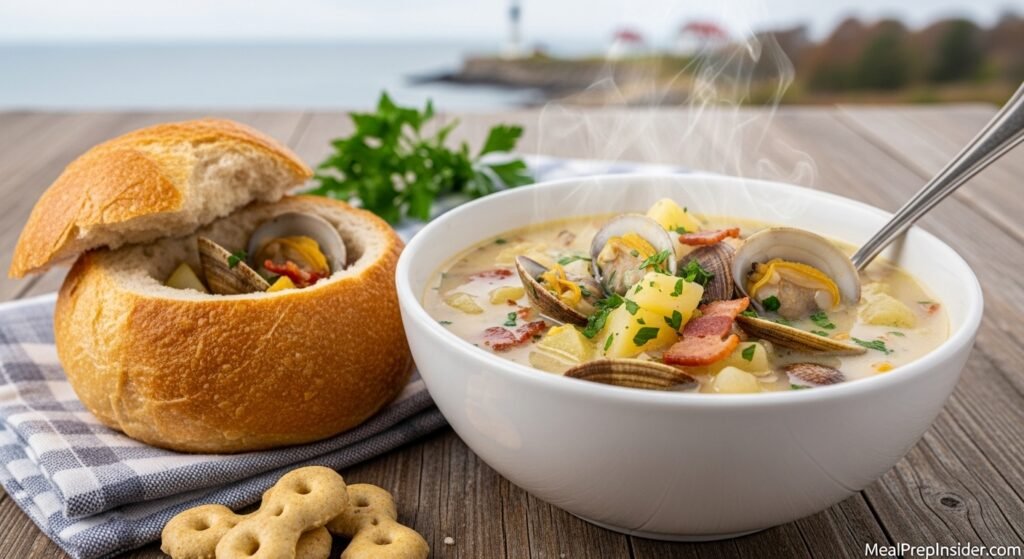
This cream-based classic is the trickiest to freeze due to its high dairy content. The methods described above work best for this variety.
Consider the modified recipe approach where you hold back the cream until reheating. It makes a significant difference in the final quality.
Manhattan Clam Chowder
This tomato-based version freezes beautifully. Without cream or milk, you sidestep the biggest freezing challenges entirely.
Tomatoes handle freezing well, as do the vegetables typically found in Manhattan chowder. This variety is much more forgiving than its New England cousin.
Freeze and thaw using the same general principles, but expect much better results with less fuss.
Rhode Island Clam Chowder
This clear broth version is arguably the easiest to freeze. No dairy, no tomatoes—just broth, clams, and vegetables.
The lack of thickening agents means texture changes are minimal. It reheats almost as well as it tastes fresh.
RELATED POST >> Rhode Island Clam Chowder Recipe: Favorite Delicious Soup
Commercial vs. Homemade: Freezing Differences
Store-bought clam chowder often contains stabilizers and emulsifiers that help it survive freezing better than homemade versions.
Food manufacturers design products with preservation in mind. Those mysterious ingredients you can’t pronounce? Many of them prevent separation and maintain texture during freezing and thawing.
Homemade chowder, made with pure ingredients and no additives, is more vulnerable to texture changes. But it still tastes better, so don’t let that stop you.
If you’ve purchased fresh chowder from a restaurant or seafood market, ask if it’s been previously frozen. Refreezing will definitely compromise quality.
Creative Uses for Frozen Clam Chowder
Sometimes your thawed chowder doesn’t look quite right for eating as soup. Get creative.
Chowder Sauce for Pasta
Reduce the thawed chowder by simmering until it thickens, then toss with linguine or fettuccine. Add extra clams if you like, and top with fresh parsley.
It’s a completely different dish that disguises any minor texture issues from freezing.
Seafood Pot Pie Filling
Use thawed chowder as the base for a pot pie. The baking process further integrates separated ingredients, and the flaky crust distracts from any textural imperfections.
Add extra seafood like shrimp or scallops to stretch it further.
Baked Potato Topping
Load up a baked potato with heated clam chowder instead of traditional toppings. Add cheese, bacon bits, and green onions.
The potato absorbs the chowder beautifully, and you’ve created a hearty meal from something that might not have looked appetizing on its own.
Casserole Base
Mix thawed chowder with cooked rice or pasta, top with breadcrumbs and cheese, and bake until golden and bubbly.
The transformation into a completely different dish means texture issues from freezing become irrelevant.
Food Safety Considerations
Let’s talk about keeping things safe to eat.
Bacterial Growth During Cooling
Never leave chowder at room temperature for more than two hours before refrigerating or freezing. Between 40°F and 140°F, bacteria multiply rapidly.
In hot weather or warm kitchens, that window shrinks to one hour. Play it safe.
Thawing Safety
Always thaw in the refrigerator, cold water, or microwave—never on the counter. Room temperature thawing invites bacterial growth in the outer portions while the center remains frozen.
Reheating Temperature
Heat thawed chowder to at least 165°F before serving. Use a food thermometer to verify. This ensures any potential bacteria are killed.
Don’t just heat until it “seems hot enough.” Measure it.
Signs of Spoilage
Trust your senses. If thawed chowder smells off, looks slimy, or has an unusual appearance, throw it out.
Freezing doesn’t kill all bacteria—it just stops them from growing. If chowder was already beginning to spoil before freezing, it will continue deteriorating after thawing.
Cost-Effectiveness of Freezing Clam Chowder
Making a large batch and freezing portions saves both money and time.
Fresh clams and seafood aren’t cheap. Making a double or triple batch lets you buy in bulk when prices are good or when you find quality ingredients.
Freezing prevents waste. Instead of throwing out leftovers, you’re creating future meals.
The time investment in cooking happens once, but you eat multiple times. That’s efficiency.
Compare the cost of homemade frozen chowder to buying fresh from restaurants or prepared from grocery stores. Your freezer stash wins every time.
Seasonal Considerations
Clam chowder freezing becomes particularly useful during certain times of the year.
Summer Clam Season
When clams are abundant and prices drop, make large batches and freeze for winter enjoyment.
Fresh summer clams taste incredible, and capturing that flavor for cold winter months is deeply satisfying.
Holiday Preparation
Making chowder ahead and freezing it frees up stove space and reduces stress during busy holiday cooking.
Serve as an elegant first course without the last-minute rush.
Post-Holiday Leftovers
Made too much for your gathering? Freeze it rather than forcing yourself to eat chowder for a week straight.
Future you will appreciate the variety when you’re not burnt out on clam chowder.
Storage Container Comparison
| Container Type | Pros | Cons | Best For |
|---|---|---|---|
| Plastic freezer containers | Reusable, stackable, portion control | Can absorb odors over time, takes up space | Regular freezing, multiple portions |
| Freezer bags | Risk of breaking, heavier, and more expensive | Single-use (mostly), can puncture | Tight freezer space, budget-conscious |
| Glass freezer-safe containers | Doesn’t absorb odors, oven-safe for reheating | Risk of breaking, heavier, expensive | Long-term storage, quality concerns |
| Vacuum-sealed bags | Maximum freshness, prevents freezer burn | Requires special equipment, higher cost | Extended storage, serious home cooks |
Texture Expectations After Freezing
Be realistic about what you’re getting.
Frozen and thawed clam chowder will never taste exactly like freshly made. The texture changes slightly, even with perfect technique.
The flavor remains largely intact. Chowder still tastes like chowder—the herbs, the clams, the savory broth all survive well.
The mouthfeel might be slightly different. Dairy-based versions may feel less velvety smooth, especially if you notice any separation.
Setting appropriate expectations prevents disappointment. It’s still delicious comfort food, just not quite identical to fresh.
Professional Chef Tips
People who cook for a living have learned tricks worth stealing.
Flash Freeze Individual Portions
Pour chowder into muffin tins and freeze until solid, then pop out and store in freezer bags. These individual portions thaw quickly and let you take out exactly what you need.
Perfect for singles or couples who don’t need a full quart at once.
Add Gelatin
Some chefs add unflavored gelatin (about 1 teaspoon per quart) to help stabilize dairy during freezing. It prevents separation without affecting flavor.
Bloom the gelatin in cold water, then stir it into warm chowder before cooling and freezing.
Freeze Clam Meat Separately
Cook clams separately and freeze them apart from the chowder base. Add when reheating for the freshest texture.
Clams can get rubbery during the freeze-thaw process when sitting in liquid for months.
Restaurant Secret
Many restaurants actually freeze their chowder base without dairy, then make it “fresh” to order by adding cream and heating. You’re essentially doing what professionals do.
Equipment That Makes a Difference
Having the right tools simplifies the entire process.
Vacuum Sealer
This removes all air from storage bags, dramatically reducing freezer burn and extending quality storage time.
The upfront cost pays off if you freeze food regularly. Chowder lasts noticeably longer with vacuum sealing.
Freezer Thermometer
Is your freezer actually at 0°F? You might be surprised. A simple thermometer confirms your freezer maintains proper temperature.
Inconsistent temperatures ruin frozen food quality faster than anything else.
Ladle with Pour Spout
Makes portioning chowder into containers much neater. Less spilling means less waste and cleaner containers.
Immersion Blender
Essential for fixing separated chowder after thawing. Having one on hand gives you options when things don’t go perfectly.
Regional Variations and Freezing
Different regions have different chowder styles, each with unique freezing considerations.
In the Pacific Northwest, salmon chowder presents similar challenges to clam chowder—cream-based with delicate protein.
Southern corn chowders freeze beautifully due to the sturdiness of corn compared to seafood.
Northeastern fish chowders follow the same principles as clam chowder, with white fish being even more delicate than clams after freezing.
Knowing your regional variation helps you anticipate challenges and adjust methods accordingly.
Frequently Asked Questions
Can you freeze clam chowder with heavy cream?
Yes, though you’ll get better results if you add the heavy cream fresh when reheating. Cream-containing chowder can separate during freezing, but gentle reheating and stirring usually bring it back together. For the best quality, freeze the base and add fresh cream later.
How do you know if frozen clam chowder has gone bad?
Check for off odors, unusual colors like gray or green, or excessive ice crystals that indicate freezer burn. If it smells sour or fishy (beyond normal seafood scent), discard it immediately. When in doubt, throw it out—seafood safety isn’t worth risking.
Can you freeze store-bought clam chowder in the can?
Remove it from the can first and transfer to freezer-safe containers. Never freeze food in its original metal can—the metal can corrode, and cans aren’t designed to handle the expansion of freezing liquids. Most canned chowder freezes reasonably well due to stabilizers added during manufacturing.
Does freezing clam chowder kill bacteria?
No, freezing only stops bacterial growth temporarily. It doesn’t eliminate bacteria that were present before freezing. This is why you must start with fresh, properly cooked chowder and handle it safely throughout the freezing and thawing process. Always reheat to 165°F before eating.
Can you freeze clam chowder twice?
Absolutely not. Refreezing creates severe texture problems and increases food safety risks significantly. The quality deteriorates exponentially with each freeze-thaw cycle. Only freeze once, and only thaw the amount you plan to consume completely.
What’s the best container size for freezing clam chowder?
Choose containers that hold one to two servings for most households. Pint or quart-sized containers work well. Smaller portions thaw faster and prevent waste since you can’t refreeze leftovers. Consider your typical serving sizes when deciding.
Can you freeze clam chowder with potatoes and still have a good texture?
The potatoes will likely become softer and potentially mealy, but many people find this acceptable. For best results, slightly undercook potatoes before freezing or add freshly cooked ones when reheating. Waxy potato varieties hold up better than starchy russets.
How long does it take to thaw frozen clam chowder in the fridge?
Plan for 24 hours in the refrigerator for a quart-sized container. Smaller portions thaw faster, while larger batches may need up to 36 hours. Never thaw at room temperature—the slow refrigerator method is safest and maintains the best quality.
Can you heat frozen clam chowder directly without thawing?
You can, but it requires very low heat and constant stirring to prevent scorching. The outer portions will heat while the center remains frozen, creating uneven temperatures and potential for burning. Thawing first gives much better results and more control over the heating process.
Why does my clam chowder separate after freezing?
Dairy products naturally separate when frozen because fat molecules break away from the liquid. The extreme temperature and ice crystal formation disrupt the emulsion that keeps the cream smooth and integrated. Gentle reheating with stirring or adding fresh cream usually fixes this problem.
Is Manhattan or New England clam chowder better for freezing?
Manhattan clam chowder freezes significantly better because its tomato base doesn’t separate as cream does. The lack of dairy eliminates the biggest freezing challenge. If you know you’ll be freezing, Manhattan-style is the smarter choice for maintaining quality.
Can you freeze cream-based soup in general or just clam chowder?
Most cream-based soups face the same challenges when frozen. Potato soup, broccoli cheese soup, and cream of mushroom all experience similar separation and texture issues. The techniques for freezing clam chowder work for these soups too—particularly adding dairy fresh during reheating.
Final Thoughts on Freezing Success
Freezing clam chowder absolutely works when you respect the process and understand the limitations.
Perfect technique gives you meals that taste nearly as good as fresh, stretches your grocery budget, and reduces food waste significantly.
The key factors are proper cooling, appropriate containers, correct thawing, and gentle reheating. Master these elements, and you’ll wonder why you didn’t start freezing chowder sooner.
Consider modifying recipes specifically for freezing by holding back dairy until reheating. This one change transforms results from mediocre to excellent.
Your freezer represents an opportunity to capture the comfort of homemade clam chowder for those nights when cooking from scratch isn’t happening. That bowl of creamy, savory goodness waiting in your freezer? That’s smart planning.
Don’t let leftover chowder go to waste. Don’t hesitate to make a double batch when the inspiration strikes. And definitely don’t let fear of imperfect results stop you from trying.
Frozen clam chowder isn’t quite the same as fresh. But on a cold evening when you’re hungry and tired, it’s pretty darn close—and infinitely better than no chowder at all.
SUGGESTED POST >> Is Clam Chowder Healthy? The Creamy Truth & Nutrition Facts