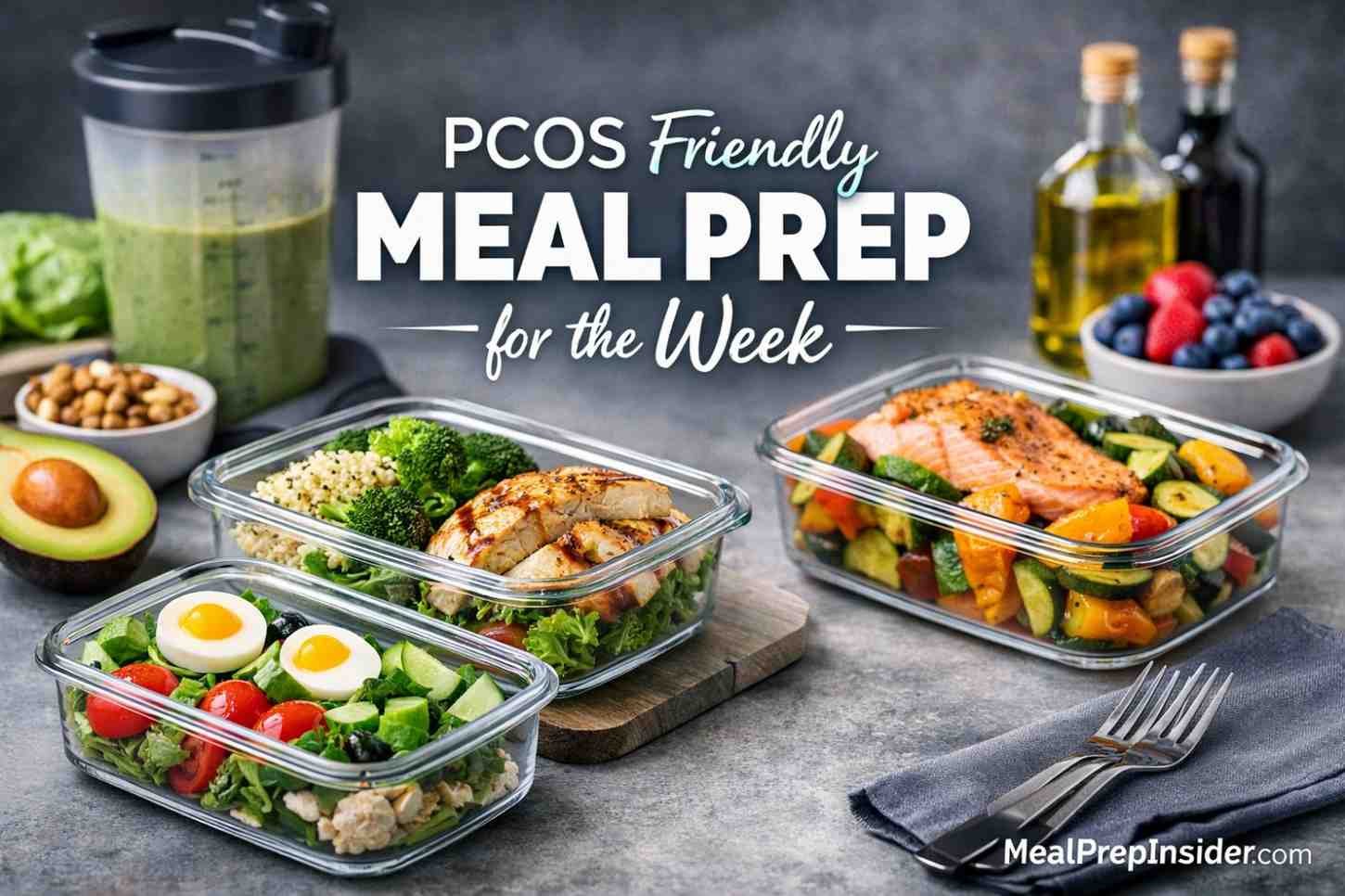
PCOS friendly meal prep for the week doesn’t have to feel like navigating a minefield of contradictory nutrition advice and endless hours in the kitchen. If you’re one of the millions of American women dealing with Polycystic Ovary Syndrome, you already know that Sunday night panic when you realize you’ve got nothing planned for the week ahead and your blood sugar is about to go on a roller coaster ride.
Let me tell you about Sharon. She’s a 32-year-old marketing manager from Denver who spent three years bouncing between restrictive diets that left her hangry, exhausted, and still struggling with her PCOS symptoms.
Her breaking point came during a Wednesday afternoon meeting when she nearly passed out from skipping breakfast and living on coffee. That’s when she decided meal prep wasn’t optional anymore—it was survival.
The thing about PCOS is that it’s not just about having irregular periods or dealing with hormonal acne. It’s a metabolic condition that affects how your body processes insulin, which means what you eat and when you eat it can make the difference between feeling like yourself or feeling like you’re walking through quicksand all day.
Why PCOS Friendly Meal Prep Changes Everything
Your body with PCOS responds differently to food than someone without the condition. You’re dealing with insulin resistance in about 70% of cases, which means your cells don’t respond properly to insulin, causing your pancreas to pump out more of it.
This creates inflammation, triggers androgen production, and sets off a cascade of symptoms that can include weight gain, fatigue, and those stubborn cravings that hit at 3 PM like clockwork.
When you prep your meals ahead of time, you’re not just saving time. You’re taking control of your blood sugar, reducing decision fatigue, and giving your body consistent, balanced nutrition that supports hormone regulation.
Here’s what happens when you don’t prep:
- You grab whatever’s convenient, which usually means high-carb, processed options
- Your blood sugar spikes and crashes throughout the day
- Insulin levels stay elevated
- Inflammation increases
- Cravings intensify
- You feel like garbage
Sound familiar?
The Foundation of PCOS Meal Prep Success
Before we dive into recipes and containers, let’s talk about what makes a meal PCOS-friendly in the first place. This isn’t about restriction or cutting out entire food groups. It’s about balance and timing.
Protein is your best friend. Every single meal should have a solid protein source. We’re talking 25-35 grams per meal for most women. Protein helps stabilize blood sugar, keeps you full, and supports muscle maintenance, which is crucial for improving insulin sensitivity.
Fiber is your second-best friend. Aim for at least 25-30 grams daily. Fiber slows down digestion, prevents blood sugar spikes, and helps eliminate excess hormones through your digestive system. Plus, it feeds the good bacteria in your gut, which research shows plays a role in managing PCOS symptoms.
Healthy fats are non-negotiable. Your brain needs fat. Your hormones are made from fat. Anti-inflammatory omega-3s can help reduce some of the chronic inflammation that comes with PCOS. Don’t fear fat—just choose quality sources.
Strategic carbs matter. Notice I didn’t say “low carb.” Some women with PCOS do great on lower carb intake; others need more carbs to support thyroid function and avoid triggering stress hormones. The key is choosing complex carbs with fiber and pairing them with protein and fat.
Your Weekly PCOS Meal Prep Blueprint
Let’s get practical. Here’s a realistic approach to prepping that won’t consume your entire weekend.
Sunday Setup Strategy
Block out 2-3 hours on Sunday afternoon. Put on a podcast, pour yourself some herbal tea, and commit to the process. Sarah likes to start around 2 PM so everything’s ready before the Sunday scaries kick in.
First hour: Prep your proteins
Cook 3-4 different protein sources in bulk. This gives you variety throughout the week without getting bored.
- Bake 3 pounds of chicken thighs at 400°F for 35 minutes
- Cook 2 pounds of ground turkey with taco seasoning
- Hard-boil a dozen eggs
- Season and bake 2 pounds of wild-caught salmon
Second hour: Handle your vegetables
Roast a variety of non-starchy vegetables. Mix it up so your meals don’t feel repetitive.
- Broccoli and cauliflower florets with olive oil and garlic
- Brussels sprouts halved and roasted until crispy
- Zucchini and bell peppers cut into chunks
- Asparagus with lemon and sea salt
Third hour: Complex carbs and assembly
- Cook a big batch of quinoa or brown rice
- Roast sweet potatoes, cut into cubes
- Portion everything into containers
Truth is, this gets faster every week. By week three, you’ll have it down to 90 minutes, tops.
Five Days of PCOS-Friendly Meals You’ll Want to Eat
Let me break down what a week of PCOS meal prep looks like in real life. These aren’t Instagram-perfect bento boxes that require a culinary degree. They’re balanced, delicious, and they work.
Monday: Mediterranean Chicken Bowl
Breakfast: Veggie egg muffins with spinach, tomatoes, and feta (make 12 on Sunday)
Pair with half an avocado and a handful of berries. Coffee with full-fat coconut milk if you’re into that.
Lunch: Grilled chicken thigh over mixed greens with cucumber, olives, cherry tomatoes, hummus, and olive oil dressing
Add a quarter cup of quinoa on the side. The combination of protein, fiber, and healthy fats keeps your blood sugar stable through the afternoon slump.
Dinner: Baked salmon with roasted broccoli and half a medium sweet potato
Drizzle everything with tahini sauce made from tahini, lemon juice, and garlic. This meal is ridiculously satisfying.
Snacks: Apple slices with almond butter, or Greek yogurt with chia seeds and cinnamon
Tuesday: Taco-Inspired Power Bowls
Breakfast: Protein smoothie with spinach, half a banana, protein powder, chia seeds, and almond milk
Blend it the night before and grab it on your way out. Add a tablespoon of almond butter for staying power.
Lunch: Seasoned ground turkey over cauliflower rice with black beans, salsa, avocado, and a dollop of Greek yogurt
This bowl is loaded with fiber and protein. The cauliflower rice keeps the carbs in check while the black beans add resistant starch, which is great for gut health.
Dinner: Chicken thigh with roasted Brussels sprouts and a side salad
Dress the salad with olive oil and apple cider vinegar. Simple but effective.
Snacks: Hard-boiled eggs with everything bagel seasoning, or veggie sticks with guacamole
Wednesday: Asian-Inspired Lettuce Wraps
Breakfast: Chia pudding made with coconut milk, topped with berries and crushed almonds
Prep this Tuesday night before bed. It takes two minutes.
Lunch: Ground turkey with ginger, garlic, and coconut aminos wrapped in butter lettuce leaves
Add shredded carrots, cucumber, and a sprinkle of sesame seeds. Pack the filling separately and assemble at lunch for maximum freshness.
Dinner: Baked salmon with roasted zucchini and half a cup of brown rice
Season the zucchini with Italian herbs for a flavor change from earlier in the week.
Snacks: Mixed nuts (watch the portions—a quarter cup is plenty), or celery with cashew butter
Thursday: Sheet Pan Simplicity
Breakfast: Veggie egg muffins with a side of sautéed greens
Reheat the muffins and quickly sauté some kale or spinach in olive oil. Takes five minutes.
Lunch: Chicken thigh with roasted bell peppers and asparagus over mixed greens
Add pumpkin seeds for crunch and extra magnesium, which many women with PCOS are deficient in.
Dinner: Ground turkey stuffed bell peppers with cauliflower rice
Make these on Sunday and just reheat. They’re basically comfort food that won’t spike your blood sugar.
Snacks: Greek yogurt with hemp seeds, or cucumber slices with hummus
Friday: Mix It Up Day
Breakfast: Scrambled eggs with leftover roasted vegetables and half an avocado
Use up whatever veggies are looking lonely in your fridge. Waste not, want not.
Lunch: Salmon salad with mixed greens, roasted sweet potato cubes, and tahini dressing
This combination of omega-3s, fiber, and complex carbs is basically a love letter to your hormones.
Dinner: Leftover creation night
Mix and match whatever proteins and veggies you have left. Throw it over greens, add your favorite dressing, and call it a Buddha bowl. Nobody needs to know you’re winging it.
Snacks: Dark chocolate (85% cacao) with almond butter, or bell pepper strips with white bean dip
The Equipment That Makes It Happen
You don’t need fancy gadgets, but a few key items make meal prep significantly less painful.
Glass meal prep containers: Get the ones with divided sections. Aim for 10-12 containers, so you’re not constantly washing. Glass doesn’t absorb odors or stain like plastic, and you can reheat directly in them.
Sheet pans: Three good-quality rimmed baking sheets change the game. You can roast everything at once without multiple batches.
Instant Pot or slow cooker: Not essential, but helpful for cooking tough cuts of meat or making big batches of bone broth, which is fantastic for gut health and PCOS.
Good knife and cutting board: A sharp chef’s knife makes vegetable prep about 80% faster and way less frustrating.
Mason jars: Perfect for overnight oats, chia pudding, smoothies, and homemade dressings.
Grocery Shopping Like a PCOS-Aware Boss
Your grocery haul should focus on whole foods around the perimeter of the store. Here’s what a typical PCOS-friendly shopping list looks like:
Proteins
- Chicken thighs (dark meat has more nutrients than white)
- Ground turkey or grass-fed beef
- Wild-caught salmon or other fatty fish
- Eggs (pasture-raised if possible)
- Greek yogurt (full-fat, plain)
- Canned wild sardines (trust me on this one)
Vegetables
- Leafy greens: spinach, kale, arugula, mixed greens
- Cruciferous vegetables: broccoli, cauliflower, Brussels sprouts
- Colorful options: bell peppers, zucchini, asparagus, tomatoes
- Aromatics: onions, garlic, ginger
Complex Carbs
- Quinoa
- Brown rice
- Sweet potatoes
- Black beans and lentils
- Oats (steel-cut or rolled)
Healthy Fats
- Avocados
- Olive oil (extra virgin)
- Nuts and seeds (almonds, walnuts, pumpkin seeds, chia, hemp)
- Nut butters (check for no added sugar)
- Full-fat coconut milk
Extras That Matter
- Fresh herbs: cilantro, parsley, basil
- Spices: turmeric, cinnamon, cumin, paprika
- Apple cider vinegar
- Coconut aminos or tamari
- Lemons and limes
- Berries (fresh or frozen)
RELATED POST >> 8 Hour Night Shift Meal Plan: Eating Great to Stay Alert
Common Pitfalls That Trip People Up
Even with the best intentions, certain mistakes can derail your meal prep efforts. Let’s talk about what to avoid.
Prepping foods you don’t enjoy eating. Sarah spent her first month making bland chicken breast and steamed broccoli because she thought that’s what “healthy” meant. She lasted two weeks before ordering pizza at midnight. Prep food you’re excited to eat.
Not seasoning properly. Salt, herbs, spices, and acid from lemon or vinegar—these aren’t optional. They’re what make your meal prep something you look forward to, not dread.
Waiting until you’re starving to meal prep. You’ll make poor choices, cut corners, and probably order takeout halfway through. Prep when you’re fed and focused.
Trying to prep every single meal and snack. That’s burnout waiting to happen. Prep lunches and dinners. Keep breakfast simple. Have easy snack options available, but don’t go overboard.
Forgetting about flavor combinations. If every meal tastes the same, you’ll get bored fast. Use different seasonings, sauces, and cooking methods to keep things interesting.
Batch Cooking vs. Ingredient Prep
There are two schools of thought in the meal prep world, and honestly, you might end up using both depending on the week.
Batch cooking means making complete meals in advance. Think casseroles, soups, or fully assembled bowls. You just grab and reheat. This works great if you have zero time during the week and don’t mind eating the same thing multiple days in a row.
Ingredient prep means cooking components separately—proteins, veggies, and carbs—then mixing and matching throughout the week. This gives you more variety and feels less repetitive. It’s what Sarah eventually switched to after getting tired of eating the same lunch five days straight.
Truth be told, a hybrid approach works best for most people. Prep your base ingredients, but maybe make one or two complete meals like soup or a casserole for those nights when you can’t even think straight.
Navigating Social Situations and Meal Prep
Real life doesn’t stop because you’re meal prepping. You’ll have dinner invitations, work lunches, and spontaneous plans. Here’s how to handle it without abandoning your PCOS management or becoming that person who brings Tupperware everywhere.
Flexibility is key. If you prepped lunch for Wednesday but got invited to a work lunch, eat your prepped meal for dinner instead. Nothing is wasted.
Restaurant strategy matters. Order protein-forward dishes with vegetables. Ask for dressings and sauces on the side. Skip the bread basket if it’s just going to spike your blood sugar and leave you crashed an hour later.
Don’t make it weird. You don’t need to explain your entire medical history when declining certain foods. “I’m good with what I have” or “I’m not hungry for that right now” works fine.
Plan for one or two meals out per week. This keeps you sane and social. Just make informed choices when you’re dining out.
The Hormone-Balancing Extras
Beyond the basic meals, certain additions can further support your PCOS management.
Studies have shown that spearmint tea can reduce androgen levels. Have a cup in the evening as part of your wind-down routine.
Cinnamon helps improve insulin sensitivity. Add it to your morning coffee, smoothies, or sprinkle it on berries.
Omega-3 supplementation from high-quality fish oil or algae oil can reduce inflammation. If you’re not eating fatty fish three times per week, consider supplementing.
Inositol is a supplement that’s gained attention for PCOS management. Many women find it helpful for improving insulin sensitivity and menstrual regularity. Talk to your healthcare provider about whether it makes sense for you.
Vitamin D deficiency is common in PCOS. Get your levels checked and supplement if needed, especially if you live in northern states where sun exposure is limited half the year.
When Meal Prep Needs to Evolve
Your needs will change depending on where you are in your cycle, stress levels, activity level, and life circumstances. What worked in January might need tweaking by June.
Paying attention to how you feel is more valuable than rigidly sticking to any plan. If you’re dragging during workouts, you might need more carbs. If you’re constantly hungry, increase your protein and fat intake. If you’re wired and tired, look at stress management and sleep quality, not just food.
Tracking symptoms can help you identify patterns. Sarah keeps a simple note on her phone tracking energy levels, cravings, mood, and menstrual symptoms. After a few months, she noticed that she needed more carbs in her luteal phase to manage cravings and mood swings.
Working with a professional who understands PCOS can be incredibly valuable. A registered dietitian specializing in PCOS can help you fine-tune your approach based on your specific symptoms and lab results.
Building Your Meal Prep Confidence
The first few weeks of meal prepping feel awkward and time-consuming. You’ll forget ingredients, overcook chicken, and probably have at least one container leak in your bag.
That’s completely normal.
By week four, you’ll have a rhythm. By week eight, you won’t need to reference recipes or shopping lists. By week twelve, you’ll wonder how you ever functioned without this system.
Sarah’s now two years into consistent meal prep. Her HbA1c dropped from prediabetic levels to the normal range. She lost 30 pounds without counting calories. Her periods regulate themselves. The afternoon energy crashes are gone.
More importantly, she no longer feels controlled by food. She’s not white-knuckling through sugar cravings or experiencing the shame spiral that used to follow an unplanned fast-food stop.
Quick Reference Tables
PCOS Meal Prep Timing Guide
| Task | Time Required | When to Do It |
|---|---|---|
| Grocery shopping | 45-60 minutes | Saturday or Sunday morning |
| Protein cooking | 45 minutes | Sunday afternoon |
| Vegetable roasting | 30-40 minutes | Sunday afternoon |
| Grain/carb prep | 30 minutes | Sunday afternoon |
| Container assembly | 20 minutes | Sunday evening |
| Total weekly time | 2.5-3 hours | One session or split over weekend |
Protein Portions at a Glance
| Protein Source | Serving Size | Approximate Grams of Protein |
|---|---|---|
| Chicken thigh | 4 oz cooked | 28g |
| Ground turkey | 4 oz cooked | 32g |
| Salmon | 4 oz cooked | 25g |
| Eggs | 2 large | 12g |
| Greek yogurt | 1 cup | 20g |
| Lentils | 1 cup cooked | 18g |
PCOS-Friendly Snack Ideas
| Snack | Protein | Healthy Fat | Fiber | Quick Prep |
|---|---|---|---|---|
| Apple with almond butter | Low | High | High | Yes |
| Hard-boiled eggs | High | Medium | None | Yes |
| Greek yogurt with berries and chia | High | Low | High | Yes |
| Hummus with veggie sticks | Medium | Medium | High | Yes |
| Mixed nuts (1/4 cup) | Medium | High | Medium | Yes |
| Cheese with cucumber slices | Medium | High | Low | Yes |
Troubleshooting Your Meal Prep
Problem: Everything tastes bland by day three.
Solution: Store sauces and dressings separately. Add fresh herbs right before eating. Include acidic elements like lemon juice or vinegar to brighten flavors.
Problem: You’re hungry an hour after meals.
Solution: Increase protein portions. Add more healthy fats. Check if you’re including enough fiber. You might also be eating too quickly—slow down and chew thoroughly.
Problem: No time for Sunday prep.
Solution: Split it up. Cook proteins on Sunday, prep vegetables on Wednesday. Or do minimal prep—rotisserie chicken, pre-washed greens, and frozen vegetables count?
Problem: Food safety concerns.
Solution: Cooked food lasts 3-4 days in the fridge. Prep three days at a time if you’re nervous, or freeze half your batch and thaw midweek.
Frequently Asked Questions
How long does PCOS meal prep take each week?
Most people spend 2-3 hours initially, then drop to 90 minutes once they develop a routine. You can also split the work across multiple days if dedicating a whole afternoon feels overwhelming.
Can I freeze my PCOS meal prep?
Absolutely. Most proteins, cooked grains, and many vegetable dishes freeze well for up to three months. Just avoid freezing high-water content vegetables like cucumber or lettuce. Freeze in individual portions for easy grab-and-go meals.
Do I need to eat the same thing every day?
Not at all. The beauty of ingredient prep is mixing and matching throughout the week. You can create different combinations using the same base ingredients with various seasonings and sauces to keep meals interesting.
What if I don’t like meal prepping full meals?
Focus on ingredient prep instead. Cook your proteins and vegetables, then assemble fresh meals each day. This takes 10 minutes versus an hour and still prevents the 6 PM scramble when you’re starving.
How do I meal prep if I have family members without PCOS?
The meals outlined here are healthy for everyone. You can add extra carbs or different sides for family members who want them. Nobody needs to feel like they’re on a special diet.
Should I count calories or macros when PCOS meal-prepping?
It depends on your goals and how your body responds. Some women benefit from tracking initially to understand portions, while others do better with intuitive eating focused on balanced plates. Listen to your body’s hunger cues and energy levels.
What if I travel frequently for work?
Invest in a good insulated lunch bag and ice packs. Pack prepped meals for your travel day. Research restaurants ahead of time. Keep emergency protein bars or nuts in your bag for when plans change unexpectedly.
Can I still have carbs with PCOS?
Yes. The idea that everyone with PCOS needs to go keto is outdated. Focus on complex carbs paired with protein and fat. Some women do better with moderate carb intake around workouts or in the second half of their cycle.
How do I prevent getting bored with meal prep?
Rotate your proteins and seasonings weekly. Try one new recipe each week. Change up your vegetables seasonally. Join PCOS meal prep communities online for inspiration and new ideas from women managing the same condition.
What’s the best diet for PCOS—keto, paleo, Mediterranean?
The best diet is the one you can sustain long-term that helps you manage your specific symptoms. Research supports Mediterranean and anti-inflammatory approaches for most women with PCOS, but individual responses vary. Experiment and find what makes you feel best.
Do I need organic everything for PCOS?
While reducing exposure to pesticides and hormones is ideal, it’s not always realistic or affordable. Prioritize organic for the “Dirty Dozen” produce and animal products when possible, but don’t stress if you can’t afford all organic. Eating vegetables—organic or not—is better than not eating them at all.
How soon will I see results from PCOS meal prep?
Blood sugar stabilization can happen within days to weeks. Hormonal changes typically take 2-3 months since that’s how long it takes to develop and ovulate an egg. Weight changes, if that’s a goal, usually become noticeable after 4-6 weeks of consistency.
The Real Talk About Sustainability
Here’s what nobody tells you about meal prep: some weeks you won’t do it.
You’ll get sick. Work will explode. Life will happen. You’ll order pizza at 9 PM on a Tuesday and feel like you’ve failed.
You haven’t.
PCOS management isn’t about perfection. It’s about having more good days than bad ones. It’s about creating systems that work most of the time and giving yourself grace when they don’t.
Sarah still has weeks where meal prep doesn’t happen. The difference now is that she doesn’t let one chaotic week derail her entirely. She picks up the following Sunday and starts again. No shame. No drama. Just consistency over time.
That’s what makes the difference. Not the perfect Instagram-worthy meal prep photos. Not the most complicated recipes or the most expensive organic ingredients.
Just showing up, doing your best most of the time, and being kind to yourself when you can’t.
Your PCOS journey is a marathon, not a sprint. Meal prep is one tool in your toolkit for managing symptoms and feeling like yourself again. Use it when it serves you. Adjust it when it doesn’t. And remember that every meal is an opportunity to support your body, no matter what happened at the meal before.
Start small. Maybe just prep lunches for three days this week. See how you feel. Build from there.
You’ve got this.
SUGGESTED POST >> Top 15 Low-Carb Diabetic Meal Prep Recipes: Best & Easy