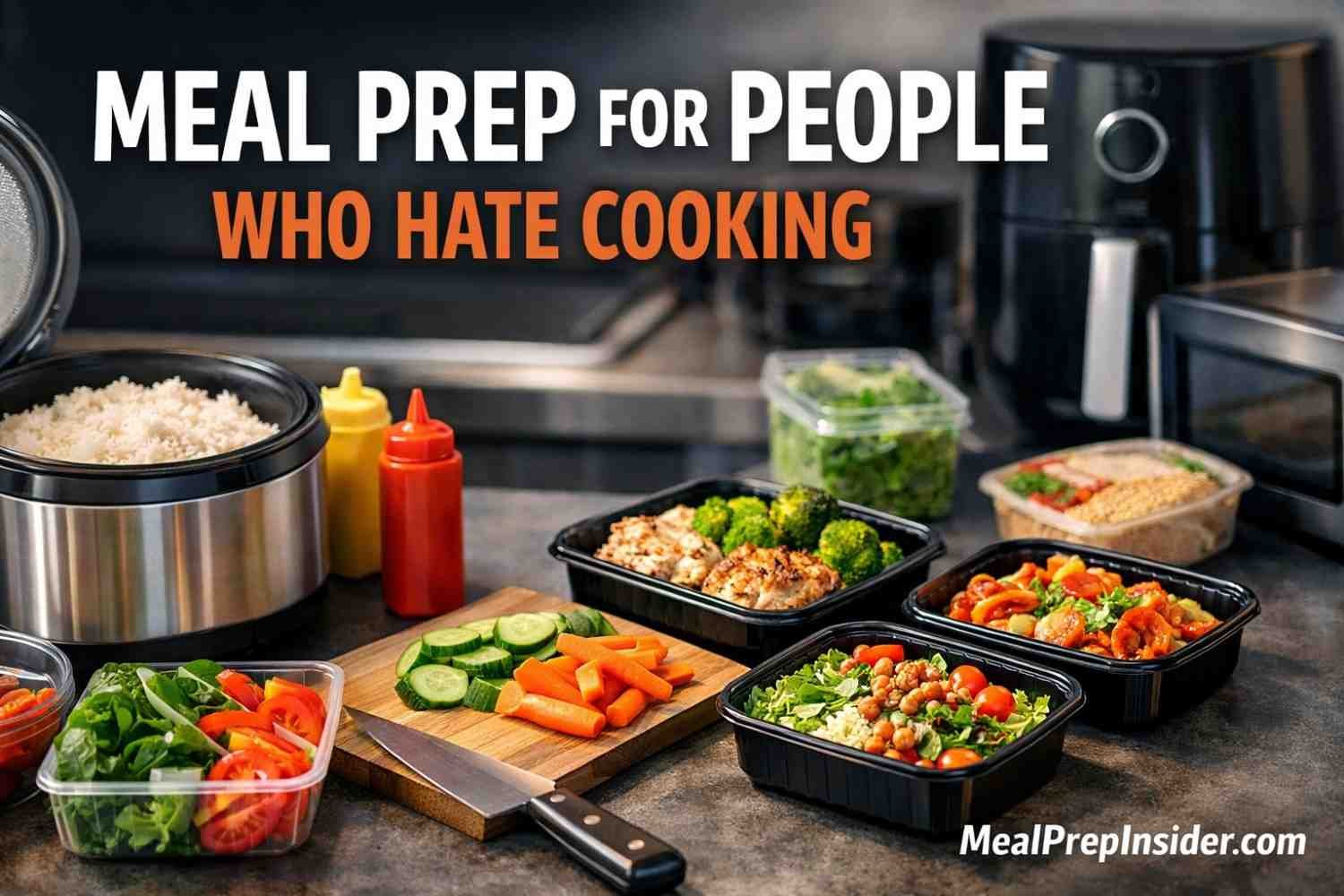
Meal prep for people who hate cooking doesn’t have to feel like a prison sentence in your own kitchen.
Let me guess. You’ve seen those Instagram accounts. The ones where everything is perfectly portioned in matching glass containers. Rainbow vegetables lined up like a military parade. Chicken breasts so precisely grilled they could pass as museum exhibits.
And you felt absolutely nothing except maybe mild dread.
That’s okay. You’re not broken.
The truth is, most meal prep content out there treats cooking like it’s everyone’s favorite hobby. Like we all dream of spending Sunday afternoon chopping vegetables while jazz music plays in the background.
But some of us would rather do literally anything else. File taxes. Sort socks. Watch paint dry.
I get it because I used to be that person. I once lived on cereal, takeout, and the occasional frozen pizza for months. My kitchen was basically a museum of unused appliances and expired condiments.
Then my wallet started crying. My body started protesting. Something had to change.
This isn’t a story about how I fell in love with cooking. I didn’t. But I did figure out how to feed myself actual food without wanting to throw my cutting board out the window.
Why Traditional Meal Prep Advice Fails Cooking Haters
Most meal prep guides assume you have a baseline interest in cooking.
They don’t.
They tell you to “just roast a bunch of vegetables,” like that’s somehow fun. They suggest making four different recipes on Sunday, like you’re running a small restaurant.
Here’s what they miss: if you hate cooking, more cooking isn’t the solution. Less cooking is.
The entire framework needs to flip. Instead of making cooking more efficient, we need to make eating well require almost no cooking.
That’s the difference.
Traditional meal prep tries to optimize cooking. What we need is to minimize it entirely while still eating food that doesn’t make us sad.
The Fundamental Rule: Assembly Over Cooking
Forget recipes with twelve steps.
Your new best friend is assembly. Think of yourself as someone who assembles meals rather than cooks them.
What’s the difference?
Cooking involves heat, timing, techniques, and the constant threat of burning something. Assembly involves opening containers and putting things together.
One requires skill and attention. The other requires opposable thumbs.
A sandwich is assembled. A salad is assembled. A burrito bowl is assembled. Notice how none of these require you to stand over a hot stove, wondering if you’re doing it right.
This shift in mindset changes everything. You’re not a bad cook. You’re just asking yourself to do something you fundamentally don’t enjoy.
So stop asking.
The Bare Minimum Kitchen Equipment
You don’t need a fully stocked kitchen. You need exactly five things.
The Essential Five:
- A sheet pan (for those rare occasions you use the oven)
- A large microwave-safe bowl with a lid
- A decent knife that actually cuts things
- Tupperware containers (mismatched is fine)
- A rice cooker (the set-it-and-forget-it kind)
That’s it.
Notice what’s missing? Fancy gadgets. Seventeen different pots. A spice collection that looks like a small pharmacy.
You can add more later if you want. But you can absolutely survive with just these items.
I’d also recommend a cutting board, but technically, you could use a plate. I won’t judge. We’re going for function here, not HGTV aesthetics.
The rice cooker deserves special mention. This thing is magic for people who hate cooking. Press a button, walk away, come back to perfectly cooked rice, quinoa, or oatmeal.
No watching. No stirring. No risk of burning.
It’s the closest thing to teleportation in the kitchen.
Base Components: Your Meal Prep Building Blocks
Think of meal prep in three categories: bases, proteins, and stuff that makes it taste good.
Bases are your foundation. These are filling, cheap, and require minimal brain power.
- White rice (cooks in the magic rice cooker)
- Brown rice (same)
- Pasta (boil water, dump it in, set a timer)
- Quinoa (rice cooker again)
- Bagged salad greens (open bag, dump in bowl)
- Microwaveable sweet potatoes (poke holes, microwave)
- Tortillas (no cooking required)
- Bread (still no cooking)
Make a big batch of one or two bases on Sunday. Or don’t even do that. Make rice every other day. It takes five minutes of actual effort.
The goal isn’t perfection. It’s having something to put your food on that isn’t directly from the takeout container.
Proteins That Don’t Require Cooking Skills
Here’s where cooking-haters get stuck. Protein seems complicated.
It isn’t. Not if you choose right.
The Lazy Person’s Protein List:
- Rotisserie chicken from the grocery store (literally already cooked)
- Canned tuna (open can, drain, done)
- Canned salmon (same)
- Hard-boiled eggs (boil water, add eggs, set timer for 10 minutes)
- Pre-cooked frozen grilled chicken strips
- Canned beans (black, kidney, chickpeas—all good)
- Deli turkey or ham (zero cooking)
- Greek yogurt (technically protein)
- Cottage cheese (underrated and easy)
- Frozen pre-cooked shrimp (thaw and eat)
Notice a pattern? Most of these involve opening a container. That’s intentional.
Yes, cooking a chicken breast from scratch is cheaper. It’s also boring and easy to mess up. When you’re starting out and trying not to resort to DoorDash every night, convenience beats cost.
Buy the rotisserie chicken. Shred it while watching TV. Put it in containers. You just made protein for four days, and it took maybe ten minutes.
Vegetables: The Path of Least Resistance
Vegetables are where people get ambitious and then quit.
Don’t get ambitious.
The Easiest Vegetables:
- Baby carrots (wash, eat)
- Cherry tomatoes (wash, eat)
- Cucumber slices (minimal chopping)
- Bell pepper strips (buy pre-cut if you want)
- Bagged salad (we mentioned this, but it’s worth repeating)
- Frozen broccoli (microwave in bag)
- Frozen stir-fry vegetables (same)
- Canned corn (drain, use)
- Snap peas (literally eat them raw)
You can roast vegetables if you want. Sheet pan, olive oil, salt, 400 degrees for 20 minutes. But you don’t have to.
Raw vegetables are valid. Frozen vegetables are valid. Canned vegetables are valid.
The best vegetable is the one you’ll realistically eat. If that’s baby carrots dipped in ranch while you scroll through your phone, great. You’re still eating a vegetable.
The Five-Minute Assembly Meal Formula
Here’s the formula that changed my life:
Base + Protein + Vegetable + Sauce = Meal
That’s it. Four components. Mix and match.
Example 1:
Rice + rotisserie chicken + frozen broccoli + teriyaki sauce
Example 2:
Pasta + canned tuna + cherry tomatoes + Italian dressing
Example 3:
Tortilla + deli turkey + bagged lettuce + ranch
Example 4:
Quinoa + chickpeas + cucumber + tahini
Example 5:
Bread + hard-boiled eggs + baby carrots + hummus
None of these requires cooking. They all take about five minutes to assemble. They’re all actual meals with protein, carbs, and vegetables.
This is the secret. Stop trying to cook elaborate recipes. Start combining pre-made components in different ways.
Sunday Prep for People Who’d Rather Not
Let’s be honest. The idea of “meal prep Sunday” makes you want to fake your own death.
So don’t do it the traditional way. Do it the lazy way.
Your 30-Minute Sunday Routine:
- Put rice in the rice cooker (2 minutes)
- Boil eggs (1 minute active time, 10 minutes waiting)
- Buy a rotisserie chicken and shred it (10 minutes)
- Wash some vegetables or dump frozen ones in containers (5 minutes)
- Put everything in separate containers (5 minutes)
Total active time? Maybe 25 minutes. The rest is just waiting for things to cook themselves.
You now have components for the entire week. Monday’s lunch is rice, chicken, frozen broccoli, and soy sauce. Tuesday’s lunch is the same but with different vegetables. On Wednesday, you make a chicken wrap instead.

Same components, different arrangements. That’s the entire game.
Store-Bought Shortcuts Nobody Talks About
There’s this weird shame around buying pre-made food items. Like it’s cheating.
Forget that. Cheating is the entire point.
Store-Bought Shortcuts Worth Every Penny:
- Pre-washed salad bags
- Pre-cut vegetables (especially onions—crying is optional)
- Rotisserie chicken (mentioned already, but deserves another spot)
- Pre-cooked rice in pouches (microwave for 90 seconds)
- Pre-marinated proteins (throw in oven, set timer)
- Bagged coleslaw mix (great for crunch)
- Canned soups as bases (add protein and vegetables)
- Pre-made quinoa bowls (just customize them)
These cost more than raw ingredients. They also cost less than eating out every meal, and they’re infinitely more likely to actually get used.
Your goal isn’t to become a host on a cooking channel. It’s to eat reasonably well without hating every minute of it.
Sauce: The Ingredient That Makes You Look Like You Tried
Here’s a secret: sauce fixes everything.
Boring rice and chicken? Add buffalo sauce. Suddenly, it’s a buffalo chicken bowl.
Same rice and chicken? Add peanut sauce. Now it’s vaguely Thai-inspired.
Sauces That Require Zero Effort:
- Store-bought salad dressings (ranch, Italian, Caesar)
- Hot sauce (any variety)
- Soy sauce or tamari
- Teriyaki sauce
- BBQ sauce
- Hummus (yes, it’s a sauce)
- Pesto (from a jar)
- Salsa (from a jar)
- Tahini (mixed with lemon juice)
- Plain Greek yogurt with garlic powder
Keep four or five of these in your fridge. Rotate them. The same base ingredients taste completely different depending on the sauce.
This is how you avoid getting bored while still eating essentially the same thing all week.
The Snack Strategy
Meal prep isn’t just about lunch and dinner. Snacks prevent you from ordering pizza at 4 PM because you’re starving.
Brain-Dead Easy Snacks:
- String cheese
- Nuts in portion bags
- Apple slices with peanut butter
- Greek yogurt cups
- Hard-boiled eggs (from your Sunday batch)
- Protein bars (literally just unwrap)
- Crackers and cheese
- Beef jerky
- Hummus with baby carrots
Portion these out on Sunday if you’re feeling motivated. Or just grab them from the package. Both are fine.
The point is having something available that’s not chips or candy. Though honestly, if it’s chips or candy versus skipping food entirely and getting so hungry you end up ordering $40 worth of takeout, eat the chips.
Progress over perfection. Always.
RELATED POST >> Easy Meal Prep for Shift Workers Made Simple: Fresh & Ready
Common Pitfalls and How to Dodge Them
Let me tell you about the mistakes I made so you don’t have to.
Pitfall 1: Making Too Many Different Meals
I once tried to prep seven different lunches for the week. Different proteins, different bases, different vegetables.
I spent three hours cooking and wanted to die. I also made a huge mess and used every dish I owned.
Don’t be me. Make one or two combinations. Eat them multiple times. It’s okay to eat the same lunch Monday through Wednesday.
Pitfall 2: Buying Vegetables You Won’t Eat
Aspirational vegetable purchases are real. You buy kale because you think you should. It dies slowly in your crisper drawer while you eat carrots instead.
Buy the vegetables you’ll honestly eat. Even if it’s just three kinds. That’s three more than eating no vegetables.
Pitfall 3: Prep Burnout
Going from zero meal prep to trying to prep everything for every meal is a recipe for failure.
Start with one meal. Just lunch. Or just dinner. Get that down for a few weeks before expanding.
Pitfall 4: Not Having Backup Plans
Some weeks you won’t prep. Life happens. If you don’t have a backup plan, you’re back to daily takeout.
Keep frozen meals in the freezer. Not as a meal prep replacement, but as a safety net. The slightly expensive healthy frozen meals are still cheaper than DoorDash.
Pitfall 5: Perfectionism
Your containers don’t need to match. Your meals don’t need to look Instagram-worthy. You don’t need to eat perfectly balanced macros.
You just need to eat something that’s not exclusively processed junk or restaurant food.
The bar is low. Step over it and call it a win.
The Breakfast Hack for Non-Morning People
Breakfast is the meal where the fewest cooking-haters have any energy.
So don’t cook breakfast. Assemble it or eat the same thing every day.
Zero-Effort Breakfast Options:
| Breakfast | Time Required | Cooking Required |
|---|---|---|
| Overnight oats | 2 minutes (night before) | No |
| Greek yogurt with granola | 1 minute | No |
| Peanut butter toast | 2 minutes | Toast only |
| Hard-boiled eggs and fruit | 0 minutes | Prepped Sunday |
| Protein shake | 2 minutes | No |
| Bagel with cream cheese | 2 minutes | Optional toasting |
| Cereal with protein powder | 2 minutes | No |
Pick one. Eat it every day or rotate between two. This isn’t the meal to get creative with.
Save your limited enthusiasm for the meal you’re most likely to otherwise order delivery for.
Dinner Without the Drama
Dinner is where people usually crack. You’re tired from work. Cooking sounds terrible. The couch is calling.
This is where your Sunday prep pays off. But even without prep, you can make dinner happen without actual cooking.
Quick Assembly Dinners:
- Burrito bowl: Rice, canned black beans, salsa, shredded cheese, sour cream
- Pasta situation: Pasta, jar sauce, frozen meatballs, bagged salad
- Breakfast for dinner: Scrambled eggs, toast, fruit
- Sandwich night: Good bread, deli meat, cheese, chips
- Quesadilla: Tortilla, cheese, beans, microwave or pan
- Tuna melt: Canned tuna, bread, cheese, toaster oven
None of these requires real cooking. They’re all faster than waiting for delivery. They’re all cheaper than restaurants.
And they’re all totally valid dinners. Breakfast for dinner is underrated and should happen more often.
How to Not Hate Your Meal Prep Food By Wednesday
The biggest complaint about meal prep is getting sick of eating the same thing.
Here’s how to avoid that without making everything complicated.
The Rotation Method:
Make two different bases (rice and pasta). Get two different proteins (chicken and beans). Have four different sauces.
Monday: Rice, chicken, teriyaki
Tuesday: Pasta, chicken, marinara
Wednesday: Rice, beans, salsa
Thursday: Pasta, beans, pesto
Same ingredients. Different combinations. Your taste buds don’t get bored.
The Temperature Trick:
Eat the same meal cold one day, hot the next. It tastes different.
The Texture Addition:
Add something crunchy. Nuts, seeds, crackers, crispy onions. Texture changes perception dramatically.
The Fresh Herb Cheat:
Buy one container of cilantro or basil. Add it fresh to pre-prepped meals. It makes everything taste less reheated.
These are small changes that make eating the same base ingredients feel like variety.
The Freezer Is Your Friend
People forget about the freezer. Don’t be those people.
What to Keep Frozen:
- Pre-cooked grilled chicken strips
- Frozen vegetables (every variety you’ll eat)
- Frozen fruit (for smoothies or oatmeal)
- Frozen meatballs
- Frozen shrimp
- Frozen brown rice
- Backup frozen meals
- Bread (freezes great, thaws fast)
The freezer is your insurance policy. Didn’t prep this week? Pull frozen chicken and frozen vegetables out of the freezer, microwave with rice, and add sauce.
Still a meal. Still didn’t require cooking. Still counts.
Mental Game: Reframing Meal Prep
Here’s the mindset shift that made this sustainable for me.
Meal prep isn’t about becoming someone who loves cooking. It’s about getting your time and money back.
Every meal you prep is:
- 30-60 minutes, you’re not waiting for delivery
- $10-20 you’re not spending on restaurant food
- Decision fatigue, you’re not experiencing it when hungry and tired
You’re not meal prepping because you should. You’re meal prepping because future you deserves not to be stressed about food.
That version of you who’s exhausted on Tuesday night? They’ll thank you for having food ready. Even if it’s just rice and chicken with hot sauce.
When to Quit and Order Food Anyway
Sometimes you should just order food. And that’s fine.
If you’ve had a genuinely terrible day and cooking or assembling food feels like the final straw, order the food. One meal isn’t going to ruin everything.
The goal is to reduce takeout from daily to occasional. Going from eating out twelve times a week to three times a week is massive progress.
Don’t let perfection kill your progress. This isn’t about never eating restaurant food again. It’s about having options, so you’re not dependent on it.
Some weeks, you’ll prep everything and feel great. Some weeks, you’ll prep nothing and survive on frozen meals and sandwiches. Both weeks are okay.
The path isn’t linear. It’s a messy zigzag that hopefully trends in the right direction over time.
Building the Habit Without Hating Your Life
Start stupidly small. Smaller than you think you should.
Week one: Make rice on Sunday. That’s it. Just rice. Use it for a few meals during the week.
Week two: Make rice and boil eggs. Two tasks. Still manageable.
Week three: Add shredding a rotisserie chicken.
You’re building the habit of Sunday prep without the overwhelming three-hour cooking marathon that makes you quit by week two.
Small, sustainable changes beat ambitious, perfect plans that you abandon immediately.
The Shopping List That Makes This Possible
You need a core shopping list. The same things every week. This removes the need for decision-making and ensures you always have meal components available.
Weekly Staples:
- Rice or pasta
- Rotisserie chicken
- Eggs
- Canned beans (2-3 cans)
- Frozen vegetables (2-3 bags)
- Bagged salad
- Baby carrots
- Cherry tomatoes
- Bread or tortillas
- Cheese
- Greek yogurt
- 2-3 sauces you like
This list costs roughly $40-60, depending on your area, and provides components for most of your meals for the week.
Add specific items if you want variety that week, but this baseline ensures you can always assemble meals.
Real Talk About Nutrition
Look, I’m not a nutritionist. But here’s what I know: eating homemade meals assembled from basic components is almost certainly better than eating restaurant food or processed snacks exclusively.
Is it perfect? No. Could you optimize your macros better? Probably. Do you need to stress about that right now? Absolutely not.
The order of operations is:
- Eat regular meals
- Include some protein and vegetables
- Optimize from there if you want
Most cooking-haters are failing at step one. Get that down first. Everything else is bonus points.
Your meal prep doesn’t need to look like a fitness influencer’s. It needs to keep you fed without making you miserable.
Making Peace with Mediocre Meals
Here’s something nobody tells you: most of your meals will be fine. Not amazing. Not terrible. Just fine.
And that’s okay. Actually, that’s the goal.
We’ve been sold this idea that every meal should be an experience. That cooking should be joyful, and every bite should spark happiness.
But most meals are just fuel. They’re the thing between you and being hungry. They don’t need to be special.
When you accept that meals can just be okay, the pressure disappears. You’re not trying to create magic. You’re trying to assemble food that tastes decent and keeps you alive.
That’s a much more achievable goal.
Troubleshooting Common Issues
“Everything tastes bland.”
You need more salt and more sauce. Seriously. That’s usually the entire problem.
“I get bored by Wednesday.”
Change your sauce or add a crunchy topping. Same base, different experience.
“I don’t have time on Sunday.”
Prep on a different day or split it into two 15-minute sessions. Sunday isn’t mandatory.
“My food gets soggy.”
Keep wet ingredients separate. Add sauce and dressing right before eating.
“I forgot to eat my prepped food.”
Set phone reminders. Put containers at eye level in your fridge. Make it visible.
“I’m still hungry after.”
Add more protein or healthy fats. Peanut butter, cheese, nuts, avocado.
The One-Month Challenge
Try this for one month. Just one.
Don’t commit to forever. Don’t decide if you like it or hate it yet. Just try it for four weeks and see what happens.
Week 1: Prep just rice and eggs. Make simple lunches.
Week 2: Add rotisserie chicken. Expand to lunches and some dinners.
Week 3: Try different sauces and vegetables. Find what you like.
Week 4: Develop your personal rotation of meals that don’t make you sad.
After a month, evaluate. Are you spending less on food? Feeling better? Stressing less about meals?
If yes, keep going. If no, adjust something. Maybe you need different base components. Maybe you need more variety. Maybe you need to accept more shortcuts.
This isn’t one-size-fits-all. It’s finding your personal version of meal prep that doesn’t make you want to set your kitchen on fire.
Frequently Asked Questions
How long does prepped food last in the fridge?
Most components last 3-5 days. If something smells weird or looks questionable, toss it. When in doubt, freeze half your prep.
Can I meal prep if I have dietary restrictions?
Yes. The component method works for any diet. Swap ingredients to match your needs. Gluten-free bases, dairy-free sauces, vegetarian proteins—all possible.
What if I live alone and recipes are for families?
Embrace it. Make the family-sized recipe and freeze portions or eat it all week. Or buy the individual components and assemble without following recipes at all.
Is meal prep actually cheaper?
For most people, yes. A week of prepped meals costs $40-60. That’s roughly 4-6 restaurant meals. Do the math for your situation.
Do I need to count calories or macros?
Only if you want to. For most cooking-haters, the goal is simply to eat regular meals with protein and vegetables. That alone is progress.
What if my family won’t eat my meal prep?
Make components that they can customize. Taco bar style. Everyone assembles their own meal from the same base components.
How do I meal prep without a microwave at work?
Cold meals are valid. Salads, sandwiches, wraps. Or invest in a thermos that keeps food hot.
Can I meal prep breakfast and dinner too?
You can, but start with one meal. Trying to prep everything at once is how people quit. Master lunch, then expand.
What’s the best container for meal prep?
Whatever you’ll actually use. Glass is nice. Plastic is lighter. Mix and match is fine. Don’t overthink it.
How do I know what combinations will taste good?
Start with combinations you know you like from restaurants. Burrito bowl components. Pasta dish components. Recreate them simply.
Meal prep for people who hate cooking is really just strategic laziness. You’re being lazy efficiently rather than expensively.
You’re not trying to become a chef. You’re trying to adult without losing your mind or your money.
Some days you’ll crush it. Some days you’ll eat cereal for dinner. Both are part of the process.
The goal is progress, not perfection. Feed yourself reasonably well most of the time without hating every minute of it.
That’s the entire game. Everything else is just details.
Now go make some rice and shred a rotisserie chicken. You’ve got this.
SUGGESTED POST >> Best Freezer Meal Prep for New Moms That’s Stress-Free