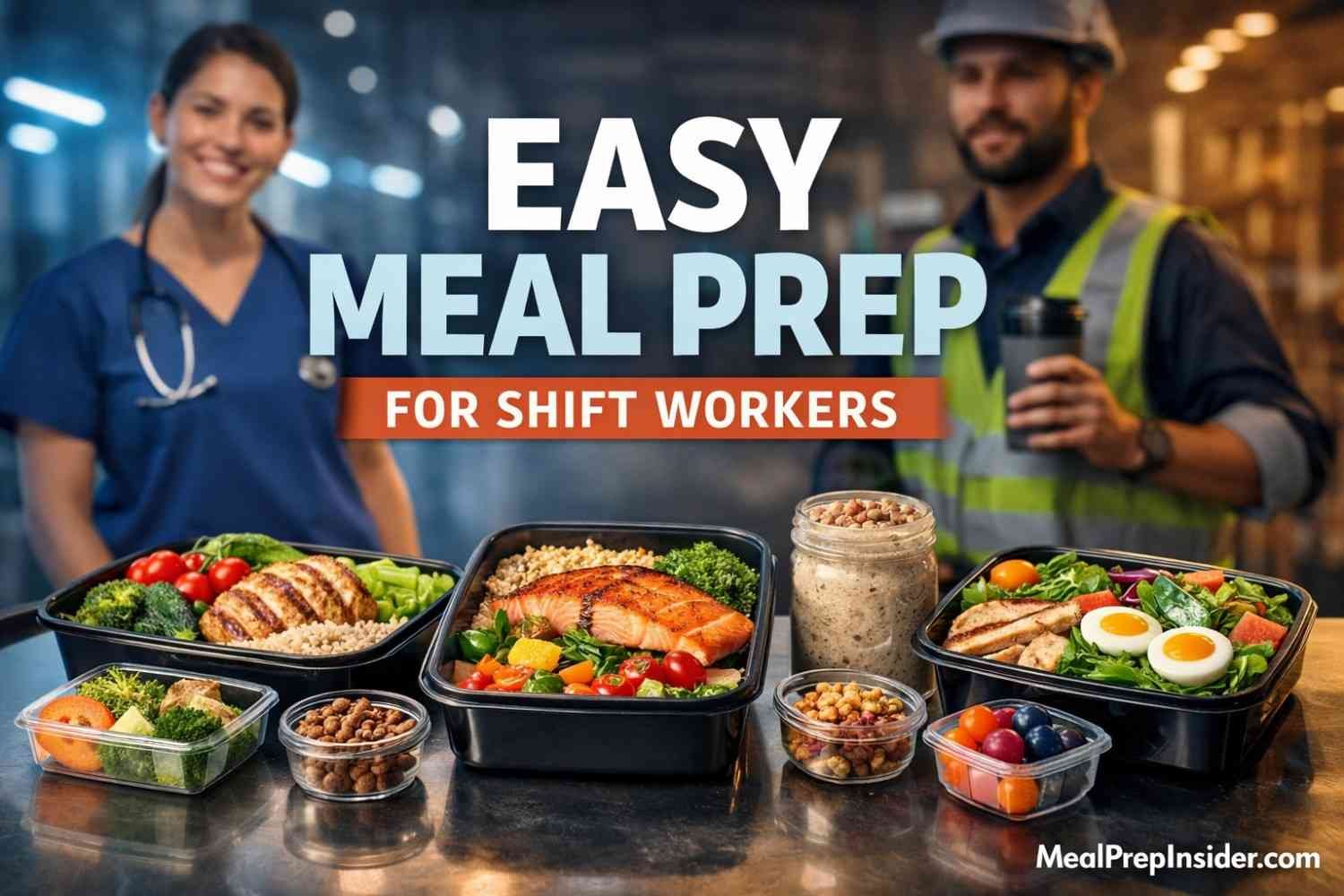
Easy meal prep for shift workers isn’t just about throwing together random containers of food on Sunday night. It’s about survival, honestly. It’s about maintaining your health when your schedule feels like it’s working against you.
Let me tell you about Marcus, a nurse who worked rotating 12-hour shifts at a hospital in Dallas. He’d come home at 3 AM, starving, and order fast food because nothing was ready. His energy tanked. His wallet hurt. His uniform got tighter. Sound familiar?
The truth is, shift work wreaks havoc on your body’s natural rhythm. Your coworker on the 9-to-5 schedule? They can meal prep for standard breakfasts, lunches, and dinners. But you? You might need breakfast at 10 PM or dinner at 6 AM.
This is where strategic meal prep changes everything.
Why Traditional Meal Prep Fails Shift Workers
Regular meal prep advice assumes everyone eats at the same time every day. That’s laughable when you’re working nights one week and early mornings the next.
Standard meal prep tells you to batch cook on Sunday. Great. But what happens when your “Monday” starts at midnight on Tuesday?
The system wasn’t built for you. So we’re going to rebuild it.
Understanding Your Unique Nutritional Needs
Shift workers face specific challenges that day shift workers don’t face. Your circadian rhythm gets confused. Your metabolism slows down. Your body doesn’t know when to expect food.
Research shows that night shift workers have higher risks of metabolic syndrome, obesity, and digestive issues. Not because they’re doing anything wrong, but because their eating patterns conflict with their biology.
You need meals that:
- Keep your energy stable during weird hours
- Don’t sit heavily in your stomach
- Are actually appealing at 4 AM or whenever you’re eating
- Won’t spoil if your schedule changes at the last minute
- Can be eaten cold if there’s no microwave access
The Shift Worker’s Meal Prep Philosophy
Forget the Instagram-perfect rows of identical containers. That’s not realistic for your life.
Instead, think modular.
Build a system with components you can mix and match based on which shift you’re working and what sounds good. Some days you want warm comfort food. Other days, you need something light and cold.
Your meal prep should work for you, not the other way around.
Setting Up Your Meal Prep Foundation
Before you cook a single thing, you need the right setup.
Container Situation
Get yourself quality containers that actually seal. Not those flimsy things that leak marinara all over your work bag. Invest in glass containers with locking lids if you can. They’re microwave-safe, dishwasher-safe, and they don’t stain.
You’ll want various sizes:
- Small containers for snacks and sides
- Medium containers for single meals
- Large containers for bulk ingredients
- Mason jars for overnight oats or salads
- Insulated lunch bags if you don’t have reliable refrigeration
Kitchen Tools That Save Time
You don’t need fancy equipment, but certain things make life easier:
A slow cooker or an Instant Pot becomes your best friend. Set it before bed and wake up to ready food. A rice cooker handles grains while you focus on protein. Sheet pans let you roast multiple things at once.
Sharp knives speed up prep work. A good cutting board matters more than you think. Measuring cups and food scales help with portion control if that’s your goal.
The Framework: Building Your Meal Prep System
Here’s where we get into the actual strategy that works for shift workers.
The Three-Component Method
Every meal you prep should have three basic components:
Protein – This keeps you full and maintains muscle mass, which is important when your sleep schedule is chaotic.
Complex Carbs – Energy that lasts, not the quick spike and crash from simple sugars.
Vegetables – Nutrients, fiber, and volume without excessive calories.
Mix and match these components based on what shift you’re working and what sounds good.
Protein Options That Work
Cook these in bulk, and they’ll last 4-5 days in the fridge:
- Grilled chicken breast (seasoned differently to keep it interesting)
- Ground turkey or beef (great for bowls, wraps, or eating plain)
- Hard-boiled eggs (perfect grab-and-go protein)
- Pulled pork in the slow cooker
- Baked salmon or white fish
- Canned tuna or chicken (yes, canned counts)
- Rotisserie chicken from the store (no shame in shortcuts)
Pro tip: Season your proteins differently. Marcus learned this the hard way after eating plain grilled chicken for a week straight. Now he does Italian herbs on some, Mexican spices on others, and Asian-inspired marinades on another batch.
Complex Carb Foundations
These give you sustained energy without the crash:
- Brown rice
- Quinoa
- Sweet potatoes
- Regular potatoes
- Whole-grain pasta
- Oatmeal
- Whole-grain bread
Cook a big batch of rice or quinoa on your prep day. It reheats beautifully and takes on whatever flavors you pair it with.
Vegetable Variety
The biggest mistake people make? Thinking they have to eat steamed broccoli every single day.
Roast your vegetables. It transforms them. Toss them with olive oil, salt, and pepper, then roast at 425°F until they get crispy edges.
Good options:
- Bell peppers
- Zucchini
- Carrots
- Brussels sprouts
- Cauliflower
- Green beans
- Asparagus
- Cherry tomatoes
Keep some raw veggies ready, too. Baby carrots, cucumber slices, and cherry tomatoes need zero prep and stay fresh all week.
Actual Meal Prep Strategies for Different Shifts
Your schedule determines your approach.
Night Shift Meal Prep
If you’re working 11 PM to 7 AM, your eating schedule is completely backwards.
You’ll want:
- A substantial meal before your shift starts (around 9-10 PM)
- A lighter meal or snack around 3 AM when you hit that wall
- Something easy to eat when you get home, even though it’s breakfast time
Sample Night Shift Prep:
Prepare burrito bowls with rice, black beans, seasoned ground beef, peppers, and salsa. These work hot or cold. Pack them in containers with toppings separate so nothing gets soggy.
Make overnight oats for when you get home. Even though it’s 8 AM, your body thinks it’s nighttime. The oats are filling but not heavy, and they’re already ready in the fridge.
Prep veggie sticks and hummus for that 3 AM slump. Light enough that you won’t feel sick, but enough to keep you going.
Rotating Shift Meal Prep
This is the hardest schedule to prep for because your body never adjusts.
You need maximum flexibility.
The Solution: Prep ingredients, not complete meals.
Cook your proteins. Prep your carbs. Chop your vegetables. Store them separately.
When you wake up (whenever that is), you can throw together whatever sounds good in about five minutes.
This also helps when your appetite is unpredictable. Some days after a night shift, you’re starving. Other days, you can barely eat. With components ready, you can make a big or small meal as needed.
Early Morning Shift Prep
Starting work at 5 or 6 AM means you’re not cooking breakfast at 4 AM.
Grab-and-go becomes essential.
Egg muffins are your friend. Mix eggs, cheese, vegetables, and cooked sausage or bacon. Pour into muffin tins. Bake. Now you have a portable breakfast for the week.
Make smoothie packs. Portion out frozen fruit, spinach, and protein powder into bags. In the morning, dump it in the blender with liquid. Done.
Prep sandwiches or wraps for lunch. They hold up fine for a few days if you keep wet ingredients separate until you’re ready to eat.
Weekly Meal Prep Schedule for Shift Workers
You don’t have to prep everything on one day. In fact, you probably shouldn’t.
Here’s a more realistic approach:
Prep Day One (whenever you have 2-3 hours free):
- Cook all proteins for the week
- Make a big batch of rice or quinoa
- Roast a variety of vegetables
- Hard-boil a dozen eggs
- Chop raw veggies for snacking
Prep Day Two (2-3 days later, 1-2 hours):
- Make a batch of overnight oats or egg muffins
- Prep fresh salad ingredients
- Make a soup or stew
- Portion out snacks
This split approach keeps food fresher and prevents burnout from spending five hours in the kitchen.

Meals That Actually Work at Weird Hours
Food hits different at different times. What sounds amazing at 2 PM might make you nauseous at 2 AM.
Meals That Work Anytime
These are neutral enough to eat whenever:
Chicken and Rice Bowls
Season grilled chicken however you want. Add rice. Top with veggies and sauce. Works hot or cold. Never gets old if you vary the seasonings.
Turkey and Sweet Potato
Ground turkey cooked with taco seasoning. Baked sweet potato. Simple. Filling. Easy on your stomach at weird hours.
Pasta Salad
Whole grain pasta, chicken or chickpeas, lots of vegetables, Italian dressing. Refreshing cold. Still good, slightly warm if you want to heat it.
Late Night Options
When it’s 3 AM, and you need something that won’t make you feel awful:
- Greek yogurt with berries and granola
- Peanut butter banana roll-ups
- Cheese and whole-grain crackers
- Hummus and vegetables
- Trail mix (make your own to control sugar)
Pre-Shift Fuel
Before you start work, you need something that provides sustained energy:
- Egg scramble with vegetables and toast
- Oatmeal with protein powder mixed in
- Chicken wrap with lots of veggies
- Quinoa bowl with beans and avocado
Smart Shortcuts That Aren’t Cheating
You’re working difficult hours. You’re tired. You don’t have unlimited time or energy.
Use shortcuts.
Buy pre-cut vegetables if it means you’ll actually eat them. They cost more, but what’s your time worth?
Rotisserie chicken from the grocery store is already cooked protein. Shred it. Use it all week.
Frozen vegetables are just as nutritious as fresh, sometimes more so because they’re frozen at peak ripeness. Keep bags in your freezer for when you run out of fresh.
Canned beans are already cooked. Rinse them, and you’re good to go.
Pre-made salad kits work if you add your own protein.
Rice that comes in microwavable pouches? Totally fine for busy weeks.
The best meal prep is the one you’ll actually do.
Avoiding Typical Pitfalls
People make the same errors when they start meal prepping for shift work.
Overcomplicating Everything
You don’t need fourteen different recipes. You need solid basics that taste good and keep you full.
Start simple. Master chicken, rice, and roasted vegetables. Then branch out.
Making Food You Don’t Like
Just because grilled fish and steamed vegetables are “healthy” doesn’t mean you should prep them if you hate them.
You won’t eat food you don’t enjoy. You’ll order takeout instead. Make food you actually want to eat.
Not Considering Storage Realities
Do you have a refrigerator at work? Microwave access? These details matter.
If you don’t have refrigeration, pack your lunch in an insulated bag with ice packs. If there’s no microwave, prep meals that work cold.
Prepping Too Far in Advance
Food safety matters. Most cooked foods last 4-5 days in the refrigerator.
Don’t prep for two weeks. You’ll either waste food or eat something that’s questionable.
Forgetting Snacks
You need snacks. Your schedule is long and unpredictable.
Always have backup options:
- Protein bars
- Nuts and seeds
- String cheese
- Fruit
- Popcorn
Not Drinking Enough Water
This isn’t technically meal prep, but it’s related. Get a good water bottle. Actually drink from it.
Dehydration makes fatigue worse, makes you crave junk food, and tanks your energy.
RELATED POST >> Meal Prep for One Person for the Week: Singles’ Perfect Plan
Budget-Friendly Meal Prep
Shift work is hard enough without spending a fortune on groceries.
Buy protein when it’s on sale and freeze it. Chicken breast, ground meat, pork—all freeze well.
Dried beans and lentils cost almost nothing and provide excellent protein and fiber. Yes, they take longer to prepare, but throw them in a slow cooker and forget about them.
Buy whole vegetables instead of pre-cut when possible. The time you spend cutting saves significant money.
Plan meals around what’s on sale. If sweet potatoes are cheap this week, make them your carb base.
Buy generic brands for basics like rice, pasta, canned goods, and frozen vegetables. There’s usually no quality difference.
Sample Budget Meal Prep
Here’s a week of meals for under $50 (prices vary by location, but this gives you an idea):
Shopping List:
- 3 pounds chicken breast – $9
- 2 pounds ground turkey – $8
- 18 eggs – $4
- Bag of rice – $2
- Bag of dry black beans – $2
- Sweet potatoes (3 pounds) – $3
- Frozen mixed vegetables (2 bags) – $4
- Fresh broccoli – $3
- Bananas – $2
- Apples – $3
- Peanut butter – $3
- Oats – $3
- Onions and garlic – $2
- Olive oil and seasonings – $2
Total: Around $50
This gives you protein, carbs, vegetables, and snacks for an entire week.
Meal Prep Ideas by Cuisine Type
Variety keeps you from getting bored.
Mexican-Inspired
- Burrito bowls with different proteins
- Taco salads in mason jars
- Chicken fajita meal prep
- Bean and rice bowls
Asian-Inspired
- Teriyaki chicken with rice and broccoli
- Beef and vegetable stir fry
- Thai peanut chicken bowls
- Fried rice with vegetables and egg
Mediterranean-Inspired
- Greek chicken bowls with tzatziki
- Mediterranean quinoa salad
- Baked fish with roasted vegetables
- Hummus veggie wraps
American Comfort Food
- Turkey meatloaf with mashed sweet potato
- BBQ chicken with coleslaw
- Baked potato bars with toppings
- Breakfast burritos (freezer-friendly)
The Two-Week Rotation
Here’s a practical two-week rotation to prevent monotony:
Week One:
- Mexican chicken bowls
- Asian beef stir fry
- Egg muffins for quick meals
- Overnight oats
- Roasted vegetables and sweet potatoes
Week Two:
- Mediterranean chicken with quinoa
- Turkey taco meat with rice
- Breakfast burritos
- Greek yogurt parfaits
- Different roasted vegetables
Rotate between these, and you won’t feel like you’re eating the same thing constantly.
Making It Sustainable Long-Term
The meal prep system that works is the one you can maintain.
Don’t aim for perfection. Some weeks you’ll prep everything. Other weeks, you’ll barely manage to cook chicken and rice. Both are fine.
Have backup options for bad weeks. Keep frozen meals on hand for emergencies. Not ideal, but better than skipping meals or eating fast food every shift.
Prep with a friend or partner if possible. It makes the time go faster, and you can split the work.
Listen to music or podcasts while you prep. Make it enjoyable rather than a chore.
Celebrate small wins. Did you prep lunch for three days this week? That’s three days you didn’t have to think about food during your shift.
Food Safety Essentials
This is important when your schedule is unpredictable.
Cool hot food quickly before refrigerating. Spread it out on sheet pans rather than leaving it in a big pot.
Use the refrigerator within two hours of cooking. One hour if it’s hot outside.
Label everything with the date you cooked it. Your tired brain won’t remember if you made that chicken on Monday or Thursday.
When in doubt, throw it out. Food poisoning during your shifts is miserable.
Keep your refrigerator at 40°F or below. Use a thermometer to check.
Reheat food to 165°F to kill any bacteria that might have grown.
Sample Meal Prep Plan for Beginners
If you’re new to this, start here.
Sunday Prep Session (2 hours):
- Bake 2 pounds of chicken breast with different seasonings
- Cook a pot of rice
- Roast a sheet pan of mixed vegetables
- Hard-boil 6 eggs
- Portion everything into containers
This gives you mix-and-match components for at least 4-5 meals.
Throughout the Week:
- Grab a container with chicken, rice, and vegetables
- Make a chicken and rice bowl with fresh toppings
- Use leftover chicken in a wrap with fresh veggies
- Eat hard-boiled eggs with rice and vegetables as a quick meal
See how the same ingredients create variety?
Meal Prep Table for Night Shift Workers
| Meal Timing | Best Options | Why It Works |
|---|---|---|
| Before Shift (9-10 PM) | Greek yogurt, fruit, nuts, veggies, and hummus | Sustained energy without being too heavy |
| Mid-Shift (2-3 AM) | Light promotes better sleep quality | Light but satisfying, won’t disrupt your system |
| After Shift (7-8 AM) | Overnight oats, smoothie, egg muffin | Easy to eat when you’re exhausted, won’t require cooking |
| Before Sleep | Banana with peanut butter, small protein shake | Light, promotes better sleep quality |
Meal Prep Table for Rotating Shifts
| Component | Prep Method | Storage Time | Versatility |
|---|---|---|---|
| Grilled Chicken | Batch cook with various seasonings | 4-5 days | Bowls, wraps, salads, alone |
| Rice/Quinoa | Large batch in rice cooker | 5-6 days | Base for any bowl, side dish |
| Roasted Vegetables | Sheet pan at 425°F | 4-5 days | Side dish, add to anything |
| Hard Boiled Eggs | Dozen at once | 1 week | Snack, add to meals, quick protein |
| Ground Turkey/Beef | Cook with different seasonings | 4-5 days | Bowls, wraps, over potatoes |
Frequently Asked Questions
How long does meal-prepped food actually last?
Most cooked foods stay safe in the refrigerator for 4-5 days. If you’re prepping on Sunday, plan to eat it by Thursday or Friday. Anything beyond that should be frozen. Cooked rice lasts about 5-6 days if stored properly. Hard-boiled eggs last up to a week.
Can I freeze meal-prepped food?
Absolutely. Many meals freeze beautifully. Soups, stews, casseroles, breakfast burritos, and most cooked proteins freeze well. Rice and pasta can get a bit mushy when frozen, but are usually fine in mixed dishes. Avoid freezing raw vegetables, lettuce, or cream-based sauces. They don’t hold up well.
What if I don’t have time to meal prep?
Start smaller than you think you need to. Even prepping just your protein for the week is helpful. Or prep only breakfast. Or just snacks. Something is better than nothing. You can also split your prep into two shorter sessions instead of one long one.
How do I keep food fresh longer?
Make sure it’s completely cooled before refrigerating. Use airtight containers. Keep your fridge at the proper temperature. Store components separately when possible—don’t add dressing to salads until you’re ready to eat, keep sauces separate from rice and protein. This prevents sogginess and extends freshness.
What if I don’t have access to a microwave at work?
Focus on meals that taste good cold. Pasta salads, chicken and rice bowls with cold-friendly sauces, wraps, sandwiches, and salads all work. Invest in a good insulated food jar—you can fill it with boiling water to warm it, then add hot food from home, and it stays warm for hours.
How do I make healthy choices when I’m exhausted after a shift?
This is why meal prep works. The decision has already been made, and the food is ready. You’re not choosing between cooking and ordering pizza at 3 AM—you’re just grabbing what’s already prepared. Keep it visible in your fridge so you see it first when you open the door.
Is meal prepping actually cheaper than buying lunch?
In most cases, yes. A meal-prepped lunch costs roughly $3-5, depending on ingredients. Restaurant or takeout meals average $10-15. Over a work week, that’s $35-75 in savings. Over a month, you’re looking at $140 to $ 300 saved. The initial grocery trip feels expensive, but you’re buying ingredients for multiple meals.
What if my appetite changes day to day?
This is common with shift work because your hunger hormones get confused. Prep smaller portions and have extras available if you’re hungrier. Or prep components separately so you can build bigger or smaller meals as needed. Always have easy snacks available for days when you can’t handle full meals.
How do I deal with food boredom?
Change your seasonings, not your whole system. The same chicken and rice tastes completely different with Italian herbs, Mexican spices, and teriyaki sauce. Keep different sauces and toppings on hand. Switch up your vegetables. Try new combinations with the same base ingredients.
Should I count calories when meal prepping for shift work?
That depends on your goals. If weight management is a priority, tracking can help. But for many shift workers, the first priority should be to eat consistently and make decent choices. Get that habit solid before worrying about precise calorie counts. Stable eating often helps you lose weight naturally when your schedule is chaotic.
What’s the best container brand?
You don’t need expensive containers. Many shift workers swear by Rubbermaid Brilliance, Pyrex glass containers, or even cheap sets from Target or Amazon. The most important features are: truly leak-proof lids, microwave-safe and dishwasher-safe, and the right sizes for your portions. Start with a basic mixed set and see what you use most.
Can I meal prep if I have dietary restrictions?
Yes, actually, it’s easier in many ways. You control every ingredient. For gluten-free, use rice or quinoa instead of pasta. For dairy-free, skip the cheese and use olive oil or avocado for healthy fats. For low-carb, double the vegetables and protein, skip the rice. The component method works for any eating style.
The reality is that easy meal prep for shift workers comes down to building a flexible system that works with your chaotic schedule, not against it. You’re not failing at meal prep because you can’t follow standard advice. Standard advice wasn’t designed for someone who eats “dinner” at 3 AM on Tuesday and 6 PM on Thursday.
Start simple. Cook some protein. Make some rice. Chop some vegetables. Put them in containers. That’s it. That’s meal prep.
Everything else is just refinement.
Marcus, that nurse from Dallas? He’s down 30 pounds now. He has more energy during his shifts. His grocery bill is lower. He’s not perfect—some weeks he still grabs fast food—but most weeks, he’s got his meals ready.
You can do this. Your schedule is hard enough. Your food doesn’t have to be.
SUGGESTED POST >> Best Cheap Meal Prep Ideas Under $50: Easy & Healthy