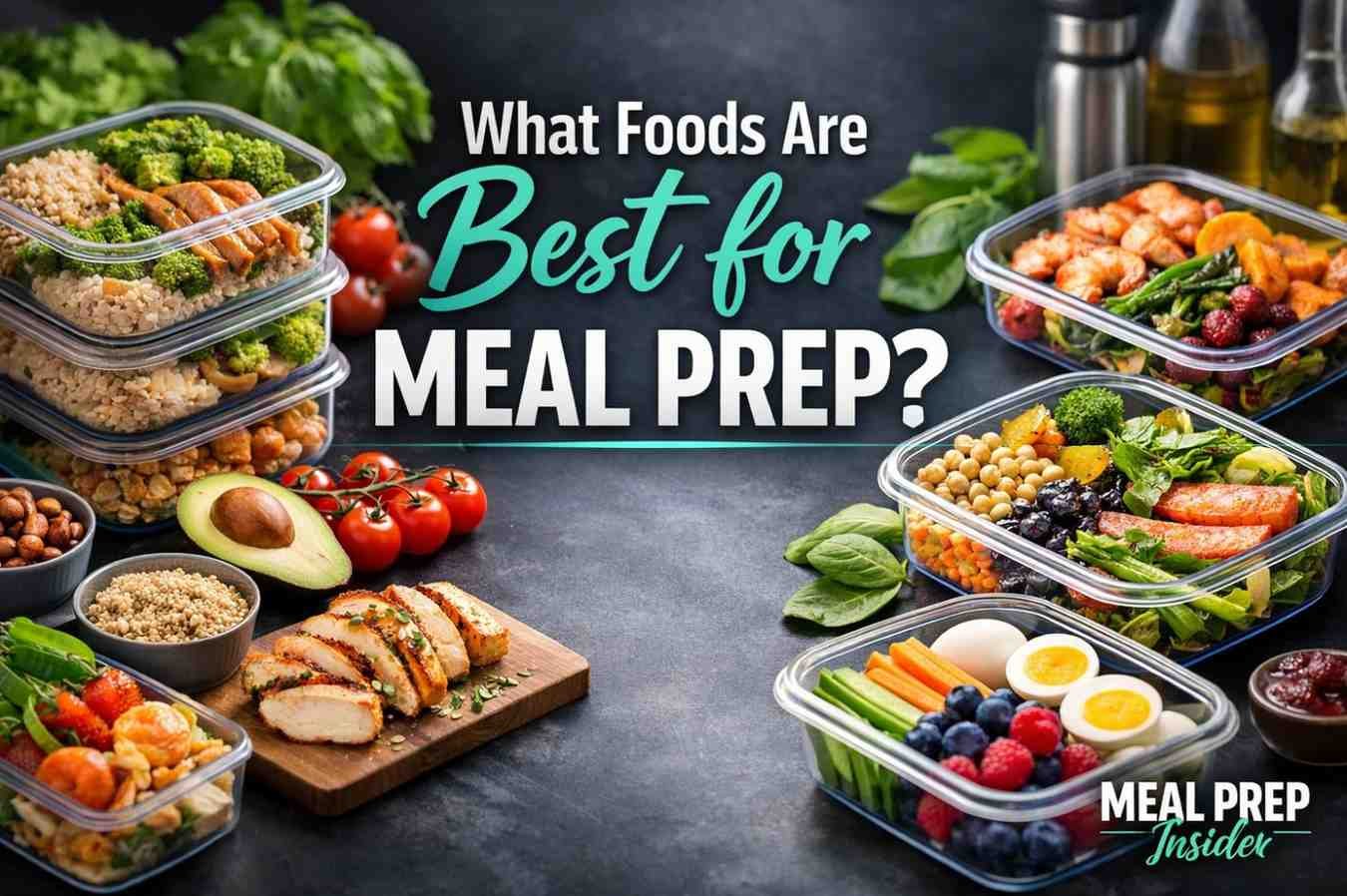
What Foods Are Best for Meal Prep?: Not sure what to meal prep? This guide breaks down the best foods for meal prep — by nutrition, shelf life, and ease — so you spend less time cooking and more time eating well.
Moreso, discover the best foods for meal prep in the US: lean proteins like chicken, salmon & eggs, whole grains such as quinoa & brown rice, roasted veggies, beans, and more for easy, healthy, high-protein meals that last all week.
What Foods Are Best for Meal Prep?
You’ve probably told yourself you’ll eat better. Maybe you did, for a week or two. Then life happened, the week got busy, and suddenly you’re on DoorDash again at 10 PM. The problem usually isn’t motivation. It’s not having the right food ready.
Meal prep isn’t a personality trait reserved for fitness influencers with aesthetic kitchens. It’s a practical habit — one that starts with knowing which foods actually hold up after cooking and storage. Not everything does.
Some foods taste great fresh and terrible four days later. Others become even better after a night in the fridge. The difference matters a lot when you’re trying to eat consistently throughout the week.
This guide focuses on the foods that work. Not the ones that look good in prep containers on social media, but the ones that’ll still taste decent on Thursday when you made them Sunday.
Why Food Choice Makes or Breaks Meal Prep
Here’s the thing people skip over: meal prep isn’t just about cooking in bulk. It’s about cooking the right things in bulk.
If you prep a salad with leafy greens dressed in vinaigrette on Sunday, it’s mushy by Tuesday. But if you prep roasted broccoli, grain bowls, or marinated proteins, you’re eating well all week with almost zero effort mid-week.
The foods best suited for meal prep share a few traits:
- They hold their texture and flavor when stored for 3–5 days
- They reheat well without becoming rubbery or soggy
- They’re versatile enough to mix and match across meals
- They’re nutrient-dense, so you’re not just filling space in a container
Let’s break it down by category.
Proteins: The Foundation of Every Good Prep
Protein is where most people start — and rightly so. It keeps you full, supports muscle recovery, and gives your meals structure.
Chicken breast and thighs are the workhorses of meal prep. Breast is leaner; thighs are more forgiving. If you’ve ever prepped chicken breast and found it dry and chalky by day three, switch to thighs. They retain moisture better. Both are easy to batch-cook — roast a sheet pan at 400°F, season simply, and you’ve got protein for five days.
Ground turkey and ground beef are underrated for prep. Brown a pound or two of ground beef with aromatics, and you’ve got a filling you can throw into bowls, wraps, tacos, or pasta. Ground meats reheat fast and don’t lose much flavor sitting in the fridge.
Hard-boiled eggs are the quiet overachievers. Cheap, protein-dense, easy to eat on the go. They last about a week refrigerated in the shell, or five days peeled and stored in water. They work for breakfast, salads, or a quick snack.
Canned or cooked legumes — lentils, chickpeas, black beans — are technically plant proteins but worth mentioning here. They’re inexpensive, high in fiber and protein, and they hold up remarkably well all week. Cooked lentils keep for four to five days. Canned beans just need a rinse.
Salmon and tuna round things out. Canned tuna is the easiest protein in the game — no cooking, long shelf life, high protein. Baked salmon works if you eat it within three to four days and can handle the smell when reheating. Fair warning on that last part.
| Protein | Shelf Life (Cooked) | Best Reheating Method |
|---|---|---|
| Chicken thighs | 4–5 days | Stovetop with a splash of water |
| Ground turkey/beef | 3–4 days | Microwave or skillet |
| Hard-boiled eggs | 5–7 days | No reheating needed |
| Lentils | 4–5 days | Microwave or simmered |
| Baked salmon | 3–4 days | Low heat in oven |
Grains and Carbohydrates: Your Meal Prep Base
Carbs take the most time to cook from scratch, which makes batch-cooking them one of the highest-return habits you can build.
Rice is the universal base. White rice lasts about four days in the fridge. Brown rice has more fiber, a slightly nuttier flavor, and holds up just as well. Cook a large batch, portion it out, and your meal assembly drops to minutes each night.
Quinoa is worth the slightly higher cost. It’s a complete protein on its own, meaning it contains all nine essential amino acids. It also refrigerates well, has a slightly nutty bite that doesn’t get mushy, and works as both a grain substitute and a salad base.
Sweet potatoes deserve their own mention. You can roast a whole batch of cubed potatoes, mash them, or cook them whole. They keep for four to five days. They pair with everything from eggs to chicken to black beans. And they’re filling in a way that doesn’t leave you crashing two hours later.
Oats cover breakfast entirely. Overnight oats can be portioned into individual jars on Sunday evening and grabbed each morning. They take about 5 minutes to prep in total and keep for up to 5 days. Add protein powder, nut butter, or berries depending on your goals.
Pasta works if you treat it right. Cook it slightly under al dente, toss lightly with olive oil, and store the sauce separately. Pasta absorbs liquid as it sits, so mixing sauce in too early leaves you with a dense clump. Done correctly, it keeps for four days without issue.
Vegetables: Not All of Them Are Created Equal
This is where people most often go wrong. Some vegetables are perfect for prep. Others turn into a soggy, sad version of themselves within a day.
Roasted vegetables almost always win. The roasting process removes moisture and concentrates flavor. Broccoli, cauliflower, Brussels sprouts, bell peppers, zucchini, carrots — all of them hold up well roasted. They reheat in the microwave or a hot skillet and taste good cold, too.
Raw vegetables for snacking work if you’re strategic. Baby carrots, celery sticks, cucumber slices, snap peas — cut and store them in water or airtight containers. They’re ready to grab without any prep during the week.
Spinach and kale hold up better than most leafy greens. Raw spinach wilts quickly once dressed, but in a container without dressing, it lasts 4 to 5 days. Kale actually gets better with time after being massaged with lemon juice or olive oil — the texture softens in a good way.
Avoid prepping cut avocado, dressed salads, raw tomatoes stored cut, or anything with high water content that hasn’t been cooked. They don’t last.
RELATED POST >> How Do You Keep Meal Prep Fresh All Week? Best Guide Now
Here’s a quick reference:
| Vegetable | Prep Style | Shelf Life |
|---|---|---|
| Broccoli | Roasted | 4–5 days |
| Baby carrots | Raw/whole | 5–7 days |
| Sweet potato | Roasted/cubed | 4–5 days |
| Kale | Massaged raw | 4–5 days |
| Bell peppers | Roasted or raw/sliced | 4–5 days |
| Zucchini | Roasted | 3–4 days |
| Spinach | Raw, undressed | 4 days |
Sauces, Dressings, and Flavor Agents
This is the part most guides ignore, and it’s probably why people get bored with their meal prep by Wednesday.
Same chicken, same rice, same broccoli every day gets old fast — even if you like all three separately. The solution is keeping a rotation of sauces and dressings that can change the entire flavor profile of the same base ingredients.
Batch-make at least two sauces per week. Keep them in small jars. Apply them at meal time, not during storage. Here are a few that work well:
- Tahini dressing (tahini, lemon, garlic, water) — works on grain bowls, salads, roasted vegetables
- Soy-ginger glaze (soy sauce, fresh ginger, sesame oil, a bit of honey) — excellent on chicken, salmon, and rice
- Greek yogurt sauce (yogurt, cucumber, dill, lemon) — great for wraps and Mediterranean bowls
- Chipotle sauce (canned chipotle in adobo, mayo or Greek yogurt, lime) — adds heat and smokiness to tacos and bowls
Most homemade sauces keep for five to seven days in a sealed jar. Rotate them and your meal prep suddenly feels like variety, not repetition.
Breakfast-Specific Prep: What Actually Works
Breakfast is the meal most people either skip or handle poorly. Prepping breakfast separately is worth it.
Egg muffins are one of the easiest wins. Whisk eggs with any vegetables and protein you like, pour into a muffin tin, and bake. They keep for 5 days in the refrigerator, reheat in 45 seconds, and require zero thought in the morning.
Overnight oats have already been mentioned, but they genuinely deserve emphasis. They’re customizable, fast to make in batches, and satisfying. A standard ratio: half cup of oats to half cup of milk (any kind); leave overnight. Add your toppings in the morning.
Greek yogurt parfaits can be layered in advance without the granola — add it at mealtime, or it gets soggy. The yogurt-and-fruit base keeps for 3 days.
Chia pudding is another option worth trying. It sets overnight, keeps for five days, and is high in omega-3s and fiber. The texture is polarizing — some people love it, others don’t. Worth a try if you haven’t.
Meal Prep by Goal
What you prep should align with what you’re trying to accomplish. The same foods won’t serve everyone equally.
For weight loss: Lean proteins (chicken breast, turkey, egg whites), high-volume low-calorie vegetables (broccoli, zucchini, spinach), and moderate portions of slow-digesting carbs (brown rice, sweet potato). Keep calorie-dense items like sauces and oils measured.
For muscle building: Higher protein is the priority. Add more eggs, Greek yogurt, cottage cheese, and legumes. Don’t shy away from calorie-dense bases like quinoa and whole-grain pasta.
For general health: Balance is the goal. Include a mix of protein, fiber-rich vegetables, quality carbs, and healthy fats (such as olive oil, avocado, and nuts). Variety across the week matters more than perfection.
For budget meal prep: Eggs, canned tuna, dried or canned legumes, frozen vegetables, and rice. These four categories cover everything you need nutritionally and cost almost nothing per serving. Frozen broccoli and frozen spinach are nutritionally comparable to fresh and significantly cheaper.
How Long Can You Actually Keep Prepped Food?
This question matters more than most people realize. Eating something that’s been in the fridge for five and a half days is a gamble. Most prepped meals are at their best within three to four days and remain safe, but they decline by day five.
General guidelines:
- Cooked proteins: 3–5 days refrigerated
- Cooked grains: 4–6 days refrigerated
- Roasted vegetables: 4–5 days refrigerated
- Raw prepped vegetables: 3–7 days depending on type
- Sauces and dressings: 5–7 days in a sealed container
- Smoothie packs (frozen): Up to 3 months in the freezer
When in doubt, freeze it. Most prepped proteins and grains freeze well. Rice, in particular, freezes beautifully — portion into bags, freeze flat, reheat from frozen in minutes.
A Realistic Weekly Prep Template
You don’t need to spend six hours in the kitchen on Sunday. A realistic session takes ninety minutes to two hours if you work efficiently. Here’s a simple structure:
Proteins (one or two): Roast a sheet pan of chicken thighs. Brown a pound of ground turkey on the stovetop.
Grains (one or two): Cook a pot of brown rice or quinoa. Batch a few jars of overnight oats.
Vegetables (one large batch): Roast two sheet pans—one with broccoli and cauliflower, the other with bell peppers and zucchini.
Extras: Hard-boil six eggs. Mix two sauces.
From that, you have materials for salads, bowls, wraps, breakfasts, and snacks across five days. No recipe required. Just assemble and eat.
Common Meal Prep Mistakes (And Quick Fixes)
Even experienced meal preppers fall into predictable traps.
Over-prepping leads to waste. Start with three days’ worth, not five. Figure out your rhythm before committing to a full week.
Prepping complete meals instead of components limits flexibility. If you assemble every single container exactly the same, you’ll be bored by Tuesday. Prep the parts, and assemble when you eat.
Storing everything together too early ruins textures. Keep wet and dry components separate. Add sauces and dressings right before eating.
Ignoring seasoning. Bland food doesn’t get eaten. Season proteins well before cooking. Salt and pepper at a minimum. It makes a bigger difference than any elaborate recipe.
Using the wrong containers. Glass is better than plastic for reheating. Airtight lids matter more than people think — they preserve texture and prevent odor transfer. Invest in a decent set; it pays off quickly.
The Real Point of Meal Prep
Meal prep isn’t about eating perfectly. It’s about reducing decision fatigue during the week, so you default to something decent instead of something quick and regrettable.
The best foods for meal prep are the ones you’ll actually eat. Not the trendiest, not the most nutritionally perfect — the ones you enjoy, that hold up well, and that fit your actual schedule.
Start small. One protein, one grain, one vegetable. Master that for a few weeks. Add more as the habit sticks.
The consistency beats the optimization, every single time.
Frequently Asked Questions
What is the number one food to meal prep? Chicken thighs are hard to beat. They’re inexpensive, high in protein, easy to batch-cook, and hold moisture better than chicken breast when refrigerated. Pair them with rice and a roasted vegetable, and you’ve got a complete meal framework.
Can I meal prep for a full week or just a few days? Most cooked proteins and grains are best within three to four days. For a full five-day week, freeze the latter portions (days four and five) on Sunday and thaw them midweek. This keeps quality up and reduces food waste.
Is it safe to meal prep rice in advance? Yes, but handle it properly. Cook rice quickly (within an hour), store it in an airtight container in the fridge, and reheat it to steaming hot — not just warm. Improperly stored cooked rice can develop bacteria (specifically Bacillus cereus), so don’t leave it at room temperature for extended periods.
What vegetables should I avoid prepping in advance? Avoid dressing leafy salads in advance, storing cut avocado without protection, or prepping raw tomatoes cut open. High-water-content vegetables like cucumber and zucchini can also go soft quickly if cooked and left too long.
Do I need special containers for meal prep? Not fancy ones, but good ones matter. Airtight containers — glass preferred for reheating — keep food fresher longer and prevent odors. A set of uniform containers also makes fridge organization significantly easier.
How do I keep meal prep from getting boring? Prep components, not complete meals. Change your sauces and seasonings weekly. Rotate your grain base (quinoa one week, rice the next). Small changes to flavor profiles make the same core ingredients feel completely different.
Is meal prepping actually cheaper than eating out? Substantially, yes. A week’s worth of prepped meals using chicken, rice, eggs, and frozen vegetables typically costs $30–$50 for one person in the U.S., depending on where you shop. That covers 10–15 meals. Eating out even modestly costs significantly more per meal.
SUGGESTED POST >> 25 Free Carnivore Diet Recipes for Beginners: Make on Repeat