Starbucks Egg White Bites Recipe: Master the Copycat Version

Starbucks Egg White Bites Recipe has a cult following that borders on obsession. You know the ones. Those little cups of fluffy, protein-packed perfection that somehow justify a five-dollar price tag before 8 AM. The texture is impossibly airy. The flavor hits all the right notes. And the convenience? Unmatched.
Until now.
What if I told you that recreating these breakfast icons in your own kitchen isn’t just possible—it’s easier than you think? No culinary degree required. No fancy equipment that costs more than your rent. Just a few simple ingredients and a technique that’ll have you churning out batches that rival (and some might argue, surpass) the original.
Stick with me here. We’re about to unlock something special.
Why Everyone’s Obsessed with Egg White Bites
The Starbucks version changed the breakfast game when it launched. Before these came along, grab-and-go breakfast meant greasy sandwiches or sad muffins that left you hungry by 10 AM. These bites? Different story entirely.
They’re made with sous vide cooking—a French technique that involves sealing food in bags and cooking it in precisely controlled water baths. This method creates that signature velvety texture that regular baked eggs just can’t touch.
But here’s the thing.
You don’t need a sous vide machine to get similar results at home. The secret lies in understanding what makes them work and adapting the technique for standard kitchen equipment.
The Real Magic Behind the Texture
Those bites aren’t just scrambled eggs poured into molds. The commercial version achieves its cloud-like consistency through a combination of factors:
- Steam cooking in a water bath
- Precise temperature control
- The right ratio of eggs to dairy
- Gentle, slow heating
- Cottage cheese for added creaminess
Regular baking dries out eggs. High heat creates rubber. But a gentle approach with added moisture? That’s where the magic happens.
What You’ll Need to Get Started
Let’s talk ingredients first. The beauty of this recipe is its simplicity. No weird additives. No ingredients you can’t pronounce.
Core Ingredients:
- Egg whites (the foundation)
- Cottage cheese (texture enhancer)
- Monterey Jack cheese (flavor and richness)
- Your choice of mix-ins (we’ll get to those)
Equipment:
- Silicone egg bite molds or muffin tin
- Blender
- Large baking dish
- Aluminum foil
That’s it. Seriously.
Notice what’s missing? Expensive equipment. Hard-to-find ingredients. Complicated gadgets.
The Basic Recipe That Changes Everything
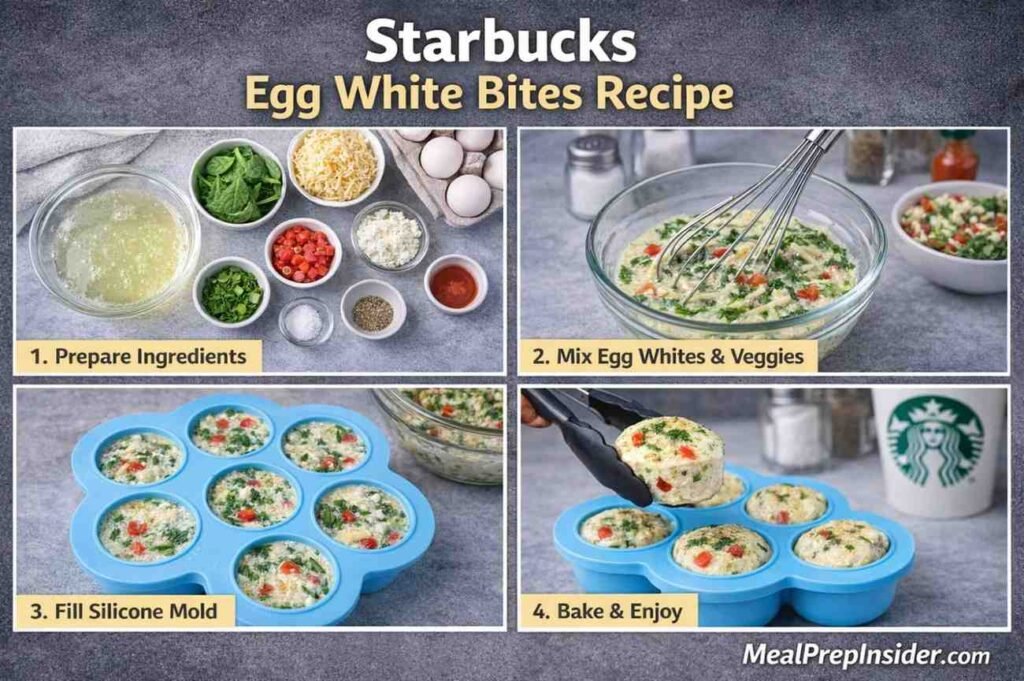
Here’s your starting point. This base recipe makes about 12 egg bites, depending on your mold size.
Ingredients:
- 8 large egg whites (roughly 1 cup)
- ½ cup cottage cheese (4% fat works best)
- ¾ cup shredded Monterey Jack cheese
- ¼ teaspoon salt
- ⅛ teaspoon pepper
- Your chosen mix-ins (about 1 cup total)
The Process:
Preheat your oven to 300°F. This lower temperature is crucial. Don’t crank it higher, thinking faster is better.
Blend the egg whites, cottage cheese, half the Monterey Jack, salt, and pepper until completely smooth. This step matters more than you’d think. Any lumps mean an uneven texture in the final product.
Prepare your molds with cooking spray. Even if they claim to be non-stick, trust me on this.
Distribute your mix-ins evenly among the molds. Then pour the egg mixture over them, filling each about three-quarters full. Top with the remaining cheese.
Here comes the key step: place your filled molds in a larger baking dish. Pour hot water into that dish until it reaches halfway up the sides of your molds. Cover everything tightly with foil.
Bake for 25-30 minutes. They’re done when set but still slightly jiggly in the center. Carryover cooking will finish them.

Mix-In Combinations That Actually Work
The base recipe is your canvas. Mix-ins are where you become an artist.
Classic Red Pepper:
- Roasted red peppers (diced small)
- Baby spinach (chopped fine)
- Extra Monterey Jack
This mirrors the Starbucks bestseller. Roast your own peppers for deeper flavor, or use jarred to save time. No shame either way.
Bacon Gruyere:
- Crispy bacon pieces
- Caramelized onions
- Gruyere cheese instead of Monterey Jack
The onions add sweetness that balances the smoky bacon perfectly. Cook them low and slow until golden.
Southwest Inspired:
- Black beans
- Corn kernels
- Diced green chiles
- Pepper Jack cheese
- Fresh cilantro
This version packs more punch. Great for meal prep when you need something that wakes you up.
Ham and Cheese:
- Diced ham
- Sharp cheddar
- Chives
- A pinch of smoked paprika
Simple. Straightforward. Hits the spot every single time.
Temperature and Timing: The Variables That Matter
Baking these requires patience. I know 300°F seems low. I know 30 minutes seems long for something so small.
Do it anyway.
Higher temperatures create pockets of overcooked egg that turn rubbery. Lower temperatures mean they never fully set. This range is the sweet spot.
Your oven might run hot or cold. Invest in an oven thermometer if you haven’t already. The dial on your oven lies. Often.
Start checking at 25 minutes. They should puff up slightly and pull away from the edges just a bit. A toothpick inserted should come out mostly clean with maybe a few moist crumbs.
Take them out when they still look slightly underdone in the very center. They’ll continue cooking as they cool.
The Water Bath Isn’t Optional
Some recipes skip this step. Those recipes are wrong.
The water bath (bain-marie, if you want to sound fancy) serves multiple purposes:
It moderates the temperature, preventing the bottom from cooking faster than the top. It adds humidity to the oven environment, keeping the eggs moist. It mimics the sous vide environment that makes the original so special.
Without it? You get mini omelets. Which are fine. But they’re not egg bites.
Make sure the water is hot when you add it. Room temperature water will lower the oven temperature and extend cooking time unpredictably.
Storage Solutions for Meal Preppers
One batch makes enough for nearly two weeks of breakfasts. Here’s how to keep them fresh.
Refrigerator Storage:
Let them cool completely first. Condensation from warm bites creates soggy disasters.
Store in an airtight container with parchment paper between layers. They’ll keep for 5-7 days easily.
Reheat in the microwave for 30-45 seconds. Don’t overheat or they’ll get tough.
Freezer Storage:
These freeze remarkably well. Flash freeze them on a baking sheet first, then transfer to freezer bags. This prevents them from sticking together.
They’ll keep frozen for up to 3 months. Thaw overnight in the fridge, or microwave from frozen for about a minute.
Troubleshooting Common Issues
They Came Out Rubbery:
The temperature was too high. Lower it next time. Also, check that you’re using the water bath properly.
They’re Too Dense:
Not enough blending. The cottage cheese needs to be completely smooth and fully incorporated into the eggs. Blend for at least 30 seconds.
They Stick to the Molds:
Grease more generously. Silicone still needs help. Let them cool for 5 minutes before attempting to remove them. Warm eggs are more delicate.
They Collapsed After Baking:
Overbaking is usually the culprit. They need to come out when still slightly wobbly. The structure sets as they cool.
Watery Texture:
Your mix-ins released too much moisture. Pat vegetables very dry before adding them. Frozen veggies need to be thawed and thoroughly drained.
Nutrition Breakdown Compared to Store-Bought
Here’s where homemade really shines. You control every ingredient.
| Nutrient | Starbucks Version | Homemade Version |
|---|---|---|
| Calories | 170 | 85-95 |
| Protein | 13g | 10-12g |
| Fat | 10g | 4-6g |
| Sodium | 540mg | 180-220mg |
| Cost per Serving | $4.95 | $0.75-$1.00 |
The sodium difference is staggering. Commercial versions need a longer shelf life, which means more salt. Yours don’t have that constraint.
Customization for Dietary Needs
Dairy-Free Version:
Swap cottage cheese for silken tofu blended with nutritional yeast. Use dairy-free cheese alternatives. The texture changes slightly—more dense, less fluffy—but still delicious.
Extra Protein Boost:
Add a scoop of unflavored protein powder to the base. Reduce cottage cheese slightly to compensate for the added dry ingredient. This bumps protein to 15g+ per bite.
Low-Sodium:
Use no-salt-added cottage cheese. Skip the added salt. Boost flavor with herbs, garlic powder, or nutritional yeast instead.
Keto-Friendly:
The base recipe already works. Just choose low-carb mix-ins like bacon, sausage, cheese, and low-carb vegetables.
RELATED RECIPE >> Rhode Island Clam Chowder Recipe: Favorite Delicious Soup
Flavor Boosters Beyond the Basics
Salt and pepper work. But why stop there?
Herbs That Elevate:
- Fresh chives (classic for a reason)
- Dill (especially good with smoked salmon)
- Basil (pairs well with tomatoes and mozzarella)
- Cilantro (essential for Mexican-inspired versions)
Add fresh herbs after blending. Blending them turns everything green and bitter.
Spices That Transform:
- Smoked paprika (adds depth without heat)
- Garlic powder (better than fresh for even distribution)
- Onion powder (ditto)
- Cayenne (just a pinch for background warmth)
- Everything bagel seasoning (on top before baking)
Umami Additions:
- Sun-dried tomatoes
- Parmesan cheese
- Mushroom powder
- Miso paste (just a tiny bit)
The Sous Vide Method If You’re Feeling Fancy
Got a sous vide machine gathering dust? Use it.
Set the water bath to 172°F. Fill your molds, seal them individually in small mason jars (leave them slightly loose), and cook for 1 hour.
The texture is otherworldly. Even better than the water bath method. Creamier. More consistent. Worth the extra equipment if you’ve already got it.
Batch Cooking Strategy for Busy People
Sunday afternoon. Two hours. That’s all you need to set up breakfast for two weeks.
Make a double batch—24 bites total. Vary the mix-ins so you’re not eating the same thing every day. Half bacon and Gruyere, half red pepper and spinach, for example.
Let them cool. Package them in grab-and-go containers with a piece of fruit or some nuts. Mornings become automatic.
The time investment pays off immediately. No more drive-through trips. No more skipped breakfasts. No more hangry mid-morning crashes.
Cost Breakdown: The Money You’ll Save
Let’s get specific about savings.
Store-Bought (2 pack):
- Price: $4.95
- Per bite: $2.48
- Weekly cost (7 mornings): $17.36
- Monthly cost: $69.44
Homemade (batch of 12):
- Eggs: $2.00
- Cottage cheese: $1.50
- Cheese: $2.00
- Mix-ins: $3.00
- Total: $8.50
- Per bite: $0.71
- Weekly cost: $4.97
- Monthly cost: $19.88
Annual savings: $594.72
That’s a plane ticket. A nice dinner out every month. Several bags of good coffee. However, you want to frame it.
Mistakes Beginners Make
Rushing the Blending:
Thirty seconds minimum. You want zero lumps. The cottage cheese must completely disappear into the mixture.
Skipping the Spray:
Even silicone needs it. Even if the package says it doesn’t. Trust comes from experience. I’ve got the stuck-bite scars to prove it.
Overfilling the Molds:
Three-quarters full max. They puff up while baking. Overfilled molds mean overflow and a messy oven.
Opening the Oven Repeatedly:
Temperature fluctuations mess with delicate eggs. Check once every 25 minutes. That’s it.
Using Cold Ingredients:
Room temperature eggs blend more easily and create a better texture. Take them out 30 minutes before starting.
Advanced Techniques for Perfectionists
The Whipping Method:
Some recipes whip the egg whites separately before folding them in. This creates an even airier texture—almost soufflé-like. It’s extra work. But the results are stunning.
Layered Bites:
Pour half the mixture, add mix-ins, and pour the rest. This centers your ingredients instead of letting them sink. More visually appealing.
Broiler Finish:
After baking, hit them with 30 seconds under the broiler for a golden top. Purely aesthetic. But we eat with our eyes first.
Infused Cream:
Replace some cottage cheese with heavy cream infused with herbs. Steep rosemary or thyme in warm cream for 20 minutes, strain, cool, then use. Subtle but sophisticated.
Making Them Kid-Friendly
Kids can be weird about texture. These usually pass the test.
Winning Combinations for Young Eaters:
- Ham and mild cheddar
- Bacon bits and regular Jack cheese
- Just cheese (nothing green)
Cut them smaller if needed. Serve with ketchup even though it hurts your soul. Whatever gets protein into them.
Let older kids choose their own mix-ins. They’re more likely to eat something they helped create.
The Environmental Angle
Every store-bought package creates waste. Plastic containers. Cardboard sleeves. Transportation emissions.
Making them at home eliminates all that. Reusable molds. Ingredients you’d buy anyway. Zero single-use packaging.
If you make two batches a week, you’ll prevent roughly 100 plastic containers from entering the waste stream annually. Small change. Meaningful impact.
Pairing Suggestions for Complete Meals
Egg bites are protein powerhouses. Round them out smartly.
What Works:
- Fresh fruit (natural sweetness balances savory)
- Whole-grain toast (if you need more fuel)
- Avocado slices (healthy fats for satiety)
- Mixed nuts (crunch factor)
- Greek yogurt with berries (double protein punch)
What Doesn’t:
- More eggs (texture overload)
- Heavy pastries (defeats the healthy purpose)
- Sugary cereals (blood sugar crash incoming)
Scaling Up for Crowds
Brunch for twelve? Double or triple the recipe.
You’ll need multiple muffin tins. Prep everything in one large blender batch, then distribute. Bake in shifts if your oven can’t fit everything at once.
They hold well in a warm oven (175°F) for up to an hour. Just cover loosely with foil to prevent drying out.
Serve them in the molds on a platter. Looks impressive. Tastes incredible. People will ask for the recipe.
Seasonal Variations Worth Trying
Spring:
Fresh asparagus tips, goat cheese, and lemon zest. Light and bright.
Summer:
Cherry tomatoes, fresh basil, and mozzarella. Caprese-inspired goodness.
Fall:
Butternut squash (roasted and diced small), sage, and sharp cheddar. Warm and comforting.
Winter:
Caramelized onions, mushrooms, thyme, Gruyere. Rich and earthy.
The Science of Why This Works
Eggs are protein networks. Heat causes proteins to bond and tighten. Too much heat, too fast? Tight, tough bonds. Gentle heat with added moisture? Tender, delicate bonds.
Cottage cheese adds casein proteins that help stabilize the structure. The extra dairy fat provides richness and mouthfeel. Cheese adds both flavor and additional protein scaffolding.
The water bath ensures the outside doesn’t cook faster than the inside. Even heat distribution is everything with eggs.
Understanding this helps you troubleshoot and adjust without a recipe. You’re not following instructions blindly. You’re applying principles.
Frequently Asked Questions
Can I use whole eggs instead of just whites?
Sure. The texture gets richer and denser. Less fluffy, more substantial. Use 5-6 whole eggs to replace the 8 whites. Expect higher calories and fat content.
Do I have to use cottage cheese?
It’s highly recommended. Ricotta works as a substitute but creates a grainier texture. Greek yogurt works in a pinch, but reduces the protein slightly. Cottage cheese really is ideal.
What if I don’t have silicone molds?
Regular muffin tins work fine. Grease them extremely well and use paper liners for easier removal. The shape won’t be as cute, but the taste is identical.
How do I know when they’re actually done?
They should be set around the edges with just a slight wobble in the very center. A toothpick inserted comes out with a few moist crumbs, not wet batter. They firm up more as they cool.
Can I make these without a blender?
Technically, yes, but it’s harder. Whisk very thoroughly and make sure the cottage cheese is as smooth as possible. A food processor works too. The goal is to eliminate all lumps.
Why do mine taste bland compared to Starbucks?
You probably need more salt. Commercial kitchens use way more sodium than home cooks instinctively add. Also, make sure your cheese is flavorful—cheap cheese makes bland bites.
How long do they really last in the fridge?
Five days is safe and optimal. Seven days if you’re pushing it. Beyond that, the texture starts degrading even if they’re technically still safe to eat.
Can I make these in an Instant Pot?
Yes. Pour water in the bottom, place filled molds on the trivet, and cook on low pressure for 8 minutes with natural release. Results are very similar to sous vide.
What’s the best cheese for a melting texture?
Monterey Jack melts beautifully without getting greasy. Gruyère is the next best. Avoid pre-shredded when possible—the anti-caking agents affect melting.
Do I need to let the batter rest before baking?
No. Pour and bake immediately. Letting it sit doesn’t improve anything and can cause separation.
Can I add vegetables without pre-cooking them?
Depends on the vegetable. Peppers and spinach are fine raw. Harder vegetables like broccoli or mushrooms should be pre-cooked to remove excess moisture and ensure they’re tender.
Why did my bites turn green?
Too much spinach, or you blended the greens into the base. Keep leafy greens as mix-ins only, not blended, and use them sparingly. A little goes a long way.
Are these okay to eat cold?
Definitely. They’re actually quite good chilled. Different texture—more firm—but convenient when you can’t reheat.
How do I prevent the cheese from sinking to the bottom?
Add half the cheese to the blended mixture and sprinkle the rest on top. The incorporated cheese helps suspend everything evenly.
What’s the texture supposed to be like?
Creamy, tender, and light. Not rubbery, not spongy, not watery. Somewhere between a traditional omelet and a custard. Melt-in-your-mouth quality.
The beauty of this recipe is its flexibility. Start with the basics. Master the technique. Then make it your own.
Your kitchen now holds the secret to breakfast that costs less, tastes better, and fits your exact preferences. No more waiting in line. No more five-dollar mornings.
Just you, your molds, and endless possibilities in a little cup.
SUGGESTED POST >> 10 Best Meal Prep Containers That Are Durable & Sturdy
Discover more from Meal Prep Insider
Subscribe to get the latest posts sent to your email.