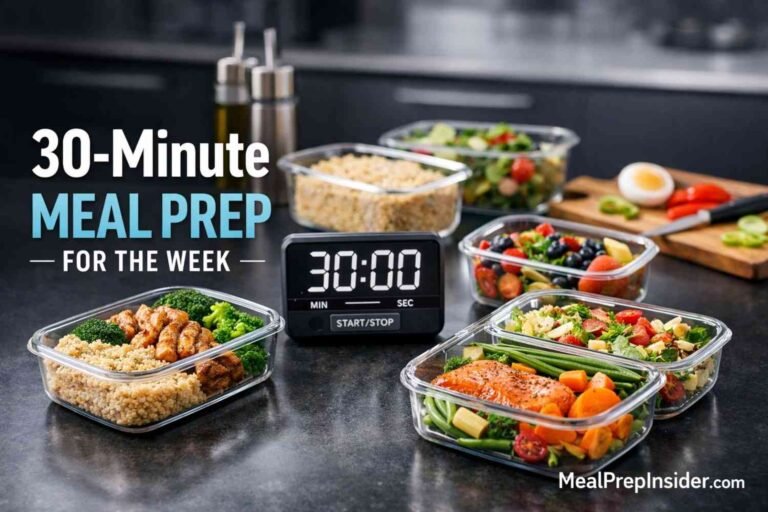
19 Best Meal Prep Tips for Heavy Sleepers: Smart Meal Guide

Meal Prep Tips for Heavy Sleepers: Heavy sleepers know the morning struggle all too well. You’ve snoozed through three alarms, your phone’s vibrating itself off the nightstand, and suddenly you’ve got seven minutes to become a functioning human. Breakfast? Forget it. Lunch? You’ll grab something. Dinner? We’ll cross that bridge when we’re exhausted at 8 PM.
Sound familiar?
Here’s the thing most people don’t realize about being a heavy sleeper: your eating habits suffer way more than just missing breakfast. You’re making food decisions in crisis mode. You’re spending money you don’t need to spend. You’re probably feeling like garbage by 2 PM.
But what if I told you the solution isn’t becoming a morning person? (Because let’s be honest, that’s not happening.) The solution is working with your sleep patterns, not against them.
That’s where meal prep enters the picture.
Not the Instagram version with perfect containers and color-coded vegetables. The real, sustainable kind that actually saves heavy sleepers from the daily food scramble. The kind that respects the fact that you’re not going to chop vegetables at 6 AM because you physically cannot wake up at 6 AM.
This isn’t another generic meal prep guide. This is specifically designed for people who hit snooze like it’s an Olympic sport.
Let’s fix your food situation once and for all.
Why Heavy Sleepers Need Meal Prep More Than Anyone Else
Being a deep sleeper isn’t a character flaw. Your body genuinely needs that rest, and fighting your natural sleep patterns usually backfires. The problem is that modern life expects everyone to bounce out of bed ready to make complex decisions about nutrients and cooking methods.
That’s ridiculous.
When you can’t trust yourself to wake up on time, you definitely can’t trust yourself to make a nutritious omelet before work. Meal prep removes the decision-making from your most vulnerable hours. It turns eating well from an active choice into a passive benefit.
Think about it. Every morning you don’t do meal prep is a morning where Future You has to figure things out while half-conscious. Future You consistently makes terrible choices because Future You is barely awake.
Past You, however, has the power to set everything up when you’re actually coherent.
1. Prep on Your Peak Energy Days, Not Random Schedules
Here’s where most meal prep advice fails heavy sleepers immediately. They tell you to prep every Sunday like it’s a law of nature. But if you’re a heavy sleeper, Sunday might be your best recovery day. You might be most energetic on Tuesday evenings or Saturday mornings.
Prep when you have energy, not when a blog post tells you to.
Track your energy levels for a week. Notice when you feel most motivated and least foggy. That’s your meal prep window. For some people, it’s right after work on Wednesdays. For others, it’s Saturday afternoons after sleeping in.
Your prep schedule should match your rhythm, not fight it.
Some heavy sleepers even split their prep into two shorter sessions instead of one marathon Sunday. There’s no rule saying it all has to happen at once. Proteins on Thursday, vegetables on Saturday. Whatever actually works.
2. Invest in Grab-and-Go Containers Before Anything Else
You need containers you can literally grab while stumbling toward the door. Not containers that need assembly. Not containers that require you to remember multiple components. Single. Unified. Grab-and-go.
The best containers for heavy sleepers have these characteristics:
- Completely assembled the moment they go in the fridge
- Microwave-safe without removing lids (or designed for cold foods)
- Shaped to fit in bags without toppling
- Clear enough to see the contents without opening
- Stackable, so you can store a week’s worth
Glass containers feel fancy, but they’re heavy and breakable when you’re rushing. Plastic BPA-free containers work perfectly fine. Save the glass for storing leftovers, not for commuting.
Label everything with the day of the week using masking tape and a marker. Monday breakfast. Tuesday lunch. Wednesday dinner. Remove all thinking from the equation.
3. Master the Art of Overnight Preparation
Heavy sleepers have a secret weapon most morning people don’t utilize: overnight preparation actually works better when you’re going to sleep deeply anyway.
Set up your breakfast the night before while you’re still awake. Overnight oats. Chia pudding. Cold brew coffee. Smoothie bags. These aren’t trendy options; they’re survival strategies.
Here’s a breakfast rotation that requires zero morning effort:
| Day | Overnight Prep | Morning Action |
|---|---|---|
| Monday | Overnight oats with berries | Grab from the fridge |
| Tuesday | Grab from the fridge | Add liquid, blend 30 seconds |
| Wednesday | Greek yogurt parfait | Grab from the fridge |
| Thursday | Breakfast burrito (pre-made) | Microwave 90 seconds |
| Friday | Chia pudding | Grab from fridge |
Notice something? The most complicated morning task is pressing a microwave button. That’s the level we’re working with here.
4. Cook Proteins in Massive Batches Without Losing Your Mind
Protein is usually the most time-consuming meal component. It’s also the thing most likely to go wrong when you’re rushing. Undercooked chicken. Overcooked fish. Eggs that somehow burned and stayed raw simultaneously.
Batch cooking proteins eliminates this.
Pick one protein cooking method per week and go all-in. This week, it’s sheet pan chicken thighs. Next week it’s slow-cooker pulled pork. The week after that, it’s baked salmon portions.
The rotation prevents boredom without requiring you to become a chef.
For chicken, the easiest method is buying a package of thighs, seasoning them all identically, and baking at 425°F for 35-40 minutes. Done. You’ve got protein for the entire week. Pair with different sides and sauces throughout the week so it doesn’t feel repetitive.
Ground turkey or beef cooks even faster. Brown three pounds at once, season it, and divide it into portions. Use it for tacos, pasta, rice bowls, and salads. Same base protein, completely different meals.
5. Embrace the Power of Breakfast for Dinner Prep
Who said you have to eat traditional breakfast foods in the morning? Heavy sleepers should seriously consider prepping dinner foods for breakfast instead.
Leftover pizza. Rice and beans. Pasta. Stir-fry. These are all completely acceptable breakfast foods when you’re an adult making your own decisions.
In reality, your body doesn’t care if you’re eating eggs or eating chicken at 7 AM. It cares about getting nutrients. If reheating last night’s stir-fry is easier than making traditional breakfast, do that.
This mindset shift alone can simplify your entire meal prep approach. You’re not making separate breakfast foods and dinner foods. You’re making food portions that can be eaten at any time.
Prep one big batch of fried rice on Sunday. Eat it for breakfast, lunch, or dinner. Add a fried egg on top for breakfast vibes. Add sriracha for dinner vibes. It’s the same food with minimal modification.
6. Use Your Freezer Like a Time Machine
Your freezer lets Past You send fully-prepared meals to Future You across time. This is especially valuable for heavy sleepers because it builds in buffer periods.
Had a terrible week and didn’t prep? You’ve got frozen backup meals.
Accidentally slept through meal prep time? Frozen meals have your back.
The key is treating your freezer as a rotating meal bank, not a food graveyard. When you cook, always make double and freeze half. This gradually builds a reserve without requiring special freezer-prep sessions.
Best foods for heavy sleepers to freeze:
- Breakfast burritos wrapped individually
- Soup portions in containers
- Cooked grains (rice, quinoa, farro)
- Pasta dishes in single servings
- Marinated proteins ready to cook
- Smoothie ingredient bags
Label everything with contents and date using a permanent marker. A frozen mystery burrito defeats the purpose when you’re half-asleep trying to grab breakfast.
7. Prep Snacks First, Meals Second
This might sound backward, but hear me out. Heavy sleepers often skip entire meals because they slept through regular eating times. You wake up at 10 AM, having missed breakfast. By 11 AM, you’re starving. Lunch isn’t until 1 PM.
This is where prepped snacks become essential.
When you have healthy, immediately-accessible snacks, you stop making desperate gas station runs. You stop eating half a bag of chips because it’s the only thing in your pantry. You stop spending $8 on a mediocre muffin.
Snack prep is simpler than meal prep:
- Cut vegetables into hummus portions
- Cheese cubes and whole-grain crackers
- Trail mix in small bags
- Hard-boiled eggs
- Apple slices with almond butter containers
- Greek yogurt cups
These take maybe 20 minutes to portion out for a week. They prevent the hunger spirals that lead to poor decisions. They’re also more forgiving than full meals if your schedule shifts.
8. Create a Morning Station, Not a Morning Routine
Morning routines fail for heavy sleepers. You’re not going to follow 17 steps in sequence. You’re going to grab what’s immediately visible and run.
That’s why you need a morning station instead.
Designate one specific area of your kitchen or fridge where everything you need each morning lives. Your lunch. Your water bottle. Your coffee. Your snacks. Your utensils, if needed.
Same spot. Every single day.
Train yourself to reach for that one spot while you’re on autopilot. Your half-asleep brain can handle “grab from designated spot” way better than it can handle “remember where lunch is, find coffee, locate water bottle, check for snacks.”
Some heavy sleepers even use a small bin on a specific fridge shelf. Every night, they put tomorrow’s food in the bin. Morning action is just grabbing the bin.
Simplicity beats complexity whenever consciousness is questionable.
9. Meal Prep Your Coffee or Caffeine Source
You know what makes mornings even worse? Having to actively make coffee when you can barely open your eyes. Your coffee situation should be as automated as possible.
Options for heavy sleepers:
- Programmable coffee maker set the night before
- Cold brew concentrate (just add water/milk)
- Instant coffee you actually like (yes, it exists now)
- Caffeine powder in pre-portioned smoothies
- Pre-made iced coffee in the fridge
The time saved not fumbling with coffee filters while half-conscious is legitimately valuable. Those three minutes could be the difference between catching your bus and missing it.
If you’re a tea person, overnight cold brew tea works identically. Prepare a pitcher on Sunday night, you’ve got tea all week with zero morning effort.
10. Shop with a Template, Not a Random List
Decision fatigue is real, and grocery shopping requires hundreds of small decisions. Heavy sleepers already struggle with morning decisions. Don’t make shopping harder than it needs to be.
Create a grocery template that you shop from every single week. Same basic items. Same general quantities. Slight variations for variety.
This is your shopping template foundation:
Proteins: 3 pounds (rotate: chicken, ground turkey, fish, tofu)
Grains: 2 types (rice, quinoa, pasta, bread)
Vegetables: 5-7 types (mix of fresh and frozen)
Fruits: 3-4 types
Dairy: Eggs, yogurt, cheese, milk
Snacks: 3 options
Pantry: Oils, spices, and sauces as needed
You’re not reinventing your entire diet every week. You’re making small substitutions within a proven framework. This week, it’s chicken thighs and broccoli. Next week it’s ground turkey and bell peppers.
The structure stays the same. You’re just swapping compatible components.
11. Prep Ingredients, Not Just Complete Meals
Complete meal prep works great until your schedule changes. You prepped five salads, but now you want hot food. You made five pasta portions, but you’re sick of pasta by Wednesday.
Ingredient prep gives you flexibility.
Instead of assembling complete meals, prep components:
- Cooked proteins in plain form
- Washed and chopped vegetables
- Cooked grains in containers
- Sauces in small jars
- Prepared toppings (nuts, cheese, etc.)
Now you can assemble different combinations based on what you actually want. On Monday, you make a rice bowl. Tuesday, you make a wrap. On Wednesday, you make a salad. Same prepped ingredients, different final products.
This is especially valuable for heavy sleepers because your appetite might vary depending on how much sleep you get. Light sleep at night means you want something heavy for lunch. Great sleep means you’re fine with something lighter.
Ingredient prep lets you adjust without wasting food.
12. Set Absurdly Loud Alarms for Meal Prep Time
You know what’s funny? Heavy sleepers often sleep through important morning alarms but can wake up for specific evening activities. Use this to your advantage for meal prep.
If your prep time is Saturday at 11 AM, set an alarm. Not a gentle reminder. An actually annoying alarm that you have to physically get up to turn off.
Treat meal prep time with the same importance as a doctor’s appointment. Because in a way, it is a health appointment. You’re literally preparing the food that fuels your body for the week.
Once the alarm goes off, follow the two-minute rule: start something meal prep-related within two minutes. Doesn’t matter what. Wash a container. Pull out a cutting board. Turn on the oven.
Starting is the hardest part. Once you’ve begun, momentum usually carries you through.
RELATED POST >> 12 Easy Atkins Recipes for Back Sleepers: Best Bet Meals
13. Master Three Reliable Formulas, Not Twenty Complicated Recipes
Recipe blogs will try to convince you that meal prep requires culinary school training. Ignore them. You need three simple formulas that you can execute consistently.
Formula 1: The Sheet Pan
Protein + vegetables + oil + seasoning → 400°F for 25-35 minutes
Formula 2: The Grain Bowl
Cooked grain + protein + vegetables + sauce + toppings
Formula 3: The Slow Cooker Dump
Protein + liquid + vegetables + seasonings → Low for 6-8 hours
These three formulas can create dozens of different meals just by changing the specific ingredients. Sheet pan with chicken, broccoli, and Italian seasoning. Sheet pan with salmon, asparagus, and lemon pepper. Different meals, identical method.
You don’t need variety in techniques. You need variety in flavors using the same techniques.
Once these three formulas become automatic, you can expand. But honestly, most people never need to expand. These three cover breakfast, lunch, and dinner indefinitely.
14. Prep Condiments and Sauces Separately
This seems minor, but it’s transformative. Sauces and condiments completely change how food tastes without changing what the food is.
Prepare plain proteins and vegetables, then add different sauces throughout the week. Monday it’s teriyaki. Tuesday, it’s buffalo. Wednesday, it’s honey mustard. Same chicken, completely different eating experience.
Sauces to make or buy for rotation:
- Teriyaki sauce
- Buffalo sauce
- Pesto
- Tzatziki
- Chimichurri
- Honey mustard
- Tahini dressing
- Salsa verde
Store them in small containers. Add them fresh when you eat, not when you prep. This prevents soggy vegetables and maintains texture.
A weekly rotation of four sauces means your basic chicken and rice can feel like four different meals. That’s efficiency.
15. Use Breakfast Timing Strategically
Here’s an unconventional tip: heavy sleepers might want to skip traditional breakfast timing entirely. If you naturally wake at 10 AM, having breakfast at 10 AM and lunch at 2 PM makes perfect sense.
There’s no biological requirement to eat within an hour of waking. That’s a social convention, not a health necessity.
Adjust your meal timing to match your actual schedule:
- Meal 1: Whenever you wake up
- Meal 2: 4-5 hours later
- Meal 3: 4-5 hours after that
- Snacks: As needed between
This removes the pressure to eat breakfast foods at breakfast time. It removes the guilt about “missing breakfast.” You’re not missing anything. You’re eating on your body’s actual schedule.
Prep meals as “Meal 1,” “Meal 2,” “Meal 3” instead of breakfast, lunch, and dinner. This mental shift alone reduces stress.
16. Prep Your Backup Plan
The biggest trap in meal prep is the all-or-nothing mindset. You either prep perfectly or you fail. Heavy sleepers need backup plans built into their system.
Identify your acceptable shortcuts for when prep doesn’t happen:
- Healthy frozen meals you actually like
- Rotisserie chicken from the grocery store
- Pre-washed salad kits
- High-quality frozen vegetables
- Canned beans and rice packets
These aren’t failures. These are strategic reserves. The difference between eating reasonably well and completely falling apart is often having acceptable convenience options available.
Keep three emergency meals in your freezer at all times. When you eat one, replace it on your next grocery trip. This creates a rolling buffer that prevents the “I didn’t prep, so I’m eating fast food all week” spiral.
17. Clean As You Prep, Not After
This is where many people abandon meal prep forever. They spend two hours cooking, then face another hour of cleanup. It’s exhausting and unsustainable.
Heavy sleepers especially can’t afford to waste energy on inefficient processes.
Clean while things are cooking. Chopped the vegetables? Wash the cutting board while the oven preheats. Proteins in the pan? Clean the counter while they cook. Waiting for water to boil? Load the dishwasher.
By the time your food is done, your kitchen should be 90% clean. You’re left with maybe the serving dishes and your actual meal prep containers.
This transforms meal prep from an all-day ordeal into a focused two-hour session. That’s sustainable. That’s something you’ll actually do weekly.
18. Prep for Your Worst Days, Not Your Best Days
Design your meal prep for the version of you that slept terribly, woke up late, can’t find pants, and has back-to-back meetings all day. That version of you needs food even more than the well-rested version.
Your meals should require:
- Zero cooking skills to reheat
- Minimal dishes (eat from the container)
- No assembly (already complete)
- Fool-proof reheating (microwave times written on containers)
- Utensils included if needed
If a meal requires you to remember a side dish that’s stored separately, you’ll forget it half the time. Build everything into single containers. The lazier you can be about eating well, the more consistently you’ll succeed.
19. Track What You Actually Eat, Not What You Prep
The final tip is the most important: meal prep only matters if you’re actually eating the food. Track which meals you eat and which ones sit in the fridge until they go bad.
This isn’t about guilt. It’s about data.
If you consistently skip the salads, stop prepping salads. If the overnight oats always get eaten, make more overnight oats. Your meal prep should evolve based on your actual behavior, not your aspirational behavior.
Keep a simple notes file on your phone:
- What I prepped this week
- What I actually ate
- What went to waste
- What I’d change next time
After a month, you’ll see clear patterns. You’ll know exactly which meals work for your lifestyle and which ones you prep out of obligation rather than utility.
Adjust accordingly. Meal prep isn’t a rigid system. It’s a personalized tool that should fit your life.
Common Pitfalls Heavy Sleepers Make With Meal Prep
Let’s address the frequent mistakes that undermine even the best intentions.
Overcomplicating the first week. You get excited and prep 15 different meals with complex recipes. By Wednesday, you’re exhausted and never want to see a meal prep container again. Start with three simple meals. Expand slowly.
Prepping foods you think you should eat instead of foods you like. If you hate kale, stop trying to make kale happen. Prep foods you genuinely enjoy. Nutrition matters, but consistency matters more.
Forgetting about texture changes. Some foods get soggy or tough after a few days. Crispy things become soft. Soft things become mushy. Learn which foods hold up well and which ones need special treatment.
Not accounting for sodium in prepared foods. When you’re reheating the same seasoned food multiple days in a row, too much salt becomes overwhelming. Season lighter during prep, add more when eating if needed.
Ignoring portion sizes. Preparing five identical huge portions means you’ll be sick of that food by portion three. Make portions slightly smaller than you think you need. It’s easier to add a snack than force yourself to finish an overwhelming meal.
How to Stay Consistent When Motivation Disappears
Motivation is unreliable. Heavy sleepers especially can’t depend on feeling motivated every single week. You need systems that work even when motivation is zero.
The minimum viable prep. Decide what the absolute minimum meal prep looks like for you. Maybe it’s just hard-boiling a dozen eggs and washing some fruit. On low-energy weeks, just do the minimum. Something is infinitely better than nothing.
Accountability partnerships. Find someone else who meal preps and text each other when it’s done. Not in a judgmental way. Just a simple “prepped” message. The social element creates gentle accountability without pressure.
Visual progress tracking. Use a simple calendar and mark off weeks where you prepped. Seeing a chain of consecutive weeks creates motivation to not break the chain. Miss a week? No big deal. Start a new chain.
Reward systems. Every four consecutive weeks of meal prepping, you get a specific reward. A favorite takeout meal. A new kitchen gadget. A lazy Sunday with zero cooking. Whatever motivates you personally.
The goal isn’t perfection. The goal is to develop a sustainable rhythm that fits your life as a heavy sleeper.
Frequently Asked Questions
How long does meal-prepped food stay fresh?
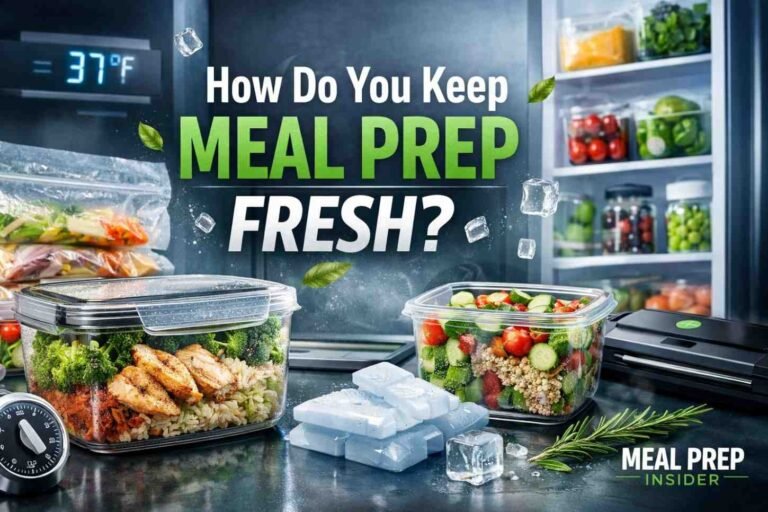
Most meal-prepped food stays fresh for 3-5 days when stored properly in airtight containers in the refrigerator. Cook proteins to proper temperatures and cool them quickly before refrigerating. If you’re prepping for more than 5 days, freeze portions beyond day five and move them to the fridge the night before you need them.
What if I get bored eating the same thing all week?
This is why ingredient prep works better than full meal prep for many people. Prep components separately so you can mix and match throughout the week. Also, use different sauces and seasonings to change flavors even when the base ingredients stay the same. You don’t need to eat identical meals five days straight.
Is meal prep actually cheaper than just buying food?
For most people, yes. The average American spends $12-15 on lunch when buying out. Meal-prepped lunches typically cost $3-5 per portion. That’s a savings of roughly $50 per week just on lunches. The upfront grocery bill feels expensive, but it’s covering multiple days of food, not just one meal.
Do I need special equipment to start meal prepping?
No. You need containers, basic cooking equipment (pots, pans, oven), and a refrigerator. That’s it. Fancy gadgets like rice cookers or instant pots are helpful but not required. Start with what you have. Upgrade equipment only after you’ve established a consistent prep routine.
What’s the best day to meal prep?
Whichever day you have the most energy and time. There’s no universal best day. Most people choose Sundays because they’re off work, but if you work weekends, pick a weekday. Some people split prep across two days. The best day is the one you’ll actually use consistently.
How do I meal prep if I have dietary restrictions?
The same principles apply regardless of dietary restrictions. Identify proteins, vegetables, and grains that fit your requirements, then use the same formulas. Gluten-free meal prep uses rice instead of pasta. Vegan meal prep uses tofu instead of chicken. The system stays the same; the specific ingredients change.
Can I meal prep if I don’t have much refrigerator space?
Yes, but you’ll need to rely more heavily on your freezer and prep smaller batches more frequently. Consider prepping three days at a time instead of seven. Utilize stackable containers to maximize vertical space. Some people also prep just lunches and keep dinners simple with minimal ingredients.
What if my schedule changes and I can’t eat my prepped meals?
Freeze them immediately if you know your schedule has changed. Most prepped meals freeze reasonably well for 2-3 months. Or, give them to friends, family, or coworkers rather than letting them go to waste. This happens to everyone occasionally. Don’t let it derail your entire system.
How do I prevent my vegetables from getting soggy?
Store wet ingredients (dressings, sauces, tomatoes) separately from dry ingredients until you’re ready to eat. Keep paper towels in containers with lettuce to absorb excess moisture. Slightly undercook vegetables since they’ll continue softening in the fridge. Roasted vegetables hold up better than steamed ones.
Should heavy sleepers prep breakfast differently?
Yes. Breakfast prep for heavy sleepers should require literally zero morning cooking. Everything should be grab-and-go or require only reheating. Overnight preparations work especially well. Avoid anything that requires assembly, cooking, or complex steps when you’re barely conscious.
Final Thoughts for Heavy Sleepers
Being a heavy sleeper doesn’t mean you’re doomed to bad eating habits and wasted money on convenient food. It just means you need a system designed for your reality, not someone else’s idealized morning routine.
Meal prep gives you something that heavy sleepers desperately need: control over food choices during your most vulnerable times. When you’re rushing out the door at the last possible second, you’re not making decisions. You’re executing a plan that Past You already created.
That’s powerful.
Start small. Pick three tips from this list and implement them this week. Not all nineteen. Just three. Master those before adding more.
Maybe you start with overnight breakfast prep, batch cooking one protein, and setting up a morning station. That’s enough to dramatically change your mornings without overwhelming yourself.
Next week, add another tip. Then another. Before you know it, meal prep becomes automatic rather than effortful.
The goal isn’t becoming a meal prep influencer with color-coded containers and perfect portions. The goal is to feed yourself well without requiring superhuman morning willpower.
You can absolutely do this. Your sleep patterns don’t have to sabotage your eating patterns. The two can coexist peacefully with the right system in place.
Now go set an alarm for your first meal prep session. Make it obnoxiously loud. Future You will thank Past You for this.
SUGGESTED POST >> How Late is the Closest Grocery Store Open? Best 6 Ranked
Discover more from Meal Prep Insider
Subscribe to get the latest posts sent to your email.