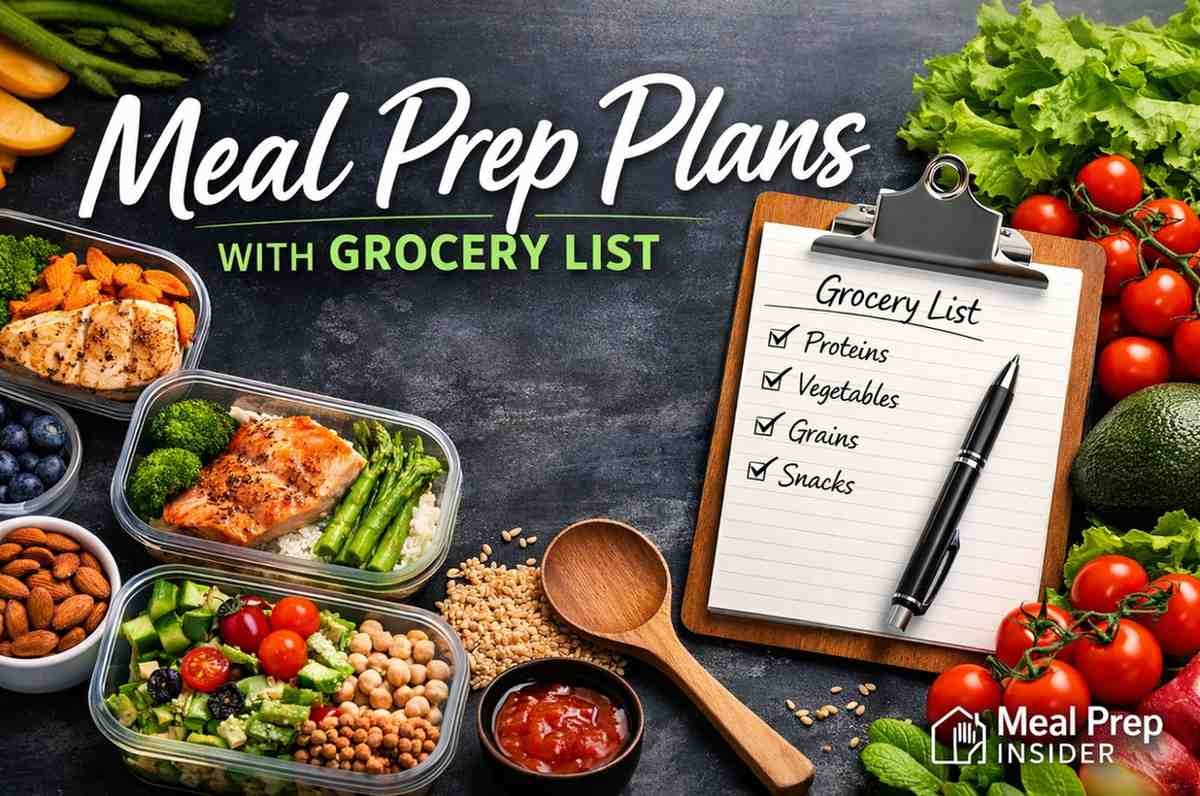
Meal Prep Plans with Grocery List: Easy Meals without a Chef

Meal Prep Plans with Grocery List: What Actually Works (And What Doesn’t)
Meal Prep Plans with Grocery List: Struggling with what to eat all week? These meal prep plans with grocery lists take the guessing out of your routine — built for real U.S. schedules, budgets, and appetites.
There’s a version of meal prep that lives on Pinterest. Color-coded containers. Matching lids. Six grain bowls lined up like they’re posing for a photo shoot.
That version doesn’t survive contact with a Tuesday.
This post is for people who want to actually do meal prep — not perform it. Whether you’ve got two hours on Sunday or forty-five minutes on a Wednesday night, there’s a plan here that works for your life.
First, Let’s Talk About Why Meal Prep Fails
Most people don’t fail at meal prep because they chose the wrong recipe. They fail because they prep too much, get bored by Wednesday, and toss half of it by Friday.
Or they prep meals that don’t reheat well. Nothing kills enthusiasm like soggy broccoli at noon.
The other big mistake? Prepping without a grocery list. Sounds obvious. But it happens more than you’d think — people just grab “stuff” at the store, come home, and realize they have six sweet potatoes and absolutely nothing to pair them with.
A grocery list isn’t optional. It’s the foundation.
The Three Types of Meal Prep (Pick One)
You don’t have to prep everything. That’s the first thing to understand.
There are three approaches. Each one works. None of them requires you to be a chef.
1. Full Meal Prep You cook and portion complete meals for the week. Breakfast, lunch, and dinner. Everything’s done. You just heat and eat.
Best for: People with very little time on weeknights. Families with predictable schedules. Anyone who’s tried to “figure it out” at 6 pm and ended up ordering delivery.
2. Component Prep (Aka “Building Blocks”) You cook ingredients separately — rice, roasted vegetables, proteins — and assemble meals throughout the week. More flexibility, slightly more effort daily, but way less boredom.
Best for: People who get tired of eating the same thing twice. Those who have 10-15 minutes on weeknights.
3. Partial Prep You do just enough to make cooking easier later. Marinate meats. Chop vegetables. Cook grains. The actual cooking still happens each evening, but it’s much faster.
Best for: People who enjoy cooking but hate the prep work. Great for households with different dietary preferences.
READ ALSO >> 7-Day High Protein Meal Prep for Muscle Gain: Proven Guide
A Real 5-Day Meal Prep Plan (with Grocery List)
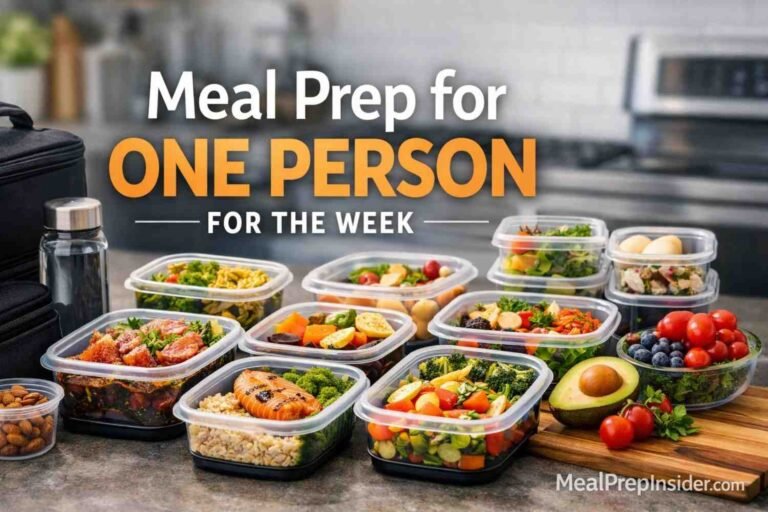
This plan is designed for one person or a couple. It follows the component prep approach, which is the most sustainable for most Americans over the long term.
The Weekly Overview
| Meal | Monday | Tuesday | Wednesday | Thursday | Friday |
|---|---|---|---|---|---|
| Breakfast | Overnight oats | Overnight oats | Egg muffins | Egg muffins | Greek yogurt bowl |
| Lunch | Grain bowl | Grain bowl | Chicken wrap | Chicken wrap | Leftover remix |
| Dinner | Sheet pan chicken + veg | Stir fry | Pasta | Tacos | Pizza night (earned it) |
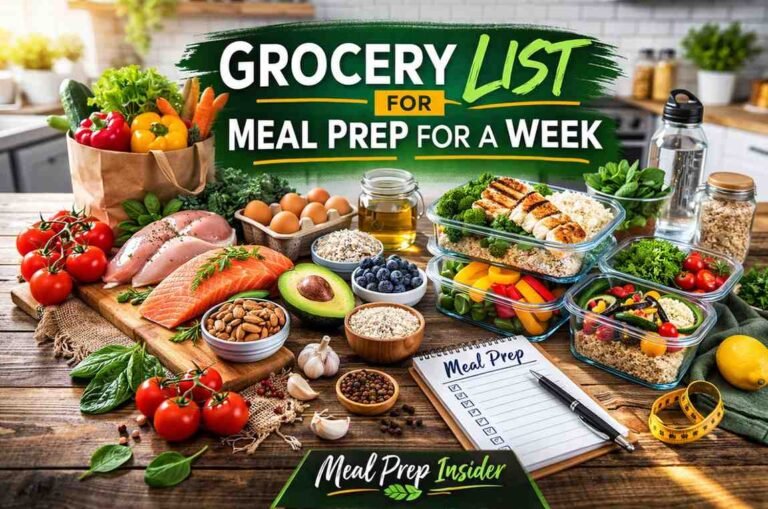
The Grocery List
Proteins
- 2 lbs boneless, skinless chicken breast (or thighs — thighs are more forgiving)
- 1 lb ground beef or turkey (for tacos)
- 1 dozen eggs
- 1 container plain Greek yogurt (32 oz)
Grains & Carbs
- 2 cups dry brown rice or farro
- 1 box of pasta (whatever shape you like)
- 1 pack flour tortillas (8-count)
- 1 loaf whole-grain bread
- 1 bag rolled oats (old-fashioned, not instant)
Produce
- 1 bag broccoli florets
- 1 bag baby spinach
- 1 bell pepper (any color — red tends to sweeten when roasted)
- 1 zucchini
- 1 red onion
- 1 bunch green onions
- 2 cloves garlic (or a small jar of pre-minced)
- 1 lemon
- 1 avocado (buy it a little firm — ripens by midweek)
- 1 pint cherry tomatoes
- 1 bag shredded coleslaw mix (shortcut — trust it)
Pantry & Fridge Staples
- Olive oil
- Soy sauce or coconut aminos
- Canned black beans (2 cans)
- 1 jar of salsa
- Shredded cheese
- Pasta sauce (jar is fine — no shame)
- Chicken broth (32 oz carton)
- Milk or dairy-free alternative (for oats)
- Frozen corn (small bag)
Optional but worth it:
- Tahini or hummus (grain bowls become significantly better)
- A rotisserie chicken, if you don’t want to cook chicken from scratch
- Chia seeds for overnight oats
- Hot sauce of your choice
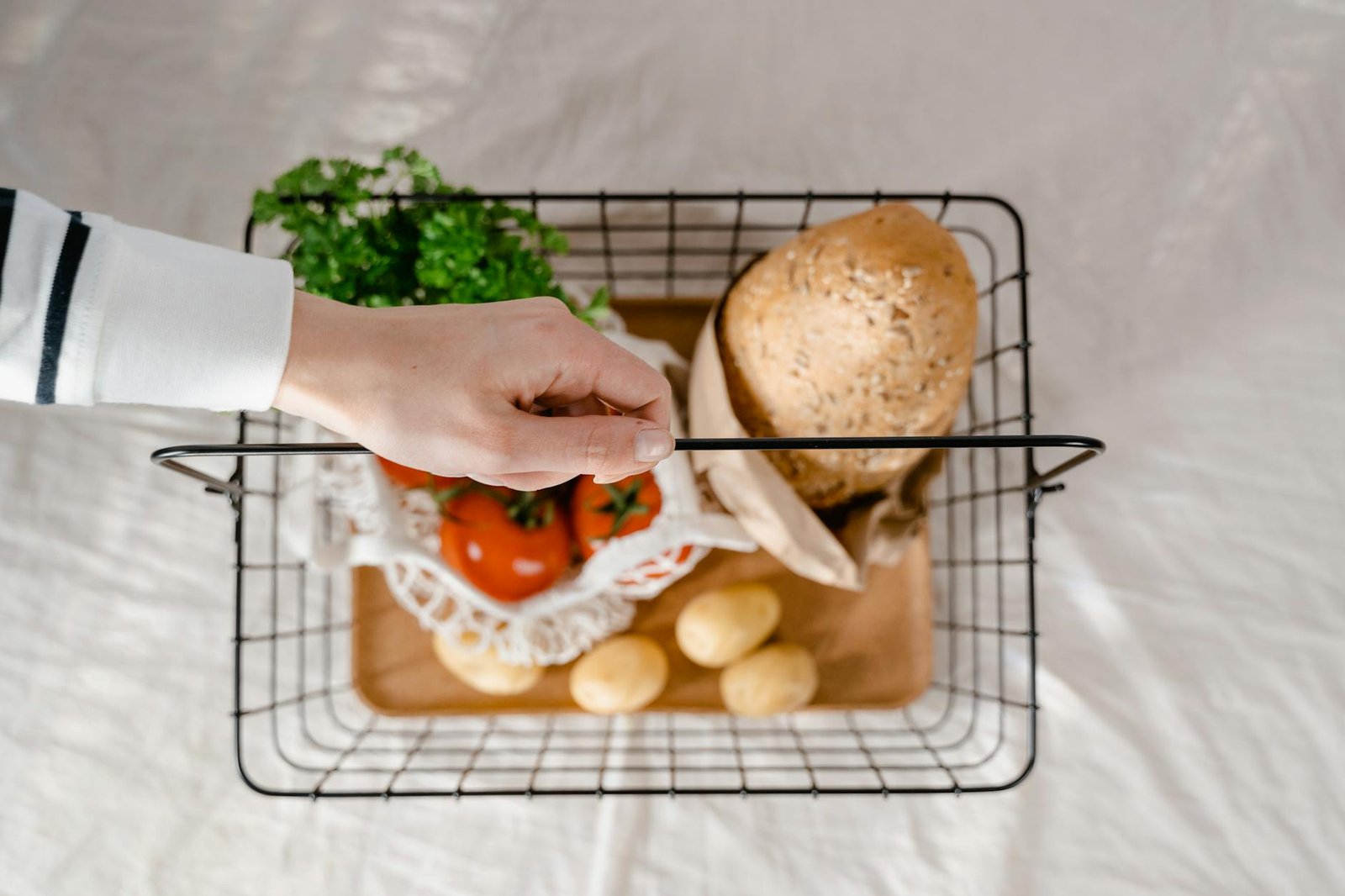
Prep Day: What to Do in Under 2 Hours
Sunday afternoon is the traditional choice. Saturday evening works too. Pick whatever actually happens in your life.
Step 1: Start the grains (5 minutes active, 40 minutes passive). Put rice or farro on the stove. Set a timer. Walk away. You don’t need to babysit grains.
Step 2: Roast the vegetables (10 minutes active, 25 minutes passive). Preheat oven to 425°F. Toss broccoli, zucchini, bell pepper, and cherry tomatoes with olive oil, salt, and pepper. Spread on two sheet pans — don’t crowd them or they steam instead of roast. That matters more than people realize.
Step 3: Season and cook the chicken (10 minutes active, 25 minutes passive). Season chicken with salt, pepper, garlic powder, and paprika. You can cook it on the third oven rack while the vegetables roast, or bake it separately afterward. Let it rest, then slice or shred.
Step 4: Make egg muffins (10 minutes active, 20 minutes passive). Whisk 8 eggs with salt, pepper, and a splash of milk. Fold in spinach, cheese, and green onions. Pour into a greased muffin tin. Bake at 375°F for 18-20 minutes. Makes 12. These reheat fast.
Step 5: Prep overnight oats (10 minutes). Combine oats with milk (or milk alternative) in a jar or container — roughly 1:1 ratio. Add chia seeds, a drizzle of honey, and whatever fruit you have. Two servings cover Monday and Tuesday.
Step 6: Portion and store
Here’s where people waste time. You don’t need to plate everything perfectly.
- Grains in one large container
- Roasted veg in another
- Chicken sliced into thirds
- Egg muffins in a row in their own container
- Oats in individual jars
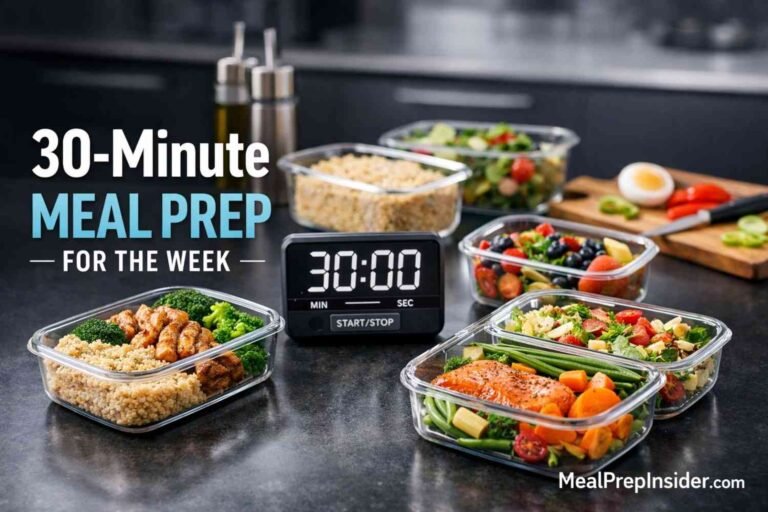
Total active cooking time: roughly 45-55 minutes. The rest is just waiting.
Storage Guide: What Keeps and What Doesn’t
This part actually matters. Wasted food is wasted money.
| Food | Fridge (days) | Freezer |
|---|---|---|
| Cooked chicken | 3-4 | Yes, up to 3 months |
| Cooked grains | 4-5 | Yes |
| Roasted vegetables | 4 | Not ideal (gets mushy) |
| Egg muffins | 4-5 | Yes |
| Overnight oats | 4-5 | No |
| Cooked ground beef | 3-4 | Yes |
| Cooked pasta | 3-4 (store sauce separate) | Yes |
One thing most people don’t do: label containers with the date. A small piece of masking tape and a Sharpie. Takes two seconds. Saves you the “is this still good?” panic on Thursday.
Budget Breakdown
This plan should run around $60-80 at a standard U.S. grocery chain (Kroger, Publix, HEB, etc.), depending on location and whether you buy store-brand vs. name-brand.
To bring it down further:
- Swap chicken breast for thighs (cheaper, arguably better for most of these applications)
- Use dried beans instead of canned (requires soaking, but significantly cheaper)
- Skip the Greek yogurt if it’s not something you’ll actually eat
- Frozen vegetables work just as well as fresh for roasting
To spend a bit more for added convenience:
- Buy pre-cut vegetables
- Use the rotisserie chicken shortcut
- Invest in a few quality glass containers (they last for years and don’t stain)
DON’T MISS >> 10 Cheap High Protein Meals for Students on a Budget
The Meal Plans for Different Goals
Not everyone preps for the same reason. Here’s how to adjust the framework above.
High-Protein Plan
If you’re focused on building muscle or just want to feel fuller longer, shift the ratios.
Additional grocery items:
- Cottage cheese (1 large container)
- Edamame (frozen, shelled)
- Additional eggs
- Canned tuna or salmon
Adjust portions: more protein, slightly less grain, same vegetables.
Breakfast gets eggs or cottage cheese. Lunch gets an extra scoop of chicken or a hard-boiled egg on the side. Snacks become edamame or Greek yogurt.
Budget Plan (Under $50 for the Week)
Totally doable. Requires a slight mindset shift — you’re cooking from the pantry, not from trend boards.
Adjusted grocery list:
- Dried lentils (versatile, dirt cheap, high protein)
- Canned chickpeas (2-3 cans)
- Sweet potatoes (2-3 large)
- Cabbage (1 small head)
- Frozen broccoli
- Eggs (1 dozen)
- Oats
- Brown rice
- Whatever’s on sale at the meat counter
A lentil soup. A roasted sweet potato grain bowl. Egg fried rice. Chickpea tacos. All of this costs very little and holds up well through the week.
Family Plan (2 Adults, 2 Kids)
The game changes when kids are involved. Meals need to be a little more universally appealing, which usually means simpler and less aggressively seasoned.
- Double everything on the base grocery list
- Add kid-friendly proteins: deli turkey, string cheese
- Keep sauces and seasonings on the side (let everyone build their own)
- Prep more snack-ready items: carrot sticks, apple slices, celery with peanut butter
Sheet pan dinners work particularly well for families. Everyone can customize their portion. Less arguing about what’s on the plate.
Mistakes to Stop Making Immediately
Prepping meals you don’t actually like. If you’ve never enjoyed a kale salad on a random Monday, prepping five of them will not change that. Start with food you already enjoy, then make it slightly more nutritious.
Using the wrong containers. Flimsy containers lead to spills, sloshed dressings, and general frustration. Glass containers are worth the investment. So are wide-mouth mason jars for oats and salads.
Skipping the grocery list. Even experienced home cooks end up buying duplicates, forgetting key ingredients, or impulse-buying things that derail the entire plan. The list keeps you on track.
Trying to do too much at once. Start with lunch prep only. Literally just lunches for the week. Once that’s a habit — which takes about 3-4 weeks — add breakfasts. Then snacks. Then dinners if needed.
Not accounting for your actual schedule. If you know you’re eating out on Thursday, don’t prep a meal for Thursday. Prep realistically.
Reheating Tips That Actually Make a Difference
Microwave: Add 1 tablespoon of water to the grains before reheating, then cover loosely. Prevents the concrete-rice situation.
Oven: For roasted vegetables, a quick 5 minutes at 400°F in the toaster oven brings them back to life. Microwave makes them sad.
Stovetop: Best for eggs and most proteins. Low and slow. Keeps moisture in.
Air fryer: If you have one, it’s excellent for reheating almost everything except soups. Crispy texture returns in about 3-4 minutes.
Quick Tips for Staying Consistent
Consistency is the whole thing. One great prep Sunday doesn’t matter if you give up by week three.
- Same day, same time. Treat it like an appointment. Sunday at 3 pm. Or Saturday at 6. Whatever. Make it routine.
- Keep it boring, at first. Exciting recipes are fun, but they take longer and introduce more risk of “this didn’t work.” Start with simple, predictable foods.
- Celebrate small wins. You prepped lunches for three days and didn’t order out once? That’s a win.
- Have a backup plan. Keep frozen protein (chicken tenders, edamame, frozen fish) for the week when prep doesn’t happen. Life is unpredictable.
- Eat what you prep. This sounds obvious. It isn’t. If something keeps getting pushed to “tomorrow,” either you don’t like it or it’s not convenient. Fix one of those.
FAQ
How many hours a week should I spend on meal prep? Most people find 1.5 to 2.5 hours per week is the sweet spot. If you’re spending much more than that, you’re over-prepping or choosing unnecessarily complex recipes.
Can I meal prep if I have a small kitchen? Absolutely. You don’t need much counter space. You need a cutting board, a sheet pan, a pot, and a skillet. That’s really it. Smaller kitchens often force better efficiency.
Is it cheaper to meal prep or order takeout? Significantly cheaper to prep. A single delivery order in most U.S. cities runs $15-25 after fees and tip. That’s enough to feed yourself lunch for an entire week if you prep.
How do I keep from getting bored eating the same thing? Vary the sauces and seasonings rather than the base ingredients. The same chicken and rice can be teriyaki on Monday, Mediterranean on Tuesday, and tossed into a soup by Wednesday. Variety lives in the condiment drawer.
Do I need special meal prep containers? You don’t need anything fancy. However, containers that seal properly, are microwave-safe, and stack well will genuinely improve your experience. Glass containers from brands like Pyrex or OXO are popular for good reason. Mason jars are versatile and inexpensive.
What if my family doesn’t eat the same things? Component prep works well for households with different preferences. Everyone builds their own plate. Same proteins and vegetables, different sauces and combinations. You prep once; everyone eats differently.
Can I freeze everything I prep? Most proteins and grains freeze well. Most vegetables don’t (they get mushy once thawed). Eggs can be tricky — egg muffins freeze fine, but scrambled eggs tend to get rubbery. When in doubt, freeze the raw ingredient rather than the cooked dish.
Should I count calories or macros when meal prepping? Only if that’s a specific goal. Many people meal prep simply to reduce food stress and save money — no tracking required. If you do want to track, component prep makes it easier because each ingredient is cooked separately, and quantities are clear.
Meal prep doesn’t need to be a whole lifestyle. It just needs to work. Pick a plan above, make the grocery list, give yourself two hours on a weekend, and see how different the week feels when you’re not scrambling at dinner time.
Start small. Stay consistent. Adjust as you go.
SUGGESTED POST >> How to Meal Prep for the Week: High-Protein Easy Recipes
Discover more from Meal Prep Insider
Subscribe to get the latest posts sent to your email.