How to Start a Meal Prep Business Now: Profitable Blueprint

How to Start a Meal Prep Business: Want to start a meal prep business in the US? This guide covers everything — licensing, pricing, marketing, and how to actually make money without burning out.
How to Start a Meal Prep Business
Starting a meal prep business sounds simple. Cook food. Sell food. Get paid. But anyone who’s actually done it will tell you there’s a lot more going on behind the scenes — permits, pricing math, food safety rules, client retention, and the constant pressure to keep food fresh as you scale up.
The good news? The U.S. meal prep industry is booming. People are busier than ever, health-conscious eating is mainstream, and demand for convenient, ready-made meals has never been higher. You don’t need a culinary degree or a commercial kitchen from day one. You need a plan, some hustle, and a clear understanding of what you’re getting into.
This guide walks you through all of it.
What Is a Meal Prep Business, Exactly?
A meal prep business prepares meals — or individual meal components — in advance for customers who want to eat well without doing the cooking themselves. You could be prepping weekly meal packages for busy families, portioned lunches for office workers, or macro-balanced containers for gym clients.
It’s different from catering. Catering is event-based. Meal prep is usually subscription-based or recurring — your clients order weekly or bi-weekly, and you deliver, or they pick up.
The model is flexible. You can run it solo from your house, grow into a commercial kitchen, or build a full delivery operation. It just depends on where you want to take it.
Is There a Market for This?
Yes. A clear one.
The U.S. meal kit and meal prep market continues to grow year over year. People want healthy options, but don’t have time to cook every day. Fitness communities, working parents, seniors, people with dietary restrictions — all underserved. And unlike a restaurant, you’re not serving walk-in customers. You’re building a base of repeat clients, which makes revenue more predictable.
A few niches that are particularly strong right now:
- High-protein, gym-friendly meal prep
- Family-sized weekly meal plans
- Specialized diets (keto, vegan, diabetic-friendly, gluten-free)
- Corporate lunch delivery
- Postpartum meal support (this one is massively underserved)
Pick a lane. Generalists struggle. Specialists grow faster because their marketing is cleaner, and word-of-mouth spreads more easily within specific communities.
Step 1: Decide on Your Business Model
Before you cook a single thing, you need to know what kind of meal prep business you’re building. There are a few different ways to structure this.
Cook-to-order: Customers place orders by a cutoff day, you cook fresh, and deliver within 24–48 hours. Higher quality perception, more labor-intensive.
Subscription model: Clients pay weekly or monthly for a set number of meals. Predictable income, easier planning.
À la carte menu: Customers choose from a rotating menu each week. More flexibility, slightly more complex to manage.
Bulk prep packages: You prep large batches (like 10 or 20 containers of a single meal) for clients who want the same thing repeatedly. Great for gym clients or busy households.
Most successful small meal prep businesses mix models — maybe a subscription base plus an à la carte add-on menu. Start simple and add complexity as you grow.
Step 2: Handle the Legal Stuff (Don’t Skip This)
This is where most beginners drag their feet, and it causes real problems later. Get your legal foundation in place early.
Business structure: Register your business as an LLC or sole proprietorship. An LLC protects your personal assets if something goes wrong — and in the food business, something eventually goes wrong. Filing an LLC costs between $50 and $500, depending on your state.
Cottage food laws: Many states allow home-based food businesses, but these have limitations. Most cottage food laws restrict you to low-risk, shelf-stable items such as baked goods and jams. Prepared meals that include proteins, dairy, and fresh vegetables typically fall outside the cottage food rules.
Check your specific state’s cottage food laws on the National Conference of State Legislatures website or your state’s Department of Agriculture.
Food handler’s license: Almost every state requires this. It’s usually a short course and a small fee. Takes a day or less to complete.
Food business permit: Required in most jurisdictions. This allows you to legally sell food to the public. You may also need a home occupation permit if you’re cooking from home.
Health department inspection: If you’re cooking in a commercial space or operating at a volume above cottage food, expect an inspection. They’re checking your kitchen setup, food storage, hygiene practices, and labeling.
Business bank account and EIN: Get these early. Mixing personal and business finances is a mess. An EIN (Employer Identification Number) is free from the IRS and can be obtained online in minutes.
Liability insurance: Food business liability insurance is not optional. One sick client, one allergy incident — you want coverage. Budget around $500–$1,500 per year for a small operation.
Step 3: Figure Out Your Kitchen Situation
Where you cook matters — legally and practically.
If you’re just starting and staying under your state’s cottage food limits, cooking at home works. But once you’re moving real volume, you’ll need more.
Options to consider:
| Kitchen Type | Cost | Best For |
|---|---|---|
| Home kitchen | Low (existing cost) | Testing, small cottage-food ops |
| Shared/commissary kitchen | $15–$35/hour | Growing businesses, avoiding full overhead |
| Commercial kitchen rental | $500–$2,000/month | Mid-size operations |
| Your own commercial space | High ($3,000+/month) | Established businesses |
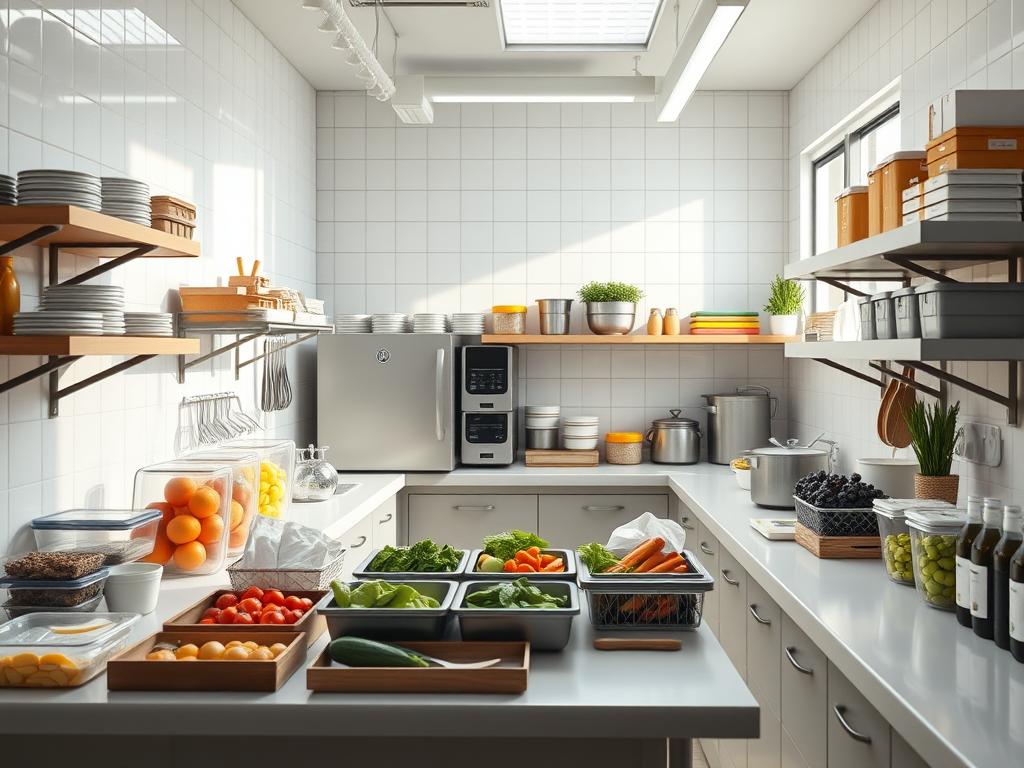
A commissary or shared kitchen is often the sweet spot when you’re getting started. You rent time in a licensed, inspected commercial kitchen by the hour. This keeps your overhead low and keeps you legal. Search “commissary kitchen near me” or check sites like The Kitchen Door or Peerspace.
Step 4: Build Your Menu
Your menu is your product. Don’t treat it like an afterthought.
A good meal prep menu is:
- Scalable (you can make 50 portions as easily as 5)
- Nutritionally solid (clients are paying for results, not just flavor)
- Practical (uses ingredients that are affordable and consistently available)
- Visually appealing (people eat with their eyes first, especially on Instagram)
Start with 8–12 menu items. Rotating weekly keeps things fresh for clients without overwhelming your prep process.
Consider batch-cooking efficiency. A menu where everything uses chicken breast and roasted vegetables is much easier to prep than one with 12 different proteins. Think like a systems person, not just a cook.
Example menu structure for a fitness-focused meal prep service:
| Meal | Protein | Carb | Vegetable |
|---|---|---|---|
| Grilled chicken + rice | Chicken breast | Brown rice | Broccoli |
| Turkey taco bowls | Ground turkey | Cilantro rice | Bell peppers |
| Salmon + sweet potato | Atlantic salmon | Sweet potato | Asparagus |
| Beef stir fry | Lean beef strips | White rice | Snap peas, onion |
| Shrimp + quinoa | Shrimp | Quinoa | Zucchini |
Rotate two or three each week. Keep bestsellers on the permanent menu and swap out the rest seasonally.
Step 5: Price Your Meals Correctly
This is where most people undercharge and burn out. Pricing your meals well means understanding your actual costs — not just the cost of ingredients.
The basic formula:
Meal Price = (Food Cost ÷ 0.30) + Packaging + Labor + Overhead
Industry standard is to keep food cost at around 25–35% of the selling price. If a meal costs you $3.50 in ingredients and packaging, the minimum you should charge is around $11–$14.
But most meal prep businesses charge more — and rightly so. You’re not just selling food. You’re selling time, convenience, and nutritional expertise.
Sample pricing breakdown for one meal:
| Cost Category | Amount |
|---|---|
| Ingredients | $3.20 |
| Packaging (container, label, bag) | $0.75 |
| Labor (your time, prorated) | $2.00 |
| Overhead (kitchen rental, gas, electricity) | $1.00 |
| Total Cost | $6.95 |
| Suggested Retail Price (at 35% food cost) | $13–$16 |
Most meal prep businesses in the U.S. charge between $10 and $18 per meal, with premium or specialty options going higher. Don’t go below $10 unless you have very low overhead and high volume.
Offer package deals to increase average order value. For example, a 5-meal package at $65 and a 10-meal package at $120.
Step 6: Sort Out Packaging and Labeling
Packaging isn’t just aesthetics. It’s food safety, logistics, and branding all at once.
Use leak-proof, microwave-safe, BPA-free containers. Meal prep clients reheat in the containers — this matters. Spend the few extra cents on quality containers. Clients will notice.
Label requirements for prepared food in the U.S. typically include:
- Business name and address
- Product name
- Ingredients list (in order of weight)
- Net weight
- Allergen information (Big 9: milk, eggs, fish, shellfish, tree nuts, peanuts, wheat, sesame, soybeans)
- Heating instructions
- Refrigeration/storage instructions
- Best-by date
Allergen labeling is not optional. One mistake here can cause a serious problem. Triple-check your labels every time you introduce a new ingredient.
Source packaging in bulk from suppliers like Webstaurant Store, Packaging Wholesale, or Amazon Business. You’ll save significantly on per-unit cost.
Step 7: Set Up Your Sales Process
You don’t need a fancy website to start. But you do need somewhere for people to place and pay for orders.
Beginner options:
- Square or Shopify — simple product listings, takes payment online
- Meal prep software like Subbly, ServiceM8, or MealSurfer — built specifically for meal prep businesses- handles subscriptions, menus, and delivery zones
- Instagram DMs + Venmo/Cash App — honestly works fine when you’re small, but get off this model as soon as you can
Whatever platform you use, make it easy. If a customer has to send three messages before they can pay, you’ll lose them.
Build an order cutoff day into your process. For example: orders close every Wednesday at noon, prep happens Thursday, and delivery is Friday. This keeps your prep organized and prevents last-minute chaos.
Step 8: Market Your Business
Good food alone won’t grow your business. You need people to find you.
Instagram and TikTok are your best friends. Post prep videos. Show the process. Share finished containers. Before-and-after shots of a full week of meals. These perform well organically without paid ads.
Google My Business. Set this up. When someone searches “meal prep delivery near me,” you want to show up. It’s free and massively underused by small food businesses.
Facebook groups. Local fitness groups, mom groups, neighborhood groups — these are goldmines. Don’t spam. Actually participate, then mention your service when relevant.
Referral program. Give existing clients $5 or a free meal for every referral that converts. Word-of-mouth is your most powerful growth channel when your food is good.
Partnerships. Connect with local gyms, CrossFit boxes, physical therapy clinics, and personal trainers. Offer to provide sample meals for their clients. A single partnership with a gym of 200 members can transform a small business.
Local farmers’ markets. Some markets allow prepared food vendors. It’s a great way to build local brand recognition and test new menu items in person.
Step 9: Handle Food Safety Like a Professional
You’re handling perishable food. Take this seriously.
Temperature rules every meal prep business must follow:
- Hot food must stay above 140°F until served
- Cold food must stay below 40°F during storage and delivery
- The “danger zone” is between 40°F–140°F — bacteria multiply rapidly in this range
- Never leave cooked food at room temperature for more than 2 hours
Use insulated bags and ice packs for delivery. Invest in a food thermometer. Label every container with a prep date and best-by date (typically 4–5 days for refrigerated meals, up to 3 months frozen).
ServSafe certification is highly recommended — if not required by your county. It’s a nationally recognized food safety training program that makes you more credible to clients.
Step 10: Track Your Numbers
Running a meal prep business without watching your numbers is how you end up working 60 hours a week and making barely anything.
Track these weekly at a minimum:
- Revenue (total sales)
- Food cost percentage (aim for 25–35%)
- Number of active clients
- Average order value
- Hours worked
- Profit margin
Use simple tools. A spreadsheet works fine to start. QuickBooks, Wave, or FreshBooks are good options once volume increases.
Know your break-even number. If your monthly fixed costs (kitchen rental, insurance, packaging, software) are $1,200 and you make $12 profit per meal, you need to sell 100 meals before you start making real money. Build from there.
Common Mistakes to Avoid
These show up constantly with new meal prep businesses.
Underpricing. You’ll be tempted to charge less to attract clients. Don’t. Charge what the meal is worth, explain the value, and trust that the right clients will pay.
No cutoff days. Taking orders anytime creates chaos. Set firm cutoff days and stick to them.
Doing everything manually. At 20 clients, managing orders by text message and manually recording payments is fine. At 50 clients, it’ll break everything. Automate early.
Ignoring allergens. One client’s reaction to a missed allergen can shut you down. Build allergen tracking into every recipe.
Over-expanding the menu. A 30-item menu sounds impressive. It’s a nightmare to prep. Keep it tight.
Not getting paid up front. Require payment before you prep. Chasing invoices is draining and unnecessary.
How Much Can You Actually Make?
Real numbers vary widely, but here’s a rough range:
| Business Size | Weekly Orders | Monthly Revenue | Net Profit (est.) |
|---|---|---|---|
| Solo, small | 50–80 meals | $650–$1,200 | $300–$600 |
| Solo, growing | 150–250 meals | $2,000–$3,500 | $900–$1,800 |
| Small team | 400–700 meals | $5,500–$10,000 | $2,500–$5,000 |
| Established | 1,000+ meals | $14,000+ | $6,000+ |
Profit margins in food are notoriously tight. But meal prep businesses can achieve healthy margins — typically 20–35% — because overhead is lower than a restaurant and you’re not dealing with walk-in unpredictability.
The real money comes from retention. A client who stays with you for a year at $80/week is worth over $4,000 in annual revenue. Treat your existing clients well.
Scaling Beyond Solo
At some point, if demand grows past what you can handle alone, you’ll need to make decisions.
Hire a prep assistant first. Even 10–15 hours a week of help with chopping, portioning, and labeling frees you up to focus on growth.
Look into partnering with a ghost kitchen or co-packing facility for high-volume production. This is how small meal prep brands become real companies.
Consider adding frozen meals to your lineup. Frozen extends shelf life, reduces weekly pressure, and opens up shipping options — meaning you’re no longer limited to local delivery.
FAQs
Do I need a commercial kitchen to start a meal prep business? Not always. Depending on your state’s cottage food laws and what type of food you’re preparing, you may be able to start from home. However, most states require a licensed commercial kitchen for selling protein-based prepared meals. Renting commissary kitchen time by the hour is a smart early-stage solution.
How do I get my first meal prep clients? Start with your network. Friends, family, coworkers. Offer a discounted trial week. Ask for honest feedback and a testimonial if they’re happy. Then expand to local Facebook groups, Instagram, and gym partnerships.
What licenses do I need to start a meal prep business? At a minimum, most states require a food handler’s permit, a business license, and a food business permit. If you’re operating out of a commercial space, you’ll also need a health department inspection. Requirements vary by state and county — check with your local health department directly.
How do I price my meal prep services? Start with your actual cost per meal (ingredients + packaging + labor + overhead) and ensure the sale price gives you at least a 25–30% profit margin. Most U.S. meal prep businesses charge $10–$18 per meal. Bundle pricing (5-meal or 10-meal packages) increases average order size and simplifies customer choices.
How long does meal-prepped food last? Refrigerated prepared meals typically last 4–5 days. Frozen meals can last up to 3 months. Always label with a prep date and best-by date. Use the correct packaging and refrigeration to ensure food stays safe and fresh.
Can I run a meal prep business from home? Yes, in many cases — especially when starting small. But check your state’s cottage food laws first. Many states restrict home food businesses to shelf-stable items, which means protein-heavy meal prep may require a commercial kitchen license.
Is a meal prep business profitable? It can be, yes. Profit margins typically range from 20–35% for well-managed operations. The key is to price correctly, control food costs, retain clients, and avoid undervaluing your labor. Meal prep businesses often struggle in the early stages simply because the owner undercharges.
SUGGESTED POST >> Whole Foods Family Meal Prep Hack: The Best You Can Get Now
Discover more from Meal Prep Insider
Subscribe to get the latest posts sent to your email.