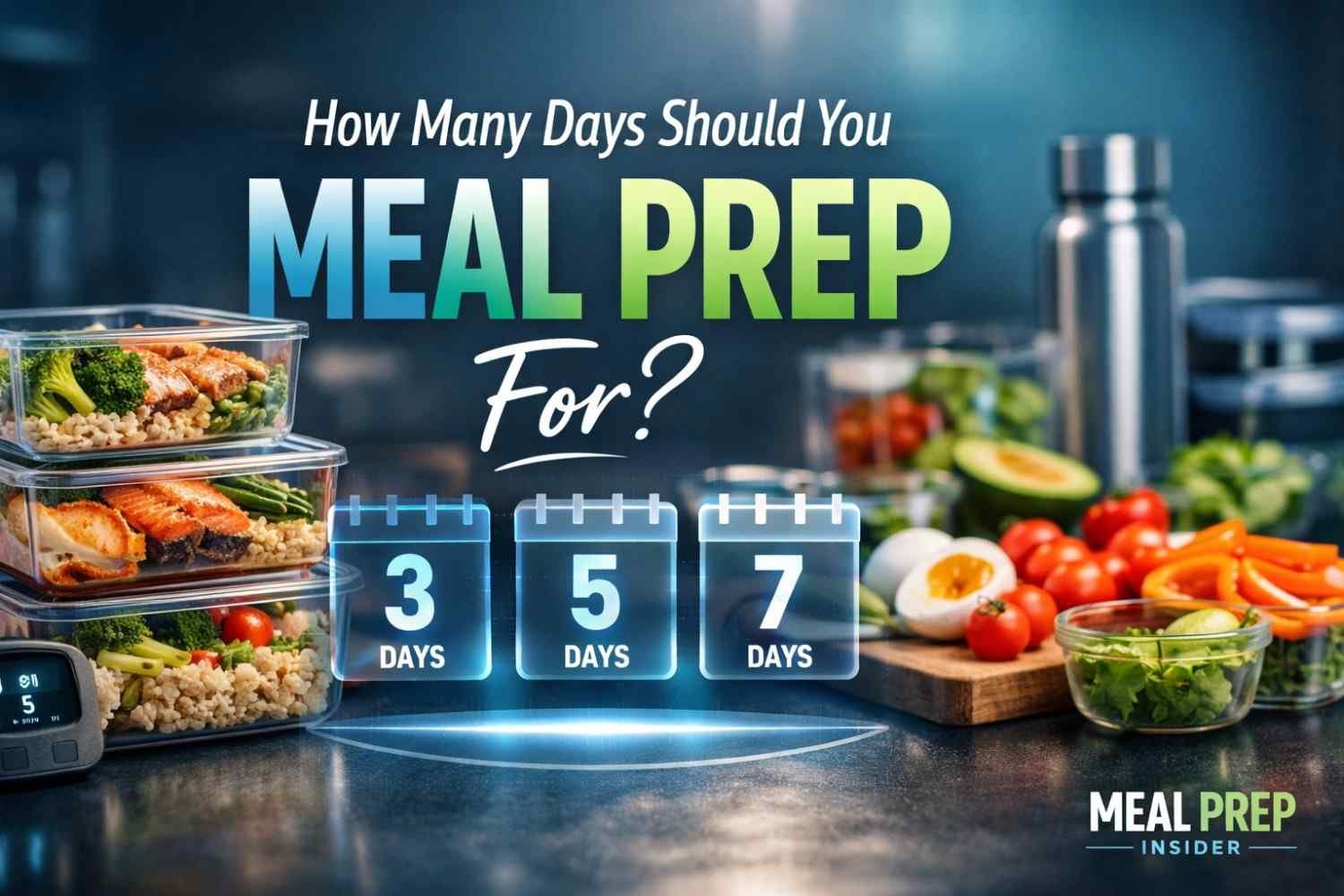
How Many Days Should You Meal Prep For?: Not sure how many days to meal prep? This guide breaks down the real answer based on your schedule, food safety rules, and lifestyle — no fluff, just what works for American households.
How Many Days Should You Meal Prep For?
You’ve seen the photos. Rows of identical glass containers, neatly stacked in a fridge, labeled by day. Everything color-coded. It looks great on Instagram. In real life, though, most people open their fridge on day four and stare at soggy rice and gray-looking chicken before ordering takeout anyway.
So, how many days should you actually meal prep for? The honest answer is: it depends. But there’s a smarter way to figure out what works for you — and it’s not just copying whatever a fitness influencer does.
Why the “Prep for the Whole Week” Advice Falls Apart
The most common advice is to pick one day — usually Sunday — and prep five to seven days’ worth of meals all at once. Sounds efficient. It mostly isn’t.
Here’s the thing. Most cooked proteins stay fresh for three to four days in the fridge. The USDA is pretty clear on this. Chicken, beef, fish, pork — after day four, you’re gambling. Not dramatically, but you are. And if you prep on Sunday, that Thursday dinner is already pushing limits.
Beyond safety, there’s a texture problem. Grains get gummy. Leafy greens turn to mush. Sauces separate. The meal you prepped with care on Sunday is a completely different experience by Wednesday.
Seven-day prep sounds like discipline. Often it’s just waste.
The Two-Phase Approach Most People Don’t Talk About
Instead of going all-in on one massive cook session, split it up.
Prep twice a week. Sunday and Wednesday, for example. Or Saturday and Tuesday. The exact days don’t matter — what matters is that you’re never eating food that’s more than three or four days old. Each session takes less time because you’re not cooking for an army. And the food actually tastes like food.
This method works especially well for proteins. Cook chicken thighs or ground beef in two smaller batches across the week rather than one large one. They stay fresher, reheat better, and you have more flexibility to change things up mid-week.
Breaking It Down by Meal Type
Not all meals age the same way. This is where most prep guides miss the mark.
Breakfasts are the easiest category to prep ahead of time. Overnight oats, egg muffins, and chia pudding — these hold up for four to five days without any issues. You can reasonably prep a full work week’s worth of breakfast on Sunday, and it’ll be fine.
Lunches are trickier. If you’re meal prepping for work, you want something portable and reliable. Grain bowls, lentil soups, wraps (stored without the wet ingredients), and pasta salads tend to last 3 to 4 days. Go beyond that, and the quality drops fast.
Dinners are where people over-prep the most. Dinners tend to be more complex — more components, more sauces, more things that don’t reheat well together. Prepping dinners for more than three days in advance often backfires. It’s usually better to prep the components of dinner (roasted vegetables, cooked grains, a protein) rather than full-plate meals.
Snacks are underrated in the prep conversation. Pre-portioned trail mix, cut fruit, hummus with vegetables, and boiled eggs — most snacks take 10 minutes to prep and can last 4 to 5 days.
The Fridge Reality Check
Here’s something nobody shows you in those meal prep photos: what your fridge actually looks like.
If you prep five to seven days of meals for a family of four, you’re filling most of your fridge. Which means everything else — condiments, leftovers, produce — gets pushed to the side or forgotten. Food waste goes up, not down.
A more practical approach is building a “component fridge” rather than a “full meal fridge.” Instead of storing seven containers of identical chicken and rice, store components separately:
- A big batch of cooked grains (rice, quinoa, farro)
- Two proteins prepped in bulk
- Roasted vegetables
- A couple of sauces or dressings
- Raw produce for days three through five
Mix and match across the week. The meals feel different even if the components are the same. You’re not eating the same thing four days in a row. And you waste a lot less.
What Food Safety Actually Says
Let’s get specific about timelines, because vague advice gets people in trouble.
| Food Type | Fridge (Cooked) | Freezer |
|---|---|---|
| Chicken (any cut) | 3–4 days | 4 months |
| Ground beef/turkey | 3–4 days | 3–4 months |
| Fish and seafood | 3–4 days | 2–3 months |
| Cooked pasta/grains | 3–5 days | 1–2 months |
| Cooked vegetables | 3–5 days | 8–12 months |
| Soups and stews | 3–4 days | 4–6 months |
| Hard-boiled eggs | 1 week | Not recommended |
| Overnight oats | 5 days | Not ideal |
These aren’t opinions. These are USDA and FDA guidelines. If you’re prepping for more than 4 days, you should either cook in smaller batches midweek or use your freezer more aggressively.
The freezer is criminally underused in most meal prep routines. You can batch-cook soups, stews, burritos, and cooked grains, freeze them in individual portions, and pull them out as needed. Technically, you’re prepping weeks ahead — but you’re not eating old food.
RELATED POST >> Can You Freeze Meal Prep Meals? Your New Best Combo
How Many Days to Prep: A Realistic Guide by Lifestyle
There’s no one-size-fits-all answer. But here’s a rough framework.
If you live alone, two to three days at a time is usually enough. Solo eaters often overestimate how much they’ll actually cook and eat at home. Prepping for four days sounds right until day three when you’re tired of the same food. Start small.
If you’re a couple, three to four days works well. You can prep once, eat for most of the week, and top up mid-week with something fresh. The variety appetite is lower than that of a household with kids.
If you have kids: Prep for three days max, but keep it component-based. Kids are unpredictable eaters. Prepping seven lunches for a five-year-old, only to have them decide they hate that particular food on Tuesday, is a special kind of frustration.
If you’re on a specific diet plan (macro tracking, weight loss, etc.): Four to five days is workable if you’re disciplined about storage and stick to foods that hold up well. Meal prepping is actually easiest here because variety matters less — the goal is consistency.
If you hate cooking, just prep for two to three days at a time. Seriously. Ambitious seven-day plans almost always collapse for people who aren’t naturally enthusiastic about cooking. A shorter, more manageable prep routine is infinitely better than an elaborate one that you abandon by Tuesday.
The Containers Actually Matter
This sounds like a minor thing. It isn’t.
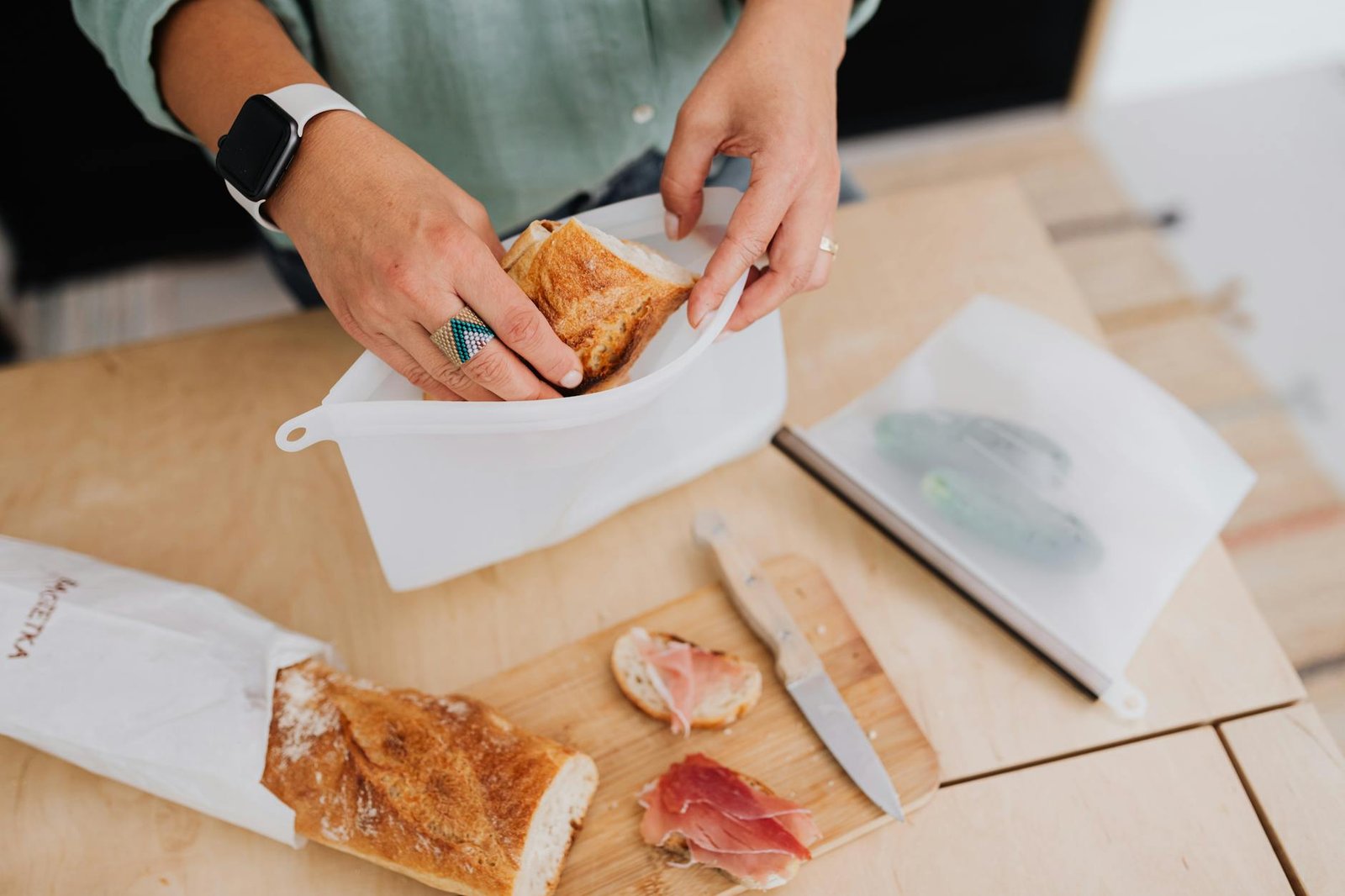
Airtight glass containers extend food freshness noticeably compared to loosely covered plastic ones. If your meal-prepped food keeps going bad before you get to it, the container might be part of the problem. You don’t need a specific brand. You just need containers with proper seals.
A few practical rules:
- Let food cool completely before sealing and refrigerating (hot food raises fridge temp and accelerates bacterial growth)
- Don’t store dressings and sauces mixed into salads — keep them separate
- Stack-friendly containers save a ton of fridge space
- Label things. Yes, even if you think you’ll remember what’s in there
Planning the Prep Session
Most people skip the planning step entirely and just start cooking. That’s why prep sessions take four hours and leave a disaster kitchen behind.
A smarter approach:
Before you cook anything, write out what you’re making and in what order. Start with the things that take the longest (roasting vegetables, cooking grains, simmering soups) and work backwards. While the oven’s running for vegetables, cook your protein on the stove. While the protein rests, chop things for tomorrow’s prep.
Good mise en place — basically having everything washed, chopped, and measured before cooking starts — cuts prep time dramatically. It also makes the whole thing feel less chaotic.
When Meal Prepping Just Isn’t Working
Some honest scenarios where meal prepping might not be the answer:
You keep throwing food out. If you prep five days of food and eat three days of it, you’re not saving money — you’re wasting it. Cut back the prep volume first.
You’re getting bored every week. Rotating two or three prep templates (a grain bowl week, a wrap week, a soup week) helps more than trying to prep elaborate, different meals every time.
Your schedule is too unpredictable. Meal prepping assumes you’ll be home to eat those meals. If your week regularly includes last-minute dinners out, work events, or travel, adjust accordingly. Prep fewer days. Rely more on freezer meals.
You hate the reheated version of the food. Not everything reheats well. Fried foods, delicate fish, creamy pastas — they’re often better fresh. If reheated meals feel like a punishment, stop prepping those particular dishes.
A Simple Weekly Structure That Actually Holds Up
If you want a realistic starting point:
- Sunday: Full prep session. Cook two proteins, a big batch of grains, roast a sheet pan of vegetables, prep snacks, and breakfasts. This covers Monday through Wednesday.
- Wednesday evening: Quick 20–30 minute top-up. Cook another protein if needed, prep fresh produce, switch up the grain if you’re bored with the first one. Covers Thursday and Friday.
- Friday or Saturday: Eat whatever’s left, order out, or cook something completely fresh. Give yourself a break from the routine.
That’s it. No marathon Sunday sessions that leave you exhausted. No eating four-day-old chicken. No Sunday dread.
The Bottom Line
Three to four days is the sweet spot for most people. It aligns with food safety guidelines, produces better-tasting food, reduces waste, and makes the prep routine sustainable instead of a chore you burn out on by February.
Seven-day prep works in theory. In practice, most people find it creates more problems than it solves — stale food, fridge overflow, and flavor fatigue.
Start with three days. See how it goes. Adjust based on your actual life, not someone else’s meal prep aesthetic.
Frequently Asked Questions
Is it safe to meal prep for 5 days? For some foods, yes. Cooked grains and hard-boiled eggs hold up well for five days. Most proteins (chicken, beef, fish) are safe to consume within 3 to 4 days, per USDA guidelines. If you want to prep for five days, consider freezing the day-four and day-five portions and thawing as needed.
What’s the best day to meal prep? Sunday is the most popular choice because it sets up the work week. But it only works well if you’re prepping for three to four days, not seven. If a Sunday session feels too rushed, try Saturday afternoon instead.
Can I meal prep for 7 days? Technically, yes — if you use the freezer strategically. Prep and freeze later-week meals rather than keeping everything in the fridge. Just refrigerating seven days’ worth of food isn’t safe for most proteins and yields noticeably lower-quality meals.
Does meal prepping actually save money? Yes, when done right. The key is prepping only what you’ll realistically eat. Over-prepping leads to food waste, which cancels the savings. Buying in bulk, sticking to seasonal produce, and building component-based meals (rather than single-use recipes) are what actually move the needle.
What foods should I avoid when meal prepping? Avoid prepping foods that don’t reheat well: fried foods, creamy pastas, delicate fish, dishes with fresh avocado, and anything with separate components that get soggy when combined. These are better cooked fresh or batch-frozen rather than refrigerated.
How do I stop getting bored with meal-prepped food? Prep components, not full meals. When you store rice, protein, and vegetables separately, you can mix and match them into different combinations across the week. Same ingredients, different eating experience. Rotating sauces also helps enormously — the same chicken and rice tastes completely different with teriyaki versus a lemon herb dressing.
Should I meal prep if I have a small fridge? A small fridge actually makes the case for shorter prep cycles even stronger. Prep for two to three days, use containers efficiently, and lean on pantry staples and freezer meals to bridge the gaps. Component prepping takes up less space than storing fully assembled meals.
SUGGESTED POST >> 45 Easy Bulking Meals for Skinny Guys: High-Calorie Preps