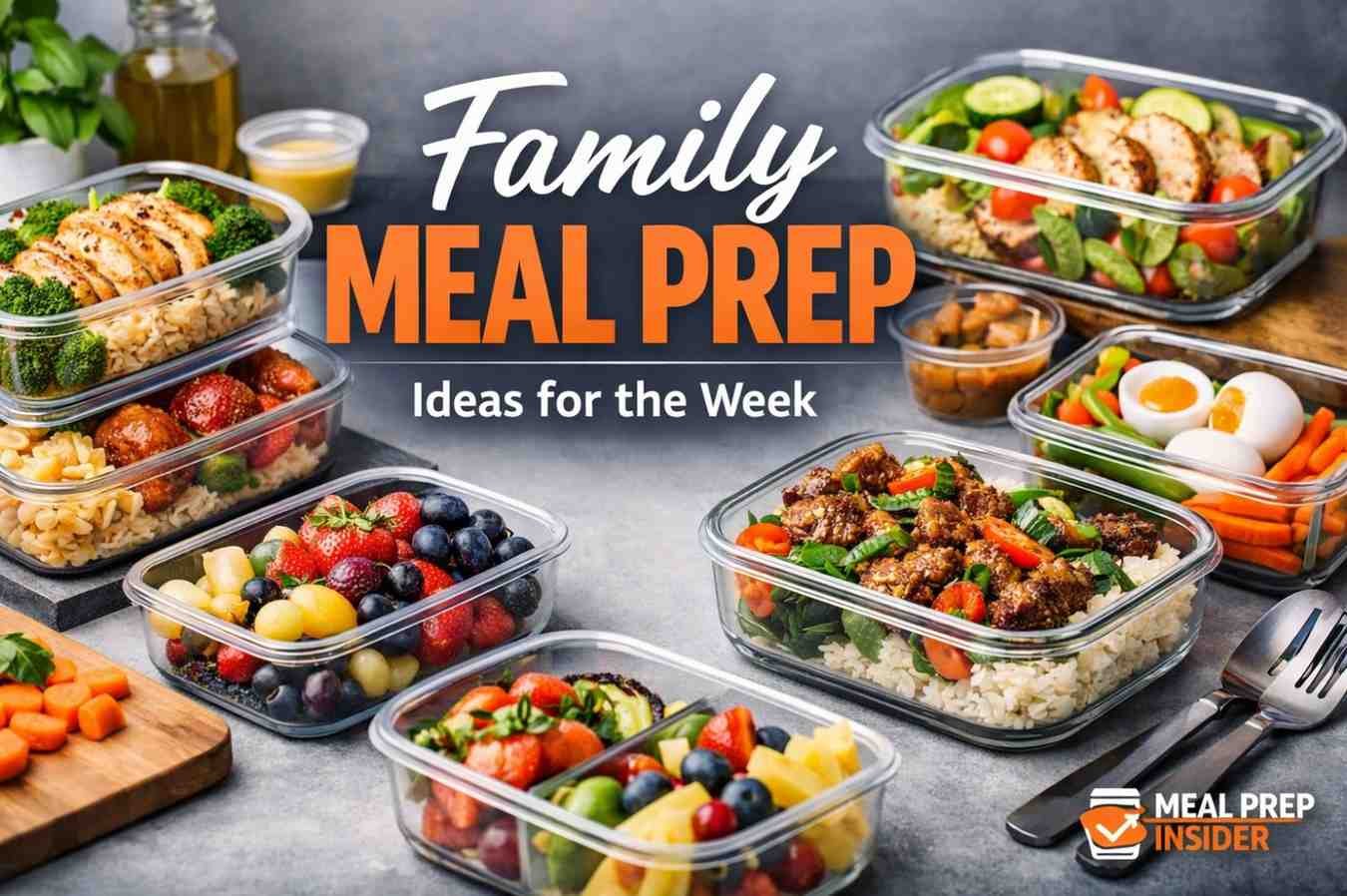
Family Meal Prep Ideas for the Week: Tired of the 6 PM panic? These family meal prep ideas help you plan, cook smart, and feed everyone well — without spending your whole Sunday in the kitchen. Practical, real, and built for busy U.S. households.
Family Meal Prep Ideas for the Week
Let’s be honest. Most weeks don’t go the way you planned.
You wake up on Monday with good intentions. By Wednesday, you’re ordering pizza again. By Friday, someone’s eating cereal for dinner, and nobody’s mad about it.
That’s not failure. That’s just life without a prep plan.
Family meal prep isn’t about being perfectly organized or cooking like a restaurant chef. It’s about doing a little thinking ahead so that Tuesday night — after soccer practice, homework, and a very long workday — you’re not staring into an empty fridge wondering what to make.
This guide is for real families. People with picky eaters, full schedules, and limited patience for complicated recipes.
Why Most Meal Prep Advice Doesn’t Work for Families
A lot of meal prep content is written for one or two people. Single containers. Portion-controlled lunches. Five identical mason jar salads lined up in a fridge.
That’s fine for some people. But when you’ve got kids who won’t touch quinoa, a spouse who eats more than you planned for, and a toddler who only ate half her portion — you need something more flexible.
Family meal prep is different. You’re prepping for moving targets.
The goal isn’t to pre-make every single meal. The goal is to reduce the number of decisions you have to make at 6 PM when everyone is hungry and slightly irritable.
Think of it this way: you’re not cooking ahead. You’re removing obstacles.
The Foundation: What to Actually Prep
Before you start cooking anything, decide what kind of prep will help your family the most.
There are three approaches most families end up rotating between:
Component Prep — You cook ingredients separately (grains, proteins, roasted vegetables) and mix and match them into meals throughout the week. Super flexible. Works great if your family has different preferences.
Full Meal Prep — You cook complete dishes in advance and reheat them. Great for super busy weeks. Less flexible, but the least amount of thinking required at mealtime.
Hybrid Prep — A little of both. You prep some bases and also have one or two ready-to-go meals in the fridge. This is what most families actually end up doing once they get the hang of it.
No one approach is better. The right one depends on your week.
Building a Weekly Prep Plan That Holds Up
Here’s a realistic framework for a family of four:
| Day | What You’re Cooking For |
|---|---|
| Sunday | Monday, Tuesday, Wednesday meals/components |
| Wednesday evening | Thursday and Friday refresh |
| Saturday (optional) | One batch cook item (soups, chili, casseroles) |
You don’t have to cook everything on Sunday. Spreading it out makes it less overwhelming and keeps food fresher.
Sunday should take you 1.5 to 2.5 hours max. If it’s taking longer than that, you’re probably overcomplicating it.
The Proteins: Cook Once, Use Three Ways
Protein is usually the most time-intensive part of any meal. If you nail this, you’re already ahead.
Pick two proteins per week. Cook them in large batches with minimal seasoning so they stay versatile.
Shredded chicken is probably the most useful thing you can meal prep. One whole chicken or 4 to 5 pounds of chicken thighs, cooked in a slow cooker or Instant Pot, yields pulled chicken that works in tacos, sandwiches, pasta, rice bowls, fried rice, quesadillas, and soup. Easy to freeze. Kids usually like it.
Ground beef or turkey is another workhorse. Brown a big batch with onions and garlic. Keep it plain. It becomes taco meat, pasta sauce, stuffed peppers, sloppy joes, and more, depending on what sauce or seasoning you add at mealtime.
Hard-boiled eggs aren’t glamorous, but they’re fast breakfast proteins, easy snacks, and quick additions to grain bowls or salads. Cook a dozen on Sunday. Done.
Baked salmon or tilapia if your family eats fish — season simply and bake in bulk. Flakes into pasta, rice, or tacos during the week.
A few other proteins worth having prepped:
- Cooked lentils (freeze well, high protein, cheap)
- Sliced deli turkey or ham portioned into bags for school lunches
- Pre-marinated pork tenderloin (just needs to go in the oven night-of)
Grains and Starches: The Quiet Heroes
Nobody gets excited about cooked rice in the fridge. But having it there changes everything.
Cook a big pot of one or two starches every week. They’re the base for so many meals.
White or brown rice — The classic. Works under almost anything. Fried rice, burrito bowls, stir-fry base, stuffed peppers. Make at least 4 cups dry.
Pasta — Cook it slightly under (al dente), toss with a little olive oil to prevent sticking, and store in the fridge. Reheat in a pan with whatever sauce you’re using. Holds well for four days.
Roasted or baked potatoes — Cube them, roast them, refrigerate them. Reheat as a side, toss into breakfast scrambles, or make quick home fries with eggs on a busy weeknight.
Quinoa — More nutrition than rice. Admittedly, not every kid will eat it. But if your family’s on board, it’s one of the better meal prep grains because it holds its texture well.
One grain. One starch. That’s all you need most weeks.
Vegetables: The Part Most Families Skip (and Shouldn’t)
Here’s the truth: vegetables are the hardest part of family meal prep. Not to cook — to actually get people to eat.
Still, prepping vegetables saves a surprising amount of time during the week. Washing, chopping, and roasting takes effort in the moment. If it’s already done, it gets used.
Roasted sheet pan vegetables are the easiest approach. Chop whatever you have — broccoli, bell peppers, zucchini, carrots, sweet potatoes, cauliflower — toss with olive oil and salt, roast at 425°F until edges are caramelized. They reheat well and taste good cold, too.
Washed and chopped salad greens stored in a container with a paper towel — ready for salads or wraps anytime.
Cut raw veggies (carrots, celery, cucumber, and bell pepper strips) and store them in water or in containers for snacks and school lunchboxes.
Steamed broccoli or green beans — quick to make, stores well, and easy to reheat or serve cold with dip for kids.
If roasting a big tray of vegetables is the only vegetable prep you do, that alone will significantly upgrade your week.
RELATED POST >> Easy Family Meal Prep Ideas for a Family of 4 Without Chaos
The Sauces and Flavor Boosters
This is where meal prep gets interesting.
Plain rice and plain chicken are fine. But the reason they feel bored is that nothing’s been done to them. The secret is having two or three sauces or seasoning bases prepped or stocked so you can quickly transform your base components into completely different meals.
Homemade taco seasoning blend — Mix chili powder, cumin, garlic powder, paprika, oregano, and salt. Store in a jar. Add to ground beef for tacos, sprinkle on roasted veggies, season chicken for burritos.
Simple tomato sauce — One big batch covers pasta night, pizza night (with store-bought dough), and shakshuka eggs. Make a large pot on Sunday and refrigerate or freeze in portions.
Peanut sauce — Peanut butter, soy sauce, lime juice, garlic, a little honey, and sesame oil. Whisk together in three minutes. Turns noodles, chicken, and roasted veggies into something people actually request.
Garlic butter — Softened butter with minced garlic and parsley. Goes on garlic bread, tossed with pasta, on fish, and on roasted potatoes. Make a log, refrigerate or freeze, and slice off what you need.
Teriyaki sauce — Soy sauce, mirin, sugar, and cornstarch slurry. About ten minutes on the stove. Brushed onto chicken, salmon, and tofu. Changes the entire meal profile.
You don’t need all five of these every week. Pick one or two that match the meals you’re planning.
A Real Weekly Meal Plan (With Prep That Makes It Work)
Here’s how a full week can look using the prep strategy above:
Sunday prep session (approximately 2 hours):
- Slow cooker shredded chicken (set and forget)
- Brown 2 lbs of ground beef with onions
- Cook a large pot of white rice
- Roast one sheet pan of broccoli and sweet potatoes
- Hard-boil a dozen eggs
- Prep cut veggies for snacks
- Make a batch of tomato sauce
Weeknight meals:
| Night | Meal | Prep Needed |
|---|---|---|
| Monday | Rice bowls with shredded chicken, roasted veggies, and teriyaki | 10 min assembly |
| Tuesday | Pasta with meat sauce + garlic bread | Reheat sauce + boil pasta, 20 min |
| Wednesday | Rice bowls with shredded chicken, roasted veggies, teriyaki | Assemble + quick teriyaki sauce |
| Thursday | Ground beef stuffed bell peppers | 30 min oven time |
| Friday | Fried rice with eggs, leftover rice, soy sauce, peas | 15 min stovetop |
That’s five dinners. Each under 30 minutes of active cooking. All are using the same prep.
Lunches throughout the week: sandwiches with deli meat portioned out, leftover rice bowls, quesadillas with shredded chicken, or simple egg salad made from hard-boiled eggs.
Breakfast Prep (Often Forgotten, Very Helpful)
Most families focus on dinner prep and forget breakfast entirely. But mornings are often the most chaotic part of the day.
Overnight oats — Make six to eight jars on Sunday. Kids can grab them from the fridge. Add fruit, nut butter, or honey on top. Done.
Egg muffins (mini frittatas) — Whisk eggs with whatever mix-ins your family likes (cheese, spinach, diced bell pepper, ham), then pour into a greased muffin tin and bake at 350°F for 18–20 minutes. Makes 12. Refrigerate. Reheat in 45 seconds.
Pancake or waffle batch — Make a big batch over the weekend, cool, layer with parchment, and freeze in a zip-lock bag. Pop in the toaster on school mornings.
Pre-portioned smoothie bags — Add frozen fruit, spinach, banana slices, and any other ingredients to individual zip-lock bags. Freeze. On busy mornings, dump one bag into the blender with milk or yogurt. Forty-five seconds.
Breakfast prep doesn’t need to be elaborate. Even having two or three grab-and-go options significantly cuts the morning chaos.
Snack Prep for Families With Kids
Snacks disappear fast. Having them prepped means fewer arguments about what to eat and less rummaging through the pantry.
Keep this simple:
- Hummus and veggie packs — Pre-portioned into containers. Quick afternoon snack.
- Apple slices with peanut butter — Cut apples store well with a squeeze of lemon juice.
- Trail mix bags — Mix nuts, dried fruit, pretzels, and chocolate chips. Portion into snack bags.
- Cheese and cracker packs — Cube cheese, pair with crackers in a container.
- Yogurt parfait cups — Layer yogurt, granola, and fruit in cups. Refrigerate. Breakfast or snack.
Having these ready-made means kids can actually get their own snack without needing you every time.
How to Store Everything (Without Wasting Food)
Meal prep only works if you store things properly.
A few rules:
- Cooked proteins: 3–4 days in the fridge, up to 3 months in the freezer
- Cooked grains: 4–5 days in the fridge (add a tiny splash of water before reheating)
- Roasted vegetables: 3–4 days in the fridge (they soften over time, still tasty)
- Sauces: Most last 5–7 days in the fridge, longer if frozen
- Soups and stews: 4–5 days refrigerated, freeze well in portions
- Cut raw vegetables: 3–5 days, stored in airtight containers with a paper towel
Label everything with the date. It sounds fussy, but it’s the easiest way to avoid the “is this still good?” panic mid-week.
Glass containers keep food fresher and are better for reheating. Plastic works too — just avoid putting hot food straight into them and try not to microwave in lower-quality plastic containers.
Tips for Getting the Family On Board
The most well-executed meal prep in the world doesn’t help if nobody eats what you made.
A few things that actually work:
Involve the kids in choosing meals. Give them two or three options and let them pick. They’re far more likely to eat something they helped choose.
Keep one meal a week as a “free choice” night. Leftovers, cereal, eggs — whatever. It takes pressure off everyone.
Don’t change everything at once. Swap one meal per week to a prepped option. Build slowly.
Make it visible. If prepped food is buried in the back of the fridge in unmarked containers, it goes unused. Keep it at eye level.
Let older kids help with prep. Even an 8-year-old can wash vegetables, stir things, or help measure. It becomes a routine instead of something that happens to them.
The goal is to reduce friction, not add a whole new system that stresses everyone out.
Budget-Friendly Meal Prep Ideas
Good meal prep doesn’t have to be expensive. Some of the best prep-friendly foods are also the cheapest.
| Ingredient | Average Cost | Meals It Can Cover |
|---|---|---|
| Whole chicken (4–5 lbs) | $8–$12 | 3–4 dinners + broth |
| Dry lentils (1 lb bag) | $1.50–$2.50 | Soup, stew, grain bowls |
| Dried pasta (2 lbs) | $2–$4 | 4–5 servings as a base |
| Eggs (1 dozen) | $3–$5 | Breakfast, snacks, fried rice |
| Canned tomatoes (2 cans) | $2–$3 | Sauce, soup, chili |
| Ground turkey (2 lbs) | $7–$10 | Tacos, pasta, stuffed peppers |
| Frozen vegetables (large bag) | $3–$5 | Sides, stir fry, soups |
Shopping the sales, buying proteins in bulk, and building meals around pantry staples keep weekly food costs manageable even with a large family.
When You Only Have 30 Minutes to Prep
Not every Sunday allows for two hours in the kitchen. Sometimes you’ve got thirty minutes. That’s still enough.
Here’s a 30-minute prep priority list:
- Start the Instant Pot or slow cooker with chicken — it runs itself
- Hard-boil eggs — set the timer and walk away
- Chop and store raw vegetables for snacks and lunches
- Cook one pot of rice
- Portion any deli meats or cheeses for lunches
That alone — done in 30 minutes — will make your week noticeably easier.
Not perfect. But easier. And that’s the point.
Frequently Asked Questions
How many hours a week should family meal prep take? For most families, one to two hours once a week is realistic and enough to cover dinners. If you split prep between Sunday and Wednesday, it feels even less overwhelming. The goal is progress, not perfection.
Is meal prep worth it if I have a picky eater? Yes, especially if you use component prep. Keeping proteins, grains, and vegetables separate means a picky eater can have plain chicken and rice while everyone else has a rice bowl with roasted veggies and sauce. Same prep, customized plates.
What containers are best for meal prep? Glass containers with snap-lock lids are the most durable and safest for reheating. For on-the-go or kids’ lunches, BPA-free plastic containers work fine. Invest in a few different sizes so you can store individual portions and larger batches.
Can I freeze meal-prepped food? Absolutely. Soups, stews, cooked proteins, sauces, grains, and casseroles all freeze well. Slice and label everything before freezing so you know exactly what you have. A well-stocked freezer is basically a second prep system.
How do I stop meal-prepped food from getting boring mid-week? Vary the sauces and seasonings rather than the ingredients. The same shredded chicken can become tacos on Monday, a teriyaki bowl on Wednesday, and chicken noodle soup on Friday — all completely different eating experiences. The ingredients don’t have to change. The flavors do.
What’s the easiest meal to prep for a large family? Sheet-pan meals and slow-cooker dishes. They require minimal active time and produce large quantities. A slow cooker full of pulled chicken or chili essentially cooks itself and feeds a family of five or six without much effort.
Should I meal prep breakfast too, or just dinner? Start with dinners if that’s where your biggest stress is. Once that becomes routine, add one or two breakfast prep items — overnight oats and egg muffins are the easiest starting points. Build the habit gradually.
SUGGESTED POST >> 56 Easy Bulking Meal Prep Recipes on a Budget: Extra Healthy