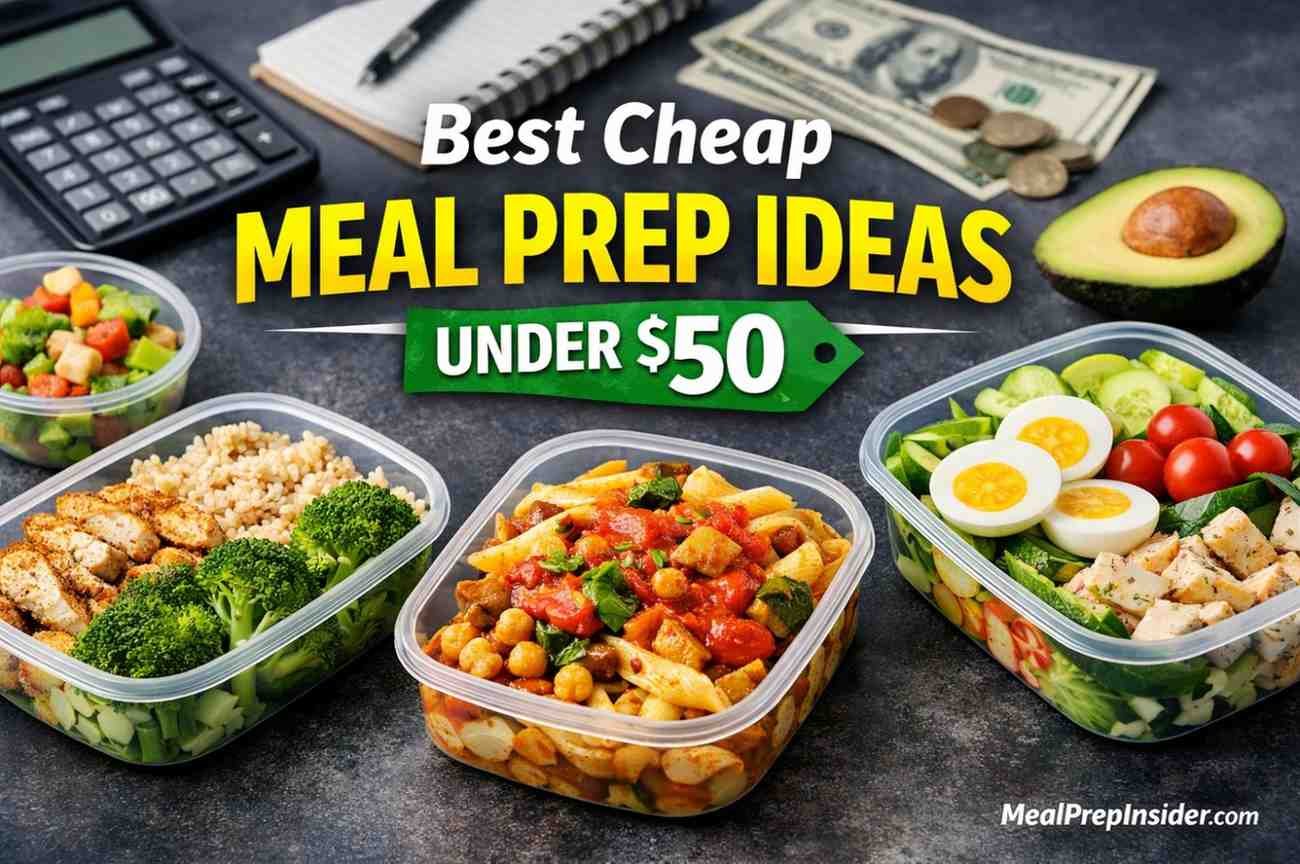
Best Cheap Meal Prep Ideas Under $50: Easy & Healthy

Best cheap meal prep ideas under $50 can completely transform how you eat during the week without draining your bank account. If you’ve ever stood in front of your fridge at 9 PM on a Tuesday, wondering what to eat while scrolling through delivery apps, you know that pain.
Those $15 orders add up faster than you’d think, and before you know it, you’ve spent $300 on takeout in a month.
I get it. Life gets busy. Cooking feels like a chore after a long workday. But what if I told you there’s a better way?
Meal prepping doesn’t mean eating bland chicken and rice for seven days straight. It doesn’t require fancy containers or spending your entire Sunday in the kitchen. And most importantly, it doesn’t have to cost a fortune.
Let me share something with you. Last year, I was spending nearly $400 monthly on food for just myself. That’s ridiculous when you think about it. I decided enough was enough and committed to meal prepping on a tight budget. Within the first month, my food costs dropped to under $200. The second month? Even lower.
The secret isn’t complicated. It’s about smart shopping, choosing versatile ingredients, and preparing meals that genuinely taste good.
Why Meal Prep Under $50 Works for Real People
The beauty of budget meal prep lies in its simplicity. When you commit to spending $50 or less per week on groceries, you naturally become more intentional about what you buy.
No more impulse purchases. No more letting produce rot in your crisper drawer. Every ingredient serves a purpose.
Here’s what makes this approach different from other meal prep strategies:
- You’re not locked into expensive organic-only shopping
- You can shop at regular grocery stores or discount chains
- The meals work for various dietary preferences
- You won’t need specialized kitchen equipment
- Leftovers become assets, not afterthoughts
Think about what $50 really means. That’s roughly $7.14 per day for all your meals. Breakfast, lunch, and dinner. Compare that to a single lunch at Chipotle or Panera. The math speaks for itself.
Planning Your Budget Meal Prep Strategy
Before you set foot in a grocery store, you need a game plan. Wandering aisles aimlessly is how you blow your budget before you’ve even started.
Grab your phone. Open a notes app. Write down what you already have in your pantry, fridge, and freezer. That half-used bag of rice? It’s coming with us on this journey. Those frozen veggies from two months ago? Perfect.
Next, think about your week ahead. How many meals do you actually need? If you eat out twice a week or have dinner plans with friends, don’t prep for 7 full days. Be realistic.
Here’s a simple framework that works:
Map out five dinners. Most people eat out or order in at least once per weekend, so five solid dinners cover your weeknight needs.
Plan three lunches. Maybe you eat out with coworkers on Fridays. Maybe you skip lunch on Saturdays. Adjust accordingly.
Keep breakfast simple. Oatmeal, eggs, and toast don’t need elaborate prep. Buy ingredients that work for a quick morning assembly.
The Best Ingredients for Maximum Value
Smart ingredient selection makes or breaks your budget. You want foods that deliver nutrition, taste, and versatility without costing an arm and a leg.
Proteins form the foundation of most meals, but they can quickly eat up your budget if you’re not careful. Here’s where to focus:
Chicken thighs cost significantly less than breasts and pack way more flavor. They’re forgiving when cooked, meaning you won’t end up with dry, sad protein.
Ground turkey works in everything from tacos to pasta sauce to stir-fries. At most stores, it runs about $3-4 per pound.
Canned tuna and salmon offer quick protein without the prep work. A single can makes two servings for most recipes.
Eggs remain the ultimate budget protein. Eighteen eggs for $4 gives you multiple breakfast and dinner options.
Dried beans and lentils seem boring until you realize how incredibly cheap and nutritious they are. One bag can feed you for days.
For vegetables, stick with what’s in season or go frozen. Frozen vegetables get a bad rap they don’t deserve. They’re picked at peak ripeness, flash-frozen to preserve nutrients, and cost a fraction of the price of fresh produce.
Your best vegetable picks include:
- Bags of frozen broccoli, cauliflower, or mixed vegetables
- Fresh carrots, which last weeks in the fridge
- Cabbage is incredibly cheap and versatile
- Onions and garlic for flavor base
- Sweet potatoes are filling and nutrient-dense
- Spinach or kale, fresh or frozen
Grains and starches round out your meals without destroying your budget:
Rice comes in at pennies per serving. Brown rice offers more nutrients, but white rice works perfectly fine, too.
Pasta feeds you cheaply and pairs with countless sauces and proteins.
Oats work for breakfast but also as a binder in meatballs or veggie burgers.
Potatoes remain one of the cheapest, most filling foods you can buy.
Five Complete Cheap Meal Prep Ideas Under $50
Let me walk you through actual meal prep plans with real prices based on average U.S. grocery costs. These aren’t theoretical. These are meals I’ve made repeatedly.
Plan One: Classic Comfort
This plan focuses on familiar flavors that satisfy without getting fancy.
Shopping List:
- 3 lbs chicken thighs – $6.00
- 2 lbs ground turkey – $7.00
- 1 dozen eggs – $3.00
- 5 lb bag rice – $4.00
- 2 lb bag dried black beans – $2.50
- Bag frozen mixed vegetables – $3.00
- 5 lb potatoes – $3.00
- Yellow onions (3 lb bag) – $2.00
- Garlic bulb – $0.50
- Can diced tomatoes – $1.00
- Bag shredded cheese – $4.00
- Cooking oil – $3.00
- Basic spices (chili powder, cumin, salt, pepper) – $6.00
Total: $49.00
Meals This Creates:
Baked chicken thighs with roasted potatoes and vegetables for four dinners. Season the chicken with salt, pepper, and garlic. Cube potatoes, toss with oil and spices, and bake everything together at 425°F for 35 minutes.
Turkey and black bean burrito bowls for four lunches. Cook ground turkey with onions and taco seasoning. Prepare rice and beans. Portion into containers with cheese and any leftover vegetables.
Scrambled eggs with potatoes for five breakfasts. Dice and pan-fry potatoes until crispy, scramble eggs, and combine.
Plan Two: Mediterranean Inspired
This plan brings bright flavors without exotic ingredients.
Shopping List:
- 2 lbs chicken breast – $8.00
- 1 can chickpeas – $1.00
- 1 dozen eggs – $3.00
- 2 lb pasta – $2.50
- Bag frozen spinach – $2.00
- 5 lb sweet potatoes – $4.00
- Cherry tomatoes (pint) – $3.00
- Cucumber – $1.50
- Lemon (3 pack) – $2.00
- Feta cheese – $4.00
- Hummus – $3.00
- Olive oil – $5.00
- Dried oregano, garlic powder – $4.00
- Pita bread – $3.00
Total: $49.00
Meals This Creates:
Greek-style chicken bowls with roasted sweet potato, cucumber, tomato, and feta for four dinners. Marinate chicken in lemon juice, olive oil, and oregano before baking.
Pasta with chickpeas and spinach for four lunches. Sauté garlic, add chickpeas and spinach, toss with cooked pasta and olive oil.
Pita with eggs and hummus for five breakfasts. Scramble eggs, then stuff into a warmed pita with hummus.
Plan Three: Asian-Inspired
You don’t need fancy ingredients to create Asian-flavored meals.
Shopping List:
- 2 lbs ground pork – $6.00
- 1 lb bag frozen shrimp – $7.00
- 1 dozen eggs – $3.00
- 5 lb rice – $4.00
- Bag frozen stir-fry vegetables – $3.00
- Cabbage head – $2.00
- Carrots (2 lb bag) – $2.00
- Fresh ginger – $1.00
- Garlic – $0.50
- Soy sauce – $3.00
- Rice vinegar – $2.50
- Sesame oil – $4.00
- Sriracha – $3.00
- Green onions – $1.50
Total: $48.50
Meals This Creates:
Ground pork fried rice with vegetables for four dinners. Cook pork with ginger and garlic, add day-old rice and frozen vegetables, and season with soy sauce.
Shrimp and cabbage stir-fry over rice for four lunches. Quick-cook shrimp, sauté shredded cabbage and carrots, season with soy sauce and sesame oil.
Egg and veggie scramble for five breakfasts. Use leftover vegetables from stir-fry prep.

Plan Four: Vegetarian Budget
Meat-free doesn’t mean flavor-free or expensive.
Shopping List:
- 2 lb dried lentils – $3.00
- 2 cans black beans – $2.00
- 2 dozen eggs – $6.00
- 5 lb rice – $4.00
- 2 lb pasta – $2.50
- Bag frozen broccoli – $2.50
- Can crushed tomatoes (2 large) – $3.00
- Yellow onions – $2.00
- Garlic – $0.50
- Bell peppers (3) – $3.00
- Bag shredded cheese – $4.00
- Jar pasta sauce – $2.50
- Tortillas – $3.00
- Bag spinach – $3.00
- Italian seasoning, cumin – $4.00
Total: $49.00
Meals This Creates:
Lentil curry over rice for four dinners. Cook lentils with onions, garlic, curry powder, and crushed tomatoes.
Black bean and cheese quesadillas with peppers for four lunches. Mash beans, stuff tortillas with beans, peppers, and cheese.
Veggie scrambles for five breakfasts. Eggs with spinach, peppers, and cheese.
Pasta with marinara and roasted broccoli for bonus meals with leftover ingredients.
Plan Five: Soup and Sandwich
Perfect for colder months when you want warm, filling meals.
Shopping List:
- Whole rotisserie chicken – $6.00
- 2 lb dried split peas – $3.00
- Loaf bread – $2.50
- 1 lb deli turkey – $5.00
- Cheese slices – $4.00
- Carrots (2 lb) – $2.00
- Celery bunch – $2.00
- Yellow onions – $2.00
- Garlic – $0.50
- 5 lb potatoes – $3.00
- Can corn – $1.00
- Can green beans – $1.00
- Chicken broth (2 boxes) – $4.00
- Mayonnaise – $3.00
- Mustard – $2.00
- Lettuce – $2.00
- Bay leaves, thyme – $3.00
Total: $49.00
Meals This Creates:
Split pea soup with ham for four dinners. Use chicken bones to make stock, then cook split peas with carrots, celery, onions, and any leftover chicken meat.
Turkey sandwiches with veggies for five lunches. Simple but satisfying with good bread and fresh vegetables.
Chicken salad made from rotisserie chicken remnants for variety lunches.
Smart Shopping Tactics That Save Money
Where you shop matters almost as much as what you buy. Different stores excel at different things.
Aldi and Lidl offer the absolute best prices on staple items. Their store brands match name-brand quality for significantly less money.
Walmart provides competitive pricing on meat and frozen goods. Their Great Value brand works well for most items.
Ethnic grocery stores often beat mainstream chains on produce, rice, and spices. An Asian market sells a massive bag of rice for what you’d pay for a small box elsewhere.
Dollar stores stock surprisingly decent canned goods, pasta, and spices. Just check expiration dates.
Shop seasonally. Butternut squash costs $0.49 per pound in October but $2.99 in June. Strawberries flip that pattern. Work with nature’s schedule.
Buy store brands. Seriously, that organic, fair-trade, artisanal can of tomatoes tastes pretty much identical to the store-brand that costs half as much.
Check unit prices, not package prices. Sometimes the bigger package costs more per ounce. The shelf tag tells you the truth.
Time your shopping. Many stores mark down meat and bread in the evenings. That $8 pack of chicken marked down to $4 because it expires tomorrow? Freeze it immediately.
RELATED POST >> 10 Cheap High Protein Meals for Students on a Budget
Meal Prep Day: Making It Happen
Sunday works for most people, but prep whenever fits your schedule. The specific day matters less than consistency.
Start with a clean kitchen. Dirty counters and a full sink make everything harder.
Pull out all your groceries. Having everything visible prevents forgotten ingredients.
Read through all your recipes first. Understanding the full scope before you start prevents chaos.
Multitask intelligently. While rice cooks, chop vegetables. While the chicken bakes, prepare your bean mixture. One-pot boiling doesn’t mean you stand there watching it.
Follow this order for maximum efficiency:
Step one: Start with anything that takes the longest. Rice, dried beans, and roasted vegetables. Get these going first.
Step two: Prep your proteins. Season, marinate, or cook your chicken, ground meat, or other proteins.
Step three: Chop all vegetables at once. Washing the cutting board once beats washing it five times.
Step four: Assemble meals in containers as items finish cooking. Don’t wait until everything’s done to start portioning.
Step five: Label containers with contents and date. In the future, you will appreciate this.
The whole process takes roughly two to three hours for a week’s worth of food. That’s less time than most people spend watching Netflix on a Sunday.
Storage and Food Safety
Proper storage prevents food waste and keeps you safe. Here’s what matters.
Most prepared food lasts three to four days in the refrigerator. If you prep on Sunday, Wednesday’s meal sits at the edge of this window. That’s fine for most items.
Freeze anything you won’t eat within four days. Cooked rice, proteins, soups, and casseroles all freeze beautifully.
Let hot food cool before sealing containers. Trapping steam creates condensation, which makes food soggy and spoils faster.
Glass containers cost more initially but last forever and don’t stain. Plastic works fine if you’re on a tight budget.
Separate wet and dry components when possible. Store dressing separately from salad. Keep the sauce separate from the rice until you’re ready to eat.
Use your freezer strategically. Bread, cooked grains, prepared proteins, and chopped vegetables all freeze well. Your freezer extends your meal prep beyond a single week.
Common Pitfalls People Encounter
The biggest mistake people make? Trying to prep too many different meals. Five completely different dinners sound great in theory, but create unnecessary work.
Embrace repetition strategically. Making the same lunch four times simplifies your prep dramatically. Just vary your dinners for excitement.
Another frequent error is ignoring what you actually like eating. Don’t force yourself to eat food you hate just because it’s cheap. You’ll end up ordering takeout anyway and wasting what you prepped.
Be honest about your cooking skills. If you’ve never cooked Asian food before, maybe don’t make that your first meal prep attempt. Build confidence with familiar foods first.
People also underestimate portion sizes. Those meal prep containers seem huge when empty. Trust me, when you’re hungry after a long day, you’ll eat that whole portion.
Don’t skip seasoning to save money. Salt, pepper, and basic spices transform bland ingredients into actual food you want to eat. A $3 bottle of garlic powder lasts months and improves everything.
Making Meal Prep Stick Long-Term
The first week feels exciting. The second week feels like a chore. By week three, you’re tempted to quit. Push through.
Something interesting happens around week four. Meal prepping becomes automatic. You stop thinking about it as extra work and start seeing it as a normal routine.
Build in flexibility. Some weeks you’ll have more time and energy. Other weeks, life happens. A simple week of pasta and rotisserie chicken counts as meal prep.
Involve others if you can. Prepping with a roommate, partner, or friend makes the time pass faster and splits the work.
Track your savings. Seeing real numbers motivates you to continue. When you realize you saved $150 in a month, skipping meal prep suddenly feels expensive.
Celebrate wins. The first time you skipped ordering delivery because you had food ready? That’s a victory worth acknowledging.
Adjust as needed. Maybe you discover you hate eating the same lunch four days straight. Fine, prep two different lunch options. The system should work for you, not against you.
Scaling Up for Families
Everything I’ve described works for individuals, but what about families? The same principles apply with adjustments.
Multiply ingredients based on family size. That $50 budget becomes $100 for a family of four, but you’re still spending far less than convenience food.
Involve kids in age-appropriate ways. Even young children can wash vegetables or stir ingredients. Teenagers can handle actual cooking tasks.
Prep components rather than complete meals for picky eaters. Make plain rice, plain chicken, and plain vegetables, then let family members combine them however they prefer.
Double recipes intentionally. If you’re making tacos anyway, double the meat and freeze half for next week. You’ve just halved your next prep time.
Budget Meal Prep for Special Diets
Gluten-free, dairy-free, and other dietary restrictions don’t prevent budget meal prep. They just require slight adjustments.
For gluten-free eating, rice and potatoes become your best friends. They’re naturally gluten-free and incredibly cheap.
Dairy-free works easily since most budget proteins and vegetables contain no dairy anyway. Skip the cheese or use dairy-free alternatives when they’re on sale.
Low-carb costs more but remains doable. Focus on eggs, chicken thighs, ground meat, and non-starchy vegetables. Accept that your budget might stretch to $60-70 weekly.
Vegan meal prep can actually cost less than omnivore plans. Beans, lentils, and rice form the foundation of incredibly cheap, nutritious meals.
Quick Wins When You’re Short on Time
Some weeks you won’t have three hours to spend prepping. That’s real life. Here are shortcuts that still keep you on budget.
Buy a rotisserie chicken. At $5-6, it provides protein for multiple meals with zero cooking required. Eat it plain the first night, make chicken salad for lunch, and use bones for soup.
Embrace one-pot meals. Throw chicken, rice, broth, and frozen vegetables in a pot. Come back in 30 minutes to complete the meal.
Prep breakfast only. Even small meal prep helps. Five days of overnight oats take fifteen minutes to prepare and save morning stress.
Use your slow cooker. Dump ingredients in before work, come home to finished food. The hands-on time measures in minutes.
Buy pre-cut vegetables when they’re on sale. Yes, whole vegetables cost less, but pre-cut vegetables beat takeout every time.
Maximizing Flavor Without Maximizing Cost
Budget food doesn’t have to taste boring. Learning to layer flavors transforms basic ingredients.
Toast your spices. Thirty seconds in a dry pan wakes up dried spices and makes them taste fresher.
Use acid. A squeeze of lemon or a splash of vinegar brightens flavors better than extra salt.
Let alliums lead. Onions and garlic form the flavor foundation of countless cuisines. Starting most dishes with sautéed onions and garlic creates depth.
Don’t fear fat. A small amount of oil or butter adds flavor and makes food more satisfying. You’re not deep-frying; you’re using fat strategically.
Build layers. Brown your meat properly. Let vegetables caramelize. Add herbs at the end for brightness. Each step adds dimension.
Save and use scraps. Vegetable trimmings become stock. Chicken bones become the soup base. Stale bread becomes breadcrumbs. This mindset stretches your budget.
Tracking Your Progress
Keep a simple food spending log for one month before meal prepping, then compare it to a month with meal prep. The difference will shock you.
Take photos of your prepped meals. When motivation dips, scrolling through successful prep sessions reminds you that you can do this.
Notice how you feel physically. Most people report more energy and better digestion after a few weeks of consistent meal prep. You’re eating more vegetables and less processed food.
Pay attention to reduced stress. Knowing what’s for dinner eliminates daily decision fatigue. That mental clarity matters as much as money saved.
Resources That Actually Help
You don’t need a million cookbooks or expensive apps. Keep this simple.
YouTube offers endless free meal prep tutorials. Search for “budget meal prep” and you’ll find thousands of real people sharing real methods.
Free apps like Mealime or Budget Bytes provide recipes organized by cost. Both offer solid options without requiring payment.
Your grocery store’s weekly ad guides what to buy. Plan meals around what’s on sale rather than shopping from a preset list.
A basic kitchen scale helps with portion control and accurate recipe following. They cost $10-15 and last for years.
Building Your Pantry Over Time
You can’t buy everything at once, and you don’t need to. Build your pantry staples gradually.
This week, add dried beans to your cart. Next week, grab another spice. The following week, stock up on rice when it’s on sale.
Within two months of consistent shopping, you’ll have accumulated the basics. Future shopping trips focus mainly on fresh items since you’ve got shelf-stable staples covered.
Essential pantry items to acquire over time:
- Rice (white and brown)
- Pasta (various shapes)
- Dried beans (black, pinto, chickpeas)
- Lentils
- Oats
- Canned tomatoes
- Tomato paste
- Chicken or vegetable broth
- Cooking oil
- Olive oil
- Soy sauce
- Vinegar
- Flour
- Sugar
- Salt and pepper
- Garlic powder
- Onion powder
- Cumin
- Chili powder
- Italian seasoning
- Paprika
When Meal Prep Doesn’t Go as Planned
Sometimes you’ll mess up a recipe. You’ll burn rice or overcook chicken, leaving it dry.
It happens to everyone. Don’t let one bad batch derail your entire effort.
Salvage what you can. Overcooked chicken becomes chicken salad with enough mayo. Burned rice? The top layer might still be fine.
Order pizza if needed. One emergency takeout meal doesn’t erase three successful meal-prepped dinners.
Learn and adjust. If a recipe didn’t work, try a different one next week. Not every meal prep idea will match your taste or skill level.
The Real Impact After Three Months
Give meal prepping three full months before deciding if it works for you. Here’s what typically happens.
Month one feels like work. You’re learning. Recipes take longer. You make mistakes. But you’re also saving money immediately.
Month two gets easier. You’ve found a few recipes you genuinely enjoy. Prep time decreases as you become more efficient. The savings become obvious.
Month three makes you a believer. Meal prep feels normal now. You’ve probably saved $300-500 compared to your old habits. You have more energy. Food waste in your home has dropped dramatically.
Many people find that money saved goes toward other goals. That’s an extra car payment. A chunk toward an emergency fund. A nice dinner out because you chose to spend money there, not because you had no other option.
Frequently Asked Questions
How long does meal-prepped food really stay fresh?
Most cooked food stays safe for three to four days in the refrigerator at 40°F or below. Rice and pasta dishes sometimes don’t taste as good by day four, but they’re still safe. Freeze anything you won’t eat within that window. Soups and stews often taste better after a day or two as flavors meld.
Can I meal prep if I don’t have much kitchen equipment?
Absolutely. A pot, a pan, a knife, and a cutting board cover most meal prep needs. A baking sheet expands your options. You don’t need an Instant Pot, air fryer, or any fancy gadgets. Simple equipment works fine.
What if my family members have different taste preferences?
Prep components instead of complete meals. Make plain proteins, grains, and vegetables separately, then let people combine them with different sauces or seasonings. Taco bars, rice bowls, and pasta stations work perfectly for a variety of preferences.
Is it safe to reheat rice?
Yes, when handled properly. Cool cooked rice quickly and refrigerate within an hour of cooking. Reheat it to steaming hot, only once. Never leave cooked rice at room temperature for extended periods, as it can develop bacteria. Following these rules makes rice completely safe.
How do I prevent meal prep burnout?
Don’t prep the exact same meals every single week. Rotate between three or four different plans. Occasionally, take a week off and do minimal prep. Build in restaurant meals, so you’re not restricting yourself completely. Meal prep should make life easier, not feel like a punishment.
Can I meal prep on a budget if I buy organic?
It becomes significantly harder to stay under $50 weekly with organic ingredients. If organic matters to you, prioritize the “Dirty Dozen” produce items for organic purchases and buy conventional for everything else. You might need to increase your budget to $65- $ 75 per week.
What’s the best way to reheat meal-prepped food?
The microwave works fine for most items. Add a splash of water to rice or pasta before reheating to restore moisture. Crispy items like roasted vegetables reheat better in a toaster oven or air fryer. Soups and stews reheat well on the stovetop. Let refrigerated food sit out for 5-10 minutes before reheating for more even heating.
How do I meal prep without a ton of storage containers?
Start with what you have. Clean takeout containers work temporarily. Buy containers gradually, a few at a time. Glass jars hold soups and salads. You don’t need twenty matching containers on day one.
Does meal prep work for weight loss?
It can absolutely support weight loss goals because you control portions and ingredients. You’re not eating mystery restaurant food with hidden calories. But meal prep itself doesn’t guarantee weight loss—that depends on what and how much you eat. Track portions if weight loss is your goal.
What if I get sick of eating the same thing?
Use different sauces and seasonings to vary the same base ingredients. Chicken and rice become completely different meals with BBQ sauce, teriyaki, and curry spices. Freeze half of what you prep and make a second, different meal for later in the week. Variety matters for long-term success.
Can beginners really do this?
Yes. In fact, beginners often succeed because they follow instructions carefully without overcomplicating things. Start with one or two simple recipes. Master those before expanding. Everyone who meal preps successfully started as a beginner.
Is meal prepping worth it for just one person?
Definitely. Single people often waste more money on takeout and convenience food. Meal prepping as a solo person might mean smaller batches, but the principles and savings remain the same. You might spend $40 instead of $50 weekly, which still beats eating out.
The path forward is simple. Pick one meal prep plan from this article. Buy those groceries. Spend a few hours this weekend preparing food. Eat what you made during the week.
That’s it. You don’t need to overthink this.
Best cheap meal prep ideas under $50 work because they’re practical, sustainable, and based on real food that real people actually eat. They’re not about deprivation or suffering through bland meals. They’re about taking control of what you eat and how much you spend.
Start small. Build consistency. Watch your bank account grow while your stress decreases. That’s a trade worth making.
SUGGESTED POST >> Best Freezer Meal Prep for New Moms That’s Stress-Free
Discover more from Meal Prep Insider
Subscribe to get the latest posts sent to your email.