25 Easy Carnivore Recipes for Digital Nomads Now

Carnivore Recipes for Digital Nomads: Easy carnivore recipes perfect for digital nomads: simple, no-cook or quick-prep meat-based meals using steak, eggs, canned fish & butter. Travel-friendly, high-protein, zero-carb ideas to stay strict on the go anywhere in the world.
Why Carnivore and Nomad Life Actually Go Together
Most people assume that eating a carnivore diet while traveling is hard. It’s not. In fact, it might be the easiest diet to maintain on the road — once you stop thinking about it the way you would at home.
You don’t need a full kitchen. You don’t need a spice rack. Meat is meat. And meat is everywhere.
Digital nomads already deal with unpredictable schedules, dodgy Wi-Fi, and time zone chaos. The last thing anyone needs is a complicated meal plan. Carnivore strips that down completely. Protein. Fat. Done.
This isn’t a diet for people who want to count macros in a spreadsheet. It’s food that works.
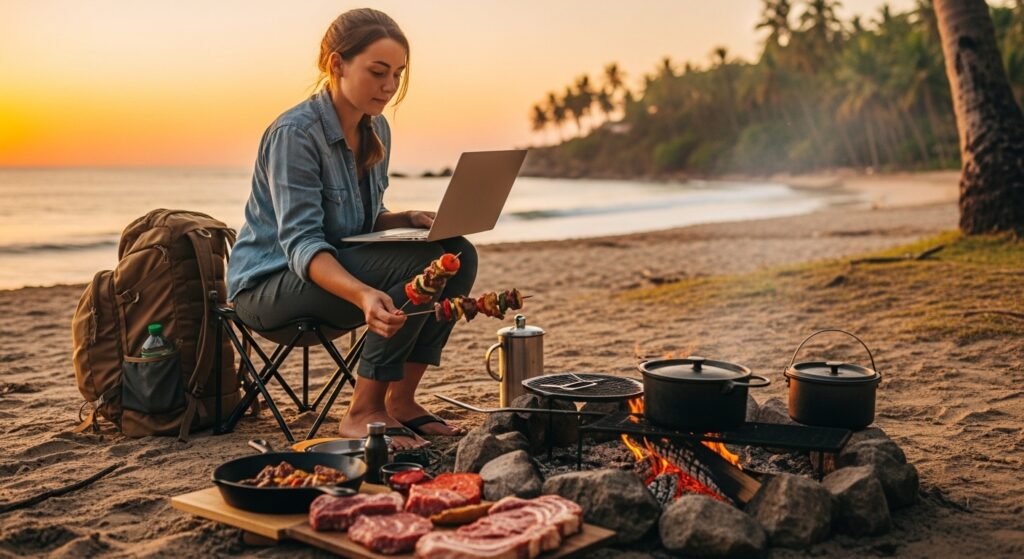
Whether you’re in a Chiang Mai co-working space, a Lisbon Airbnb, or a Medellín hostel with a hot plate — these 25 recipes will keep you fed, sharp, and satiated.
What You Actually Need to Cook Carnivore on the Road
Before the recipes, let’s talk equipment. Because lugging a Dutch oven through three countries isn’t the move.
Minimal gear that handles most of these recipes:
- A cast-iron skillet or small non-stick pan (buy locally, leave when you go)
- A sharp knife
- One medium pot
- A hot plate or portable induction burner
- Salt — just salt
That’s it. Seriously.
Some nomads carry a small immersion circulator for sous vide cooking. That’s optional, but worth it if you’re stationary for a few weeks. A lot of these recipes don’t even need a stove.
25 Easy Carnivore Recipes for Digital Nomads
1. Pan-Seared Ribeye with Salted Butter
This is the foundational carnivore meal. Simple. Satisfying. Never gets old.
Get your pan screaming hot. Dry the steak. Salt both sides heavily. Sear two to three minutes per side. Rest it. Finish with a tablespoon of butter over the top while it’s still hot.
That’s the whole recipe.
A 12-ounce ribeye has around 70–80 grams of protein and plenty of fat to keep you full for hours. Great before a long work session.
2. Ground Beef Bowl (No Bowl Required)
Buy ground beef — ideally 80/20 fat ratio. Brown it in a pan. Eat it straight out of the pan or a cheap bowl from a local market.
No seasonings needed. The fat carries the flavor.
If you want to upgrade slightly, cook it in beef tallow. Adds richness without complicating anything.
This one works in almost any country. Ground beef is available everywhere.
3. Bacon and Egg Scramble
Two ingredients. One pan. Ready in six minutes.
Cook the bacon first, leave the fat in the pan, crack in three eggs, and scramble them gently. The bacon fat seasons everything. No additional salt is even needed — though most people add some.
High-fat, high-protein, incredibly portable as a concept. You can make this in a hostel kitchen without annoying a single person.
4. Smoked Salmon with Cream Cheese
No cooking required. This is a no-heat carnivore meal.
Grab a pack of smoked salmon and a tub of full-fat cream cheese. Eat them together. That’s the recipe.
Good for travel days. Good for coworking spaces. Doesn’t smell terrible if you’re eating around others (unlike canned fish).
High in omega-3s. High in fat. Filling without being heavy.
5. Pork Belly Strips
Slice pork belly into strips. Cook fat-side down in a dry pan until crispy. Flip. Cook for another few minutes.
Pork belly is extremely cheap in most Southeast Asian countries. In places like Vietnam and Thailand, you can get it from a local market for almost nothing.
The fat renders down, creating a crispy, chewy texture that’s borderline addictive.
6. Canned Sardines Straight Up
This is as nomadic as it gets.
A tin of sardines in olive oil. Eat them cold. Add salt if needed.
Sardines in the U.S. are often underrated. But they’re one of the most nutrient-dense foods on the planet — loaded with vitamin D, B12, calcium, and omega-3s. If you’re doing a full carnivore diet, these belong in your bag.
They’re shelf-stable. They cost about a dollar. They work anywhere.
7. Beef Liver Pâté
Liver is the most nutrient-dense food that exists. Most people avoid it because of the taste. Pâté fixes that problem.
Sauté chicken or beef liver in butter until cooked through. Let it cool. Blend it with more butter and a pinch of salt. Refrigerate.
Eat it by the spoonful or with pork rinds if you want something crunchy.
These store in the fridge for about four days. Make a batch at the start of the week.
8. Reverse-Seared NY Strip
Better for when you have an oven. But it’s worth mentioning.
Cook the steak in a low oven — around 250°F — until it reaches an internal temperature of 120°F. Then sear it hard in a hot pan for 60 to 90 seconds per side.
The result is edge-to-edge medium-rare. Better than most steakhouses. Nomads who rent apartments for a month at a time should absolutely do this one.
9. Carnivore Burger Patties
Mix ground beef with a bit of salt. Form patties. Cook in a pan or on a grill if you have access.
No bun. No condiments. Just the patty.
Two quarter-pound patties are a full meal. You don’t need anything else.
If you want variety, try mixing beef with lamb for a different fat profile and flavor.
10. Soft-Boiled Eggs Batch
Boil a pot of water. Drop in six eggs. Eight minutes for jammy yolks. Ten for fully set.
Make a batch. Store them in the fridge for three days.
Eggs are the perfect nomadic protein source. Cheap everywhere, easy to cook, portable when hard-boiled.
RELATED POST >> 34 Easy Carnivore Recipes for Back Sleepers: Pain-Free Night
11. Pan-Seared Duck Breast
Duck is underused in American kitchens. Outside the U.S., it’s everywhere, and it’s cheap.
Score the fat side of a duck breast. Start it fat-side down in a cold pan. Let the fat render slowly for ten minutes. Flip and cook three more minutes.
Rich, fatty, incredibly satisfying. The flavor is deeper than chicken by a mile.
12. Chicken Thighs Cooked in Butter
Bone-in, skin-on thighs. Salt them. Cook them skin-side down in butter over medium heat for about fifteen minutes. Flip for another eight.
The skin gets crispy. The meat stays moist. Butter browns slightly and takes on a nutty flavor.
This one works on a single burner. Takes about 25 minutes total.
13. Tuna Packed in Oil
Similar to sardines but more familiar to most U.S. eaters.
Canned albacore tuna in olive oil. Eat it straight or mix it with a soft-boiled egg.
High in protein. Moderate fat. Good for lunch when you don’t want to cook.
Skip the water-packed stuff — the oil-packed versions have better flavor and more calories for sustained energy.
14. Lamb Chops with Sea Salt
Salt the chops generously. Sear in a ripping-hot cast-iron skillet for 2 minutes per side. Rest.
Lamb chops are small, cook fast, and are packed with fat and zinc. In places like Morocco, Greece, or Turkey, they’re dirt cheap at local markets.
Even in the U.S., shoulder chops are an affordable cut most people overlook.
15. Bone Broth (From Scratch or Store-Bought)
When you’re stationary for a week or more, make bone broth.
Simmer beef knuckle bones or chicken carcasses in water for 12 to 24 hours. Strain. Salt. Drink it like coffee.
It’s warm. Gut-healing. Full of collagen and minerals.
If you’re not stationary? Buy a shelf-stable brand like Kettle & Fire and keep a few cartons in your bag. It’s a real meal when you need something fast and hot.
16. Beef Heart Steaks
The heart is a muscle, not an organ. It tastes like a lean, slightly gamey steak.
Slice it thin. Sear it fast on high heat. Salt after cooking.
Beef heart is extremely high in CoQ10 — an antioxidant that supports energy production. Good for nomads who feel run down from constant travel.
17. Pork Rinds as a Snack
Not technically cooking, but they count.
Pork rinds — or chicharrones — are pure protein and fat. Zero carbs. Perfect for long travel days or airport layovers.
In Latin America, they’re sold fresh at street markets. In the U.S., you can find them in most grocery stores. Look for the brands that use just pork skin and salt — no additives.
18. Steak and Eggs (Classic)
Flank steak or sirloin. Three eggs. One pan.
Sear the steak. Remove. Cook the eggs in the leftover steak fat. Eat together.
This combo has been a bodybuilder staple for decades. There’s a reason. High protein. Balanced fat. Keeps you full for a solid five to six hours.
19. Carnivore Meatballs
Mix ground beef with egg and salt. Roll into balls. Brown them in a pan on all sides.
That’s it. No breadcrumbs. No sauce.
Batch cook twenty meatballs at once. Eat them cold from the fridge for the next two days. Great for busy work days when cooking feels like too much effort.
20. Shrimp in Butter
Quick. Easy. Works with just a pan and ten minutes.
Melt butter over medium-high heat. Add shrimp. Cook two minutes per side. Salt.
Shrimp are low-fat, so pair them with extra butter or eat them alongside something fattier like pork rinds or an egg.
21. Wagyu Beef Slices (Hot Plate Method)
If you’re in Japan, South Korea, or anywhere that sells wagyu or high-fat beef slices — this is mandatory.
Thin slices of wagyu on a hot pan. Ten seconds per side. Salt lightly.
The fat content in wagyu is so high that the flavor is almost sweet. It melts. It’s the best thing you will eat on this list.
22. Whole Roasted Chicken (Apartment Weeks)
Buy a whole chicken. Rub it with salt all over. Roast at 425°F for about an hour.
This feeds you for two to three days. Pull off the breasts one meal, thighs the next. Make broth from the carcass after.
Efficient. Cheap. Deeply satisfying. Best for when you’re renting an apartment and want to cook like a semi-normal human for a week.
23. Beef Tallow Frying
This isn’t a recipe on its own — it’s a method that improves everything.
Render beef fat or buy pre-made tallow. Use it as your cooking fat instead of vegetable oils.
Tallow is shelf-stable at room temperature. You can carry a small jar of it. It adds beefy flavor to everything and has a very high smoke point — perfect for high-heat cooking.
24. Canned Corned Beef (The Emergency Meal)
Not glamorous. Gets the job done.
A can of corned beef has around 50 grams of protein per serving and plenty of salt and fat already built in. Heat it in a pan or eat it cold.
Best brands in the U.S.: Libby’s, Hereford, or Mary Kitchen.
Keep one or two cans in your bag. You will absolutely use them one day.
25. Cold Sliced Brisket
Buy brisket from a barbecue joint or cook it yourself if you have the time. Let it cool. Slice thin. Eat cold over the next two days.
Cold brisket is one of the best things in carnivore eating. The fat firms up a bit. The flavor deepens. It slices clean and eats like a snack.
In Texas, great brisket is everywhere. In other parts of the U.S., a good grocery-store flat-cut brisket, cooked low and slow for eight hours, does the job.
Carnivore Eating by Location Type
| Location | Best Recipe Options | Why It Works |
|---|---|---|
| Hostel (shared kitchen) | Bacon & eggs, ground beef bowl, canned sardines | Quick, minimal mess, cheap |
| Airbnb / apartment | Ribeye, whole chicken, brisket, meatballs | Full kitchen access |
| Hotel room (microwave only) | Canned tuna, pork rinds, hard-boiled eggs | No stove needed |
| Co-working space | Smoked salmon, pork rinds, cream cheese | No cooking, no smell |
| Camping/van life | Reverse sear (campfire), duck breast, lamb chops | Open flame works great |
| Long-haul travel | Canned corned beef, sardines, bone broth cartons | Shelf-stable, portable |
Quick Nutrition Snapshot
| Recipe | Approx. Protein | Approx. Fat | Ease Level |
|---|---|---|---|
| Ribeye | 75g | 55g | Easy |
| Ground beef bowl | 60g | 45g | Very Easy |
| Bacon & egg scramble | 35g | 40g | Very Easy |
| Smoked salmon + cream cheese | 30g | 35g | Zero effort |
| Liver pâté | 25g | 40g | Moderate |
| Bone broth | 10g | 5g | Easy/buy it |
| Shrimp in butter | 45g | 20g | Easy |
| Carnivore meatballs | 55g | 35g | Easy |
Tips That Actually Matter
Buy fresh, cook simple. The carnivore diet doesn’t need to be complex. The more ingredients you add, the further you’re drifting from the point.
Salt is not optional. When you cut carbs hard, your kidneys flush electrolytes. Salt your food aggressively. Add sodium to your water if needed.
Fat is fuel. If you’re feeling tired on a carnivore diet, you’re probably not eating enough fat. This isn’t a lean protein diet. Eat the ribeye, not the chicken breast.
Organ meats once or twice a week. Liver especially. If you hate the taste, disguise it as pâté (Recipe 7). It covers your vitamin and mineral needs without supplements.
Eat two meals a day. Most experienced carnivore eaters naturally settle into two meals — often called OMAD (one meal a day) or 2MAD. Your hunger signals normalize fast.
Frequently Asked Questions
Is the carnivore diet safe long-term? Based on current evidence, many people do well on it long term, especially when including organ meats for micronutrients. That said, if you have underlying health issues, talk to a doctor first. It’s not a magic cure-all, but it’s not dangerous for most healthy adults.
Can I do carnivore in countries that aren’t the U.S.? Yes, and honestly, it’s easier in many places. Argentina, Brazil, South Korea, Japan, and most of Eastern Europe are meat-heavy cultures. You’ll find better cuts for less money than back home.
What about fiber and gut health? Controversial topic. Many carnivore eaters report better digestion without fiber. The research here is limited. Some people thrive. Others don’t adapt well. Give it 30 days before judging.
Do I need to track calories on carnivore? Most people don’t. The satiety from protein and fat tends to naturally regulate intake. If you’re eating until satisfied, you’re probably in a reasonable range.
What’s the cheapest carnivore meal on this list? Canned sardines or ground beef bowl. Both are under $3 per meal in most U.S. cities, and even cheaper abroad.
Can I build muscle on carnivore? Yes. Plenty of strength athletes eat a carnivore diet. The protein content from red meat is high-quality and complete. Prioritize fattier cuts to keep calories high enough for muscle growth.
What should I eat on travel days specifically? Pack pork rinds, hard-boiled eggs, and a can of tuna or sardines. Order a burger patty with no bun at airports. Most airport restaurants will accommodate that without drama.
Is a carnivore expensive? It can be, if you eat ribeye every day. It doesn’t have to be. Ground beef, eggs, chicken thighs, canned fish, and pork belly are all budget-friendly and fully carnivore-compliant. Many nomads eat well on this diet for $10 to $15 a day.
SUGGESTED POST >> Best Shishito Pepper Recipe Worth Making Tonight
Discover more from Meal Prep Insider
Subscribe to get the latest posts sent to your email.