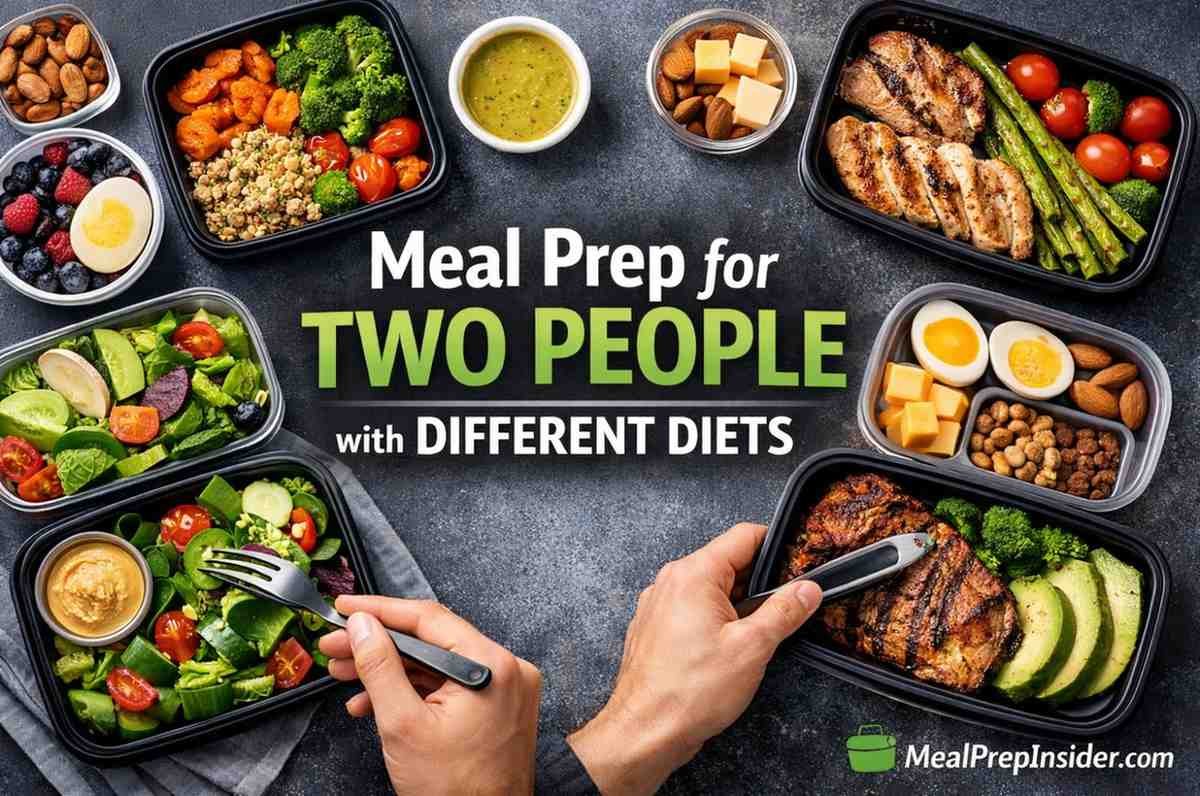
Meal prep for two people with different diets isn’t just challenging—it’s a weekly negotiation that can test even the strongest relationships.
You’re vegan. Your partner lives for steak.
Or maybe you’re keto while they can’t imagine life without pasta.
Sound familiar?
Here’s the thing: Most couples in this situation end up cooking separate meals every single night, doubling their kitchen time and tripling their stress. They watch cooking shows together but eat completely different dinners. They buy groceries that fill two carts instead of one.
But what if I told you there’s a smarter way?
What if you could prep meals for both diets simultaneously, save money, reduce food waste, and still enjoy dinner together without anyone feeling resentful or deprived?
That’s exactly what this guide will show you. No fluff. No generic advice you’ve heard a thousand times. Just real strategies that work for real couples dealing with real dietary differences.
Let’s get into it.
Understanding Why Meal Prep for Two People with Different Diets Feels Impossible
The kitchen standoff happens every Sunday afternoon in millions of American homes.
One person wants to prep grain bowls. The other wants meat and potatoes. Both end up frustrated, and by Wednesday, you’re both ordering takeout again.
The core problem isn’t the diets themselves. It’s the approach.
Most people think different diets mean completely separate meal prep sessions. That’s like saying roommates need two washing machines because they own different colored shirts.
The solution lies in strategic overlap—finding the intersection points where your diets can share ingredients, cooking methods, and prep time without either person compromising their nutritional goals.
The Foundation Strategy That Changes Everything
Here’s a framework that works regardless of which dietary combinations you’re dealing with.
Think of your meals in three components: protein, base, and toppings.
Proteins are your meat, fish, tofu, tempeh, or legumes. Bases include rice, quinoa, pasta, cauliflower rice, or greens. Toppings cover sauces, dressings, vegetables, and garnishes.
When you prep these components separately rather than complete meals, you create a mix-and-match system. Your partner assembles their plate one way. You build yours differently. Same prep session, different results.
This isn’t rocket science, but it requires a mental shift from “I’m cooking dinner” to “I’m preparing ingredients that become dinners.”
Identifying Common Ground Between Seemingly Opposite Diets
Every dietary combination has more overlap than you’d think.
Keto and plant-based? Both love vegetables, nuts, seeds, and healthy fats.
Paleo and vegetarian? Share enthusiasm for fresh produce, eggs, and minimally processed foods.
Low-carb and Mediterranean? Both emphasize lean proteins and abundant vegetables.
The mistake couples make is focusing on what divides their diets instead of what unites them. When you start with shared ingredients, you’re already halfway to a unified meal prep strategy.
Take roasted vegetables. Nearly every diet includes them. Prep three sheet pans on Sunday—Brussels sprouts, bell peppers, and zucchini—and suddenly both of you have ready-to-eat sides for the week.
Same with leafy greens, herbs, sliced vegetables, and certain sauces like tahini, pesto, or chimichurri.
Breaking Down Popular Diet Combinations
Let’s get specific about common scenarios American couples face.
Keto + Standard American Diet
The keto partner needs high fat, moderate protein, and very low carbs. The other person wants balanced meals with grains and starches.
Your prep strategy: Cook proteins together (chicken thighs, salmon, ground beef). Roast low-carb vegetables. The keto person adds extra olive oil, avocado, or cheese. The other person adds rice, potatoes, or bread.
Vegan + Omnivore
One eats no animal products. The other enjoys meat, dairy, and eggs without restrictions.
Your prep strategy: Prepare grain bases together (quinoa, brown rice, farro). Roast vegetables. Prep two protein options—marinated tofu or tempeh for the vegan, grilled chicken or fish for the omnivore. Use separate cutting boards and storage containers for the proteins.
Vegetarian + Paleo
A vegetarian avoids meat but eats dairy and eggs. Paleo eliminates grains, legumes, and dairy but includes meat.
Your prep strategy: Focus on eggs as a shared protein source. Prep abundant vegetables. Sweet potatoes work for both. The vegetarian adds cheese and legumes. The paleo person adds meat and extra vegetables.
Gluten-Free + Regular Diet
One person has celiac disease or gluten sensitivity. The other has no restrictions.
Your prep strategy: This is honestly the easiest combination. Prep naturally gluten-free bases like rice, quinoa, and potatoes. Many meals are naturally gluten-free anyway. The non-restricted person can add bread or regular pasta at serving time if desired.
Low-FODMAP + Everything Else
One person follows a low-FODMAP diet for digestive issues. The other has no dietary restrictions.
Your prep strategy: This requires more attention to detail. Prep low-FODMAP vegetables (carrots, zucchini, bell peppers) as your base vegetables. Add high-FODMAP options like onions and garlic to only one person’s portions. Use garlic-infused oil for flavor without the FODMAP content.
The Weekly Meal Prep Blueprint for Mixed-Diet Households
Sunday afternoon. Three hours. That’s all you need.
Start with a planning session—fifteen minutes max. Both people choose two dinner templates they want to eat that week. A template isn’t a specific recipe. It’s a framework.
Examples:
- Protein + roasted vegetables + grain or cauliflower rice
- Salad bowl with protein and various toppings
- Stir-fry style with vegetables and protein over a base
- Sheet pan meal with protein and vegetables
Notice these templates work for virtually any diet combination.
Next, create your shopping list based on the components you’ll need. Organize it by grocery store section to speed up shopping.
Your actual prep session follows this sequence:
Step 1: Start proteins that take the longest
Put chicken breasts in the oven. Set a slow cooker with a pot roast. Start soaking beans if needed.
Step 2: Prep vegetables while proteins cook
Wash, chop, and organize vegetables into containers. Some you’ll roast. Others stay raw for salads.
Step 3: Cook grain bases
Rice cooker, instant pot, or stovetop. Make large batches. They refrigerate beautifully.
Step 4: Prepare sauces and dressings
Blend up two or three different sauces. These add variety throughout the week without extra cooking.
Step 5: Final assembly prep
Portion out proteins. Label containers clearly. Create “grab-and-go” containers if schedules are hectic.
Smart Ingredient Choices That Serve Multiple Purposes
Some ingredients are kitchen superstars for mixed-diet households.
Eggs work for almost everyone except vegans. Scramble a dozen for quick protein additions.
Rotisserie chicken saves time. The meat-eater gets protein. Pull it apart Sunday night, store it in containers, and you’ve got protein for days.
Canned beans are underrated. Even if one person doesn’t eat them as a main protein, they add substance to salads and bowls.
Pre-washed greens eliminate a tedious task. Yes, they cost more. Your time is valuable too.
Frozen vegetables aren’t inferior. They’re picked at peak ripeness and save tremendous prep time.
Quality oils and vinegars create different flavors from the same base ingredients. Balsamic, apple cider, and red wine vinegar—each transforms a simple salad differently.
Nuts and seeds add crunch, healthy fats, and protein to nearly any meal. Toast them in bulk for better flavor.
Container Strategy and Organization
This matters more than you think.
Glass containers with locking lids prevent leaks and don’t stain. They’re microwave-safe and last for years.
Size matters. Get a variety: small for sauces and dressings, medium for single portions, large for family-style storage.
Label everything. Use masking tape and a permanent marker. Include contents and date. Future you will appreciate current you.
Designate zones in your refrigerator. Top shelf: ready-to-eat proteins. Middle shelf: cooked bases and grains. Bottom shelf: raw vegetables and salad components. Door: sauces and dressings.
Create a system both people understand. If your partner can’t find the marinated chicken, your prep session didn’t fully succeed.
Avoiding the Pitfalls That Derail Good Intentions
Even with perfect planning, certain traps catch couples off guard.
Trap #1: Overcomplicating the menu
You don’t need fifteen different recipes. Three to four templates with varied proteins and seasonings provide plenty of variety.
Trap #2: Forgetting about seasoning differences
Salt and season proteins after separation, not before. What works for one diet might not suit the other.
Trap #3: Batch cooking everything identically
Cook proteins using different methods. Bake some chicken, grill other pieces, and use a slow cooker for a third batch. Same ingredient, different textures and flavors.
Trap #4: Ignoring personal taste preferences
Different diets don’t mean taste preferences disappear. One person might hate cilantro. Don’t dump it on shared vegetables.
Trap #5: Making it all-or-nothing
You don’t have to prep every single meal. Start with dinners only. Add lunches once you’ve got a rhythm.
Trap #6: Skipping the communication step
Check in midweek. Is the food getting eaten? Does something taste off? Adjust for next week.
Budget Management for Two Different Diets
Let’s talk money because dual-diet households can rack up serious grocery bills.
Buy proteins on sale and freeze them. Chicken breast at $1.99 per pound? Buy ten pounds. Properly frozen, it lasts months.
Shop ethnic markets for better prices on grains, spices, and produce. Asian markets typically offer better deals on rice, tofu, and vegetables.
Buy generic brands for staples. Your body doesn’t know if the quinoa came in fancy packaging.
Calculate cost per serving, not cost per package. That expensive block of tempeh yields four servings, making it cheaper than it first appears.
Reduce food waste by repurposing ingredients. Leftover roasted vegetables become soup. Excess grains turn into fried rice.
Share expensive items when possible. Specialty oils, quality spices, and fancy vinegars work across most diets.
Join a warehouse club if space allows. Bulk buying saves money on frequently used items like olive oil, nuts, and certain proteins.
RELATED POST >> Easy Family Meal Prep Ideas for a Family of 4 Without Chaos
Equipment That Makes Everything Easier
You don’t need a restaurant kitchen, but certain tools dramatically reduce prep time.
A sharp chef’s knife is non-negotiable. Dull knives slow you down and increase injury risk.
Cutting boards in different colors prevent cross-contamination between animal and plant proteins.
Sheet pans—at least three. You’ll use them constantly for roasting vegetables and proteins.
An Instant Pot or quality slow cooker transforms tough cuts of meat into tender proteins while you do other tasks.
Food processor makes quick work of slicing, shredding, and chopping when you’re prepping large quantities.
A rice cooker ensures perfect grains without attention. Set it and forget it.
Quality storage containers, as mentioned earlier, prevent leaks and keep food fresh longer.
A kitchen scale helps with portion control if either diet requires specific macronutrient tracking.
Sample Weekly Meal Plans for Common Diet Pairings
Let’s make this concrete with actual weekly templates.
Keto + Plant-Based Weekly Template
| Day | Keto Person | Plant-Based Person | Shared Components |
|---|---|---|---|
| Monday | Salmon, cauliflower rice, roasted broccoli with butter | Quinoa bowl with chickpeas, roasted broccoli, tahini | Roasted broccoli |
| Tuesday | Burger patty (no bun), side salad with ranch, avocado | Lentil burger on whole grain bun, side salad with vinaigrette | Side salad base |
| Wednesday | Quinoa bowl with chickpeas, roasted broccoli, and tahini | Chicken thighs, zucchini noodles, and alfredo sauce | Roasted vegetables |
| Thursday | Pork chops, mashed cauliflower, green beans | Tofu stir-fry with brown rice and green beans | Green beans |
| Friday | Steak, butter sautéed mushrooms, Brussels sprouts | Tempeh tacos with rice, peppers, and onions | Pasta with marinara, roasted vegetables, and nutritional yeast |
Paleo + Vegetarian Weekly Template
| Day | Paleo Person | Vegetarian Person | Shared Components |
|---|---|---|---|
| Monday | Grilled chicken, sweet potato, roasted asparagus | Sweet potato with black beans, asparagus, cheese | Sweet potato, asparagus |
| Tuesday | Beef stir-fry with vegetables, no rice | Sweet potato with black beans, asparagus, and cheese | Stir-fried vegetables |
| Wednesday | Salmon, roasted Brussels sprouts, side salad | Quinoa bowl with egg, Brussels sprouts, feta | Brussels sprouts, salad |
| Thursday | Pork tenderloin, cauliflower mash, carrots | Vegetable curry with chickpeas over cauliflower rice | Roasted carrots |
| Friday | Egg fried rice with the same vegetables | Pasta with marinara, mozzarella, side salad | Marinara sauce |
Making Meals Feel Special Despite Different Requirements
Eating different things doesn’t mean eating separately.
Set the table. Sit down together. Share how your day went.
Plate food attractively. Restaurant-style presentation makes meal prep food feel more special.
Create signature sauces that each person looks forward to. “Your week” might mean peanut sauce appears. “My week” brings Chipotle lime.
Designate one meal per week where both people eat something identical. Find a recipe that works for both diets and enjoy the shared experience.
Try new restaurants together and discuss what you could recreate at home within your respective diets.
Celebrate wins. When meal prep goes smoothly, acknowledge it. When you both stuck to the plan all week, recognize that accomplishment.
Handling Social Situations and Meal Prep Fatigue
Even the best system gets exhausting sometimes.
Permit yourself to take breaks. Order takeout occasionally without guilt.
When traveling or dealing with unusual schedules, simplify rather than skip entirely. Prep just proteins and buy pre-cut vegetables.
For social events, plan. If you’re hosting, create a menu accommodating both diets. If you’re attending, eat a meal-prepped snack beforehand so you’re not starving.
Accept that some weeks won’t go perfectly. Life happens. Don’t let one imperfect week derail your entire system.
Rotate who takes the lead on meal planning. One person plans this week, the other next week. Fresh perspectives prevent menu monotony.
Advanced Strategies for Long-Term Success
Once you’ve mastered the basics, these refinements take things further.
Create a master list of successful meals. When planning gets tedious, reference what’s worked before.
Prep components ahead of prep day. Friday night, marinate proteins. Saturday morning, start slow cooker meals. Sunday becomes easier.
Use themed nights to simplify decisions. Monday is always bowl night. Wednesday is always sheet pan meals. Frameworks reduce decision fatigue.
Keep a running grocery list on your phone. When you notice you’re running low on something, add it immediately.
Photograph meals that work well. Visual references make it easier to remember successful combinations.
Join online communities for your specific diet combination. Other couples are solving the same challenges.
Experiment with new ingredients gradually. One new item per week prevents overwhelm while expanding your repertoire.
When One Person’s Diet Changes
Diets evolve. Someone goes from vegetarian to vegan. A health diagnosis requires new restrictions.
Communicate early about upcoming changes. Surprises adapt harder.
Research together. Learn about the new dietary requirements as a team rather than putting all responsibility on the person making the change.
Adjust your meal prep system gradually. Don’t overhaul everything at once.
Find new common ground. What ingredients work for this updated combination?
Be patient with yourself and each other. New systems take time to feel natural.
Frequently Asked Questions
How long does meal prep for two different diets actually take?
Most couples spend 2-3 hours on their first few sessions. With practice, this drops to 90 minutes to 2 hours. The time investment pays off through reduced weeknight cooking stress.
Can we meal prep if one person has food allergies?
Definitely. Use separate cutting boards, wash hands thoroughly between handling different ingredients, and store allergen-containing foods in clearly labeled containers. Consider the allergic person’s food as the “default,” and the other person adds their ingredients separately.
What if we have completely different schedules and can’t eat together?
The component-based system works even better for this situation. Each person assembles their meal when they’re actually eating. Everything’s ready to heat and combine.
How do we prevent meal prep food from getting boring?
Vary your proteins, rotate different sauces and seasonings, and don’t prep for more than 4-5 days at a time. The last couple of days of the week can use frozen backup meals or simple fresh preparations.
Is it cheaper to meal prep for two different diets or just cook separate meals nightly?
Meal prep typically costs 30-40% less because you reduce food waste, buy ingredients more strategically, and avoid the “I’m too tired to cook, let’s order out” trap that costs $30-50 per meal.
What happens when one person doesn’t like leftovers?
Frame it differently. These aren’t leftovers—they’re pre-made fresh meals. Proper storage, good seasoning, and varied components prevent the “leftover feeling.” Some people prefer assembling ingredients fresh each night rather than eating fully assembled meals, which the component method accommodates.
Can this work with more than two different diets in one household?
Yes, but complexity increases. Families with three or four different dietary needs should focus heavily on the component method and might need slightly longer prep sessions.
What if my partner won’t participate in meal prep?
Prep components for both diets anyway. Make it easy for them to assemble their meals. Over time, seeing the benefits often brings reluctant partners around. If not, at least your meals are handled.
How do we handle guests with yet another different diet?
The component system shines here. Lay out all your prepped ingredients buffet-style. Guests build their own plates according to their needs.
Should we prep breakfast and lunch too, or just dinner?
Start with whichever meal causes the most stress. For most couples, that’s dinner. Once dinner prep feels effortless, add another meal. Don’t try to prep everything immediately.
How long does prepped food stay fresh?
Most cooked proteins last 4-5 days refrigerated. Grains last up to a week. Raw cut vegetables last 3-5 days, depending on type. Freeze anything you won’t eat within that timeframe.
What if we’re both too tired on Sunday to prep?
Move prep day to whenever you have energy. Saturday morning works for some couples. Others split it—Wednesday evening plus Sunday afternoon. There’s no rule requiring Sunday.
The Reality Check You Need to Hear
Meal prep for two people with different diets will never be as simple as one person cooking one diet.
It requires more planning, more containers, more refrigerator space, and more initial mental energy.
But here’s what it gives you back: time together during the week, less stress, better nutrition for both people, significant money savings, and fewer arguments about what’s for dinner.
The couples who succeed don’t have perfect systems. They have workable systems they’ve customized for their specific situation.
Your first month will feel clunky. You’ll forget ingredients. You’ll prep too much of one thing and not enough of another. Some meals won’t taste great.
That’s normal. Expected, even.
By month two, you’ll find your rhythm. By month three, you won’t remember how you managed before.
The question isn’t whether this approach works—it does for thousands of couples across America. The question is whether you’re willing to invest a few weeks of experimentation to make your weeknights dramatically easier.
Getting Started This Week
Stop overthinking it.
Choose one meal template that works for both diets. Maybe it’s a build-your-own bowl situation. Maybe it’s sheet pan meals with different proteins.
This Sunday, prep just that one template for three dinners this week.
That’s it. Three dinners from one prep session.
See how it feels. Adjust what doesn’t work. Keep what does.
Next Sunday, prep that same template again if it worked, or try a different one if it didn’t.
Add a second template when you’re ready. Build gradually rather than perfectly.
The couples who try to create a complete meal prep system in week one usually quit by week three. The couples who start small and build incrementally are still meal prepping a year later.
You’re not trying to win a meal prep competition. You’re trying to make your daily life easier while respecting both people’s dietary needs.
Start small. Be patient with the process. Communicate openly when something isn’t working.
That’s the real secret to meal prep for two people with different diets: treating it as an evolving practice rather than a one-time solution you must perfect immediately.
Your Sunday afternoon is waiting. Your weeknight stress is optional.
What template will you try first?
SUGGESTED POST >> 23+ Easy Office Lunch Meal Prep Ideas that Don’t Smell