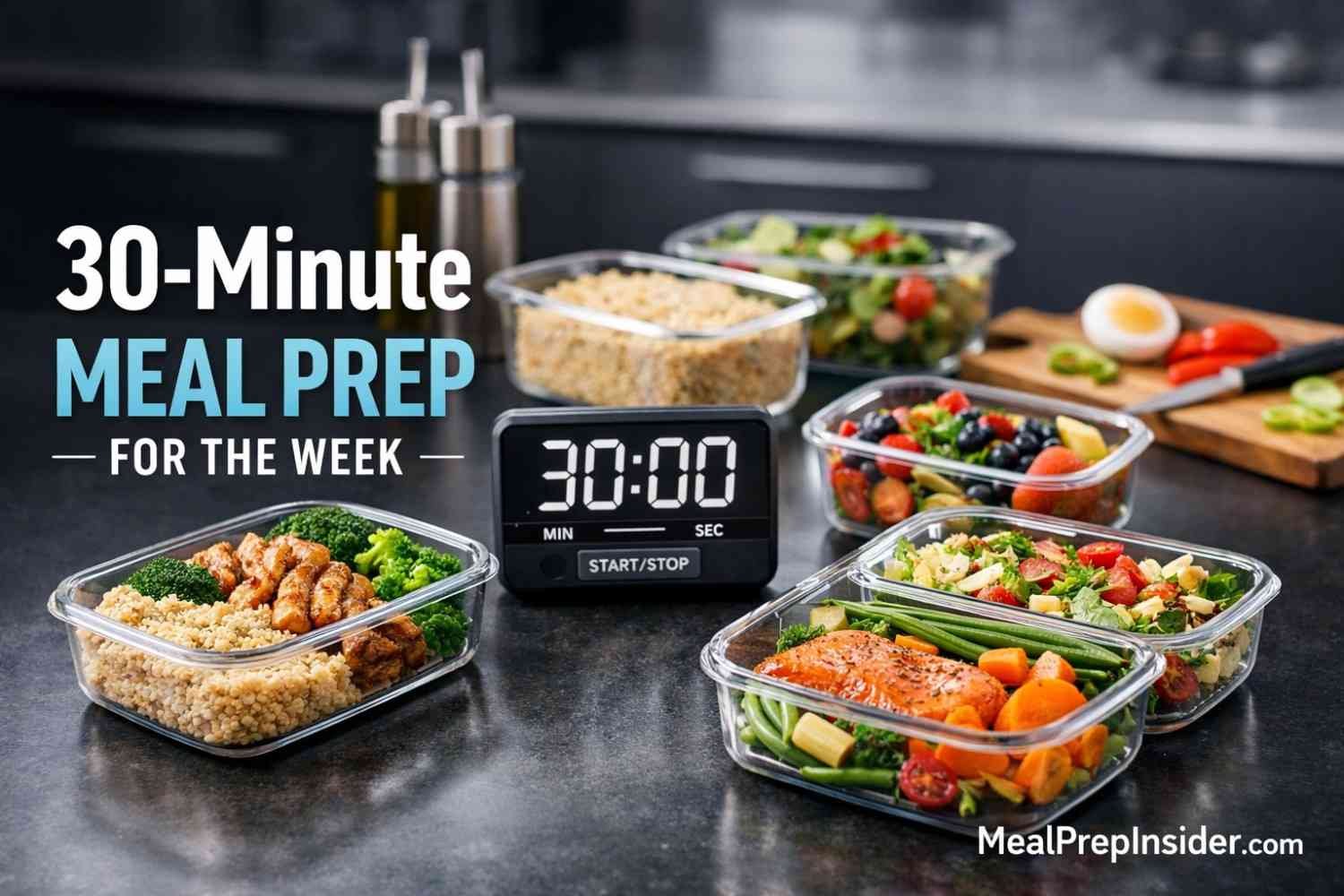
30-minute meal prep for the week changed everything for Sarah, a nurse from Portland who used to survive on drive-thru dinners and cereal eaten straight from the box. She’d come home exhausted, stare into her empty fridge, and order pizza for the third time that week. Sound familiar?
Here’s the thing: meal prepping doesn’t require spending your entire Sunday in the kitchen like some cooking show marathon. You don’t need fancy containers or chef-level skills either.
Just thirty minutes.
That’s it.
Let me show you how to make it work without losing your mind or your weekend.
Why 30-Minute Meal Prep Actually Works
The traditional meal prep advice tells you to cook everything on Sunday. Spend four hours chopping vegetables, cooking six different recipes, and washing mountains of dishes.
No wonder people quit after one week.
The 30-minute approach flips this on its head. You’re not cooking complete meals. You’re preparing components that mix and match throughout the week. Think of it as creating your own fast-food restaurant at home, except the food doesn’t leave you feeling like garbage afterward.
This method works because it respects your time and energy. You’re not committed to eating the same chicken and broccoli for five days straight. You’ve got options.
Flexibility matters more than perfection.
The Foundation: What You Really Need
Before we dive into the actual prep work, let’s talk tools. You probably already have everything in your kitchen.
Essential equipment:
- One good knife (doesn’t need to be expensive)
- Cutting board
- Sheet pan
- Large pot or skillet
- Storage containers (glass or plastic, whatever you’ve got)
That’s the list.
I’m serious. You don’t need a food processor, an Instant Pot, an air fryer, or any other gadget collecting dust on your counter. Those things are nice to have, sure. But they’re not necessary for quick meal prep.
The real secret weapon? Your oven’s timer and some strategic thinking.
The Strategy Behind Speed
Here’s where most people mess up. They try to do everything sequentially. Cook one thing, then the next, then the next.
Inefficient.
You want things happening simultaneously. While rice cooks on the stove, vegetables roast in the oven. While those cook, you’re chopping ingredients for salads or washing produce.
Think like a restaurant line cook. Multiple things are happening at once, all timed to finish within that 30-minute window.
Let me walk you through a real example that works for actual humans with jobs and lives.
Your First 30-Minute Meal Prep Session
Set a timer. Put on music or a podcast. Pour yourself something to drink.
Ready?
Minutes 0-5: The Setup
Preheat your oven to 425°F.
Pull out everything you’ll need. This includes your chosen protein (chicken thighs, ground turkey, tofu, whatever), vegetables, grains, and storage containers.
Wash your hands. Clear your workspace.
This prep time matters more than you think. When you’re scrambling to find the right container lid twelve minutes in, you’re losing momentum.
Minutes 5-10: The Protein
Season your protein. Salt, pepper, maybe some garlic powder. Keep it simple.
If you’re using chicken thighs or breasts, cut them into smaller pieces. They cook faster that way. Ground meat is cooked in a skillet on medium heat.
For plant-based folks, cube your tofu or open those cans of beans.
Get the protein cooking or in the oven. Set a timer for when you need to check it.
Minutes 10-15: The Vegetables
Grab whatever vegetables you bought. Don’t overthink this part.
Chop them into similar-sized pieces. Toss with olive oil, salt, and pepper. Spread on a sheet pan.
Into the oven they go.
Popular options that work great:
- Bell peppers
- Broccoli
- Cauliflower
- Sweet potatoes
- Zucchini
- Brussels sprouts
- Carrots
- Onions
Mix and match based on what was on sale or what you actually enjoy eating.
Minutes 15-20: The Grains or Base
Get your grains going if you haven’t already. Rice takes longer, so maybe you started it earlier. Quinoa cooks in about 15 minutes.
Or skip grains entirely. Use pre-washed salad greens as your base. Buy pre-cooked rice or quinoa from the store. This isn’t cheating—it’s being smart with your time.
While that’s happening, check on your protein. Flip it if needed. Check the vegetables.
Minutes 20-25: The Assembly Prep
Everything’s cooking. Now you’re getting containers ready.
Think about how you’ll combine these components throughout the week. Maybe you make a few combinations now, or maybe you just store everything separately and mix it daily.
Both approaches work.
I prefer storing components separately. Keeps things from getting soggy and gives me more flexibility during the week.
Minutes 25-30: The Final Push
Everything comes out of the oven or off the stove.
Let things cool for a minute while you do a quick cleanup. Rinse that cutting board. Wipe down the counter.
Then pack everything up. Label containers if you’re organized like that. Stick them in the fridge.
Done.
You just prepped the foundation for an entire week of meals in half an hour.
The Mix-and-Match Method That Changes Everything
This is where the magic happens. You’ve got proteins, vegetables, and bases. Now you turn them into different meals throughout the week without eating the same thing repeatedly.
Monday: Chicken + roasted vegetables + rice in a bowl with sriracha mayo
Tuesday: Same chicken chopped into a salad with different vegetables and vinaigrette
Wednesday: Vegetables and quinoa stuffed into a whole wheat tortilla with cheese
Thursday: Rice bowl with different sauce (maybe teriyaki or peanut sauce)
Friday: Whatever’s left becomes fried rice or a scramble with eggs
See how that works? Same components, completely different eating experience.
Pitfalls People Run Into (And How to Avoid Them)
Buying ingredients you won’t actually eat
That kale looked beautiful at the farmers’ market. But if you hate kale, it’ll end up as compost in your crisper drawer.
Stick with vegetables you genuinely enjoy. Revolutionary concept, right?
Making the plan too complicated
You saw an influencer make seven elaborate meals with garnishes and three different sauces each.
That’s content, not real life.
Your meal prep should be simpler than your weeknight cooking, not more complex.
Forgetting about sauces and seasonings
Plain chicken and rice get old by Tuesday.
Keep various sauces on hand. Hot sauce, soy sauce, salsa, pesto, tahini, whatever speaks to your taste buds. They transform the same basic components into different flavor profiles.
Not considering your actual schedule
You meal prepped on Sunday, but you’ve got dinner plans on Tuesday, lunch meetings on Wednesday and Thursday, and you’re traveling on Friday.
That’s three days of meals going to waste.
Prep for your real life, not an imaginary perfect week.
Speed Boosters: Cutting Time Even Further
Once you’ve got the basic routine down, these tricks can shave off additional minutes.
Buy pre-cut vegetables sometimes
Yes, they cost more. But if the choice is between pre-cut vegetables and ordering takeout, the pre-cut vegetables are still cheaper.
Your time has value, too.
Use a rice cooker set on a timer
Start the rice before you even begin prepping. It’ll be ready when you need it.
Cook proteins you can use multiple ways
Ground turkey works in tacos, pasta sauce, rice bowls, salads, and scrambles. One protein, infinite possibilities.
Embrace rotisserie chicken
The grocery store already cooked it for you. Use it. No judgment here.
Keep your recipes to five ingredients or fewer
More ingredients mean more prep, more shopping, more decisions. Simple food can still taste fantastic.
What a Full Week Looks Like in Real Time
Let me paint you a picture of how this plays out practically.
Sunday evening, you spend 30 minutes prepping. You make:
- Two pounds of ground turkey seasoned with cumin, chili powder, and garlic
- Sheet pan of roasted vegetables (peppers, onions, sweet potatoes)
- Pot of brown rice
- Quick-pickled red onions in a jar
- Washed and chopped romaine lettuce
Monday lunch: Turkey taco bowl with rice, vegetables, lettuce, salsa, and cheese
Monday dinner: Leftover turkey mixed with pasta and marinara sauce (new ingredients)
Tuesday lunch: Rice bowl with vegetables, fried egg on top, and hot sauce
Tuesday dinner: Turkey and vegetable quesadillas
Wednesday lunch: Salad with turkey, pickled onions, and whatever fresh vegetables you have
Wednesday dinner: Eating out with friends (because life happens)
Thursday lunch: Turkey and rice stuffed peppers (using leftover components)
Thursday dinner: Quick stir-fry using the remaining vegetables with fresh shrimp (new protein)
Friday: Use up whatever’s left or embrace a well-deserved night off
Notice how you’re not eating identical meals? You’re creating variations using the same base components plus a few fresh additions throughout the week.
The Breakfast and Lunch Strategy
Most 30-minute meal prep focuses on dinners. But honestly, breakfast and lunch are where you’ll save the most money and make the healthiest choices.
Breakfast solutions that work:
- Overnight oats (literally just oats, milk, and whatever you want to add)
- Hard-boiled eggs made in batches
- Breakfast burritos are wrapped individually and frozen
- Greek yogurt with pre-portioned berries and granola
- Smoothie freezer packs (blend and go)
Lunch combinations that travel well:
- Grain bowls with protein and vegetables
- Mason jar salads (dressing on bottom, sturdy vegetables next, greens on top)
- Wraps and sandwiches made fresh each morning using prepped components
- Soup in a thermos with crusty bread
- Bento-style boxes with different components
The key is portability and food safety. If your workplace doesn’t have a microwave or refrigerator, plan accordingly.
RELATED POST >> Anti-Inflammatory Meal Prep for the Week: 7-Day Best Options
Adjusting for Different Dietary Needs
The beauty of component-based meal prep is how easily it adapts.
Vegetarian/Vegan:
Swap animal proteins for:
- Seasoned chickpeas
- Baked tofu
- Lentils
- Black beans
- Tempeh
Everything else stays the same.
Low-carb/Keto:
Skip the grains. Double up on vegetables and healthy fats. Add more cheese, avocado, nuts, and olive oil to your components.
Gluten-free:
Use rice, quinoa, or potatoes as your base. Check sauce labels. Otherwise, you’re golden.
High-protein:
Prep multiple proteins. Add hard-boiled eggs to everything. Greek yogurt becomes a snack staple. Incorporate nuts and seeds.
See how flexible this is? The method stays the same regardless of your dietary preferences.
Containers, Storage, and Food Safety Reality
Let’s talk about the practical stuff nobody mentions.
How long does meal-prepped food actually last?
Cooked proteins: 3-4 days maximum in the refrigerator
Cooked grains: 4-5 days
Roasted vegetables: 4-5 days
Fresh cut vegetables: 2-3 days
Leafy greens: Best used within 2 days
This is why 30-minute meal prep works better than massive Sunday sessions. You’re not trying to make food last an entire week. You’re prepping for 3-4 days, maybe doing a quick 15-minute refresh mid-week if needed.
Container recommendations:
Glass containers don’t stain or retain smells. They’re heavier and more expensive.
Plastic containers are lighter and cheaper. They might need replacing more often.
Honestly, use what you have. Don’t go buy a whole new container system unless your current one literally doesn’t have lids.
Food safety basics:
Let hot food cool before sealing containers. Otherwise, you create a bacteria playground.
Don’t leave food at room temperature for more than two hours.
When in doubt, throw it out. Food poisoning isn’t worth the $8 you’ll save.
When Life Gets in the Way
Some weeks, 30 minutes feels impossible.
You worked late. The kids had meltdowns. You got sick. The dishwasher broke, and your kitchen’s a disaster.
Here’s your backup plan:
10-minute emergency prep:
- Buy pre-cooked rice or quinoa
- Grab a rotisserie chicken
- Wash some lettuce and cherry tomatoes
- Buy pre-cut vegetables
Combine those throughout the week. Is it ideal? No. Will it keep you from living on pizza and regret? Absolutely.
The freezer strategy:
When you do have time for that 30-minute session, make it a 60-minute session. Freeze half.
In the future, you will be grateful.
Cooked grains freeze beautifully. So do most proteins. Cooked beans. Soups. Sauces.
Your freezer is a time machine that brings your past effort into your overwhelmed present.
Upgrading Your 30-Minute System
Once you’ve done this a few times, you might want to level up.
Theme weeks make shopping easier:
- Mexican week: beans, rice, peppers, salsa, tortillas
- Asian-inspired week: rice, stir-fry vegetables, teriyaki and soy sauce, eggs
- Mediterranean week: chickpeas, quinoa, cucumbers, tomatoes, feta, olives
- Comfort food week: potatoes, ground beef, cheese, frozen vegetables
You’re not locked into eating the same cuisine every meal. But shopping for one theme streamlines your grocery trip.
Batch cooking specific components:
Some weeks, spend your 30 minutes making a huge batch of one thing:
- Shredded chicken that becomes tacos, soup, salads, and sandwiches
- A massive pot of beans for bowls, salads, and dips
- Roasted vegetables in huge quantities
- Hard-boiled eggs (a dozen or two)
Store everything, then mix and match with fresh elements throughout the week.
The sauce game changer:
Seriously, invest in good sauces. Make them yourself or buy quality ones.
The same chicken and rice tastes completely different with:
- Peanut sauce
- Buffalo sauce
- Teriyaki
- Chimichurri
- Tzatziki
- Curry sauce
Variety comes from seasoning, not from ingredients.
Budget Considerations That Matter
Meal prep saves money, but only if you’re strategic.
Shop your pantry first
You probably already own half of what you need. Use the pasta, rice, canned beans, and frozen vegetables sitting in your kitchen before buying new ingredients.
Build from sale items
Check the weekly ads. Chicken on sale? That’s your protein this week. Peppers buy-one-get-one? Roast them all.
Let prices guide your planning, not the other way around.
Calculate your actual savings
A $40 grocery trip for meal prep components seems expensive until you realize it’s replacing:
- $12 lunch salads (x5 = $60)
- $15 takeout dinners (x3 = $45)
- $8 breakfast sandwiches (x3 = $24)
That’s $129 in potential spending replaced by $40 in groceries.
The math matters.
Reduce waste strategically
The vegetables you prep and eat are cheaper than the vegetables you buy with good intentions, then throw away when they rot.
Prep what you’ll actually use. It’s okay to buy smaller quantities.
Troubleshooting Your Meal Prep Problems
Everything tastes boring by Wednesday
You need better sauces and seasonings. Also, try adding one fresh element to each meal. Fresh herbs, a squeeze of lime, sliced avocado, or crunchy nuts completely change the eating experience.
Food gets soggy or gross
Store wet and dry components separately. Add dressing right before eating. Keep crispy elements (nuts, croutons, chips) in separate containers.
You run out of time constantly
Reduce your expectations. Prep two components instead of four. Buy one pre-made element. Something is better than nothing.
Your family won’t eat what you prepped
Let them suffer. Just kidding (kind of). Get input before shopping. Prep components everyone tolerates, then let people customize their own plates. You’re not a short-order cook, but a little flexibility helps.
You forget to actually eat the food you prepped
Put it at eye level in the fridge. Set reminders on your phone. Pack your lunch the night before. Make it easier to eat the prepped food than to order something else.
FAQ Section
How long does 30-minute meal prep actually take once you get used to it?
Honestly, with practice, you might get it down to 20-25 minutes. The first few times might stretch to 40 minutes as you figure out your rhythm. That’s normal. You’re learning a new skill.
Can I meal prep if I live alone?
Absolutely. In fact, it’s often easier because you’re only planning for one person’s preferences. Cut recipes in half or freeze portions for variety later.
What if I don’t have 30 minutes all at once?
Split it up. Prep vegetables in the morning, cook protein after work. Or do 15 minutes on Sunday and 15 minutes on Wednesday. The method adapts to your schedule.
Do I need to prep every single week?
No. Some weeks you’ll have more dinners out, more leftovers, or just need a break. This is a tool, not a religion. Use it when it serves you.
What about snacks?
Wash and cut fruits and vegetables. Portion nuts into small containers. Make a batch of energy balls or granola. The same component principle applies.
Can I meal prep if I’m feeding a family?
Yes, just scale up quantities. Involve kids in age-appropriate tasks. They’re more likely to eat food they helped prepare. Plus, you’re teaching them valuable skills.
How do I prevent freezer burn?
Remove as much air as possible from containers or bags. Use freezer-specific storage bags. Label everything with dates. Use frozen items within 2-3 months for best quality.
Is meal prep safe during pregnancy?
Yes, but be extra cautious about food safety. Follow storage guidelines strictly. Reheat everything to proper temperatures. Avoid high-mercury fish and unpasteurized products. When in doubt, ask your healthcare provider.
What if I hate cooking?
The 30-minute method minimizes actual cooking time. Also, consider it an investment in your health and budget rather than a hobby. You don’t have to love it to benefit from it.
Can I meal prep for weight loss?
Meal prep helps with portion control and avoiding impulsive food choices. But weight loss depends on what and how much you eat, not just on it being prepped. Control portions, include plenty of vegetables, and watch your overall calorie intake.
The Bigger Picture Nobody Talks About
Here’s the truth about meal prep that goes beyond the food.
It’s about reclaiming control.
When you know there’s food at home, you’re not at the mercy of your hunger, your schedule, or your exhaustion. You’ve created options for yourself.
That’s powerful.
The money you save matters. Better nutrition matters. But the mental freedom of not having to make decisions when you’re already depleted? That might matter most.
Decision fatigue is real. By making food choices once during your 30-minute prep session, you eliminate dozens of small decisions throughout the week.
Your brain thanks you.
Getting Started This Week
Stop overthinking this.
Here’s your assignment: Pick one day this week. Block off 30 minutes. Choose one protein, two vegetables, and one grain.
That’s it.
Don’t worry about perfect containers or Instagram-worthy arrangements. Just cook some food and put it in whatever containers you own.
See how it feels. Notice whether having prepared food in your fridge changes your week.
Start small. Build from there.
The person who preps imperfectly every week gets better results than the person who plans the perfect system but never starts.
You’ve got this.
Your 30 minutes might look different than mine. Your components might be completely different. Your schedule and preferences are unique to you.
That’s exactly as it should be.
The goal isn’t to follow someone else’s meal prep formula. It’s to create a sustainable system that actually works for your real life.
Thirty minutes a week.
That’s the investment between constant food stress and having your meals handled.
Which version of your week do you want?
The choice is yours, and the timer starts whenever you’re ready.
SUGGESTED POST >> Best Cheap Meal Prep Ideas Under $50: Easy & Healthy