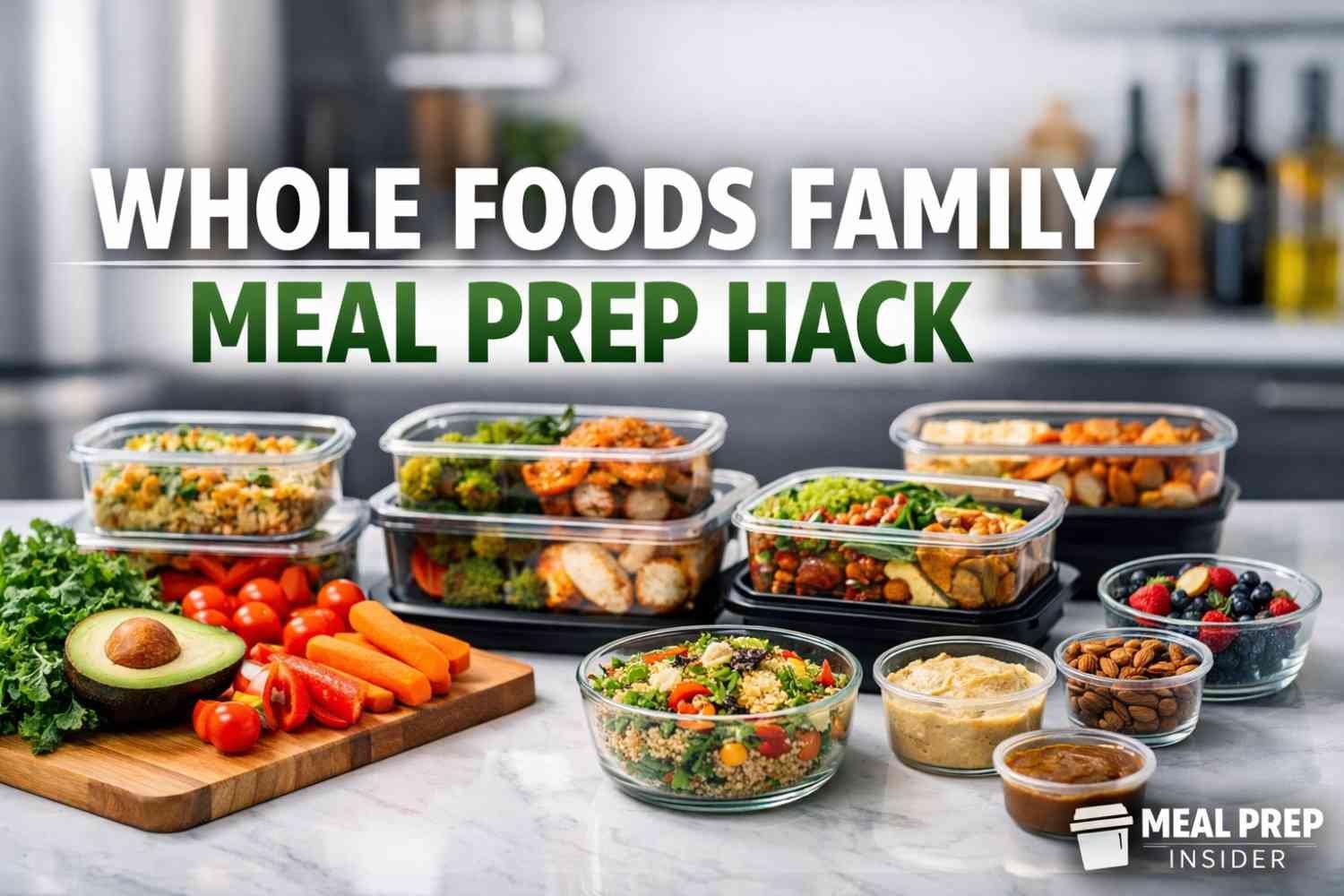
Unlock the viral Whole Foods family meal prep hack: Build your own $35 customizable entrée + two sides to feed four—perfect for easy, healthy weekly lunches or dinners with minimal effort and fresh ingredients.
Why Whole Foods Makes Sense for Family Meal Prep
Most people hear “Whole Foods” and immediately think expensive. And yeah, it can be — if you shop without a plan. But if you know what you’re doing, Whole Foods is actually one of the smarter places to meal prep for a family.
Here’s why.
The store does a lot of the work for you. Pre-cut vegetables. Rotisserie chickens that are actually seasoned well. Bulk bins with exactly the amount of grains or nuts you need. A hot bar for those nights when cooking isn’t happening. Whole Foods isn’t just a grocery store. It’s a meal prep infrastructure — if you treat it like one.
This post is for families who are tired of scrambling for dinner ideas mid-week. Who wastes too much food? Who spends money without thinking and then wonders where it went? This is a practical, no-nonsense guide to using Whole Foods intentionally for weekly family meal prep.
Start With a Realistic Weekly Meal Plan
Before you even pull into the parking lot, you need a plan. Not a perfect one. A realistic one.
Think about your week. How many nights will everyone actually sit down together? Which nights are chaotic — sports, late meetings, homework meltdowns? Those nights need either a slow cooker meal or something that takes under 20 minutes to reheat.
A simple framework that works for most families:
- 2 protein-heavy dinners — think roasted chicken thighs, sheet pan salmon, or beef stir fry
- 1 pasta or grain bowl night — easier on the budget, filling, adaptable for picky eaters
- 1 soup or stew — makes great leftovers, stretches well
- 1 “clean out the fridge” night — omelets, grain bowls, quesadillas using whatever’s left
- Lunches — built from dinner leftovers or simply assembled meals
- Breakfasts — overnight oats, egg muffins, or fruit and yogurt
That’s it. You don’t need to plan 21 separate meals. That’s how people burn out and give up by Tuesday.
Navigating Whole Foods Without Overspending
Whole Foods has a reputation. But the price gap between Whole Foods and conventional grocery stores has narrowed in several categories — especially since Amazon acquired the brand. Knowing where to spend and where to save inside the store is the real skill.
Spend here:
- 365 by Whole Foods brand products (store brand, solid quality, much cheaper)
- Rotisserie chicken — usually $9–$11, and it feeds a family for two meals
- Bulk section — buy only what you need, no waste
- Frozen vegetables — often better quality than fresh and far cheaper
- Canned goods — 365 brand canned tomatoes, beans, and lentils are reasonably priced
Be more careful here:
- Specialty cheeses (beautiful but not a meal prep necessity)
- Pre-marinated meats (you’re paying for convenience, you can do it yourself in 5 minutes)
- Fancy snack items near the checkout
- Small bottles of olive oil or spices, when you can buy larger sizes
The 365 store brand is seriously underrated. Whole Foods stocks it across almost every category — pasta, olive oil, almond butter, canned beans, frozen veggies, eggs, butter, chips, and crackers. If you’re not buying the 365 brand, you’re leaving money on the table.
Also, check the Whole Foods app before you go. They run rotating deals, and Prime members get an extra 10% off select sale items. That adds up over a month.
The Whole Foods Meal Prep Shopping List (Family of 4)
Here’s a practical, repeatable shopping framework. Adjust quantities based on your family’s appetite and the number of meals you’re prepping.
| Category | Items | Estimated Cost |
|---|---|---|
| Protein | Rotisserie chicken (1–2), ground beef or turkey (2 lbs), canned tuna or salmon (4 cans) | $30–$40 |
| Grains | Brown rice, quinoa, whole wheat pasta, oats (bulk or 365 brand) | $10–$15 |
| Vegetables | Broccoli, spinach, bell peppers, zucchini, sweet potatoes, frozen peas | $18–$25 |
| Legumes | Black beans, chickpeas, lentils (canned or dry) | $6–$10 |
| Dairy/Eggs | A dozen eggs (365 brand), Greek yogurt, shredded cheese | $12–$16 |
| Pantry/Staples | Olive oil, diced tomatoes, chicken broth, garlic, onions | $10–$14 |
| Fruit | Bananas, apples, frozen berries (for smoothies or oatmeal) | $8–$12 |
| Total | ~$94–$132 |
That’s a full week of real meals for a family of four. Not snacks, not supplements, not specialty items. Real, whole food cooking. Most families overspend not because Whole Foods is too expensive, but because they’re buying without a list.
The Sunday Prep Session: A Step-by-Step Breakdown
You don’t need four hours. Two to two-and-a-half hours on Sunday gets the job done if you’re strategic about it.
First 20 minutes — Unpack and assess
Get everything out. Wash produce. Preheat your oven to 400°F. Put a big pot of water on the stove for grains. While that’s happening, pull apart the rotisserie chicken if you bought one. Separate it into white and dark meat. Store in separate containers. That chicken is now three meals — chicken tacos, chicken grain bowls, and chicken soup.
Next 30 minutes — Roast your vegetables
Sheet pan roasting is the most efficient prep move you can make. Toss broccoli, sweet potatoes, bell peppers, and zucchini in olive oil, salt, pepper, and garlic powder. Spread across two sheet pans. Roast at 400°F for 25–30 minutes. Done. Roasted vegetables work in everything — bowls, wraps, pasta, eggs.
While vegetables roast — Cook your grains
Cook a big batch of brown rice or quinoa. Both hold up well in the fridge for 5 days. Quinoa is faster (about 15 minutes). Brown rice takes 40–45 minutes, but you can set it and forget it. Either way, cook more than you think you need.
Next 30 minutes — Your main protein
If you didn’t buy a rotisserie chicken, now’s when you cook your proteins. Ground beef or turkey goes fast — season it simply with cumin, garlic, salt, and pepper. It works in tacos, rice bowls, pasta sauce, or stuffed peppers. If you’re making a soup or stew, get it started now so it simmers while you do other things.
Final 30 minutes — Breakfast and lunch prep
- Make overnight oats: oats, milk or oat milk, chia seeds, honey, frozen berries. Five mason jars. Done for the week.
- Egg muffins: beat 8–10 eggs, add diced vegetables and cheese, and pour into a greased muffin tin. Bake at 350°F for 18–20 minutes. Makes 10–12 muffins. Easy to grab in the morning.
- Portion out snacks — cut fruit, portion nuts from the bulk section, and divide Greek yogurt into individual containers.
Last 10 minutes — Label and store
This is the part people skip. Don’t skip it. Label everything with its type and when it was made. Your future Tuesday-night self will thank you.
SEE RELATED POST >> Healthy Family Meal Prep Ideas for the Week: Budget-Friendly
Building Meals from Your Prepped Ingredients
The whole point of prep is flexibility. You’re not cooking the same thing five days in a row. You’re building different combinations from the same base ingredients.
Here’s how one week can look:
Monday — Chicken grain bowls, quinoa + roasted vegetables + pulled rotisserie chicken + tahini drizzle + lemon. 15 minutes.
Tuesday — Ground beef tacos, tortillas (Whole Foods has great ones) + seasoned ground beef + shredded cheese + Greek yogurt as sour cream substitute + avocado. Under 20 minutes.
Wednesday — Lentil soup. If you started a batch on Sunday, this is just reheating. Add some broth, maybe some spinach, and crusty bread from the Whole Foods bakery.
Thursday — Pasta night: Whole-wheat pasta + olive oil + garlic + roasted vegetables + Parmesan + a fried egg on top, if you want it. Simple. Kids eat it. Adults eat it. Everyone’s happy.
Friday — Clean out bowls. Whatever’s left. Grains, vegetables, beans, and a protein. A fried egg or some hot sauce. This is often the most creative and satisfying meal of the week.
Whole Foods Shortcuts That Actually Save Time
Whole Foods has shortcuts built into it that most people ignore.
The hot bar and salad bar — Not just for lunches out. The hot bar is priced by weight, and on nights when you’re exhausted, grabbing some roasted vegetables or grilled chicken from the hot bar to supplement your meal is faster and more nutritious than ordering takeout. Less expensive, too.
Pre-cut vegetables — Yes, they cost more per pound than whole vegetables. But if the alternative is letting whole vegetables rot in your fridge because you didn’t have time to chop them, the pre-cut version actually saves money. Be real about how much time you actually have.
Frozen fish and seafood — Whole Foods has a solid frozen seafood section. Frozen wild salmon, shrimp, and cod — all good for quick weeknight dinners. Pull them out of the freezer in the morning, and they’re ready to cook by dinner.
Prepared grains and legumes — Whole Foods carries pre-cooked lentils, pre-cooked quinoa, and other ready-to-eat grains in the refrigerated section. They’re more expensive than cooking from scratch, but they’re a genuine time-saver on weeks when Sunday prep didn’t happen.
Bakery bread and rolls — Fresh, no preservatives, satisfying. A loaf of good sourdough or whole-wheat bread turns a simple soup or salad into a meal.
Storage Tips That Keep Food Fresh All Week
Good containers matter. You don’t need anything fancy. You do need things that seal properly.
- Glass containers are better for hot food and don’t absorb smells. Worth the investment.
- Mason jars are perfect for overnight oats, soups, smoothie ingredients, and snacks.
- Stackable containers of the same size make refrigerator organization so much easier.
- Produce bags or beeswax wraps help cut vegetables stay fresh longer.
Some storage timelines to keep in mind:
| Food | Fridge Life | Notes |
|---|---|---|
| Cooked grains | 5 days | Keep covered, reheat with a splash of water |
| Roasted vegetables | 4–5 days | Best reheated in oven or skillet, not microwave |
| Cooked chicken | 3–4 days | Keep separate from bones |
| Cooked ground meat | 3–4 days | Freeze half if making a large batch |
| Egg muffins | 5 days | Can freeze, reheat in microwave for 60 seconds |
| Overnight oats | 4–5 days | Add fresh fruit day-of |
| Soups and stews | 5 days | Freeze well, always a good idea to make a double batch |
The biggest mistake families make is prepping food and then forgetting what they have. Put containers at eye level. If it’s visible, it gets eaten.
How to Adapt This for Picky Eaters
Every family has at least one. The kid who won’t eat anything green. The spouse who “doesn’t like” quinoa (but somehow eats it when it’s in something). The toddler who happily ate sweet potatoes last week now refuses.
Here’s the honest truth: you can’t force people to eat what they don’t want to eat. But you can build flexibility into your prep.
Component-style meals work best. Instead of assembling everyone’s bowl for them, put all the components on the counter and let people build their own. Kids who reject “chicken rice bowls” often choose the same ingredients when deciding what to put in their bowls.
Keep one safe protein separate. If your kid will reliably eat plain grilled chicken and nothing else, keep some plain grilled chicken in the fridge. Don’t season it the same way you do for the adults. A little accommodation goes a long way.
Disguise vegetables in sauces and soups. Spinach disappears into pasta sauce. Cauliflower blends into creamy soups. Zucchini in muffins is practically invisible. This isn’t deception — it’s just cooking.
Let kids help. Kids who help prep meals are statistically more likely to eat them. Even small tasks — washing vegetables, stirring oats, choosing toppings — create buy-in. Whole Foods is also a genuinely interesting store for curious kids. Make the shopping trip part of the experience.
The Budget Reality Check
Let’s talk numbers honestly.
Whole Foods isn’t the cheapest option for every item. Conventional grocery stores will beat it on things like bread, cereal, juice, and processed snacks. But for the whole foods, minimally processed ingredients that make up a good meal prep — produce, bulk grains, eggs, legumes — the price difference isn’t as dramatic as people assume.
A full week of family meal prep at Whole Foods, using the 365 brand and focusing on whole ingredients, typically runs $90–$140 for a family of four. That includes dinners, lunches, and breakfasts. Compare that to the average American family’s food spending — often over $1,000/month —, and you start to see how intentional meal prep at Whole Foods can actually reduce your monthly food bill, not inflate it.
The key is to go in with a list and not deviate from it significantly. Every impulse purchase is just a small hole in the budget. Specialty vinegar you don’t need. The fancy granola with the good packaging. The prepared meal for tonight because you’re hungry while shopping. Eat before you go. Stick to the list.
Frequently Asked Questions
Is Whole Foods actually affordable for family meal prep? It can be, if you shop strategically. Stick to the 365 brand, use the bulk bins, buy frozen produce, and plan your meals before you go. Families who shop with a list and focus on whole ingredients typically spend $90–$140/week, which is reasonable for the quality you’re getting.
How many hours does family meal prep actually take? Realistically, 2–2.5 hours on a Sunday covers a full week of dinners, lunches, and breakfasts for a family of four. The key is doing multiple things at once — roasting vegetables while grains cook, while egg muffins bake.
What if I don’t have time to prep on Sundays? Even 45 minutes of partial prep makes a difference. Cook one batch of grains. Chop your vegetables. Hard-boil some eggs. You don’t have to do everything to benefit from doing something.
What are the best things to buy at Whole Foods for meal prep? Rotisserie chicken, bulk grains (quinoa, oats, rice), 365 brand canned beans and tomatoes, frozen vegetables, eggs, sweet potatoes, and Greek yogurt. These items are versatile, nutritious, and reasonably priced.
Can I meal prep at Whole Foods on a tight budget? Yes. Focus on plant-based proteins (beans, lentils, chickpeas), which are very cheap, especially when purchased in bulk. Frozen vegetables over fresh. 365 brand everything. Skip the specialty items entirely. A plant-forward meal prep week can come in under $80 for a family of four.
Does Whole Foods have good options for families with picky eaters? Yes. The variety of proteins, the quality of ingredients, and the store’s range of simple, recognizable foods actually work well for families with picky eaters. Component-style meal prep — where everyone assembles their own plate — is especially effective with kids.
How do I avoid wasting food with meal prep? Plan meals that share ingredients. Use leftover proteins in different ways across the week. Check your fridge before you shop so you don’t double up. Label everything. And do a mid-week check to see what needs to be used first.
Whole Foods Family Meal Prep: Final Thoughts
Meal prep isn’t a lifestyle aesthetic. It’s not about perfectly photographed mason jars or color-coded containers. It’s about having real food available for real people on real weekdays when nobody has time or energy to cook from scratch.
Whole Foods, used intentionally, is genuinely one of the better stores for this. The quality is there. The variety is there. The shortcuts — rotisserie chickens, bulk bins, pre-cut produce, frozen seafood — are all built in. You just have to shop with a plan.
Two hours on Sunday. A sensible list. The 365 brand. And permission to stop treating dinner like a performance.
That’s the hack for the Whole Foods Family Meal Prep guide.
SUGGESTED POST >> How to Meal Prep Sweet Potatoes for the Week: Expert Guide