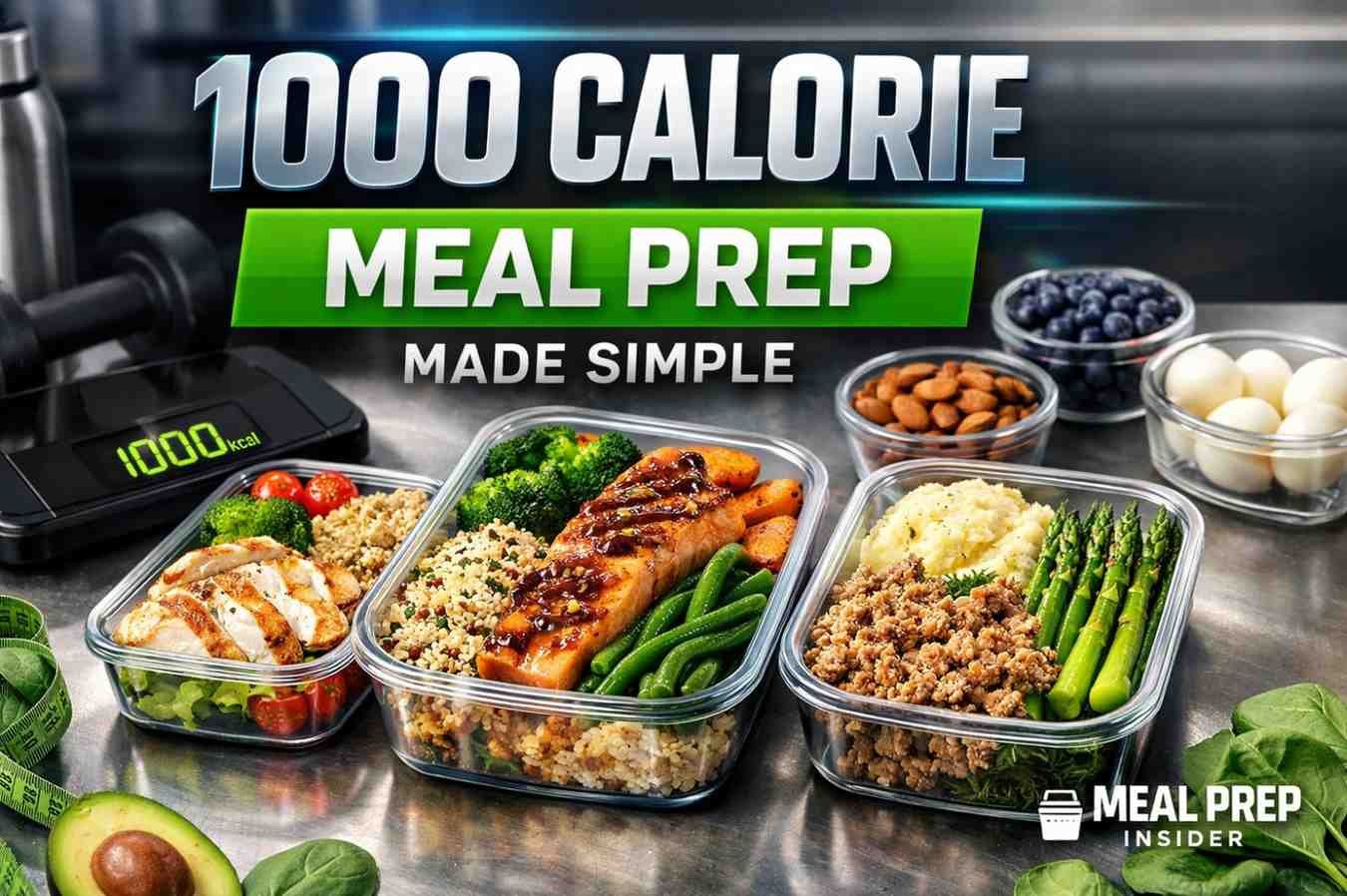
1000 Calorie Meal Prep: Learn how to meal prep 1000 calories the smart way — real food, practical portions, and zero guesswork. Built for busy Americans who actually want results.
1000 Calorie Meal Prep: The No-Nonsense Guide for Real Results
You’ve probably seen the Instagram meal preps. Seven identical containers are lined up on a counter. Everything looks perfect. Nobody eats like that.
Real meal prep is messier. It’s also more effective when you actually stick to it. And if you’re trying to hit a specific calorie target — say, 1,000 calories — the game changes. You can’t just throw stuff in a pan and hope for the best. You need a plan.
This guide is that plan.
Whether you’re cutting calories under medical supervision, following a very low-calorie diet (VLCD), or prepping a single controlled meal from a larger daily intake, this is your roadmap. We’ll cover what to eat, how to structure it, what the numbers actually look like, and how to prep it without spending your entire Sunday in the kitchen.
Let’s get into it.
First, Let’s Be Clear About What 1,000 Calories Means
One thousand calories a day is low. For most adults in the U.S., the recommended daily intake ranges from 1,600 to 2,400 calories depending on age, sex, and activity level. So 1,000 calories represents a significant deficit.
That’s not a bad thing if it’s intentional and informed. It’s a very bad thing if you’re just winging it.
This guide does not replace medical advice. If you’re doing a full 1,000-calorie diet long-term, talk to a doctor or registered dietitian first. That said, many people use 1,000-calorie meal prep as part of a structured plan — one controlled meal within a larger day, a short-term jumpstart, or a medically supervised approach.
Whatever your situation, the nutritional principles here are solid.
Why Meal Prep Changes Everything at This Calorie Level
Here’s the truth about low-calorie eating: hunger wins when you’re unprepared.
If you don’t have your food ready, you’ll reach for something convenient. Convenient food is almost never 1,000 calories of balanced nutrition. It’s a bag of chips, fast food, or skipping meals entirely — none of which do what you’re going for.
Meal prepping at this calorie level is less about saving time and more about staying in control. When the food is already made, portioned, and sitting in your fridge, the decision is already made for you.
That’s the whole trick.
The Building Blocks of a 1,000-Calorie Meal Prep
You’re working with limited calories. Every single one has to count. That means prioritizing:
- Protein — keeps you full, preserves muscle mass during a deficit
- Fiber — slows digestion, reduces hunger spikes
- Micronutrients — vitamins and minerals your body still needs even when eating less
- Volume — foods that take up space so you don’t feel like you’re starving
Here’s a rough macro target that works well for a 1,000-calorie day:
| Macro | Target | Why It Matters |
|---|---|---|
| Protein | 80–120g | Muscle preservation, satiety |
| Carbohydrates | 80–120g | Energy, fiber source |
| Fat | 25–40g | Hormone function, nutrient absorption |
| Fiber | 20–30g | Fullness, digestive health |
These aren’t rigid. They’re guardrails.
What a 1,000-Calorie Day Can Actually Look Like
Most people structure this as three small meals or two meals plus a snack. Here are two layouts that work:
Option A: Three Meals
- Breakfast: ~250 calories
- Lunch: ~350 calories
- Dinner: ~400 calories
Option B: Two Meals + Snack
- Meal 1: ~400 calories
- Snack: ~150 calories
- Meal 2: ~450 calories
Option B tends to work better for people who skip breakfast anyway. Don’t force a meal structure that doesn’t match your life.
SIMILAR POST >> 45 Lunch Meal Prep Ideas High Protein: Best Selected Lunches
The Actual Meal Prep: 5 Days of 1,000-Calorie Eating
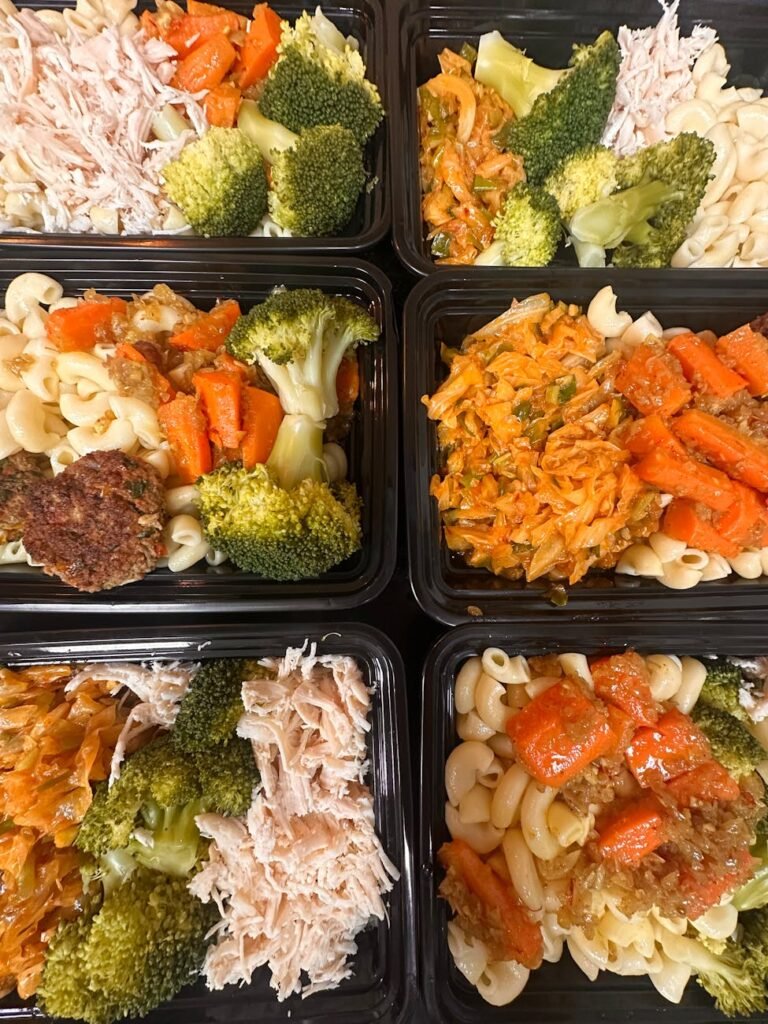
This is a five-day meal prep plan. Each day totals approximately 1,000 calories. All meals are prepped in one or two sessions.
Day 1 – Chicken, Brown Rice, Roasted Veggies
Breakfast (250 cal): 2 eggs scrambled with spinach + ½ cup low-fat cottage cheese
Lunch (350 cal): 4 oz grilled chicken breast + ½ cup brown rice + 1 cup roasted zucchini and bell peppers (drizzled with 1 tsp olive oil)
Dinner (400 cal): 4 oz baked tilapia + 1 cup steamed broccoli + ½ cup cooked quinoa + small side salad with 1 tbsp balsamic vinaigrette
Day 2 – Turkey and Sweet Potato
Breakfast (250 cal): Greek yogurt (plain, non-fat, ¾ cup) + ½ cup blueberries + 1 tbsp chia seeds
Lunch (350 cal): 3.5 oz ground turkey (93% lean, cooked) + ½ medium sweet potato (baked) + ½ cup steamed green beans
Dinner (400 cal): 4 oz poached chicken + 1 cup cauliflower rice (sautéed with garlic) + ½ cup black beans + 1 tbsp salsa
Day 3 – Eggs, Lentils, Salmon
Breakfast (260 cal): 2 hard boiled eggs + 1 small apple + 1 tbsp almond butter
Lunch (340 cal): ½ cup cooked lentils + 1 cup spinach sautéed with garlic and lemon + 1 oz feta cheese
Dinner (400 cal): 3.5 oz baked salmon + 1 cup roasted asparagus + ½ cup brown rice
Day 4 – Shrimp and Vegetables
Breakfast (250 cal): Overnight oats — ¼ cup oats + ½ cup unsweetened almond milk + 1 tbsp flaxseed + ½ cup strawberries
Lunch (350 cal): 5 oz cooked shrimp + 1 cup mixed greens + cherry tomatoes + cucumber + 1 tbsp tahini dressing
Dinner (400 cal): Stir-fry: 4 oz tofu (firm, pressed) + 1 cup bok choy + ½ cup snap peas + 1 tbsp low-sodium soy sauce + ½ cup brown rice
Day 5 – Lean Beef and Root Vegetables
Breakfast (250 cal): 1 whole egg + 2 egg whites scrambled + ½ cup diced tomatoes + 1 slice Ezekiel bread
Lunch (350 cal): 3.5 oz lean ground beef (95% lean) + ½ cup roasted carrots + ½ cup cooked barley
Dinner (400 cal): 4 oz baked chicken thigh (skinless) + 1 cup roasted brussels sprouts + ½ cup mashed cauliflower
The Grocery List (For All 5 Days)
No fluff. Just what you actually need.
Proteins:
- Chicken breast (about 1.5 lbs)
- Chicken thighs, skinless (½ lb)
- Ground turkey, 93% lean (½ lb)
- Ground beef, 95% lean (½ lb)
- Tilapia fillets (½ lb)
- Salmon fillets (½ lb)
- Shrimp, cooked (½ lb)
- Firm tofu (1 block)
- Eggs (1 dozen)
- Low-fat cottage cheese (1 small container)
- Plain non-fat Greek yogurt (1 small container)
Grains and Legumes:
- Brown rice
- Quinoa
- Barley
- Oats (rolled)
- Black beans (1 can or dry)
- Lentils (1 cup dry or 1 can)
- Ezekiel bread (1 loaf, freeze what you don’t use)
Vegetables:
- Zucchini
- Bell peppers
- Broccoli
- Green beans
- Cauliflower
- Spinach (fresh or baby)
- Brussels sprouts
- Asparagus
- Bok choy
- Snap peas
- Cherry tomatoes
- Cucumber
- Carrots
Fruits:
- Blueberries
- Strawberries
- Small apples
Fats and Condiments:
- Olive oil (use sparingly)
- Almond butter
- Tahini
- Balsamic vinaigrette
- Low-sodium soy sauce
- Salsa
- Feta cheese (small block)
- Chia seeds, flaxseed
How to Actually Prep All of This
Here’s the Sunday workflow. It takes about 2.5 to 3 hours total.
Step 1: Start with grains first. Brown rice, quinoa, and barley take the longest. Get them on the stove before anything else.
Step 2: Preheat oven to 400°F. Season and roast your vegetables in batches — Brussels sprouts, asparagus, zucchini, bell peppers. Sheet pan everything. It’s fine if they overlap a little.
Step 3: Cook proteins. Bake the chicken, tilapia, and salmon in the oven (in separate pans). Cook turkey and beef on the stovetop. Boil eggs while everything else cooks.
Step 4: Prep cold items. Make overnight oats. Portion Greek yogurt. Rinse canned beans or cook lentils.
Step 5: Portion into containers. This is where most people rush. Don’t. Accurate portioning is everything at this calorie level. Use a food scale — at least for the first few weeks until you’ve got a visual feel for portions.
The Container Setup That Actually Works
Use containers by meal, not by day. That way, you pull whatever you need without repacking anything.
- 5 breakfast containers
- 5 lunch containers
- 5 dinner containers
Glass containers reheat better. BPA-free plastic works too. Avoid containers with loose lids — nothing derails a meal prep faster than a spilled lunch at work.
Label everything with the day or meal name. Sounds excessive. It’s not.
Foods That Punch Above Their Weight at Low Calories
Some foods are just better suited to a 1,000-calorie framework. They’re filling, nutritious, and relatively low in calories.
Eggs. One large egg is about 70 calories and packed with protein, healthy fat, and B vitamins. Two eggs at breakfast for 140 calories is hard to beat.
Leafy greens. Spinach, arugula, kale — you can eat enormous volumes for almost no calories. Great for volume eating.
Legumes. Lentils and black beans are rich in fiber and protein. They slow digestion and keep you fuller longer than most carb sources.
Greek yogurt. Non-fat, plain Greek yogurt is about 80–100 calories for ¾ cup and packs 15–18 grams of protein. It’s one of the most calorie-efficient protein sources you can find at a grocery store.
Cruciferous vegetables. Broccoli, cauliflower, Brussels sprouts — high in fiber and nutrients, low in calories, very filling when roasted.
White fish and shrimp. Tilapia and shrimp are among the lowest-calorie animal proteins available. Mild flavor, easy to prep, versatile.
Common Mistakes People Make
Let’s address the stuff nobody talks about.
Using too much oil. A tablespoon of olive oil is 120 calories. At 1,000 calories total, that’s 12% of your entire day. Use cooking spray or measure carefully. This is the number one hidden calorie problem in “healthy” meal preps.
Not weighing proteins. A four-ounce chicken breast can look wildly different depending on who’s cutting it. A food scale solves this immediately.
Forgetting condiments. Salad dressings, dipping sauces, and marinades — these add up fast. Stick to measured amounts. Balsamic vinegar, lemon juice, and salsa are your calorie-light friends.
Eating the same meal every day. This leads to burnout by Wednesday. Variety isn’t just nice to have. It’s what keeps you going past week one.
Not eating enough protein. At 1,000 calories, protein is your priority. If you’re not hitting at least 80 grams, you’ll feel hungry, lose muscle, and probably abandon the whole plan within two weeks.
What to Drink
This often gets overlooked. At 1,000 calories, you have almost no room for liquid calories.
- Water — drink a lot of it. Aim for at least 8 cups daily, more if you’re active.
- Black coffee — zero calories, helps with appetite suppression
- Unsweetened green or herbal tea — fine, zero calories
- Sparkling water — great substitute for soda cravings
Skip: juice, sweetened coffee drinks, soda, sports drinks, flavored creamers. A single Starbucks latte can be 250 calories. That’s a quarter of your day.
Should You Take Supplements?
When calories are this restricted, supplementation is worth considering. You might not be getting enough of certain nutrients from food alone.
Consider discussing with your doctor:
- A daily multivitamin (covers micronutrient gaps)
- Vitamin D (common deficiency in the U.S., worsened by reduced food intake)
- Magnesium (often under-consumed on low-calorie diets)
- Omega-3s, if you’re not eating fatty fish regularly
This is not a prescription. It’s a practical heads-up for people eating at a significant deficit.
Adjusting This Plan for Your Life
Not everyone in the U.S. is eating 1,000 calories total per day. Some people use this as a framework for a single big meal within a 1,500–1,800-calorie day. Others are doing a structured VLCD under medical supervision. Some are prepping for a specific short-term goal.
Here’s how to adapt:
If 1,000 is your full day, stick closely to the plans above. Don’t skip meals. Prioritize protein at every meal. Stay in contact with a healthcare provider.
If this is one meal of a larger day, pick any of the dinner recipes (350–450 calories) and pair it with other planned meals. Use the grocery list as inspiration for flexible cooking.
If you’re adjusting for activity: Add 100–200 calories on training days. An extra half cup of brown rice or another egg does the job.
Quick Reference: Calorie Counts for Common Ingredients
| Ingredient | Serving Size | Calories |
|---|---|---|
| Chicken breast (cooked) | 4 oz | 185 |
| Salmon (baked) | 3.5 oz | 175 |
| Tilapia (baked) | 4 oz | 145 |
| Shrimp (cooked) | 5 oz | 150 |
| Ground turkey 93% | 3.5 oz | 160 |
| Eggs (large) | 1 | 70 |
| Brown rice (cooked) | ½ cup | 110 |
| Sweet potato (baked) | ½ medium | 90 |
| Black beans | ½ cup | 115 |
| Lentils (cooked) | ½ cup | 115 |
| Greek yogurt (non-fat) | ¾ cup | 90 |
| Broccoli (steamed) | 1 cup | 55 |
| Spinach (raw) | 2 cups | 14 |
| Olive oil | 1 tsp | 40 |
| Almond butter | 1 tbsp | 100 |
Keep this handy. It makes building out your own variations a lot easier.
Frequently Asked Questions
Is 1,000 calories a day safe? It depends on the individual. For some people — particularly shorter, less active women — 1,000 calories can be appropriate in specific circumstances. For others, especially men or very active people, it’s too low for daily long-term use. A registered dietitian can help you figure out what’s right for your body. Don’t guess on something this significant.
Will I lose weight on 1,000 calories a day? Almost certainly, yes — as long as your maintenance calories are higher than 1,000, which they are for virtually every adult. However, losing weight too fast can lead to muscle loss, nutrient deficiencies, and metabolic adaptation. Slow, steady, sustainable is usually better than aggressive restriction.
Can I work out on this meal plan? Light to moderate activity is generally fine. Intense workouts while eating only 1,000 calories are harder to sustain and can leave you depleted. If you’re lifting heavy or doing high-intensity cardio, you’ll likely need to eat more. Listen to your body.
How do I keep from getting bored with the food? Variety is intentionally built into this plan. If you still find yourself losing interest, swap proteins (swap tilapia for cod, chicken for turkey), change your spice profiles, or rotate the vegetable sides. Meal prep doesn’t require eating the same thing every day.
How long can I store these meals in the fridge? Cooked proteins and grains keep well for 4–5 days in the refrigerator. Anything beyond that is freezer territory. Prep Monday through Friday, and you’re fine with just a fridge.
What if I’m hungry on this plan? Focus on volume first. More vegetables, more water, more fiber. If you’re consistently hungry, it may mean your calorie level is too low for your needs. Persistent hunger is a signal worth paying attention to, not pushing through.
Do I need a food scale? At this calorie level, yes. Eye-balling portions leads to creeping inaccuracies. A digital kitchen scale costs about $10–15 and pays for itself in the first week. It’s the most useful tool in a calorie-conscious kitchen.
Can I do this meal prep on a budget? Absolutely. The most affordable proteins in this plan — eggs, canned legumes, tilapia, ground turkey — are also the most nutritionally dense. Shop sales, buy in bulk where it makes sense, and freeze proteins you won’t use within two days of purchase.
Final Thoughts
Meal prepping at 1,000 calories isn’t a punishment. It’s not a crash diet. Done right, it’s a deliberate, disciplined approach to eating that puts you in control of something most people leave entirely to chance.
The plan above isn’t flashy. It’s not trendy. It works because it’s built on real food, smart portioning, and consistency.
Start with one week. See how you feel. Adjust from there.
That’s it.
SUGGESTED POST >> Easy Dirty Bulk Meal Prep with High Calorie: 7-Day Plan