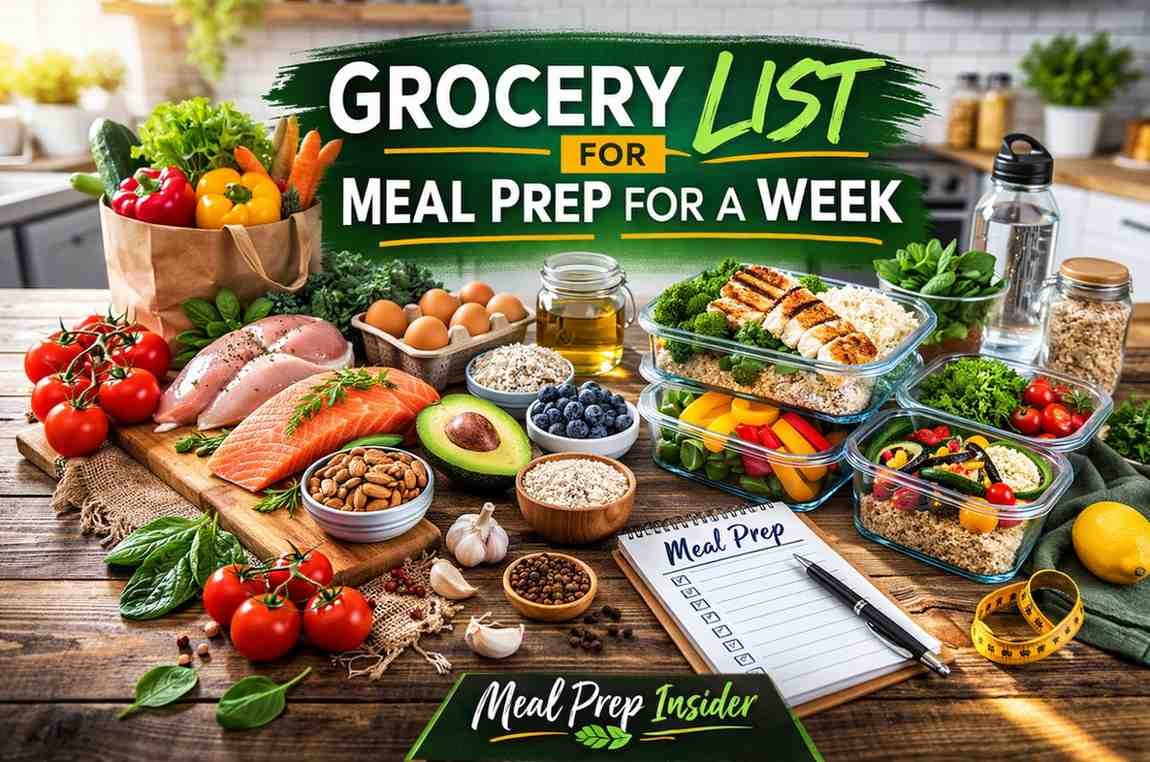
Grocery List for Meal Prep for a Week: Master weekly meal prep with this complete grocery list. Save time, money, and stress with our strategic shopping guide for busy Americans who want healthy, homemade meals.
Let me be honest with you.
Sunday rolls around, and you’re standing in your kitchen with good intentions. You want to meal prep. You downloaded the recipes. You watched the TikToks. But your fridge looks like a sad documentary about forgotten vegetables.
The problem isn’t commitment. It’s the grocery list.
Most people approach meal prep backwards. They pick recipes first, then scramble to figure out what to buy. That’s like trying to build IKEA furniture without checking if you have the Allen wrench. Frustrating and completely avoidable.
Why Your Grocery List Actually Matters More Than Your Recipes
Here’s something nobody talks about enough.
The grocery list is your meal prep foundation. Get this wrong, and you’ll end up at Trader Joe’s three times in one week, buying random ingredients you’ll use once. Your bank account hates that. Your schedule hates that. And honestly, the planet isn’t thrilled about it either.
A strategic grocery list does three things most people overlook. It prevents food waste because you’re buying with purpose. It saves legitimate money because you’re not impulse-buying that artisanal kimchi you’ll never open. And it actually makes cooking less stressful because everything you need is already there.
Think about it differently. When you batch your grocery shopping, you batch your decision-making. One trip. One list. Done.
The Foundation: Proteins That Actually Last
Protein is where people mess up most.
You can’t just throw chicken breasts in your cart and hope for the best. Some proteins handle meal prep like champions. Others turn into rubber by Wednesday.
Best Proteins for Week-Long Meal Prep:
- Chicken thighs – Stay juicy, more forgiving than breasts
- Ground turkey (93/7 lean ratio) – Versatile, freezes well
- Eggs – Obvious but underutilized beyond breakfast
- Salmon fillets – Cook these mid-week, not Sunday
- Canned tuna (in water) – Emergency protein that doesn’t expire
- Tempeh – Holds texture better than tofu for meal prep
- Ground beef (85/15) – Fat content keeps it from drying out
- Pork tenderloin – Lean, affordable, scales well
Buy at least two protein types. Three is better. This isn’t about variety for variety’s sake. It’s insurance against flavor fatigue, which is the real meal prep killer.
Most Americans give up on meal prep by Thursday because they’re eating the same grilled chicken for the fourth day in a row. Your taste buds deserve a better strategy.
Vegetables: The Shelf-Life Hierarchy
Not all vegetables are created equal for meal prep.
Some wilt faster than your motivation on a Monday morning. Others stay crisp for days. Knowing the difference separates successful meal preppers from people eating soggy salads by Tuesday.
Hardy Vegetables (Buy These First)
| Vegetable | Lasts | Best Uses |
|---|---|---|
| Broccoli | 7-10 days | Roasted, steamed, stir-fry |
| Cauliflower | 7-10 days | Rice substitute, roasted |
| Carrots | 3-4 weeks | Raw snacks, roasted, soups |
| Bell peppers | 1-2 weeks | Fajitas, salads, snacks |
| Brussels sprouts | 1 week | Roasted, shredded salads |
| Cabbage | 2-3 weeks | Slaws, stir-fry, fermented |
| Sweet potatoes | 2-3 weeks | Baked, mashed, breakfast hash |
Delicate Vegetables (Buy These Strategically)
- Spinach – Wilts fast, buy baby spinach in clamshells
- Lettuce – Only if you’re eating salads in the first three days
- Zucchini – Gets mushy, use early in the week
- Tomatoes – Cherry tomatoes last longer than regular ones
- Mushrooms – Paper bag storage extends life to 5-7 days
Here’s a trick most meal prep guides won’t tell you. Buy your delicate vegetables twice. Small shop Sunday, smaller shop Wednesday. It takes an extra fifteen minutes but completely changes your weekend eating experience.
Carbs and Grains: The Bulk That Actually Matters
Carbohydrates get a bad reputation they don’t deserve.
For meal prep, they’re your volume workhorses. They fill containers, stretch proteins, and keep you satisfied. The key is choosing ones that reheat without turning into paste.
Essential Grain and Carb Purchases:
- Brown rice (2-3 lbs) – Batch cook Sunday, lasts all week
- Quinoa (1 lb) – Higher protein, faster cooking
- Pasta (whole wheat or chickpea) – Variety matters
- Oats (rolled or steel-cut) – Breakfast MVP
- Sweet potatoes (5-7 medium) – Versatile carb source
- Whole wheat bread (freezable) – Toast from frozen
- Tortillas (corn or whole wheat) – Freeze half the package
The biggest mistake? Cooking all your grains on Sunday. Rice gets weird in the fridge after four days. Instead, cook half on Sunday, half on Wednesday. Same effort, better results.

Healthy Fats: The Flavor and Satiety Secret
Fat makes food taste like food instead of cardboard.
It also keeps you full, which matters when you’re trying to avoid the 3 PM vending machine spiral. But fats are calorie-dense, so you need a strategy here.
Your Fat Essentials:
- Extra virgin olive oil (for finishing dishes)
- Avocado oil (for high-heat cooking)
- Butter (real butter, not the spray stuff)
- Avocados (buy them at different ripeness stages)
- Nuts (almonds, walnuts, cashews)
- Nut butter (almond or peanut, check ingredient lists)
- Seeds (chia, hemp, pumpkin)
- Full-fat Greek yogurt
Pro tip about avocados that’ll change your life. Buy two rock-hard ones, two somewhat firm ones, and two ready-to-eat. Stagger your avocado consumption throughout the week instead of watching them all turn brown simultaneously.
Dairy and Alternatives: What Actually Stays Fresh
Dairy is tricky for meal prep.
Some products last forever. Others develop science experiments by day five. Know the difference before you’re throwing away half-full containers.
Dairy Staples:
- Greek yogurt (plain, full-fat) – 2-3 weeks unopened
- Cottage cheese – High protein, versatile
- Cheese blocks (cheddar, mozzarella) – Lasts longer than pre-shredded
- Milk (or oat/almond milk) – Buy the smallest size you’ll actually use
- Eggs (18-24 count) – They last way longer than you think
Skip These Unless You’re Using Them Immediately:
- Pre-shredded cheese (anti-caking agents make it weird)
- Flavored yogurts (sugar bombs with short shelf life)
- Heavy cream (unless you’re cooking with it this week)
Real talk about plant-based milks. They last longer than dairy milk, but they separate. Shake before using. Every single time. Yes, even if you shook it yesterday.
Pantry Staples: The Unsung Heroes
Your pantry is where meal prep magic happens.
These aren’t glamorous ingredients. Nobody’s taking Instagram photos of soy sauce. But they’re the difference between bland meal prep you abandon and food you actually look forward to eating.
Must-Have Pantry Items
Oils and Vinegars:
- Olive oil
- Avocado oil
- Sesame oil
- Apple cider vinegar
- Balsamic vinegar
- Rice vinegar
Flavor Builders:
- Soy sauce or tamari
- Hot sauce (multiple varieties)
- Mustard (Dijon and whole grain)
- Garlic (fresh cloves)
- Onions (yellow and red)
- Ginger root
- Lemon and lime (fresh, always)
Canned Goods:
- Black beans
- Chickpeas
- Diced tomatoes
- Coconut milk
- Tomato paste
Spices and Seasonings:
- Kosher salt and black pepper
- Garlic powder
- Onion powder
- Paprika (smoked and regular)
- Cumin
- Chili powder
- Italian seasoning
- Everything bagel seasoning
These pantry items don’t go on your weekly grocery list. They go on your monthly stock-up list. Big difference.
The Actual Weekly Grocery List Template
Alright, enough theory.
Here’s what you’re actually buying for one week of meal prep. This assumes two people eating lunch and dinner from meal prep, plus some breakfast items.
Proteins (Choose 3)
- 2 lbs chicken thighs
- 1.5 lbs ground turkey
- 1 dozen eggs
- 1 lb salmon or white fish
- 2 cans of tuna
Vegetables (Get Variety)
- 2 heads of broccoli
- 1 cauliflower head
- 2 lbs carrots
- 4 bell peppers (mixed colors)
- 1 bag spinach
- 5-7 sweet potatoes
- 1 container cherry tomatoes
- 1 bunch kale or chard
Carbs and Grains
- 2 lbs brown rice (or pre-cooked pouches)
- 1 lb quinoa
- 1 box whole wheat pasta
- 1 container of oats
- 1 loaf whole wheat bread
Dairy and Alternatives
- 2 containers plain Greek yogurt
- 1 block of cheese (your choice)
- 1 gallon of milk or milk alternative
- 18 eggs (if not already listed in protein)
Fruits
- 3 apples
- 3 bananas (varying ripeness)
- 2 avocados
- 1 container of berries
- 2 oranges
Snacks and Extras
- Mixed nuts (1 bag)
- Hummus
- Nut butter
- Dark chocolate (70%+)
This list feeds two adults for five days of lunches and dinners. Scale up or down based on your household.
RELATED POST >> Meal Prep Plans with Grocery List: Easy Meals without a Chef
Shopping Strategy: How to Actually Execute This
Walking into a grocery store without a plan is financial self-sabotage.
You need a system. Not a complicated one, just intentional.
The Perimeter Rule: Start on the outside edges of the store. That’s where the fresh food lives. Produce, meat, dairy. Get 80% of your list here.
Mid-Week Refresh Hack: Schedule a 15-minute store run on Wednesday evening. Grab delicate greens, maybe one more protein if you’re running low. This single strategy dramatically improves the quality of your meals.
Avoid These Times: Saturday mornings (absolute chaos), Sunday afternoons (post-church rush), weekday evenings 5-7 PM (everyone’s stressed). Best times? Tuesday or Wednesday mornings, Sunday evenings after 7 PM.
The Cart Test: Before checkout, look at your cart. Does it look colorful? If it’s all brown and beige, you’re missing vegetables. Add more.
Storage Matters More Than You Think
You bought everything. Great.
Now don’t ruin it with terrible storage. This is where meal prep dreams go to die.
Invest in Real Containers: Those disposable takeout containers? Stop it. Glass containers with snap lids or quality BPA-free plastic. You need at least 10-12 containers in various sizes.
Vegetable Storage Tricks:
- Wash and completely dry greens, store with paper towels
- Keep herbs in water like flowers
- Store mushrooms in paper bags, not plastic
- Wrap celery in aluminum foil (weird, but it works)
Protein Storage: Raw proteins should be stored on the bottom shelf of your fridge. Always. This prevents cross-contamination if packages leak. Cook within 3-4 days or freeze immediately.
Freezer Strategy: Freeze anything you won’t use in five days. Portion it first. Future you will thank present you for making those individually wrapped chicken thighs.
The Hidden Costs Nobody Mentions
Meal prep saves money. That’s the pitch.
But there are upfront costs people conveniently forget to mention. Let’s be real about them.
You’ll spend more in week one. Probably $150-200 for two people, maybe more if your pantry’s empty. That’s normal. You’re building inventory.
Week two drops to $80- $ 120. Week three, maybe $70-100. By week four, you’ve hit your rhythm, and you’re spending less than you did eating out or doing daily grocery runs.
The other hidden cost? Time. Your first few meal prep sessions will take 3-4 hours. You’ll get faster. By week three or four, you’ll have it down to 90 minutes. But that first week feels long.
Worth it? Absolutely. But go in with accurate expectations.
Common Mistakes That Sabotage Your Grocery List
Let’s talk about where people actually fail.
Mistake #1: Buying Too Much Variety
You don’t need twelve different vegetables. You need four or five you’ll actually eat. Variety is fun until you’re throwing away an unused fennel bulb on Saturday.
Mistake #2: Ignoring Your Schedule
Got dinner plans on Wednesday? Don’t buy ingredients for seven dinners. Adjust your list to your actual life.
Mistake #3: Forgetting Breakfast and Snacks
Everyone focuses on lunch and dinner. Then 10 AM hits, you’re starving, and you’re at Starbucks buying an $8 breakfast sandwich. Add grab-and-go breakfast items to your list.
Mistake #4: Not Checking What You Have
Check your fridge and pantry before shopping. You probably have half an onion, some garlic, and random condiments. Use them.
Mistake #5: Shopping Hungry
Classic mistake. Still true. Eat before you shop, or your cart will be filled with things like “truffle-infused popcorn” and “artisan pickles.”
The Flexibility Factor
Life happens. Plans change.
Your grocery list shouldn’t be a prison. It’s a framework. Thursday, you might get invited to dinner. Friday, you might be too exhausted to care about meal prep containers.
That’s fine. Normal, even.
Build in flexibility. Buy one fewer protein than you think you need. Keep some backup canned goods. Have frozen vegetables as insurance. The goal isn’t perfection. It’s better than constant takeout and daily trips to the store.
Budget-Friendly Substitutions
Not everyone has unlimited grocery money.
Here are swaps that maintain nutrition while significantly reducing costs.
Instead of salmon → canned salmon or sardines
Same omega-3s, fraction of the price. Mix into salads or rice bowls.
Instead of organic everything → prioritize the Dirty Dozen
Focus organic spending on strawberries, spinach, and apples. Skip organic for avocados, onions, and cabbage.
Instead of pre-cut vegetables → whole vegetables
Pre-cut convenience costs double or triple. If you have twenty minutes, cut them yourself.
Instead of fancy grains → bulk rice and oats
Quinoa’s great. Brown rice is like $2 per pound. Do the math.
Instead of fresh herbs → frozen herbs, or dried
Fresh basil’s nice. Frozen basil cubes work in 90% of recipes at 10% the cost.
Seasonal Shopping Advantages
Buy what’s in season. Your wallet and taste buds both win.
Spring: Asparagus, peas, artichokes, strawberries
Summer: Tomatoes, zucchini, berries, peaches, corn
Fall: Squash, apples, Brussels sprouts, sweet potatoes
Winter: Citrus, cabbage, root vegetables, pomegranates
In-season produce costs less and tastes better. It’s also at peak nutrition. Triple win.
The Make-or-Break First Week
Your first week of meal prep grocery shopping will feel overwhelming.
The list looks long. The cart’s full. The checkout total makes you nervous. This is completely normal.
Give yourself permission to not be perfect. Maybe your chicken’s a little dry. Perhaps you bought too much spinach. You’ll learn.
By week three, you’ll know exactly how much rice your household actually eats. You’ll have figured out which proteins you genuinely enjoy reheating. You’ll stop buying ingredients for recipes you’ll never make.
The learning curve exists. Lean into it.
Making the List Work for Different Diets
This framework adapts.
Keto/Low-Carb: Remove grains and sweet potatoes, add more avocados, nuts, full-fat dairy, and fatty proteins. Increase vegetable quantities.
Vegetarian: Replace meat proteins with beans, lentils, tofu, tempeh, and additional eggs. Increase variety in vegetables and whole grains.
Vegan: Same as vegetarian, minus eggs and dairy. Add nutritional yeast, plant-based proteins, and calcium-fortified milk alternatives.
Paleo: Remove grains and legumes, increase vegetables, add more sweet potatoes, focus on quality proteins and healthy fats.
The structure stays the same. Proteins, vegetables, carbs (if applicable), fats, pantry staples. Just swap the specific items.
When to Actually Skip Meal Prep
Real talk: meal prep isn’t for everyone all the time.
If you’re traveling for work, don’t meal prep that week. If you’ve got four dinner invitations, adjust accordingly. If you’re going through something and cooking feels impossible, give yourself permission to simplify.
Meal prep is a tool, not a religion. Use it when it serves you.
The Final Check Before Checkout
You’re standing in line with a full cart.
Do one last mental check. Protein? Check. Vegetables in multiple colors? Check. Something for breakfast? Check. Snacks for when hunger strikes between meals? Check.
You’ve got fats, carbs, and the pantry staples to make everything taste good. Your list balanced fresh ingredients with shelf-stable backups.
That’s it. You’re ready.
The reality is this: a good grocery list for meal prep isn’t about buying everything. It’s about buying the right things. The ingredients that work together, last the appropriate amount of time, and actually match how you eat.
You’re not meal prepping for Instagram. You’re meal prepping, so Tuesday lunch doesn’t become another $15 DoorDash order you eat sadly at your desk.
This list gets you there. One week at a time.
Grocery List for Meal Prep for a Week: Frequently Asked Questions
How much should I budget for weekly meal prep groceries?
For one person, expect $50-80 per week once you’re past the initial pantry-building phase. Two people typically spend $80-120. This assumes mostly home-cooked meals with quality ingredients. Your first week will run higher ($150-200) because you’re stocking pantry staples that last months.
Can I meal prep if I have a small fridge?
Absolutely. Focus on proteins that freeze well, buy vegetables twice weekly instead of once, and prioritize shelf-stable items like canned beans, grains, and root vegetables. Use your freezer strategically for portioned proteins and some prepared meals.
How long does meal-prepped food actually stay good?
Most cooked proteins and vegetables last 4-5 days in proper airtight containers. Grains and beans can push to 6-7 days. Anything beyond that should be frozen. When in doubt, smell test. If it smells off or looks questionable, toss it.
Should I buy organic for meal prep?
Prioritize organic for the “Dirty Dozen” (strawberries, spinach, kale, apples, grapes, peaches, cherries, pears, tomatoes, celery, potatoes, peppers). For the “Clean Fifteen” (avocados, corn, pineapple, onions, papaya, sweet peas, eggplant, asparagus, broccoli, cabbage, kiwi, cauliflower, mushrooms, honeydew, cantaloupe), conventional is fine. Focus your organic budget where it matters most.
What if I get bored eating the same meals?
Vary your sauces and seasonings rather than base ingredients. The same chicken and rice become different meals with teriyaki sauce, curry, or lemon-herb. Buy versatile proteins and vegetables, then mix up how you flavor them throughout the week.
Is meal prep actually cheaper than buying prepared meals?
Yes, significantly. Restaurant meals average $12-20 per serving. Meal-prepped servings typically cost $3-6. That’s $9-14 saved per meal. Over a week (10 meals), you’re saving $90-140. The upfront shopping feels expensive, but the per-meal cost is dramatically lower.
SUGGESTED POST >> How to Meal Prep Chicken Without It Getting Dry Accurately