High Protein Meal Prep on a Budget: Learn how to meal prep high-protein meals without draining your wallet. Real food, real savings, practical tips for busy Americans trying to eat smart.
So You Want Protein Without the Price Tag?
Here’s the truth most fitness blogs won’t say out loud: you don’t need a $200 grocery haul to hit your protein goals. You don’t need fancy supplements, exotic ingredients, or a meal prep service charging $14 per container.
You need a plan. A real one.
This guide is for anyone eating on a tight budget — whether that’s a college student, a single parent, someone between jobs, or just a person who’s tired of spending $60 at Whole Foods for three days of food. Protein doesn’t have to be expensive.
Once you understand which sources to buy, when to buy them, and how to cook them in bulk, everything shifts.
Let’s get into it.
Why Protein Actually Matters (Keep It Simple)
Protein is the macronutrient that helps your body repair muscle tissue, stay full longer, regulate hormones, and maintain a healthy weight. Most adults in the U.S. are advised to consume around 0.8 grams of protein per kilogram of body weight — but if you’re active, that number climbs to 1.2–2.0 grams per kg.
That’s a lot of chicken breasts if you’re not shopping smart.
The problem isn’t the protein itself. The problem is that Americans are conditioned to think high protein = expensive. That association comes from gym culture, protein bars priced at $4, and pre-marinated meats at Whole Foods. None of that is necessary.
Real, whole-food protein sources are cheap. Full stop.
The Best Budget Protein Sources in the U.S.
This is where the money is — or rather, where you save it.
| Protein Source | Avg. Cost | Protein per 100g |
|---|---|---|
| Eggs | ~$3.50/dozen | 13g |
| Canned tuna | ~$1.00–$1.50/can | 25g |
| Canned sardines | ~$1.50/can | 21g |
| Dry lentils | ~$1.50/lb | 9g (cooked) |
| Split peas | ~$1.20/lb | 8g (cooked) |
| Canned chickpeas | ~$0.89/can | 19g |
| Ground turkey (93% lean) | ~$4.00–$5.00/lb | 27g |
| Ground beef (80/20) | ~$4.50–$5.50/lb | 26g |
| Chicken thighs (bone-in) | ~$1.50–$2.50/lb | 24g |
| Cottage cheese | ~$3.00–$4.00/16oz | 11g |
| Greek yogurt (store brand) | ~$3.50/32oz | 10g |
| Black beans (canned) | ~$0.89/can | 21g |
| Peanut butter | ~$3.00/jar | 25g |
| Tofu (firm) | ~$2.00–$2.50/block | 17g |
| Frozen edamame | ~$2.50/12oz bag | 11g |
Prices based on average U.S. grocery store pricing. ALDI, Walmart, and Costco will often run lower.
The big takeaway here? Canned proteins and legumes are the unsung heroes of budget meal prep. Eggs are still one of the most cost-effective protein sources per gram you can find, even with recent price increases.
Building Your Weekly Meal Prep System
Here’s where most people get tripped up. They go to the store, buy a bunch of food, and then stand in the kitchen on Sunday with no real plan. An hour later, they’re eating cereal.
Don’t do that.
Meal prep works when you have a system, not just ingredients.
The basic framework:
- Pick 2–3 protein sources for the week
- Pick 2 carbohydrate bases (rice, oats, sweet potatoes, pasta)
- Pick 2–3 vegetables (fresh or frozen, whatever’s cheaper)
- Cook everything in batches, season differently across meals, so you’re not bored
That’s it. The magic isn’t in the recipes. It’s in the repetition and the flexibility.
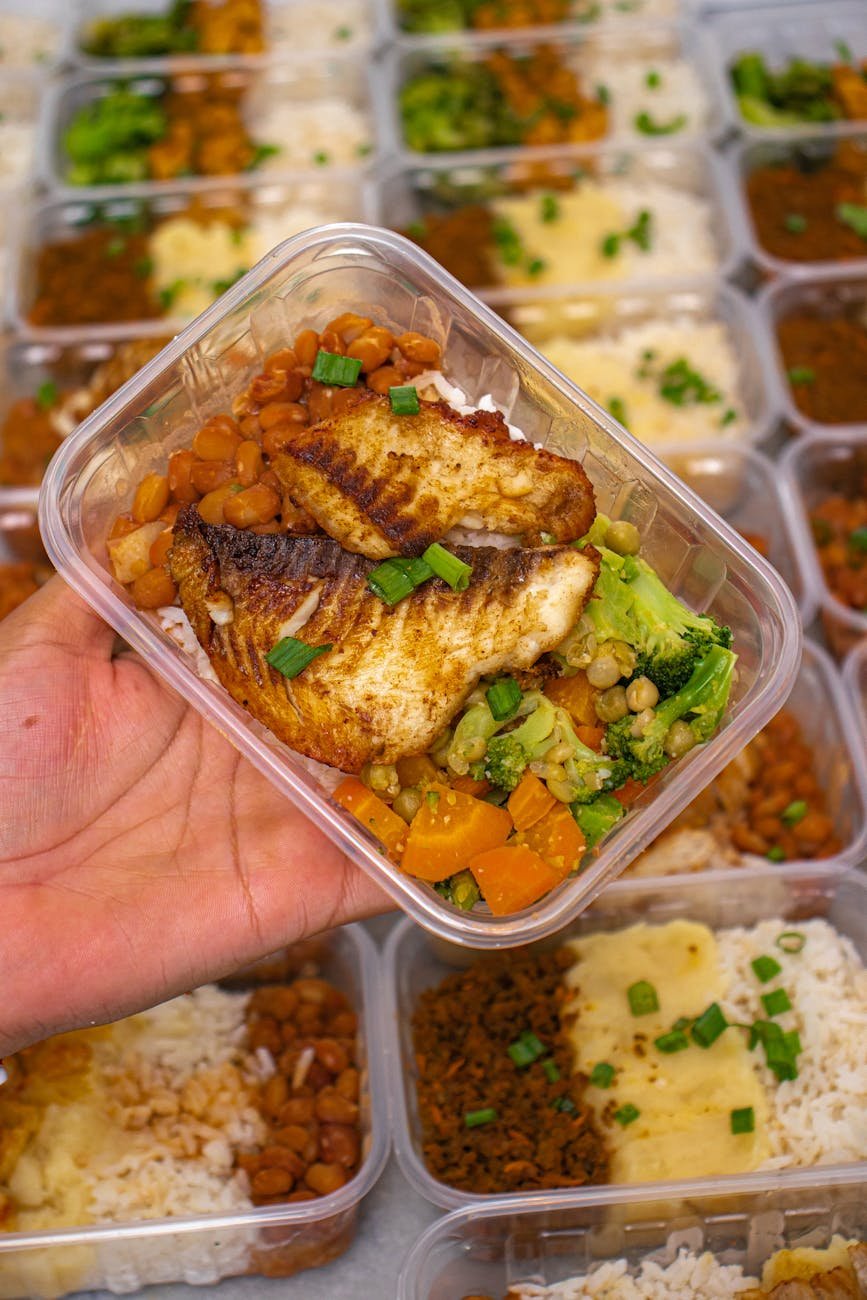
A Real Budget Week: $50 or Less
Let’s walk through an actual week of high-protein meal prep for one person. This is based on a rough weekly grocery list designed to provide approximately 140–160 grams of protein per day on a roughly 2,000-calorie diet.
Grocery List:
- 2 dozen eggs — $7
- 2 lbs chicken thighs (bone-in, skin-on) — $4
- 1 lb ground turkey — $4.50
- 2 cans of tuna — $3
- 1 lb dry lentils — $1.50
- 2 cans black beans — $1.80
- 2 lbs white rice — $2
- 1 large bag frozen broccoli — $2.50
- 1 bag frozen mixed vegetables — $2
- 2 sweet potatoes — $2
- 1 container cottage cheese (16oz) — $3.50
- 1 jar peanut butter — $3
- Oats (quick or rolled, 2 lbs) — $3
- Canned tomatoes (2 cans) — $2
- Olive oil, salt, pepper, garlic powder, onion powder, paprika — ~$5 (or already in your pantry)
- Soy sauce, hot sauce — $2
Total: roughly $47–$52, depending on your store
That’s five days of meals — breakfast, lunch, and dinner — with snacks. Under $10 a day. Under $4 per meal.
The Actual Meal Prep (What to Cook and How)
Sunday Prep Session: About 2–2.5 Hours
Step 1: Get rice going first. Cook a large batch of white rice. Two cups of dry make about 4–5 cups cooked. Season lightly with salt. Rice is your base — it stays good in the fridge for 5 days.
Step 2: Roast the chicken thighs. Season with garlic powder, onion powder, paprika, salt, and pepper. Bake at 400°F for 35–40 minutes. Bone-in thighs are forgiving. They don’t dry out. Pull the meat off the bone once it’s cooled, then store it in a container.
Step 3: Brown the ground turkey. In a skillet, cook with a little olive oil, diced onion (optional), and canned tomatoes. Add cumin, chili powder, and garlic. This becomes a versatile taco/bowl filling that works for three days.
Step 4: Boil the lentils. 1 cup dry lentils to 2.5 cups water. Bring to a boil, simmer 20 minutes. Season with salt and a splash of olive oil. Lentils go with everything, and they’re a protein-carb combo, which is ideal for budget eating.
Step 5: Steam or microwave the broccoli. Frozen broccoli doesn’t need much. Five minutes in the microwave with a lid, a little salt. Done.
Step 6: Hard-boil a batch of eggs. 8–10 eggs. They’ll serve as snacks, breakfast additions, and lunch extras throughout the week.
Step 7: Prep overnight oats for breakfast. In four jars or containers: ½ cup rolled oats, ¾ cup milk or water, 1 tablespoon peanut butter, a pinch of salt. Refrigerate overnight. In the morning, top with a boiled egg on the side for a solid protein-heavy breakfast.
Meal Breakdown by Day
Here’s a rough example of how meals flow across the week with this prep:
| Day | Breakfast | Lunch | Dinner | Approx. Protein |
|---|---|---|---|---|
| Mon | Overnight oats + 2 boiled eggs | Chicken + rice + broccoli | Turkey taco bowl + black beans | ~145g |
| Tue | Scrambled eggs (3) + oats | Tuna over rice + mixed veg | Lentils + sweet potato + turkey | ~140g |
| Wed | Overnight oats + cottage cheese | Chicken + lentils + veg | Rice bowl + turkey + broccoli | ~150g |
| Thu | 3-egg omelet + oats | Tuna + black beans + rice | Chicken + sweet potato + veg | ~138g |
| Fri | Overnight oats + boiled egg | Leftover turkey + rice | Egg stir fry + lentils + veg | ~135g |
Not every day will be perfect. That’s fine. The point is that you’re staying in range without eating sad desk food.
Flavor Is Free (Or Almost Free)
One of the biggest complaints about meal prep? It gets boring. And honestly, that’s a fair critique. Plain chicken and rice four days in a row is rough.
The solution isn’t fancy sauces or expensive seasonings. It’s a strategic use of cheap aromatics and condiments.
Budget flavoring tools:
- Hot sauce — Cholula, Tapatio, or store brand. Under $2. Transforms anything.
- Soy sauce — low-sodium, small bottle, $1.50. Works on rice, eggs, and any protein.
- Garlic powder + onion powder — foundational. Buy the big containers.
- Paprika — smoked or regular, adds depth for pennies.
- Cumin — $1.50 for a jar. Makes beans, lentils, and turkey taste incredible.
- Lemon juice — a squeeze on fish, chicken, or lentils. A $1 bottle of ReaLemon lasts weeks.
- Mustard — cheap, tangy, goes great with eggs and chicken.
The mistake people make is seasoning only at the end. Season at every layer — when you cook the protein, when you add the vegetables, and when you plate.
Smart Shopping Habits That Change the Math
You can have the best meal prep plan in the world and still overspend at the grocery store if you’re not shopping strategically.
These habits matter:
Buy store brands. At Walmart, ALDI, or even Kroger, store-brand canned goods, oats, and frozen vegetables are almost always 20–40% cheaper than name brands. The nutritional profile is identical.
Shop the freezer aisle more. Frozen vegetables and frozen fish are often nutritionally superior to fresh produce that’s been sitting on a shelf for a week. Frozen tilapia and frozen shrimp are budget-friendly protein options most people overlook.
Buy bigger packages. A 10-lb bag of chicken leg quarters from Walmart or a wholesale club will cost you $0.80–$1.00/lb in many parts of the country. That’s a remarkable value.
Don’t skip ALDI. If you have one near you, ALDI’s prices on eggs, canned goods, Greek yogurt, and produce routinely beat every other chain. It’s not even close.
Check unit prices, not sticker prices. A $4 container might be cheaper per ounce than a $2.50 container. Always look at the shelf tag’s unit price (usually listed in small print).
Plan before you shop. This sounds basic. Most people don’t do it. Going in without a list leads to impulse buys and forgotten staples. Make a list tied to your actual meal plan.
Protein Math: Are You Actually Hitting Your Goals?
A lot of people assume they’re eating enough protein. Then they log it for a week and realize they’re at 60–70 grams a day, half of what they need.
Let’s do some quick math for a 170-pound person who works out 3–4 times a week:
- Target: ~1.6g/kg body weight = about 123 grams per day
With the meal plan above, you’re comfortably hitting 135–150g per day on a $47–$52 weekly grocery budget. That works out to roughly $0.30–$0.40 per 10 grams of protein. Compare that to a $35 tub of whey protein at 25g per scoop — you’re looking at $0.50–$0.70 per 10 grams.
Whole food wins. Almost always.
That said, a basic whey protein powder isn’t a bad addition if you’re struggling to hit numbers or need a fast post-workout option. A 5-lb tub from a brand like Optimum Nutrition or a Costco store brand can cost about $0.40–$0.50 per serving. It’s a tool, not a replacement.
Meal Prep Containers: Don’t Overthink It
You don’t need matching glass sets with locking lids. You don’t need anything expensive.
What you do need:
- 8–10 containers with lids (any kind)
- At least 2 large containers for bulk-stored rice and proteins
- A few small containers or jars for overnight oats or snacks
Walmart sells basic plastic meal prep containers in a 10-pack for around $8–$10. That’s enough.
Glass is better for longevity and microwave safety, but if you’re starting out or on a tight budget, plastic works. Don’t let the container conversation become a reason to delay starting.
Mistakes That Wreck Budget Meal Prep
Most people run into the same few problems. Knowing them ahead of time makes everything easier.
Buying too much fresh produce. Fresh vegetables go bad. If you’re prepping for five days, stick to frozen for most of your vegetables and only buy fresh for days 1–2.
Forgetting to season before storing. Bland food becomes a reason to skip the meal and order out. Season your proteins before storing them, not just before eating.
Cooking only one protein. If you prep nothing but chicken all week, you will be tired of chicken by Wednesday. Use two to three protein sources.
Not prepping snacks. Hunger between meals is what breaks the plan. Keep boiled eggs, cottage cheese, peanut butter, and Greek yogurt ready as default snacks.
Overcomplicating the recipes. The goal isn’t Instagram content. It’s food that keeps you fueled and doesn’t stress you out. Simple is better.
What About Plant-Based Protein on a Budget?
Worth talking about because a lot of people are cutting back on meat — for cost reasons, ethical reasons, or both.
Plant-based protein on a budget is very doable. The learning curve is understanding that most plant proteins are incomplete (meaning they lack one or more essential amino acids). You don’t need to eat them together in one meal — just consistently across the day.
Best budget plant protein sources:
- Lentils — cheap, versatile, high in iron
- Black beans/kidney beans/chickpeas — pantry staples, canned or dry
- Tofu — firm tofu is inexpensive, absorbs flavor well, great for stir fry
- Edamame — frozen, easy, one of the few complete plant proteins
- Peanut butter — high calorie, good protein, affordable
- Tempeh — pricier than tofu but higher protein, worth it occasionally
- Hemp seeds — not the cheapest, but 10g protein per 3 tablespoons; a little goes far
- Nutritional yeast — adds a nutty, cheesy flavor and about 8g protein per 2 tablespoons; sprinkle on everything
A plant-based week using lentils, tofu, beans, and edamame can hit 100–120g of protein per day without animal products — and stay well under $50.
Freezer Meal Prep: The Level Up
If you want to go beyond one week, start batch-cooking and freezing.
Certain high-protein foods freeze exceptionally well:
- Cooked ground turkey or beef
- Cooked chicken (shredded or cubed)
- Lentil soups and bean stews
- Egg muffins (eggs baked in muffin tins with veggies and cheese)
- Turkey chili
A Saturday afternoon spent making a double- or triple-batch of turkey chili and portioning it into freezer bags yields 15–20 meals ready to go. Pull one out the night before, reheat in the morning or at lunch. No cooking required on busy weekdays.
This is how serious budget meal preppers operate. They’re not prepping every Sunday. They’re building a freezer stash over two or three weeks, then coasting.
A Quick Note on Food Safety
Cooked proteins stored in the fridge are generally safe for 3–4 days. After that, the quality and safety start to decline.
- Cooked chicken: 3–4 days in fridge, 2–3 months in freezer
- Cooked ground meat: 3–4 days in fridge, up to 4 months in freezer
- Hard-boiled eggs: 1 week in fridge (unpeeled)
- Cooked lentils/beans: 5 days in fridge
- Overnight oats: 5 days in fridge
Label your containers with the date. Sounds fussy, but it takes 5 seconds and saves you from having to deal with mystery containers two weeks later.
The Mindset Piece (Because It Matters)
Meal prep isn’t a punishment. It’s not something you do because you can’t afford real food. It’s a decision to take control of what you eat and how much you spend — two things that affect your energy, your body, and your bank account.
Budget eating has a stigma in the U.S. People associate it with sacrifice and deprivation. That framing is wrong.
You can eat 150 grams of protein a day, feel good, have energy at the gym, and spend less than $350 a month on food. That’s not deprivation. That’s smart. A lot of people spending $600 a month on groceries aren’t eating better than that.
The goal is sustainability, not perfection. One good meal prep week leads to another. The habit builds. And at some point, it just becomes the way you eat.
FAQs
Q: How much protein do I actually need per day? The general recommendation for active adults is 1.2–2.0 grams per kilogram of body weight. For a 155-pound (70kg) person doing regular exercise, that’s roughly 84–140 grams per day. If you’re sedentary, 0.8g/kg is a reasonable baseline. Most Americans under-eat protein without realizing it.
Q: Is canned tuna safe to eat every day? Canned tuna is safe for most people in moderate amounts, but it does contain mercury. The FDA generally recommends limiting albacore (white) tuna to once a week and light tuna (chunk light) to 2–3 servings per week. Canned sardines and salmon are lower in mercury and can be eaten more frequently.
Q: Can I hit my protein goals without eating meat? Yes, absolutely. Lentils, beans, tofu, tempeh, edamame, eggs, and dairy (cottage cheese, Greek yogurt) can collectively provide 120–150+ grams of protein per day without any meat. It takes a bit more planning, but it is very achievable on a budget.
Q: How long does meal-prepped food last in the fridge? Most cooked proteins and grains last 3–5 days in the refrigerator. Soups and stews with beans or lentils can stretch to 5–6 days if stored properly. When in doubt, smell it — and when really in doubt, freeze it.
Q: Do I need protein powder if I’m meal prepping whole foods? Not necessarily. If your whole-food intake meets your daily protein needs, powder is optional. It’s useful when you’re short on time, traveling, or struggling to hit numbers with food alone. A basic whey or plant-based protein powder can be a cost-effective supplement, not a replacement.
Q: What’s the cheapest way to buy chicken in the U.S.? Bone-in, skin-on chicken thighs and leg quarters are consistently the cheapest cuts. Whole chickens bought on sale are also an excellent value. Buying in bulk from warehouse stores like Costco or Sam’s Club, or from discount grocery chains, significantly lowers the per-pound cost.
Q: What if I don’t have time to prep on Sundays? You don’t have to do it all in one session. Cooking rice and boiling eggs takes 20 minutes. Roasting a tray of chicken while you’re doing something else takes 40 minutes of passive time. Even 45 minutes of prep can set you up for three or four days. It doesn’t have to be a full production.
Q: Is meal prepping on a budget realistic for a family? Yes, but the math changes. Buying in larger quantities actually helps — a 10-lb bag of chicken leg quarters or a bulk purchase of dry beans and lentils stretches much further per person. Focus on one-pot meals like chili, soups, and stir fries that scale easily and use inexpensive proteins.
Last thought: the best meal prep is the one you’ll actually stick to. Start simple. Cook one or two things this week. Build the habit before you try to build the perfect system.
SEE POST ALSO >> Meal Prep for Weight Loss: This Burns Stubborn Fat Quickly