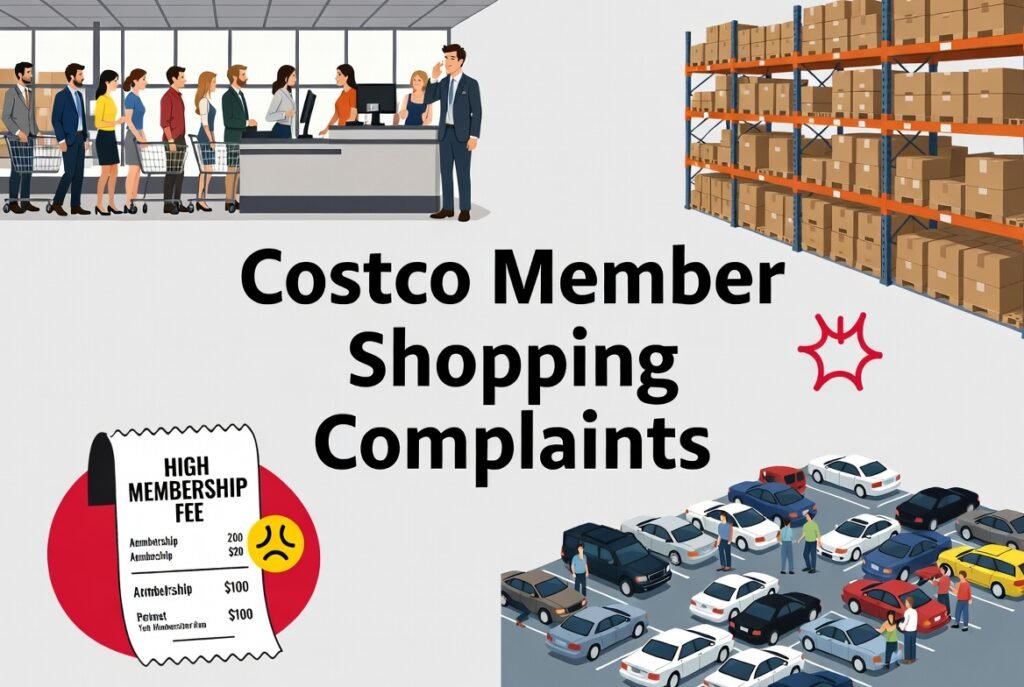
Costco member shopping complaints have reached a fever pitch in recent months, and the frustration is palpable. Walk into any warehouse on a Saturday afternoon, and you’ll witness the chaos firsthand: angry shoppers blocking entire aisles, checkout lines snaking toward the furniture section, and members openly venting their irritations to anyone within earshot.
The wholesale giant built its reputation on bulk savings and generous return policies. But something’s shifted.
Long-time members are speaking out. Social media threads overflow with grievances. Reddit communities dedicated to Costco have become digital venting chambers where shoppers air everything from product discontinuation heartbreaks to parking lot nightmares.
And here’s the thing: these aren’t just minor inconveniences.
We’re talking about genuine anger, disappointment, and even betrayal from people who’ve maintained memberships for decades. The complaints cut deep because members pay for the privilege of shopping there. When you fork over that annual fee, expectations run high.
This isn’t your typical listicle of minor gripes. We’ve compiled the most vocal, passionate, and downright bitter complaints straight from the mouths of frustrated Costco shoppers across the United States. Some of these outbursts might surprise you. Others will have you nodding in recognition.
Let’s dive into what’s really bothering America’s warehouse shoppers.
1. The Disappeared Product Phenomenon
Nothing sends Costco members into a tailspin quite like discovering their favorite item has vanished without warning.
You know the drill. You find that perfect product—maybe it’s an organic snack, a particular brand of coffee, or those incredible frozen appetizers. You build it into your routine. Your family loves it. Life is good.
Then it’s gone.
No announcement. No substitution suggestion. Just empty shelf space where your beloved item used to sit.
“I’ve been buying the same almond butter for three years,” one member posted on social media. “Drove 30 minutes to stock up, and they just don’t carry it anymore. No warning. Nothing. I feel personally attacked.”
This complaint ranks at the top because it happens constantly. Costco’s business model involves rotating inventory based on deals and supplier relationships. Great for variety, terrible for creatures of habit.
The bitterness intensifies when members realize they have zero control. Unlike regular grocery stores, where you can request items, Costco operates on a take-it-or-leave-it philosophy. Product selection happens at corporate levels far removed from individual member preferences.
Members report actual grief over discontinued items:
- Kirkland Signature coffee cake (still mourned in online forums)
- Specific frozen meal varieties that vanished mid-pandemic
- Beloved snack brands were replaced without explanation
- Seasonal items that never returned
The lack of communication stings most. A simple notification system would ease the pain, but Costco remains silent on these decisions.
2. Weekend Warrior Parking Lot Battles
Costco members’ complaints about parking lots deserve their own documentary series.
Weekends transform these lots into gladiatorial arenas. Members circle endlessly, stalking shoppers pushing loaded carts. Tensions escalate. Horns honk. Occasionally, heated confrontations erupt over contested spots.
The design doesn’t help. Many Costco locations were built when the membership base was smaller. Now they’re bursting at the seams, with parking infrastructure that hasn’t kept pace with growth.
“I spent 22 minutes looking for parking on a Sunday,” one member vented. “Twenty-two minutes! I could’ve driven to three other stores in that time.”
The frustration compounds when members spot employees parked in premium spots near the entrance. Fair or not, it grates on people who’ve circled the lot multiple times.
Smart shoppers have developed strategies:
- Shopping at opening time on weekdays
- Arriving 30 minutes before closing
- Parking in the far reaches and walking
- Avoiding weekends entirely
But here’s the reality: most people can’t structure their lives around Costco’s peak hours. Families with two working parents need weekend shopping trips. That’s when the parking nightmare begins.
Some locations have it worse than others. Urban Costcos in densely populated areas face particularly brutal parking situations. Suburban locations with generous lot sizes still get congested during prime hours.
The bitter outbursts in parking lots have become legendary. Members report witnessing full-blown arguments, passive-aggressive cart placement, and creative (sometimes illegal) parking solutions born of desperation.
3. The Sample Station Chaos and Disappointment
Remember the glory days of Costco samples?
Tables positioned throughout the warehouse offered generous portions of everything from appetizers to desserts. It was part of the experience, a perk that justified the membership fee for many.
Then the pandemic shut it all down.
Samples returned, but they’re different now. Portions shrunk. Availability became sporadic. The magic faded.
“The samples are a joke now,” one disgruntled member shared. “They hand you one sad little piece of cracker with barely any topping. I remember when they’d give you actual meal-sized portions.”
Beyond portion sizes, the sample station’s behavior has deteriorated. Shoppers crowd around demonstrations, blocking aisles and creating bottlenecks. Some members treat sample stations like their personal buffet, making multiple passes while others wait.
The vendors working these stations report dealing with entitled behavior, rudeness, and even aggressive demands for additional samples. It’s gotten ugly.
Long-time members lament what’s been lost. Sampling used to feel generous and community-oriented. Now it often feels stingy and chaotic, with members jockeying for position like it’s a limited-edition product drop.
4. Checkout Line Purgatory
Few things test patience like Costco checkout lines during peak hours.
You’ve navigated the crowded aisles. Your cart overflows with bulk purchases. You’re ready to complete the transaction and head home.
Then you see it: lines extending back into the merchandise sections, 8-10 carts deep at every register.
The wait begins.
Fifteen minutes pass. Twenty. Your frozen items start sweating. Kids grow restless. That quick shopping trip has consumed your entire afternoon.
“I’ve stood in Costco checkout lines longer than I’ve waited at the DMV,” one member posted. “And that’s saying something.”
The frustration multiplies when members notice registers sitting closed despite massive lines. Staffing challenges affect all retailers, but the optics look terrible when customers are trapped in queue purgatory while empty registers mock them.
Self-checkout was supposed to help. In theory, it’s a solution. In practice, it’s created new problems:
- Members with overflowing carts struggle with the process
- Item limits at self-checkout cause confusion
- Technical glitches require employee intervention
- The process often takes longer than traditional checkout
The bitter outbursts in checkout lines have become routine. Members openly complain to each other, creating a shared misery that somehow makes the wait feel even longer.
Some locations handle traffic better than others. Newer warehouses designed with expanded checkout areas provide relief. Older locations remain stuck with infrastructure that can’t accommodate current membership levels.
5. The Membership Fee Increases Without Added Value
Costco announced another membership fee increase, and members erupted.
The annual fee has crept upward over the years, and each increase triggers passionate responses. Not because members can’t afford the difference—most can. The anger stems from a perceived lack of proportional value increases.
“They raised the fee again, but what am I getting for it?” one member questioned. “The gas prices are competitive, sure, but sometimes not the cheapest. The store is more crowded than ever. Products I love disappear. Where’s the added value?”
This complaint resonates because members feel the relationship has become one-sided. Costco’s profits soar while the shopping experience deteriorates in specific ways. The fee increase feels like adding insult to injury.
The Executive membership tier particularly stings. Members pay the higher fee, anticipating those 2% rewards will offset the cost. But changing shopping habits, product availability issues, and price adjustments can reduce the expected return.
Truth be told, Costco’s membership fees remain reasonable compared to some competitors. The yearly cost breaks down to mere dollars per month. But psychology matters. That annual payment feels significant, and members expect their loyalty to be rewarded with consistent, quality experiences.
6. Aggressive Cart Handlers and Aisle Blockers
Costco member shopping complaints frequently target fellow shoppers rather than the store itself.
The warehouse shopping format encourages bulk buying, meaning larger carts and more items. When everyone’s pushing oversized carts through finite aisle space, conflicts become inevitable.
Then there are the specific offenders:
The Aisle Blockers: These shoppers park their carts perpendicular to traffic flow, completely obstructing passage while they contemplate purchase decisions. They seem oblivious to the bottleneck they’ve created.
The Speed Racers: They navigate the warehouse like they’re qualifying for NASCAR, cutting corners, and nearly clipping other shoppers. Their urgency apparently supersedes basic courtesy.
The Reunioners: Old friends who haven’t seen each other in years somehow always meet in the narrowest Costco aisle, where they proceed to catch up on life events while blocking both directions of traffic.
The Samplers: They abandon carts randomly to pursue free samples, creating orphaned cart obstacles throughout the store.
“I’ve been rammed by carts more at Costco than anywhere else,” one member vented. “And rarely do people apologize. It’s like entering the store strips people of basic manners.”
The confined spaces and high traffic create a pressure cooker environment. Add in time constraints, hunger, and decision fatigue, and you’ve got a recipe for confrontation.
Some members have developed defensive shopping strategies—shopping at off-peak times, taking wider routes, or simply avoiding certain sections during busy periods. But that shouldn’t be necessary for a retail experience you’re paying to access.
7. Return Policy Abuse by Other Members
Costco’s generous return policy is legendary.
It’s also a source of significant member frustration.
The policy allows returns on most items with few questions asked, even without receipts in many cases. This customer-friendly approach builds loyalty but creates opportunities for abuse that honest members resent.
Stories circulate constantly:
- Members returning fully consumed products, claiming they “didn’t like” them
- Year-old items brought back in clearly used condition
- People are treating Costco like a free rental service for seasonal items
- Returns of products obviously purchased for one-time events
“I watched someone return a turkey on December 26th,” one member shared. “They clearly bought it for Christmas, cooked it, served it, and returned whatever they claimed was ‘wrong’ with it. The employee had to accept it. I felt embarrassed for everyone involved.”
This abuse raises costs, which ultimately affect all members through pricing adjustments. The ethical shoppers feel penalized for others’ exploitation of the system.
Costco has added some restrictions over the years—electronics have a 90-day window, and diamonds must be returned within 48 hours. But the core policy remains remarkably lenient, and some members push boundaries aggressively.
The employees processing these questionable returns display remarkable patience, but members watching these transactions unfold feel genuine anger. It violates the unspoken community agreement that most Costco shoppers believe should exist.
8. The Tire Center Appointment Nightmare
Costco tire centers offer competitive pricing and quality service.
Getting an appointment? That’s another story entirely.
Members report booking appointments weeks in advance, only to face long waits even with confirmed times. The online scheduling system shows availability that doesn’t match reality at individual locations.
“I had a 10 AM appointment for a tire rotation,” one member explained. “I arrived on time, checked in, and still waited two hours. What’s the point of the appointment system if they don’t honor the times?”
The tire centers face unique challenges. Seasonal demand fluctuates dramatically. Unexpected repairs take longer than scheduled services. Staff shortages impact capacity. But members don’t see those operational details—they see broken promises.
Walk-ins further complicate the situation. Some locations accept them, creating uncertainty about queue position for members with appointments. The lack of transparency about wait times adds to the frustration.
Communication could solve much of this. If the tire center provided realistic time estimates or updates about delays, members could plan accordingly. Instead, they’re often left wondering whether to stay or leave.
The pricing remains attractive enough that members tolerate the inconvenience. But the bitter complaints about wasted time pile up, especially for members who’ve taken time off work for these appointments.
9. Inconsistent Stock Between Locations
Costco’s inventory varies significantly between locations, creating a treasure hunt mentality that members find simultaneously exciting and infuriating.
What’s abundantly available at one warehouse might never appear at another. Members searching for specific items often call multiple locations, only to find the product exists nowhere in their region.
“I saw this amazing outdoor furniture set at my friend’s Costco across town,” one member shared. “Drove to my nearest location—nothing. Called three others—still nothing. Why can they get it and we can’t?”
The warehouse model allows individual locations to stock items based on local preferences and supplier relationships. This creates variety but also inequality in member experiences.
Business centers stock entirely different selections, and not all areas have access to these specialized locations. Members in areas without business centers feel like second-class customers when they hear about products available only at those warehouses.
Regional differences make sense for certain items—cold-weather gear sells better in Minnesota than Florida. But when basic popular items show geographic disparity without a clear reason, members feel frustrated.
The online inventory system doesn’t solve this problem. Website stock often doesn’t match in-warehouse availability, and items listed as available may be out of stock when you arrive.
SIMILAR POST >> What to Buy When Grocery Shopping: Smart List Essentials
10. Food Court Menu Reductions and Changes
The Costco food court holds a special place in members’ hearts.
Or it used to.
Menu reductions have sparked outrage that rivals any other complaint. The loss of specific items has created actual grief among the membership base.
The Polish dog removal remains one of the most controversial decisions in Costco history. Members loved this menu staple. Petitions circulated demanding its return. Social media campaigns formed. The anger was real and sustained.
“Taking away the combo pizza was a personal attack,” one member declared. “My kids grew up on that pizza. It was tradition. Now what am I supposed to tell them?”
The food court menu has shrunk considerably:
- Polish dogs: gone
- Chocolate frozen yogurt: discontinued
- Combo pizza: eliminated
- Various regional items: removed
What remains feels limited. Hot dogs and pizza still anchor the menu, but the variety that once existed has vanished. For some members, the food court was a major membership perk. Its diminishment feels like a broken promise.
The quality of remaining items has also come under fire. Members report the pizza isn’t as good, the churros taste different, and portion sizes have shrunk. Whether these perceptions are accurate or nostalgia-driven, the sentiment is widespread.
International Costco locations sometimes offer menu items unavailable in the United States, adding salt to domestic members’ wounds when they see photos online.
11. Online Ordering Complications and Surcharges
Costco’s e-commerce platform lags behind competitors in functionality and value.
Members frustrated by in-warehouse experiences naturally turn to online ordering, only to discover a new set of problems. The website works, but it’s not intuitive. Product searches return odd results. The checkout process feels clunky.
Then there are the surcharges.
Online prices often exceed in-warehouse prices, sometimes significantly. This price difference infuriates members who feel they’re being penalized for choosing convenience.
“I can’t always get to the warehouse,” one member explained. “I have mobility issues. But why am I paying 20-30% more for the same products online? I’m already paying for membership.”
The shipping threshold for free delivery sits higher than that of competitors. Members accustomed to free two-day shipping from other retailers balk at Costco’s requirements.
Delivery windows lack precision. The tracking information provides general timeframes rather than specific updates. For members arranging their schedules around deliveries, this vagueness creates unnecessary stress.
Returns of online orders add another complication. Some items must be returned to warehouses, others get handled through mail, and the process varies by product category. The confusion leads to abandoned purchases.
Costco’s strength lies in its physical warehouses. The online experience feels like an afterthought, and members have noticed.
12. Pharmacy Wait Times and Insurance Headaches
Costco pharmacies offer excellent pricing on medications.
Getting those medications can test your patience and sanity.
Wait times stretch unreasonably long during peak hours. Members report dropping off prescriptions and being told to return in several hours, or even the next day, for routine refills.
“I needed a simple antibiotic refill,” one member recounted. “They told me it would be three hours. For a refill, they already had in stock. I ended up going to a different pharmacy.”
The pharmacy drive-through windows, where available, move glacially slow. Cars queue up, wrapping around the building. What should be a quick pickup becomes a 30-minute ordeal.
Insurance issues compound the problem. Costco pharmacies require navigating the same insurance labyrinths as other pharmacies, but the high volume means longer resolution times when problems arise.
Staff shortages hit pharmacies particularly hard. The specialized nature of the work means fewer available employees to handle rushes. Members see the stress on pharmacy workers but still feel frustrated by the inefficiency.
The app-based prescription management helps some members but introduces technical glitches that create new problems. Refill requests submitted through the app sometimes disappear. Notifications about ready prescriptions arrive late or not at all.
Despite competitive pricing, some members have abandoned Costco pharmacies entirely, concluding that the time cost outweighs the financial savings.

13. Gas Station Lines and Pump Etiquette Violations
Costco gas stations offer significant savings per gallon.
They also inspire some of the most bitter member outbursts recorded in the retail environment.
Lines of cars snake through parking lots, sometimes extending onto public streets. Members spend 20-30 minutes waiting for fuel, burning gas while idling to save money on gas—the irony isn’t lost on anyone.
“I calculated it once,” a member posted. “After accounting for the time, the gas I burned waiting, and the stress, I saved maybe $3. Totally not worth it.”
Then there’s the pump etiquette—or lack thereof.
Members report constant violations of basic gas station courtesy:
- Cars pulling in the wrong direction, creating awkward angles
- Drivers leaving cars at pumps while they shop
- People filling multiple vehicles and gas cans during peak hours
- Shoppers are treating the gas line like a parking lot
The space constraints at many Costco gas stations weren’t designed for current traffic volumes. The resulting congestion creates bottlenecks where minor mistakes cascade into major delays.
Arguments at the pumps happen regularly. Tensions run high when someone’s been waiting 25 minutes and watches another driver commit an egregious etiquette violation.
Some locations have implemented better traffic flow designs, but older stations remain chaotic. The attendants do their best to manage flow, but they can’t overcome fundamental design limitations.
14. Temperature Control Inside Warehouses
Walk into a Costco in summer, and you might need a jacket.
Winter shopping? You’re sweating within minutes.
Temperature control complaints might seem trivial compared to other issues, but the discomfort affects the entire shopping experience. Members bundle up in winter coats to brave the cold warehouse in July, or strip off layers in December when the heat blasts.
“I don’t understand the climate control strategy,” one member questioned. “It’s 95 degrees outside, and I’m cold inside the store. But in winter, when I want it cool, it feels like a sauna.”
The refrigeration sections create cold zones that require extra layers. Browsing frozen foods becomes an endurance test. Members rush through these sections to escape the chill, potentially missing products they’d consider with more time.
Conversely, certain areas of the warehouse trap heat, especially near the food court or during summer months. These hot zones discourage browsing and rush decision-making.
The warehouse design prioritizes product preservation over customer comfort. Refrigeration needs, building size, and energy efficiency calculations drive temperature decisions. Members’ comfort ranks lower on the priority list.
Regional variations in climate control exist, with some warehouses maintaining more comfortable temperatures than others. Members who’ve visited multiple locations notice these inconsistencies and wonder why standardization doesn’t exist.
15. The Membership Card Checkpoint Routine
Every. Single. Visit.
You pull into the parking lot, grab your membership card, and prepare for the entrance ritual. An employee checks your card before you can enter. Fine, it’s policy.
But members question the necessity and execution of this checkpoint.
“They check my card at the door, then again at checkout,” a member pointed out. “What’s the door check preventing? Has anyone ever said, ‘You got me, I don’t have a card,’ and left?”
The entrance checkpoint creates bottlenecks during busy times. Lines form at the doors while employees verify each card. The process slows entry when warehouses are already crowded.
The receipt checks upon exit add another layer to this complaint. Members who’ve just waited in long checkout lines must now stop again while an employee marks their receipt. The reasoning makes sense—theft prevention and cart accuracy verification—but the implementation feels tedious.
“I’ve been a member for 15 years,” one long-time shopper vented. “I buy thousands of dollars in products annually. The entrance and exit checkpoints make me feel like a suspected criminal rather than a valued customer.”
The policies exist for legitimate business reasons. But the execution sometimes lacks the warmth that would transform these security measures into customer service touchpoints. A smile and friendly greeting can make the card check feel welcoming rather than suspicious.
Some members have adapted by having cards ready and moving through quickly. Others feel the entire routine represents unnecessary friction in the shopping experience.
Understanding Why These Complaints Matter
Costco member shopping complaints aren’t just isolated grievances from cranky shoppers.
They represent genuine friction points in what should be a premium retail experience. Members pay annual fees, which psychologically elevate their expectations. When the experience falls short, the disappointment cuts deeper than it would at stores with no membership requirement.
The complaints cluster around a few core themes:
Lack of control: Members can’t influence product selection, can’t guarantee availability, and can’t customize their experience.
Time inefficiency: Parking struggles, checkout waits, and crowd navigation consume time that members value highly.
Communication gaps: Costco makes decisions affecting members without explanation or warning, creating feelings of being undervalued.
Erosion of value: Long-time members perceive the experience declining while fees increase, creating a value equation that no longer balances.
These complaints matter because they indicate areas where Costco could improve. Some fixes would require significant infrastructure investment—expanded parking, additional checkout lanes, and better traffic flow design. Others could be addressed through simple communication improvements.
What Costco Does Right Despite the Complaints
Fair perspective requires acknowledging that Costco remains enormously popular for good reasons.
The Kirkland Signature brand delivers exceptional value across countless product categories. Quality generally exceeds expectations, especially at the price points offered. Members trust the brand.
Return policies, while sometimes abused, provide genuine peace of mind for honest shoppers. Knowing you can return an unsatisfactory purchase eliminates purchase anxiety.
Employee treatment stands out in retail. Costco pays competitive wages and provides benefits, creating a workforce that generally stays longer and provides better service than industry averages.
The treasure hunt aspect of rotating inventory excites many members. Finding unexpected deals creates genuine joy and keeps the shopping experience fresh.
Bulk pricing delivers real savings for families and small businesses. The per-unit costs often beat competitors significantly, making the membership fee worthwhile purely from a financial perspective.
Strategies for Minimizing Costco Shopping Frustrations
Smart members have developed tactics for avoiding the worst aspects of the Costco experience:
Timing optimization: Shopping weekday mornings or evenings dramatically reduces crowd stress. The warehouse at 7 PM on Tuesday bears little resemblance to 2 PM on Saturday.
List discipline: Detailed shopping lists prevent wandering, which extends time in crowded environments. Get in, get what you need, get out.
Strategic parking: Walking from distant spots often takes less total time than circling for closer spaces. Plus, you’ll skip the parking lot confrontations.
Splitting trips: Instead of one massive monthly shop, shorter, focused trips reduce cart size, simplify checkout, and minimize stress.
Online research: Check product availability online before traveling to the warehouse when seeking specific items.
Gas timing: Fill up during off-peak hours—early morning or late evening—to avoid the worst lines.
Pharmacy alternatives: For urgent prescriptions, consider using other pharmacies. Reserve the Costco pharmacy for routine refills you can plan around.
The Evolution of Member Expectations
Costco member shopping complaints have intensified partly because retail expectations have evolved.
Amazon trained shoppers to expect next-day delivery, precise tracking, and effortless returns. Target and Walmart invested heavily in app-based shopping, curbside pickup, and seamless omnichannel experiences.
Costco’s model resists some of these innovations. The warehouse membership club operates fundamentally differently from traditional retail. But members increasingly expect conveniences they’ve found elsewhere.
The generational shift matters too. Long-time members who joined in the 1990s or 2000s accept certain limitations as part of the warehouse experience. Younger members who grew up with smartphone shopping and instant gratification view those same limitations as outdated inconveniences.
Social media amplifies every complaint. Before online platforms, frustrated members might vent to friends or write letters to corporate offices. Now they post in forums where thousands echo their frustrations, creating communities of shared grievance.
This amplification doesn’t mean the complaints lack validity. It means individual negative experiences reach wider audiences, shaping perceptions even among members who haven’t personally encountered those specific issues.
Regional Variations in Member Satisfaction
Costco member shopping complaints vary significantly by region and specific warehouse location.
Newer warehouses built within the past decade generally receive better reviews. Modern design incorporates lessons learned from older locations—wider aisles, more checkout lanes, expanded parking, better traffic flow.
Urban locations face unique challenges. Limited real estate means smaller parking lots. Higher population density creates more competition for the same warehouse capacity. Weekend crowding reaches extreme levels.
Suburban warehouses with generous footprints and ample parking deliver much smoother experiences. Members in these areas report fewer frustrations with the core operational issues that plague busier locations.
Regional cultural differences affect shopping behavior, too. Some areas maintain stronger courtesy norms in public spaces. Others embrace more aggressive shopping tactics. These cultural variations shape the in-warehouse experience significantly.
Management quality at individual warehouses makes enormous differences. Members report vastly different experiences with the same policies depending on how local leadership implements them.
The Financial Reality Behind Membership Complaints
Here’s an uncomfortable truth: Costco makes most of its profit from membership fees, not product sales.
This business model brilliantly ensures the company remains incentivized to provide value that justifies membership renewal. But it also means Costco can sometimes tolerate operational friction points that would devastate traditional retailers.
Members who complain but keep renewing send a message that the value proposition still works, despite frustrations. Only when complaint levels affect renewal rates does economic pressure build for significant changes.
The math works differently for different members:
- Large families buying bulk groceries see clear ROI on membership
- Small households struggle to justify the fee without careful shopping
- Business members access unique value through bulk supplies
- Convenience-focused shoppers might find better options elsewhere
Understanding your personal value equation helps determine whether Costco membership makes sense despite the legitimate complaints.
Looking Ahead: Potential Improvements Members Want
Reading through member feedback reveals consistent improvement requests:
Communication systems: Email or app notifications when favorite products discontinue, with suggested alternatives. Real-time wait estimates for checkout, pharmacy, and tire center. Clear explanations for policy changes.
Technology integration: Better inventory tracking is accessible through apps. Ability to reserve specific items for pickup. Virtual queuing systems for pharmacy and tire center.
Infrastructure expansion: More checkout lanes at existing warehouses. Parking lot expansions were feasible. Traffic flow redesigns at problematic gas stations.
Customer service touchpoints: Staffed information desks to answer questions quickly. Dedicated assistance for members with accessibility needs. Product specialists in complex categories.
Online platform improvements: Price parity between online and in-warehouse, where possible. Better search functionality. Improved delivery windows and tracking.
Some of these improvements would require significant investment. Others could be implemented relatively quickly with existing technology.
Frequently Asked Questions
Why do Costco members complain if they keep renewing their memberships?
The value proposition still works for most members despite frustrations. Bulk savings, quality Kirkland products, and gas discounts often justify the membership fee even when the shopping experience includes irritations. People complain because they care and want improvements, not necessarily because they’re ready to cancel.
Are Costco complaints worse now than in previous years?
Complaints have intensified partly due to social media amplification. Experience degradation has occurred in specific areas—menu reductions, increased crowding, product discontinuations—but other aspects have improved. The perception that things are worse often reflects changing expectations as much as changing reality.
Which Costco locations have the fewest complaints?
Newer warehouses in suburban areas with ample parking and modern design generally receive the highest satisfaction ratings. Specific locations vary, but members consistently report better experiences at facilities built within the past 10 years in areas with moderate population density.
Can you shop at Costco without dealing with crowds?
Timing makes an enormous difference. Weekday mornings (especially Monday and Tuesday) and weekday evenings after 7 PM typically offer much lighter traffic. The first hour after opening on any day tends to be relatively peaceful. Avoiding Saturdays and Sunday afternoons eliminates the worst crowding.
Does complaining to Costco corporate actually change anything?
Individual complaints rarely drive policy changes, but patterns of feedback definitely influence decisions. Costco monitors member satisfaction closely and has made changes based on widespread feedback. The Polish dog removal generated enough backlash that Costco acknowledged member passion on the topic, even if they haven’t reversed the decision.
Are Executive memberships worth it, given the complaints about value?
Executive memberships pay for themselves if you spend approximately $3,000 annually (with standard 2% rewards). Calculate your typical yearly Costco spending and compare the 2% return against the additional membership cost. For members already shopping regularly, the math usually works out favorably despite other frustrations.
Why doesn’t Costco expand popular locations that are always overcrowded?
Real estate availability and zoning restrictions limit expansion options for existing warehouses. Costco’s strategy typically involves opening new warehouses in underserved areas rather than expanding existing ones. The long-term planning cycle means addressing current crowding can take years.
How can I find out if Costco discontinued a product or if it’s just temporarily out of stock?
Asking warehouse employees provides the most reliable information, though they may not always know corporate inventory decisions. The asterisk pricing code (* on the price sign) indicates an item won’t be reordered, signaling discontinuation. Online forums and social media groups also track product availability and discontinuations.
What’s the best way to avoid Costco gas station lines?
Fill up during off-peak times—early weekday mornings, late evenings, or mid-afternoon on weekdays. Avoid Monday mornings when people fuel up for the week, and never attempt weekend fills during prime shopping hours. Consider whether the savings justify the wait for your specific situation.
Can a Costco membership be shared to make it more worthwhile?
Standard memberships include one household card for a spouse or household member. Beyond that, card sharing violates membership terms and creates issues at checkout. However, families can evaluate whether splitting the effective cost across legitimate cardholders improves the value proposition.
The bitter outbursts from Costco members stem from a complicated relationship with a retailer that delivers significant value while creating genuine frustrations. Understanding the complaints helps set realistic expectations and develop strategies for maximizing the membership benefits while minimizing the aggravations.
The warehouse club model inherently includes tradeoffs. Bulk packaging requires larger carts. Discount pricing necessitates operational efficiencies that sometimes sacrifice convenience. Limited selection keeps costs down but restricts choices.
Members who go in understanding these fundamental tradeoffs can better decide whether Costco fits their needs. Those expecting a traditional grocery store experience will inevitably face disappointment.
The complaints documented here are real, widespread, and valid. They represent opportunities for Costco to improve. But they also reflect the tensions inherent in a business model that’s made Costco one of the most successful retailers in the world.
Your membership value depends on whether the savings and quality outweigh the parking lot battles, checkout waits, and product disappointments. Only you can make that calculation.
For millions of members, the equation still balances favorably. For others, the frustrations have tipped the scales toward cancellation.
Understanding exactly what bothers members most helps everyone make informed decisions about whether a Costco membership makes sense for their specific situation.
SUGGESTED POST >> 10 Best Smoothie Recipes for Weight Loss at Home: Easy Guide