Essential Grocery List on a Budget: Affordable Shopping Tips

Creating an essential grocery list on a budget isn’t just smart—it’s survival. You walk into the grocery store with good intentions, maybe even a mental note of what you need. Then you leave with three bags of chips, artisanal cheese you can’t pronounce, and a credit card that’s crying for mercy.
Sound familiar?
Here’s the thing. Most people think budgeting means eating bland food and giving up everything delicious. Wrong. Dead wrong. The real secret is knowing what to buy, when to buy it, and how to stretch every dollar until it begs for relief.
This isn’t about deprivation. It’s about strategy.
Think about it. The average American family throws away nearly $1,500 worth of food every year. That’s a vacation. A nice one. Instead, that money ends up rotting in your fridge because you bought stuff you didn’t need, couldn’t use, or forgot existed.
Ready to change that? Let’s dive in.
Why Most People Fail at Budget Grocery Shopping
The grocery store is designed to separate you from your money. Every aisle, every endcap, every “limited time offer” exists to make you spend more than you planned.
Those shopping carts keep getting bigger for a reason.
People fail because they shop without a plan. They go hungry. They fall for marketing tricks. They buy pre-cut vegetables at triple the price because convenience feels worth it in the moment.
It’s not about willpower. It’s about having a system.
Building Your Essential Grocery List on a Budget: The Foundation
Start with protein. It’s the most expensive category, and it’s where most people blow their budget.
Chicken thighs cost half what chicken breasts do. Same bird. More flavor. Better texture when cooked. Yet somehow, boneless skinless chicken breasts became the default, and everyone’s paying premium prices for the driest part of the chicken.
Eggs remain undefeated as the cheapest protein per gram. A dozen eggs give you twelve different meals if you’re creative. Scrambled. Fried. Boiled. Baked into things. Turned into breakfast burritos you can freeze.
Canned tuna and beans are backup players that never let you down.
Here’s what your protein foundation should look like:
Budget Protein Staples:
- Eggs (18-count or larger for better value)
- Chicken thighs or drumsticks
- Ground turkey or beef (look for 80/20 ground beef on sale)
- Canned tuna or salmon
- Dried or canned beans (black beans, pinto, chickpeas)
- Peanut butter
- Whole rotisserie chicken (often cheaper than raw chicken)
Carbohydrates That Won’t Break the Bank
Rice and potatoes are your best friends. Not trendy. Not exciting. But reliable.
A 20-pound bag of rice costs about the same as two fancy coffee drinks. That bag will feed you for weeks. Brown rice, white rice—doesn’t matter much for your budget, though brown rice edges ahead nutritionally.
Potatoes get overlooked. They’re cheap, filling, and more versatile than people give them credit for. Baked. Mashed. Roasted. Fried. Turned into hash browns. Made into soup.
Pasta sits right behind rice in the budget hall of fame. Generic pasta is chemically identical to name brands. You’re paying for a box design.
Oats deserve special mention. Old-fashioned rolled oats cost pennies per serving and keep you full for hours. Forget the instant packets loaded with sugar and charging you for convenience.
Budget Carbohydrate Essentials:
- Long-grain white or brown rice (buy in bulk)
- Potatoes (russet, red, or sweet)
- Dried pasta (any shape)
- Old-fashioned oats
- Bread (buy on sale and freeze extra loaves)
- Flour and cornmeal for making your own basics
Vegetables and Fruits Without the Premium Price Tag
Frozen vegetables are nutritionally identical to fresh ones. Sometimes better, since they’re frozen at peak ripeness while “fresh” produce sits in trucks and warehouses for days.
Nobody wants to hear it, but it’s true.
Fresh produce works when you buy what’s in season. Berries in winter cost three times what they do in summer. Asparagus in February is a budget killer. Learn the seasons, follow them, and your produce bill drops dramatically.
Root vegetables last forever. Carrots, onions, and celery—these are the foundation of basically every cuisine on earth. They’re cheap. They store well. They add flavor to everything.
Bananas remain the most affordable fresh fruit year-round. Apples run a close second, especially when bought in bulk bags rather than individually.
Budget Produce Guide:
| Vegetable | Why It’s Budget-Friendly | Best Use |
|---|---|---|
| Carrots | Long shelf life, versatile | Snacks, soups, roasting |
| Cabbage | Huge heads, lasts weeks | Coleslaw, stir-fry, soup |
| Onions | Flavor powerhouse, cheap | Base for almost everything |
| Frozen mixed vegetables | No waste, always available | Quick side dishes, soups |
| Celery | Lasts long, adds flavor | Soups, stocks, snacking |
| Canned tomatoes | Shelf-stable, versatile | Sauces, soups, stews |
Budget Fruit Options:
- Bananas
- Apples (bulk bags)
- Oranges (in season)
- Frozen berries
- Canned fruit in juice (not syrup)
Dairy and Alternatives That Make Sense
Milk prices vary wildly by region, but buying the largest size you’ll use before it expires gives you the best per-ounce price.
Block cheese costs less than shredded cheese. Yes, you have to grate it yourself. Those thirty seconds of effort save you 40% on cheese. Worth it.
Plain yogurt in large containers beats individual cups by miles. Add your own fruit or honey. You control the sugar and save money.
Butter goes on sale regularly. When it does, stock up. Butter freezes beautifully and lasts months.
Dairy Staples:
- Milk (the largest size you can use)
- Block cheese (cheddar is most versatile)
- Plain yogurt (large container)
- Butter (stock up on sale)
- Eggs (listed in protein, but work here too)
Pantry Items That Multiply Your Options
Salt, pepper, garlic powder, and onion powder transform boring food into something edible. They’re not expensive, and they last practically forever.
Oil for cooking is non-negotiable. Vegetable or canola oil works for almost everything. Olive oil is great, but not essential for budget cooking.
Vinegar and soy sauce add massive flavor for minimal cost. A bottle of each lasts months and makes cheap ingredients taste intentional rather than desperate.
Bouillon cubes or stock concentrate give you restaurant flavor at home. A jar costs a few dollars and makes gallons of broth.
Essential Pantry Items:
- Salt and black pepper
- Garlic powder and onion powder
- Vegetable or canola oil
- All-purpose flour
- Sugar
- Vinegar (white and apple cider)
- Soy sauce
- Bouillon cubes or paste
- Hot sauce
- Baking soda and baking powder
How to Shop Smart and Slash Your Bill
Shop once a week. Every extra trip to the store costs you an average of $20 in impulse purchases. Limit your exposure.
Make a list and stick to it like your financial future depends on it. Because it kind of does.
Never shop hungry. This isn’t a myth. Studies confirm hungry shoppers spend 64% more than satisfied ones. Eat a snack before you go.
Check unit prices, not package prices. That big box might cost more upfront, but less per ounce. Do the math. Stores are required to show unit prices on shelf tags.
Store brands are manufactured in the same facilities as name brands. Sometimes it’s literally the same product in different packaging. Unless you have a specific preference, you can taste, go generic.
Shopping Strategy Checklist:
- Shop weekly, not daily
- Eat before shopping
- Bring a list and follow it
- Compare unit prices
- Choose store brands
- Check sale flyers before going
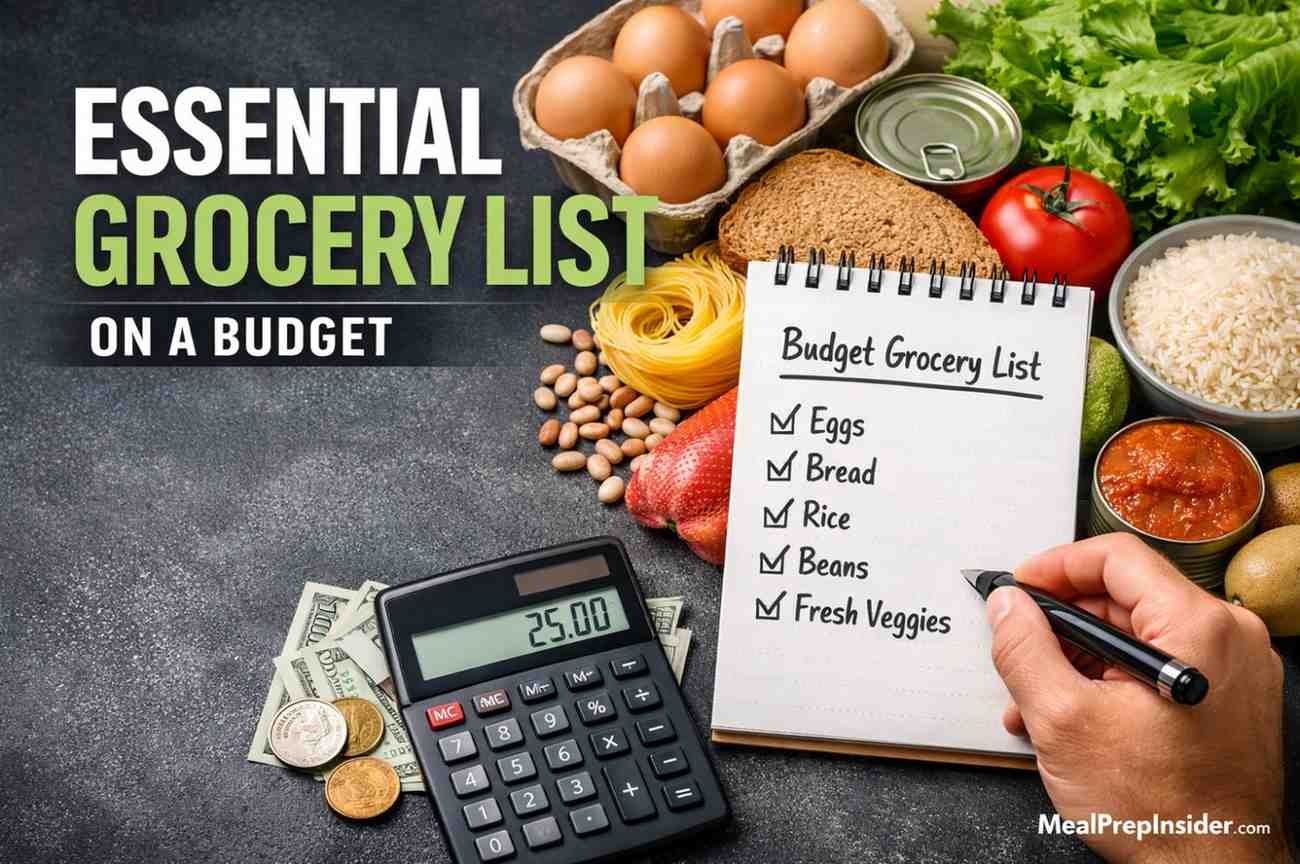
- Use a calculator to track spending as you shop
Mistakes That Kill Your Grocery Budget
Buying pre-cut produce is convenient and expensive. You’re paying someone’s labor to chop vegetables. A whole pineapple costs $3. Pre-cut pineapple chunks cost $6 for half the amount.
Do the math.
Shopping at convenience stores for anything except emergencies destroys budgets. Prices run 20-30% higher than those in regular grocery stores.
Ignoring sales and stockpiling opportunities costs you long-term. When chicken goes on sale for half price, buy extra and freeze it. When canned goods hit rock bottom prices, grab a dozen.
Throwing away food because you didn’t use it in time is throwing away money. Literally putting dollar bills in the trash.
Not checking your fridge before shopping leads to buying duplicates. You don’t need a fourth jar of mayo hiding behind the old one.
Budget-Killing Errors:
- Buying pre-cut, pre-washed, or pre-marinated foods
- Shopping without checking what you have
- Ignoring expiration dates and letting food spoil
- Buying individual serving sizes instead of bulk
- Falling for “health halo” marketing on expensive products
- Shopping at multiple stores for tiny savings (your time and gas matter)
Meal Planning Makes Everything Easier
Planning meals for the week before shopping changes everything. You buy exactly what you need. Nothing sits unused.
Start simple. Three dinner ideas that use overlapping ingredients. Monday’s roasted chicken becomes Wednesday’s chicken tacos and Friday’s chicken soup.
Breakfast and lunch can be repetitive. Nobody judges you for eating the same breakfast five days straight. That’s called consistency, not boring.
Leftovers are planned meals, not accidents. Cook once, eat twice. Make double batches of anything that reheats well.
Simple Week Meal Plan Example:
Monday: Baked chicken thighs, roasted potatoes, steamed frozen vegetables
Tuesday: Spaghetti with meat sauce (ground beef), side salad
Wednesday: Chicken tacos using Monday’s leftover chicken, rice, beans
Thursday: Beef and vegetable soup using Tuesday’s leftover ground beef, frozen vegetables
Friday: Egg fried rice using Wednesday’s leftover rice, frozen mixed vegetables
Saturday: Baked potato bar with cheese, leftover taco meat, and vegetables
Sunday: Chicken soup using bones from Monday’s chicken, carrots, celery, onions
Notice how ingredients repeat and build on each other? That’s the strategy.
Storage Tips That Prevent Waste
Freeze everything you won’t use immediately. Bread. Cheese. Meat. Butter. Chopped vegetables. Cooked rice. Sauces.
Your freezer is a pause button for food.
Learn proper refrigerator storage. Vegetables last longer in crisper drawers. Herbs stay fresh standing in water like flowers. Cheese wrapped in wax paper then plastic lasts weeks longer than cheese in its original packaging.
Glass containers show you what you have. You won’t forget about food if you can see it.
First in, first out. New groceries go behind old ones. Use older food first. This isn’t complicated, but it saves money.

Storage Guidelines:
| Food Item | Storage Method | Lifespan |
|---|---|---|
| Bread | Freeze extra loaves | 3-6 months frozen |
| Cheese (block) | Wax paper then plastic wrap | 3-4 weeks |
| Cooked rice | Freezer bags, flattened | 3 months |
| Raw chicken | Freeze if not using within 2 days | 9 months frozen |
| Vegetables (chopped) | Freezer bags | 8-12 months |
| Flour | Airtight container | 6-8 months |
| Bananas (overripe) | Peel and freeze | 3 months for smoothies |
RELATED POST >> Best Grocery List Essentials: Easy Weekly Shopping Checklist
The Complete Budget Grocery List Template
Here’s everything in one place. Customize based on your family size and preferences.
Proteins:
- Eggs (18-30 count)
- Chicken (whole, thighs, or drumsticks)
- Ground beef or turkey (when on sale)
- Canned tuna or salmon (4-6 cans)
- Dried beans (2-3 pounds)
- Peanut butter
Grains and Carbs:
- Rice (5-10 pound bag)
- Pasta (2-3 boxes)
- Bread (2 loaves, freeze one)
- Oats (large container)
- Potatoes (5-10 pound bag)
Vegetables:
- Onions (3-5 pounds)
- Carrots (2-3 pounds)
- Celery (1 bunch)
- Frozen mixed vegetables (2-3 bags)
- Canned tomatoes (4-6 cans)
- Cabbage (1 head)
- Garlic (1 bulb)
Fruits:
- Bananas (1 bunch)
- Apples (3-5 pound bag)
- Frozen berries (1-2 bags)
- Seasonal fruit on sale
Dairy:
- Milk (1 gallon or your weekly need)
- Cheese (1-2 pound block)
- Butter (1-2 pounds)
- Plain yogurt (32 oz container)
Pantry Staples:
- Flour
- Sugar
- Salt
- Black pepper
- Garlic powder
- Onion powder
- Cooking oil
- Vinegar
- Soy sauce
- Bouillon or stock
Advanced Strategies for Maximum Savings
Cashback apps work if you’re already buying the items. Don’t buy things just for cashback. That’s how they get you.
Loyalty programs at your main grocery store are worth joining. They’re free and often give personalized coupons based on what you buy.
Rain checks save money when sale items are out of stock. Ask customer service for a rain check, then buy at the sale price when they restock.
Markdown sections exist in most stores. Meat near its sell-by date gets discounted 30-50%. Freeze it the day you buy it, and it’s perfectly safe.
Growing herbs on a windowsill seems small, but it adds up. Fresh herbs cost $3-4 per tiny package. A basil plant costs $3 and produces for months.
Extra Savings Tactics:
- Download your store’s app for digital coupons
- Shop markdown sections for meat and bread
- Buy in bulk only what you’ll definitely use
- Consider a wholesale club membership if you have storage and a family size to support it
- Track prices on items you buy regularly to recognize good deals
- Use cash instead of cards to stick to your budget physically
Eating Healthy on a Budget Is Possible
The myth that healthy eating costs more needs to die. Cooking from scratch with basic ingredients costs less than processed food and tastes better.
Beans and rice together make a complete protein. Add frozen vegetables and seasoning, and you’ve got a nutritious meal for under $2.
Oatmeal with bananas and peanut butter gives you fiber, protein, and potassium for pennies per serving.
Frozen vegetables are just as nutritious as fresh and often more so because they’re frozen at peak ripeness. No nutritional compromise required.
Eggs provide the same high-quality protein whether you pay $8 for pasture-raised or $3 for conventional. The nutritional difference is minimal despite the price gap.
Water is free and the healthiest beverage. Juice and soda add empty calories and real costs.
What a Week of Budget Groceries Actually Costs
For a single person eating three meals daily, a solid grocery budget runs $40-60 per week. That’s roughly $175-250 monthly.
A couple can eat well on $80-100 weekly by cooking at home and following these principles.
A family of four might spend $150-200 weekly, depending on ages and appetites.
These numbers assume cooking from scratch, minimal eating out, and following the strategies outlined here.
Sample Weekly Budget Breakdown ($50 for one person):
- Proteins: $15 (eggs, chicken, beans, peanut butter)
- Grains/Carbs: $8 (rice, pasta, bread, oats, potatoes)
- Vegetables: $12 (fresh basics, frozen bags, canned tomatoes)
- Fruits: $6 (bananas, apples, frozen berries)
- Dairy: $7 (milk, cheese, yogurt)
- Pantry/Miscellaneous: $2 (replenishing spices and staples)
The 72-Hour Challenge
Try this. For the next three days, commit to shopping from this list and nothing else. Track every dollar.
Don’t buy anything pre-made. No restaurant food. No convenience items.
Cook simple meals using the template above. Notice how far your money stretches.
Most people are shocked by two things: how much money they save and how good basic food tastes when you actually season it properly.
After 72 hours, you’ll have a baseline. You’ll understand your real grocery needs versus wants.
Making It Sustainable Long-Term
Budgeting isn’t deprivation. It’s allocation.
You’re not giving up good food. You’re choosing to spend money on ingredients rather than packaging and marketing.
Allow yourself one or two treats per shopping trip. A favorite coffee creamer. A pint of ice cream. Something that makes you happy. Budget for joy, or you’ll rebel against the whole system.
Track your progress. Keep receipts for a month and compare them to previous months. Seeing the savings in black and white reinforces the habit.
Celebrate wins. When you make it through a week under budget, do something free that you enjoy. The positive reinforcement works.
Long-Term Success Tips:
- Review and adjust your list monthly
- Don’t aim for perfection, aim for improvement
- Share budget meals with family so everyone understands the why
- Find free recipes online that match your staples
- Batch cook when you have time to make future weeks easier
- Remember that one expensive week doesn’t ruin everything
Common Pitfalls to Sidestep
Thinking cheaper always means lower quality, which sets you up for disappointment. Store brands often match or exceed name-brand quality.
Comparing your budget to someone with different circumstances makes you miserable. A family with kids has different needs than a single person. A couple in their twenties eats differently from retirees.
Getting discouraged by one bad shopping trip kills momentum. Learn what went wrong and adjust.
Buying things you don’t like just because they’re cheap guarantees waste. If you hate beans, don’t buy beans. Find your cheap proteins elsewhere.
Refusing to adapt when prices spike on your usual items costs money. If chicken is expensive this week, buy what’s on sale instead.
When to Spend More Strategically
Some items are worth paying extra for. Quality knives last for decades and make cooking easier. Cheap knives frustrate you and quit working.
Good storage containers prevent waste, which saves money long-term. They’re an investment, not an expense.
Spices and seasonings that you use constantly deserve decent quality. They make cheap ingredients taste expensive.
A slow cooker or instant pot multiplies your options with cheap ingredients. Tough, cheap cuts become tender. Dried beans cook without soaking.
Worth the Investment:
- One good chef’s knife
- Glass storage containers
- Basic slow cooker or pressure cooker
- Sheet pans for roasting
- Quality spices you use weekly
FAQ
How much should I budget for groceries per month?
For a single adult, $150-250 monthly is realistic. Couples can budget $300-400. Families of four should plan for $500-800, depending on children’s ages and dietary needs. These numbers assume home cooking and minimal dining out.
Are generic brands really the same as name brands?
In most cases, yes. Many store brands are manufactured in the same facilities as name brands. The main difference is packaging and marketing costs. Blind taste tests consistently show people can’t tell the difference in basics like pasta, rice, canned goods, and dairy.
How do I grocery shop on $25 a week?
Focus on rice, beans, eggs, potatoes, and whatever protein is on sale. Buy frozen vegetables instead of fresh. Skip all processed and convenience foods. Bake your own bread if possible. This budget is tight, but doable for a single person willing to cook everything from scratch.
What are the cheapest high-protein foods?
Eggs lead the pack at roughly 15-20 cents per egg for 6 grams of protein. Dried beans cost pennies per serving with 15 grams per cup. Peanut butter, canned tuna, and chicken thighs round out the affordable protein options.
Should I buy organic on a tight budget?
Not necessary for budget success. Organic is a personal choice, not a nutritional requirement. If certain organic items matter to you, prioritize those and buy conventional for everything else. The “Dirty Dozen” list identifies which produce has the most pesticide residue if you want to be selective.
How can I save money without coupons?
Focus on unit pricing, buying in bulk, choosing store brands, and shopping during sales. Coupons often push you toward processed foods or brands you wouldn’t normally buy. Building meals around what’s on sale saves more than couponing for specific items.
Is buying in bulk always cheaper?
Only if you’ll use it before it expires. Bulk rice and pasta make sense because they last for years. Bulk fresh produce spoils if you’re shopping for one or two people. Calculate the unit price and honestly assess whether you’ll use the quantity.
How do I reduce food waste?
Plan meals before shopping, use a first-in-first-out system in your fridge, freeze extras immediately, and repurpose leftovers creatively. Make stock from vegetable scraps and chicken bones. Freeze overripe bananas for smoothies. Store food properly to extend shelf life.
Can I eat healthy for cheap?
Absolutely. Beans, rice, oats, eggs, frozen vegetables, and seasonal fruits provide complete nutrition for minimal cost. The healthiest diets globally are based on simple, affordable staples. Processed “health foods” are expensive, but actual healthy eating isn’t.
What’s the best day to grocery shop for deals?
Wednesday typically offers the best combination of old and new sales overlapping. Markdowns on meat and bread often happen early in the morning or late evening. Ask your store’s staff when they do markdowns and plan accordingly.
How do I stick to my list at the store?
Eat before shopping, set a firm budget and track as you go, avoid aisles that don’t contain list items, and use grocery pickup or delivery if impulse control is challenging. Treat your list as non-negotiable unless you find a better deal on an equivalent item.
Should I shop at multiple stores for the best deals?
Usually not worth it unless stores are very close together. The time, gas, and increased temptation to overspend typically cancel out small savings. Pick one main store with good prices and stick with it for efficiency.
Final Thoughts
An essential grocery list on a budget doesn’t require sacrifice. It requires intention.
The difference between spending $800 monthly and $400 isn’t eating worse. It’s shopping smarter, wasting less, and cooking more.
Those savings compound. An extra $400 monthly is $4,800 yearly. That’s a solid emergency fund. A debt payment plan. A vacation. Whatever matters to you.
Start with one week. Use this list. Track your spending. See what happens.
You might surprise yourself with how good you are at this once you have a system.
The grocery store will still try to separate you from your money. But now you’ve got a plan to fight back.
SUGGESTED POST >> Ultimate Mediterranean Diet Grocery List: Best Easy Guide
Discover more from Meal Prep Insider
Subscribe to get the latest posts sent to your email.