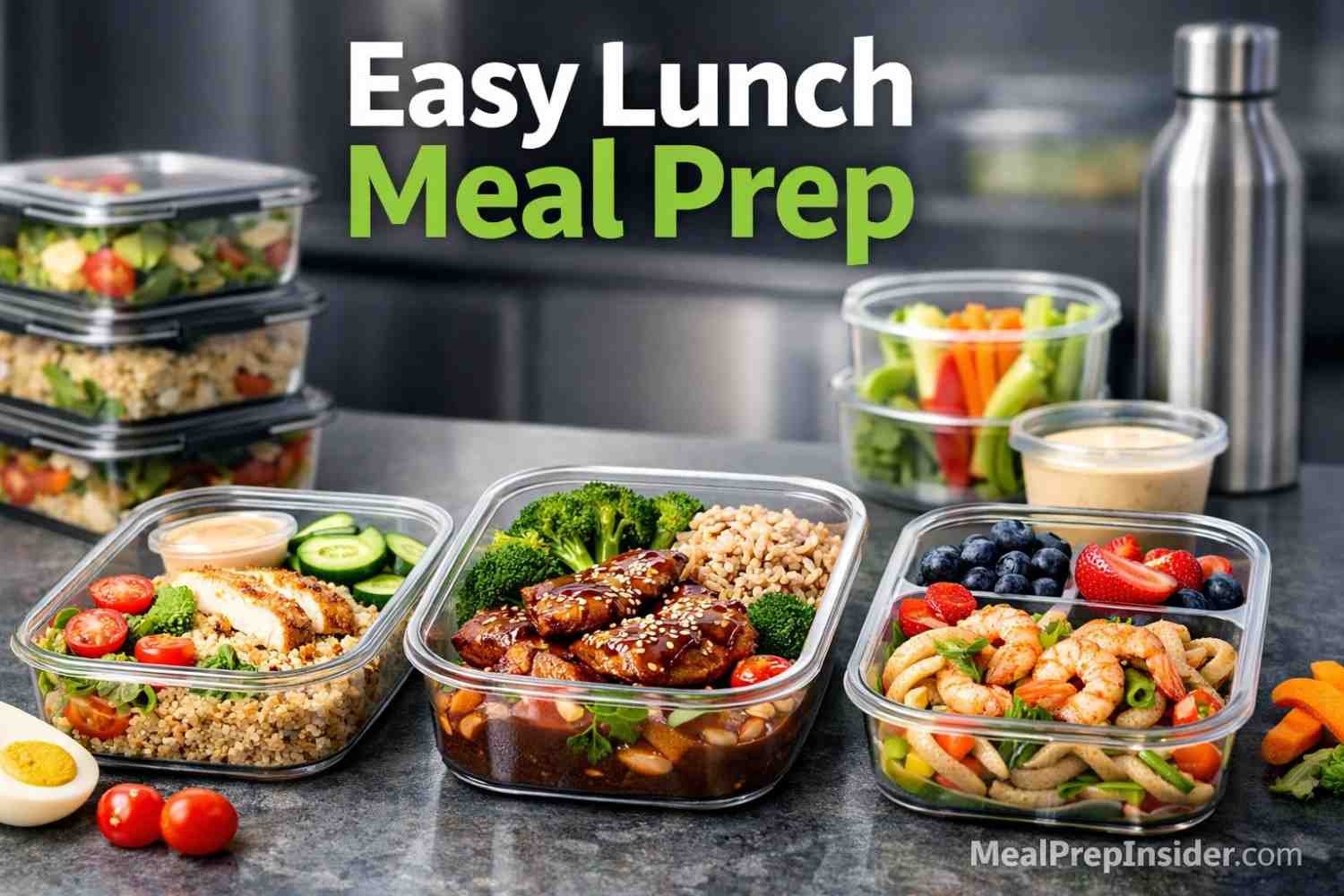
Easy Lunch Meal Prep: Best Hassle-Free Midday Meals

Easy lunch meal prep might sound like another trendy health thing, but here’s what nobody tells you: most people completely abandon their prep containers by Thursday. The wilted lettuce. The soggy bread. The mysterious smell is coming from that quinoa bowl.
You know what I’m talking about.
But what if I told you that prepping lunches doesn’t have to feel like assembling tiny Tupperware prisons for sad desk meals? What if it could genuinely save you money, time, and those 2 PM vending machine regrets?
Stay with me here.
The reality is that Americans spend an average of $3,000 annually on lunch. That’s a vacation. Or a new couch. Or approximately 300 really good coffees.
This guide isn’t going to give you the same five boring chicken recipes everyone else pushes. We’re going deeper. We’re talking about systems that work for chaotic schedules, strategies for people who hate cooking, and real solutions for when your week goes sideways.
Let’s get into it.
Why Easy Lunch Meal Prep Changes Everything
You already know meal prep saves money. Everyone says that.
But here’s what changed my perspective entirely: it’s about decision fatigue. By Wednesday afternoon, you’ve already made roughly 200 decisions. Your brain is fried. That’s when you grab whatever’s closest, tastiest, and usually least nutritious.
Prepped lunches eliminate that mental load.
Think about it. No more staring into your fridge at 7 AM, wondering what you’ll eat later. No more sad drive-throughs. No more spending $15 on a mediocre salad because you forgot to plan.
The benefits stack up quickly:
- You control exactly what goes into your body
- Portion sizes become consistent and reasonable
- Dietary goals become achievable instead of theoretical
- Your wallet stays noticeably heavier
- Afternoon energy crashes diminish significantly
- You stop eating things you don’t even like out of desperation
And here’s the kicker: once you establish a system, it takes less time than you’d spend deciding what to order three times during the week.
The Foundations of Successful Lunch Prep
Before we talk recipes, we need to talk strategy.
Most people fail at meal prep because they approach it like cooking for a dinner party every single week. That’s exhausting. That’s unsustainable.
Successful prep is boring in the best possible way.
Container quality matters more than you think
Cheap containers leak. They stain. They crack in the dishwasher. Then you’re buying new ones every two months, which defeats the cost-saving purpose.
Invest once in glass containers with proper sealing lids. They lasted years. Food tastes better. You can microwave them without wondering if you’re slowly poisoning yourself with plastic chemicals.
Get various sizes. Small ones for snacks and sides. Medium for salads. Larger ones for full meals with multiple components.
Temperature zones are your secret weapon
Not everything needs to be cold. Not everything should be reheated.
Think in categories:
- Cold items that stay fresh: salads with dressing separate, wraps, veggie sticks
- Room temperature foods: grain bowls, pasta salads, certain sandwiches
- Reheat-friendly meals: casseroles, stir-fries, soups, stews
Mix these categories throughout your week so you’re not microwaving everything or eating cold meals when you want something warm.
The rotation principle keeps you sane
Don’t prep the same lunch five times. Your taste buds will revolt by day three.
Instead, create two or three different meals. Alternate them. Your brain interprets this as variety even though you cooked everything on Sunday.
Setting Up Your Prep System
Let me be straight with you: the Pinterest-perfect meal prep photos showing twelve identical containers lined up like soldiers? That’s not real life for most people.
Your system needs to fit your actual life.
Time-blocking that works
You don’t need a four-hour marathon cooking session. In fact, that’s a recipe for burnout.
Try this instead: pick two time blocks during the week. Sunday afternoon for 90 minutes. Wednesday evening for 45 minutes.
Sunday covers your Monday through Wednesday lunches. Wednesday tops you up for Thursday and Friday.
Shorter sessions feel manageable. You’re not sacrificing your entire weekend. And midweek prep means fresher food toward the end of the week.
The shopping strategy nobody mentions
Your grocery trip determines whether meal prep succeeds or becomes another abandoned resolution.
Shop with a list. Obvious, right? But structure that list by recipe component, not by store section.
Write down:
- Proteins for each meal
- Vegetables and produce
- Grains and bases
- Sauces and seasonings
- Containers and storage needs
This prevents the “I bought random healthy things that don’t make complete meals” problem that plagues most first-time preppers.
Equipment that speeds everything up
You don’t need fancy gadgets. But a few key items make the difference between 90-minute prep and three-hour ordeals.
A rice cooker or instant pot handles grains while you prep other components. Sheet pans let you roast multiple vegetables simultaneously. A sharp knife makes chopping vegetables feel less like punishment.
That’s genuinely all you need to start.
Easy Lunch Meal Prep Ideas That Work
Now we get to the good stuff. Real meals that taste good on day one and day five.
Grain Bowl Formula
Grain bowls are foolproof. They’re forgiving. They don’t get weird and soggy.
The formula is simple:
Base + Protein + Vegetables + Sauce + Crunch
For the base, choose one:
- Brown rice
- Quinoa
- Farro
- Rice noodles
- Cauliflower rice
Protein options:
- Grilled chicken thighs (stay juicier than breasts)
- Baked tofu cubes
- Hard-boiled eggs
- Chickpeas
- Ground turkey
Vegetables work best when roasted:
- Sweet potatoes
- Broccoli
- Bell peppers
- Zucchini
- Brussels sprouts
The sauce goes in a separate small container. Add it right before eating. This prevents everything from getting mushy.
For crunch, try:
- Nuts or seeds
- Crispy chickpeas
- Tortilla strips
- Croutons
Mix and match these components. One prep session gives you countless combinations.
The Master Salad Strategy
Salads get a bad reputation because most people build them incorrectly for meal prep.
Here’s the method that keeps salads crisp all week:
Layer ingredients in a specific order inside your container. Dressing goes on the bottom. Then hearty vegetables that won’t wilt. Then proteins. Then grains, if you’re using them. Delicate greens go on top.
When you’re ready to eat, shake the container or dump it into a bowl. Everything mixes perfectly, and your lettuce isn’t sitting in dressing for four days.
Salad combinations that taste like real food:
Southwest style: Black beans, corn, peppers, avocado, cilantro lime dressing, crushed tortilla chips
Mediterranean: Chickpeas, cucumber, tomatoes, olives, feta, red onion, lemon herb vinaigrette
Asian-inspired: Edamame, shredded cabbage, carrots, mandarin oranges, sesame ginger dressing, almonds
Cobb: Hard-boiled eggs, bacon bits, chicken, tomatoes, blue cheese, ranch dressing
Sandwich and Wrap Solutions
Sandwiches seem obvious until you open one on Thursday and it’s a soggy disaster.
The tricks:
Toast your bread lightly before assembling. This creates a moisture barrier. Keep wet ingredients like tomatoes or pickles in separate small containers. Add them right before eating.
For wraps, use the burrito method: create a barrier with your protein in the center, then fold strategically so wet ingredients don’t touch the tortilla directly.
Wrap ideas that hold up:
Buffalo chicken wrap: Shredded chicken mixed with buffalo sauce, shredded lettuce, ranch, and cheese
Turkey and hummus wrap: Sliced turkey, hummus spread, cucumbers, spinach, red peppers
Veggie and bean wrap: Black beans, roasted vegetables, salsa, cheese, and sour cream on the side
Hot Meal Options
Sometimes you need real comfort food.
These meals reheat beautifully:
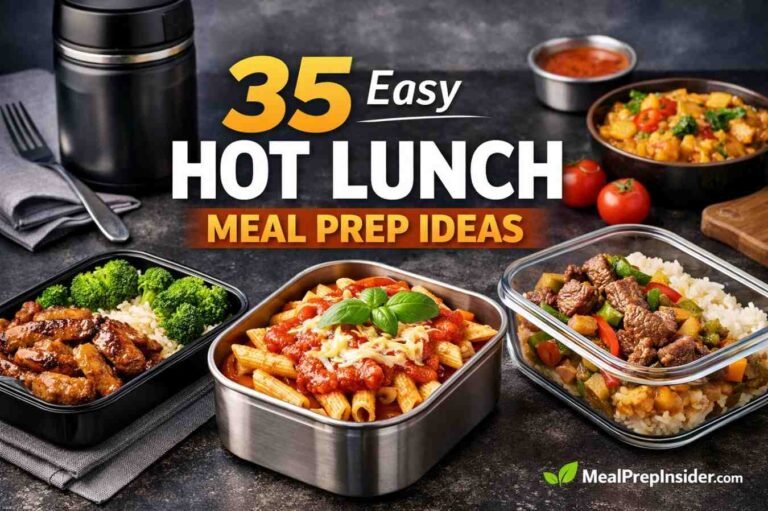
One-pan chicken and vegetables: Season chicken thighs with your favorite spices. Arrange on a sheet pan with chopped potatoes, carrots, and green beans. Roast everything together. Divide into containers.
Stir-fry variations: Cook your protein separately. Prepare your vegetables. Make your sauce. Store all three components separately. Combine and reheat together, or eat cold as an Asian-style salad.
Soup and stew: Make a big batch. These improve with time as flavors develop. Freeze portions you won’t eat within five days.
Pasta bakes: Assemble individual portions in oven-safe containers. Refrigerate. Bake fresh when you’re ready to eat, or reheat in the microwave.
Snack Boxes and Bento Style
Not every lunch needs to be a traditional meal.
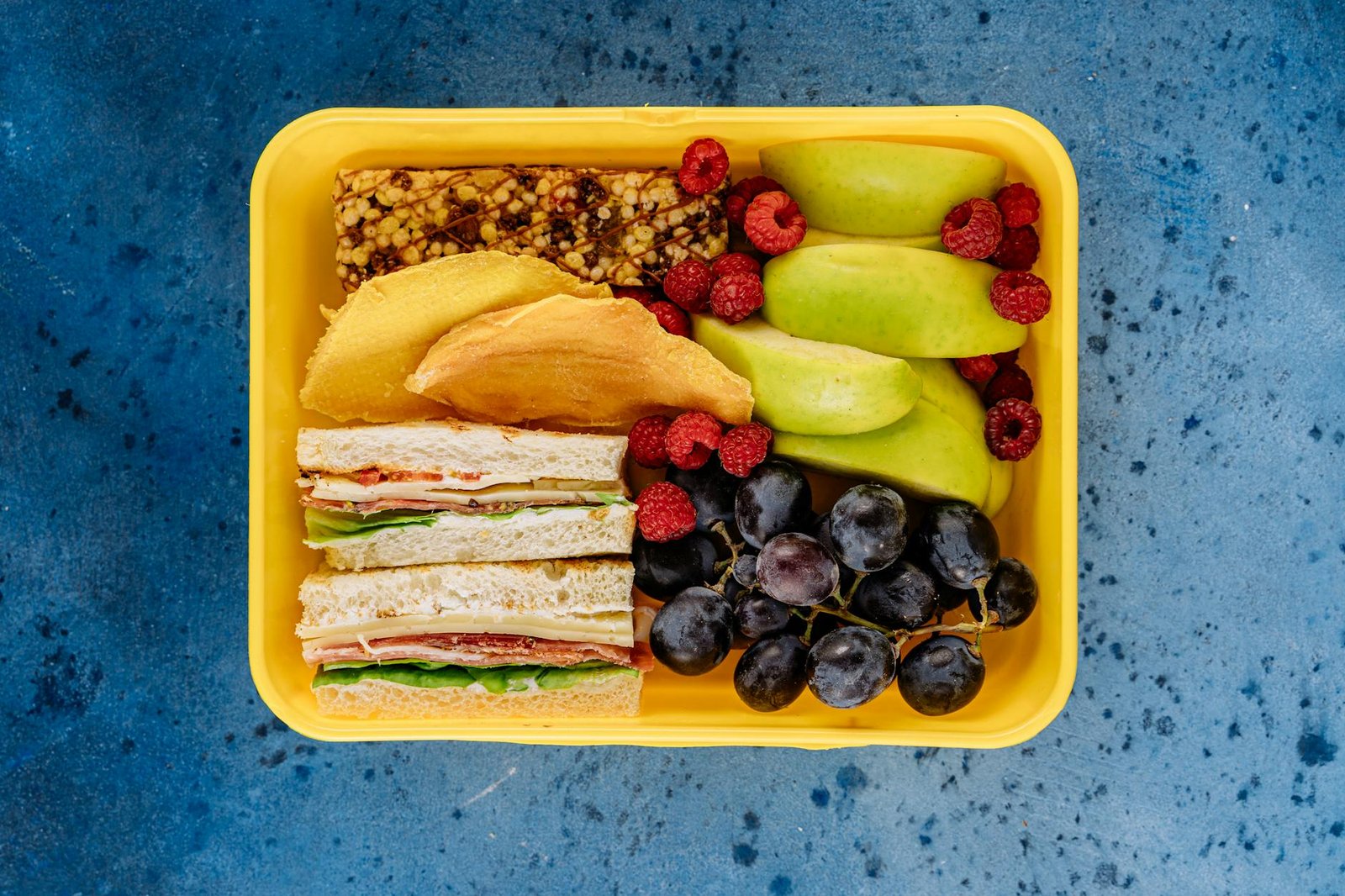
Bento-style boxes with multiple compartments let you create variety within one container.
Fill sections with:
- Cheese cubes
- Crackers
- Hummus
- Vegetables
- Fruits
- Nuts
- Deli meat
- Olives
This approach works perfectly for people who graze rather than eat large meals.
Avoiding the Pitfalls That Derail Most People
Let’s talk about where this usually goes wrong.
Pitfall number one: Overcomplicating everything
You don’t need fifteen ingredients per meal. Simple food with good seasoning beats elaborate recipes that require specialty ingredients you’ll use once.
Three-ingredient meals are completely valid. Grilled chicken, roasted vegetables, rice. Done.
The freshness problem
Some foods genuinely don’t last well. Accept this instead of fighting it.
Avocados brown. Certain lettuces wilt faster than others. Fried foods lose their crispness.
Plan around these limitations. Prep avocado-based meals for Monday and Tuesday. Save heartier meals for later in the week.
Or prep ingredients separately and assemble certain meals fresh each morning. This takes five minutes but dramatically improves quality.
Flavor fatigue is real
Eating chicken and broccoli five days straight sounds doable on Sunday. By Wednesday, you’ll hate yourself.
Variety comes from sauces and seasonings more than completely different meals. Prep one protein but three different sauces. The same chicken tastes completely different with buffalo sauce versus teriyaki and pesto.
RELATED POST >> Dense Bean Salad Meal Prep: Best Protein-Packed Make-Ahead
The forgotten food syndrome
Be honest: how many containers have you forgotten in the back of your fridge?
Set phone reminders. Put a note on your bag. Create a system that ensures you grab your prepped lunch.
Some people prep but then buy lunch anyway because they forget what’s waiting at home. That’s just buying groceries, you throw away with extra steps.
Time-Saving Techniques That Multiply Your Efficiency
Work smarter, not longer.
Batch cooking staples
Once a week, make large batches of ingredients you use repeatedly:
- Cook several pounds of chicken at once
- Roast multiple sheet pans of vegetables
- Prepare a big pot of rice or quinoa
- Hard-boil a dozen eggs
- Wash and chop vegetables for the week
Store these components separately. Combine them into different meals throughout the week.
The parallel cooking method
Use all your cooking surfaces simultaneously. While rice cooks in the rice cooker and vegetables roast in the oven, you can cook protein on the stovetop and chop ingredients for tomorrow.
This turns a three-hour process into 90 minutes.
Leverage convenience items strategically
Pre-cut vegetables cost more but save significant time. Rotisserie chicken from the grocery store gives you ready-to-use protein. Frozen vegetables sometimes offer better nutrition than fresh produce that’s been sitting for a week.
Calculate the time-money tradeoff. If pre-cut vegetables mean you’ll consistently prep instead of giving up, they’re worth the extra two dollars.
Template meals create autopilot mode
Establish three to five template meals you rotate through. Once you’ve made them a few times, you stop needing recipes. You know the timing. You know what goes together.
This mental automation reduces the cognitive load that makes meal prep feel overwhelming.
Making It Work When Life Gets Messy
Perfect meal prep doesn’t exist. Life happens.
The minimal viable prep
Some weeks are chaos. You’re traveling. You’re sick. Things are falling apart.
In these weeks, do minimal viable prep: Hard-boil eggs. Buy pre-made salads and add your own protein. Prep ingredients but not complete meals.
Something is infinitely better than nothing. Don’t let perfection destroy consistency.
Emergency backup meals
Keep shelf-stable lunch options for the weeks you can’t prep:
- Quality canned soups
- Tuna or salmon packets
- Nut butter and crackers
- Protein bars that taste like food
- Instant noodle cups (the good kind from Asian grocery stores)
These prevent the “I didn’t prep, so I guess I’m spending $15” spiral.
Involving others without adding stress
If you’re prepping for a family, delegate age-appropriately. Kids can wash vegetables. Partners can handle specific components.
But if coordinating helpers creates more stress than just doing it yourself, do it yourself. This isn’t about perfect teamwork. It’s about getting lunch ready.
Adapting for Different Dietary Needs
Easy lunch meal prep works regardless of how you eat.
Low-carb and keto approaches
Focus on:
- Lettuce wraps instead of tortillas
- Cauliflower rice as your base
- Cheese crisps for crunch
- Avocado and nuts for healthy fats
- Proteins as the star
Plant-based and vegan options
Build around:
- Legumes for protein
- Tofu, tempeh, or seitan
- Nutritional yeast for cheesy flavor
- Tahini-based dressings
- Grain and bean combinations
High-protein priorities
If you’re tracking protein:
- Greek yogurt parfaits with nuts and fruit
- Egg-based meals
- Lean meats in larger portions
- Cottage cheese mixed into grain bowls
- Protein powder added to overnight oats
Allergen considerations
Meal prep becomes more important when you have restrictions. You control every ingredient. No hidden allergens. No cross-contamination concerns.
Label everything clearly if you’re prepping for multiple people with different needs.
Storage and Food Safety Essentials
Nobody wants food poisoning from their healthy habits.
Temperature management
Cool food completely before sealing containers. Hot food in sealed containers creates condensation, which makes everything soggy and creates bacterial growth conditions.
Spread hot food on sheet pans to cool faster. Then transfer to containers.
The four-day rule
Most prepared foods stay safe for four days in the refrigerator. Some items last longer, but four days is your safety zone.
If you’re prepping on Sunday for Friday’s lunch, freeze Thursday and Friday portions. Defrost on Wednesday night.
Freezer-friendly meals
These freeze and reheat beautifully:
- Soups and stews
- Casseroles
- Cooked grains
- Cooked proteins
- Some sauces
These don’t freeze well:
- Most salads
- Foods with high water content, like cucumbers
- Cream-based sauces (they separate)
- Fried foods
Container organization
Date your containers. Seems obvious, but you’ll forget which day you made what.
Store in order of when you’ll eat them. Monday’s lunch in front, Friday’s in back.
Use different colored lids or labels if you’re prepping for multiple people.
Budget-Friendly Prep Strategies
Meal prep saves money, but you can optimize even further.
Shop sales and plan around them
Check weekly store circulars before planning your menu. If chicken thighs are half price, build your week around chicken. If sweet potatoes are cheap, they become your primary vegetable.
Flexibility based on sales beats rigidly following a predetermined menu.
Bulk buying for items you use repeatedly
Rice, quinoa, oats, beans, frozen vegetables—buy these in larger quantities. The per-unit cost drops significantly.
Only buy bulk things you genuinely use. A 25-pound bag of something that goes bad before you finish it isn’t a deal.
Cost comparison: Homemade versus bought
| Item | Store-Bought Cost | Homemade Cost | Savings Per Week |
|---|---|---|---|
| Salad | $8-12 | $3-5 | $25-35 |
| Grain bowl | $10-14 | $4-6 | $30-40 |
| Sandwich | $7-10 | $3-4 | $20-30 |
| Soup | $6-9 | $2-3 | $20-30 |
These numbers add up fast. Even conservative estimates show $100+ monthly savings.
Reducing food waste
Plan meals that use similar ingredients. If you buy a bunch of cilantro for one recipe, plan another meal that uses cilantro.
Prep vegetable scraps for stock. Freeze bread that’s getting stale for croutons later. Use overripe fruit in smoothies.
Waste reduction is cost reduction.
Troubleshooting Common Issues
Let’s address the problems people rarely admit.
Everything tastes bland by day three
You’re underseasoning. Food loses perceived flavor as it sits. Season more aggressively than you think necessary.
Keep hot sauce, salt, pepper, and other seasonings at work. Adjust flavor right before eating.
Textures get weird
Some foods change texture when stored. Accept it or work around it.
Keep crispy elements separate. Add them right before eating. Store wet and dry components apart.
For sandwiches, consider deconstructing them. Pack components separately and assemble fresh.
You’re bored with your own cooking
Rotate your recipes every few weeks. Try one new meal each prep session alongside your reliable favorites.
Follow food accounts that share meal prep ideas. Inspiration combats boredom.
Running out of time consistently
Your system is too complicated. Simplify.
Choose recipes with fewer steps. Embrace simple, whole foods. Permit yourself to prep less elaborate meals.
Forgetting to eat what you prepped
Set alarms. Put your lunch bag with your keys. Create visual reminders.
Some people need systems for following through on systems. That’s okay.
Leveling Up Your Prep Game
Once the basics become routine, you can get creative.
Theme days
Assign cuisines to different days: Mediterranean Monday, Taco Tuesday, Asian-inspired Wednesday. This creates structure while maintaining variety.
Seasonal rotation
Adjust your meals with the seasons. Hearty stews in winter. Lighter salads in summer. This keeps things interesting and often saves money since seasonal produce costs less.
Meal prep parties
Prep with friends. Everyone makes double portions of one dish, then splits everything.
You go home with four different meals, but you only cooked one. This dramatically increases variety.
Experimenting with new techniques
Once you’re comfortable, try new cooking methods. Sous vide proteins. Fermented vegetables. Homemade dressings and sauces.
These add complexity only when you’re ready, not when you’re still establishing the habit.
Quick Reference Guide
Sunday prep checklist:
- Review the week’s schedule
- Plan three to four lunch options
- Create a shopping list
- Shop for ingredients
- Prep proteins
- Prep vegetables
- Cook grains or bases
- Assemble meals in containers
- Label and store properly
Essential ingredient categories:
Proteins: Chicken, turkey, tofu, beans, eggs, fish
Grains: Rice, quinoa, pasta, farro, couscous
Vegetables: Broccoli, peppers, carrots, sweet potato, greens
Healthy fats: Avocado, nuts, olive oil, cheese
Flavor: Sauces, spices, herbs, dressings
Equipment checklist:
- 5-7 quality containers in various sizes
- Sheet pans for roasting
- Rice cooker or Instant Pot
- Sharp knife
- Cutting board
- Storage bags for ingredients
- Labels or markers
Frequently Asked Questions
How long does a meal-prepped lunch last in the refrigerator?
Most prepped lunches stay fresh for three to four days when stored properly at 40°F or below. If you’re prepping for five days, freeze the last couple of portions and defrost them the night before. Salads with dressing separate last longer. Foods with dairy or mayonnaise have shorter shelf lives.
Can I meal prep if I don’t have much time?
Definitely. Start with just two lunches instead of five. Prep on Sunday for Monday and Tuesday, then prep Wednesday again for Thursday and Friday. Even 30-minute sessions work if you choose simple recipes. Hard-boiled eggs, rotisserie chicken, and pre-cut vegetables are your friends.
What if I get tired of eating the same thing?
Prepare two or three different meals and alternate them. Use the same base ingredients but different sauces and seasonings to create variety. Keep hot sauce, dressings, and toppings at work to modify meals. Introduce one new recipe every other week to keep things fresh.
Do I need to buy expensive containers?
Not necessarily, but quality matters. Cheap containers leak, stain, and break quickly, costing more in the long term. Mid-range glass containers with good seals last for years and don’t retain odors or stains. Look for sales or buy a few at a time to spread the cost.
How do I keep salads from getting soggy?
Layer strategically. Put dressing on the bottom, then hearty vegetables, proteins, grains, and delicate greens on top. Don’t mix until you’re ready to eat. Keep wet ingredients like tomatoes in separate small containers. Use heartier greens like romaine or kale instead of delicate spring mix.
Can I freeze meal-prepped lunches?
Many lunch options freeze well: soups, stews, casseroles, cooked grains, and most proteins. Things that don’t freeze well include fresh vegetables with high water content, cream-based sauces, and already-assembled salads. Freeze in individual portions for easy thawing.
What’s the best way to reheat meal prep?
Remove food from containers before microwaving plastic. For even heating, create a well in the center of your food so it heats from the outside and inside. Add a damp paper towel over the food to prevent drying. Soups and stews reheat best on the stovetop. Some grain bowls taste great cold.
How much money does meal prepping save?
The average American spends $10-15 per restaurant lunch. Homemade lunches typically cost $3-6 per meal. That’s potentially $50-90 weekly savings, or $2,500-4,500 annually. Initial container investment pays for itself within weeks.
What if I’m cooking for just myself?
Meal prep works brilliantly for solo eaters. You’re not dealing with different preferences. Start with smaller batches—three lunches instead of five. Freeze extra portions for future weeks when you don’t feel like prepping. Many recipes scale down easily.
How do I meal prep for weight loss?
Control portions by using measured containers. Include protein in every meal to stay satisfied. Load up on vegetables for volume without excess calories. Prepare your own dressings and sauces to control sugar and fat. Track your meals since you know exactly what’s in them.
What if my workplace doesn’t have a microwave?
Focus on meals that taste good cold or at room temperature: pasta salads, grain bowls, wraps, sandwiches, and certain soups. Invest in a good thermos—fill it with boiling water first, let it sit five minutes, dump it out, then add your hot food. It stays warm for hours.
Can meal prep help with picky eaters?
Yes. You control every ingredient. Make deconstructed meals where components stay separate—people can skip what they don’t like. Use familiar flavors in new combinations. Gradually introduce new foods alongside favorites. Prep different meals for different family members if needed.
The Real Talk About Sustainability
Here’s what matters most: consistency beats perfection.
The person who meal preps three simple lunches every week for a year gets better results than the person who does elaborate Pinterest-worthy prep twice and then quits.
Your system should feel doable, not like a second job.
Some weeks you’ll nail it. Everything will taste amazing. You’ll feel proud and organized.
Other weeks, you’ll barely manage. That’s fine. Do what you can. Order lunch guilt-free when needed.
The goal isn’t perfection. It’s creating a sustainable habit that generally makes your life easier, healthier, and less expensive.
Start small. Choose one simple meal. Prep it for just two or three days. See how it feels. Adjust. Add complexity only when you’re ready.
Easy lunch meal prep truly becomes easy when you stop trying to do it perfectly and start doing it consistently in whatever way works for your actual life.
You’ve got this.
SUGGESTED POST >> Best High Protein Lunch Meal Prep: Macro-Friendly Made Easy
Discover more from Meal Prep Insider
Subscribe to get the latest posts sent to your email.