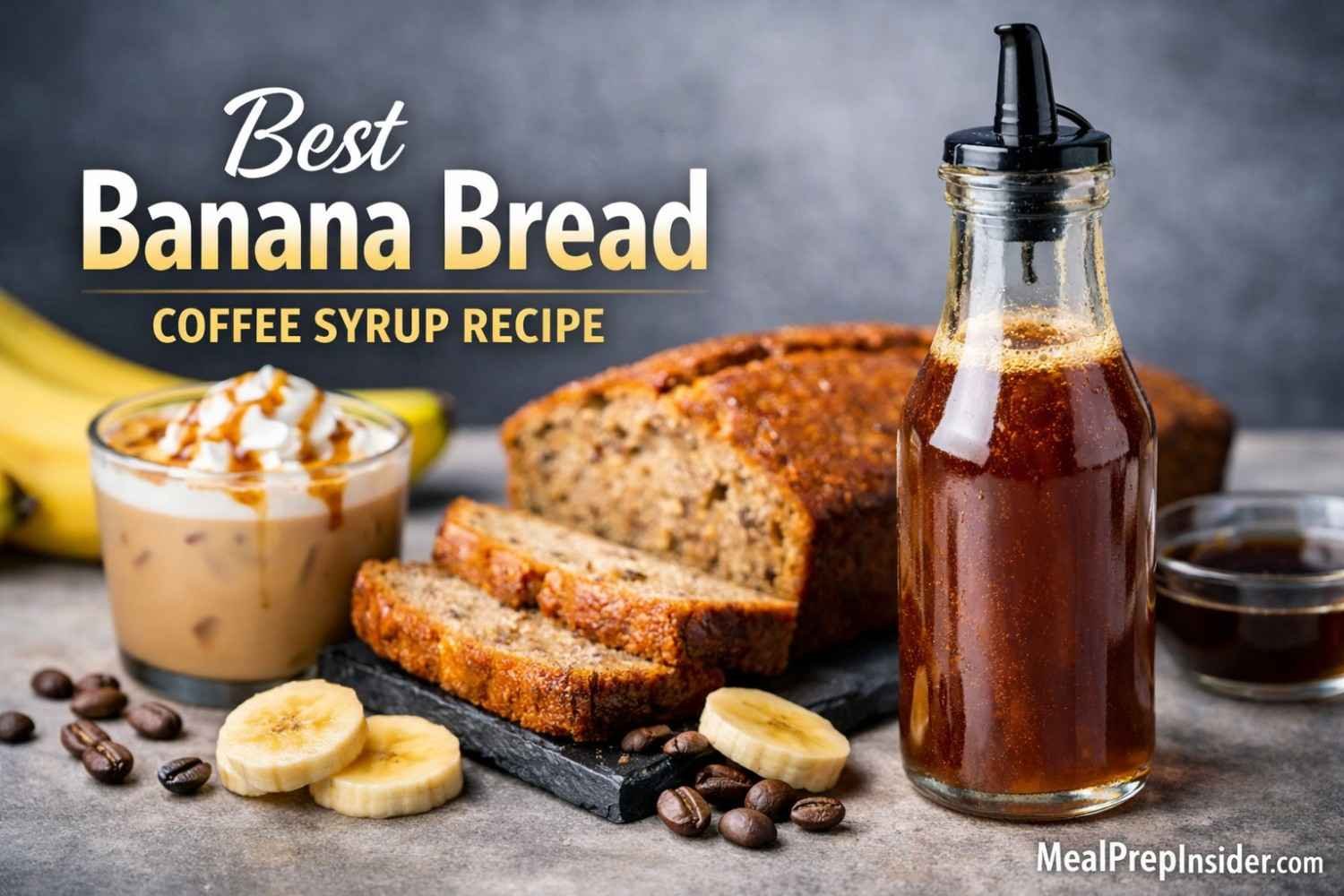
Homemade Best Banana Bread Coffee Syrup Recipe: In 10 Mins

The best banana bread coffee syrup recipe transforms your ordinary morning brew into a bakery-inspired masterpiece that tastes like liquid comfort.
Picture this: the warmth of toasted walnuts, the sweet intensity of caramelized bananas, and that unmistakable cinnamon-spiced richness that makes banana bread irresistible—all bottled up in a simple syrup you can drizzle into your coffee whenever the mood strikes.
You’re about to discover something coffee chains don’t want you to know.
That fancy seasonal latte you spend six dollars on? It’s just coffee with flavored syrup. And banana bread syrup—the kind that actually tastes like fresh-baked banana bread—is stupidly easy to make at home.
But here’s where most recipes fail you. They promise banana bread flavor and deliver watered-down banana extract that tastes like artificial candy. Not this one. This recipe uses real bananas, real spices, and a technique that concentrates those flavors into something that’ll make your kitchen smell like your grandmother’s weekend baking sessions.
No fluff. No fifteen-paragraph stories about my childhood. Just a formula that works, explained clearly enough that you’ll nail it on the first try.
Let’s get into it.
Why Homemade Coffee Syrups Beat Store-Bought Every Time
Store-bought coffee syrups sit on shelves for months. Sometimes years. That longevity comes at a cost—preservatives, artificial flavors, and enough sugar to make your teeth hurt just reading the label.
Making your own changes to the game entirely.
You control the sweetness level. You choose real ingredients. You avoid the laundry list of unpronounceable chemicals. And truthfully, homemade banana bread syrup costs about one-third what you’d pay for a mediocre bottle from a specialty store.
The flavor difference is night and day. Real banana sugars caramelize during cooking, creating depth that laboratory-created banana flavoring simply cannot replicate. The spices bloom in the heat, releasing essential oils that make each sip complex and layered.
Plus, you can adjust everything. Want more cinnamon? Add it. Prefer less sweetness? Cut back the sugar. Like a hint of vanilla? Toss it in.
That kind of customization is impossible when you’re working with mass-produced syrups designed to appeal to the broadest possible audience.
What Makes Banana Bread Flavor So Addictive
Banana bread isn’t just about bananas. That’s what most people get wrong.
The magic happens in the combination. Overripe bananas bring natural sweetness and that distinctive tangy-sweet flavor profile. Cinnamon adds warmth. Nutmeg contributes earthiness. Vanilla rounds everything out. Walnuts (if you use them) add a toasted, almost buttery note that makes the whole thing feel substantial.
When you translate those elements into syrup form, you’re capturing liquid nostalgia. Each ingredient serves a purpose:
- Overripe bananas: These contain way more sugar than regular bananas. As they cook down, those sugars concentrate and caramelize, creating complex flavors that fresh bananas simply cannot provide.
- Brown sugar: White sugar is fine, but brown sugar contains molasses, which adds depth and that slight toffee flavor you associate with good banana bread.
- Cinnamon and nutmeg: These spices don’t just add flavor—they create aroma. Your brain processes smell and taste together, so a well-spiced syrup tricks your mind into thinking you’re eating actual banana bread.
- Vanilla extract: This ingredient is a flavor enhancer. It doesn’t make things taste like vanilla—it makes other flavors taste more like themselves.
- Salt: Just a pinch balances the sweetness and prevents the syrup from tasting one-dimensional.
Understanding these components helps you troubleshoot when something seems off. If your syrup tastes flat, you probably need salt. If it’s too sweet and cloying, you need acid (lemon juice works). If it doesn’t quite taste like banana bread, you’re probably missing the spice balance or using bananas that aren’t ripe enough.
The Science Behind Syrup Making
Syrup is basically concentrated sugar water with flavor. But the process matters more than you’d think.
When you heat sugar and water together, the sugar dissolves completely. As the mixture continues heating, water evaporates, and the sugar concentration increases. This creates a thicker consistency and intensifies flavors.
Temperature control is crucial. Too hot, and your syrup caramelizes (which isn’t always bad, but it changes the flavor profile). Not hot enough, and you won’t extract maximum flavor from your ingredients or achieve proper consistency.
The ideal simple syrup sits around 200-210°F during the main cooking phase. This temperature range keeps you below the caramelization point (around 340°F) while still allowing gentle reduction.
For banana bread syrup specifically, you want the bananas to break down completely. This releases pectin, which acts as a natural thickener. It also ensures you’re extracting every bit of banana flavor into the liquid.
Straining is non-negotiable. Nobody wants banana chunks floating in their coffee. A fine-mesh strainer catches the big pieces, but if you want crystal-clear syrup that rivals commercial products, strain it twice—once through mesh, once through cheesecloth.
Ingredients You’ll Need
Here’s your shopping list. Everything should be available at any standard grocery store.
For the syrup base:
- 3 overripe bananas (the spottier, the better)
- 1 cup brown sugar
- 1 cup granulated white sugar
- 2 cups water
- 1/4 teaspoon salt
For the banana bread spice blend:
- 1 tablespoon ground cinnamon
- 1/2 teaspoon ground nutmeg
- 1/4 teaspoon ground allspice (optional but recommended)
- Tiny pinch of ground cloves (seriously, just a pinch)
Finishing touches:
- 2 teaspoons pure vanilla extract
- 1/2 teaspoon lemon juice (balances sweetness)
Optional add-ins for variation:
- 1/4 cup chopped walnuts (adds nuttiness)
- 1 tablespoon molasses (deeper flavor)
- 1/2 teaspoon maple extract (bakery-style sweetness)
Quality matters here, but you don’t need to break the bank. Real vanilla extract beats imitation every time—the flavor difference is substantial. The same goes for fresh spices. If your cinnamon has been sitting in your cabinet since 2019, replace it. Ground spices lose potency over time.
Equipment Required
You probably own everything already:
- Medium saucepan (stainless steel or non-stick)
- Wooden spoon or silicone spatula
- Fine-mesh strainer
- Cheesecloth or coffee filter (for second straining)
- Glass bottle or jar for storage
- Measuring cups and spoons
- Fork or potato masher
That’s it. No specialized equipment. No expensive gadgets.
A candy thermometer helps if you’re particular about precision, but it’s not mandatory. You can judge syrup consistency by eye and texture once you’ve made a batch or two.
Step-by-Step Instructions
This is where rubber meets road. Follow these steps exactly on your first attempt. Once you understand the process, feel free to experiment.
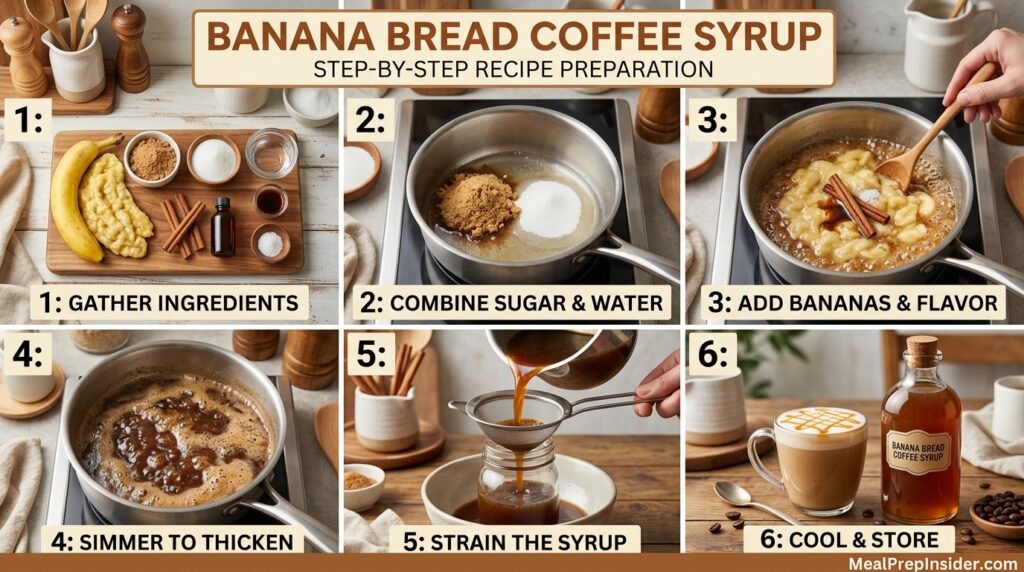
Step 1: Prepare your bananas
Peel those overripe bananas and break them into chunks directly into your saucepan. Don’t worry about being neat. Mash them roughly with a fork—you want them broken down but not pureed. The texture helps with flavor extraction.
Look for bananas with lots of brown spots or even completely brown skins. Green bananas won’t work. Yellow bananas with no spots won’t give you enough flavor. You want fruit that’s basically past eating-fresh quality—that’s when the starches have converted to sugars and the banana flavor is most concentrated.
Step 2: Combine your dry ingredients
Add both sugars, salt, and all your spices directly to the saucepan with the bananas. Mix everything with your wooden spoon until the bananas are coated in sugar and spice.
This step seems minor, but coating the bananas in sugar before adding liquid helps draw out moisture and begins the flavor extraction process immediately.
Step 3: Add water and heat
Pour in your water. Place the saucepan over medium heat. Stir occasionally as the mixture comes to temperature.
Don’t rush this. Medium heat prevents scorching and allows flavors to develop gradually. High heat might save three minutes, but it’ll cost you flavor complexity and risk burning your sugar.
Step 4: Bring to a gentle boil
Once the mixture starts bubbling around the edges, reduce the heat to medium-low. You want a gentle simmer, not a rolling boil. Small bubbles breaking the surface consistently indicate perfect temperature.
At this stage, the bananas will start breaking down completely. Keep stirring every couple of minutes to prevent sticking and ensure even heat distribution.
Step 5: Simmer and reduce
Let the mixture simmer for 20-25 minutes. You’ll notice it thickening slightly and the bananas disintegrating into mush. The liquid will reduce by about one-third, concentrating all those flavors.
Stir more frequently during the last ten minutes. As the sugar concentration increases, the syrup becomes more likely to stick to the bottom of your pan.
Your kitchen will smell incredible during this phase. That’s how you know it’s working.
Step 6: Remove from heat and add finishing ingredients
Turn off the heat. Stir in your vanilla extract and lemon juice. The vanilla would lose potency if added during the cooking process, so it goes in at the end. The lemon juice adds brightness that prevents the syrup from tasting heavy or overly sweet.
Let the mixture sit for five minutes. This cooling period makes straining safer and allows the flavors to marry.
Step 7: Strain thoroughly
Place your fine-mesh strainer over a heat-safe bowl or large measuring cup. Pour the syrup through, using your wooden spoon to press the banana solids against the mesh. You’re extracting every drop of flavored liquid while leaving the pulp behind.
For next-level clarity, line your strainer with cheesecloth or use a coffee filter for a second pass. This step is optional, but it produces a professional-looking syrup that won’t have any sediment settling at the bottom of your storage bottle.
Step 8: Bottle and store
Transfer your strained syrup to a clean glass bottle or jar. A funnel makes this easier and less messy.
Let it cool to room temperature before sealing and refrigerating. Hot syrup in a sealed container creates condensation, which can dilute your syrup and shorten its shelf life.
How Long Does Homemade Banana Bread Syrup Last
Properly stored, your banana bread coffee syrup will keep for about three to four weeks in the refrigerator.
The high sugar content acts as a natural preservative, but because you’re using real bananas (which contain moisture and natural sugars that can ferment), this syrup won’t last as long as pure, simple syrups.
Signs your syrup has gone bad:
- Mold growth (usually appears as fuzzy spots on the surface)
- Sour or fermented smell
- Separation that doesn’t remix when shaken
- Bubbling or fizzing (indicates fermentation)
For maximum shelf life, follow these storage tips:
Use sterilized bottles. Run your storage container through the dishwasher or boil it for ten minutes before adding syrup. Bacteria love sugar-rich environments.
Keep it cold. Always store in the refrigerator, never at room temperature.
Use clean utensils. Don’t pour syrup directly from the bottle into your coffee, then put the bottle back. Contaminants from your coffee cup can introduce bacteria into the whole batch.
Consider smaller batches. This recipe makes about 2 cups of syrup. If you’re the only coffee drinker in your house, consider halving the recipe so you’re using fresher syrup more consistently.
Freeze for longer storage. Syrup freezes beautifully. Portion it into ice cube trays, freeze solid, then transfer the cubes to a freezer bag. Each cube equals about one tablespoon—perfect for a single cup of coffee. Frozen syrup keeps for about three months.
Ways to Use Your Banana Bread Syrup Beyond Coffee
Coffee is the obvious application, but limiting this syrup to your morning cup wastes its potential.
In cocktails:
Add two tablespoons to an espresso martini for a banana bread twist. Mix with dark rum and cream over ice for a dessert drink that tastes like liquid banana bread. Combine with bourbon, a splash of cream, and ice for a uniquely delicious old-fashioned variation.
On pancakes and waffles:
This might be its second-best use after coffee. The syrup complements breakfast foods perfectly—it’s like having banana bread and pancakes simultaneously.
In baking:
Substitute banana bread syrup for some of the liquid in muffin or cake recipes. It adds moisture and flavor without additional prep work. Works especially well in coffee cakes and quick breads.
Over ice cream:
Warm the syrup slightly and drizzle it over vanilla ice cream. Add some chopped walnuts, and you’ve created a restaurant-quality dessert with minimal effort.
In smoothies:
One or two tablespoons add sweetness and banana bread flavor to protein shakes and fruit smoothies. Pairs especially well with peanut butter, chocolate, and coffee-flavored smoothies.
In oatmeal:
Stir a tablespoon into your morning oats instead of a regular sweetener. Instant upgrade.
As a glaze:
Reduce the syrup further by simmering until it thickens to a glaze consistency. Brush over pound cake, use as a donut glaze, or drizzle over cinnamon rolls.
RELATED RECIPE >> Orange Posset Recipe: Ridiculously Simple British Dessert
Customization Ideas and Flavor Variations
The base recipe is excellent, but once you’ve made it a few times, experimentation becomes fun.
Chocolate banana bread syrup:
Add 2 tablespoons of cocoa powder when you add the spices. Use dark cocoa for a deeper chocolate flavor or regular cocoa for a milder taste. This version is phenomenal in mochas.
Peanut butter banana bread syrup:
Whisk in 2 tablespoons of creamy peanut butter at the end with your vanilla extract. You’ll need to blend the mixture with an immersion blender before straining to fully incorporate the peanut butter. The result tastes like a peanut butter banana bread sandwich in syrup form.
Coconut banana bread syrup:
Replace half the water with canned coconut milk. Add 1/2 teaspoon of coconut extract at the end. This tropical variation works beautifully in iced coffee.
Caramel banana bread syrup:
Replace the white sugar with an additional cup of brown sugar. Add 1 tablespoon of molasses. The result is deeper, more toffee-like, with pronounced caramel notes.
Spiced rum banana bread syrup:
Add 2 tablespoons of dark rum at the very end after removing from the heat. The alcohol adds complexity and a subtle warmth. Obviously not kid-friendly, but incredible in adult coffee drinks.
Maple banana bread syrup:
Replace half the brown sugar with pure maple syrup. Add 1/2 teaspoon of maple extract. This creates a breakfast-focused flavor profile that’s outstanding on French toast.
Reduced-sugar version:
Cut the total sugar to 1 cup (instead of 2 cups). Increase the bananas to 4 instead of 3. The syrup will be thinner and less sweet, but still flavorful. Good option if you’re watching sugar intake but don’t want artificial sweeteners.
Troubleshooting Common Issues
Even simple recipes sometimes go sideways. Here’s how to fix the most frequent problems.
Problem: Syrup is too thin
This happens when you don’t reduce the liquid enough during simmering. Return the syrup to the pan and simmer for an additional 5-10 minutes. Check consistency by dipping a spoon in the syrup—it should coat the back of the spoon and run off slowly.
Alternatively, add a tablespoon of corn syrup (which thickens without adding graininess) or dissolve an extra 1/4 cup of sugar into the warm syrup.
Problem: Syrup is too thick
Easy fix. Add water, one tablespoon at a time, stirring well after each addition until you reach the desired consistency. Warm the syrup slightly if it’s too thick to stir easily.
Remember, syrup thickens as it cools. What seems slightly thin when hot will be perfect when cold.
Problem: Syrup doesn’t taste like banana bread
Usually means your bananas weren’t ripe enough or you skimped on spices. Banana flavor comes primarily from the caramelization of sugars in overripe fruit. If you use barely-ripe bananas, the flavor will be weak.
Spices are equally crucial. If you’re tasting banana-flavored simple syrup but not getting that bakery quality, increase cinnamon to 1.5 tablespoons and add more nutmeg to the next batch.
Quick fix for current batch: Add 1/4 teaspoon of banana extract if you have it, plus additional cinnamon and vanilla.
Problem: Syrup tastes burnt
The heat was too high during the cooking process. Unfortunately, burnt flavor can’t be fixed—you’ll need to start over. Prevention is key: use medium to medium-low heat and stir frequently.
Problem: Syrup crystallized during storage
Sugar crystallization happens when the syrup gets too concentrated. When you reheat it, add a tablespoon of water and warm gently while stirring. The crystals will dissolve back into solution.
To prevent crystallization, make sure your sugar is fully dissolved during the initial cooking and avoid getting sugar crystals on the sides of your pan (they act as nucleation points for further crystallization).
Problem: Syrup separated in the bottle
Some separation is normal—just shake the bottle before using. If it won’t reincorporate, the syrup might have broken (emulsion failure). This occasionally happens with the natural fats from bananas.
Pour it into a blender, blend for 30 seconds, then strain again. Should fix the issue.
Making Banana Bread Syrup in Bulk
Planning to make large batches for gifting or long-term use? Scale carefully.
The recipe doubles and triples well, but you’ll need a larger pot to prevent boil-overs. A 4-quart saucepan handles a double batch comfortably. Anything larger, and you’re better off making multiple separate batches—syrup quality degrades in very large batches because heat distribution becomes uneven.
Cooking time increases slightly with larger volumes. A double batch might need 30-35 minutes of simmering instead of 20-25.
For gifting, invest in attractive glass bottles. Add a custom label with usage instructions and storage information. Include the date made so recipients know when it expires. A ribbon and a tag with suggested uses turn homemade syrup into a thoughtful, personal gift that coffee lovers genuinely appreciate.
Consider creating a “coffee bar” gift set: include the banana bread syrup, a bag of good coffee beans, and maybe a second syrup in a complementary flavor (vanilla, caramel, or hazelnut). Package it in a basket or decorative box.
Cost Breakdown Comparison
Let’s talk economics. Making your own syrup saves serious money.
Homemade banana bread syrup cost per batch:
- 3 bananas: $0.60
- Brown sugar (1 cup): $0.35
- White sugar (1 cup): $0.25
- Spices (cinnamon, nutmeg, etc.): $0.40
- Vanilla extract: $0.30
- Water, salt, lemon juice: $0.10
Total: approximately $2.00 for about 16 ounces
Store-bought specialty coffee syrup:
- Average price: $8-12 for 12-16 ounces
- Most don’t offer banana bread flavor
- Contains artificial ingredients and preservatives
Coffee shop banana bread latte:
- Average price: $5.50-7.00 per drink
- One bottle of homemade syrup makes roughly 16 specialty drinks
- Homemade cost per drink: about $0.12 for syrup plus coffee
- Total savings per drink: roughly $5.00+
If you buy one specialty coffee drink per week, making your own syrup saves about $260 annually. That’s real money.
The Best Coffee Pairings for Banana Bread Syrup
Not all coffee works equally well with banana bread syrup. Flavor matching matters.
Best roast levels:
Medium roasts are ideal. They provide enough body to support the syrup’s richness without overwhelming its delicate banana and spice notes. Medium roasts typically have nutty, chocolate-y notes that complement banana bread flavors beautifully.
Medium-dark roasts work well if you prefer stronger coffee. The slight bitterness balances the syrup’s sweetness. Look for roasts described as having chocolate, caramel, or nut flavors.
Light roasts can work, but tend to get lost under the syrup. If you love light roasts, use less syrup to let the coffee’s fruity, bright notes shine through.
Avoid extra dark roasts. They overpower the syrup and create a bitter, unbalanced drink.
Best coffee origins:
Colombian coffee has natural chocolate and nut notes that mirror banana bread’s flavor profile.
Brazilian coffee tends toward nutty, sweet characteristics that pair beautifully with banana bread syrup.
Guatemalan coffee offers chocolate and spice notes that enhance the cinnamon and nutmeg in your syrup.
Preparation methods that work best:
Drip coffee is the obvious choice. Add 1-2 tablespoons of syrup per 8 ounces of coffee. Stir well.
Cold brew creates an incredibly smooth banana bread iced coffee. The low-acid profile of cold brew lets the syrup’s flavors come through clearly.
Espresso drinks benefit from banana bread syrup. Add one tablespoon to a latte or cappuccino for a coffeehouse-quality specialty drink.
French press coffee’s rich, full body stands up well to the syrup without getting muddy.
Nutritional Information
Transparency matters. Here’s what you’re consuming.
Per 1 tablespoon (approximately 20g) serving:
- Calories: 52
- Total carbohydrates: 13g
- Sugars: 13g
- Protein: 0g
- Fat: 0g
- Sodium: 15mg
- Potassium: 18mg (from bananas)
The nutritional profile is basically concentrated sugar with trace minerals from bananas and spices. This isn’t a health food—it’s a flavoring agent meant to be used in moderation.
For perspective, that tablespoon contains about the same sugar as 3 teaspoons of regular sugar, but it also provides significantly more flavor complexity, meaning you might use less overall.
If you’re managing sugar intake, consider the reduced-sugar variation mentioned earlier, or simply use less syrup per cup of coffee. Even a teaspoon provides noticeable banana bread flavor.
Frequently Asked Questions
Can I use regular ripe bananas instead of overripe ones?
You can, but the flavor won’t be as intense. Overripe bananas contain more sugar and have a deeper, more concentrated banana flavor. If you only have regular ripe bananas, consider adding a small amount of banana extract to boost the flavor or increasing the banana quantity to 4 instead of 3.
Is there a sugar-free version of this recipe?
Yes, but it requires different techniques. Replace the sugar with a 1:1 sugar substitute like erythritol or allulose. The texture will be slightly different—not quite as thick or smooth—but the flavor remains good. Keep in mind that some sugar substitutes have cooling effects or aftertastes that might alter the final product.
Can I make this syrup without bananas and just use banana extract?
Technically, yes, but why would you? The whole point is creating authentic banana bread flavor using real ingredients. Pure banana extract in simple syrup will taste artificial and one-dimensional. If you absolutely must skip real bananas, use at least 1-2 teaspoons of high-quality banana extract combined with the spice blend for decent results.
What’s the difference between this and regular simple syrup?
Regular simple syrup is just equal parts sugar and water heated until dissolved. This banana bread syrup incorporates real bananas, multiple types of sugar, and a spice blend, then reduces the mixture to concentrate flavors. The result is exponentially more complex and flavorful than basic simple syrup.
Can I leave out the nutmeg or other spices?
You can, but each spice contributes to the overall banana bread profile. Nutmeg adds warmth and depth. Allspice brings subtle complexity. Cloves provide a barely-there aromatic quality. That said, cinnamon is the most important spice. If you’re missing others, the syrup will still taste good—just slightly less layered.
Will this syrup work in tea?
Absolutely. It’s particularly good in black tea, chai, and rooibos. The spices complement tea beautifully. Start with one teaspoon and adjust to taste.
Can I use this syrup for kids’ drinks?
Sure. Mix it into milk (hot or cold), add to hot chocolate, or stir into smoothies. Kids typically love the banana bread flavor. Just be mindful of sugar content.
My syrup has sediment at the bottom. Is it still good?
Yes, completely normal. Some banana solids and spice particles make it through even careful straining. Just shake the bottle before each use to redistribute them, or strain one more time through coffee filters for crystal-clear syrup.
Can I can this syrup for shelf-stable storage?
Not recommended. Home canning requires specific acidity levels and procedures to be safe. The banana content and relatively low acidity make this syrup unsafe for water-bath canning. Stick with refrigerator storage or freezing.
What’s the best way to add this to iced coffee?
Syrup dissolves better in hot liquid than in cold. Either add it to hot coffee before icing, or dissolve it in a tiny amount of hot water first, then add to your iced coffee. Alternatively, make syrup ice cubes and add them directly—they’ll flavor your drink as they melt.
Can I make this vegan?
The recipe is already vegan. Bananas, sugar, spices, and vanilla extract contain no animal products.
Does this syrup contain alcohol?
Not unless you add the optional rum variation. Vanilla extract contains trace amounts of alcohol, but it’s negligible—less than you’d find in very ripe fruit.
Can I reduce the banana flavor and increase the spice notes?
Definitely. Use 2 bananas instead of 3 and increase cinnamon to 2 tablespoons. Add an extra 1/4 teaspoon of nutmeg. This creates a more spice-forward syrup that still has banana character but doesn’t lead with it.
Why does my syrup taste different each time I make it?
Bananas vary in ripeness, size, and sugar content. Natural variation is normal. Overripe bananas from different seasons or sources can taste slightly different. This is part of the charm of homemade products—each batch has a unique character. For more consistency, measure your bananas by weight (about 300g total) rather than counting.
Can diabetics use this syrup?
That’s a question for their doctor. The syrup is high in sugar. However, the reduced-sugar variation using sugar substitutes might be appropriate depending on individual dietary management plans. Always consult healthcare providers about dietary choices.
How do I know when the syrup is done reducing?
The mixture should coat the back of a spoon and drip off slowly rather than running off quickly like water. It will thicken more as it cools, so don’t over-reduce. When in doubt, pull a small amount aside in a spoon and let it cool to room temperature—that shows you the final consistency.
Final Thoughts on Making the Perfect Batch
The best banana bread coffee syrup recipe isn’t complicated. It doesn’t require specialized equipment or hard-to-find ingredients. What it requires is attention to detail and good-quality starting materials.
Use legitimately overripe bananas. Don’t skimp on the spices. Simmer patiently at the right temperature. Strain thoroughly.
Those four things determine the difference between mediocre banana-flavored syrup and something that genuinely tastes like you liquified a slice of homemade banana bread.
The first batch teaches you the process. The second batch, you’ll tweak to your preferences. By the third batch, you’ll wonder why you ever bought flavored syrups at all.
Make a bottle this weekend. Your Monday morning coffee will thank you.
Store it properly. Share it generously. And most importantly, enjoy the small luxury of starting your day with something you made yourself that’s genuinely better than anything you could buy.
That’s the real point here. Not just saving money or avoiding preservatives—though those are nice benefits. It’s about taking something ordinary, your daily coffee, and making it special with minimal effort and maximum flavor.
Now you know how. The rest is just doing it.
SUGGESTED RECIPE >> Viral Trader Joe’s Dumpling Bake Recipe: So Easy & Tasty!
Discover more from Meal Prep Insider
Subscribe to get the latest posts sent to your email.