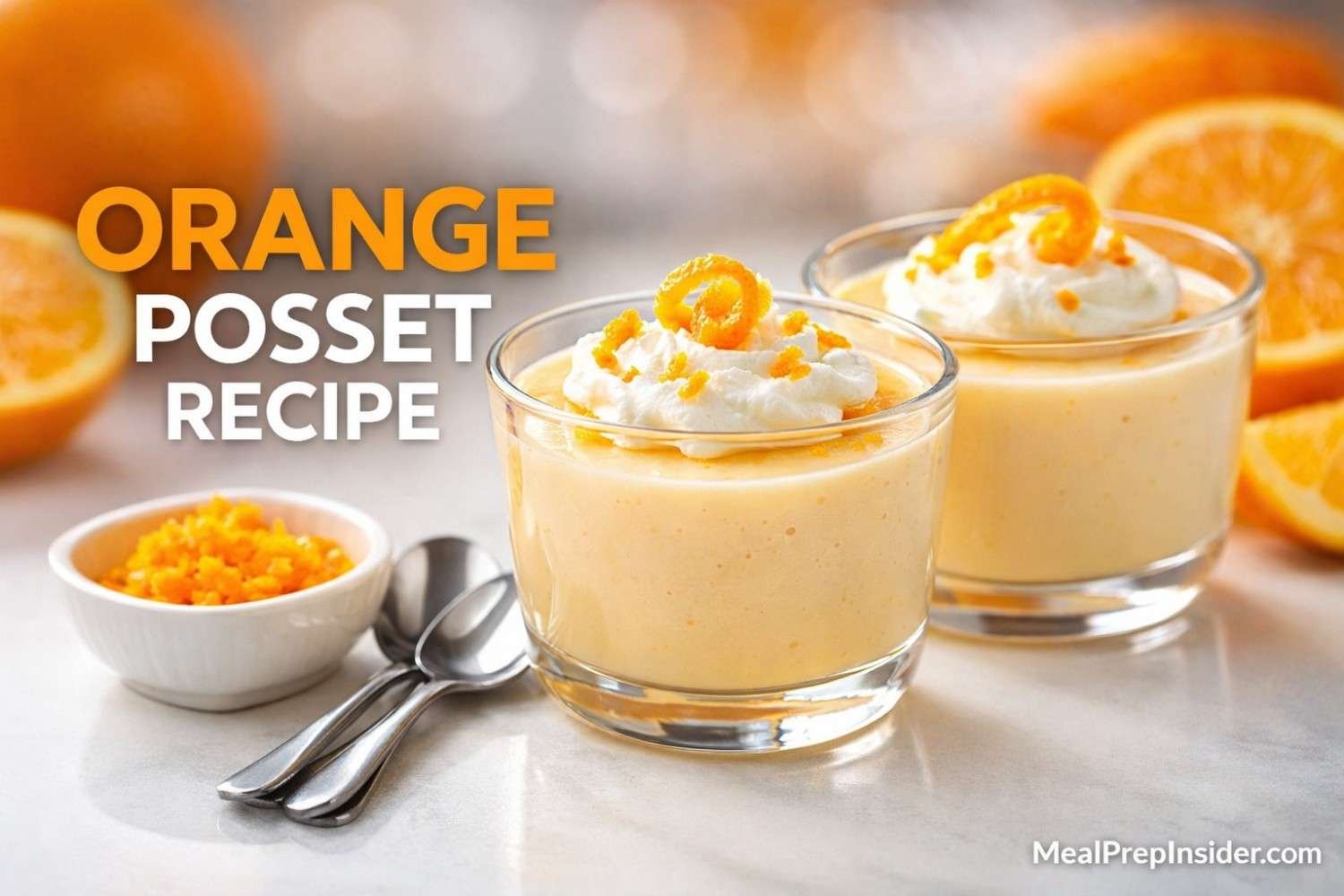
Orange posset recipe enthusiasts, gather round. I’m about to introduce you to what might be the most deceptive dessert you’ll ever make. Three ingredients. No eggs. No gelatin. No water bath. No temperamental baking that’ll have you questioning your life choices at 9 PM on a Tuesday.
And yet.
This dessert will have your dinner guests convinced you attended Le Cordon Bleu.
Here’s the thing nobody tells you about possets: they’re basically medieval magic. You take cream, sugar, and citrus, combine them in a specific way, and chemistry does something absolutely wild. The acid from the oranges transforms the cream into this silky, luxurious custard without a single thickening agent.
Wild, right?
British cooks have known this secret for centuries. They’ve been quietly serving these elegant little pots at dinner parties while the rest of us wrestled with temperamental crème brûlée and finicky panna cotta. Meanwhile, possets require about fifteen minutes of actual work and zero advanced techniques.
The audacity.
But let’s be honest. You clicked on this because you want a dessert that tastes expensive, looks impressive, and doesn’t require you to become a pastry chef. You want something that works when you’re hosting your in-laws, celebrating an anniversary, or just treating yourself on a random Wednesday.
I’m going to walk you through everything. Not just the recipe, but the why behind each step, the science that makes it work, and the little tweaks that’ll transform this from good to spectacular.
By the time you finish reading, you’ll understand possets better than most people who’ve been making them for years.
Let’s go.
What Exactly Is a Posset Anyway?
Think of posset as the cool British cousin of panna cotta and crème brûlée. It has that same creamy, spoonable texture, that same sophisticated presentation, that same “I definitely know what I’m doing in the kitchen” energy.
But it’s actually way easier.
Traditional possets date back to medieval England, where they were originally a warm drink made with milk, ale or wine, sugar, and spices. People consumed them as a remedy for colds or as a nightcap. Over the centuries, the recipe evolved, the alcohol mostly disappeared, and the drink transformed into the chilled dessert we know today.
The modern version is pure simplicity. Heavy cream gets heated with sugar until dissolved, then citrus juice goes in. The acid causes the cream proteins to set, creating a thick, smooth texture that holds its shape without any gelatin or eggs.
No tempering. No splitting. No curdling disasters.
The science is actually fascinating. When citric acid meets the proteins in heated cream, those proteins rearrange themselves into a network that traps the fat molecules. As everything cools, this network stabilizes, giving you that signature creamy texture.
You’re basically building a protein matrix. But unlike when you’re making custard or hollandaise, this process is incredibly forgiving.
Why Orange Makes This Posset Extraordinary
Lemon possets get all the attention. Every British cookbook has one. Every food blog features them. They’re the default, the classic, the one everyone makes.
But orange? That’s where things get interesting.
Oranges bring a different character entirely. Where lemon possets are bright and sharp and attention-grabbing, orange possets have this mellow, rounded sweetness. They’re sophisticated without being aggressive. Elegant without making your face pucker.
The flavor profile works differently, too. Orange has these subtle floral notes that lemon doesn’t. There’s a complexity there, especially if you use the zest. You get the essential oils from the rind mingling with the juice, creating layers of citrus flavor that develop as you eat.
Plus, orange feels slightly more special. It’s unexpected. When people see that gorgeous pale orange color, they lean in. They get curious.
And here’s something most recipes won’t tell you: orange juice has slightly less acid than lemon juice. This means your posset sets a bit softer, a bit more delicate. Some people consider this a disadvantage.
Those people are wrong.
That softer set creates an incredibly luxurious mouthfeel. It’s like the difference between silk and satin. Both are smooth, but one has this extra slip, this decadence that feels more indulgent.
The Orange Posset Recipe You’ll Make Forever
Time to get into it. This recipe serves six people in small ramekins or glasses. You can absolutely scale it up or down, but these proportions create the perfect balance of sweetness, creaminess, and citrus brightness.
Ingredients:
- 2 cups heavy whipping cream (the good stuff, at least 36% fat)
- ⅔ cup granulated sugar
- ⅓ cup fresh orange juice (about 1.5 large oranges)
- Zest from 2 oranges (optional but strongly recommended)
- Pinch of sea salt (trust me on this)
Equipment:
- Medium heavy-bottomed saucepan
- Wooden spoon or silicone spatula
- Fine-mesh strainer
- Measuring cups and spoons
- Microplane or zester (if using zest)
- Six 4-ounce ramekins or serving glasses
- Citrus juicer (or just your hands and determination)
Instructions:
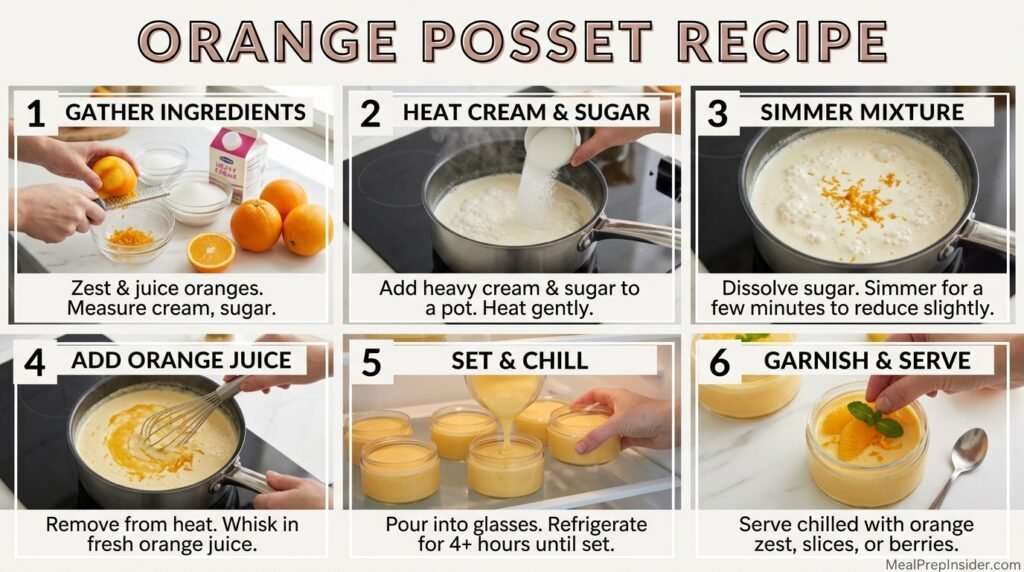
- Prepare your serving vessels first. Set out your ramekins or glasses on a tray that’ll fit in your refrigerator. Once the posset mixture is ready, you’ll want to pour it immediately, so have everything staged and ready.
- Zest your oranges. If you’re using zest (and really, you should), get this done before you juice. Once you’ve juiced an orange, trying to zest it becomes a slippery, frustrating disaster. Use a microplane for the finest zest, and avoid the white pith underneath because it’s bitter.
- Juice your oranges. You need exactly ⅓ cup, which is about 5-6 tablespoons. Roll the oranges firmly on your counter before cutting them in half. This breaks down some of the internal membranes and helps release more juice. Strain out any seeds.
- Combine cream, sugar, and zest in your saucepan. Pour in that heavy cream, add the sugar and orange zest, then set everything over medium heat. If you’re adding salt (which I recommend), toss it in now.
- Bring to a gentle boil, stirring occasionally. This part takes patience. You want the sugar to dissolve completely and the mixture to reach a proper boil, not just steam. It’ll take about 5-7 minutes. Don’t rush it by cranking the heat. Keep it moderate.
- Once boiling, maintain the boil for exactly 3 minutes. Stir occasionally to prevent scorching. Set a timer. This step is important because you need the cream to reach the right temperature for the proteins to set up properly later.
- Remove from heat and immediately stir in the orange juice. The mixture will thin out at first, which might freak you out. Don’t panic. This is normal. Stir for about 30 seconds to fully incorporate the juice.
- Strain the mixture through your fine-mesh strainer. This removes the zest and any bits that might’ve formed. If you want visible zest flecks in your finished posset for visual interest, you can skip this step, but the texture won’t be quite as silky.
- Pour into your prepared vessels. Work fairly quickly because the mixture starts setting as it cools. Fill each ramekin, leaving a bit of space at the top if you’re planning to add toppings later.
- Let cool at room temperature for about 15 minutes. This prevents condensation from forming on top when you refrigerate them.
- Transfer to the refrigerator and chill for at least 3 hours. Overnight is even better. The possets need this time to fully set. They’ll go from liquid to that signature creamy, spoonable texture.
- Serve chilled. Pull them out about 5-10 minutes before serving if you want to take the edge off the cold.
That’s it. Twelve steps, and half of them are just “wait for things to happen.”
The Science Behind Why This Works
Let me geek out for a minute because understanding the chemistry makes you a better cook.
When you heat cream with sugar, you’re doing a few things. First, you’re dissolving the sugar completely. Second, you’re raising the temperature to a point where the cream proteins (mainly casein) become more susceptible to structural changes.
Then comes the magic part.
When you add acidic orange juice to hot cream, the acid lowers the pH. This causes the casein proteins to denature and coagulate. They unwind from their normal structure and bond with each other, forming a three-dimensional network.
This network traps the fat globules and liquid components of the cream. As everything cools in your refrigerator, this network stabilizes and tightens slightly, giving you that thick, custard-like texture.
The fat content matters tremendously here. Heavy cream with higher fat content (36-40%) creates a richer, more stable set. The fat molecules get trapped in the protein network, contributing to the creamy mouthfeel and helping the whole structure hold together.
Temperature is crucial, too. If the cream isn’t hot enough when you add the juice, the proteins won’t denature properly. The mixture might set, but it’ll be grainy or separated. That three-minute boil ensures you’ve reached the right temperature throughout.
The ratio of acid to cream matters. Too much acid, and you get something that tastes sour and might over-set into a rubbery texture. Too little, and it won’t sit at all. The ⅓ cup orange juice to 2 cups cream ratio hits the sweet spot.
Understanding this helps you troubleshoot. If your posset didn’t set, you probably didn’t heat it enough or didn’t use enough acid. If it’s grainy, you might’ve added the juice to cream that wasn’t hot enough, or you used cream with too low a fat content.
Why Your Posset Might Fail (And How to Prevent It)
Let’s talk about the things that can go wrong. Not to scare you, because honestly, possets are incredibly forgiving. But knowledge is power.
Issue: Posset didn’t set and stayed liquid
This happens when the ratio is off or the temperature wasn’t high enough. Make sure you’re using heavy whipping cream with at least 36% fat. Half-and-half won’t work. Light cream won’t work. You need that fat content.
Also, verify that you actually brought the mixture to a proper boil. You should see bubbles breaking the surface across the entire pan, not just steaming around the edges. And maintain that boil for the full three minutes.
Finally, are you certain you used fresh citrus juice? Bottled juice sometimes has lower acidity and can produce inconsistent results.
Issue: Posset is grainy or curdled-looking
Temperature shock causes this. If your cream wasn’t hot enough when you added the juice, the proteins seized up instead of forming a smooth network. The solution is making sure you add the juice immediately after removing the pan from the heat, while everything is still properly hot.
Another cause: adding the juice too fast without stirring. Pour it in a steady stream while stirring continuously to distribute the acid evenly throughout the cream.
Issue: Posset is too firm or rubbery
You either boiled it too long or used too much citrus juice. Stick to the measurements and timing exactly, at least for your first few attempts. Once you understand how it should work, you can experiment.
Issue: Posset tastes too sweet or not sweet enough
The sugar is doing more than just sweetening. It’s also balancing the acid from the oranges. That said, you can reduce the sugar slightly if you prefer less sweetness. I wouldn’t go below ½ cup, though, or the balance gets thrown off.
If it’s not sweet enough, consider whether your oranges were particularly tart. Citrus varies in sweetness. You might need to adjust based on what you’re working with.
Issue: Skin formed on top
This happens when hot posset gets exposed to air. That’s why you transfer it to serving dishes quickly and let it cool slightly before refrigerating. If you’re worried about it, you can press plastic wrap directly onto the surface of each pot before chilling.
Elevating Your Orange Posset Game
The basic recipe is fantastic on its own. But once you’ve mastered it, these variations and additions will blow minds.
Flavor Infusions:
Steep additions in the cream while it heats, then strain them out before adding the juice.
- Fresh thyme sprigs (3-4 sprigs) create this herbaceous note that’s unexpectedly perfect with orange
- Cardamom pods (4-5, lightly crushed) add warm, aromatic complexity
- Vanilla bean (1 split pod, seeds scraped) amplifies the creaminess
- Star anise (1-2 whole) brings a subtle licorice note
- Lavender buds (1 teaspoon) create a floral, sophisticated flavor
- Fresh ginger (2-inch piece, sliced) adds warmth and slight spice
Citrus Combinations:
Replace part of the orange juice with other citrus for a complex flavor.
- Half orange, half blood orange for deeper color and berry notes
- 2 tablespoons lemon juice, rest the orange for extra brightness
- 1 tablespoon lime juice, rest orange for tropical vibes
- Add tangerine or clementine juice for a sweeter, more delicate flavor
Boozy Versions:
Add 1-2 tablespoons of spirits or liqueurs to the orange juice.
- Grand Marnier or Cointreau reinforces the orange flavor
- Campari creates a bittersweet, sophisticated version
- Aperol brings gentle bitter orange notes
- Rum adds warmth and caramel undertones
- Bourbon creates surprising depth
Texture Additions:
Layer these in before the posset or on top after it sets.
- Cookie crumbs (shortbread or ginger snaps)
- Crushed amaretti
- Toasted coconut flakes
- Candied orange peel
- Caramel sauce
- Fruit compote
Topping Ideas That Transform Presentation
A plain posset in a ramekin looks nice. A beautifully topped posset looks like something from a restaurant.
Fresh Fruit:
- Orange supremes (citrus segments with no membrane)
- Macerated berries tossed with a little sugar
- Poached pears or peaches
- Fresh figs, quartered
- Pomegranate arils for color and crunch
Textural Elements:
- Candied citrus peel
- Honeycomb shards
- Meringue kisses
- Toasted sliced almonds
- Pistachios, roughly chopped
- Coconut flakes, toasted until golden
Sauces and Drizzles:
- Salted caramel
- Chocolate ganache (dark chocolate plays beautifully with orange)
- Berry coulis
- Honey, especially orange blossom honey
- Olive oil and flaky salt (sounds weird, tastes incredible)
Whipped Cream Variations:
Top with softly whipped cream flavored with:
- Vanilla and orange zest
- Honey and cinnamon
- Maple syrup and a pinch of nutmeg
- Mascarpone for extra richness
The Professional Touch:
For restaurant-level presentation, use a kitchen torch to barely caramelize a thin layer of sugar on top, creating a mini crème brûlée effect. Sprinkle about a teaspoon of granulated sugar over each set posset, then torch until it melts and darkens.
Let it cool for a minute so the sugar hardens into a thin shell.
That crack when the spoon breaks through? Chef’s kiss.
Serving Suggestions and Presentation Tips
Possets are versatile. You can serve them casually or dress them up for fancy occasions.
Vessel Choices:
- Small mason jars for rustic charm
- Vintage teacups for afternoon tea vibes
- Martini glasses for elegance
- Small wine glasses for height and sophistication
- Classic ramekins for traditional presentation
- Shot glasses for party portions
Portion Control:
A little goes a long way with possets. They’re rich and intensely flavored. Four-ounce servings are perfect for a dinner party dessert. For a buffet where people are trying multiple desserts, you can go smaller, maybe 2-3 ounces.
Serving Temperature:
Straight from the fridge is traditional, but I prefer pulling them out 5-10 minutes before serving. Just slightly less cold, the flavors open up more. You taste the orange more distinctly, and the texture feels even creamier on your tongue.
Accompanying Elements:
Consider serving with:
- Shortbread cookies for dipping
- Thin, crispy wafers
- Biscotti for texture contrast
- Fresh fruit on the side
- A small glass of dessert wine or Prosecco
Make-Ahead Strategy:
This is the dinner party host’s dream dessert because you must make it ahead of time. It needs those hours to set. You can prepare possets up to three days in advance, keeping them covered in the refrigerator.
Add toppings right before serving to maintain their texture and visual appeal.
Troubleshooting Texture and Taste
Even when a posset sets properly, sometimes the flavor or texture isn’t quite what you wanted. Let’s fix that.
Too tart:
If your finished posset tastes too acidic, your oranges were probably very tart, or you accidentally added too much juice. Next time, reduce the juice slightly to ¼ cup plus 2 tablespoons. You can also increase the sugar by a tablespoon or two.
For immediate fixes, serve with something sweet like honeycomb or candied nuts to balance the tartness.
Too sweet:
This usually happens when your oranges are particularly sweet, or you prefer less sugar. Next time, reduce sugar to ½ cup. You can’t fix overly sweet possets once they’re set, but you can serve them with tart elements like fresh berries or a slightly bitter element like dark chocolate shavings.
Not enough orange flavor:
Common when you skip the zest or use older, less flavorful oranges. Zest is crucial for intense orange flavor because that’s where the aromatic oils live. The juice provides acid and some flavor, but zest brings the goods.
You can also use more flavorful orange varieties. Blood oranges, Cara Cara oranges, and tangerines have more complex flavors than standard navel oranges.
Too rich:
Possets are inherently rich because they’re basically sweetened, set cream. If that’s overwhelming for you, serve smaller portions. You can also add a tart element on top, like citrus segments or berries, to cut through the richness.
Texture too thick:
If your posset set firmer than you wanted, you might’ve boiled it longer than three minutes or used extra citrus juice. The texture is still fine to eat, just denser. Serve it with something to provide textural contrast, like crispy cookies or toasted nuts.
Texture too soft:
A softer set happens when you didn’t boil long enough, or your cream had lower fat content. It’s still delicious, just spoon it carefully. You can also serve it in the vessels you set it in, rather than trying to unmold anything.
Storage and Food Safety Considerations
Possets contain dairy, so proper storage matters.
Refrigeration:
Always keep possets refrigerated except during serving. They’ll stay fresh for 3-4 days when covered. After that, the texture starts degrading, and flavors begin tasting stale.
Covering:
Cover each pot with plastic wrap pressed directly to the surface to prevent skin formation and protect from refrigerator odors. Alternatively, use ramekins with lids or seal the top of glasses with plastic wrap.
Freezing:
Technically, you can freeze possets for up to a month, but the texture changes upon thawing. The protein network breaks down slightly, sometimes resulting in a grainy texture. I don’t recommend it unless you’re desperate to preserve leftovers.
If you do freeze them, thaw overnight in the refrigerator and stir gently before serving to re-incorporate any separated liquid.
Food Safety:
Possets are relatively safe from a food safety standpoint because the high acid content and sugar act as preservatives. However, they’re still dairy-based and should never sit at room temperature for more than two hours.
If you’re serving them at a party, consider setting them on ice or in a chilled dish to maintain temperature.
RELATED POST >> Viral Trader Joe’s Dumpling Bake Recipe: So Easy & Tasty!
Dietary Modifications and Substitutions
The traditional recipe isn’t exactly diet-friendly, but you have options.
Lower Fat Version:
You can replace up to half the heavy cream with whole milk. Use 1 cup heavy cream and 1 cup whole milk. The texture will be lighter and less rich, but it’ll still set. Don’t go beyond this ratio, or it won’t set properly.
Dairy-Free Version:
Full disclosure: this is tricky. The setting mechanism relies specifically on dairy proteins reacting with acid. That said, full-fat coconut cream sometimes works.
Use 2 cans of full-fat coconut cream (the thick stuff from the top of the can, not coconut milk). Follow the same method. The texture won’t be identical, but you’ll get something similar. The coconut flavor will be noticeable, so lean into it with complementary additions like toasted coconut on top.
Reduced Sugar:
You can reduce sugar to ½ cup without major issues. Below that, the balance gets thrown off, and the posset might not set as reliably. Consider using a sugar substitute designed for cooking that measures cup-for-cup with sugar.
Vegan Version:
Honestly, a true vegan posset is nearly impossible because you’re relying on milk proteins. Your best bet is using thick coconut cream and accepting that it’ll be a different dessert inspired by possets rather than a true posset.
Pairing Suggestions for Different Occasions
What you serve with your orange posset can elevate the entire experience.
Afternoon Tea:
Pair with:
- Delicate finger sandwiches
- Scones with clotted cream
- Earl Grey or Lady Grey tea
- Champagne or Prosecco
Dinner Party Dessert:
Following rich mains, posset is perfect because it’s light despite being creamy. Serve with:
- Small cookies or biscotti for dipping
- Fresh berries
- A sweet dessert wine like Moscato d’Asti
- Coffee or espresso
Casual Weekend Treat:
- Strong coffee or cappuccino
- Simple shortbread cookies
- Fresh orange slices
Special Occasion:
- Chocolate truffles on the side
- Champagne or orange liqueur
- Edible flowers for garnish
- Gold leaf for extreme fancy points
Getting Creative with Layered Presentations
Once you’re comfortable with basic possets, layering creates stunning visual impact.
Two-Tone Citrus:
Make a lemon posset and an orange posset. Let the lemon layer set for 2 hours, then carefully spoon the orange layer on top. Return to the fridge to set completely. You’ll get a beautiful two-toned dessert.
Fruit and Cream:
Put a spoonful of berry compote or fruit curd at the bottom of each glass before adding the posset mixture. As people eat down through the posset, they discover the fruit layer.
Cookie Bottom:
Crumble shortbread or ginger snaps in the bottom of serving glasses before adding posset. This adds textural interest and makes it feel more substantial.
Parfait Style:
Alternate thin layers of posset with cookie crumbs or whipped cream. This works best in clear glasses where people can see the layers.
The Cultural Context and History Worth Knowing
Possets have been around since medieval times, originally appearing in texts from the 1400s. Back then, they were medicinal drinks, often consumed before bed or when someone was ill.
The original versions contained wine or ale mixed with hot milk, sugar, and spices. Sometimes eggs got involved. The mixture would curdle from the acid in the alcohol, creating a thick, porridge-like consistency.
By the 17th and 18th centuries, possets had become fashionable drinks for the wealthy. Special posset pots were created, complete with two handles and a spout. People would sip the liquid portion through the spout and eat the curdled top portion with spoons.
The transformation into a chilled dessert happened gradually. As refrigeration became common and tastes changed, cooks started serving possets cold. The alcohol mostly disappeared, replaced by citrus juice for the acid component.
Now possets are experiencing a renaissance, particularly in the UK, where they never really left. American cooks are discovering them as part of the broader interest in British baking and historical recipes.
They represent this beautiful intersection of history and modern convenience. You’re making something with roots stretching back centuries, using a technique that hasn’t fundamentally changed, but the result feels contemporary and relevant.
Why This Dessert Deserves a Place in Your Rotation
Let me make the case for adding orange possets to your regular dessert repertoire.
Time efficiency: Fifteen minutes of active work, then the fridge does everything else. You cannot beat that for a dessert this impressive.
Foolproof nature: Unlike temperamental custards or finicky soufflés, possets are remarkably forgiving. The margin for error is wide.
Make-ahead friendly: Actually requires preparation, which makes dinner party planning infinitely easier. One less thing to worry about on the day.
Dietary flexibility: Naturally gluten-free. Can be modified for various dietary needs more easily than many desserts.
Ingredient accessibility: Three main ingredients, all readily available at any grocery store. No hunting for specialty items or obscure ingredients.
Versatility: Works for fancy occasions and casual weeknight treats equally well. Dresses up or down effortlessly.
Impressive factor: People genuinely cannot believe how easy these are to make. The ratio of effort to impressed reactions is phenomenally high.
Customization potential: The basic recipe serves as a blank canvas. You can modify flavors infinitely while keeping the reliable technique.
Portion control: Individual servings mean no cutting, no serving spoons, no mess. Everyone gets their own perfect portion.
Refreshing finish: After a heavy meal, possets feel light and palate-cleansing despite being cream-based. That citrus brightness cuts through richness.
Advanced Techniques for Posset Perfection
Ready to go from competent to exceptional? These techniques will elevate your game.
Bloom gelatin for unmolding:
Traditional possets stay in their serving vessels. But if you want to unmold them onto plates for dramatic presentation, bloom ½ teaspoon of gelatin in 1 tablespoon of water, then whisk it into the hot cream mixture before adding the juice. This gives extra stability for unmolding while keeping the texture creamy.
Sous vide method:
For perfectly consistent results every time, combine everything except the orange juice in a sous vide bag. Cook at 180°F for 30 minutes. Add the juice, mix thoroughly, then strain into serving vessels. This method prevents any possibility of scorching and creates an incredibly silky texture.
Whipping siphon:
This is definitely extra, but if you have an iSi whipping siphon, you can create a posset mousse. Make the posset mixture, let it cool to room temperature but not set, pour it into the siphon, charge it with two N2O cartridges, and dispense. The texture becomes impossibly light and airy.
Molecular gastronomy elements:
Crumble freeze-dried orange powder on top for intense flavor and color. Create orange caviar using reverse spherification with the juice. Make orange tuiles with dried orange slices.
Professional setting technique:
For competition-level smoothness, warm your serving vessels slightly before pouring in the posset mixture. This prevents temperature shock that can create slight graininess at the surface where the mixture contacts cold glass.
Seasonal Variations Throughout the Year
Adapt your orange possets to the seasons for year-round relevance.
Spring:
Add rhubarb compote layer underneath. Top with fresh strawberries. Infuse with lavender or elderflower. Use blood oranges for deeper color.
Summer:
Lighten it with half coconut cream. Add tropical fruit like mango or passion fruit on top. Infuse with fresh mint or basil. Serve in frozen glasses for extra refreshment.
Fall:
Infuse with cinnamon, nutmeg, and clove. Add pumpkin spice to whipped cream topping. Serve with spiced cookie crumbles. Use clementines for a sweeter flavor.
Winter:
Add Campari or Aperol for bittersweet complexity. Top with candied citrus peel. Infuse with fresh ginger and cardamom. Pair with dark chocolate elements. Use Cara Cara oranges for berry undertones.
Scaling for Crowds and Events
Planning to serve possets at a party? Here’s how to scale successfully.
Small gathering (6-8 people):
The base recipe works perfectly. Make in 4-ounce servings. Total active time: 20 minutes.
Medium party (12-16 people):
Double the recipe and make it in two batches. Don’t try to double everything in one pot because it takes too long to come to temperature, which can affect texture. Two separate batches ensure consistency.
Large event (24+ people):
Make several batches over two days. Possets keep well, so make half the day before your event and half the morning of. This prevents kitchen chaos.
Consider serving in 2-3 ounce portions for large events where multiple desserts are available.
Buffet service:
Use uniform vessels for visual appeal. Arrange on a platter over crushed ice to maintain temperature. Provide small spoons beside the display.
Plated service:
Prepare everything in advance. Add fresh garnishes just before serving. Have someone help with plating if you’re serving more than 12.
What to Do When Things Go Wrong Mid-Recipe
Sometimes disasters happen while you’re cooking. Here’s how to rescue your posset.
Cream boiled over:
Clean your stovetop (safety first), then assess what’s left in the pot. If you still have close to 2 cups of cream, proceed. If you lost a significant amount, start over. The ratios matter too much to wing it.
Added juice too early:
If you added juice before the cream was hot enough and it looks separated or grainy, you can try rescuing it. Strain out any large curds, return it to low heat, and very gently warm it while whisking constantly. Sometimes this re-emulsifies things. Sometimes it doesn’t. Worth a shot before giving up.
Not enough orange juice:
You need that ⅓ cup for proper setting. If you’re short, squeeze another orange or supplement with a tiny bit of lemon juice. Just don’t add extra liquid like water, which will throw off the ratios.
Too much orange juice:
If you accidentally added more than ⅓ cup, your posset will set firmer and taste more tart. It’ll still be edible, just different from intended. Serve it with sweet elements to balance.
Forgot the sugar:
If you realize this before adding the juice, just add the sugar and bring it back to a boil. If you realize it after, unfortunately, there’s no fix. The sugar needs to dissolve in the hot cream.

Why Orange Varieties Matter More Than You Think
Not all oranges are created equal, and the variety you choose genuinely affects your final result.
Navel oranges:
These are the standards. Reliable, available year-round, consistently sweet with moderate acidity. They produce a classic orange posset with bright, straightforward flavor.
Valencia oranges:
Juicier than navels with slightly more acid. They create a brighter, more vibrant posset. Available spring through summer.
Blood oranges:
These create a stunning visual impact with their deep red-orange color. The flavor has berry undertones and tastes more complex than regular oranges. Use these when you want to impress. Available winter through early spring.
Cara Cara oranges:
Pink-fleshed navels with lower acid and sweeter flavor. They have subtle berry and rose notes. Possets made with these taste mellower and more delicate. Available December through April.
Tangerines/Clementines:
Sweeter and less acidic than oranges. Using these creates a softer, more delicate posset with less tang. You might need to add a tablespoon of lemon juice to ensure proper setting.
Seville oranges:
Extremely bitter and tart, these are marmalade oranges. You wouldn’t use these alone for posset, but adding 1-2 tablespoons of Seville orange juice to regular orange juice creates sophisticated bitter undertones. Available January-February only.
Recommendation:
For your first posset, use navels. They’re predictable and available anywhere. Once you’ve mastered the technique, experiment with blood oranges for special occasions and Cara Caras when you want something more delicate.
Frequently Asked Questions
Can I use bottled orange juice instead of fresh?
Technically, yes, but fresh is significantly better. Bottled juice has inconsistent acidity levels and lacks the aromatic compounds from fresh fruit. If you absolutely must use bottled, choose the highest quality, not-from-concentrate version available, and add orange zest for better flavor.
How long do possets need to set?
Minimum three hours, but overnight is ideal. They’ll set enough to serve after three hours, but the texture continues improving as they chill longer. The flavors also develop and meld with time.
Can I make possets in one large dish instead of individual servings?
You can, but individual servings are preferable. A large posset in a serving bowl sets fine, but scooping servings disrupts the smooth surface and doesn’t look as elegant. Individual portions also control serving sizes and are presented more impressively.
Why did my posset separate?
Separation usually happens when the cream wasn’t hot enough when you added the juice, or when the fat content in your cream was too low. Always use heavy whipping cream with at least 36% fat, and make sure the mixture is properly boiling before adding citrus.
Is the zest necessary?
Technically, no, the posset will set without it. However, zest provides most of the aromatic orange flavor. Without it, you’ll have a citrus-flavored cream dessert, but it won’t taste vibrantly orange. The juice provides acid and some flavor, but zest provides the essence.
Can I add alcohol to possets?
Definitely. Add 1-2 tablespoons of liqueur or spirits to the orange juice. Popular options include Grand Marnier, Cointreau, rum, bourbon, or Campari. Don’t add more than 2 tablespoons, or you’ll affect the setting.
What’s the best way to serve possets?
Serve them chilled in the vessels you set them in. Pull them from the refrigerator 5-10 minutes before serving to take the edge off the cold. Add garnishes just before serving to maintain their texture and appearance.
Can I halve the recipe?
Yes, but watch your measurements carefully. The ratios must stay consistent. Half the recipe would be 1 cup cream, ⅓ cup sugar, and 2 tablespoons plus 2 teaspoons orange juice.
Why does my posset taste eggy even though there are no eggs?
If your posset tastes eggy, something’s wrong. Traditional possets contain no eggs and shouldn’t taste eggy at all. This might indicate cream that was starting to turn, or contamination from equipment previously used for egg-based custards.
Can children eat possets?
Yes, unless they have dairy allergies. There’s no alcohol (unless you add it), no raw eggs, nothing unsuitable for kids. The texture and sweetness usually appeal to children, though the citrus might be strong for very young palates.
How do I get possets out of ramekins for plating?
Traditional possets don’t unmold well without gelatin. If you want to unmold them, add ½ teaspoon bloomed gelatin to the hot cream mixture before adding juice. Then briefly dip the bottom of each ramekin in hot water and invert onto plates.
What if I don’t have a fine-mesh strainer?
You can use cheesecloth draped over a regular colander, or even a clean coffee filter in a funnel. The goal is to remove zest bits and any small lumps for a silky texture. In a pinch, carefully spoon the mixture into serving dishes, leaving behind any bits.
Can I use Meyer lemons instead of oranges?
Absolutely, but the result is a Meyer lemon posset, not an orange posset. Meyer lemons are sweeter and more floral than regular lemons, creating a delicious but different dessert. Use the same measurements.
Why is there water pooling on top of my posset?
A small amount of liquid separation can happen if the pudding sits in the refrigerator for several days. It’s whey separating from the proteins and is totally normal. Just pour it off before serving. If it’s excessive, your cream may have had stabilizers that interfered with proper setting.
Can I make this dairy-free with oat milk or almond milk?
Unfortunately, no. The entire setting mechanism depends on dairy cream proteins reacting with acid. Non-dairy milks don’t contain these proteins. Full-fat coconut cream is your only option for a dairy-free version, and even that produces different results.
Is posset the same as panna cotta?
No. Panna cotta uses gelatin as a thickener and is Italian. Posset uses acid to set the cream proteins and is British. They have similar textures and presentations but different flavors and techniques.
Can I add food coloring to make it brighter orange?
You can, though, natural orange color is part of the charm. If you want a deeper color, use blood oranges or add a tiny amount of gel food coloring. Liquid food coloring might affect the setting chemistry.
What’s the shelf life of possets?
Three to four days refrigerated in covered containers. After that, the texture begins to degrade, and the fresh citrus flavor fades. They’re best within the first two days.
This orange posset recipe is your ticket to effortless elegance. Three ingredients, fifteen minutes of work, and you’ll serve something that tastes as if you trained in pastry arts.
Make it once, and you’ll understand why British cooks have been quietly hoarding this technique for centuries.
The real question is: why did it take you this long to discover it?
SEE RECIPE ALSO >> Starbucks Egg White Bites Recipe: Master the Copycat Version