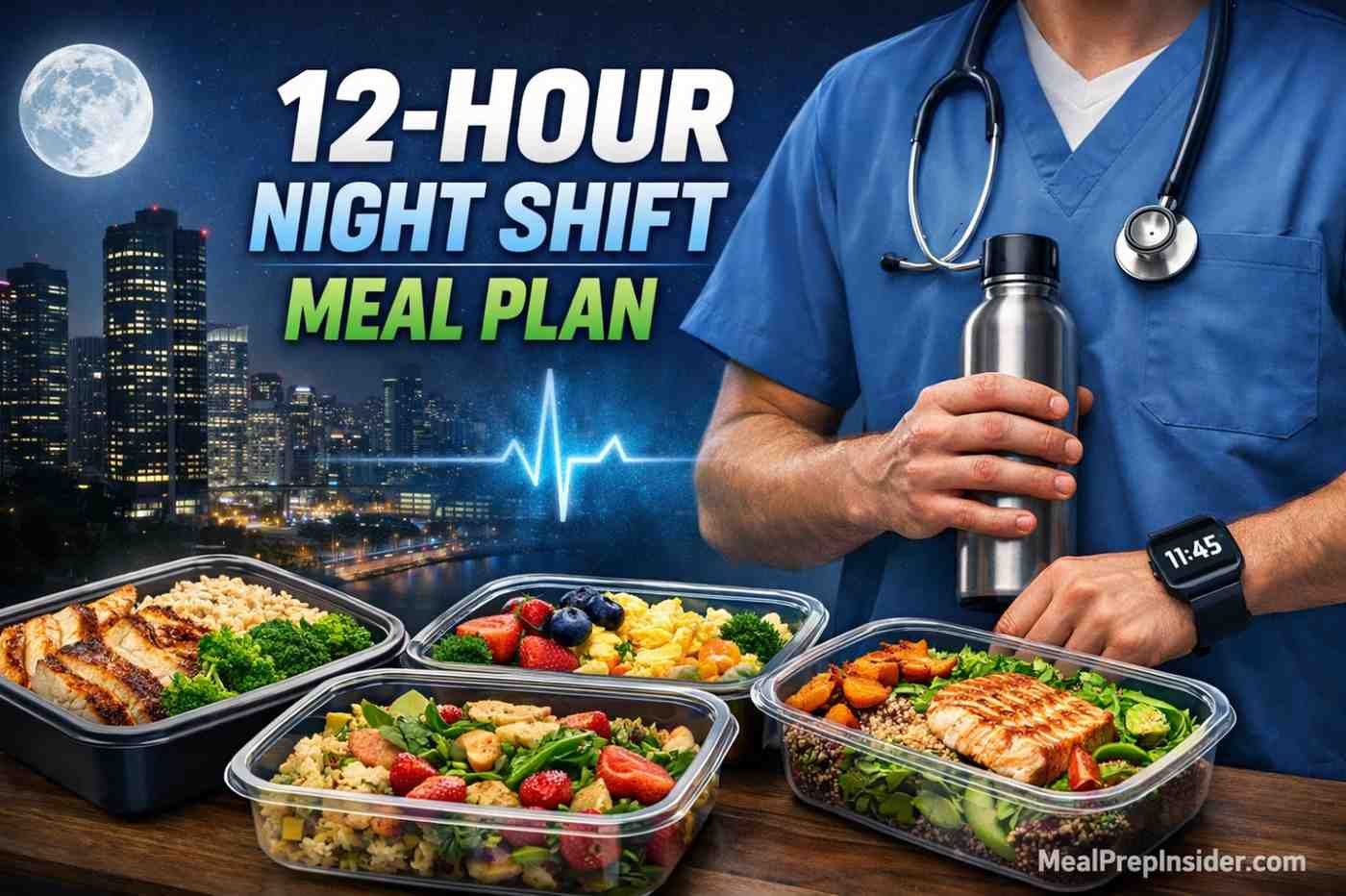
A 12-hour night shift meal plan can make the difference between dragging yourself through each shift and thriving during those overnight hours. You know that feeling when you’re staring at the vending machine at 3 AM, exhausted and starving, trying to convince yourself that a bag of chips counts as dinner? Yeah, we’ve all been there.
Working nights isn’t just about flipping your schedule upside down. Your body doesn’t magically adjust because you tell it to. Your circadian rhythm fights you every step of the way, and somewhere around hour nine, your stomach starts sending confused signals about whether it’s breakfast time or dinner time.
Let me share something real with you.
I spent two years working 7 PM to 7 AM shifts at a hospital, and those first few months were brutal. I gained fifteen pounds, felt constantly bloated, and survived mostly on energy drinks and whatever leftovers I could find in the break room fridge. My digestion was a mess. My energy crashed harder than the stock market in 2008.
Then I met Teresa, a veteran night nurse who’d been working overnights for twelve years and somehow looked healthier than people working regular hours. Her secret? She treated her meal planning like medication dosing, precise and intentional.
That conversation changed everything for me.
Why Night Shift Workers Need a Different Meal Plan
Your body runs on a natural clock that expects food during daylight hours and rest at night. When you flip that script, everything from your metabolism to your hormone production gets thrown off balance.
Research shows night shift workers face higher risks of:
- Metabolic syndrome
- Type 2 diabetes
- Cardiovascular disease
- Digestive issues
- Weight gain
- Chronic fatigue
These aren’t just statistics. These are real health consequences affecting millions of Americans working overnight shifts in hospitals, factories, emergency services, and 24-hour operations across the country.
Your insulin sensitivity drops during nighttime hours. Your digestive system slows down. Even the bacteria in your gut get confused about what time zone they’re living in.
But here’s the thing. You can work with your biology instead of against it.
Understanding Your Body’s Night Shift Reality
Before we jump into meal planning, let’s talk about what’s going on inside your body when you’re awake while everyone else is sleeping.
Your cortisol levels naturally peak in the early morning hours, around 6-8 AM. That’s great if you’re waking up. Not so great if you’re trying to wind down from your shift.
Melatonin, your sleep hormone, starts rising when it gets dark. For day workers, that’s convenient. For you? That means fighting drowsiness right when you need to be most alert.
Your metabolism slows by about 15-20% at night. That candy bar you eat at midnight gets processed differently than the same candy bar eaten at noon.
Here’s what that means for your meal plan: timing matters just as much as what you eat.
The Foundation of a Smart 12-Hour Night Shift Meal Plan
Think of your eating schedule in three phases: pre-shift fueling, mid-shift sustaining, and post-shift recovery.
Each phase serves a different purpose and requires different types of nutrients.
Pre-Shift (Before Your 12-Hour Night Begins)
This meal is your foundation. You’re building energy reserves for the long haul ahead.
You want complex carbohydrates for sustained energy, lean protein to keep you satisfied, and healthy fats to slow digestion. This isn’t the time for a heavy, greasy meal that’ll sit in your stomach like a rock.
Mid-Shift (Hours 4-6 Into Your Shift)
This is your anchor meal. It needs to stabilize your blood sugar and provide genuine nutrition without making you sleepy.
Protein becomes your best friend here. Vegetables add volume and nutrients without excess calories. Moderate carbs prevent the energy crash.
Post-Shift (After Your 12 Hours)
This meal is tricky. You’re hungry because you just worked all night. But you also need to sleep soon.
Light, easily digestible foods work best. Think of this as a substantial snack rather than a full meal.
Your Practical 12-Hour Night Shift Meal Schedule
Let’s break this down with actual times. I’m using a 7 PM to 7 AM shift as the example, but you can adjust these times based on your specific schedule.
5:30 PM – Pre-Shift Main Meal
This is essentially your dinner, eaten before most people finish their workday.
Sample meal options:
- Grilled chicken breast with quinoa and roasted vegetables
- Salmon with sweet potato and steamed broccoli
- Turkey meatballs with whole wheat pasta and marinara sauce
- Beef and vegetable stir-fry with brown rice
- Baked cod with wild rice and asparagus
Portion guide: Fill half your plate with vegetables, one quarter with protein (about 4-6 ounces), and one quarter with complex carbs.
10:00 PM – First Snack Break
You’re three hours into your shift. Energy is still decent, but starting to dip.
Keep it light and protein-focused:
- Greek yogurt with berries and a handful of almonds
- Apple slices with natural peanut butter
- Hard-boiled eggs with cherry tomatoes
- String cheese with whole-grain crackers
- Hummus with vegetable sticks
1:00 AM – Midnight Main Meal
This is your second substantial meal. Six hours down, six to go.
This meal needs to carry you through the rest of your shift without causing drowsiness.
Sample options:
- Chicken and vegetable soup with a small whole-grain roll
- Turkey and avocado wrap with a side salad
- Grilled shrimp with quinoa and mixed vegetables
- Egg white omelet with spinach, mushrooms, and whole wheat toast
- Lean beef with roasted Brussels sprouts and wild rice
Notice what’s missing? Heavy sauces, fried foods, and excessive cheese. Those will wreck your energy faster than you can say “coffee break.”
4:00 AM – Second Snack Break
The witching hour has passed. You’re in the home stretch but probably feeling it.
Strategic snacking here prevents the desperate vending machine run:
- Protein shake with banana
- Cottage cheese with cucumber slices
- Trail mix (watch the portion – easy to overeat)
- Rice cakes with almond butter
- Edamame with sea salt
7:30 AM – Post-Shift Light Meal
You made it. You’re exhausted. You’re hungry. But remember, you need to sleep soon.
Keep this meal light and sleep-friendly:
- Scrambled eggs with whole wheat toast
- Oatmeal with sliced banana and cinnamon
- Smoothie with protein powder, berries, and spinach
- Turkey slices with cucumber and hummus
- Small bowl of whole-grain cereal with milk
Avoid anything too heavy, spicy, or caffeinated at this point.

Breaking Down the Nutrients That Matter Most
Let me be straight with you. Not all calories function the same way during night shifts.
Protein: Your Night Shift Anchor
Aim for 25-35 grams of protein with your main meals and 10-15 grams with snacks.
Protein keeps you full longer, stabilizes blood sugar, and doesn’t spike insulin the way refined carbs do. When you’re fighting fatigue at 3 AM, that steady energy makes all the difference.
Best protein sources for night shift workers:
- Chicken breast (lean and versatile)
- Turkey (contains tryptophan but won’t knock you out in moderate amounts)
- Fish (omega-3s support brain function)
- Eggs (complete protein, easy to prepare)
- Greek yogurt (protein plus probiotics for gut health)
- Legumes (protein plus fiber)
Complex Carbohydrates: Choose Wisely
Carbs aren’t the enemy, but timing and type matter tremendously.
Early in your shift? Complex carbs provide sustained energy. Later in your shift? Too many carbs can trigger drowsiness.
Smart carb choices:
- Quinoa
- Brown rice
- Sweet potatoes
- Whole-grain bread
- Oatmeal
- Wild rice
Carbs to minimize or avoid during night shifts:
- White bread
- White pasta
- Sugary cereals
- Pastries
- Candy
That blood sugar spike and crash will destroy your productivity.
Healthy Fats: The Slow Burn
Fats slow down digestion, helping you feel satisfied longer between meals.
Quality fat sources:
- Avocado
- Nuts and seeds
- Olive oil
- Fatty fish
- Natural nut butters
A tablespoon of almond butter with your apple slice at 10 PM keeps you fuller than the apple alone.
Fiber: Your Digestive System’s Best Friend
Night shift workers commonly struggle with digestive issues. Irregular eating schedules confuse your gut.
Fiber helps maintain regularity and keeps you feeling full. Aim for 25-30 grams daily.
High-fiber foods that work well for night shifts:
- Vegetables (especially cruciferous ones)
- Fruits (berries are particularly good)
- Beans and lentils
- Whole grains
- Chia seeds
Hydration Strategy for 12-Hour Nights
Let’s talk about what you’re drinking, because this matters more than most people realize.
You need about 64-80 ounces of water during your 12-hour shift. But chugging it all at once just means constant bathroom breaks.
Here’s a better approach:
- Drink 16-20 ounces before your shift starts
- Sip 8-12 ounces every hour throughout your shift
- Drink 16 ounces after your shift
Water keeps your metabolism functioning, helps your brain stay alert, and prevents you from mistaking thirst for hunger.
The Caffeine Question
Coffee isn’t evil. But using it strategically versus desperately makes a huge difference.
Strategic caffeine use:
- First cup at the start of your shift or shortly after
- Second cup around hour 4-5 if needed
- Cut off caffeine at least 4-5 hours before you plan to sleep
That means if you’re getting off at 7 AM and sleeping by 9 AM, your last caffeine should be around 2-3 AM at the latest.
I know. That’s rough when you’re dragging at 5 AM. But trust me, the sleep you’ll actually get is worth more than the temporary boost.
Weekly Meal Prep for Night Shift Success
Here’s reality: You won’t cook fresh meals at 1 AM. You just won’t.
Meal prep becomes non-negotiable if you want to eat well during night shifts.
Your Meal Prep Day Strategy
Pick one day off when you have 3-4 hours. For most night shift workers, this works best on a day between shift blocks.
Batch cook proteins:
- Grill 4-5 chicken breasts
- Bake a large piece of salmon
- Cook a pound of ground turkey
- Hard-boil a dozen eggs
Prepare complex carbs:
- Cook a large batch of quinoa or brown rice
- Roast sweet potatoes
- Prepare overnight oats
Chop vegetables:
- Cut up bell peppers, cucumbers, carrots
- Wash and portion berries
- Prepare salad containers
Portion everything into grab-and-go containers. When you’re rushing out the door or taking your break, you just grab a container and go.
Sample Weekly Meal Prep Plan
| Day | Protein | Carb | Vegetables | Prep Time |
|---|---|---|---|---|
| Sunday | 4 chicken breasts | Brown rice (4 cups) | Broccoli, bell peppers | 2 hours |
| Wednesday | Turkey meatballs | Quinoa (3 cups) | Mixed salad greens | 1.5 hours |
This rotation keeps things from getting boring while staying manageable.
Avoiding Common Pitfalls Night Shift Workers Face
Let’s talk about the mistakes that’ll sabotage your health faster than you can say “vending machine.”
Frequent Error #1: Skipping Meals
You get busy. A patient’s emergency happens. A rush order comes through. Suddenly, you’ve gone eight hours without eating.
Then what happens? You’re ravenous and make terrible choices.
Solution: Pack more food than you think you need. Keep emergency snacks in your locker or work bag.
Frequent Error #2: Relying on Caffeinated Energy Drinks
Those energy drinks are basically liquid sugar with a caffeine bomb. The crash that follows is worse than the fatigue you started with.
Plus, drinking them late in your shift destroys your ability to sleep when you get home.
Frequent Error #3: Eating Like It’s a Normal Day
Some night workers try to maintain “normal” eating times on top of their shift meals. So they’re eating dinner at 6 PM, then eating full meals during their shift, then eating breakfast when they get home.
That’s essentially eating two days’ worth of food in one day. The math doesn’t work in your favor.
Frequent Error #4: The Social Eating Trap
Your coworkers order pizza at 2 AM. Everyone’s eating donuts that someone brought in. The break room always has birthday cake.
These social eating situations are tough to navigate, but eating garbage just because everyone else is won’t make you feel better.
Bring your own food. Politely decline. Save those treats for occasional indulgences, not nightly habits.
Frequent Error #5: Sleeping on an Empty (or Too Full) Stomach
Going to bed on an empty stomach means you’ll wake up hungry and struggle to sleep. Going to bed stuffed means digestive discomfort and poor sleep quality.
That post-shift meal needs to be substantial enough to satisfy you but light enough to digest before sleep.
Managing the Days Between Shifts
Your eating schedule on days off matters too.
Some night shift workers try to flip back to a “normal” schedule on days off. This constant schedule switching is brutal on your body.
If you work several night shifts in a row, consider staying on a similar schedule even on your days off. Your body will thank you.
If you rotate between day and night shifts, give yourself at least 24 hours to transition. During that transition day, eat smaller, more frequent meals to help your body adjust.
RELATED POST >> Best AI Meal Prep Planner Available Now: Top 7 Explained
Special Considerations for Different Types of Night Shift Workers
Not all night shifts are created equal.
Healthcare Workers
You’re on your feet constantly. You burn more calories and need more frequent energy replenishment.
Focus on: Portable, non-perishable snacks you can eat quickly. Protein bars (choose ones with minimal sugar), nuts, dried fruit.
Security and Monitoring Jobs
You’re more sedentary. Calorie needs are lower, but the temptation to eat out of boredom is higher.
Focus on: High-volume, low-calorie foods like vegetables with hummus. Foods that require effort to eat (nuts in shell, whole fruits).
Manufacturing and Warehouse Workers
Physical labor increases calorie and electrolyte needs, especially in temperature-controlled environments.
Focus on: Adequate protein for muscle recovery. Electrolyte-rich drinks (not just sugar-loaded sports drinks). Calorie-dense healthy fats.
Emergency Services
Unpredictable breaks mean you need foods that stay good without refrigeration and can be eaten quickly.
Focus on: Shelf-stable proteins like jerky and nut butters. Whole fruits. Foods that don’t require utensils.
Sample 12-Hour Night Shift Meal Plan for One Week
Let me give you a concrete example you can actually use.
Monday Night Shift
- 5:30 PM: Grilled chicken with sweet potato and green beans
- 10:00 PM: Greek yogurt with blueberries and walnuts
- 1:00 AM: Turkey and vegetable soup with whole grain crackers
- 4:00 AM: Apple slices with almond butter
- 7:30 AM: Scrambled eggs with whole wheat toast
Tuesday Night Shift
- 5:30 PM: Baked salmon with quinoa and roasted Brussels sprouts
- 10:00 PM: String cheese with cherry tomatoes
- 1:00 AM: Chicken and avocado wrap with side salad
- 4:00 AM: Protein shake with banana
- 7:30 AM: Oatmeal with cinnamon and sliced banana
Wednesday Night Shift
- 5:30 PM: Turkey meatballs with whole wheat pasta and marinara
- 10:00 PM: Hard-boiled eggs with cucumber slices
- 1:00 AM: Grilled shrimp with wild rice and steamed broccoli
- 4:00 AM: Cottage cheese with strawberries
- 7:30 AM: Smoothie with protein powder, spinach, and berries
Thursday Night Shift
- 5:30 PM: Lean beef stir-fry with mixed vegetables and brown rice
- 10:00 PM: Hummus with carrot and bell pepper sticks
- 1:00 AM: Egg white omelet with vegetables and whole grain toast
- 4:00 AM: Trail mix (¼ cup)
- 7:30 AM: Turkey slices with cucumber and whole grain crackers
Friday Night Shift
- 5:30 PM: Baked cod with roasted sweet potato and asparagus
- 10:00 PM: Apple with natural peanut butter
- 1:00 AM: Chicken and vegetable soup with a small whole-grain roll
- 4:00 AM: Greek yogurt with a handful of almonds
- 7:30 AM: Small bowl of whole grain cereal with milk
Notice the pattern? Variety keeps things interesting while maintaining the same basic nutritional structure.
Foods to Keep Stocked for Night Shift Success
Your pantry and fridge need to support your schedule. Here’s what successful night shift workers keep on hand:
Refrigerator Essentials
- Greek yogurt
- Pre-cooked chicken breast
- Hard-boiled eggs
- Fresh vegetables (pre-cut if possible)
- Berries
- Hummus
- String cheese
- Cottage cheese
- Lean deli meat
Freezer Essentials
- Frozen vegetables
- Frozen berries
- Pre-portioned cooked grains
- Homemade soup (batch-made)
- Frozen fish fillets
Pantry Essentials
- Nuts and seeds
- Nut butters
- Whole grain crackers
- Quinoa and brown rice
- Canned tuna or salmon
- Protein powder
- Oatmeal
- Whole-grain bread (can be frozen)
Portable Snacks for Work Bag
- Individual nut butter packets
- Protein bars (low sugar)
- Whole fruit
- Beef jerky or turkey jerky
- Rice cakes
- Dark chocolate (for when you need a treat)
The Sleep-Food Connection You Can’t Ignore
What you eat affects how you sleep. How you sleep affects what you eat. It’s a cycle.
Poor sleep increases ghrelin (a hunger hormone) and decreases leptin (a satiety hormone). That’s why you’re ravenous after a bad sleep.
Certain foods promote better sleep:
- Tart cherry juice (natural melatonin)
- Bananas (magnesium and potassium)
- Oatmeal (triggers serotonin production)
- Almonds (magnesium)
- Turkey (tryptophan)
Foods that interfere with sleep:
- Caffeine (obviously, but it stays in your system 4-6 hours)
- Alcohol (disrupts sleep cycles)
- High-fat foods (hard to digest)
- Spicy foods (can cause heartburn)
- High-sugar foods (blood sugar fluctuations)
Time your post-shift meal to finish eating at least 90 minutes before you plan to sleep. This gives your body time to start digestion without keeping you awake.
Supplements Worth Considering for Night Shift Workers
I’m not saying supplements replace food. But certain supplements can support your health when working nights.
Vitamin D
You’re sleeping during daylight hours. You’re not getting natural sun exposure. Vitamin D deficiency is common among night shift workers.
Consider 2000-4000 IU daily, especially in the winter months.
Magnesium
Supports sleep quality and helps with muscle relaxation. Many Americans are deficient anyway.
300-400 mg before sleep can help.
Melatonin
Not during your shift. For helping you fall asleep when you get home.
Start with 0.5-1 mg about 30 minutes before bed. More isn’t better with melatonin.
Omega-3 Fatty Acids
Support brain health, reduce inflammation, and may help regulate circadian rhythm.
If you’re not eating fatty fish 2-3 times weekly, consider a quality fish oil supplement.
Probiotics
Night shift work disrupts your gut microbiome. Probiotics may help maintain digestive health.
Always talk to your doctor before starting new supplements, especially if you take medications.
Real Talk About Weight Management on Night Shifts
Let’s address the elephant in the break room. Most night shift workers gain weight.
It’s not your fault. It’s biology working against you. But you’re not powerless.
The meal plan I’ve outlined helps, but you also need to think about total daily calories.
Night shift workers often need slightly fewer calories than day workers doing similar jobs because your metabolism is slower at night. That’s annoying but true.
Track your intake for a week without changing anything. Just observe. Then identify where empty calories are sneaking in.
Common calorie traps:
- Mindless snacking during slow periods
- Liquid calories (fancy coffee drinks, juice, soda)
- Eating full meals when you’re not actually hungry
- Weekend binge eating to “make up” for restriction during the week
You don’t need to count calories forever. But awareness helps you make better choices.
Making It Work in Real Life
Theory is great. Implementation is harder.
You’ll have nights when everything goes wrong. You’ll forget your food. You’ll work through breaks. You’ll be too exhausted to meal prep.
That’s life. Don’t let one bad night derail your entire plan.
Keep backup options:
- Protein powder at work (just add water)
- Shelf-stable protein bars in your locker
- Emergency cash for healthier convenience store options
- Relationships with coworkers who might share food
The goal isn’t perfection. The goal is consistency most of the time.
If you nail your nutrition 80% of the time, you’ll feel dramatically better than if you eat garbage every night.
Building Sustainable Habits
Start small. Don’t overhaul everything at once.
Week 1: Focus just on your pre-shift meal. Make that one consistently healthy.
Week 2: Add in proper hydration throughout your shift.
Week 3: Plan your mid-shift meal.
Week 4: Dial in your post-shift eating and snacks.
By month two, you’ll have built habits that stick rather than trying to force a complete transformation that fails by week three.
Get your family or roommates involved. Explain why you’re eating at weird times. Ask them to support your meal prep efforts.
Find a coworker on the same schedule who wants to eat better. Accountability helps.
The Bottom Line on Night Shift Nutrition
A 12-hour night shift meal plan isn’t just about food. It’s about respecting your body enough to give it what it needs when the timing is all wrong.
You’re asking your body to do something unnatural. The least you can do is fuel it properly.
Will following this plan make night shifts easy? No. Night shifts are hard.
But proper nutrition will give you more energy, better focus, improved mood, better sleep quality, and reduced health risks over the long term.
You deserve to feel good, even when you’re working while the rest of the world sleeps.
Start with one shift. Pack your meals. Follow the plan. Notice how you feel.
I bet you’ll notice the difference before your shift is even over.
Your body is working hard for you every single night. Give it the fuel it needs to keep going.
Frequently Asked Questions
How many calories should I eat during a 12-hour night shift?
Calorie needs vary based on your size, activity level, and metabolic rate. Most night shift workers need between 1,800-2,500 calories daily, distributed across their pre-shift meal, mid-shift meal, snacks, and post-shift meal. Track your intake and weight for a few weeks to find your ideal range.
Should I eat breakfast when I get home from a night shift?
Keep your post-shift meal light rather than a full breakfast. Think of it as a substantial snack—something like scrambled eggs with toast or oatmeal. You need enough to satisfy hunger but not so much that it interferes with sleep. Eat at least 90 minutes before bed.
What’s the best thing to eat at 3 AM when I’m exhausted?
Reach for protein-rich snacks that provide steady energy without sugar crashes. Greek yogurt, hard-boiled eggs, nuts with an apple, or a protein shake work well. Avoid sugary snacks, heavy meals, and excessive caffeine this late in your shift.
Can I drink coffee throughout my entire 12-hour shift?
Cut off caffeine 4-5 hours before you plan to sleep. For a 7 PM to 7 AM shift, your last coffee should be around 2-3 AM. Caffeine has a half-life of 4-6 hours, meaning it stays in your system long after you drink it. Late-shift caffeine will destroy your sleep quality.
How do I avoid gaining weight while working night shifts?
Focus on whole foods, control portions, stay hydrated, and avoid mindless snacking. Night shift workers have slower metabolisms at night, so you may need slightly fewer calories than day workers. Meal prep prevents desperate vending machine runs that pack on pounds.
What should I do on my days off between night shifts?
If you work multiple nights in a row, maintain a similar eating schedule on days off. Constantly flipping between day and night eating patterns is harder on your body than staying consistent. If you must switch schedules, allow at least 24 hours for the transition, with smaller, more frequent meals.
Is intermittent fasting a good idea for night shift workers?
Intermittent fasting can work, but timing matters. Some night workers do well eating only during their shift (essentially a 12-hour eating window). Others find this leads to overeating and poor choices. Experiment carefully and listen to your body’s signals.
What foods help me sleep better after a night shift?
Foods containing tryptophan, magnesium, and complex carbs promote sleep. Try oatmeal with banana, scrambled eggs with whole wheat toast, or a smoothie with protein powder and berries. Avoid caffeine, spicy foods, high-fat meals, and large portions close to bedtime.
How much water should I drink during a 12-hour shift?
Aim for 64-80 ounces of water throughout your shift. Drink 16-20 ounces before your shift, then sip 8-12 ounces every hour. Don’t chug large amounts at once—this just leads to constant bathroom breaks. Adjust based on physical activity level and facility temperature.
Should I take supplements if I work night shifts?
Consider vitamin D (you’re missing sunlight), magnesium (supports sleep), and omega-3s (brain health). Melatonin can help with post-shift sleep. Probiotics may support digestive health disrupted by irregular eating. Always consult your doctor before starting supplements, especially if you take medications.
SUGGESTED POST >> 36 Easy Night Shift Meal Prep Ideas: Best Energy-Packed