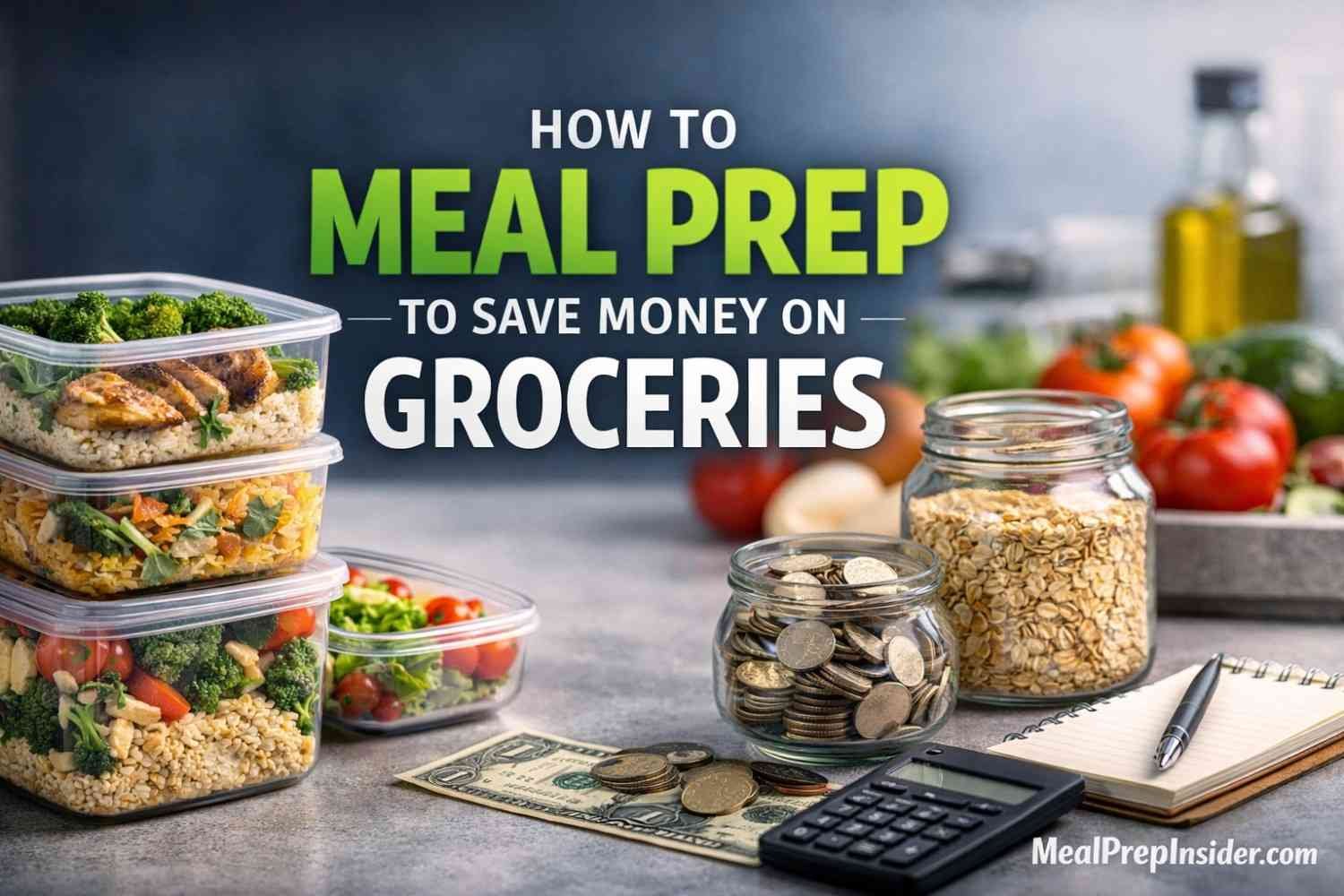
How to Meal Prep to Save Money: Saving money on groceries through meal prep isn’t just another internet trend that sounds good in theory but falls apart when you try it at home. It’s a genuine financial strategy that thousands of American families use to cut their food bills by 30% or more each month.
Let me tell you about Sarah, a marketing coordinator from Phoenix who was hemorrhaging about $800 monthly on groceries and takeout for her family of three. She wasn’t buying caviar or dining at five-star restaurants. Just regular trips to Target, grabbing “a few things” that somehow turned into $150 purchases, plus those convenient drive-through dinners when she was too exhausted to cook.
Sound familiar?
Sarah discovered meal prepping almost by accident when a coworker brought beautiful glass containers filled with colorful meals to the office every day. That coworker wasn’t spending hours slaving away in the kitchen either. She was strategic. Intentional. And her grocery bill? About $450 monthly for the same-size family.
The difference was staggering.
This guide will walk you through exactly how to implement meal prepping strategies that reduce your grocery spending without sacrificing variety, flavor, or your sanity. We’re talking real-world tactics that work with American lifestyles, not some aspirational Pinterest fantasy.
Why Meal Prep to Save Money on Groceries Actually Works
The connection between meal preparation and reduced spending isn’t mysterious. It’s mathematics combined with behavioral psychology.
When you meal prep, you eliminate the most expensive grocery shopping habit: impulse buying. Research from the Marketing Science Institute shows that nearly 60% of grocery purchases are unplanned. Those “quick trips” for milk that result in $75 receipts? That’s the grocery industry’s business model working exactly as designed.
Meal prepping forces intentionality.
You plan what you’ll eat. You buy only those ingredients. You prepare meals when you have time and energy, not when you’re starving and everything sounds good (or nothing sounds appealing, so you order pizza).
The financial benefits stack up quickly:
Reduced food waste: Americans throw away approximately $1,500 worth of food per household annually. Meal prepping means using what you buy.
Fewer restaurant visits: The average American spends $3,500 yearly on restaurants and takeout. Meal prep provides that convenience without the markup.
Bulk purchasing power: Buying larger quantities of staple ingredients costs less per serving than small packages.
Energy efficiency: Cooking multiple meals simultaneously uses less electricity or gas than cooking daily.
Eliminated convenience fees: Pre-cut vegetables, pre-marinated meats, and ready-made meals cost 40-300% more than their prepare-it-yourself counterparts.
Marcus from Detroit put it perfectly when he told me, “I used to think spending $12 on lunch was just part of working downtown. Now I bring meals that cost maybe $3 to make, taste better, and keep me full longer. That’s $45 per week, almost $200 per month. That’s my car insurance payment.”
The savings are real. The method just needs to fit your life.
Setting Up Your Meal Prep Foundation
Before you cook a single thing, you need the right setup. This isn’t about buying expensive equipment. It’s about creating a system that removes friction from the process.
The Essential Equipment
You don’t need a fully stocked Williams Sonoma kitchen. You need functional tools that make preparation easier.
Must-have items:
- Quality food storage containers (glass or BPA-free plastic)
- Sharp chef’s knife
- Cutting boards (separate for proteins and produce)
- Large stockpot
- Sheet pans (at least two)
- Slow cooker or Instant Pot
- Measuring cups and spoons
Jennifer from Nashville started with dollar-store containers and her existing cookware. She spent maybe $25 total. Six months later, after seeing real savings, she upgraded to better containers. But those initial cheap ones worked fine to prove the concept.
Start where you are.
Storage Container Strategy
Container selection matters more than you’d think. The wrong ones create annoying problems that derail your entire system.
Glass containers last longer and don’t stain or retain odors. They’re microwave-, oven-, and dishwasher-safe. The downside? They’re heavier and breakable.
Plastic containers are lightweight and affordable. Good for portability. But they can stain, warp, and degrade over time.
Recommended container inventory for beginners:
- 10-12 containers (3-4 cup capacity) for full meals
- 6-8 smaller containers (1-2 cup capacity) for components or snacks
- 4-6 divided containers if you prefer separated foods
Standardizing sizes makes storage easier. Nothing’s more frustrating than container lids that don’t match anything.
Creating Your Prep Space
Your kitchen doesn’t need to be huge. It needs to be organized.
Clear your counter space completely before prep days. You’ll need room for assembly-line style preparation. One area for washing and chopping vegetables. Another for protein preparation. A third for assembly.
Stephanie, a single mom in Chicago with a tiny apartment kitchen, preps on her dining table. She lays out cutting boards, bowls, and ingredients in stations. It works beautifully because she planned the workflow.
The space matters less than the system.
How to Plan Your Meal Prep to Save Money on Groceries
Planning separates successful meal preppers from people who batch-cook random things, get bored, and quit. Strategic planning maximizes savings and maintains variety.
The Inventory Assessment
Open your refrigerator, freezer, and pantry. Write down everything you already have.
This step feels tedious. Do it anyway.
Most Americans have $200-400 worth of food already sitting in their homes. Using what you own before buying more is the fastest way to reduce grocery spending immediately.
Rachel from Portland discovered eight cans of diced tomatoes, three boxes of pasta, and two pounds of frozen chicken in her pantry, all of which she’d completely forgotten about. That became the foundation for her first week of meal prep. Zero additional grocery spending required.
Check expiration dates. Move older items forward. Plan meals around ingredients that need to be used soon.
Building Your Master Meal List
Create a running list of 15-20 meals your household genuinely enjoys eating. Not aspirational meals you saw on Instagram. Real food your people will consume without complaining.
This list becomes your rotation. You’re not cooking different things every single day forever. You’re rotating through proven winners, which simplifies shopping and preparation.
Meal list criteria:
- Uses affordable, accessible ingredients
- Reheats well (if preparing in advance)
- Provides balanced nutrition
- Can be scaled for batch cooking
- Stores safely for 3-5 days
Daniel from Atlanta keeps his list on a note in his phone. He adds new successful recipes and removes ones his family didn’t love. After a year, he has 30 reliable options that he rotates through, and grocery shopping takes 15 minutes because he knows exactly what he needs.
The Weekly Planning Process
Sunday evening (or whenever works for your schedule), plan the upcoming week’s meals.
Check your calendar first. How many breakfasts, lunches, and dinners will you prepare at home? Account for date nights, work dinners, travel, or other commitments.
Then select meals from your master list based on:
Time availability: Choose simpler meals for busy weeks, more complex ones when you have time.
Ingredient overlap: Select recipes sharing common ingredients to minimize shopping and costs.
Nutritional balance: Ensure variety in proteins, vegetables, and preparation styles.
What’s on sale: Build flexibility into your system to capitalize on deals.
Maria in Sacramento plans for 5 dinners, 5 lunches, and 3 breakfasts weekly. Her family eats out on Friday nights, she has team lunches on Wednesdays, and they grab breakfast out on weekends. She only preps what she’ll use.
No wasted effort. No wasted food.

Creating Your Shopping List
Write your shopping list organized by store sections: produce, meat, dairy, and pantry items. This speeds up shopping and reduces the risk of forgetting items.
Compare your list against current grocery store sales flyers. Adjust meals if chicken thighs are $1.99/pound, but you’d planned for chicken breasts at $4.99/pound.
Money-saving shopping list strategies:
Check unit prices, not package prices. The larger size isn’t always cheaper per ounce.
Buy store brands for staples. Flour, sugar, rice, beans, and canned goods rarely differ meaningfully from name brands.
Purchase proteins on sale and freeze extras. Stock up when prices drop.
Choose whole foods over processed. Pre-seasoned, pre-marinated, or pre-packaged items carry significant markups.
Buy frozen vegetables for meal prep. They’re picked at peak ripeness, flash-frozen, and often cheaper than fresh with zero waste.
Skip beverages except milk and coffee/tea. Water is free. Juice, soda, and specialty drinks drain budgets quickly.
Thomas from Miami uses the Flipp app to compare sales across multiple stores before shopping. He plans one monthly “stock-up” trip to Costco for bulk items and weekly trips to a local grocer for fresh produce and proteins. His average grocery spending dropped 35% with this approach.
Executing Your Meal Prep Sessions
The preparation session is where planning becomes tangible. This is your cooking time, but approached systematically rather than frantically.
Choosing Your Prep Schedule
Some people dedicate Sunday afternoons to cooking everything for the week. Others prefer shorter sessions twice weekly. Some prep ingredients and components, rather than complete meals.
There’s no single correct method.
Full batch cooking: Prepare all meals for the week in one 2-4 hour session. Requires significant time investment but consolidates effort.
Partial prep: Prepare proteins and chop vegetables, then quickly assemble meals daily. Provides fresher-tasting food with less upfront time.
Component cooking: Make versatile components (grilled chicken, roasted vegetables, cooked grains) that can be combined in different ways throughout the week.
Hybrid approach: Prep some complete meals, some components, based on the week’s needs.
Amanda, a nurse in Boston working 12-hour shifts, does full batch cooking before her work week. She prepares everything on Sunday afternoon and doesn’t cook again until Thursday, when she’s off.
Kevin, working from home in Denver, preps components Sunday evening, then assembles meals fresh each day in about 10 minutes.
Both approaches work because they match their lifestyles.
The Efficient Prep Workflow
Efficiency comes from proper sequencing. Start with tasks requiring the longest cooking times, then work on quicker preparations while those cook.
Recommended workflow:
Step 1: Preheat oven. Start any slow cooker or Instant Pot recipes.
Step 2: Begin cooking grains (rice, quinoa, pasta) that take 20-45 minutes.
Step 3: Prepare proteins for oven or stovetop cooking.
Step 4: While proteins cook, wash and chop all vegetables.
Step 5: Start cooking vegetables (roasting, sautéing, steaming).
Step 6: As items finish cooking, portion them into containers or storage.
Step 7: Prepare any sauces, dressings, or toppings.
Step 8: Assemble complete meals or organize components.
This assembly-line approach cuts preparation time nearly in half compared to cooking meals individually.
Lisa from San Diego sets timers for everything. When the rice timer goes off, she starts cooking vegetables. When the chicken timer sounds, she begins portioning. She’s streamlined her process so thoroughly that she preps 12 meals in under 90 minutes.
Budget-Friendly Meal Prep Recipes
Certain recipes are meal prep champions: affordable, scalable, delicious reheated, and nutrient-dense.
Protein Options:
- Slow cooker pulled chicken or pork
- Sheet pan chicken thighs with vegetables
- Turkey or beef chili
- Baked salmon or white fish
- Hard-boiled eggs (breakfast protein or snacks)
- Black bean and sweet potato tacos
Grain Bases:
- Brown rice
- Quinoa
- Whole wheat pasta
- Farro
- Barley
- Baked sweet potatoes
Vegetable Preparations:
- Roasted broccoli, cauliflower, Brussels sprouts
- Sautéed peppers and onions
- Steamed green beans
- Roasted root vegetables
- Simple salads with dressing separate
Complete Meal Ideas:
| Meal | Protein | Grain/Starch | Vegetable | Approximate Cost Per Serving |
|---|---|---|---|---|
| Chicken Burrito Bowl | Seasoned chicken breast | Brown rice and black beans | Peppers, onions, salsa | $3.25 |
| Asian Chicken | Teriyaki chicken thighs | White rice | Steamed broccoli | $2.75 |
| Pasta Primavera | Italian sausage | Whole wheat pasta | Mixed roasted vegetables | $3.50 |
| Salmon and Vegetables | Baked salmon | Quinoa | Green beans | $5.25 |
| Breakfast Bowl | Scrambled eggs | Roasted potatoes | Peppers and onions | $2.00 |
These meals cost a fraction of restaurant equivalents while providing superior nutrition and portion control.
Compare that $3.25 burrito bowl to Chipotle’s $12-15 version. The math becomes compelling quickly.
Storing and Organizing Your Prepped Meals
Proper storage extends freshness, maintains food safety, and makes your system sustainable.
Food Safety Fundamentals
Meal prep requires attention to food safety since you’re storing food longer than same-day consumption.
Critical safety practices:
Cool hot food quickly. Don’t let cooked food sit at room temperature longer than two hours. Divide large batches into smaller containers to speed cooling.
Store food at 40°F or below. Invest in a refrigerator thermometer to verify the temperature.
Label everything with contents and date. Use masking tape and markers for easy labeling.
Follow the 3-5 day rule. Most cooked meals remain safe and tasty for 3-4 days refrigerated. The last five days, but the quality declines.
Freeze meals you won’t eat within the safe window. Frozen properly, most meals last 2-3 months.
Keep raw and cooked foods separate. Avoid cross-contamination during storage.
Reheat to 165°F. Use a food thermometer occasionally to verify your microwave heats food adequately.
Nobody wants food poisoning. These simple practices prevent it.
Refrigerator Organization Strategy
An organized refrigerator makes meal prep sustainable. You can see what you have, grab meals quickly, and nothing gets forgotten and wasted.
Organization tips:
Designate a “meal prep zone” in your refrigerator. Group all prepped meals together, separate from other food.
Stack containers efficiently. Standardized container sizes make this much easier.
Position meals you’ll eat first at the front. Older meals move forward, newer ones toward the back.
Store breakfast, lunch, and dinner items in different areas if that helps your household.
Keep components separate from complete meals if doing hybrid prep.
Jacob in Phoenix uses clear containers and arranges them like a restaurant reach-in cooler. Lunches on the top shelf, dinners on the middle shelf, breakfast items and components on the bottom. His wife and teenage kids can grab what they need without asking what anything is.
Visibility equals usability.
Freezer Meal Management
Freezing extends your meal prep considerably. You can cook larger batches less frequently, capitalize on better sales, and create more variety.
Not all foods freeze equally well.
Freezer-friendly foods:
- Soups and stews
- Casseroles
- Cooked grains
- Most cooked proteins
- Sauces and marinades
- Breakfast burritos or sandwiches
- Muffins and baked goods
Foods that don’t freeze well:
- Lettuce and raw vegetables with high water content
- Cooked potatoes (texture changes)
- Cream-based sauces (can separate)
- Fried foods (get soggy)
Use freezer-safe containers or heavy-duty freezer bags. Remove as much air as possible to prevent freezer burn.
Freeze meals flat in bags for space-efficient storage and faster thawing.
Label clearly with contents and date. Frozen food looks remarkably similar.
Create a freezer inventory list. Keep a whiteboard on your freezer, noting what’s inside and when you froze it.
Angela in Minnesota preps two weeks’ worth of meals each month. She cooks for an entire Saturday, freezes half, and refrigerates the other half. Midweek, she pulls frozen meals from the refrigerator to thaw. She’s cooking twice a month instead of daily and saving hundreds each month.
RELATED POST >> How to Meal Prep Breakfast Burritos That Never Get Soggy
Common Pitfalls to Avoid When Starting
Most people make predictable mistakes when beginning meal prep. Recognizing these traps helps you avoid them.
Overcomplicating Initially
The biggest enthusiasm killer is attempting too much too soon. You see someone on Instagram prepping 30 elaborate gourmet meals and think that’s the standard.
It’s not.
Start simple. Prep for three days instead of seven. Make familiar recipes, not experimental ones. Use straightforward ingredients.
Build complexity gradually as the habit establishes.
Carla from Dallas tried prepping 14 different meals her first week, including several recipes she’d never made before. She spent six hours in the kitchen, hated half the meals, and quit entirely.
Three months later, she tried again. This time she made just three recipes: chili, chicken with rice and broccoli, and breakfast burritos. It took 90 minutes. Everything tasted good. She’s been prepping consistently for eight months now.
Simple works. Fancy fails.
Ignoring Personal Preferences
Meal prepping foods you don’t genuinely enjoy eating is a recipe for quitting and wasting money.
If you hate leftovers, meal prep probably isn’t your strategy. If you despise chicken breast, don’t prep it just because it’s cheap. If you need variety and can’t eat the same lunch four days in a row, prep different options.
The best meal prep approach is the one you’ll maintain.
Brian from Seattle discovered he couldn’t eat the same dinner four consecutive nights, but was perfectly fine with the same breakfast and lunch. Now he preps only breakfasts and lunches, cooks dinner fresh each evening, and still saves significant money and time.
Make the system fit you.
Inadequate Seasoning
Properly seasoned food eaten four days later tastes good. Bland food eaten immediately tastes bad and becomes intolerable by day three.
Season generously. Herbs, spices, acids (lemon juice, vinegar), and aromatics (garlic, onions) make meal prep exciting instead of monotonous.
Create variety through different sauces and seasonings, even when using the same base ingredients. Grilled chicken becomes four different meals with teriyaki, buffalo, Italian, and taco seasonings.
Store dressings and sauces separately when possible. They keep food from getting soggy and let you adjust flavors as you eat.
Michelle in Austin makes one large batch of shredded chicken weekly but portions it with different flavor profiles: BBQ, Asian-inspired, Mexican-seasoned, and Mediterranean. Same protein, completely different meals.
Seasoning is the difference between sustainable and miserable.
Skipping the Planning Step
Enthusiastically cooking a bunch of food without planning creates chaos. You end up with ingredients that don’t make complete meals, missing crucial components, or too much of one thing.
Planning takes 20 minutes. It saves hours and prevents waste.
Even a simple plan beats no plan. A scribbled list of “chicken, rice, broccoli/turkey chili/egg muffins” on a sticky note provides direction.
Write it down. Follow the plan. Adjust based on results.
Maximizing Grocery Savings Through Meal Prep
Meal prep lays the foundation for savings, but specific strategies significantly amplify them.
Strategic Bulk Buying
Purchasing in bulk dramatically reduces per-unit costs. But buying bulk quantities of things you won’t use creates waste that negates savings.
Smart bulk purchasing:
Buy shelf-stable staples in bulk. Rice, beans, oats, flour, sugar, oils, and spices keep for months or years.
Purchase proteins on sale in bulk, then portion and freeze. When chicken breasts hit $1.99/pound instead of the usual $4.99, buy 10 pounds.
Split bulk purchases with friends or family. Costco quantities work great for a family of six, but overwhelm a single person. Share the cost and products.
Store bulk items properly. Airtight containers for dry goods, freezer bags for proteins.
Calculate the actual cost per serving. Sometimes bulk isn’t cheaper if you factor in waste.
Robert from New York splits a Costco membership with his brother. They shop together monthly, dividing bulk packages. Each pays half the membership fee and gets bulk prices on the items they use regularly. They estimate saving $150-200 monthly each.
Seasonal Produce Selection
Produce prices fluctuate widely with seasonality. Strawberries in December cost three times more than strawberries in June.
Building meal plans around seasonal produce cuts costs while improving flavor.
Generally cheaper by season in most of the United States:
Spring: Asparagus, peas, lettuce, spinach, strawberries
Summer: Tomatoes, zucchini, peppers, berries, stone fruits, corn
Fall: Squash, sweet potatoes, apples, pears, Brussels sprouts
Winter: Citrus fruits, root vegetables, cabbage, kale
Frozen vegetables offer consistent year-round pricing and reduce waste, since you use only what you need.
Catherine in Oregon plans meals around the weekly farmers’ market. Whatever’s abundant and cheap becomes that week’s vegetable focus. Her produce spending is about $20 weekly for a family of four because she’s buying peak-season items.
Repurposing Ingredients Across Meals
The most efficient meal prep uses ingredients in multiple applications throughout the week.
Cook a whole chicken on Sunday. Serve roasted chicken for dinner. Use leftover meat in chicken salad for lunch. Simmer the carcass for soup stock. One ingredient, four applications.
Roast a large pan of mixed vegetables. Serve some as a side dish. Blend some into the soup. Add some to grain bowls. Toss some with pasta.
This approach minimizes shopping, reduces waste, and creates variety from simple ingredients.
Example ingredient rotation:
Sunday: Roast 3 pounds of chicken thighs
Monday lunch: Chicken thighs with rice and vegetables
Tuesday lunch: Chicken and black bean burrito bowl
Wednesday dinner: Shredded chicken tacos
Thursday lunch: Chicken and vegetable soup using remaining meat and vegetable scraps
One affordable protein purchase ($6-8) provides four different meals.
Reducing Meat Consumption Strategically
Protein is typically the most expensive component of meals. Even a slight reduction in meat consumption yields substantial savings.
You don’t need to become a vegetarian. Just incorporate meatless meals strategically.
High-protein plant-based options:
- Beans and lentils ($1-2 per pound dried)
- Eggs (around $0.15-0.25 each)
- Greek yogurt
- Quinoa
- Tofu
- Peanut butter
David from Colorado Springs incorporated two meatless dinners weekly: black bean chili and lentil curry. Those meals cost about $1.50 per serving, compared with $4-5 for meat-based dinners. That small change saves roughly $40 monthly.
Small adjustments accumulate into significant savings.
Meal Prep for Different Household Sizes
Meal prep strategies adjust based on who you’re feeding.
Meal Prep for Singles
Solo meal preppers face specific challenges: bulk buying may not make sense, variety can be harder to achieve, and motivation can waver when cooking only for yourself.
Strategies for one:
Prep smaller batches. Four meals instead of 12 might be more realistic.
Freeze half immediately. Cook six servings, eat three this week, freeze three for next week.
Join with a friend. Prep together, split meals. You make chicken and vegetables, they make turkey chili, and you each go home with a variety.
Focus on versatile components rather than complete meals. Prepare proteins and grains, and combine them differently each day.
Use your freezer extensively. Single-serving frozen meals provide variety without waste.
Emma in Philadelphia preps with her neighbor every other Sunday. They each cook double batches of different recipes, then split everything. She gets variety without cooking constantly and splits grocery costs.
Meal Prep for Families
Families can leverage meal prep powerfully, but need to account for different preferences, ages, and schedules.
Family meal prep considerations:
Involve family members. Kids who help prep are more likely to eat the meals.
Create customizable components. Base proteins, grains, and vegetables that family members can combine according to preference.
Account for different portion sizes. Growing teenagers eat differently from toddlers.
Prep school lunches simultaneously with adult lunches. Consolidated effort saves time.
Use larger equipment. Full-size sheet pans, large slow cookers, or double recipes to feed everyone efficiently.
The Martinez family in Houston preps together on Saturday mornings. Dad handles proteins, mom manages vegetables and grains, the teenagers’ portion, and stores everything. They prep 20+ meals in about 2 hours and estimate saving $400-500 per month compared to their previous eating-out habits.
Family involvement makes it sustainable.
Tracking Your Savings and Adjusting
What gets measured improves. Tracking spending creates awareness and motivation.
Documenting Your Baseline
Before making any changes, track your current food spending for two weeks. Every grocery purchase, convenience store stop, coffee run, restaurant meal, and food delivery.
The number might be shocking. That’s okay. You can’t improve what you don’t measure.
Write down the total. This becomes your baseline for comparison.
Monitoring Grocery Expenses
After implementing meal prep, continue tracking all food-related spending.
Compare monthly totals. Calculate the difference. Celebrate the wins.
Most people see 20-40% reductions in food spending through consistent meal prep. Some see even more dramatic results if they were previously eating out extensively.
Simple tracking methods:
- Photo receipts, total them monthly
- Spreadsheet with grocery spending, restaurant spending, and total food costs
- A budgeting app that categorizes spending automatically
- Envelope method with allocated cash for groceries
Numbers don’t lie. When you see $650 in food spending drop to $425, the effort feels worthwhile.
Adjusting Based on Results
After a month of meal prep, evaluate honestly.
What worked? Do more of that.
What didn’t work? Change it or eliminate it.
Which recipes did everyone love? Make them again.
Which meals sat in the refrigerator untouched? Remove them from rotation.
This iterative process creates a customized system that fits your household perfectly.
Meal prep isn’t static. It evolves with your needs, preferences, and circumstances.
Building Sustainable Meal Prep Habits
The difference between short-term dieting and lifestyle change applies to meal prep too. Quick bursts of intense effort fade. Sustainable systems last.
Starting Gradually
You don’t need to prep every meal immediately. Start with the most problematic meal.
If lunch is your biggest expense or challenge, start there. Prep just lunches for two weeks.
Once that feels comfortable, add another meal. Maybe breakfast or a few dinners.
Gradual implementation builds confidence and competence without overwhelming you.
Creating Accountability
Accountability increases follow-through dramatically.
Find a meal prep partner. Check in weekly about your prep sessions.
Join online communities. Reddit’s meal prep forum, Facebook groups, or Instagram communities provide inspiration and accountability.
Share your meals on social media. A little social pressure helps consistency.
Tell someone your savings goal. External accountability makes you more likely to persist.
Celebrating Progress
Recognize your wins, even small ones.
You prepped for three days instead of seven? That’s still three days of not scrambling for food.
You saved $75 this month instead of your $200 goal? That’s still $75 you didn’t have before.
You skipped prep one week but resumed the next? That’s not failure, that’s resilience.
This isn’t about perfection. It’s about progress.
Every meal prepped is a small victory. Every dollar saved is progress toward financial goals.
Frequently Asked Questions
How long does meal prep actually take?
Once they develop a system, most people spend 1-3 hours a week on meals. Beginners might need 3-4 hours initially. Partial prep or component cooking might take 30-60 minutes. The time investment pays back throughout the week when meals are ready in minutes instead of requiring full cooking sessions.
Can I meal prep if I don’t like eating the same thing multiple days in a row?
Definitely. Prep components (proteins, grains, vegetables) rather than complete meals, then combine them in different ways each day. Or prep different meals simultaneously. Or freeze half your prepped meals and eat them in alternating weeks for more variety. The method adapts to your preferences.
What if I get sick of the meals by day three or four?
This usually indicates under-seasoning or insufficient variety. Make sure you’re seasoning food well. Keep different sauces and dressings available to change flavors. Prep different meals, not the same meal seven times. Consider partially prepping or component prepping instead of complete meals.
How much money can I realistically save with meal prep?
Savings vary based on your current spending and eating habits. People who eat out frequently might save $300-500 monthly. People who shop for groceries inefficiently might save $100-200 per month. On average, consistent meal preppers report 25-40% reductions in food spending.
Is meal prep safe? Won’t the food go bad?
Properly stored meal prep is safe. Cool food quickly, store at 40°F or below, and consume refrigerated meals within 3-5 days. Freeze anything you won’t eat within that timeframe. Following basic food safety practices and meal prep is completely safe.
What if I don’t have much time on weekends?
Meal prep doesn’t require weekend sessions. Prep on weekday evenings if that works better. Do shorter sessions twice weekly instead of one long session. Prep just a few meals instead of a full week. Use convenience items strategically (pre-washed salad greens, rotisserie chicken) to reduce prep time while still saving money compared to eating out.
Can I meal prep on a tight budget?
Meal prep works especially well on tight budgets. Focus on inexpensive proteins (chicken thighs, ground turkey, beans, eggs), affordable grains (rice, pasta, oats), seasonal vegetables, and strategic bulk purchases. Some of the most budget-friendly meals are extremely simple: rice and beans, pasta with vegetables, egg-based breakfasts, and chicken and rice.
What about food boredom?
Combat boredom by varying seasonings and sauces, rotating different recipes weekly, and not prepping the same meal for more than 2-3 servings at a time. Keep your master meal list diverse. Try one new recipe monthly while maintaining your reliable favorites. Food boredom usually results from repetitive planning, not meal prep itself.
How do I get my family on board with meal prep?
Involve them in the process. Let kids choose one meal weekly. Have family members help with age-appropriate prep tasks. Make sure you’re prepping foods your household enjoys. Start with familiar favorites rather than experimental recipes. Show them the financial savings and discuss what that money could fund instead (vacation, entertainment, savings goals).
Do I need expensive equipment or containers?
No. Basic containers from discount stores work fine initially. You need a knife, a cutting board, basic pots and pans, and storage containers. Start with what you have, then upgrade gradually if desired. Expensive equipment doesn’t make meal prep better; good planning and execution do.
What’s the best day to meal prep?
Whatever day works for your schedule. Sundays are popular because many people have time off. But Monday evenings, Wednesday afternoons, or Saturday mornings work equally well if that fits your life better. Some people split prep across two days. There’s no universal “best” day.
Can meal prep help with weight loss or health goals?
Yes. Meal prep provides portion control, allows you to plan balanced nutrition, and eliminates impulsive food decisions when you’re hungry. You control ingredients, cooking methods, and portions completely. Many people find meal prep essential for maintaining health goals because it removes the decision fatigue and temptation that derail progress.
Taking Action on Your Meal Prep Journey
Saving money on groceries through meal prep isn’t complicated, but it does require intentional effort and consistency.
Start where you are. Use what you have. Do what you can.
Maybe that’s prepping just three lunches this week. Maybe it’s cooking one big batch of chili. Maybe it’s simply writing a grocery list based on planned meals instead of wandering the store aimlessly.
Every small step moves you toward reduced spending and increased control over your food and budget.
The families saving hundreds of dollars each month didn’t start out as meal prep experts. They started as beginners willing to try something different. They made mistakes, adjusted, and kept going.
Sarah from Phoenix, whom we met at the beginning? She’s been meal prepping for eighteen months now. Her grocery spending averages $480 monthly, down from $800. That’s $320 monthly savings, nearly $4,000 annually.
She’s using that money to pay off debt and build an emergency fund.
Her meal prep system isn’t perfect. Some weeks she preps fully, other weeks partially, occasionally not at all. But the overall pattern saves money consistently while reducing daily stress about food decisions.
That’s the goal. Not perfection. Just progress.
Your financial situation improves one prepped meal at a time. Your stress decreases when you stop scrambling for dinner solutions. Your health benefits when you control ingredients and portions.
The best time to start was last month. The second-best time is today.
Plan three meals for next week. Buy only those ingredients. Prep at least two of them in advance.
See how it feels. Evaluate the results. Adjust and continue.
You’re not committing to meal prepping forever. You’re trying it for one week. If it works, do it again. If it doesn’t, adjust and try differently.
But do try.
Because the difference between wanting to save money on groceries and achieving that goal is simply taking the first step toward intentional meal planning and preparation.
Everything changes when you start.
SUGGESTED POST >> Top 37 High Fiber Meal Prep Ideas: Best Quick Fixes