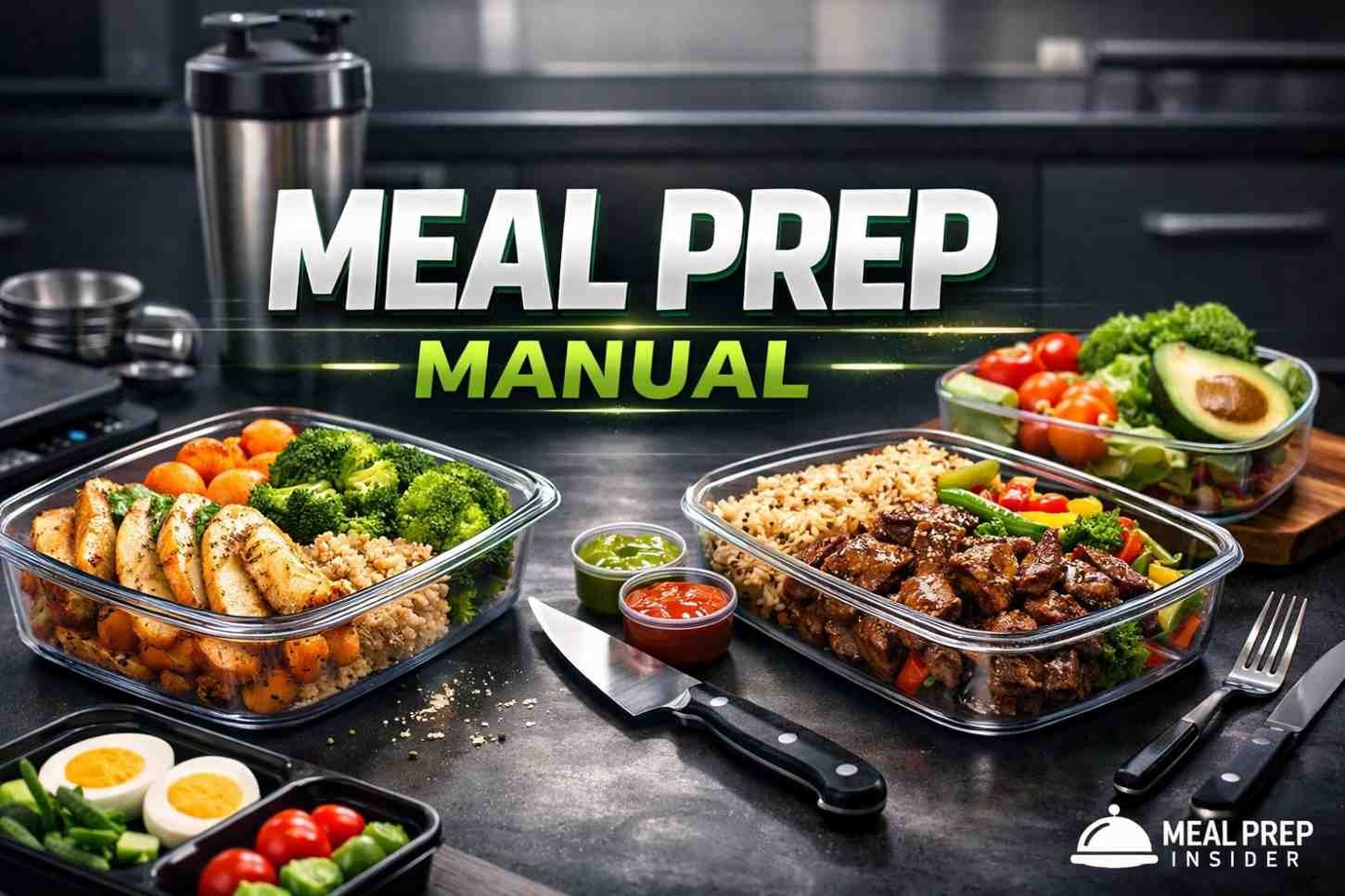
Meal Prep Manual: Learn how to meal prep like a pro with this complete guide — from planning and grocery shopping to cooking, storing, and reheating. Built for busy Americans who want to eat better without spending hours in the kitchen every night.
Meal Prep Manual
Most people overcomplicate meal prep. They watch a 20-minute YouTube video, buy $200 worth of groceries, spend a Sunday afternoon cooking six different meals — then eat the same sad chicken and rice four days in a row until they can’t stand it anymore.
That’s not meal prep. That’s punishment.
Real meal prep is flexible. It’s smart. It saves you time, money, and mental energy. This guide breaks down exactly how to do it — whether you’re cooking for one, feeding a family of four, or somewhere in the middle.
What Meal Prep Means (And What It Doesn’t)
“Meal prep” gets thrown around a lot, and people interpret it differently. Some think it means cooking every single meal in advance and portioning it into identical containers. Others think it just means cutting a few vegetables on Sunday.
Both interpretations are extreme. Neither is quite right.
Meal prep is the practice of preparing components — or full meals — ahead of time so that cooking during the week takes less effort. That’s it. It doesn’t have to mean 40 containers lined up in the fridge. It doesn’t mean eating cold food.
It can mean:
- Cooking a big pot of grains on Sunday so they’re ready to use Monday through Thursday
- Marinating proteins ahead of time so you just have to throw them on the stove
- Washing and chopping vegetables so salads take two minutes instead of ten
- Fully cooking and portioning three or four meals to grab and go
You define what works for you. That’s the first lesson.
Why Americans Are Turning to Meal Prep
The shift is real. Google searches for “meal prep ideas” have been growing steadily for years. And it makes sense — Americans are busier than ever, food costs are up, and the appeal of fast food is losing ground as people get more health-conscious.
Here’s why it actually matters:
Money. The average American household spends around $475 per month on groceries and another $300+ on dining out, according to Bureau of Labor Statistics data. Meal prepping dramatically cuts dining-out expenses because you always have food ready.
Time. Cooking takes time — but cooking smart takes less of it. Batch cooking for one or two hours on a weekend can replace 30 to 45 minutes of cooking every single night of the week.
Less decision fatigue. What’s for dinner? If you have prepped meals or components, that question disappears. That’s genuinely underrated.
Waste reduction. The USDA estimates that between 30 and 40 percent of the U.S. food supply is wasted. Prepping forces you to use what you buy.
The Three Types of Meal Prep
Not all meal prep looks the same. There are three main approaches, and knowing which one fits your life makes a big difference.
1. Full Meal Prep You cook complete meals ahead of time, portion them into containers, and just reheat and eat. Best for people with predictable schedules who want zero thinking during the week.
2. Component Prep You cook the building blocks — proteins, grains, roasted vegetables — and mix-and-match them throughout the week. More flexible. Less monotonous.
3. Hybrid Prep: A combination. Maybe you fully prep lunches, but only prep components for dinners. This works well for families where everyone has different preferences.
Most beginners do best with the hybrid approach. It’s forgiving.
Building Your Meal Prep System
Before you ever turn on the stove, you need a system. Without one, you’ll waste time, overlap effort, and forget things.
Here’s a simple weekly framework:
Step 1: Choose your prep day. Most people use Sunday. Some split it — Saturday for shopping, Sunday for cooking. Pick a day that realistically works for your schedule and protect it.
Step 2: Plan your meals. Decide what you’ll eat for the week. You don’t need to plan every single meal. Start with lunches and dinners, Monday through Friday. Weekends are flexible.
Keep it simple. Three to four different meal ideas are enough. You’ll eat each one two or three times.
Step 3: Build your grocery list. Write it by category — produce, proteins, dairy, pantry staples, frozen. This speeds up your shopping and keeps you from wandering.
Step 4: Prep in order. When you’re actually cooking, work in this order:
- Start anything that takes long — stocks, braises, baked proteins
- Cook grains (rice, quinoa, farro)
- Roast vegetables
- Cook stovetop proteins
- Prep raw/cold items last — chop salad vegetables, make dressings, portion snacks
You’ll have everything done in 60 to 90 minutes if you’re organized.
What to Prep: A Realistic Starter List
You don’t need to prep 12 different things. Here’s a practical list of items that give you the most flexibility for the least effort:
Proteins
- Baked chicken thighs or breasts (season simply, bake at 400°F)
- Hard-boiled eggs
- Ground turkey or beef, cooked with onion and garlic
- Canned chickpeas or lentils (zero cooking required)
- Shrimp (cooks in five minutes — save for weeknight)
Grains & Starches
- Brown rice or white rice
- Quinoa
- Roasted or boiled sweet potatoes
- Cooked pasta (store separately from sauce)
Vegetables
- Roasted broccoli, cauliflower, or Brussels sprouts
- Sautéed spinach or kale
- Raw bell peppers and cucumbers, sliced
- Shredded carrots
Sauces & Dressings
- A simple vinaigrette
- Tahini sauce
- Salsa or pico de gallo
- Pesto
A combination of protein, grain, vegetable, and sauce is a complete meal. The permutations are almost endless.
READ ALSO >> 150 Delicious Meal Prep Ideas You Need Now
Meal Prep for Specific Goals
What you prep depends a lot on why you’re prepping. Here’s how to think about it:
| Goal | Focus On | Avoid |
|---|---|---|
| Weight loss | High protein, lots of vegetables, measured portions | Heavy sauces, refined carbs in every meal |
| Muscle gain | Calorie-dense proteins, complex carbs, healthy fats | Skimping on carbs or total calories |
| Budget eating | Beans, eggs, whole grains, seasonal produce | Expensive proteins every meal |
| Family feeding | Crowd-pleasing proteins, flexible sides | Too many specialty ingredients |
| Vegetarian/vegan | Legumes, tofu, tempeh, whole grains | Relying only on pasta and salad |
Adjust from there. These are starting points, not rules.
The Right Containers (This Matters More Than You Think)
A lot of meal prep guides skip this. They shouldn’t.
Using the wrong containers leads to soggy food, leaking bags, and meals that look depressing by Tuesday. The container affects the food.
Glass containers — best for reheating. Food doesn’t absorb smells or stains. Heavier, but worth it. Good for soups, grains, and proteins.
Plastic containers — lighter, stackable, and great for dry or room-temperature items. Look for BPA-free options.
Mason jars — excellent for salads (layer dressing at the bottom, greens on top), overnight oats, and smoothie ingredients.
Compartment containers — useful for keeping items separated. Common in bento-style prep.
Ziplock or reusable silicone bags — great for marinating proteins, storing chopped vegetables, and freezing items flat.
Invest in a matching set of containers with lids that actually seal. The organizational benefit alone is worth it.
How Long Does Prepped Food Last?
This is where people get nervous. And honestly? The concern is legitimate. Eating spoiled food is no one’s idea of a good week.
Here’s a general guide:
| Food Type | Fridge | Freezer |
|---|---|---|
| Cooked chicken / turkey | 3–4 days | Up to 4 months |
| Cooked ground meat | 3–4 days | 3–4 months |
| Cooked grains (rice, quinoa) | 5–6 days | Up to 6 months |
| Roasted vegetables | 4–5 days | 2–3 months |
| Hard-boiled eggs | 1 week | Not recommended |
| Soups and stews | 4–5 days | 4–6 months |
| Leafy greens (raw, washed) | 3–5 days | Not recommended |
| Cooked pasta | 3–5 days | 2 months |
When in doubt, smell it. And always label your containers with the date you made them.
Meal Prep on a Budget
Grocery prices in the U.S. have been rough lately. Here’s how to keep meal prep affordable without eating the same boring thing every week.
Buy in bulk. Warehouse stores like Costco or Sam’s Club offer massive savings on chicken breasts, canned goods, frozen vegetables, and pantry staples. Split bulk buys with a friend or family member if storage is limited.
Shop seasonally. Produce that’s in season is cheaper and tastes better. In winter, lean on root vegetables, citrus, and hearty greens. In summer, tomatoes, zucchini, corn, and stone fruit.
Use cheaper protein sources. Eggs, canned fish, dried beans, and lentils are significantly cheaper per gram of protein than chicken breast or steak. Rotate them in.
Freeze smartly. If chicken thighs are on sale, buy double and freeze half. Same with bread, fruit, and shredded cheese.
Make your own sauces. A jar of pasta sauce is $4 to $7. A batch of homemade marinara costs maybe $2 and tastes better.
A family of four can eat well on $150 to $200 a week with strategic meal prep. It takes practice, but it compounds.
Common Meal Prep Mistakes (And How to Fix Them)
Most people hit a few walls when they start. Here’s what goes wrong — and what to do about it.
Prepping too much variety. Cooking six different meals sounds great. By Wednesday, you’ve lost track of what’s in the fridge. Stick to three or four options max when you’re starting.
Under-seasoning everything. Batch-cooked food can taste flat if you don’t season intentionally. Salt while cooking, not just at the end. Use spice blends, acids (lemon, vinegar), and fresh herbs.
Not accounting for texture. Some foods don’t reheat well. Crispy things get soggy. Delicate proteins dry out. Plan for it. Keep sauces separate. Reheat proteins low and slow.
Ignoring freezer meals. The fridge gets all the attention. But your freezer is a time machine. Soups, stews, cooked grains, and marinated raw proteins freeze beautifully. You can prep for two weeks in one afternoon if you use the freezer correctly.
Giving up after one bad week. You’ll overcook something. You’ll prep a meal you end up hating. That’s part of the learning curve. Adjust and keep going.
A Sample Week of Meals
Here’s what a practical, flexible prep week could look like for one person:
Sunday Prep Session (about 90 minutes):
- 4 baked chicken thighs (seasoned with garlic, paprika, olive oil)
- 2 cups of brown rice
- Roasted sweet potato and broccoli
- 6 hard-boiled eggs
- Washed and chopped salad greens
- Simple lemon vinaigrette
Monday through Friday meals built from that:
- Lunch: Grain bowl — rice, chicken, roasted veg, vinaigrette
- Dinner (Mon/Wed): Chicken thigh with sweet potato and sautéed spinach (fresh, takes 5 min)
- Dinner (Tue/Thu): Stir fry using chicken, broccoli, rice, and a store-bought sauce
- Breakfast: Hard-boiled eggs with toast or alongside fruit
- Snacks: Sliced veggies, hummus, fruit
Total grocery spend for one person: roughly $35–$50.
Meal Prep for Families
Families add a layer of complexity. Picky kids. Different schedules. One person wants low-carb, another wants pasta.
A few strategies that actually work:
Build a “component bar.” Instead of making everyone eat the same thing, prep the components and let people assemble their own. Taco bars, grain bowls, and rice plates work great for this.
Involve the kids. Even young kids can rinse vegetables, stir things, or sort ingredients. They’re more likely to eat what they helped make.
Double your batch. If you’re making soup for four, make it for eight and freeze half. In the future, you will be very grateful.
Keep at least one crowd-pleaser in rotation. Something everyone eats without complaint. Pasta, tacos, breakfast sandwiches — whatever is in your house. It reduces the friction on tired weeknights.
Reheating: The Underrated Part
Bad reheating ruins good food. A few tips:
- Rice: Add a small splash of water, cover, and heat on 70% power.
- Chicken: Reheat in a covered pan with a splash of water or broth on low heat. Avoid the microwave if you can.
- Soups/stews: Stovetop is best. Low heat, stir occasionally.
- Roasted vegetables: A quick 5-minute reheat in the oven at 400°F restores some crispiness. Or eat them room temp — they’re fine.
- Eggs: Don’t reheat hard-boiled eggs. Eat them cold or at room temp.
Quick-Reference Meal Prep Cheat Sheet
| Task | Time Estimate | Tip |
|---|---|---|
| Plan meals for the week | 10–15 min | Keep a rotating list of 10 go-to meals |
| Write grocery list | 5–10 min | Organize by store section |
| Grocery shopping | 30–45 min | Shop with a full stomach |
| Active cooking time | 60–90 min | Use multiple burners and oven simultaneously |
| Cooling and storing | 20–30 min | Don’t refrigerate hot food — let it cool first |
FAQs
Q: How many meals should I prep per week as a beginner? Start small. Prep just lunches for the week, or dinners from Monday to Thursday. That’s four to five meals. Once that feels manageable, expand.
Q: Is meal prepping safe? Won’t the food go bad? Yes, it’s safe if you store food properly. Use airtight containers, refrigerate within two hours of cooking, and follow the storage guidelines above. When something smells off, trust your nose.
Q: Can I meal prep if I have a small kitchen? Absolutely. You don’t need a ton of counter space or equipment. A sheet pan, one large pot, a good knife, and a cutting board will get you through most prep sessions.
Q: Do I have to eat the same thing every day? No. Component prepping solves this. If you prep proteins, grains, and vegetables separately, you can combine them in different ways each day. It’s the same ingredients, different meals.
Q: What’s the best protein to meal prep? Chicken thighs are the most forgiving — they stay moist when reheated. Hard-boiled eggs are fast and versatile. For plant-based options, lentils and chickpeas are cheap, quick, and last well in the fridge.
Q: How do I avoid getting bored with prepped food? Sauces and seasonings are the answer. The same chicken thigh tastes completely different with tahini, salsa verde, or a Thai peanut sauce. Prep neutrally — season boldly when you eat.
Q: Is meal prep worth it for just one person? Yes, maybe even more so. Cooking for one every night is inefficient and often leads to eating out. A single batch of ingredients can cover your whole week with minimal waste.
Q: Do I need special equipment? No. A sheet pan, a pot, a skillet, a good knife, a cutting board, and some decent containers. That’s it. You don’t need an Instant Pot or an air fryer to start.
Meal prep isn’t a trend. It’s a skill — and like any skill, it gets easier the more you do it. The first week might feel clunky. The second week will go smoother. By the fourth or fifth week, it’ll just be how you cook.
Start simpler than you think you need to. Build from there. And eat something good this week.
SUGGESTED POST >> How to Meal Prep Smoothies for the Week: Best Way to Do It