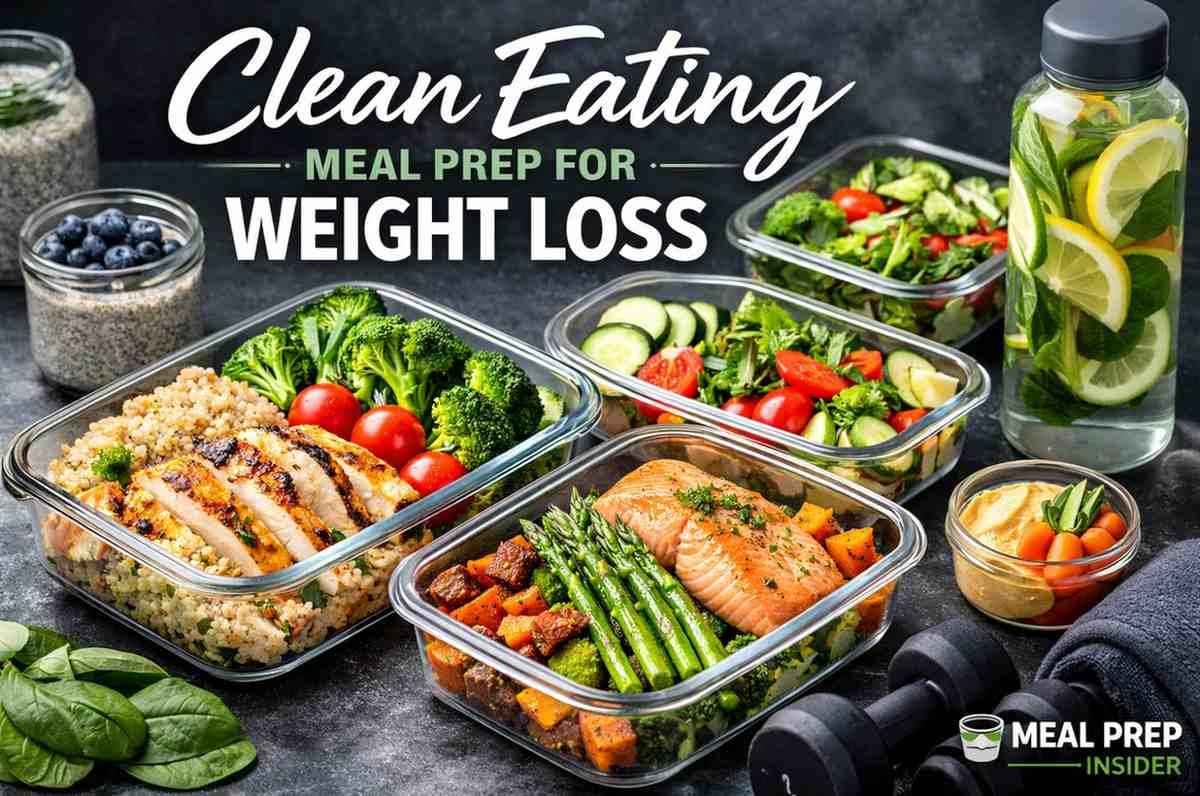
Clean Eating Meal Prep for Weight Loss: Learn how to start clean-eating meal prep with practical tips, a weekly plan, grocery lists, and recipes designed for busy Americans looking to eat better without the stress.
Clean Eating Meal Prep for Weight Loss
There’s a version of Sunday where you don’t panic about Monday. You open your fridge, and everything’s already handled — portioned, labeled, ready. That’s what meal prep does when you actually commit to it.
But here’s where most people go wrong. They confuse “clean eating” with eating nothing fun. Or they prep twelve identical chicken-and-rice bowls, hate it by Wednesday, and order takeout anyway.
This guide is different. It’s practical, flexible, and designed for real people with real schedules — not influencers with a personal chef.
What “Clean Eating” Actually Means
The phrase gets thrown around a lot. And honestly, it means different things to different people.
For the purposes of weight loss? Clean eating is simple. It’s choosing whole, minimally processed foods most of the time. That’s it.
- Whole grains instead of refined ones
- Vegetables and fruits in real, recognizable form
- Lean proteins that aren’t wrapped in breadcrumbs
- Healthy fats like avocado, olive oil, and nuts
- Fewer ingredient lists, you need a chemistry degree to read
It is not about perfection. It’s not about cutting entire food groups. And it definitely doesn’t mean you’re eating “dirty” if you put hot sauce on your eggs.
The goal is to make better choices more consistently. Meal prep is the system that gets you there.
Why Meal Prep Works for Weight Loss
Here’s the honest answer: meal prep works because it removes decisions.
Every time you stand in front of an open fridge at 7 pm, starving and tired, you’re one bad decision away from ordering a large pizza. Meal prep eliminates that window. The food is there. It’s already good for you. You eat it.
Research backs this up, too. People who plan their meals ahead of time tend to eat fewer calories, consume more vegetables, and spend less money on food. A 2017 study published in the International Journal of Behavioral Nutrition and Physical Activity found that meal planning was associated with better diet quality and lower rates of overweight and obesity.
The mechanics of why it works:
- Portion control becomes automatic. When you pre-portion your meals, you stop guessing. Guessing almost always leads to overeating.
- You stop relying on willpower. Willpower is a limited resource. Meal prep builds an environment that doesn’t require it.
- Grocery trips become intentional. You buy what you need. Less impulse purchasing. Less wasted food.
- You save money. The average American spends significantly more on food when eating out versus cooking at home. Meal prepping shifts that balance fast.
The Beginner’s Mistake (And How to Avoid It)
Most people start meal prep the wrong way. They try to prep everything at once — breakfast, lunch, dinner, snacks — for an entire week. They spend six hours in the kitchen and burn out before the next Sunday.
Don’t do that.
Start with one or two meals. Lunch is usually the easiest win. When lunch is prepped, you’re not making a stress decision at noon. You just eat what’s in the container.
Once that habit sticks, add breakfast. Then snacks. Then maybe one dinner. Build the system slowly, and it’ll actually hold.
Setting Up Your Kitchen for Success
Before we get to recipes and plans, your kitchen setup matters more than people admit.
Must-have items:
| Item | Why It Matters |
|---|---|
| Glass meal prep containers (various sizes) | Keeps food fresh longer, microwave safe, no weird smells |
| Digital kitchen scale | Portion accuracy without obsessing over measuring cups |
| Sheet pans (at least 2) | Batch roasting vegetables and proteins at the same time |
| Instant Pot or slow cooker | Hands-off cooking for grains, beans, soups, and proteins |
| Sharp chef’s knife | You will prep more when chopping doesn’t feel like a workout |
| Label tape + marker | Sanity. Especially if you live with other people. |
You don’t need to buy everything immediately. Work with what you have and upgrade as you go.
How to Build a Clean Eating Meal Prep Plan
Here’s a framework that actually works. Think in components, not complete meals.
Step 1: Pick Your Proteins. Choose 2-3 proteins for the week. Variety prevents boredom. Good options:
- Boneless skinless chicken thighs or breasts
- Ground turkey
- Salmon or tilapia
- Hard-boiled eggs
- Canned chickpeas or black beans (yes, these count)
- Greek yogurt (works as both protein and base for sauces)
Step 2: Pick Your Carbs Yes, carbs. Don’t skip them. Choose quality sources:
- Brown rice or wild rice
- Quinoa
- Sweet potatoes
- Whole wheat pasta or pasta made from legumes
- Rolled oats for breakfast
Step 3: Load Up on Vegetables. This is where most meal prep goes thin. Be generous with vegetables. They add volume, nutrients, and fiber without wrecking your calorie targets.
Roasted: broccoli, zucchini, bell peppers, cauliflower, Brussels sprouts. Raw or lightly prepped: shredded cabbage, spinach, cucumbers, cherry tomatoes Frozen (perfectly fine): edamame, peas, corn, mixed stir-fry blends
Step 4: Prep Your Sauces and Seasonings Separately. This is the move most people skip. If you put the sauce directly on everything, it all tastes the same by day three. Keep sauces in small containers on the side. Mix them in when you’re ready to eat.
A few easy homemade sauces:
- Tahini lemon (tahini + lemon juice + garlic + water)
- Greek yogurt ranch (Greek yogurt + dill + garlic powder + lemon)
- Soy-ginger glaze (low-sodium soy sauce + fresh ginger + sesame oil + a touch of honey)
A Sample Clean Eating Meal Prep Week
This is a realistic week. Not extreme. Totally sustainable.
Sunday Prep Session (roughly 2 hours):
- Bake 2 lbs of chicken thighs seasoned with olive oil, garlic, paprika, and cumin
- Cook a big batch of brown rice in the rice cooker (mostly hands-off)
- Roast two sheet pans of vegetables (broccoli on one, sweet potatoes and zucchini on the other)
- Hard-boil 8 eggs
- Portion overnight oats into 5 jars
- Wash and dry leafy greens for salads
Sample Day of Eating:
| Meal | What You’re Eating | Approx. Calories |
|---|---|---|
| Breakfast | Overnight oats with almond butter and berries | 380–420 |
| Lunch | Brown rice bowl with chicken, roasted broccoli, tahini sauce | 480–520 |
| Snack | Hard-boiled egg + cucumber slices | 100–130 |
| Dinner | Sheet pan salmon with roasted sweet potato and spinach salad | 500–550 |
| Optional snack | Greek yogurt with a small handful of walnuts | 180–220 |
Daily total: roughly 1,640–1,840 calories. Adjust up or down based on your specific needs, activity level, and goals. This is a rough estimate, not a prescription.
Overnight Oats (5 Jars in 10 Minutes)
This breakfast is non-negotiable for beginners to meal prep. Takes almost no time. Holds well in the fridge for five days.
Per jar:
- ½ cup rolled oats
- ¾ cup unsweetened almond milk (or any milk you prefer)
- 1 tbsp chia seeds
- 1 tsp maple syrup or honey
- Pinch of salt
Stir it all together in a mason jar. Put the lid on. Refrigerate overnight.
In the morning, add your toppings: fresh or frozen berries, a spoonful of nut butter, a sliced banana, or granola for a bit of crunch.
The base recipe has about 280–300 calories and keeps you full for hours because of the fiber and protein combo.
RELATED POST >> Meal Prep for Weight Loss: This Burns Stubborn Fat Quickly
Sheet Pan Chicken Thighs
This is the workhorse recipe of every good meal prep week.
Ingredients (for 4–5 servings):
- 2 lbs boneless, skinless chicken thighs
- 2 tbsp olive oil
- 1 tsp garlic powder
- 1 tsp smoked paprika
- ½ tsp cumin
- Salt and pepper to taste
Preheat your oven to 425°F. Pat the chicken dry (this is important — it helps them brown instead of steam). Toss with olive oil and spices. Spread on a sheet pan without crowding. Roast for 22–25 minutes until the internal temperature reaches 165°F.
Let cool before storing. Slice or shred, depending on what you’re putting them in.
One batch. Five meals. Done.
The Grocery List Problem (And How to Fix It)
Here’s something nobody talks about: the grocery list is where meal prep either succeeds or falls apart.
Most people write vague lists. “Vegetables.” “Protein.” They get to the store and spend 45 minutes wandering. They buy what’s on sale instead of what they planned. They get home missing three things.
Write a specific, organized list. Every single time.
A sample grocery list for the week above:
Proteins:
- 2 lbs boneless skinless chicken thighs
- 1 lb salmon fillets
- 1 dozen eggs
Grains:
- 1 bag of brown rice
- 1 large container of rolled oats
- Chia seeds (if you don’t have them)
Vegetables:
- 2 heads of broccoli
- 2 medium zucchini
- 2 large sweet potatoes
- 1 bag baby spinach
- 1 English cucumber
- Cherry tomatoes
Dairy/Fridge:
- Large container of plain Greek yogurt
- Almond milk or milk of choice
Pantry:
- Olive oil
- Tahini
- Low-sodium soy sauce
- Garlic, fresh and powdered
- Smoked paprika, cumin, dill
Fruits:
- Berries (fresh or frozen)
- 1 lemon
Spend about $80–$110, depending on where you shop and what you already have in your pantry. Far cheaper than a week of lunches out.
Portion Sizes Without Counting Every Calorie
Tracking calories works for some people. For others, it becomes obsessive and unsustainable.
If you’re in the second group, here’s a hand-based guide that works surprisingly well:
| Food Group | Portion Size | Visual |
|---|---|---|
| Protein | 1 palm | ~3–4 oz cooked |
| Vegetables | 1–2 fists | Generously sized |
| Complex carbs | 1 cupped hand | ~½ cup cooked |
| Healthy fats | 1 thumb | ~1 tbsp |
Use this as a rough guide. It won’t be perfect. That’s fine. You’re not training for the Olympics — you’re trying to eat better than you did last week.
How to Avoid Meal Prep Boredom
Boredom kills consistency. If you eat the same exact thing every day, you’ll be hunting for something exciting by Thursday.
A few tricks:
Mix and match components. Don’t think of it as “I prepped meal #3.” Think of it as: I have chicken, rice, and roasted vegetables — I can make a bowl, a wrap, a salad, or a stir-fry.
Change the sauce. Seriously. The same chicken tastes completely different with tahini, soy-ginger, hot sauce, and lime. Keep sauces separate.
Leave one or two meals flexible. Not every meal needs to be prepped. Leave Tuesday dinner open. Go out or cook something fresh. The goal is eating well most of the time, not mechanical compliance.
Rotate proteins weekly. Week one: chicken. Week two: turkey and salmon. Week three: shrimp and eggs. Small rotation, big difference.
What to Do When You’re Short on Time
Some weeks, you don’t have two hours on Sunday. That’s life.
Here’s a 30-minute emergency prep that still sets you up reasonably well:
- Cook a batch of quinoa (hands-off, ~15 minutes)
- Season and bake chicken thighs (25 minutes in the oven)
- While those cook, wash, and chop raw vegetables
- Portion Greek yogurt into cups for breakfast
- Set out ingredients for easy morning eggs
That’s it. You’re not fully prepped, but you’re not starting from zero either.
Frozen vegetables are your friend during these weeks. They’re just as nutritious as fresh. Anyone who tells you otherwise is wrong.
Common Clean Eating Myths Worth Ditching
“Carbs make you fat.” No. Excess calories make you gain weight. Carbs — especially complex ones — are fuel. Don’t vilify an entire macronutrient.
“You have to eat six small meals a day.” That’s outdated. Total daily intake matters far more than how many times you eat. Eat when you’re hungry. Stop when you’re full.
“Healthy food is too expensive.” Dried beans, oats, eggs, frozen vegetables, and rice are among the cheapest foods available. Eating healthy on a budget is absolutely possible. It just requires some planning.
“Clean eating means no treats.” This is how diets fail. Allowing yourself to enjoy food — including the occasional not-so-clean food — makes the whole thing sustainable. Restriction breeds obsession. Flexibility breeds consistency.
Scaling Up: Meal Prep for Families
Prepping for yourself is manageable. Prepping for a family of four adds complexity, but the framework stays the same.
- Double the proteins. Cook more chicken, more salmon. It takes the same effort.
- Let people customize. Set up a “bowl bar” in the fridge with proteins, grains, and vegetables in separate containers. Kids (and picky partners) can build their own plates.
- Get buy-in. Meal prep is smoother when everyone knows the plan and has some input.
- Use the freezer more. Double-batch soups, stews, and marinated proteins, and freeze half for two weeks from now.
Tracking Progress Without Obsessing Over the Scale
Weight loss is not linear. Some weeks, the scale moves. Some weeks it doesn’t, even when you’re doing everything right. Water retention, hormones, sleep, stress — they all affect that number.
What actually matters more:
- Do your clothes fit differently?
- Is your energy better?
- Are you sleeping more soundly?
- Are you making food decisions you feel good about?
Weigh yourself weekly, same day, same time, same conditions — if at all. Or skip the scale entirely and track by how you feel. Both approaches are valid.
Progress photos, taken monthly under the same lighting, often show changes that the scale doesn’t.
FAQs
How long does meal-prepped food stay fresh in the fridge? Most cooked proteins and grains stay good for 4–5 days. Raw chopped vegetables are fine for 3–4 days. If you’re prepping for the full week, freeze anything you won’t eat by Wednesday or Thursday.
Can I meal prep if I have dietary restrictions? Yes. The framework is flexible. Gluten-free? Use quinoa or rice instead of wheat-based grains. Dairy-free? Swap Greek yogurt for a plant-based alternative. The clean-eating approach translates to almost every dietary need.
Do I have to eat the same thing every day? Absolutely not. That’s the point of prepping components rather than identical meals. Use the same ingredients in different ways across the week.
How many calories should I eat to lose weight? This varies significantly by person — height, weight, age, and activity level all play a role. A general starting point is a 300–500 calorie daily deficit from your maintenance level. A registered dietitian can give you a much more accurate target if you want personalized guidance.
Is meal prep safe? Can bacteria grow in prepped food? Yes, if you store food properly. Cool cooked food before storing (don’t seal hot food in containers immediately). Use airtight containers. Keep your fridge at or below 40°F. When in doubt about whether something is still good, smell it, check the texture, and don’t risk it.
What if I get bored halfway through the week? That’s normal. Rotate sauces, change the format (bowl to wrap to salad), and allow yourself one or two flexible meals. Meal prep is a structure, not a sentence.
Can I lose weight without exercising if I meal prep? Yes. Nutrition drives most of the weight loss. Exercise accelerates it, improves body composition, and does a lot of good for your health beyond weight loss, but if you consistently eat in a reasonable deficit, you will lose weight.
Final Thoughts
Meal prep is not a personality. It’s a tool.
Some weeks it goes perfectly. Other weeks, you prep two things and call it a win. The goal is just to make it easier to eat well more often than not.
Start small. Pick one meal. Get the containers. Try it for two weeks before you judge whether it works.
Clean eating doesn’t have to be restrictive, complicated, or joyless. With a little planning and a Sunday afternoon, you can set yourself up for a week where food is one less thing to stress about.
And honestly? That’s worth a lot.
SUGGESTED POST >> Easy Meal Prep Scrambled Eggs: Healthy Prep 4 Days Ahead