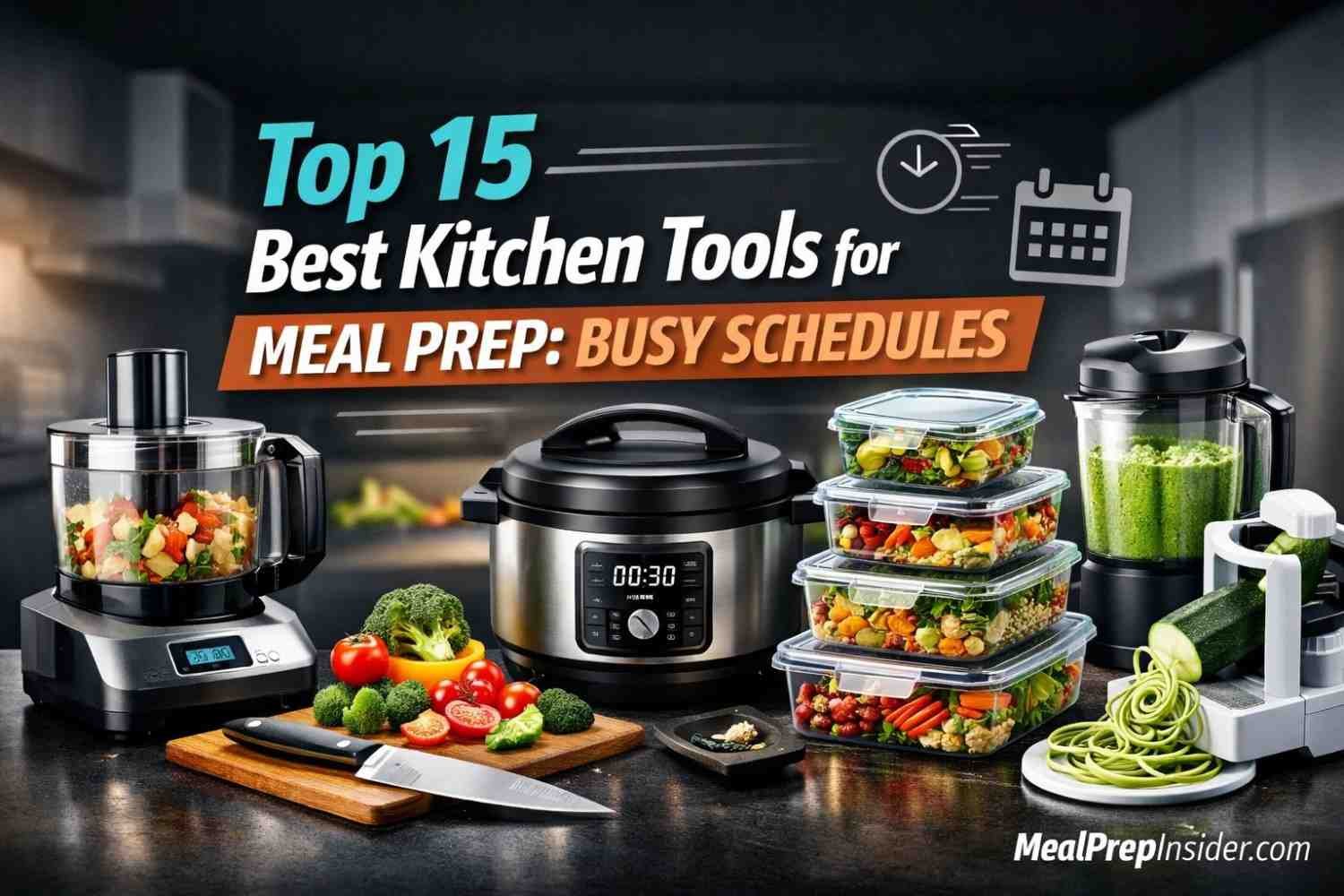
The best kitchen tools for meal prep can shave hours off your weekly cooking time while saving you money and reducing daily stress. Seriously. If you’re still dicing onions with a dull knife and searching for matching Tupperware lids at midnight, you’re doing this whole adulting thing on hard mode.
Let me guess. Sunday rolls around, and you tell yourself this is the week you’ll finally get organized. This is when meal prep becomes your new lifestyle. But then you stand in your kitchen, stare at the cutting board, and wonder why everything takes so long. The chicken doesn’t cook evenly. Vegetables go bad by Wednesday. Your containers leak all over your work bag.
Here’s what nobody tells you: meal prep isn’t about willpower or motivation. It’s about having the right equipment.
The difference between someone who successfully meal preps and someone who orders takeout four nights a week often comes down to fifteen specific tools. Not a hundred gadgets that clutter your drawers. Just fifteen carefully chosen pieces that actually earn their counter space.
This isn’t about trendy kitchen gear that looks good on Instagram but collects dust after two weeks. These are battle-tested tools that real people with actual busy schedules use to get dinner on the table without losing their minds.
Why Meal Prep Feels Impossible Without Proper Equipment
You already know the benefits of meal prep. Healthier eating. Money saved. Time reclaimed during hectic weeknights.
But why does it feel so difficult?
Because you’re fighting with inadequate tools. Trying to meal prep with the wrong equipment is like trying to build furniture with a butter knife instead of a screwdriver. Technically possible, but unnecessarily frustrating.
The right kitchen tools multiply your efficiency. They transform cooking from a dreaded chore into something that flows. Something manageable. Something you might even enjoy on occasion.
Think about it. Professional chefs don’t cook faster because they have superpowers. They cook faster because they have proper equipment and know how to use it.
You deserve the same advantage.
Understanding What Makes a Kitchen Tool Worth Your Money
Not every shiny gadget deserves space in your kitchen. Before we dive into the specific tools, let’s establish what separates essential equipment from junk drawer candidates.
A worthwhile kitchen tool does three things:
Saves time – It accomplishes tasks faster than manual methods or combines multiple steps into one.
Improves results – Food tastes better, lasts longer, or looks more appealing.
Earns its space – You use it regularly enough to justify the storage real estate it occupies.
If a tool doesn’t check at least two of these boxes, it’s probably not essential for meal prep.
Budget matters too. You don’t need to drop thousands of dollars. Many of the most effective meal prep tools cost under fifty bucks. Some cost under twenty. The key is investing strategically in items that match your cooking style and schedule.
The 15 Best Kitchen Tools for Meal Prep That Transform Your Routine
1. Sharp Chef’s Knife (8-inch)
The best kitchen tools for meal prep start with a quality chef’s knife, and this isn’t negotiable.
A sharp 8-inch chef’s knife cuts your prep time in half. Literally. When your knife glides through vegetables instead of squashing them, when it breaks down a whole chicken in minutes instead of requiring a wrestling match, you’ll wonder how you survived without one.
Dull knives don’t just slow you down. They’re dangerous. You apply more pressure to compensate for the dull blade, and that’s when the knife slips.
You don’t need a $300 Japanese blade (though those are nice). A good knife between $50-$100 will serve you beautifully for years. Brands like Victorinox, Mercer, and Wüsthof offer excellent options in this range.
What to look for:
- Comfortable grip that feels natural in your hand
- Blade that extends through the entire handle (full tang)
- Weight that feels balanced, not too heavy or light
- High-carbon stainless steel construction
Keep it sharp. A sharp knife is safer and faster. Period.
2. Large Cutting Board with Juice Groove
Your cutting board matters more than you think.
A large cutting board (at least 15 x 20 inches) gives you room to work without ingredients falling onto the counter. The juice groove catches liquids from tomatoes, cooked meats, and fruits, so your workspace stays clean.
Plastic boards are dishwasher-safe and gentle on knife edges. Wood boards look gorgeous and have natural antimicrobial properties. Either works fine. Just make sure it’s big enough.
Here’s a pro tip: Use multiple cutting boards during meal prep. Keep one for raw proteins and another for vegetables. This prevents cross-contamination and saves washing time between ingredients.
3. Food Processor
A food processor is the ultimate meal prep power tool.
Rice cauliflower in ten seconds. Make pesto in thirty seconds. Shred cabbage for coleslaw in under a minute. Mix burger patties without getting your hands messy. Slice vegetables with uniform thickness.
The possibilities are ridiculous.
You don’t need attachments that turn it into a pasta maker and coffee grinder. A solid 7-11 cup food processor with basic blades handles 95% of meal prep tasks.
Common uses during meal prep:
- Chopping onions without crying
- Shredding cheese in bulk
- Making homemade hummus and dips
- Creating breadcrumbs from stale bread
- Blending burger or meatball mixtures
Yes, it takes up counter space. Yes, it has multiple parts to clean. But the time it saves makes it absolutely worth the real estate.
4. Sheet Pans (Multiple Half-Sheet Sizes)
Sheet pans are the unsung heroes of efficient meal prep.
You need at least three half-sheet pans (18 x 13 inches). These workhorses roast vegetables, bake chicken breasts, toast nuts, and reheat leftovers. They’re flat, stackable, and dishwasher-safe.
Sheet pan dinners have become popular for good reason. Toss protein and vegetables in a pan, season everything, and slide it into the oven. One pan, minimal cleanup, and dinner for several days.
Get aluminum pans with a rim. The Nordic Ware brand is the gold standard, but restaurant supply store versions work great too and cost less.
Pro moves with sheet pans:
- Line with parchment paper for zero-stick cleanup
- Use multiple pans to cook different items simultaneously
- Roast vegetables at high heat (425°F) for caramelization
- Arrange items by cooking time to add ingredients in stages
5. Glass or BPA-Free Meal Prep Containers
The best kitchen tools for meal prep include proper storage containers, and this is where many people go wrong.
Mismatched containers with missing lids create chaos. Containers that leak ruin your lunch bag. Containers that stain and absorb smells get thrown out too soon.
Invest in a complete set of meal prep containers. Get ones that stack, are microwave and dishwasher-safe, and have secure lids.
Two main options:
Glass containers are heavier but don’t stain, don’t absorb odors, and last forever. They’re perfect for storing meals at home.
BPA-free plastic containers are lightweight and portable, ideal for taking meals to work. They’re less expensive to replace if you lose one.
Buy containers in multiple sizes:
- Large (3-4 cups) for main meals
- Medium (2 cups) for sides and snacks
- Small (1 cup) for dressings and sauces
Consider compartmented containers if you prefer keeping foods separate until eating.
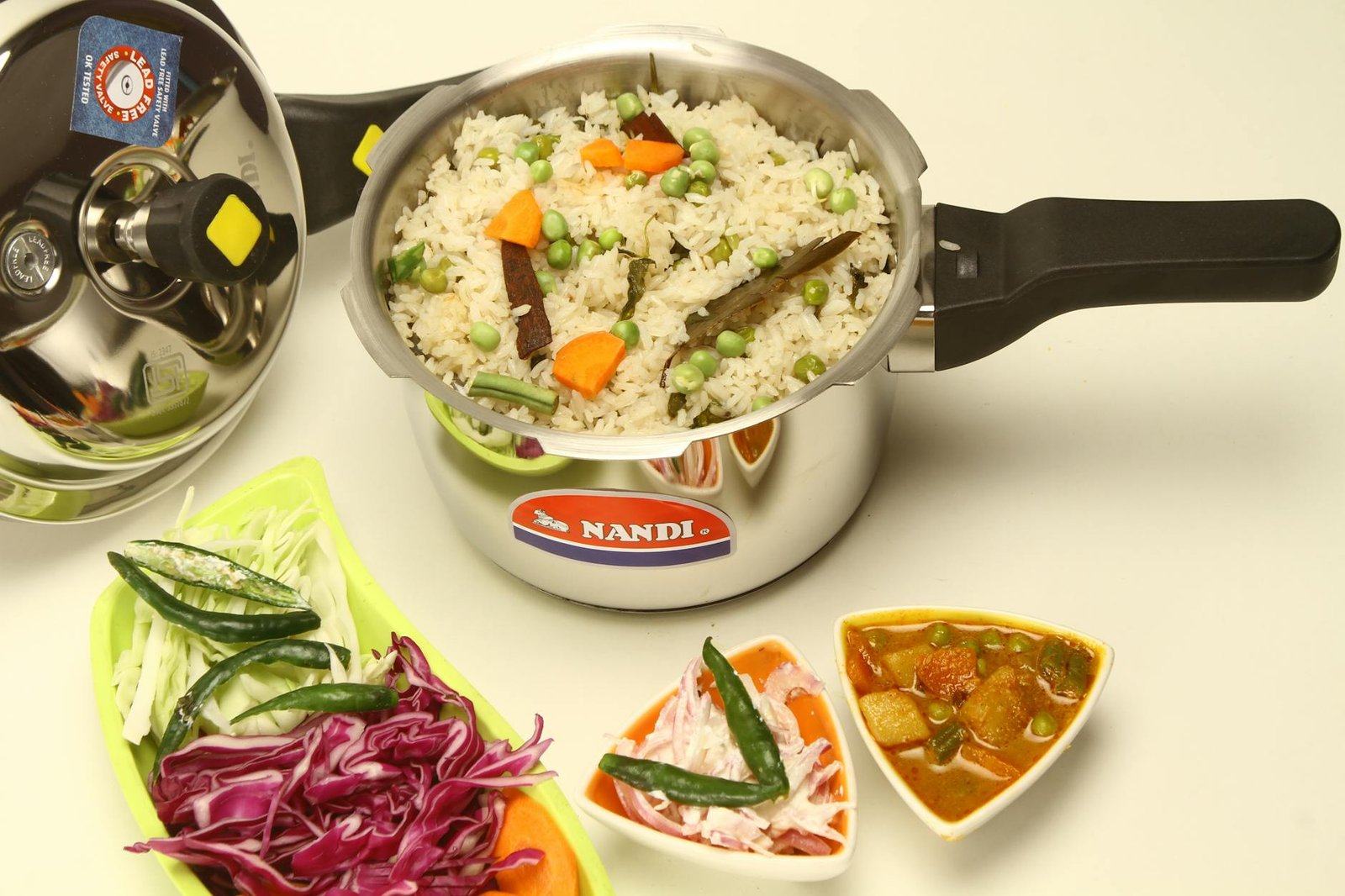
6. Instant Pot or Programmable Pressure Cooker
An Instant Pot changes the meal prep game entirely.
This tool cooks dried beans in 30 minutes without soaking. It makes fall-off-the-bone chicken in 20 minutes. It transforms tough cuts of meat into tender stews in under an hour.
The magic is pressure cooking combined with a timer. Load ingredients, set it, and walk away. No stirring. No watching. No burning.
Ideal meal prep uses:
- Cooking large batches of rice or quinoa
- Making shredded chicken or pork from frozen
- Preparing beans and legumes from scratch
- Creating soups and stews
- Cooking eggs in bulk (hard-boiled eggs in 5 minutes)
The 6-quart size suits most households. The 8-quart works better if you’re feeding a family or really serious about batch cooking.
Learn three or four reliable recipes for your Instant Pot, and it becomes indispensable.
7. Immersion Blender
Immersion blenders are compact, easy to clean, and incredibly versatile.
Unlike countertop blenders, immersion blenders work directly in the pot. Make creamy soups without transferring hot liquid. Blend smoothies directly in your glass. Whip up salad dressings in seconds.
They cost between $30-$80 and take up less space than a rolling pin.
Practical applications:
- Pureeing soups to creamy perfection
- Making small batches of sauce or pesto
- Blending protein shakes without a full blender
- Creating smooth baby food
- Emulsifying vinaigrettes
The cleanup is absurdly simple. Blend soapy water in a tall container, rinse, and you’re done.
8. Digital Kitchen Scale
Measuring by weight instead of volume changes everything.
A digital scale ensures consistency. Your portions stay on track. Your recipes turn out the same every time. You stop guessing whether you packed the flour too tightly.
For meal prep specifically, a kitchen scale helps with portion control. Divide a batch of cooked chicken into exact 4-ounce servings. Split a big pot of rice into precise amounts.
Get a scale that measures both grams and ounces, has a tare function (to zero out container weight), and can handle at least 11 pounds.
They’re inexpensive—most good ones cost $15-$25. The information they provide is priceless.
9. Slow Cooker
Yes, even with an Instant Pot, a slow cooker deserves space in your kitchen.
Some recipes genuinely taste better with low, slow cooking. Pot roasts develop deeper flavors. Pulled pork becomes more tender. Certain soups and stews benefit from hours of gentle simmering.
The beauty of slow cookers for busy schedules? Start them in the morning before work. Come home to dinner ready and your house smelling amazing.
A 6-quart programmable slow cooker gives you flexibility. The timer switches to “warm” mode automatically so food doesn’t overcook.
Perfect slow cooker meal prep recipes:
- Shredded chicken for multiple meals
- Chili and bean-based dishes
- Pot roasts that last all week
- Oatmeal prepared overnight
- Tough cuts of meat transformed into tender dinners
10. Vegetable Chopper/Dicer
Hand-dicing vegetables is meditative if you have time. Most weeks, you don’t have time.
A vegetable chopper creates uniform pieces in seconds. Press down, and suddenly you have perfectly diced onions without tears or twenty minutes of knife work.
These tools range from simple manual choppers ($20-$40) to more elaborate models. The simpler versions work great. You don’t need electric or complicated mechanisms.
Look for choppers with:
- Sharp, stainless steel blades
- Different grid sizes for various dice cuts
- Easy-to-clean design
- Stability during use
One caution: these work best for specific vegetables like onions, peppers, potatoes, and tomatoes. They’re not universal replacements for knife skills, but they’re fantastic time-savers for repetitive chopping tasks.
11. Silicone Baking Mats
Parchment paper works fine, but silicone baking mats are reusable, non-stick, and eliminate waste.
They fit perfectly on your sheet pans. Nothing sticks to them—not roasted vegetables, not baked chicken, not cookies. They clean easily in the dishwasher and last for years.
The upfront cost ($15-$25 for a set of two) pays off quickly when you stop buying parchment paper.
Beyond roasting, these mats work for:
- Rolling out dough
- Creating candy or chocolate
- Freeze portions before transferring to containers
- Providing non-slip surfaces for mixing bowls
Small thing, big impact.
12. Kitchen Shears
Quality kitchen shears are scissors’ overachieving cousin.
Snip herbs directly into your pot. Cut the chicken into pieces without a cutting board. Trim fat from meat. Open stubborn packaging. Cut parchment paper to size.
Get shears that come apart for cleaning (bacteria hide in the hinge otherwise) and have a comfortable grip. Some include bottle openers and nutcrackers, but the cutting performance matters most.
You’ll use these constantly once they’re in your kitchen. They speed up dozens of small tasks that add up during meal prep.
13. Mandoline Slicer
Uniform slices cook evenly. They also look professional and make your meal prep feel less thrown-together.
A mandoline creates perfect slices of vegetables in a fraction of the time hand-slicing requires. Potatoes for gratins. Cucumbers for salads. Onions for caramelizing.
Safety warning: Mandolins are extremely sharp. Use the hand guard. Every single time. No exceptions. Many people have scars from “just one quick slice” without protection.
An adjustable mandoline ($25-$50) handles most tasks. You don’t need the $150 professional model unless you’re prepping for a restaurant.
RELATED POST >> Top 10 Best Meal Prep Tools (That Are Actually Worth Buying)
14. Mixing Bowls (Nested Set)
A proper set of mixing bowls makes meal prep flow smoothly.
You need bowls for marinating proteins, tossing salads, mixing seasonings, and holding prepped ingredients. Get a nested set of stainless steel bowls in various sizes (1.5 quarts to 5 quarts).
Stainless steel bowls are:
- Lightweight and durable
- Dishwasher-safe
- Non-reactive with acidic ingredients
- Nestable for compact storage
Glass bowls work too, but they’re heavier and breakable. Plastic bowls stain and absorb odors over time.
Having multiple bowls means you can prep several components simultaneously without stopping to wash dishes.
15. Bench Scraper
This simple tool doesn’t look like much, but it’s remarkably useful.
A bench scraper (also called a dough scraper) is a rectangular piece of metal with a handle. Use it to:
- Transfer chopped vegetables from the cutting board to the pan
- Portion the dough into equal pieces
- Scrape cutting boards completely clean
- Scoop up minced garlic or herbs
It costs under $10 and lasts forever. Professional cooks use them constantly for good reason—they’re efficient and versatile.
The wide blade moves more food in one motion than a knife can. This small efficiency repeated dozens of times during meal prep adds up to several saved minutes.
How to Use These Tools for Maximum Efficiency
Owning the right tools is step one. Using them strategically is step two.
Create a meal prep workflow: Don’t randomly cook things. Plan a sequence. Start with items that take the longest (roasted vegetables, slow-cooked proteins). While those cook, prep quicker items. Use your waiting time for chopping, portioning, or cleaning.
Batch similar tasks: Chop all vegetables at once rather than one recipe at a time. Cook all your proteins together. Fill all your containers in one session. Context-switching between different types of tasks wastes time.
Use your tools in combination: While vegetables roast on sheet pans, use your Instant Pot for rice and your slow cooker for protein. Your kitchen has multiple “work stations” that can operate simultaneously.
Clean as you go: The food processor bowl goes in the dishwasher while vegetables roast. Wipe down the cutting board between proteins and vegetables. Soak the Instant Pot insert while you portion meals. Cleanup is infinitely easier when it’s integrated into the process rather than left for the end.
Mistakes People Make When Starting Meal Prep
Buying Too Much Too Fast
The excitement of starting meal prep leads many people to purchase every gadget they see. Then they feel overwhelmed and quit.
Start with the essentials: knife, cutting board, containers, and one cooking vessel (Instant Pot, slow cooker, or good pots and pans). Add other tools as you identify specific needs.
Choosing Recipes That Are Too Complex
Meal prep should simplify your life, not showcase your culinary skills.
Pick straightforward recipes with minimal ingredients. Master simple roasted vegetables and basic proteins before attempting complicated dishes. Complexity creates friction. Friction leads to quitting.
Not Prepping Storage Containers in Advance
You finish cooking and realize all your containers are dirty or you don’t have enough.
Before you start cooking, ensure you have clean, ready containers. This small step prevents the frustrating moment when hot food sits on the counter with nowhere to go.
Ignoring Food Safety
Leaving cooked food at room temperature for too long creates bacterial growth.
Cool foods quickly before refrigerating. Divide large batches into smaller containers so they cool faster. Don’t let cooked food sit out for more than two hours (one hour if it’s above 90°F in your kitchen).
Making Seven Days of Identical Meals
Eating the same thing seven days straight leads to meal prep burnout faster than anything else.
Prep components instead of complete meals. Cook proteins, grains, and roasted vegetables separately. Mix and match throughout the week to create variety. Monday might be chicken with rice and broccoli. Wednesday could be that same chicken in a wrap with different vegetables.
Storage and Food Safety Guidelines
| Food Type | Refrigerator Life | Freezer Life | Best Storage Method |
|---|---|---|---|
| Cooked chicken | 3-4 days | 2-6 months | Airtight containers, cooled quickly |
| Cooked beef/pork | 3-4 days | 2-3 months | Separate portions, remove air |
| Cooked rice/grains | 4-6 days | 1-2 months | Sealed containers, slightly undercook |
| Roasted vegetables | 3-5 days | 10-12 months | Glass containers, don’t add dressing |
| Soups/stews | 3-4 days | 2-3 months | Leave headspace in containers for expansion |
| Hard-boiled eggs | 1 week | Not recommended | Sealed containers, slightly undercooked |
| Salad greens (prepped) | 3-5 days | Not recommended | Keep in the shell until ready to eat |
Label everything. You think you’ll remember when you made it. You won’t. Tape and a marker take five seconds and prevent food waste.
Freeze extras. If you made too much or know you won’t eat something before it spoils, freeze it immediately. Food frozen at peak freshness tastes better than refrigerated food eaten on day seven.
Building Your Meal Prep Kitchen Gradually
You don’t need all fifteen tools immediately. Here’s a reasonable acquisition path:
Month 1: The Foundation
- Sharp chef’s knife
- Large cutting board
- Set of meal prep containers
- One sheet pan
Month 2: Power Tools
- Instant Pot or slow cooker (pick one based on your cooking style)
- Food processor or immersion blender (start with immersion blender if budget-conscious)
Month 3: Efficiency Boosters
- Kitchen scale
- Additional sheet pans
- Mixing bowl set
Month 4: Specialty Items
- Vegetable chopper or mandoline
- Silicone baking mats
- Kitchen shears
- Bench scraper
This gradual approach lets you learn each tool thoroughly before adding more. You’ll also discover which items you actually use versus which seemed appealing but don’t match your cooking style.
Real-World Meal Prep Scenarios Using These Tools
Scenario 1: Sunday Afternoon Batch Cooking (3 hours)
Goal: Prepare lunches and several dinners for the week
Tools in action:
- Use a food processor to chop vegetables for multiple recipes
- Load the slow cooker with the pot roast for shredded meat
- Roast 3 sheet pans of vegetables at once
- Cook quinoa in the Instant Pot while the vegetables roast
- Use a kitchen scale to portion proteins into containers
- Store everything in glass meal prep containers
Result: 10-12 meals ready to grab throughout the week
Scenario 2: Weeknight Mini-Prep (45 minutes)
Goal: Prepare next day’s meals without major time investment
Tools in action:
- Use a mandoline to slice vegetables quickly
- Sheet pan with silicone mat for fast roasting
- Immersion blender for quick soup
- Kitchen shears to trim and portion chicken
- Portion into containers while everything cools
Result: 3-4 meals ready with minimal effort
Scenario 3: Component Prep for Mix-and-Match Meals
Goal: Create versatile ingredients to combine each day differently
Tools in action:
- Instant Pot for rice and hard-boiled eggs
- Slow cooker for pulled chicken
- Multiple sheet pans for different roasted vegetables
- Food processor for homemade hummus and pesto
- Separate containers for each component
Result: Flexible meal elements that prevent boredom
When to Upgrade Your Tools
The best kitchen tools for meal prep don’t last forever. Here’s when to replace or upgrade:
Knives: When sharpening no longer helps, and the blade feels dull immediately after honing. Quality knives last for decades with proper care, but cheap knives need replacing every few years.
Food processors: When the motor struggles with basic tasks or the bowl develops cracks. Expect 5-10 years from mid-range models.
Containers: When lids don’t seal properly, plastic becomes cloudy/stained, or you notice odors that won’t wash out. Glass lasts indefinitely if you don’t break it. Plastic typically needs replacement every 2-3 years with heavy use.
Sheet pans: When warping prevents even cooking, or dark spots won’t clean off. Good sheet pans last 10+ years, but cheaper ones may warp within a couple of years.
Small tools: When they stop performing their function effectively. Dull mandolines, broken mixing bowls, or scratched baking mats should be replaced for safety and efficiency.
Maximizing Your Return on Kitchen Tool Investment
These tools pay for themselves through:
Reduced food waste: When meal prep is easy, you actually use the groceries you buy instead of letting them rot in the refrigerator.
Fewer restaurant meals: Convenient prepared meals reduce the temptation to order takeout on tired evenings.
Time savings: The hours you reclaim by efficient meal prep are worth far more than the cost of tools.
Better health outcomes: Controlling ingredients and portions leads to improved eating habits.
Reduced decision fatigue: Knowing what you’re eating each day eliminates the daily “what’s for dinner” stress.
Calculate the cost over time. A $100 food processor used twice weekly for five years costs about 19 cents per use. That’s excellent value for the time and frustration it saves.
The Surprising Benefits Nobody Talks About
Beyond the obvious advantages, meal prep with proper tools creates unexpected benefits:
Mental clarity: Eliminating food decisions throughout the week frees up mental energy for things that matter more.
Improved cooking skills: Regular practice with quality tools naturally develops your culinary abilities.
Family involvement: Good tools make cooking accessible for family members who want to help but feel intimidated.
Creative outlet: Once the basics become easy, you have bandwidth to experiment with new recipes and techniques.
Financial awareness: Tracking what you spend on groceries versus restaurants reveals surprising spending patterns.
Frequently Asked Questions
Do I really need specialty kitchen tools if I’m just cooking for one person?
Absolutely. Single-person meal prep often benefits more from these tools because you’re likely busier (no spouse to share cooking duties) and the time savings matter even more. The batch cooking approach works perfectly for individuals—cook once, eat multiple times. Just scale recipes accordingly and use smaller storage containers.
What’s the single most important tool if I can only buy one thing?
A sharp chef’s knife transforms your entire cooking experience. Everything else can be worked around or substituted, but trying to cook efficiently with a dull knife is genuinely impossible. Invest in one quality 8-inch chef’s knife and learn basic knife skills. That single tool will serve you for decades.
How do I keep meal-prepped food from getting boring?
Prep components rather than complete meals. Cook plain chicken, rice, and roasted vegetables separately. On Monday, you might eat them in a rice bowl with teriyaki sauce. Wednesday, shred the chicken for tacos. Friday, make fried rice. The components stay the same, but the meals feel different. Also, invest in variety through sauces, seasonings, and toppings rather than cooking entirely different proteins each time.
Is it safe to meal prep for an entire week?
Most cooked foods remain safe in the refrigerator for 3-4 days. For a full week, either freeze meals you’ll eat later in the week (freezing on day 1, then thawing day 5), or do two smaller prep sessions (Sunday and Wednesday). Some foods, like roasted vegetables, hard-boiled eggs, and cooked grains, last 5-7 days safely, while proteins are better consumed within 4 days or frozen.
Should I get electric or manual versions of tools like vegetable choppers?
Manual tools are usually sufficient for home meal prep and have fewer parts to break or clean. Electric versions make sense only if you have mobility issues that make manual tools difficult or you’re cooking for large groups regularly. The manual food processor push-chop style works great for most people and costs a fraction of electric models.
Can I meal prep if I don’t have much refrigerator space?
Yes, but you’ll need to focus on freezer meal prep. Many meals freeze beautifully in individual portions. Use your limited fridge space for meals you’ll eat in the next 2-3 days, and keep the rest frozen. Soups, stews, casseroles, and marinated proteins all freeze well. Invest in freezer-safe containers and label everything clearly.
How long does meal prep actually take?
This varies based on what you’re making, but expect 2-3 hours for a week’s worth of meals once you develop a system. The first few times take longer as you learn your workflow. With practice and the right tools, many people complete their weekly prep in under two hours. Mini-prep sessions (30-45 minutes) twice weekly work better for some schedules than one long Sunday session.
What if I’m prepping for a family with different dietary needs?
Component meal prep shines here. Cook proteins, grains, and vegetables separately without mixed-in sauces or seasonings. Each family member can combine components based on their preferences or dietary restrictions. The vegetarian can skip the meat. The low-carb person can skip the rice. Everyone else can have everything. This approach requires a few extra containers but eliminates the need to cook separate meals.
Do expensive kitchen tools actually work better than budget versions?
Sometimes yes, often no. For knives, mid-range options ($50-$100) perform nearly as well as expensive ones. For containers, quality matters more than brand names—good seals and durable materials are what count. Food processors show more variation—cheap models burn out quickly, but the most expensive ones offer features home cooks rarely need. Research specific tools and read long-term reviews rather than assuming expensive equals better.
How do I prevent food from getting soggy in meal prep containers?
Keep wet and dry ingredients separate until eating. Store dressings in small containers and add them later. For foods that release moisture (like tomatoes or cucumbers), layer paper towels in the container to absorb excess liquid. Don’t pack foods while they’re still warm—condensation creates sogginess. For crispy items like roasted chickpeas or nuts, store them separately and add just before eating.
The Bottom Line on Kitchen Tools for Busy Schedules
The best kitchen tools for meal prep aren’t about having the most gadgets. They’re about having the right gadgets that match your cooking style, space, and schedule.
Start simple. Master the basics. Add tools as you identify specific bottlenecks in your process.
A knife that cuts effortlessly. Containers that don’t leak. A cooking method that doesn’t require constant supervision. These aren’t luxuries. They’re necessities for sustainable meal prep.
The goal isn’t perfection. It’s progress.
You don’t need to prep elaborate gourmet meals. You need to prepare decent food consistently so you’re not standing in front of the refrigerator at 8 PM wondering what to eat while scrolling through delivery apps.
These fifteen tools make that possible. They remove friction from the process. They make cooking faster, easier, and less frustrating.
Your time matters. Your health matters. Your mental energy matters.
Invest in tools that protect all three, and meal prep transforms from an overwhelming chore into a manageable part of your routine.
The kitchen tools don’t do the work for you. But they make the work doable. And sometimes, that’s exactly what you need.
SUGGESTED >> 26 Best Meal Prep Recipes 2026