When to Meal Prep for Postpartum Recovery: Week 28 Myth

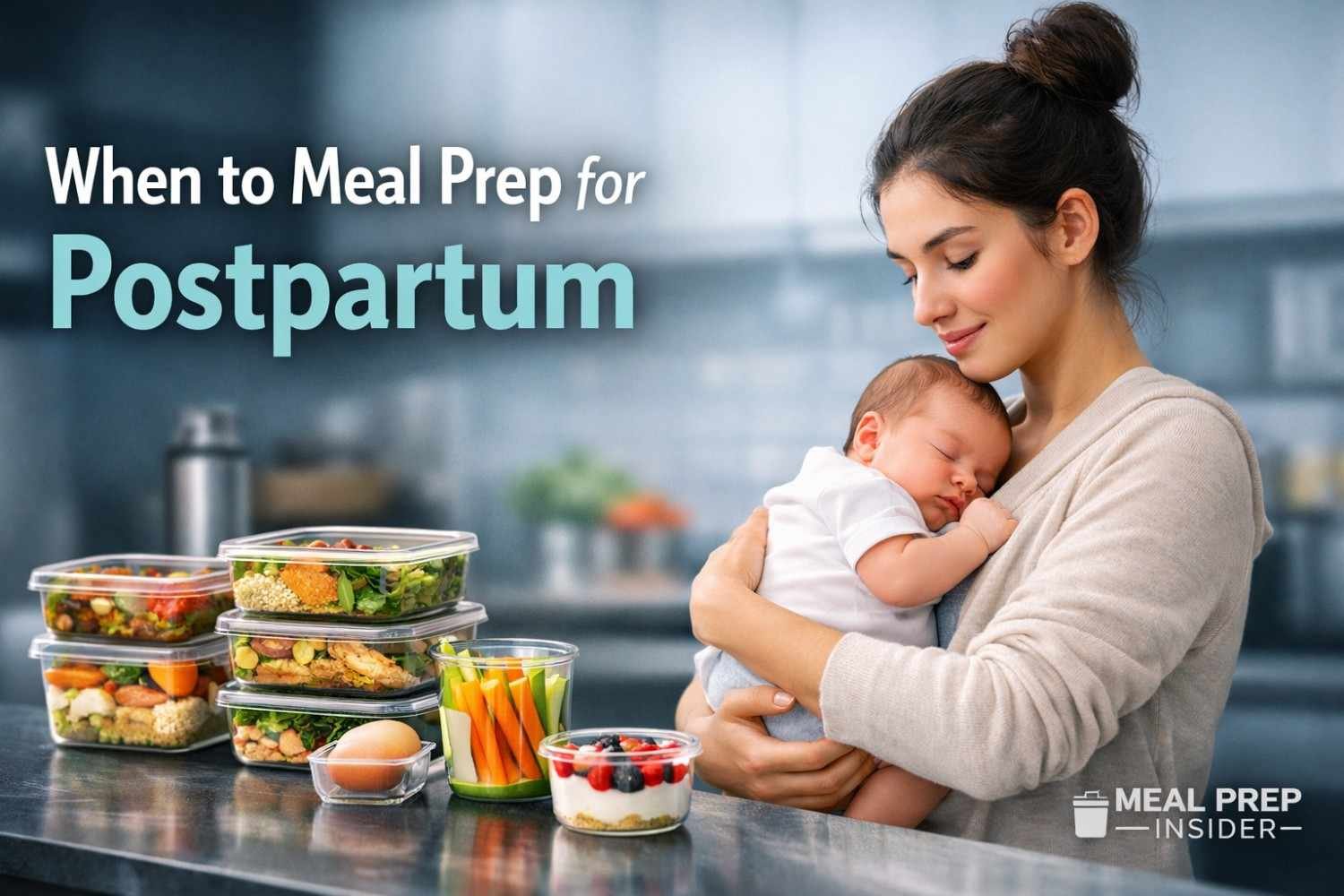
When to Meal Prep for Postpartum: Not sure when to meal prep? This guide breaks down the exact timing, what to make, and how to actually pull it off — even if you’re exhausted and short on time.
When to Meal Prep for Postpartum Recovery
You’re about to have a baby. Or you just did. Either way, eating feels like a problem nobody prepared you for.
Everyone talks about the nursery, the hospital bag, and the birth plan. But nobody sits you down and says, “Hey, the first six weeks after delivery are going to be brutal, and you will not have the energy to cook.”
Postpartum meal prep isn’t a trend. It’s survival. And timing it right is the difference between a freezer full of food that actually helps and a collection of casseroles that expire before you touch them.
Let’s get into it.
Why Postpartum Nutrition Gets Ignored (And Shouldn’t)
The American College of Obstetricians and Gynecologists recommends that postpartum care extend well beyond the traditional six-week checkup. Part of that care? What you’re eating.
Your body is healing from one of the most physically demanding events a human can experience. If you had a vaginal delivery, you’re managing tissue repair, hormonal swings, and possibly nursing. If you had a C-section, you’re recovering from major abdominal surgery — while also keeping a newborn alive.
Nutrition directly affects:
- Milk supply (if you’re breastfeeding)
- Energy levels
- Mood stability and postpartum depression risk
- Physical healing speed
- Sleep quality, even when sleep is limited
And yet, most new parents are surviving on whatever family members bring over, fast food, or the granola bars from the hospital gift bag.
Meal prepping before the baby arrives — and understanding how to keep it going afterward — significantly changes that equation.
The Postpartum Meal Prep Timeline
This is the part most guides skip. They tell you what to prep. They don’t tell you when to start or how to stagger your efforts.
Here’s a realistic breakdown.
Third Trimester: Weeks 28–36
This is your primary window. Don’t waste it.
You still have enough energy (on good days) to stand in a kitchen for an extended period. Your nesting instinct is probably kicking in. Use it productively.
Weeks 28 through 36 are ideal for:
- Stocking your pantry with shelf-stable basics
- Making and freezing large batches of soups, stews, and grain dishes
- Preparing and freezing proteins (cooked ground beef, shredded chicken, lentil bases)
- Baking and freezing lactation-supportive snacks
You’re not trying to prep every meal for three months. You’re building a buffer — about two to four weeks’ worth of easy meals that can be reheated with minimal effort.
A realistic weekly goal during this period: One big batch cook session per week, roughly two to three hours. That’s it. Don’t overdo it and burn out before the baby arrives.
Weeks 36–38: The Final Push
Energy levels vary wildly at this point. Some women feel a second wind. Others can barely walk to the kitchen.
Work with what you have.
If you’re still capable, this is a good time to:
- Prep your “first week home” meals specifically — things that can be eaten one-handed or at room temperature
- Make overnight oats in individual containers
- Portion and freeze smoothie bags (just dump in a blender with liquid when needed)
- Set up a snack station near where you’ll be nursing or sitting most often
The snack station is underrated. A small basket or bin stocked with nuts, dried fruit, crackers, nut butter packets, and easy protein bars means you can eat without leaving the couch during those endless newborn cluster feeding sessions.
Week 38 Onward: Stop Major Cooking
Seriously. You’ve done enough. If labor starts suddenly at 38 weeks (it happens), you don’t want to be in the middle of a four-hour kitchen session.
At this point, focus on:
- Organizing what you’ve already prepped
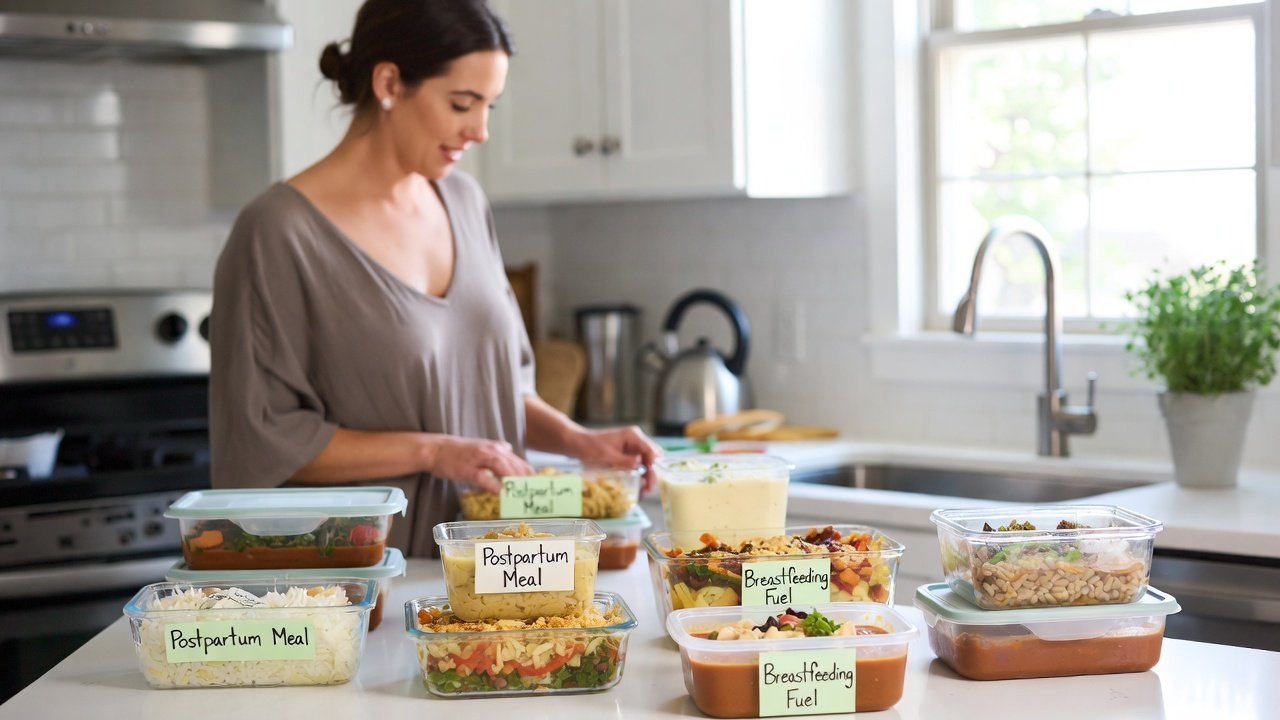
- Labeling everything clearly (contents, date, reheating instructions)
- Making sure your partner, family, or postpartum support person knows where everything is and how to heat it
Create a simple document, or even a handwritten list taped to the fridge, that lists what’s in the freezer and how to prepare each item. When you’re sleep-deprived, and someone offers to heat something up, you don’t want to have to explain anything.
The First Two Weeks Postpartum
You are not cooking. You should not be cooking.
This is recovery time. Let the freezer do its job.
Your only “food task” in the first two weeks is to eat enough and stay hydrated. Breastfeeding mothers need approximately 300–500 extra calories per day beyond baseline. That number is easy to miss when you’re exhausted, and your appetite is unpredictable.
If you have a partner at home, this is their job: reheat food, make sure you have water, and keep snacks within reach.
If you’re doing this with less support, set phone alarms reminding yourself to eat. It sounds absurd. It’s genuinely necessary.
Weeks 3–6 Postpartum
You’re not “back to normal.” But you might have slightly more capacity.
This is a good time to do very light fresh cooking — not elaborate, not time-consuming. Think:
- Scrambled eggs
- Simple pasta with jarred sauce
- Quesadillas
- Sheet pan vegetables you can eat with anything
You may also want to start rotating in fresher foods alongside freezer meals to avoid palate fatigue. Eating the same frozen soup for six weeks, even if it’s delicious, gets old.
If family or friends are still offering to help, this is a good time to request fresh produce or prepared grocery store items rather than cooked meals. A rotisserie chicken, a bag of salad, pre-cut fruit — that kind of thing.
SEE POST ALSO >> 25 Cold Meal Prep Ideas for Work: Top-Rated Delicious Meals
Beyond Six Weeks
Most postpartum guides stop here. Yours shouldn’t.
Many women don’t feel physically or emotionally stable until weeks eight, ten, or even twelve postpartum. Some much later, especially those navigating postpartum depression or anxiety.
Sustainable meal prep matters beyond the “official” recovery window.
A helpful habit to build: one batch-cook session per week, on Sunday or whenever works, that keeps at least 3 or 4 grab-and-go options in your fridge. Nothing elaborate. Just enough so you’re not making decisions from scratch when you’re exhausted at 6 pm with a baby in your arms.
What to Actually Meal Prep
Here’s where most guides go overboard. Thirty recipes, complex techniques, ingredients you’ve never used.
Keep it simple. Focus on food that:
- Freezes well
- Reheats in under five minutes
- Can be eaten one-handed if needed
- Is nutritionally dense
| Category | Good Options | Why It Works |
|---|---|---|
| Soups & Stews | Lentil soup, chicken bone broth stew, turkey vegetable | Hydrating, warming, easy to digest |
| Grains | Lentil soup, chicken bone broth stew, and turkey vegetable | Versatile base for multiple meals |
| Proteins | Shredded chicken, ground beef, hard-boiled eggs | Quick to add to any meal |
| Snacks | Lactation balls, trail mix, nut butter with crackers | Calorie-dense, one-handed eating |
| Breakfast | Egg muffins, overnight oats, freezer burritos | No morning prep required |
| Drinks | Herbal teas frozen as ice cubes, smoothie packs | Brown rice, quinoa, and farro in large batches |
Foods That Actually Support Postpartum Recovery
Not everything labeled “healthy” is useful here. Postpartum nutrition has specific priorities.
Iron-rich foods — Blood loss during delivery depletes iron stores. Lean red meat, lentils, spinach, and fortified cereals help rebuild. Pair with vitamin C sources (citrus, bell peppers) to improve absorption.
Omega-3 fatty acids — Linked to reduced postpartum depression risk and support infant brain development if breastfeeding. Salmon, sardines, walnuts, and flaxseed are solid sources.
Fiber — Constipation is an extremely common postpartum issue, especially after a C-section or if opioid pain medication was used. Beans, oats, whole grains, and vegetables help significantly.
Calcium and vitamin D — Breastfeeding draws from your calcium stores. Dairy, fortified plant milks, leafy greens, and sunlight (or supplements) matter more than usual.
Hydration — Not food, but critical. Breastfeeding women need around 128 ounces of fluid daily. Keep a large water bottle in every room you spend time in.
Involving Your Support System in Meal Prep
One thing American postpartum culture gets wrong: acting like this is entirely one person’s responsibility.
It’s not.
If you have a partner, start involving them in meal prep planning before the baby arrives. They need to know how to:
- Operate the freezer system you’ve built
- Reheat meals without destroying them
- Make at least three simple things from scratch
If you have friends or family asking how to help, tell them specifically. “Can you bring a meal on Tuesday?” is more useful than “We’re fine, thanks.”
There are also meal train websites (Meal Train, Take Them a Meal) that let you coordinate friends and family to bring food on specific days without overlap or duplicates. If someone in your life wants to set one of these up for you — let them.
Setting Up Your Kitchen Before Baby Arrives
Meal prep isn’t just about the food. It’s about making your kitchen functional for a person who has almost no capacity left.
A few weeks before your due date:
Clear freezer space. You need room. If there’s a bag of frozen peas from 2022 in there, throw it out.
Label everything you prep. Use masking tape and a marker. Write the meal name, the date it was made, how many servings, and reheating instructions. Do this every single time without exception.
Invest in the right containers. Glass containers reheat evenly, but are heavy. Silicone bags are great for soups and take up less space. Aluminum foil trays are convenient if others will be reheating for you. Have a mix.
Stock your pantry with non-perishables. Canned beans, canned tomatoes, pasta, rice, oats, nut butter, shelf-stable plant milk, crackers, olive oil. These are your baseline when the freezer runs low and no one’s brought food over.
Pre-set your coffee maker. This is not a joke. Program it. Thank yourself later.
Batch Cooking Strategy: A Real-World Approach
Here’s what a realistic batch cooking session looks like at 34 weeks pregnant.
Pick one day per week. Sundays work for many people, but any day is fine.
Make one big pot thing. A soup, a stew, a big batch of chili. Double the recipe. Portion into individual servings and freeze half; refrigerate the rest for the week.
Cook a large protein. A whole rotisserie chicken from the grocery store counts. Shred it, portion it, refrigerate or freeze.
Cook a big batch of grains. Rice, quinoa, whatever you prefer. Keep in the fridge for four to five days.
Prep some snacks. This takes thirty minutes. Portion nuts into small bags. Make a batch of energy balls. Cut fruit. Done.
That’s a three-hour session, tops, that yields roughly 10 to 14 servings of food. Do that six times before the baby arrives, and you have a meaningful cushion.
The Emotional Side of Postpartum Eating
This section gets left out of almost every meal prep guide.
Food is comfort. It’s cultural. It’s emotional. And postpartum is an emotionally enormous time.
Some women feel too exhausted to eat. Some eat far more than usual due to breastfeeding hunger or stress. Some struggle with postpartum anxiety that manifests as food aversion. None of this is weakness. All of it is worth paying attention to.
If you notice yourself consistently skipping meals, feeling disconnected from hunger cues, or using food to manage emotional distress in ways that feel out of control — these are worth mentioning to your OB or midwife. Postpartum nutrition and postpartum mental health are more connected than most people realize.
Common Meal Prep Mistakes to Avoid
Prepping too early. Frozen meals don’t last forever. Most are best within two to three months. Starting at 20 weeks and expecting your freezer meals to last until week ten postpartum isn’t realistic.
Making food you don’t actually like. This sounds obvious. It’s not. Don’t prep a bunch of “healthy” food you’d normally skip just because a blog post said it’s good for recovery. If you hate lentil soup, don’t make sixteen servings of it.
Not labeling things. You will forget what something is. Label it. Every time.
Ignoring beverages. Teas, broths, electrolyte drinks, and infused waters all count toward hydration and can be prepped in advance. Frozen bone broth cubes are an easy addition to any meal.
Doing it all yourself. Delegate. Accept help. You don’t get extra points for exhausting yourself before the baby is even born.
Quick Reference: Postpartum Meal Prep Timeline
| Timing | What to Focus On |
|---|---|
| Weeks 28–35 | Big batch freezer meals, pantry stocking, proteins |
| Weeks 36–38 | First-week-home meals, snack stations, smoothie packs |
| Week 38+ | Stop major cooking, label and organize, inform support |
| Weeks 1–2 postpartum | Reheat only, hydrate, let others help |
| Weeks 3–6 | Simple fresh cooking, rotating in fresh foods |
| Week 6+ | Light weekly batch cooking, sustainable habits |
FAQs
Q: How far in advance should I start meal prepping for postpartum? A: Most experts and experienced parents recommend starting around week 28 to 32 of pregnancy. That gives you a wide enough window to build a meaningful freezer supply without prepping so far in advance that meals lose quality.
Q: How many meals should I freeze before the baby arrives? A: Aim for at least 20 to 30 individual servings. That covers roughly two weeks of dinners (assuming one other meal each day comes from other sources). More is better, but 20 to 30 is a realistic and achievable goal.
Q: Can I meal prep if I’m having a C-section? A: Yes — and it’s arguably even more important. C-section recovery limits your mobility for longer, and your nutritional needs for wound healing are significant. Focus on foods high in protein, vitamin C, and zinc to support tissue repair.
Q: What are the best foods to freeze for postpartum? A: Soups, stews, grain dishes, shredded meats, egg muffins, and lactation-supportive snacks all freeze well. Avoid freezing anything with high water content (like cucumber or lettuce) or creamy dressings that separate.
Q: What if I don’t have time to batch cook before the baby arrives? A: Start small. Even one two-hour session with a large pot of soup and a batch of overnight oats is more than nothing. You can also buy pre-made frozen meals from grocery stores as a supplement, or set up a meal train through friends and family.
Q: Is there anything I shouldn’t eat postpartum? A: Most restrictions from pregnancy are lifted postpartum. However, if you’re breastfeeding, some babies are sensitive to certain foods (like dairy or cruciferous vegetables) that pass through breast milk. Pay attention to your baby’s reactions and consult your pediatrician if you notice consistent fussiness or gas after feeding.
Q: Do I need to eat differently if I’m not breastfeeding? A: Your caloric needs won’t be as high if you’re not breastfeeding, but your nutritional priorities — especially iron, fiber, calcium, and adequate protein — remain the same. Focus on nutrient density over calorie quantity.
Postpartum is hard enough. The food part doesn’t have to be.
Start early, keep it simple, label everything, and accept every single offer of help that comes your way. Your body just did something extraordinary. Feed it accordingly.
SUGGESTED POST >> 45 Lunch Meal Prep Ideas High Protein: Best Selected Lunches
Discover more from Meal Prep Insider
Subscribe to get the latest posts sent to your email.