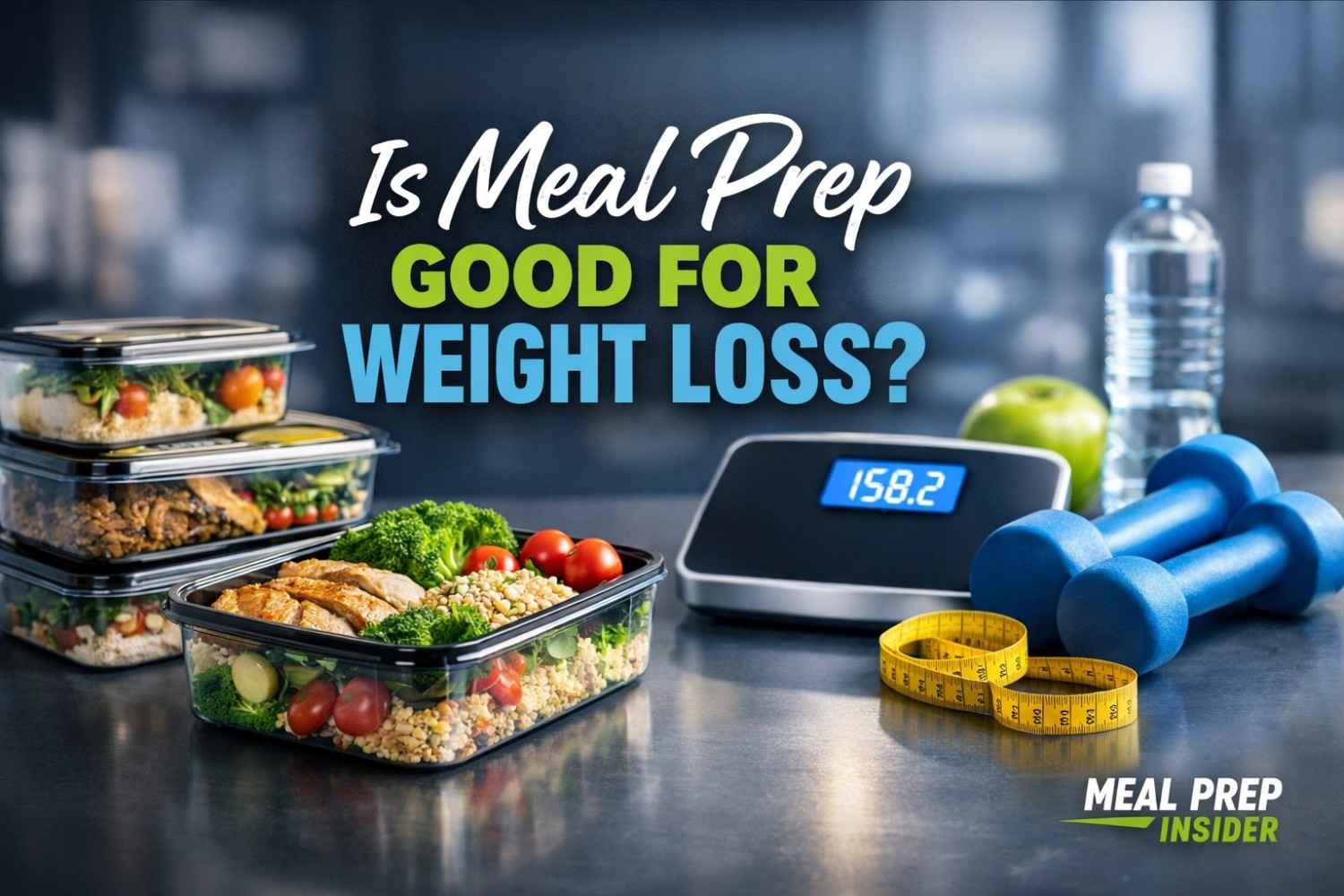
Is Meal Prep Good for Weight Loss? The Honest Truth

Is Meal Prep Good for Weight Loss? Wondering if meal prep actually helps with weight loss? We break down the real science, practical strategies, and common mistakes — so you can eat smarter without wasting your Sunday.
Is Meal Prep Good for Weight Loss?
Let’s be honest. Most people don’t fail at weight loss because they don’t care. They fail because life gets busy, the fridge is empty at 7 pm, and DoorDash is two taps away.
That’s exactly where meal prep comes in.
Meal prepping — preparing some or all of your meals ahead of time — has become one of the most recommended strategies in the American weight loss conversation. And for good reason. But it’s not a magic fix. Done wrong, it can feel like a chore that leads nowhere. Done right, it’s probably one of the most practical tools you’ll ever use.
So, is meal prep actually good for weight loss? The short answer is yes. But the longer answer is more interesting.
What Meal Prep Actually Does to Your Eating Habits
Here’s something that doesn’t get talked about enough: weight loss is less about willpower and more about your environment.
When your kitchen is stocked with ready-to-eat, portion-controlled meals, your environment works for you instead of against you. You’re not making hard decisions at the end of a long workday. The decision was already made on Sunday afternoon.
This matters more than most people realize.
A 2017 study published in the International Journal of Behavioral Nutrition and Physical Activity found that people who engaged in meal planning had a lower risk of being overweight or obese. They also had better diet quality and more food variety. Not because they were more disciplined — but because they planned ahead.
That’s the real mechanism. Not magic. Not willpower. Just removing friction.
How Meal Prep Supports a Caloric Deficit
Weight loss, at its core, comes down to eating fewer calories than you burn. That’s not controversial. What is tricky is actually staying in that deficit consistently, especially over weeks and months.
Meal prep helps in a few specific ways:
Portion control becomes automatic. When you pre-portion your meals into containers, you’re not guessing how much chicken is in that bowl. You know. And that consistency adds up fast.
You avoid impulsive, calorie-dense choices. Restaurant meals, fast food, gas station snacks — these tend to be calorie-heavy and nutrient-light. If you already have lunch in the fridge, you’re far less likely to hit the drive-through at noon.
You actually know what’s in your food. Cooking at home means you control the oil, the salt, and the sauces. A “healthy” salad from a chain restaurant can clock in at 900+ calories once you factor in the dressing and croutons. A homemade version might be 400.
That gap — repeated across multiple meals, multiple days — is where real weight loss happens.
The Psychology Behind Why It Works
There’s a behavioral concept called “decision fatigue.” The idea is simple: every decision you make throughout the day uses mental energy. By the time you get home from work, you’ve made hundreds of small decisions. Your brain is tired.
This is why most people eat worse at night. Not because they’re weak — because they’re depleted.
Meal prep eliminates a whole category of decisions. You’re not deciding what to eat, how much to eat, or whether to cook or order out. That choice is already settled. And that saves mental bandwidth for everything else.
There’s also something to be said for the routine. People who meal prep regularly tend to develop a healthier relationship with food overall. It becomes less of an emotional battlefield and more of a logistical thing. You cook, you eat, you move on.
What to Actually Prep (And What Not To)
A common mistake is thinking you have to prep every single meal for the entire week. You don’t. And honestly, that approach tends to burn people out fast.
Instead, think strategically. What meals cause you the most trouble? For most people, it’s lunch and weeknight dinners. Those are the moments when hunger meets a lack of planning, and bad choices get made.
Here’s a simple framework:
| Meal | Prep Strategy | Time Required |
|---|---|---|
| Breakfast | Overnight oats, egg muffins, pre-portioned smoothie packs | 20–30 min |
| Lunch | Grain bowls, salad jars, pre-cooked protein + veggies | 45–60 min |
| Dinner | Batch-cooked proteins, pre-chopped vegetables, sauces | 60–90 min |
| Snacks | Portioned nuts, cut fruit, boiled eggs, hummus cups | 15–20 min |
You don’t have to do all of this. Even prepping just your lunches for the week can save 400–600 calories a day compared to eating out regularly.
Start small. Build from there.
SIMILAR POST >> Clean Eating Meal Prep for Weight Loss (The Right Way)
Best Foods to Meal Prep for Weight Loss
Not all foods survive the fridge equally. Some things taste amazing on day one and terrible by day four. Here’s what actually works.
Proteins that hold up well:
- Grilled or baked chicken breast
- Ground turkey or beef (lightly seasoned)
- Hard-boiled eggs
- Canned or baked salmon
- Chickpeas and lentils
Complex carbs that reheat well:
- Brown rice
- Quinoa
- Sweet potatoes
- Oats
Vegetables that don’t get soggy:
- Roasted broccoli, cauliflower, zucchini
- Raw carrots, cucumbers, bell peppers (for snacking)
- Sautéed greens like spinach or kale
Things to be careful with:
- Leafy green salads — these wilt fast once dressed. Store dressing separately
- Avocado — it browns quickly. Add fresh when eating
- Fried foods — they lose their texture entirely and can become calorie traps when reheated
The goal is building meals that are protein-rich, fiber-heavy, and moderately low in calories — not meals that taste like cardboard by Wednesday.
A Realistic Sample Week of Meal Prep
Here’s what a practical, weight-loss-focused prep session might look like on a Sunday:
What you cook:
- 2 lbs of baked chicken breast
- A big batch of brown rice (about 3 cups dry)
- Roasted broccoli and sweet potatoes
- A dozen hard-boiled eggs
- Overnight oats prepped for 3 mornings
How it maps out:
Monday through Wednesday: Breakfast — overnight oats with berries Lunch — chicken + rice + broccoli (approx. 450 cal) Snack — 2 hard-boiled eggs Dinner — chicken + sweet potato + greens
Thursday through Friday: You might need a quick mid-week refresh — maybe 30 minutes of fresh cooking. That’s normal.
Total calories per day: roughly 1,600–1,800, depending on your portions. Enough to support a deficit for most adults without feeling starved.
Common Meal Prep Mistakes That Stall Weight Loss
Here’s where things go sideways for many people.
Prepping too much at once. If you’re new to this, cooking for 7 full days can feel overwhelming — and the food often doesn’t stay fresh that long anyway. Aim for 4–5 days and adjust.
Choosing “healthy” foods that are still high-calorie. Almond butter, granola, olive oil, avocado — these are nutritious. They’re also calorie-dense. Measuring portions matters, even with healthy foods.
Not eating enough protein. Protein keeps you full. If your meal prep is mostly grains and vegetables with minimal protein, you’ll be hungry again within two hours. That’s when snacking happens.
Getting bored and abandoning the plan. Eating the same meal five days in a row gets old. Even small variations — different sauces, different spice blends, different vegetables — make a real difference in sustainability.
Using prep as a reason to eat more. This one’s subtle. Some people find that because they “ate healthy all week,” they give themselves permission to overdo it on the weekend. That can easily cancel out the deficit you worked for.
How Much Weight Can You Realistically Lose?
This depends on your starting point, the amount of calorie deficit you maintain, and your activity level. But here’s a realistic picture.
A consistent 500-calorie daily deficit leads to roughly 1 pound of fat loss per week. If meal prep helps you stay in that deficit — which research suggests it does — then over 12 weeks, you’re looking at 10–12 pounds.
That’s not dramatic. But it’s real, and it lasts.
Crash diets might get you faster numbers in the short term. But the research on long-term weight maintenance is pretty clear: slow, consistent changes driven by sustainable habits outperform any restrictive approach over time.
Meal prep is a habit. And habits compound.
Meal Prep vs. Tracking Calories: Do You Need Both?
Not necessarily. Some people do great with meal prep alone — especially if they’re prepping balanced, reasonable portions and not snacking excessively outside of planned meals.
Others find that combining meal prep with a calorie-tracking app (like MyFitnessPal or Cronometer) yields better results because it provides both structure and data.
A reasonable middle ground: log your meals during the prep phase, so you know roughly what each container contains. You don’t have to log obsessively every day after that — but knowing the numbers gives you a baseline.
The goal isn’t perfection. It’s awareness.
Is Meal Prep Sustainable Long-Term?
This is probably the most important question. Any weight loss strategy that you can’t stick with for more than a few weeks isn’t a strategy — it’s a sprint.
Meal prep, when done at a reasonable scale, is very sustainable. Most people who stick with it report that after a few weeks, it stops feeling like extra effort and becomes part of their weekend routine. Like laundry. You just do it.
The key is keeping it simple. You don’t need elaborate recipes. You don’t need Instagram-worthy containers. You need food that tastes decent, keeps you full, and doesn’t take three hours to prepare.
Simple works. Fancy doesn’t last.
Quick Tips to Make Meal Prep More Effective for Weight Loss
- Invest in good containers. Glass containers are worth it — they reheat evenly and don’t absorb odors.
- Prep the components, not just full meals. Having cooked protein, cooked grains, and roasted vegetables separately gives you more flexibility.
- Season with intention. Low-calorie ways to add flavor: hot sauce, vinegar, mustard, lemon juice, garlic, and herbs. These make a big difference.
- Keep a snack zone in your fridge. A dedicated shelf or drawer with pre-portioned snacks means you’re not standing in front of the open fridge making a bad decision.
- Plan before you shop. Know what you’re prepping before you buy anything. Impulse buying leads to food waste and abandoned plans.
FAQs
Does meal prep really help you lose weight? Yes, it can. Studies link meal planning to better diet quality and lower rates of obesity. By controlling portions and reducing reliance on processed or restaurant food, meal prep helps maintain the calorie deficit needed for weight loss.
How many days in advance should I meal prep? Most people prep for 4–5 days at a time. Proteins and cooked grains stay fresh in the fridge for about 4 days. Anything beyond that is better frozen.
What’s the best meal prep strategy for beginners? Start with just one meal. Prepping lunches for the workweek is the easiest entry point. Once that becomes routine, add breakfast or dinner prep.
Can I lose weight just by meal prepping without exercising? Yes, diet is the biggest driver of weight loss — not exercise. You can lose weight through diet alone. That said, combining meal prep with even moderate exercise improves results and overall health.
Is it okay to eat the same meals every day when meal prepping? Nutritionally, yes — as long as your meals are balanced. Practically, it gets boring fast. Try varying seasonings or sauces to keep things interesting without adding significant calories.
How do I avoid overeating when all the food is right there in the fridge? Use portioned containers and stick to eating one at a time. Don’t eat straight from storage containers — plate your food like a real meal. It sounds simple, but it works.
Does meal prep save money? Generally, yes. Cooking at home is significantly cheaper than eating out. Many people report saving $100–$200 per month after committing to consistent meal prep.
Meal prep isn’t a diet. It’s a system. And for most people trying to lose weight in the real world — with real jobs, real families, and real exhaustion — a solid system beats willpower every single time.
SUGGESTED POST >> 1000 Calorie Meal Prep Made Simple (Done the Right Way)
Discover more from Meal Prep Insider
Subscribe to get the latest posts sent to your email.