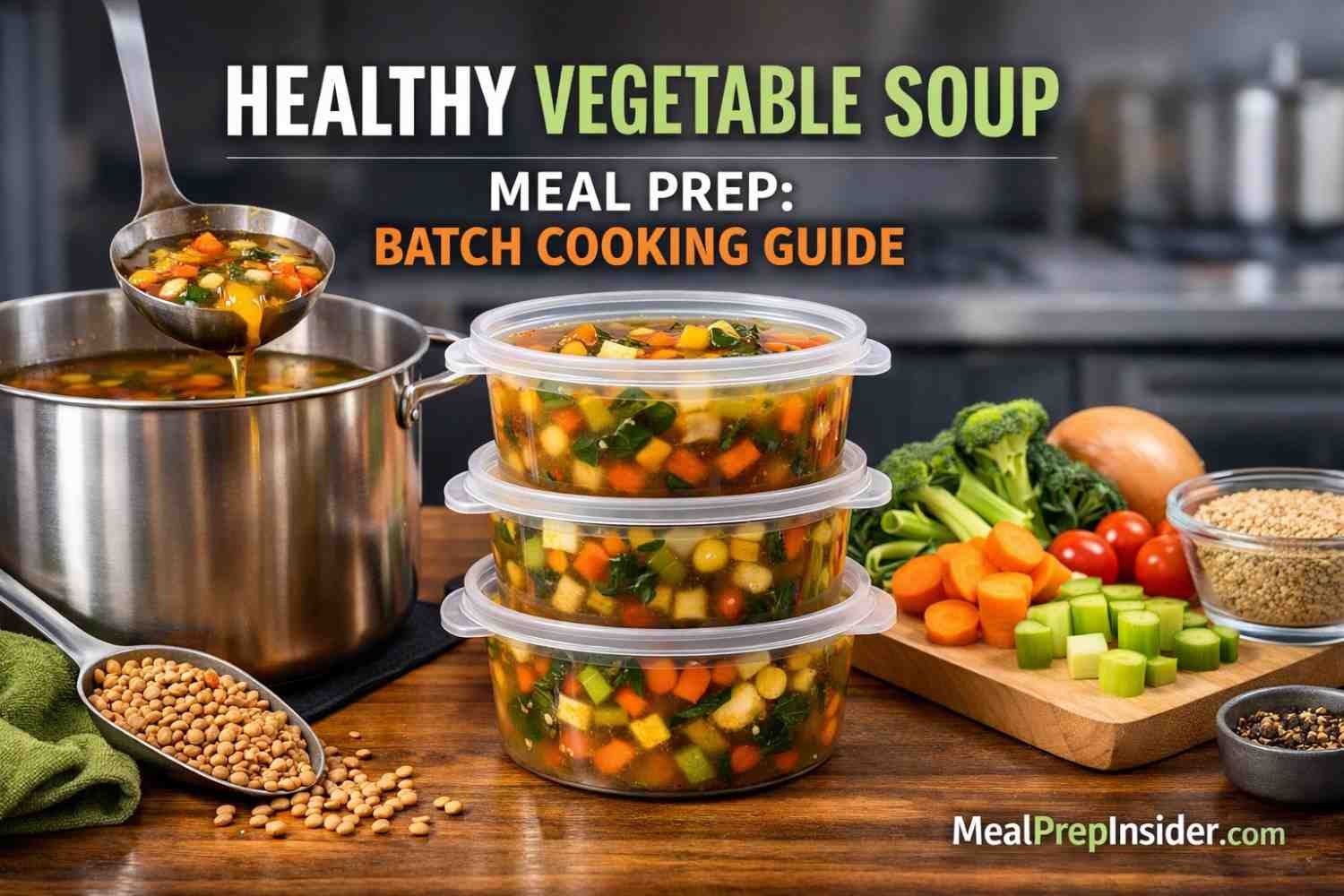
Healthy vegetable soup meal prep transforms chaotic weeknight dinners into stress-free moments of comfort. Let me take you back to my first attempt at batch cooking soups.
Picture this: me, standing in my kitchen at 10 PM on a Sunday, surrounded by 47 half-chopped vegetables, three overflowing pots, and absolutely no idea what I was doing. The kitchen looked like a farmer’s market had exploded.
That disaster taught me everything I know now.
Here’s the truth nobody tells you upfront. Meal prepping vegetable soups isn’t just about saving money or eating healthier. It’s about reclaiming your time. It’s about opening your freezer on a brutal Wednesday evening and finding homemade soup waiting for you like a gift from your past self.
This guide will walk you through everything. The strategies that work. The shortcuts that don’t compromise quality. The storage hacks that keep your soups tasting fresh for weeks.
No fluff. Just practical advice that actually makes your life easier.
Why Vegetable Soup Works Perfectly for Meal Prep
Soups are forgiving in ways other dishes simply aren’t.
Forgot to add the zucchini at the right time? Doesn’t matter. Your carrots got slightly overcooked? Nobody will notice. This flexibility makes soup the ideal starting point for anyone new to batch cooking.
The flavors improve with time. Most vegetable soups taste better on day three than they do fresh out of the pot. Those herbs, spices, and vegetables get cozy together in your fridge, creating depth you can’t rush.
Soups freeze beautifully. Unlike salads that turn soggy or grain bowls that develop weird textures, properly prepared vegetable soup maintains its integrity when frozen and reheated. You’re basically creating future dinners that require zero additional effort.
The cost efficiency is unbeatable. Buying vegetables in bulk for soup costs significantly less than purchasing individual meal components throughout the week. You’re looking at $2-3 per serving versus $8-12 for takeout or restaurant meals.
Portion control becomes automatic. When you divide your batch into individual containers, you’re naturally creating appropriate serving sizes. No more accidentally eating an entire pot of soup in two days.
Essential Equipment for Batch Cooking Vegetable Soups
You don’t need a professional kitchen. But having the right tools makes everything smoother.
Large Stock Pot or Dutch Oven
Get something that holds at least 8 quarts. Seriously. When you’re batch cooking, you need space. A 4-quart pot might seem sufficient, but you’ll regret it when vegetables are spilling over the sides.
I use a 12-quart stainless steel stock pot. It cost me $60 three years ago and has paid for itself hundreds of times over.
Quality Chef’s Knife
Sharp knives make prep work faster and safer. Dull knives slip and cause frustration. You’ll be chopping pounds of vegetables, so invest in something comfortable that holds an edge well.
Cutting Boards (Multiple)
Have at least two. One for aromatics like onions and garlic, another for everything else. This prevents flavor transfer and speeds up your workflow.
Immersion Blender
Optional but transformative for creamy soups. An immersion blender lets you puree soup directly in the pot instead of transferring hot liquid to a countertop blender. Less cleanup. Fewer burn risks.
Storage Containers
This matters more than people realize. You need:
- Wide-mouth mason jars (quart size) for refrigerator storage
- BPA-free plastic containers (16-32 oz) for freezer storage
- Gallon-sized freezer bags as a space-saving alternative
Glass containers work great in the fridge, but can crack in the freezer if filled incorrectly. Plastic containers designed for freezing handle temperature changes better.
Ladle and Measuring Cups
For portioning soup consistently. A 2-cup ladle makes this incredibly easy.
Labels and Permanent Marker
In the future, you will have no idea what’s in that container or when you made it. Trust me on this. Label everything with contents and date.
Planning Your Vegetable Soup Meal Prep Session
Healthy vegetable soup meal prep requires strategy, not just enthusiasm.
Decide Your Batch Size
How many servings do you realistically need? Consider your household size and how often you’ll eat soup.
For one person eating soup 3-4 times per week: Make 12 servings
For a couple: 16-20 servings
For a family of four: 24-32 servings
Don’t go overboard on your first attempt. Start with one double batch. Build confidence. Then scale up.
Choose Your Soup Varieties
Making multiple soups in one session maximizes efficiency. You’re already cleaning and prepping, so why not?
I typically make two different soups per session. They share some ingredients, which reduces waste and shopping complexity.
Good combinations:
- Minestrone + Butternut Squash Soup
- Vegetable Barley + Tomato Basil
- Mushroom + French Onion
- Lentil Vegetable + Broccoli Cheddar
Create Your Shopping List
Break it down by category:
Aromatics (foundation for almost every soup)
- Onions
- Garlic
- Celery
- Carrots
Main Vegetables (varies by recipe)
- Tomatoes
- Squash
- Mushrooms
- Peppers
- Leafy greens
- Potatoes
Liquids
- Vegetable broth (buy in bulk)
- Canned tomatoes
- Coconut milk
Proteins (optional)
- Beans
- Lentils
- Chickpeas
Seasonings
- Bay leaves
- Thyme
- Rosemary
- Oregano
- Paprika
- Salt and pepper
Acids (for brightness)
- Lemon juice
- Apple cider vinegar
Buy what’s on sale. Seasonal vegetables taste better and cost less. In summer, load up on tomatoes and zucchini. Winter calls for root vegetables and squash.
Schedule Your Time
Block out 3-4 hours. Yes, really. Batch cooking takes longer than making a single pot of soup, but you’re creating multiple meals.
Sunday afternoons work great for most people. Saturday mornings if you’re an early riser. Friday evenings, if you want to feel accomplished heading into the weekend.
The Efficient Batch Cooking Process
Healthy vegetable soup meal prep flows smoothly when you follow a logical sequence.
Prep First, Cook Second
This is crucial. Do ALL your chopping before you turn on the stove. Trying to dice onions while monitoring a simmering pot creates chaos.
Set up your workspace like an assembly line. Cutting board in the center. Trash bowl on the left. Prepped vegetables on the right.
Chop by Vegetable Type
Chop all your onions together. Then all your carrots. Then all your celery. This rhythm is faster than constantly switching vegetables.
Use uniform sizes within each vegetable. Doesn’t matter if your carrots are different sizes from your potatoes. But all the carrots should be roughly the same.
Start With Aromatics
Every great soup begins with onions, garlic, and celery sautéed in oil or butter. This flavor base (called mirepoix in French cooking and sofrito in Spanish) adds depth.
Heat your pot over medium heat. Add oil. Wait until it shimmers. Then add onions and celery. Cook for 5-7 minutes until softened. Add garlic in the last minute.
Garlic burns easily. That’s why it goes in last.
Layer Your Vegetables Strategically
Add harder vegetables first. They need more time to soften.
The order looks like this:
- Aromatics (onions, celery, garlic)
- Hard root vegetables (carrots, potatoes, parsnips)
- Medium vegetables (peppers, green beans)
- Quick-cooking vegetables (zucchini, spinach, peas)
Build Your Flavor Foundation
After aromatics are fragrant, add your spices. Toasting spices in oil for 30-60 seconds wakes up their flavors. Then add your liquid.
For a standard 12-serving batch:
- 8 cups vegetable broth
- 2 cups water (or more broth)
- 1 can diced tomatoes (if your recipe includes them)
Simmer With Purpose
Bring to a boil, then reduce to a gentle simmer. Boiling vegetables aggressively breaks them down too much. A gentle simmer cooks them perfectly while developing flavor.
Most vegetable soups need 25-35 minutes of simmering. You’ll know it’s done when the hardest vegetables (usually carrots or potatoes) are fork-tender.
Taste and Adjust
This is where good cooks separate themselves from great ones.
Taste your soup. What’s missing?
Too bland? Add salt, a pinch at a time.
Lacking brightness? Squeeze in lemon juice or add vinegar.
Needs depth? Try a splash of soy sauce or miso paste.
Wants warmth? Add cayenne or red pepper flakes.
Salt is your friend. Undersalted soup tastes like hot vegetable water. Properly salted soup tastes like a revelation.
Cool Properly
Food safety matters. Never put hot soup directly into containers and then into the fridge or freezer. This raises the temperature inside your appliance and can make other foods unsafe.
Cool soup quickly using these methods:
Ice bath: Place your pot in a sink filled with ice water. Stir occasionally. This brings the temperature down fast.
Separate into smaller containers: Hot soup in a large pot takes hours to cool. The same soup, divided into 4 smaller containers, cools in 30-40 minutes.
Room temperature staging: Let the soup sit at room temperature for 30 minutes, then refrigerate. Once it’s cold (2-3 hours in the fridge), transfer portions to the freezer.
Storage Strategies That Maintain Quality
Proper storage makes the difference between soup that tastes fresh after two weeks and soup you throw away.
Refrigerator Storage
Store soup you’ll eat within 4-5 days in the refrigerator.
Wide-mouth mason jars work perfectly. Leave 1 inch of headspace to allow for expansion. Soups with beans or grains absorb liquid over time, so you might need to add a splash of broth when reheating.
Glass containers are ideal because they don’t absorb odors or stains. That curry-turmeric soup won’t turn your container permanently orange.
Freezer Storage
Soup you won’t eat within 5 days should be frozen.
The enemy here is freezer burn. It happens when air comes into contact with your food, causing dehydration and off-flavors.
Container Method:
Use freezer-safe plastic containers. Fill them, leaving 1 inch of headspace (liquids expand when frozen). Seal tightly. Label with contents and date.
These stack nicely and protect your soup well.
Bag Method:
Freezer bags save significant space. Lay them flat in the freezer until solid, then stand them upright like files in a cabinet. You can fit 12 bags in the space that 4 containers would occupy.
Pro technique: Place your bag inside a rectangular container before filling. This shapes the bag into a neat rectangle that freezes flat.
Remove as much air as possible before sealing. Press from the bottom up, forcing air out the top.
Portion Sizes
Freeze in serving sizes you’ll actually use:
- Individual servings (2 cups) for solo lunches
- Double servings (4 cups) for couples
- Family servings (6-8 cups) for bigger households
Freezing one giant container of soup sounds efficient, but it isn’t practical. You can’t partially thaw a solid block of frozen soup.
Freezer Life
| Soup Type | Maximum Freezer Storage |
|---|---|
| Clear vegetable broth soups | 4-6 months |
| Cream-based soups | 2-3 months |
| Bean and lentil soups | 4-6 months |
| Tomato-based soups | 4-6 months |
| Pureed vegetable soups | 3-4 months |
Soups don’t go “bad” in the freezer (assuming your freezer stays at 0°F or below). But quality degrades over time. Flavors dull. Textures change.
Reheating Methods That Preserve Flavor and Texture
You’ve made beautiful soup. Don’t ruin it with bad reheating.
From Refrigerator
Stovetop is best. Pour soup into a pot over medium heat. Stir occasionally. Heat until it reaches 165°F (steaming hot).
Microwave works when you’re rushed. Transfer to a microwave-safe bowl. Heat on high for 2-3 minutes, then stir and heat in 1-minute intervals until hot throughout.
Cover your bowl with a microwave-safe plate or paper towel. This prevents explosions and keeps moisture in.
From Freezer
You have two options: thaw first or cook from frozen.
Thaw overnight in the refrigerator for best results. This takes planning but gives you the most control.
Cook from frozen when you forget to plan ahead. Place the frozen block in a pot over low heat. Add a splash of water or broth to prevent scorching. Stir frequently as it melts. Once liquid, increase the heat to medium and warm through.
Microwave from frozen: Remove the soup from the container (you might need to run hot water around the outside to release it). Place in a microwave-safe bowl. Microwave on defrost setting for 5 minutes, break apart what you can, then microwave on high in 2-minute intervals, stirring between each.
Texture Adjustments
Soups thicken in storage. Grains absorb liquid. Starches break down. This is normal.
Thin with:
- Additional vegetable broth
- Water
- A splash of coconut milk (for creamy soups)
Refresh the flavor:
- Fresh lemon juice
- Fresh herbs
- A drizzle of good olive oil
- Freshly ground black pepper
Five Outstanding Vegetable Soup Recipes for Batch Cooking
Healthy vegetable soup meal prep succeeds when your recipes actually taste good. These five have been tested in dozens of meal prep sessions.
Classic Minestrone
This Italian-American favorite packs vegetables, beans, and pasta into one satisfying bowl.
Ingredients for 12 servings:
- 3 tablespoons olive oil
- 2 large onions, diced
- 4 celery stalks, diced
- 4 large carrots, diced
- 6 garlic cloves, minced
- 2 zucchini, diced
- 1 can (28 oz) crushed tomatoes
- 8 cups vegetable broth
- 2 cans (15 oz each) cannellini beans, drained
- 2 cups green beans, cut into 1-inch pieces
- 2 cups small pasta (ditalini or elbow)
- 2 teaspoons dried oregano
- 2 teaspoons dried basil
- 2 bay leaves
- Salt and pepper to taste
- Fresh parsley for serving
- Parmesan cheese for serving
The technique: Sauté aromatics until soft. Add crushed tomatoes and herbs, cook for 5 minutes. Add broth and hard vegetables. Simmer for 20 minutes. Add beans, zucchini, and green beans. Simmer 10 more minutes.
Here’s the trick: Don’t add pasta before storing. Cook pasta separately and add it when reheating. Pasta gets mushy when frozen and reheated. This keeps it perfect every time.
Butternut Squash and Apple Soup
Naturally sweet and creamy without adding cream.
Ingredients for 10 servings:
- 2 tablespoons butter or olive oil
- 2 onions, chopped
- 4 pounds butternut squash, peeled and cubed
- 2 apples (Granny Smith or Honeycrisp), peeled and chopped
- 6 cups vegetable broth
- 1 teaspoon cinnamon
- 1/2 teaspoon nutmeg
- 1/4 teaspoon cayenne pepper
- Salt and pepper to taste
- 1/2 cup coconut milk (optional, for extra creaminess)
The technique: Sauté onions until translucent. Add squash and apples, cook for 5 minutes. Add spices, toast for 1 minute. Add broth, bring to a boil, then simmer for 25 minutes until squash is very tender. Use an immersion blender to puree until smooth. Stir in coconut milk if using.
RELATED POST >> 15 Simple Halloumi Meal Prep Recipes: Easy, Quick, & Crispy
This soup freezes exceptionally well. The puree texture holds up perfectly.
Hearty Lentil and Vegetable Soup
Protein-packed and incredibly filling.
Ingredients for 14 servings:
- 3 tablespoons olive oil
- 2 onions, diced
- 4 carrots, diced
- 4 celery stalks, diced
- 6 garlic cloves, minced
- 2 cups dried green or brown lentils, rinsed
- 1 can (28 oz) diced tomatoes
- 10 cups vegetable broth
- 2 bay leaves
- 2 teaspoons cumin
- 1 teaspoon smoked paprika
- 4 cups chopped kale or spinach
- 2 tablespoons lemon juice
- Salt and pepper to taste
The technique: Sauté aromatics. Add spices, toast briefly. Add lentils, tomatoes, broth, and bay leaves. Simmer for 30-35 minutes until lentils are tender but not mushy. Stir in greens for the last 5 minutes. Remove from heat and add lemon juice.
Lentils continue softening in storage. Slightly undercook them if you’re freezing portions you won’t eat for weeks.
Roasted Tomato Basil Soup
Restaurant-quality soup that’s shockingly easy.
Ingredients for 10 servings:
- 6 pounds fresh tomatoes, halved (or 3 cans of whole peeled tomatoes)
- 2 onions, quartered
- 1 head of garlic, top sliced off
- 4 tablespoons olive oil
- 4 cups vegetable broth
- 1 cup fresh basil leaves
- 1 teaspoon sugar (to balance acidity)
- Salt and pepper to taste
- 1/2 cup heavy cream or coconut cream (optional)
The technique: Roast tomatoes, onions, and a whole garlic head at 400°F for 35-40 minutes until caramelized. Squeeze garlic from skins. Transfer everything to a pot with broth and basil. Simmer for 15 minutes. Blend until smooth. Add cream if desired.
Roasting concentrates flavors. This extra step elevates the soup from good to extraordinary.
Mushroom and Wild Rice Soup
Earthy, savory, and deeply satisfying.
Ingredients for 12 servings:
- 3 tablespoons butter
- 2 onions, diced
- 4 celery stalks, diced
- 3 carrots, diced
- 2 pounds mixed mushrooms (cremini, shiitake, button), sliced
- 6 garlic cloves, minced
- 1 cup wild rice, rinsed
- 10 cups vegetable broth
- 2 teaspoons dried thyme
- 2 bay leaves
- 1 cup heavy cream or cashew cream
- 3 tablespoons fresh parsley, chopped
- Salt and pepper to taste
The technique: Sauté onions, celery, and carrots until soft. Add mushrooms, cook until they release their moisture, and the moisture evaporates. Add garlic and thyme. Add rice and broth. Simmer for 45-50 minutes until rice is tender. Stir in cream and parsley.
Wild rice takes longer than regular rice. Be patient. The nutty texture is worth it.
Troubleshooting Issues You’ll Encounter
Even experienced meal preppers face problems. Here’s how to fix them.
Soup Too Thin
This happens when you add too much liquid or your vegetables release more water than expected.
Solutions:
- Simmer uncovered for 15-20 minutes to reduce liquid
- Mash some of the vegetables against the pot side to release starches
- Add a slurry (1 tablespoon cornstarch mixed with 2 tablespoons cold water)
- Puree 1-2 cups of the soup and stir it back in
Soup Too Thick
The opposite problem. Your soup resembles stew.
Solutions:
- Add broth, water, or tomato juice gradually
- Thin with a splash of white wine
- Add a can of diced tomatoes for texture and liquid
Bland Flavor
The number one pitfall people face. You followed the recipe, but it tastes like nothing.
Solutions:
- Add more salt (seriously, this fixes 80% of bland soups)
- Squeeze in fresh lemon juice or add vinegar
- Increase garlic and aromatics
- Add umami boosters (soy sauce, miso paste, nutritional yeast)
- Fresh herbs make a massive difference
- A drizzle of high-quality olive oil before serving
Overcooked Vegetables
They’re mushy. They’ve lost their structure.
Prevention beats cure here:
- Cut vegetables larger than you think necessary
- Add quick-cooking vegetables near the end
- Slightly undercook if you’re freezing
Freezer Burn
Your frozen soup has ice crystals and tastes off.
Prevention:
- Remove all air from containers
- Use freezer-specific containers or bags
- Don’t store longer than recommended times
- Maintain consistent freezer temperature
Pasta Gets Mushy
This happens when you freeze soup with pasta already in it.
Solution:
- Always cook pasta separately
- Add when reheating individual portions
- Takes 8 extra minutes but is completely worth it
Advanced Strategies for Experienced Meal Preppers
Once you’ve mastered basic batch cooking, these techniques take efficiency to the next level.
The Flavor Base Method
Make a massive batch of sautéed aromatics (onions, celery, carrots, garlic) and freeze in portions. When you want soup, start with this flavor base instead of chopping aromatics every time.
Freeze in 2-cup portions. Each portion starts with one pot of soup.
This cuts 15 minutes off every cooking session.
Soup Starter Cubes
Blend tomato paste, garlic, herbs, and olive oil. Freeze in ice cube trays. Pop out 2-3 cubes to instantly add concentrated flavor to any soup.
The Assembly Line Approach
Dedicate one day per month to massive prep. Make 4-6 different soups. Fill your freezer completely.
You’ll eat home-cooked soup almost every day for a month. The time investment upfront pays dividends for weeks.
Repurpose Leftovers
That roasted chicken carcass? Soup bones.
Vegetable scraps? Homemade broth.
Leftover roasted vegetables? Soup ingredients.
Nothing gets wasted when you think in soup terms.
Pressure Cooker Adaptation
Instant Pot or other pressure cookers reduce cooking time dramatically. Soups that normally take 45 minutes on the stovetop cook in 15 minutes under pressure.
The flavors don’t develop quite as deeply, but the time savings are substantial for busy schedules.
Season in Stages
Add some salt and spices at the beginning. Taste and adjust near the end. Add fresh herbs right before serving.
Layering seasoning creates complexity that single-stage seasoning can’t match.
Budget Optimization Without Sacrificing Quality
Healthy vegetable soup meal prep saves money, but smart shopping amplifies those savings.
Buy in Bulk
Stock up when items go on sale:
- Canned tomatoes
- Dried beans and lentils
- Vegetable broth (or make your own)
- Frozen vegetables
These staples don’t spoil quickly. Build your pantry gradually.
Embrace Frozen Vegetables
Fresh isn’t always better. Frozen vegetables are picked at peak ripeness and frozen immediately. They’re often more nutritious than “fresh” vegetables that sat in transport for days.
Frozen works exceptionally well for:
- Spinach
- Peas
- Corn
- Green beans
- Mixed vegetables
Shop Seasonally
In-season produce costs half as much as out-of-season produce and tastes significantly better.
Summer: Tomatoes, zucchini, peppers, green beans
Fall: Squash, pumpkin, root vegetables
Winter: Cabbage, potatoes, onions
Spring: Asparagus, peas, new potatoes
Make Your Own Broth
Buying broth gets expensive when you’re making large batches. Homemade broth costs pennies.
Save vegetable scraps in a freezer bag. When it’s full, simmer with water, herbs, and salt for 1-2 hours. Strain. You’ve got free broth.
Price Per Serving Analysis
Track what you spend. Divide by servings.
Most homemade vegetable soups cost $1.50-$3.00 per serving. Comparable restaurant or store-bought soups cost $5-$10 per serving.
You’re saving $3-7 per serving. If you eat soup three times per week, you’ll save $468-$1,092 annually.
The math makes meal prepping a no-brainer.
Time Management Secrets
The biggest objection to batch cooking is time. These strategies make it manageable.
Double Your Regular Recipe
Instead of dedicating a full afternoon to meal prep, simply double whatever soup you’re making for dinner. You get one meal fresh and several portions for later with minimal extra effort.
Prep Vegetables While Watching TV
Chopping doesn’t require full attention. Wash, peel, and chop vegetables while catching up on shows. Before you know it, you’re done and didn’t “waste” any time.
Use Slow Cookers Strategically
Dump ingredients in before work. Come home to finished soup. Portion and store after dinner.
The active time you spend is maybe 20 minutes.
Clean As You Go
Wash cutting boards and knives between vegetables. Wipe counters between tasks. When soup is simmering, clean your prep dishes.
By the time the soup is ready, your kitchen is already clean. No overwhelming mountain cleanup.
Batch Your Batching
Instead of making soup every other week, make soup once per month in a massive session. Yes, it takes 5-6 hours. But you’re done with soup prep for four weeks.
This concentrated effort approach works better for some personalities than frequent, smaller sessions.
Health Benefits Beyond Convenience
Eating homemade vegetable soup regularly has measurable benefits for your health.
Increased Vegetable Consumption
Most Americans don’t eat enough vegetables. Soup makes vegetables easy to consume in large quantities.
A single serving of vegetable soup contains 2-4 servings of vegetables. Eat soup three times per week, and you’ve significantly increased your vegetable intake without trying hard.
Hydration
Soup contributes to your daily fluid intake. The combination of water, broth, and vegetable moisture keeps you hydrated, especially beneficial in winter when people drink less water.
Weight Management
Starting meals with soup reduces overall calorie consumption. The volume and warmth trigger satiety signals. You feel full faster and eat less of higher-calorie foods.
Studies show people who start lunch with vegetable soup consume 20% fewer calories overall.
Immune Support
The vegetables, herbs, and garlic in the soup provide vitamins, minerals, and compounds that support immune function. This isn’t just folk wisdom. The nutrients in homemade soup measurably support your body’s defense systems.
Reduced Sodium Compared to Restaurant Food
You control the salt. Restaurant soups often contain 800-1,200mg of sodium per serving. Your homemade version contains whatever you add, typically 300-500mg per serving.
Better Gut Health
The fiber from vegetables and beans supports healthy digestion. The warm liquid is gentle on your digestive system. People with sensitive stomachs often tolerate soup better than other meals.
Sustainability and Food Waste Reduction
Meal prepping vegetable soup aligns with environmental responsibility.
Using Whole Vegetables
Batch cooking encourages you to use parts of vegetables you might otherwise discard. Broccoli stems. Carrot tops. Celery leaves. These go into soup without waste.
Reducing Packaging Waste
One large batch equals 12-20 meals. Compare the packaging waste from 12 takeout containers or frozen meals with the minimal waste from buying in bulk and using reusable storage containers.
Preventing Food Spoilage
How often do vegetables rot in your crisper drawer? When you batch cook, you use everything immediately. Nothing sits forgotten until it’s inedible.
Lower Carbon Footprint
Cooking once to make multiple meals uses less energy than cooking each meal separately. Your stove runs for one hour instead of six separate sessions.
Frequently Asked Questions
How long does homemade vegetable soup last in the refrigerator?
Properly stored vegetable soup lasts 4-5 days in the refrigerator. Keep it in airtight containers and ensure your fridge maintains 40°F or below. If your soup contains cream or dairy, consume it within 3-4 days for the best quality.
Can I freeze soup in glass containers?
Yes, but with precautions. Use tempered glass containers designed for freezing. Leave 1-1.5 inches of headspace because liquid expands when frozen. Never put hot soup directly into glass containers bound for the freezer. Let the soup cool completely first. Wide-mouth mason jars work better than narrow-mouth jars because they handle expansion better.
Why does my frozen soup separate when thawed?
Separation happens with cream-based or pureed soups. The fat separates from the water during freezing. This is normal and doesn’t mean the soup is bad. Stir vigorously while reheating or use an immersion blender to re-emulsify. The texture returns to normal.
Should I add rice or pasta before freezing soup?
No. Rice and pasta become mushy when frozen and reheated because they continue absorbing liquid. Always cook these separately and add them when reheating individual portions. This keeps them perfectly textured.
How can I make my vegetable soup more filling?
Add protein and complex carbohydrates. Beans, lentils, chickpeas, and split peas increase protein and fiber. Quinoa, barley, or farro add heartiness. Potatoes or sweet potatoes provide a satisfying source of starch. A drizzle of olive oil or a sprinkle of nuts adds healthy fats that increase satiety.
What’s the best way to thaw frozen soup quickly?
The safest method is to thaw overnight in the refrigerator. For faster thawing, place the sealed container in a bowl of cold water and change the water every 30 minutes. Avoid hot water, which can cause bacterial growth in the outer layers while the center stays frozen. You can also cook from frozen by placing the frozen block in a pot over low heat with a splash of liquid.
Can I make vegetable soup for shelf-stable storage?
Vegetable soups can be pressure-canned for shelf-stable storage, but you must follow proper canning procedures precisely. Most vegetable soups are low-acid foods requiring pressure canning at specific temperatures and times. Never water-bath vegetable soup as it’s unsafe. If you’re new to canning, stick with freezing, which is simpler and safer.
How do I prevent my soup from getting too salty when batch cooking?
Under-salt during cooking and adjust seasoning when reheating individual portions. Flavors concentrate as the soup simmers and during storage. What tastes perfect fresh might taste too salty on day four. Start with less salt than you think you need. You can always add more later.
What vegetables don’t freeze well in soup?
Potatoes can become grainy when frozen, though some people don’t mind. Raw greens like lettuce or cabbage get slimy. Zucchini and summer squash become very soft. If using these vegetables, slightly undercook them before freezing. Better yet, add fresh when reheating.
Is it safe to freeze soup in plastic bags?
Yes, when using bags specifically designed for freezer storage. Regular storage bags aren’t thick enough and can tear or leak. Freezer bags handle low temperatures without becoming brittle. Remove as much air as possible before sealing to prevent freezer burn. Lay bags flat until frozen solid, then store upright to save space.
Can I make soup in a slow cooker and then freeze it?
Absolutely. Slow cookers are excellent for batch cooking soup. The low, slow cooking develops deep flavors. Follow the same cooling and storage procedures as stovetop soup. Don’t put the ceramic insert in the freezer—transfer soup to appropriate containers first.
How do I scale recipes up for larger batches?
Most soup recipes scale linearly. Double all ingredients to make a double batch. Triple for triple. The exception is seasoning—increase by 1.5x or 2x rather than exact proportions, then taste and adjust. Larger batches may need slightly longer simmering times for flavors to meld.
What’s the difference between vegetable broth and stock?
Broth is typically made from vegetables, herbs, and seasonings. Stock is made from bones (or, in the case of vegetable stock, a longer simmer with more vegetables for body). Broth is lighter and more seasoned. Stock is richer and more gelatinous. For soup, either works. Broth tends to be more flavorful for vegetable soups.
Can I use soup as a base for other meals?
Definitely. Thick vegetable soup becomes pasta sauce. Pureed soup becomes a flavorful cooking liquid for grains. Thin it further for a cooking liquid for other vegetables. Soup is incredibly versatile beyond eating it as soup.
How do I add more protein to vegetarian soup?
Beans and lentils are obvious choices. Tofu or tempeh adds protein without overwhelming flavor. Quinoa is technically a seed and provides complete protein. Nutritional yeast adds both protein and savory flavor. Serving soup with whole-grain bread or adding nuts as a garnish increases overall protein intake.
Should I peel vegetables before adding them to soup?
Depends on the vegetable and your preference. Carrot peels are fine. Potato peels add nutrition but change texture. Tomato peels can be bitter. Onion and garlic skins always get removed. For pureed soups, peeling creates a smoother texture. For chunky soups, many peels are perfectly fine and add fiber.
The beautiful thing about making soup at home is that you get to decide.
Your Next Steps
You now have everything you need to start batch cooking vegetable soup successfully.
Don’t overthink it. Pick one recipe from this guide. Make a shopping list. Block out three hours this weekend. Just start.
Your first batch won’t be perfect. Mine wasn’t. You’ll probably add too much of something or forget an ingredient. That’s how you learn.
The magic happens around batch three or four. That’s when the process clicks. When you develop your rhythm. When you open your freezer and see rows of homemade soup and feel that quiet pride.
Batch cooking vegetable soup isn’t glamorous. It doesn’t have the instant gratification of restaurant food or the convenience of delivery apps.
But it’s real. It’s nourishing. It’s you taking care of the future you.
That matters more than we usually admit.
Start small. Build consistency. Watch how much calmer your weeknights become when dinner is already taken care of.
Now go make some soup.
SUGGESTED POST >> Best 46 Whole Food Meal Prep Ideas