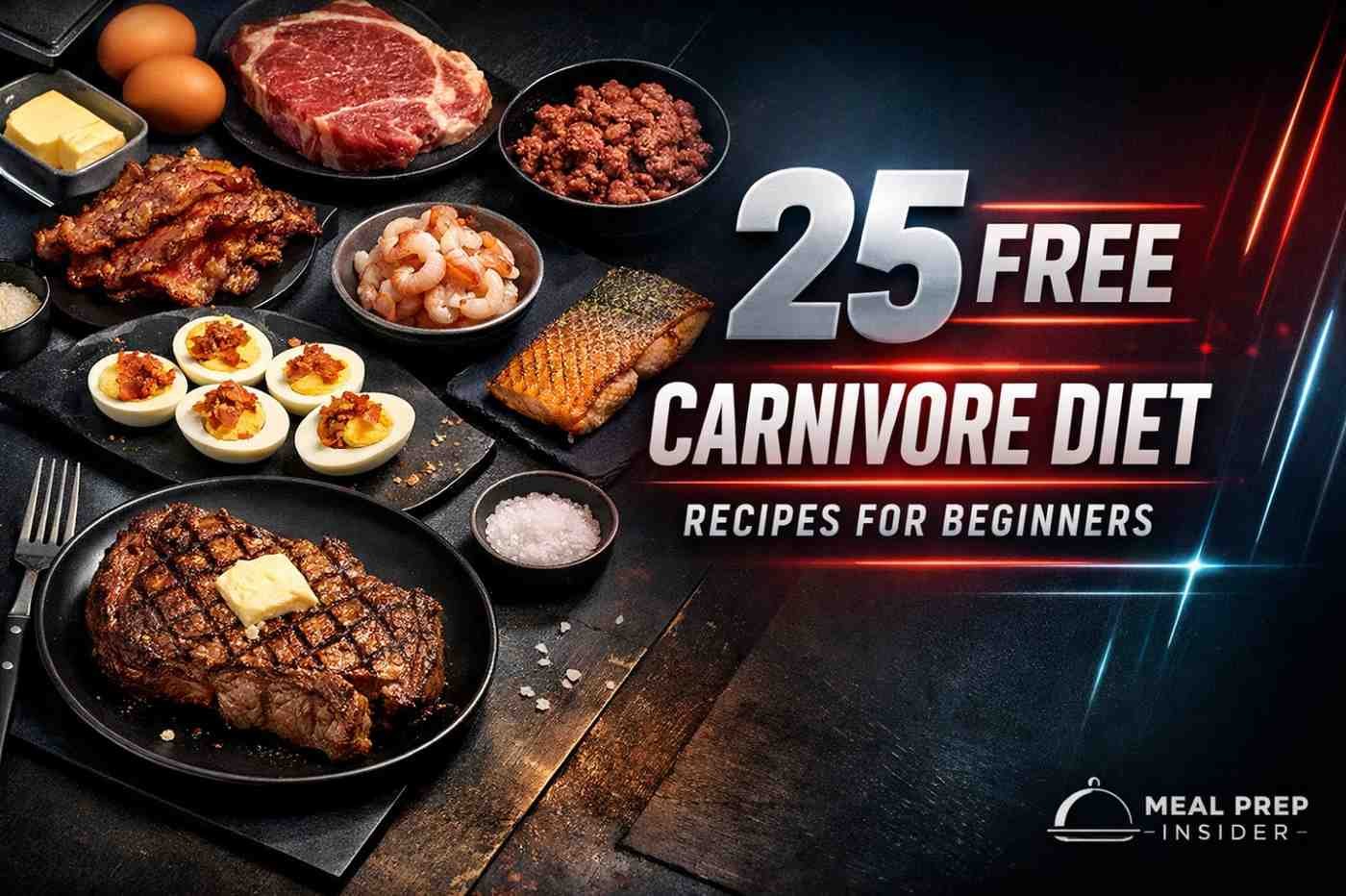
New to the carnivore diet? Easy carnivore diet recipes for beginners: simple, zero-carb meals with steak, eggs, bacon, and more. Start your all-meat journey with high-protein, satisfying ideas to lose weight and boost energy in the USA.
Free Carnivore Diet Recipes for Beginners
So you’ve decided to go carnivore. Good.
Maybe you’re tired of tracking macros, counting calories, or eating food that tastes like cardboard wrapped in good intentions. The carnivore diet strips things down to the essentials — meat, salt, water, and sometimes a few extras depending on how strict you want to go.
But here’s where most beginners get stuck: they don’t know what to actually cook.
This post fixes that. Below are 25 free, beginner-friendly carnivore recipes that are easy to make, don’t require exotic ingredients, and taste like actual food. No spiralizers. No blenders. No, “just imagine it tastes like pasta.”
Before the recipes, a quick primer on what this diet actually involves.
What Is the Carnivore Diet, Really?
The carnivore diet is an all-animal-product diet. That means meat, fish, eggs, and some dairy — nothing from the plant kingdom. No vegetables, no fruit, no grains, no legumes.
It sounds extreme. And honestly, it kind of is.
But for a growing number of Americans dealing with bloating, inflammation, autoimmune conditions, or just general metabolic dysfunction, cutting plants entirely has produced real, noticeable results.
The standard carnivore framework looks like this:
- Beef (the star of the show)
- Pork (often overlooked, unfairly so)
- Lamb (rich and deeply satisfying)
- Poultry (chicken and turkey are allowed, though less preferred by strict carnivores)
- Fish and seafood
- Eggs
- Organ meats (optional but nutrient-dense)
- Dairy (butter, heavy cream, hard cheese — tolerated by most)
Salt is fine. Water is essential. Black coffee and tea sit in a gray zone — many carnivores allow them, some don’t.
Now, to the recipes.
The 25 Recipes
These are organized loosely by protein type to make meal planning easier. Each recipe is written simply. You’re not here for a cooking show.
Beef Recipes
1. Butter-Basted Ribeye
This is the carnivore diet’s version of a perfect meal. Season a thick ribeye generously with salt. Heat a cast-iron skillet until it’s ripping hot. Sear 2–3 minutes per side, then add 2 tablespoons of butter and some thyme, if you’re feeling it, and baste continuously for another minute. Rest for five minutes before cutting.
Fat content is high. That’s the point.
2. Ground Beef Bowls
Brown 80/20 ground beef in a skillet. Season with salt and a little garlic powder if you’re not a strict carnivore. That’s it. Eat it from the bowl. No rice, no toppings. This becomes a staple for most beginners because it’s cheap and takes ten minutes.
3. Smash Burgers (No Bun)
Roll the ground beef into loose balls, then smash them onto a screaming-hot griddle or skillet. Salt immediately. Cook 2 minutes, flip once, and add a slice of cheddar if dairy is in your plan. Stack two patties. Eat with a fork.
You won’t miss the bun after the third time.
4. Beef Short Ribs (Slow-Cooked)
Season short ribs with salt and black pepper. Sear all sides in a heavy pot. Add a cup of beef broth, cover, and cook in a 300°F oven for 3.5 hours. The meat falls off the bone. The fat renders down completely. This is a weekend meal — low-effort, high-reward.
5. New York Strip with Bone Marrow Butter
Roast marrow bones at 450°F for 20 minutes. Scoop the marrow into softened butter, mix, and chill. Grill or sear a New York strip to your preferred temp. Top with a generous slice of that marrow butter while the steak rests. It melts right in.
6. Beef Liver and Bacon
This one intimidates beginners. Don’t let it. Slice beef liver thin, soak in salted water for 30 minutes to mellow the flavor, then pat dry. Fry the bacon first, then remove it; cook the liver in the bacon fat — about 2 minutes per side. Salt well. Eat together.
Liver is the most nutrient-dense food on the planet. Aim for it once a week.
7. Carnivore Meatballs
Combine ground beef, a beaten egg, salt, and a little Parmesan if you use dairy. Roll into balls, bake at 400°F for 18–20 minutes. Simple. Meal-preppable. Reheat easily during the week.
8. Reverse-Seared Tomahawk Steak
This is for the days you want to feel like you’ve done something special. Season a tomahawk generously with salt. Cook on a wire rack in a 250°F oven until the internal temperature hits 125°F. Then sear in a cast-iron pan with butter, 60–90 seconds per side. Rest for ten minutes. Cut thick.
It’s a process. It’s worth it.
9. Beef Tallow-Fried Burger Patties
Render beef tallow in a skillet (or buy it pre-made). Form thick burger patties, salt both sides, and fry in the tallow over medium-high heat. The exterior gets crispy in a way that butter and oil just don’t achieve. This is a game-changer.
Pork Recipes
10. Crispy Pork Belly
Score the skin of a pork belly slab in a crosshatch pattern. Salt heavily, especially on the skin. Roast at 450°F for 30 minutes, then drop to 325°F for another 1.5 hours. The skin turns into crackling. The fat underneath is silky.
This one gets made over and over.
11. Bacon and Eggs (The OG Carnivore Breakfast)
It feels almost too obvious to include. But bacon and eggs — cooked in the bacon’s rendered fat — is the backbone of the carnivore diet for most beginners. Eat it for breakfast. Eat it for dinner. There’s no rule against that.
Use thick-cut bacon. Cook the eggs in the fat left in the pan.
12. Pork Spare Ribs
Season ribs with salt only. Wrap in foil. Bake at 275°F for 3 hours. Unwrap, crank the heat to 400°F, and cook another 20 minutes to get some char on the edges. No BBQ sauce. The fat and collagen do the work here.
RELATED POST >> 15 Easy Ground Lamb Recipes You’ll Keep Coming Back To
13. Pan-Fried Pork Chops
Bone-in chops cook better than boneless — more fat, more flavor. Season with salt. Sear in a hot pan with butter for 4 minutes on each side. Spoon the melted butter over the top as it cooks. Rest for three minutes before eating.
14. Ground Pork Scramble with Eggs
Brown ground pork in a skillet, breaking it up as it cooks. Salt it. Crack 3 eggs directly into the pan with the pork, and scramble everything together. One pan, five minutes, done.
This is a solid weeknight dinner when you’re exhausted.
Lamb Recipes
15. Lamb Shoulder Chops
Lamb shoulder chops are cheaper than rack of lamb and arguably more flavorful. Salt generously. Sear in a cast-iron skillet over high heat for 3 minutes per side. Finish in a 375°F oven for 8–10 minutes. Let rest. The fat cap is edible and excellent.
16. Ground Lamb Patties
Mix ground lamb with salt and a little dried rosemary if you’re doing a softer carnivore. Form into patties. Cook in a cast-iron skillet over medium-high heat. The lamb fat renders out and bastes the patty as it cooks. These are incredibly rich.
17. Slow-Roasted Lamb Leg
Rub a leg of lamb with salt and a touch of black pepper. Place fat-side up on a roasting rack. Cook at 325°F for 25 minutes per pound. Pull at an internal temp of 135°F for medium. Rest 15 minutes, then slice.
This is Sunday-dinner energy.
Poultry and Egg Recipes
18. Whole Roasted Chicken
Season a whole chicken inside and out with salt. Stuff the cavity with butter. Roast at 425°F, breast-side up, for 60–75 minutes, depending on size, until the skin is deeply golden. Let it rest before carving. Don’t skip the oysters — that’s the dark meat above the backbone, and it’s the best part.
19. Soft-Scrambled Eggs with Butter
Crack 4 eggs into a cold pan. Add a tablespoon of butter. Turn the heat to medium-low. Stir constantly with a silicone spatula. The key is patience — you’re not frying. The eggs should come off the heat while still slightly underdone; they’ll finish on the plate.
Season after cooking, not before.
20. Duck Legs (Confit-Style)
Salt duck legs generously and let them sit in the fridge uncovered for 24 hours. Then submerge in duck fat (or beef tallow) and cook in the oven at 225°F for 3 hours. The skin becomes crackling-crisp when you pan-sear it afterward. The meat is like butter.
This is the most impressive low-effort dish on this entire list.
21. Egg and Cheese Cups
Grease a muffin tin. Crack one egg into each cup, add a pinch of salt, and drop a small cube of cheddar in the center. Bake at 375°F for 12–14 minutes. Portable, easy, and meal-preppable for the whole week.
Fish and Seafood Recipes
22. Pan-Seared Salmon
Season salmon fillets with salt. Heat a skillet over medium-high heat with butter. Place the salmon skin-side down and press firmly for 30 seconds to prevent the skin from curling. Cook 4–5 minutes skin-side down, flip, and cook 1 more minute. The skin should be crispy. The center should still be slightly translucent.
23. Seared Scallops with Butter
Pat scallops completely dry — this is the most important step. Season with salt. Heat a skillet until nearly smoking, then add butter and place the scallops without moving them for 90 seconds. Flip once. Remove. That sear is what you’re after. Wet scallops steam rather than sear, so always buy dry-pack.
24. Sardines Pan-Fried in Tallow
This sounds strange. It works brilliantly. Fresh or high-quality canned sardines pan-fried in beef tallow with just salt is one of the most nutrient-dense meals you can eat. Omega-3s, B12, and calcium. If fresh sardines aren’t accessible, good canned sardines in olive oil work fine.
25. Shrimp Cooked in Butter
Peel and devein large shrimp. Melt a generous amount of butter in a skillet over medium heat. Add shrimp, season with salt, and cook 2 minutes per side until pink and slightly curled. Don’t overcook. Shrimp go from perfect to rubbery in about 45 seconds.
Eat them as-is. No cocktail sauce needed.
A Simple Weekly Meal Plan for Beginners
Starting a carnivore diet can feel overwhelming if you try to plan everything. Here’s a basic framework to simplify it:
| Day | Meal 1 | Meal 2 |
|---|---|---|
| Monday | Bacon and eggs | Ribeye steak |
| Tuesday | Ground beef bowl | Pork chops |
| Wednesday | Scrambled eggs with butter | Salmon fillet |
| Thursday | Beef liver and bacon | Short ribs |
| Friday | Smash burgers | Lamb shoulder chops |
| Saturday | Soft-scrambled eggs | Tomahawk steak |
| Sunday | Egg cups | Slow-roasted lamb leg |
Two meals a day (2MAD) is common among carnivore eaters. Your appetite tends to regulate itself once you’re fat-adapted — usually within 2–4 weeks.
Tips for Beginners That Actually Matter
A few things nobody tells you when you’re starting out:
- Electrolytes matter. On a carnivore, you excrete sodium rapidly in the first few weeks. Salt your food more than it feels normal. Consider adding potassium (cream of tartar in water) and magnesium if you’re cramping.
- Eat fatty cuts, not lean ones. This is not a protein diet. It’s a high-fat, high-protein diet. If you eat only chicken breast, you will feel terrible. Ribeyes, 80/20 beef, pork belly, lamb — these are your staples.
- The first two weeks are rough. Headaches, fatigue, irritability. This is common. It’s sometimes called the “carnivore flu.” Push through. It passes.
- Don’t under-eat. Many beginners try to restrict calories on a carnivore diet. That’s a mistake early on. Eat until you’re full. Appetite naturally decreases over time.
- Organ meats are optional but valuable. If you can tolerate liver, aim for 4 oz per week. It covers most micronutrient bases. If you hate the taste, beef heart is milder and still excellent.
What to Buy at the Grocery Store
Here’s a starter shopping list that covers most of the recipes above:
Beef:
- 80/20 ground beef (buy in bulk)
- Ribeye steaks
- Short ribs
- Beef liver (optional but recommended)
Pork:
- Thick-cut bacon
- Pork belly
- Bone-in pork chops
- Ground pork
Eggs:
- Large eggs (at least 2 dozen to start)
Fish:
- Salmon fillets
- Sardines (canned in olive oil)
- Large shrimp
Fats:
- Grass-fed butter (Kerrygold is widely available)
- Beef tallow (Fatworks brand is common in US stores)
- Duck fat (optional)
Dairy (if included):
- Heavy cream
- Cheddar or Parmesan
Salt. That’s it. That’s the whole pantry.
Common Mistakes Beginners Make
They happen. Here’s how to avoid the main ones:
Eating too lean. This causes fatigue and hunger. Your body needs fat for fuel as a carnivore. If you’re eating chicken breast three times a day, add butter or switch to fattier cuts.
Not eating enough salt. Especially in the first month. Your kidneys dump sodium when insulin drops. This causes headaches and dizziness. Salt aggressively.
Giving up during the adaptation phase. The first two weeks feel bad for most people. Energy dips, digestion changes, and sleep might be off. This is normal. The people who push through consistently report significant improvements by week 3 or 4.
Relying only on chicken. Chicken has its place, but it’s low-fat and gets boring fast. Beef should be the foundation. Pork and lamb as support. Chicken is an occasional option.
Overcooking steaks. This isn’t just a taste issue — well-done beef loses some of its nutrition and, more practically, tastes dry and tough. Aim for medium-rare to medium on most cuts.
FAQs
Q: Do I need to eat organ meats on the carnivore diet? No, they’re optional. Meat, muscle meat, and eggs cover most nutritional needs. But if you want to add liver, once a week is enough to get a real nutrient boost.
Q: Can I drink coffee on the carnivore diet? Technically, coffee is not animal-based. Strict carnivores exclude it. But a large percentage of carnivore practitioners — including many well-known advocates — drink black coffee without issues. It’s a personal choice.
Q: Is the carnivore diet safe long-term? The honest answer is that long-term data is limited. Short-term studies and anecdotal evidence are generally positive for many people. If you have underlying health conditions, talk to a doctor before starting any elimination diet.
Q: How much should I eat per day? A common starting point is 1.5–2 lbs of fatty meat per day. But hunger signals in carnivores change significantly after adaptation. Eat until you’re genuinely full, not just until a number is hit.
Q: Will I get scurvy without vegetables? This is one of the most common concerns. Fresh meat — especially raw or minimally cooked — contains small amounts of vitamin C. Organ meats contain more. There are no documented cases of scurvy among people who regularly eat fresh meat. Dried or heavily processed meat is a different story.
Q: What’s the cheapest way to do carnivore in the US? Ground beef, eggs, and canned sardines. That trio is nutritious, complete, and affordable in most parts of the country. Add pork when it’s on sale. Skip the premium cuts until you’re sure this is a long-term lifestyle.
Q: Can I meal prep on carnivore? Absolutely. Ground beef bowls, meatballs, hard-boiled eggs, baked egg cups, and slow-cooked ribs all reheat well. Steak is the one exception — it’s best fresh off the heat.
The carnivore diet doesn’t need to be complicated. Meat. Salt. Heat. That’s the system.
These 25 recipes give you enough variety to stay consistent without spending hours in the kitchen or hundreds of dollars at the butcher. Start with the simple ones — smash burgers, ground beef bowls, bacon and eggs. Get comfortable. Then expand.
You’ll find your rhythm faster than you think.
SUGGESTED POST >> 35 Easy Gluten Free Meal Prep Ideas on a Budget